 PledgeBox
Subscription Management for Crowdfunding Creators
Master subscription management for Kickstarter and Indiegogo campaigns. Learn recurring billing, surveys, upsells, and fulfillment with PledgeBox.
Master subscription management for Kickstarter and Indiegogo campaigns. Learn recurring billing, surveys, upsells, and fulfillment with PledgeBox.
Your crowdfunding campaign has ended, the funding goal is secured, and the congratulatory messages have started arriving. Then the practical work lands: backer surveys, incomplete addresses, reward variations, shipping charges, VAT, add-ons, late pledges, and customers asking when their orders will arrive. A successful campaign creates a customer relationship, not just a payment record.
For creators moving beyond one-time campaigns, subscription management provides the operating layer for recurring billing, renewal control, customer access, fulfillment schedules, payment recovery, and ongoing communication. The same systems that support SaaS, media, telecom, and subscription commerce can help a campaign become a repeatable business rather than a single fundraising event.
A creator can spend months building a product, launch a campaign, and reach the funding target in a rush of orders. The morning after the campaign closes, that creator still needs to collect final reward choices, confirm addresses, calculate taxes, collect shipping, handle payment issues, and answer backers who want to add another item. The campaign may be over, but the commercial relationship has only entered its most demanding phase.
That's where the distinction between campaign funding and post-campaign operations matters. A payment processor can confirm that money changed hands. It doesn't automatically know which backer selected which reward, whether an address is deliverable, whether a customer wants an add-on, or how a recurring reward should renew.

Crowdfunding creators increasingly use campaigns as the first purchase in a longer relationship. A board game publisher might offer future expansions, a hardware company might provide replacement consumables, and a food or lifestyle brand might turn a successful reward into a subscription box. Each model needs more than a static list of backers.
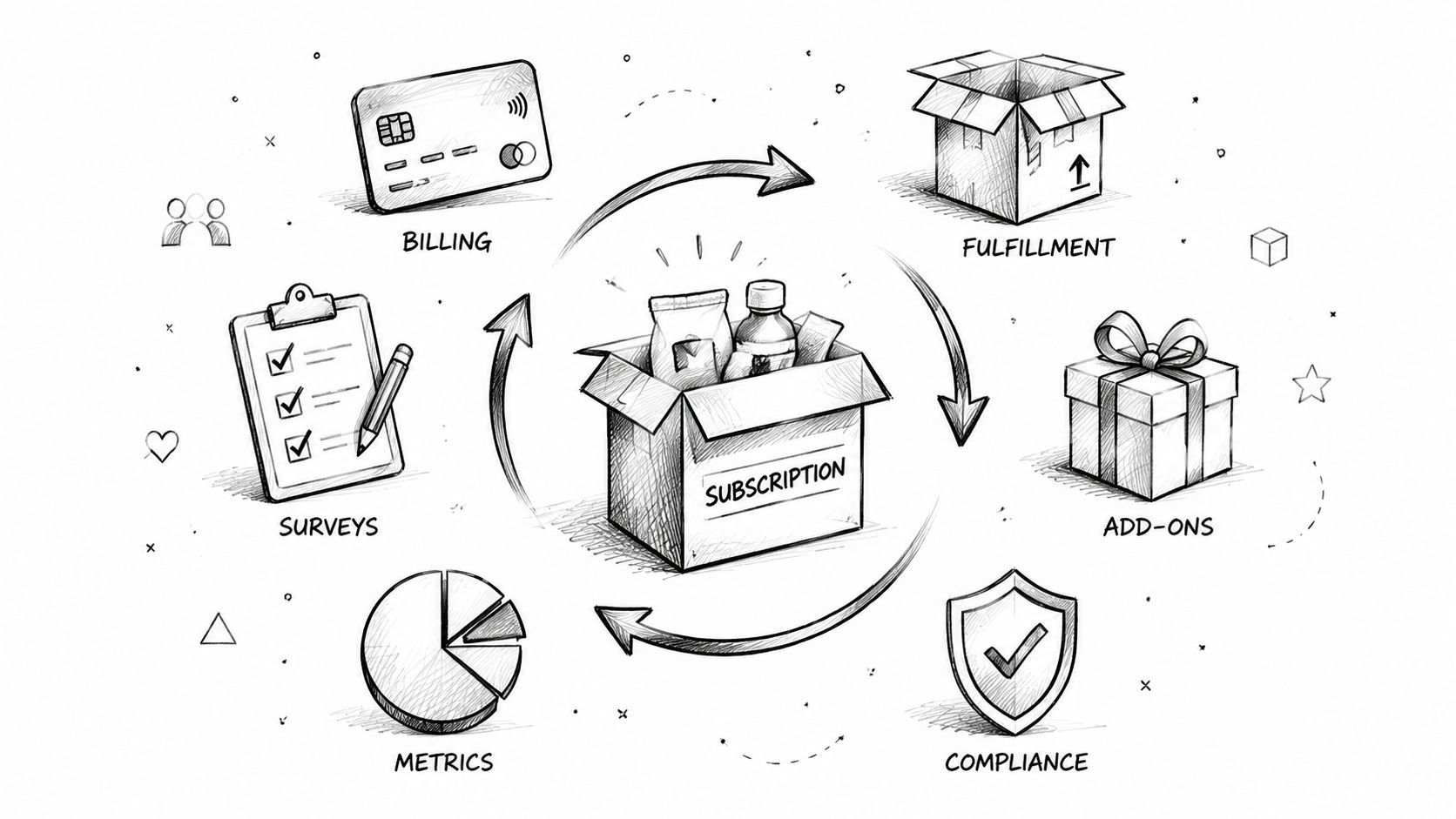
Subscription management connects:
The broader subscription economy has expanded from a peripheral pricing option into a major commercial model. One industry summary estimates the global subscription economy at about USD 492.34 billion in 2024, with a projection of USD 1.51 trillion by 2033 and a 13.3% CAGR from 2025 to 2033. The same source reports that subscription-based businesses grew 435% over the last decade. These figures are projections and industry estimates, but they point to a structural change that crowdfunding creators can't ignore. (Market Research Future subscription billing management summary)
Practical rule: Treat the end of a campaign as the start of fulfillment and retention operations, not the finish line.
Dedicated subscription management infrastructure becomes useful as soon as a creator needs to coordinate several customer states at once. A backer may have paid the original pledge, added shipping later, upgraded a reward, changed an address, and opted into a future delivery. Keeping those events in disconnected spreadsheets creates avoidable support work and makes revenue leakage harder to detect.
Subscription management starts with a simple question: what should happen after a customer pays? In a crowdfunding context, the answer includes much more than recurring charges. The system must preserve the customer's selected reward, collect missing information, apply the right shipping and tax rules, and keep the customer informed until fulfillment is complete.
A useful way to understand the workflow is to follow the backer.

Payment processing answers whether a transaction was accepted. Subscription management answers what the transaction means over time. That distinction becomes important when a creator sells several reward tiers, accepts multiple currencies, ships internationally, or invites backers to purchase additional products after the campaign.
A centralized system also gives the creator a consistent customer record. Instead of asking a backer to repeat information across separate forms, the creator can connect the pledge, survey response, payment, address, shipping choice, and communication history.
Creators building recurring-revenue products can also study the commercial landscape through resources such as the Gritt.io curated investor network, particularly when they're evaluating whether a campaign can support a larger subscription business.
For a deeper look at recurring revenue structures, the subscription revenue models guide helps frame the difference between one-time pledges, replenishment offers, access subscriptions, and tiered memberships. The right model depends on what customers repeatedly value, not on whether a creator can schedule another charge.
Kickstarter's native pledge manager is like Amazon. It gives creators access to a structured marketplace and a campaign-connected checkout, but the experience is relatively fixed around the platform's rules. A dedicated pledge manager such as PledgeBox is like Shopify, giving the creator more control over the storefront, survey logic, upsells, shipping rules, branding, and post-campaign relationship.
That analogy clarifies the trade-off. Amazon-style infrastructure is convenient when the transaction is straightforward and the platform's workflow fits the campaign. Shopify-style infrastructure becomes more useful when the creator needs a flexible commerce layer that can continue operating after the campaign closes.

Kickstarter's help information states that its pledge manager uses the same fee logic as successful campaign pledges. Kickstarter takes a 5% platform fee on funds except taxes, while Stripe collects a variable card processing fee of roughly 3% to 5% on the full payment, including taxes. (Kickstarter pledge manager fee explanation)
The platform's FAQ also explains that fee treatment applies to shipping and additional add-on funds raised through the pledge manager, while taxes raised through it don't incur fees. (Kickstarter pledge manager FAQ on shipping and add-ons)
PledgeBox is free to send the backer survey and charges only 3% of upsell revenue if there's any. Its pricing page states that the 3% applies to revenue collected through the survey, including add-ons, shipping fees, and taxes or VAT. If no extra revenue is raised, sending the survey is completely free. (PledgeBox pricing details)
| Fee Type | Kickstarter Native | PledgeBox |
|---|---|---|
| Sending the backer survey | Covered by the platform's pledge manager fee structure | Free |
| Platform fee on applicable funds | 5%, except taxes | 3% on revenue collected through the survey |
| Add-ons and shipping | Subject to the same fee logic | Included in the survey revenue calculation |
| Taxes or VAT | Kickstarter's stated platform fee excludes taxes | Included in the revenue calculation described on the pricing page |
| No extra revenue raised | Platform fee structure still applies to applicable funds | Completely free to send the survey |
Native tools can work well for a campaign with one reward, limited shipping complexity, and no meaningful post-campaign storefront. A dedicated manager earns its place when the creator needs dynamic surveys, branded experiences, later address updates, post-campaign upsells, or more detailed fulfillment exports.
The same decision pattern appears in other software categories. A practical discussion of why free gym software may fall short is relevant because low upfront cost doesn't always mean low operational cost. If a system forces manual work, limits automation, or makes customer data difficult to use, the creator pays through staff time and preventable errors.
Here's a walkthrough of the platform-native and dedicated-manager distinction:
The most useful subscription management features solve specific post-campaign problems. A survey isn't valuable because it's a form. It's valuable because it turns an incomplete pledge record into a fulfillment-ready order.
A strong survey collects only information the creator can use. Reward selection, address, phone number where needed by the carrier, size, color, language, and optional purchases should appear as clear decisions rather than one large open-ended questionnaire.
Conditional logic keeps the experience manageable. A backer who selected a digital reward shouldn't receive the same shipping questions as someone ordering a physical collector's edition. Mobile-friendly pages matter because many backers complete administrative tasks from a phone rather than a desktop.
International fulfillment exposes weak systems quickly. Shipping fees must reflect destination and package rules, while VAT or other taxes need to be presented clearly before payment. A creator who undercharges shipping may have to absorb the difference later. A creator who overcomplicates the checkout may create support tickets and abandoned surveys.
Useful controls include:
Add-ons and upsells work best when they feel connected to the original purchase. Examples include a matching accessory, an upgraded edition, a spare component, a future expansion, or a late-backer pre-order. The offer should be easy to understand, priced transparently, and tied to a real customer need.
Automated reminders help backers complete unfinished surveys, while notifications reduce repetitive questions about deadlines and delivery status. A creator should still maintain human support for unusual cases, but automation can handle predictable prompts.
The consumer side of this problem is broader than one campaign. Reporting on subscription fatigue says 41% of subscribers are annoyed that they can't manage all subscriptions in one place, and 63% globally want a single platform for all subscriptions and streaming services. (Subscription fatigue findings from Readless) That expectation supports a unified backer portal where customers can review purchases, update details, and control ongoing services.
For customers managing multiple recurring commitments, tools that help people track and cancel subscriptions illustrate the same user-experience principle. Control should be visible, understandable, and available without forcing the customer through support.
Implementation should begin with the payment and fulfillment paths, not the dashboard. List every way money enters the business, including the original pledge, shipping, taxes, add-ons, late orders, refunds, and recurring charges. Then map each payment to the product, entitlement, tax treatment, and delivery event it creates.
Confirm that the selected system works with the payment processors and methods your backers use. PledgeBox's published product information describes support for Stripe and PayPal, integrations with shipping solutions, address validation, downloadable reports, and vendor exports. Those capabilities matter only if they fit the creator's actual warehouse, carrier, accounting, and customer-support workflow.
Global campaigns need currency and tax planning before the survey goes live. Display the amount, shipping charge, and tax clearly, store the relevant transaction records securely, and confirm how refunds or address changes affect fulfillment. Data privacy also needs an owner. Backer addresses, payment-related records, and communication histories should be restricted to people and vendors who need them, with a clear process for deletion requests.
Failed subscription payments create revenue loss and customer confusion. Benchmark data reports an average failed payment rate of 7.2% across subscription businesses, with involuntary churn representing 20% to 40% of total churn. (Subscription billing benchmarks from Culta)
A sensible recovery flow combines automated retries with clear customer messages. The same benchmark source reports that modern retry logic and dunning automation can reduce median involuntary churn from 1.5% to 2.5% monthly to 0.5% to 1.0%, while advanced smart-retry systems can recover up to 62% of failed payments compared with 30% for basic email-plus-one-retry flows. These are benchmark figures, not a guarantee for every campaign, so creators should monitor their own recovery results by payment method and customer cohort.
Subscription management is also a compliance and UX responsibility. Recent U.S. and European requirements increasingly emphasize clear pre-billing disclosures, express consent, easy cancellation through the same medium used to subscribe, and, in some cases, renewal reminders. Enforcement has targeted deceptive billing and difficult cancellation flows, including the FTC's action involving Uber's subscription billing and cancellation practices. (FTC compliance developments summarized by Audet Law)
Show the renewal date, amount, frequency, cancellation method, and applicable terms before consent. Keep a record of that consent, make cancellation discoverable, and avoid using support queues as an intentional barrier.
A total subscriber count can look healthy while the underlying customer base weakens. Creators need to know which customers stay, which revenue expands, which rewards create support costs, and which payment problems remove otherwise willing buyers.
Cohort analysis groups customers by the month of their first payment and follows each group over time. Instead of asking how many subscribers exist today, the creator can ask whether customers acquired during one launch month behave differently from those acquired through a later upsell or subscription offer.
Revenue-based cohort tables add another layer. They normalize each cohort's monthly recurring revenue against its month-zero starting MRR, then support calculations for retention, gross revenue retention, and net revenue retention. The cohort analysis framework explains why this view is more useful than a simple active-subscriber count.
NRR is especially valuable because it captures expansion and contraction alongside churn. A backer who upgrades or buys additional recurring products can offset revenue lost from cancellations, while a customer who downgrades may remain active but still reduce revenue. Logo retention alone misses those changes.
Track the customer journey from survey invitation to delivery and renewal:
These measurements should lead to decisions. A low survey completion rate may require fewer questions. Weak add-on conversion may indicate poor product fit rather than weak copy. Falling NRR may show that the subscription needs a better upgrade path or a more useful recurring benefit.
Creators testing ways to increase customer lifetime value should connect those experiments to cohort revenue, not just immediate checkout totals. The campaign creates the first transaction. Retention data shows whether the business deserves the next one.
A reliable launch starts before the campaign closes. Create the reward catalog, shipping logic, tax settings, survey questions, and add-on inventory while the campaign team still has time to review them. Waiting until fulfillment pressure peaks turns every missing decision into a customer-service problem.
Begin with a single source of truth for reward entitlements. Define what each tier includes, which products can be added, which destinations require special handling, and what information the warehouse needs.
Then configure the survey around decisions:
Send the survey promptly after the campaign ends, while the project remains fresh in the backer's mind. Schedule reminders for incomplete responses, but make each message useful. State what's missing, give the deadline, and explain how the response affects fulfillment.
Post-campaign upsells should extend the product experience, not exploit urgency. An exclusive accessory, replacement part, expansion, or upgraded package can make sense. A vague offer with unclear shipping or an artificial deadline creates hesitation and support work.
Be transparent about fulfillment timing. If an add-on ships separately, say so. If a recurring reward renews automatically, display the schedule and cancellation process before the customer confirms. Backers tolerate complex logistics more readily when the creator explains them early and keeps updates consistent.
Once the survey is live, monitor completion, payment recovery, address quality, add-on choices, and fulfillment exceptions. Don't optimize only for immediate revenue. A higher-value order that creates shipping confusion or refund requests may be worse than a simpler order with a clean delivery path.
Use cohort reporting to compare customers from the original campaign with later subscribers. Review which reward tiers retain customers, which messages produce completed surveys, and which add-ons generate repeat interest. For creators considering recurring rewards, a guide to the subscription box game can help connect product selection with the operational demands of repeat fulfillment.
A final pre-launch checklist should include:
A pledge manager succeeds when it reduces uncertainty for both sides. The creator gets cleaner operations and better revenue visibility. The backer gets control over purchases, addresses, renewals, and communication without having to chase the campaign team.
PledgeBox lets creators send the backer survey for free and charges only 3% of upsell revenue if there's any, while supporting surveys, shipping, taxes or VAT, add-ons, late backer orders, and subscription-style reward management. Visit PledgeBox to turn your next campaign's post-campaign workflow into a controlled, trackable customer lifecycle.
PledgeBox
The All-in-One Toolkit to Launch, Manage & Scale Your Kickstarter / Indiegogo Campaign