 PledgeBox
Subscription Revenue Models: A Guide for Creators
Explore subscription revenue models for crowdfunding creators. Learn to choose, implement, and manage recurring revenue with examples and post-campaign tools.
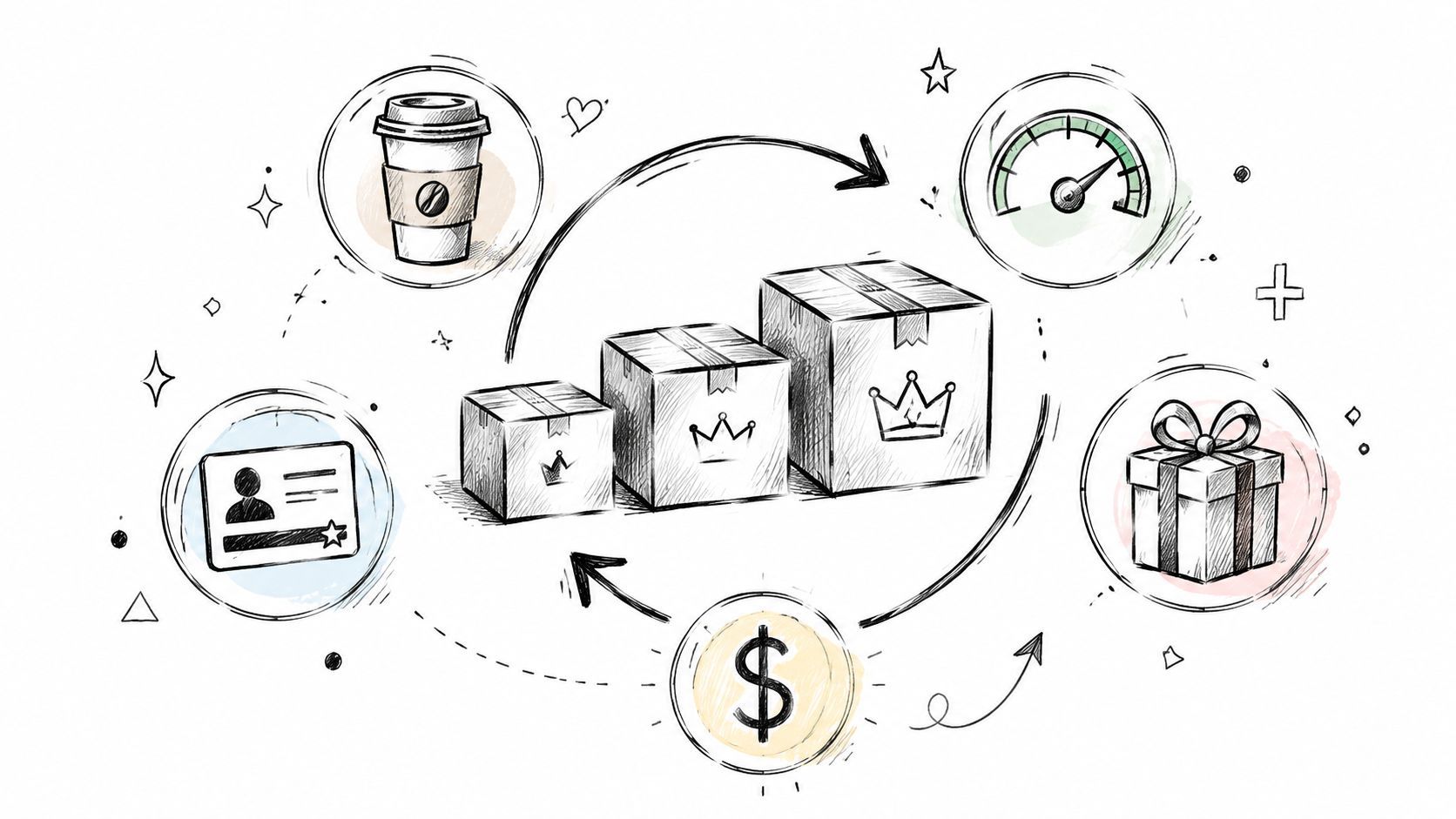
Explore subscription revenue models for crowdfunding creators. Learn to choose, implement, and manage recurring revenue with examples and post-campaign tools.
Your campaign ended well. Backers are excited, surveys are going out, and fulfillment is finally moving from chaos to a plan. Then the quiet question shows up: after this project ships, where does the next month of revenue come from?
That question matters more for creators than most business guides admit. A software company can turn on recurring billing with almost no shipping complexity. A creator selling board games, gadgets, art kits, or collectible products has to think about inventory, shipping fees, taxes, timing, and backer trust all at once. That's why most advice about subscription revenue models feels useful in theory and frustrating in practice.
For creators, subscriptions aren't just about charging people every month. They're about turning a one-time campaign into an ongoing relationship. Done well, they smooth out the drop that usually hits after campaign revenue dries up. They also give your best backers a reason to stay close to your brand instead of disappearing until your next launch.
A crowdfunding campaign creates a burst of energy. You spend months building attention, then a short funding window turns that attention into cash. The problem is what comes next. Most creators face a sharp shift from launch excitement to a one-time sales model that doesn't naturally repeat.
That's where subscription revenue models change the game. Instead of treating each release like starting from zero, you build a base of recurring customers who expect ongoing value. For a creator, that might mean a monthly mini expansion, a quarterly refill pack, a collector club, or paid access to exclusive releases and community perks.
The timing also makes sense at a market level. The global subscription economy expanded by 435% between 2011 and 2021, and projections indicate it will reach $1,512.14 billion by 2033, reflecting a larger shift toward access over ownership, according to subscription economy growth data from Swell.
Creators usually have three post-campaign assets that traditional stores would love to have:
That combination makes recurring revenue possible in a way that feels natural, not forced.
Practical rule: If backers are only hearing from you when you need money for a new campaign, you're rebuilding trust every time. A subscription gives you a reason to stay useful between launches.
Subscriptions also shift your thinking. You stop asking, “How do I get one more spike?” and start asking, “What can I deliver repeatedly that people will gladly keep?” That's a healthier question for a long-term brand.
For many creators, the smartest next move isn't a bigger second campaign. It's a smaller, steadier recurring offer that keeps revenue and community alive after the first project ships.
Not every subscription model fits a physical product business. Some work beautifully for creators. Others look elegant on paper and turn into a fulfillment headache.
The easiest way to choose is to think of a subscription as an engine. Different engines suit different roads. A board game publisher, a gadget startup, and an illustrator may all want recurring revenue, but they shouldn't all use the same setup.

At the highest level, subscription businesses usually fall into three structures: Pure Subscription with a fixed recurring fee, Consumption or Pure Usage with variable charges based on use, and Hybrid with a base fee plus overages. For pricing, tiered pricing is recommended for more complex services, while flat-rate pricing works best for simple products, according to Salesforce's guide to subscription revenue models.
For creators, that translates into a few practical models:
Think of this like a gym membership. One level gets basic access. A higher level gets more perks. Your backers choose the depth of involvement they want.
A board game creator might offer:
This works best when you serve different levels of fan intensity.
This is the classic recurring physical model. Subscribers get a surprise or a themed package on a regular schedule.
A comic creator could send a monthly envelope with a mini comic, stickers, a behind-the-scenes note, and one collectible item. The appeal is discovery and ritual. The risk is production pressure. You need a reliable content pipeline.
This is less about stuff and more about belonging. Subscribers pay for community, exclusive access, priority ordering, or members-only drops.
This can be powerful for creators who already have an active audience but don't want the burden of shipping something every month.
This model fits products people naturally use up or replace. Gadget creators with filters, accessories, maintenance parts, or consumables can use this model well.
It's one of the easiest subscriptions to explain because the benefit is obvious. The customer doesn't need to remember to reorder.
This often fits creators best. You offer a core membership or recurring release, then let subscribers add extra items when they want. That reduces pressure on you and gives flexibility to backers.
If you're working through recurring charges and post-campaign order collection, a practical reference is this guide to collecting payments from customers after your campaign.
| Model Type | How It Works | Best For... | Pros | Cons |
|---|---|---|---|---|
| Tiered | Different levels offer different benefits | Board games, premium fandoms, complex product lines | Flexible pricing, room to upsell, serves casual and superfans | More setup and communication complexity |
| Curated Box | A recurring package ships on a set schedule | Art, collectibles, fandom products, discovery-based brands | Feels exciting, builds habit, supports storytelling | Requires reliable production and fulfillment |
| Membership Access | Recurring fee unlocks community or exclusive perks | Creators with strong audience engagement | Low shipping burden, strong retention potential | Value must stay visible or members cancel |
| Replenishment | Items ship automatically when customers need them | Gadgets, supplies, maintenance items | Easy to understand, practical customer value | Only works if your product has repeat need |
| Hybrid | Base fee plus optional extras or usage-linked charges | Creators with mixed physical and digital offers | Balances predictability and flexibility | Harder to explain if offer isn't simple |
One place creators get stuck is lifecycle management. The offer makes sense, but the communication doesn't. If you want to reduce manual follow-up, this article on implementing customer journey automation is useful because recurring revenue usually breaks down at the handoff points, not the idea stage.
A good subscription model should feel easy to explain in one sentence. If it takes a full FAQ to describe what people get and when, simplify it before launch.
Once subscriptions go live, many creators make the same mistake. They focus on signups and ignore the health of the system behind those signups.
A subscription business is less like a one-time sale and more like maintaining a water tank. New subscribers fill it. Cancellations and failed payments drain it. If you only watch incoming volume, you miss the leaks.

Monthly Recurring Revenue (MRR) tells you how much predictable subscription revenue you generate in a month. The two practical formulas are:
Those formulas come from Chargebee's breakdown of subscription revenue mechanics.
Annual Recurring Revenue (ARR) is the yearly view of that recurring base. For a creator, MRR is often the more useful day-to-day number because it reflects what your subscription engine is doing right now.
Churn is the share of subscribers who cancel in a period. Think of it as the hole in the bucket.
Customer Lifetime Value (CLTV) tells you how much revenue a customer is likely to produce over the life of the relationship. The key relationship is simple but powerful: when churn goes down, CLTV rises because you collect revenue for longer. Chargebee notes that as churn decreases, CLTV increases exponentially, which directly affects whether you can recover customer acquisition costs over time.
That matters even more for creators because acquiring a backer isn't free. You spend time, ad budget, creative energy, samples, and community effort to win trust.
If your subscription has decent signup volume but weak retention, you don't have a growth problem first. You have a leak problem.
Failed payments are part of this picture too. Some cancellations aren't emotional. They're mechanical. Expired cards and payment issues can imperceptibly erode recurring revenue, which is why practical ecommerce payment recovery strategies are worth understanding.
If you want a creator-focused way to think about retention value, this resource on increasing customer lifetime value is a useful complement to your financial tracking.
Theory gets clearer when you can see the offer in someone's hands. Here are three realistic creator scenarios.
A tabletop creator has a successful core game and a loyal community that wants more content between major launches. Instead of rushing into a full sequel, the creator launches a recurring membership.
Subscribers at the first level get digital scenarios and print-and-play content. Higher-tier members receive periodic physical promo cards and early access to expansion announcements. The subscription isn't replacing crowdfunding. It's keeping the community active between campaigns and giving superfans a steady way to stay involved.
The key advantage here is pacing. The creator can release smaller pieces of value without needing a giant launch every time.
A hardware startup shipped a smart home product. The device itself was a one-time purchase, but some parts need replacement and some owners want accessory bundles.
So the creator builds a replenishment-style subscription. Customers can opt into scheduled shipments of replacement components, care supplies, or seasonal accessory packs. That recurring offer feels useful because it removes friction. Customers don't have to remember when to reorder.
This kind of subscription works best when the need is practical and recurring, not invented for the sake of adding a subscription.
An independent comic creator has a strong visual identity and a close fan base. A monthly membership gives subscribers a physical mini comic, a sticker sheet, a collectible print, and access to members-only production updates.
This is a curated box blended with community access. The value isn't just the package. It's the rhythm. Fans know something is coming, and they feel part of an ongoing creative world.
The strongest creator subscriptions don't ask, "How can I bill again?" They ask, "What ongoing experience would my best backers be happy to continue?"
Across all three examples, the pattern is the same. The recurring offer extends the original campaign promise. It doesn't feel like a random extra business model bolted on afterward.
Physical product subscriptions are harder than software subscriptions. That's just reality. Most guides focus on B2B SaaS, but that leaves creators with critical operational questions. Data also shows the gap is real. Subscription boxes are common, yet only 12% of crowdfunding creators report successfully launching a post-campaign subscription for physical goods, according to Texas Capital Bank's discussion of recurring revenue models.

The biggest launch mistake is trying to make the subscription do everything. Keep the first version tight.
Choose one of these:
If the offer depends on constant reinvention, it will strain your team fast.
Creators often underprice because they calculate only item cost. A physical subscription has more moving parts:
Many SaaS-style articles often become useless. Software businesses don't have to ask whether a heavier parcel changes the economics of a subscriber in Germany versus one in California.
Before you ever pitch the subscription to backers, map the actual journey:
That last part matters more than most creators expect. A recurring product feels safer when customers know what's happening.
Here's a useful walkthrough on recurring subscription mechanics and creator-facing setup:
Your best window is usually when backers are already engaged. They just funded you. They're watching updates. They're filling in surveys. They still remember why they backed.
That doesn't mean pushing a hard sell. It means offering a sensible next step:
The offer should feel like continuity, not a second campaign hiding inside the first.
Backers forgive complexity less than customers at retail. If your shipping rules, timing, or taxes feel murky, they won't wait around to see if it works.
For creators, the software choice matters because the subscription itself is only half the job. The other half is the operational layer behind it: surveys, product mapping, shipping, taxes, add-ons, and ongoing order control.

Kickstarter's native pledge manager is like Amazon. It's standardized, familiar, and more rigid. For some creators, that simplicity is enough. But if you want a branded, customizable experience with tighter control over products and upsells, that structure becomes limiting.
PledgeBox's pledge manager is like Shopify for crowdfunding creators. It offers a branded and customizable pledge manager, while Kickstarter's native approach functions more like a standardized Amazon marketplace, according to PledgeBox's help documentation on sending surveys.
That difference matters when you're trying to convert a one-time backer into a recurring customer. Presentation, product mapping, and control all affect trust.
This is the part creators usually want clarified in plain English. PledgeBox is free to send the backer survey and only charges 3% of upsell if there's any. There are no setup costs, monthly subscription fees, or per-backer charges for the survey flow, and the 3% fee applies only to revenue generated from upsells in the survey, based on PledgeBox's survey pricing explanation.
That structure matters for first-time subscription experiments because you don't have to absorb upfront software cost just to test demand.
If you want a broader overview of how a creator-focused pledge manager fits into post-campaign operations, this guide to a crowdfunding pledge manager is a useful starting point.
The core idea isn't just “use a tool.” It's “use a system that matches crowdfunding reality.”
For a recurring physical offer, you need room to:
If your pledge manager treats your backers like generic transactions, subscriptions become harder to launch well. If it lets you shape the experience around your campaign, recurring revenue becomes much more practical.
A successful campaign proves people want what you made. It doesn't automatically create a durable business.
That next step comes from building a relationship that continues after rewards arrive. Subscription revenue models help you do that because they replace long quiet gaps with a more consistent exchange of value. For creators, that value might be access, replenishment, exclusives, collector items, or community. The exact format matters less than the logic behind it. Give people a reason to stay.
The strongest post-campaign strategy usually isn't flashy. It's dependable. A clear offer. Predictable delivery. Thoughtful communication. Clean billing. A model your best backers can understand in seconds.
If you're deciding whether subscriptions are worth exploring, ask a simpler question. What part of your project would people miss if it stopped showing up? That's often where recurring revenue begins.
A campaign can fund a product. A subscription can fund the future of the brand behind it.
If you're ready to turn post-campaign momentum into recurring revenue, PledgeBox is a practical place to start. It's free to send the backer survey, and it only charges 3% of upsell if there's any. For creators who need more control, Kickstarter's pledge manager is like Amazon, while PledgeBox's pledge manager is like Shopify. You keep the branded experience, map products and rewards more flexibly, and create a smoother path from one-time backer to long-term customer.
PledgeBox
The All-in-One Toolkit to Launch, Manage & Scale Your Kickstarter / Indiegogo Campaign