 PledgeBox
Your Kickstarter Post-Campaign Survey Guide
Master the Kickstarter post-campaign survey. Learn to gather data, drive upsells, and streamline fulfillment with actionable strategies and proven tools.
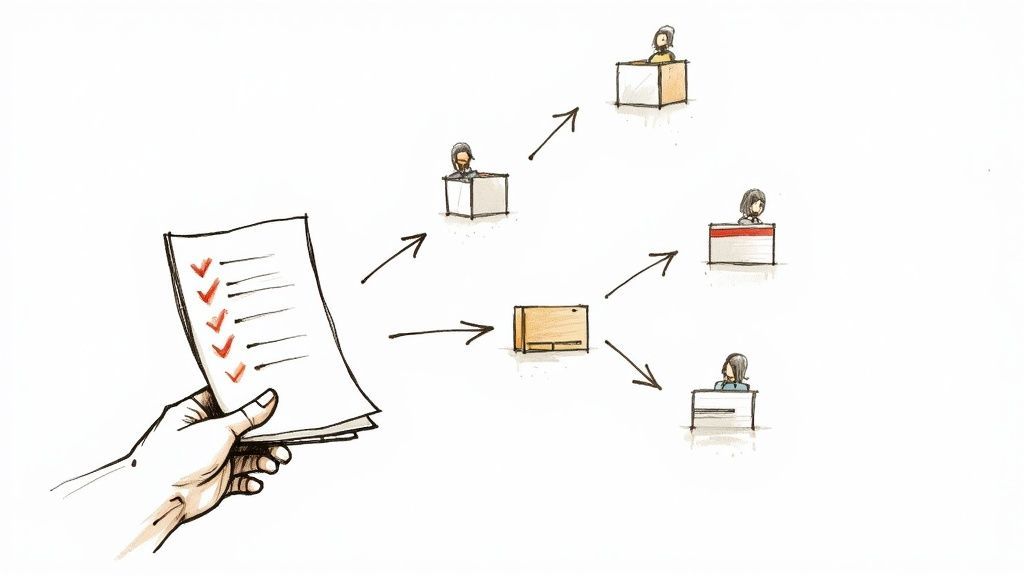
Master the Kickstarter post-campaign survey. Learn to gather data, drive upsells, and streamline fulfillment with actionable strategies and proven tools.
Your Kickstarter post-campaign survey is so much more than a simple form for collecting shipping addresses. It's the strategic bridge that turns a funded project into a fulfilled promise, helping you sidestep costly errors and even unlock a final wave of revenue. Getting this step right is absolutely critical for a smooth delivery process.

Congratulations, your project is funded! But the journey from a successful campaign to happy backers hinges on how well you handle this next phase. The survey isn't just admin work; it’s your main tool for building trust and ensuring a seamless transition from funding to fulfillment. A well-designed survey minimizes errors, sorts out your logistics, and sets the stage for a positive final experience for your supporters.
Right away, this introduces a fundamental choice every creator has to make: stick with Kickstarter’s basic, built-in tool or upgrade to a specialized pledge manager.
Think of Kickstarter’s native survey feature like the Amazon marketplace—it's a rigid, one-size-fits-all tool. It gets the basic job done, and it's functional enough for super simple projects. But it really lacks the flexibility you need for campaigns with multiple reward tiers, add-ons, or complex international shipping.
A dedicated pledge manager like PledgeBox, on the other hand, is like Shopify—it's your own powerful and customizable e-commerce platform just for your backers. It gives you the control to create a tailored experience, letting you manage all those complexities with ease—which is crucial for keeping your momentum going after the campaign buzz fades.
The post-campaign phase is just as vital as the funding stage. It’s where you solidify relationships with backers, ensure efficient reward delivery, and build the trust necessary for future campaigns.
A great Kickstarter post-campaign survey does way more than just gather addresses. It's a strategic touchpoint that can seriously impact your bottom line and your reputation.
Here's what a proper pledge manager makes possible:
This level of control is essential in the competitive crowdfunding world. Since its launch, Kickstarter has seen over 650,000 projects, but only about 41.98% successfully meet their funding goals. For those that succeed, flawless post-campaign execution is what separates a one-hit-wonder from a sustainable brand. You can explore more about these crowdfunding trends and see what makes a successful campaign stand out.
So, what's the difference in practice? Let's break it down.
Deciding which tool to use often comes down to the complexity of your project. Here’s a quick comparison of what you get with Kickstarter's built-in surveys versus a dedicated platform like PledgeBox.
As you can see, a pledge manager offers a much more robust and flexible system designed to handle the real-world logistics of fulfillment.
Ultimately, choosing the right tool is about managing risk and seizing opportunity. With PledgeBox, sending your backer survey is completely free. The platform only charges a small 3% fee on any new funds you raise through upsells, if there's any. This model removes the financial barrier, giving you access to powerful tools without any upfront cost.
Let's be honest: a low survey completion rate is a one-way ticket to a fulfillment nightmare. It causes delays and frustrates the very people who brought your project to life in the first place. Getting backers to actually complete your survey isn't about fancy tricks; it's about clarity, simplicity, and respecting their time.
The whole point is to make the process so ridiculously easy that filling it out is a quick win for them.
At its core, your Kickstarter post-campaign survey needs to collect the absolute essentials. This means nailing down the final shipping address and locking in any critical reward variations, like size, color, or style. If you offered a few different enamel pin designs, for example, this is where your backers make their final call.
A logical flow is everything. Don't bounce from asking for a t-shirt size to a shipping address and then back to an add-on choice. That’s just confusing. Group related questions together to create a smooth, intuitive path for your backers. I always start with the most important stuff first, like their reward selections, before getting into shipping details.
Keeping the language simple is just as crucial. Ditch the internal jargon or overly complicated phrases. Instead of asking backers to "confirm their SKU selection," try something more human, like, "Please choose your pin design from the options below."
Here’s a real-world example of how a simple wording change makes all the difference:
The second option is conversational, direct, and doesn't force the backer to go digging through old updates. This small tweak can make a massive difference in the accuracy of the data you get back.
While getting the right data is vital, you have to avoid survey fatigue. Every single question you add increases the chance a backer will just give up and close the tab. Stick to what you absolutely need for fulfillment.
Essential Questions:
Questions to Avoid:
Setting a friendly but firm deadline is a must. Announce it clearly in your survey intro and set up automated reminders as the date gets closer. This creates a bit of urgency and helps you lock in your production numbers so you can move forward.
Remember, the platform you use really matters here. A tool like PledgeBox lets you structure these questions intuitively. And because sending the backer survey is free, you can focus on getting the design perfect without worrying about upfront costs. You only pay their 3% fee if you successfully generate extra funds through upsells, if any. This is the key difference between a basic tool (like Amazon's rigid marketplace) and a flexible one that lets you build your own experience (like a Shopify store). For more insights, you can read our guide on how to get backers to take your surveys seriously.
Alright, your campaign is funded. Now comes one of the most important decisions you'll make: how to collect all that critical backer info. You’re basically at a fork in the road. One path leads to Kickstarter's built-in survey tool—it's free, but it's also incredibly basic. The other path leads to specialized pledge managers, which are far more powerful.
This isn't just a minor choice; it defines your entire post-campaign workflow and can make or break your relationship with backers.
If your project is super simple—say, a single enamel pin with no variants and you’re only shipping domestically—Kickstarter’s native tool might just cut it. It’ll grab an address and confirm the reward. That’s pretty much all it does.
But the second you introduce any complexity—different SKUs, color choices, add-ons, or international shipping—the built-in tool's limits become a real headache. This is the exact point where a dedicated pledge manager goes from a "nice-to-have" to a "can't-live-without."
Here’s a simple way I like to explain it. Think of Kickstarter’s pledge manager as Amazon. It’s a closed system. You're stuck with their rigid template, and there's absolutely no wiggle room for customization, branding, or upselling.
A pledge manager like PledgeBox, on the other hand, is like Shopify. It's your own flexible, powerful platform to build a custom post-campaign experience. You get to control the branding, the survey flow, and—most importantly—you can open up a storefront for add-ons and pledge upgrades.
This chart gives you a quick visual guide for what to ask in your survey. The goal is to separate the must-haves from the noise.
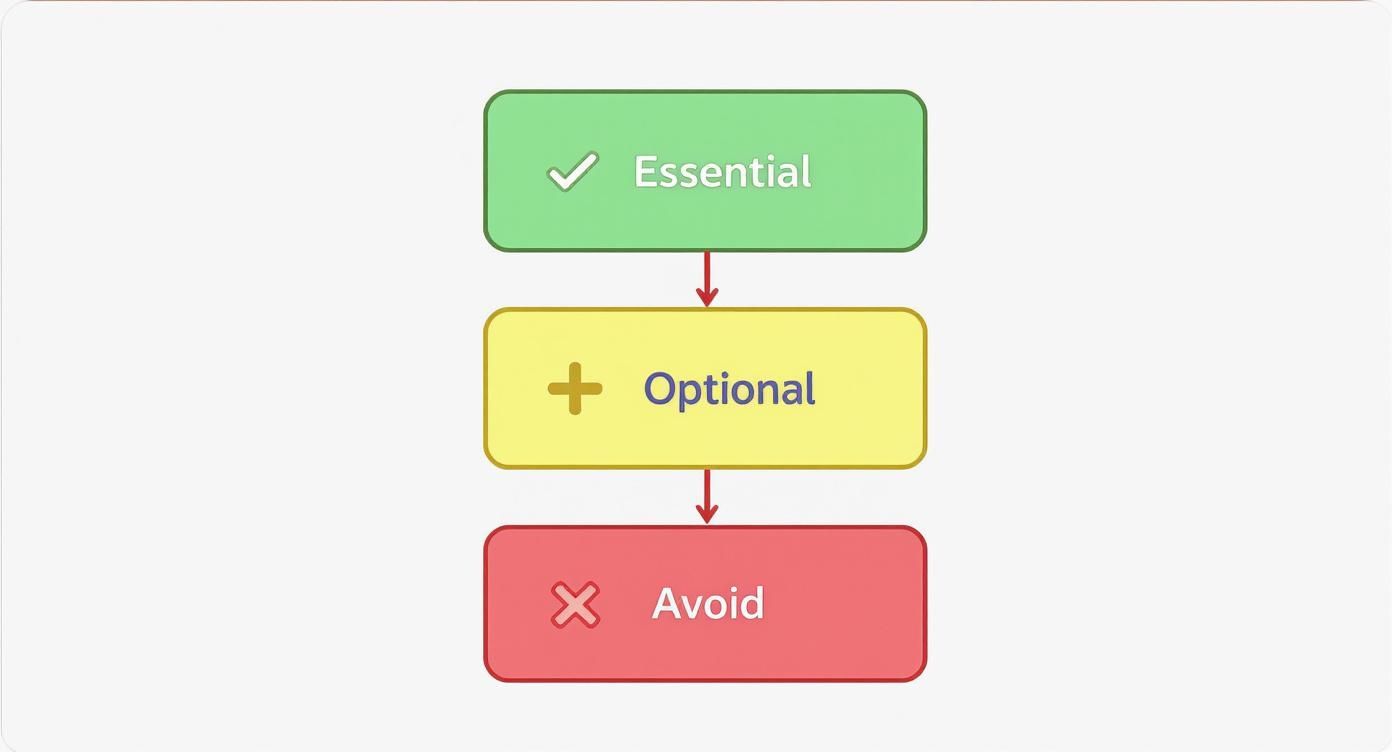
The biggest takeaway here? Respect your backers' time by only asking for what you absolutely need for fulfillment. It makes a huge difference in how many people actually complete the survey.
Naturally, cost is a big question for creators. This is where PledgeBox's model really stands out. It’s completely free to send your backer survey. You can collect shipping addresses, let backers make their reward selections, and get all your data organized without spending a dime upfront.
PledgeBox only takes a small 3% fee on new funds raised through upsells, if there are any. This pay-for-performance model makes it a powerful, risk-free tool. You aren’t paying for access; you’re just sharing a tiny slice of the extra money you bring in.
This model completely removes the financial barrier, giving creators access to professional-grade tools that can seriously boost total funding and make logistics a whole lot smoother.
That flexibility is key for keeping your community engaged, especially your repeat backers. As of early 2025, the Kickstarter community had grown to over 24.4 million people, and more than 8 million of them were repeat backers. A smooth, professional post-campaign experience is how you keep those loyal supporters coming back.
For a more detailed breakdown, we’ve put together a complete guide on comparing Kickstarter surveys to third-party pledge managers.
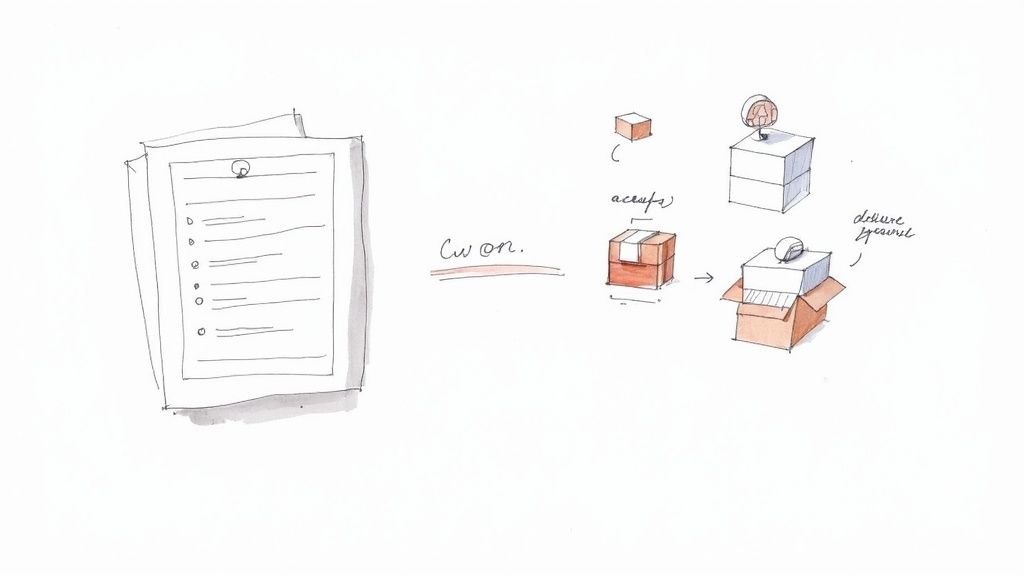
Your Kickstarter post-campaign survey is probably the single best chance you have left to bump up your average pledge value. This isn't just a form for collecting addresses; it’s your final pitch. When you weave an add-on store into your survey, you turn a simple logistical step into a real revenue driver.
This is where a dedicated pledge manager is an absolute game-changer. Kickstarter’s pledge manager is a closed system for data collection (think Amazon), but a platform like PledgeBox gives you your own customizable storefront (more like Shopify). You get full control over what your backers see, letting you showcase tempting add-ons they might have overlooked during the campaign's final hours.
The secret to a good upsell is making it feel like you're helping, not selling. Your add-ons can't just be random products; they need to feel like a natural extension of the backer's original pledge.
Here are a few tactics that just plain work:
This isn’t just about squeezing more money out of people. Honestly, many backers wanted these extras but got overwhelmed or missed them in the campaign chaos. A clean, well-organized add-on store in the survey is their second chance.
The best pledge managers make this whole process feel seamless, like it’s all part of the original campaign. By offering relevant, high-value add-ons, you’re not just upselling—you’re helping backers build their perfect pledge.
The payment model of your pledge manager is a huge deal. This is where the PledgeBox approach really stands out. Sending the backer survey is completely free, so there’s zero upfront risk for you as a creator. You only pay a small 3% fee on the new funds you raise through these upsells, if there's any.
This is a performance-based model, plain and simple. The platform only makes money when you do. It’s built to help you grow your final funding total without ever touching the money you raised on Kickstarter. Plus, the data you collect can be gold for the future—you can apply customer segmentation techniques to see what sold best and find new ways to connect with your audience next time.
By shifting your mindset from "survey as a form" to "survey as a storefront," you create a powerful engine for post-campaign growth. For more inspiration, check out our guide on using upsells to increase funding during and after a campaign.
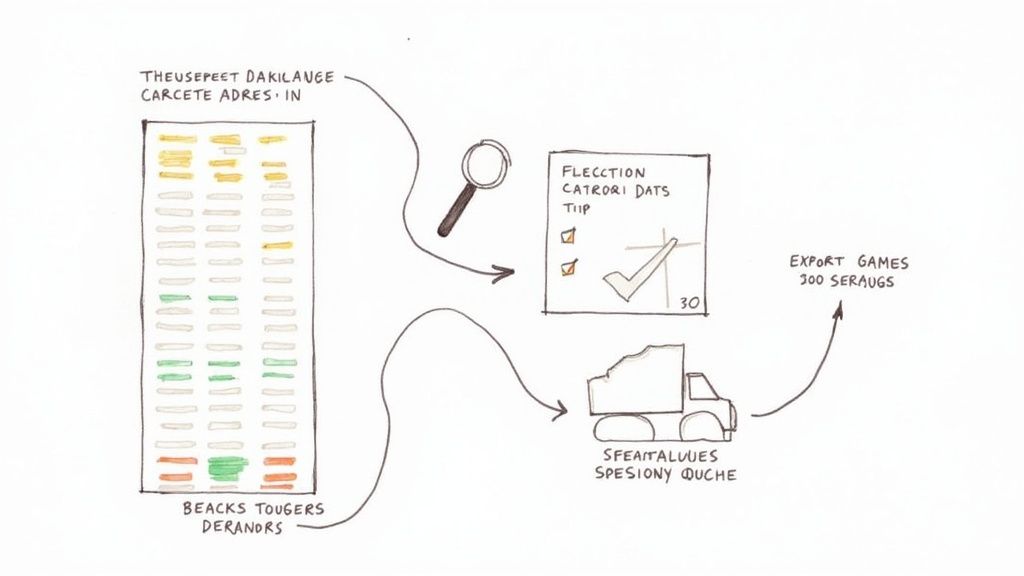
The survey responses are finally rolling in. This is it—the moment your campaign shifts from the excitement of funding to the complex reality of fulfillment. How you handle the flood of backer data right now will make or break your shipping process, directly impacting your costs and, most importantly, your backers' happiness.
Your goal is to wrangle all this information into a single, clean dataset that your fulfillment partner can understand and act on without a million questions. This is about more than just downloading a spreadsheet. It’s about slicing and dicing your backer list—by reward tier, country, or specific add-ons—and being ready for the inevitable curveballs like last-minute address changes.
First things first: you need to get all your backer information consolidated and cleaned up. Every pledge manager does this a bit differently, but the core idea is universal. You need one single source of truth for every single backer.
This is where a dedicated platform like PledgeBox really shines. It's essentially a Shopify for your post-campaign phase, giving you a flexible dashboard to manage everything. This is a huge step up from the rigid, Amazon-style system you get with Kickstarter’s pledge manager. The best part? Sending the backer survey is free, and they only take a 3% cut from any funds you raise through upsells, if any.
Here are a few data tasks you'll be dealing with:
Keeping your backers in the loop now is just as critical as it was during the campaign. Silence creates anxiety. Even small, frequent updates show that you're making progress and have things under control. This is how you build the trust that turns a first-time backer into a fan who will show up for your next project.
Remember why people back projects in the first place. Research shows that while 78% of backers are there to be part of something cool, their biggest turn-offs are poor communication and feeling disconnected. You can get more details from a survey of Kickstarter backers and discover more insights about backer behavior. Keeping them informed is the easiest way to keep that positive connection alive.
A clean data export is the foundation of a smooth fulfillment process. Double-checking your data before sending it to your warehouse or shipping partner can save you thousands in potential shipping errors and customer service hours.
Once your data is locked and loaded, it’s time for the final handoff to get rewards out the door. For creators shipping within Australia, this detailed guide to Australian parcel delivery is an incredible resource. Getting fulfillment right is how you deliver on your promise and solidify the trust that makes a campaign truly successful.
The end of your funding drive is just the beginning of the next phase. Believe it or not, the post-campaign hustle can feel just as intense as the launch itself. Many creators, especially first-timers, hit the same roadblocks and have the same questions. Let's clear those up so you can tackle this final, crucial stage with confidence.
Timing is everything. From what we've seen, the sweet spot for sending your survey is about two to four weeks after your campaign officially wraps up.
This isn't just a random window. It’s designed to align perfectly with Kickstarter's 14-day payment processing period. Waiting allows Kickstarter to sort out all the errored pledges and finalize the backer list.
By holding off for a couple of weeks, you ensure your Kickstarter post-campaign survey only goes out to backers with successful payments. It’s a simple move that cleans up your data immensely, saving you the headache of chasing down info from people whose payments failed. Send it too late, though, and you risk the initial excitement fading.
This is a big one: No. Once a survey goes out through Kickstarter's native tool, it’s set in stone. It cannot be edited.
Find a typo? Forget to add an option? Your only way out is to manually message individual backers, which can quickly turn into a logistical nightmare. This is exactly why so many seasoned creators rely on a dedicated pledge manager.
A platform like PledgeBox gives you the flexibility to manage everything on the fly. You can reopen surveys for backers who made a mistake, send out targeted reminders, and adjust options as needed. It puts you back in control.
It's simple: if a backer doesn’t complete their survey, you can't fulfill their reward. You’re missing their shipping address, reward choices, or both. Your first move should be to send polite but persistent reminders, a task that a good pledge manager can automate for you.
You should also post a campaign update that clearly states a final deadline for survey submissions. If they still don't respond, explain that their reward will be held but you can't ship it until you get their details. You have to be firm but fair to keep your fulfillment timeline from derailing for everyone else.
A common misconception is that you’re on the hook to ship rewards to backers who ghost you after the campaign. Your obligation is to fulfill the reward after the backer has provided the necessary information.
We built PledgeBox on a creator-friendly model that’s all about performance. Think of Kickstarter’s pledge manager like Amazon—it gets the job done, but it's rigid. PledgeBox is more like Shopify, your own powerful storefront, giving you the tools to create a custom post-campaign experience.
You can import all your backers and send your backer survey completely free to gather shipping info and manage reward choices. We only make money if you do.
When you offer add-ons or let backers upgrade their pledges in the survey, PledgeBox takes a 3% fee only on the new funds you raise from those upsells, if there's any. Your original Kickstarter funds are completely untouched. It’s a no-risk way to give your campaign's total funding a final boost.
Ready to streamline your fulfillment and boost your funding? With PledgeBox, you get a powerful, flexible pledge manager that’s free to start. Collect backer info effortlessly and grow your revenue with risk-free upsells. See why over 8,000 creators trust PledgeBox to manage their post-campaign success. Get started for free today.
PledgeBox
The All-in-One Toolkit to Launch, Manage & Scale Your Kickstarter / Indiegogo Campaign