 PledgeBox
Launch a Subscription Box Game from Your Crowdfunding Success
Turn one-time backers into loyal fans. Learn how to launch a profitable subscription box game and create recurring revenue after your crowdfunding campaign.
Turn one-time backers into loyal fans. Learn how to launch a profitable subscription box game and create recurring revenue after your crowdfunding campaign.
So, you've crushed your Kickstarter campaign. What's next? Imagine turning that one-time funding success into a steady, predictable revenue stream. That's the magic of a subscription box game—it’s a powerful way to transform your backers into a loyal, long-term community. It's about more than just a single transaction; it’s about extending your game's universe and keeping the story going.
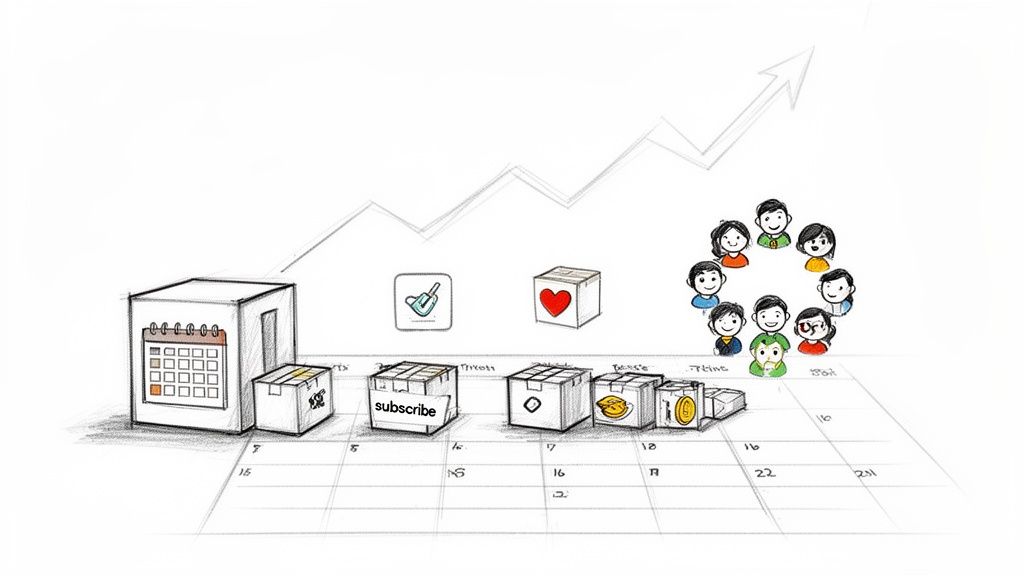
The buzz of a crowdfunding campaign doesn't have to fade when the timer hits zero. For game creators, a subscription model is a natural evolution, turning that launch excitement into reliable, recurring revenue. This move helps you break free from the feast-or-famine cycle of project-based funding and build a more stable financial foundation.
But it’s not just about the money. This is your chance to deepen the connection with the audience you worked so hard to build. You're no longer just a creator; you're the curator of an unfolding, exclusive experience.
A subscription box game keeps you delivering fresh value to your most passionate fans. Each box can be a new chapter—think new scenarios, exclusive miniatures, lore expansions, or cool thematic accessories that breathe new life into the core game.
This consistent engagement is what builds a powerful sense of community and brand loyalty. Your backers stop being just one-time supporters and become invested members of your game’s world. That kind of loyalty is priceless. If you want to dive deeper into this, check out our guide on increasing customer lifetime value.
And this isn't some niche experiment; it's a booming market. The global subscription box market was valued at USD 41.79 billion in 2025 and is projected to hit an incredible USD 87.06 billion by 2029. That’s a growth rate of 20.1%! This surge is all about consumers craving unique, personalized experiences and the thrill of unboxing—the very things that make crowdfunding so special.
Shifting from a single campaign to an ongoing subscription business requires a different mindset and, crucially, a different set of tools. This is where a robust pledge manager really shines.
A good way to think about it is this: Kickstarter's pledge manager is like Amazon—a marketplace for a one-time purchase. A dedicated pledge manager like PledgeBox is more like Shopify—built from the ground up to nurture long-term customer relationships and manage ongoing orders.
Platforms like PledgeBox are designed to handle the moving parts of a subscription service. Best of all, PledgeBox is free to send the backer survey and only charges 3% of upsell revenue if there's any. This low-risk model makes it the perfect platform to test the waters and launch your subscription box game without a hefty upfront investment.
To see this model in action, just look at something like a liquor subscription box. They've perfected the art of delivering a curated experience right to someone's door, building a loyal following one box at a time. The same principles can work wonders for your game.
Alright, let's get into the fun part: moving from a cool idea to what actually goes inside your subscription box. This is where the magic happens. A killer subscription isn't just a random assortment of stuff; it's a carefully curated experience that consistently delivers excitement and value. Your mission is to make every single box feel essential, not like some forgettable afterthought.
The first move? Map out a content calendar. Seriously, don't just wing it one box at a time. Plan out the entire year. Having a 12-month roadmap ensures your story flows, keeps you way ahead of production deadlines, and shows your subscribers you're in this for the long haul.
Think of your content calendar as the blueprint for your subscription's narrative arc. Each delivery should feel like a new chapter, building on the last one to deepen the game's world and level up the core experience for your players.
Start by brainstorming categories of items that will get your audience genuinely hyped. Here are a few ideas to get the wheels turning:
Once you’ve got your categories, start plugging them into your calendar. Maybe one quarter is all about a new hero's journey, complete with a mini and a scenario. The next could introduce a new faction with custom tokens and a lore booklet. This kind of variety keeps the unboxing experience fresh and unpredictable.
Let's be real: not all backers want the same thing or have the same budget. Offering tiered subscriptions lets you cater to different levels of commitment, which ultimately grows your subscriber base. A smart tier system makes the value proposition at each price point crystal clear.
You could design a simple two or three-tier system that scales up the value. The trick is to make upgrading to the next tier feel like a no-brainer. If you're looking for inspiration on packaging different items together, it helps to understand the psychology behind the classic add-on item model.
I like to think of Kickstarter's pledge manager as Amazon—a massive marketplace for your launch. A dedicated pledge manager like PledgeBox, on the other hand, is like your own Shopify store. It's your space for building those lasting customer relationships.
This distinction is so important. A Shopify-style platform gives you the power to create and manage these complex, multi-tiered subscriptions over the long term. Even better, remember that PledgeBox is free to send the backer survey and only charges 3% of upsell revenue if there's any, making it a financially savvy choice for managing your subscription tiers.
Let's break down what a practical framework might look like.
Here’s a quick look at how you could structure your tiers to provide clear value and encourage backers to jump in at a level that’s right for them.
| Tier Name | Monthly Price | Core Contents | Exclusive Perks |
|---|---|---|---|
| Scout Tier | $15 | Digital content pack, one new scenario card, exclusive access to developer diaries. | Perfect for players on a budget who want to stay engaged with new gameplay. |
| Champion Tier | $35 | Everything in Scout Tier, plus one exclusive miniature and a set of custom tokens. | The most popular option, balancing tangible goods with a great price. |
| Legend Tier | $60 | Everything in Champion Tier, plus a lore booklet, art print, and a premium game component. | For the super-fan who wants every single piece of the world you're building. |
This tiered structure lets backers choose their own adventure. It clearly spells out what they get for their money and makes the higher tiers feel aspirational but still within reach.
When you map your 12-month content calendar against these tiers, you're building a sustainable and genuinely exciting subscription box game that will keep your community subscribed and eagerly waiting for what's next.
Running a subscription service is a completely different ballgame than a one-time crowdfunding campaign. The setup that worked brilliantly for your initial Kickstarter funding surge just isn't built to handle the marathon of recurring billing, constant fulfillment, and long-term community management. This is where a powerful pledge manager steps in to become the central hub for your new subscription box game.
To put it another way, think of the platforms you're already familiar with. Kickstarter's pledge manager is like Amazon—a massive marketplace perfect for launching a product to a huge audience for a single transaction. A pledge manager like PledgeBox, on the other hand, functions much more like Shopify. It’s your own branded storefront, built from the ground up to foster direct, lasting relationships with your community.
This simple flowchart breaks down the journey from your initial spark of an idea to a full-fledged subscription launch.
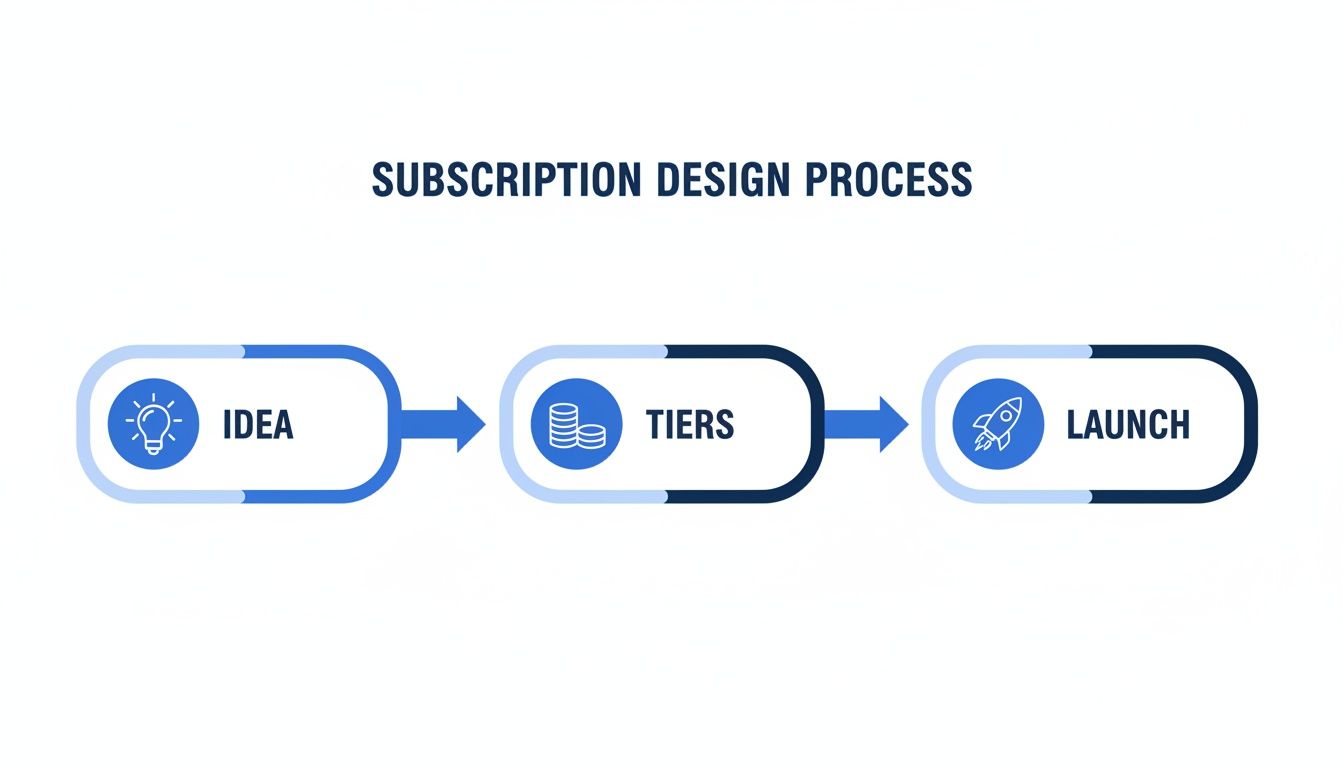
As you can see, the process isn't just about having a great idea. It requires moving from that creative concept to a well-structured, tiered offering before it ever gets in front of your audience, which underscores the need for a solid plan and the right tools.
Your pledge manager needs to evolve from a simple post-campaign survey tool into the operational backbone of your new recurring revenue model. This is where your backers will confirm their details, where you'll capture their ongoing commitment, and where the logistical magic happens month after month.
Trying to manage this transition with spreadsheets and manual payment reminders is a common pitfall, and it quickly turns into an administrative nightmare. A proper tech stack automates these headaches, freeing you up to focus on what really matters: creating an incredible game experience.
The right platform should effortlessly handle several key functions:
When you're choosing your tech, the financial model is just as important as the features. This is where PledgeBox offers a uniquely creator-friendly approach that minimizes your risk while giving you plenty of room to grow.
Here's the critical difference: PledgeBox is free to send the backer survey and only charges 3% of upsell revenue if there's any. This model is a game-changer for launching a subscription. You can survey your entire backer base, pitch your subscription offer, and build your list of subscribers without any upfront cost. The fee only kicks in when you successfully generate extra revenue through add-ons and upsells. It's a true win-win.
Think about it: You're essentially getting a sophisticated subscription management platform without the typical monthly software fees. The platform’s success is directly tied to your ability to generate more revenue from your backers.
This low-risk entry point is invaluable. It lets you test your subscription concept with your most passionate audience—your campaign backers—and prove the idea before you commit to bigger operational costs. You can gauge interest, fine-tune your tiers, and build a subscriber base with zero initial platform investment.
It’s a powerful, low-friction way to turn your successful campaign into a sustainable business. For a deeper dive into the payment side of things, our guide on how to collect payments from customers offers a great overview. This Shopify-like control, combined with a creator-first pricing model, makes PledgeBox an ideal foundation for building and scaling your subscription box game.
That post-campaign high is a powerful thing. It's the moment when excitement for your game is at its absolute peak, but that energy doesn't last forever. Your job is to capture that lightning in a bottle and channel it directly into a recurring revenue stream by converting those one-time backers into loyal subscribers. You need to act before the buzz fades.
This is where your pledge manager becomes your secret weapon. It’s no longer just a tool for collecting addresses and pledge info; it’s the bridge between a successful campaign and a sustainable business. By setting up your backer survey smartly, you can frame your subscription as the natural next step in their adventure with your game.
Your pledge manager is essentially your new digital storefront. While Kickstarter's pledge manager is like Amazon for your initial launch, a tool like PledgeBox acts more like your personal Shopify—giving you direct control to build real, lasting relationships with your community. That's exactly what you need for a subscription model.
The best part? PledgeBox is free to send the backer survey and only charges 3% of any upsell revenue, making it a zero-risk way to get started.
Here’s a look at the PledgeBox homepage. You can see it’s built for creators who want to manage everything that happens after the campaign ends.
The clean layout and focus on maximizing funds show it’s designed to be a revenue engine, not just a simple survey tool.
When you're setting things up, the first step is to create your subscription as a compelling add-on inside the survey. Don't just call it "Monthly Box." Get creative and tie it to the world you’ve built. Something like "The Chronicler's Guild Monthly Parcel" or "The Hero's Hoard" makes it feel like an extension of the game experience, not just another purchase.
The way you talk about your subscription in the survey is everything. These backers are already sold on your game; now you just need to show them why the journey shouldn't end here. Use language that's exciting, highlights the benefits, and maybe even creates a little bit of urgency.
Here are a few tactics that work wonders for boosting sign-ups:
The moment a campaign ends, your backers are at their highest level of engagement. Presenting a well-crafted subscription offer at this exact moment isn't an upsell; it's giving your most passionate fans the opportunity to stay connected to the world they just helped you build.
This strategy turns the survey from a boring logistical step into a powerful marketing opportunity. You’re reaching people when they are most excited, making them far more likely to commit to an ongoing relationship with you and your game.
What about all the people who found your game a week too late? Don't leave that money on the table. A great pledge manager will include a pre-order storefront feature. Think of it as a public page that stays live long after the campaign clock runs out, letting latecomers pledge for items and—most importantly—sign up for your subscription.
Treat this storefront like it’s always open for business. Share the link on your social media, in your email newsletter, and on your website. Every new person who discovers your game is a potential subscriber. By funneling them straight to a page where they can join the club, you create a system that keeps growing your subscriber base long after the Kickstarter is over.
Getting that first box into your backers' hands is a fantastic feeling, but it’s really just the starting line. The real win in the subscription box game is keeping those fans hooked, month after month. This is where you switch gears from a launch-focused creator to a retention-minded operator, nailing your logistics and building a community that feels genuinely special.
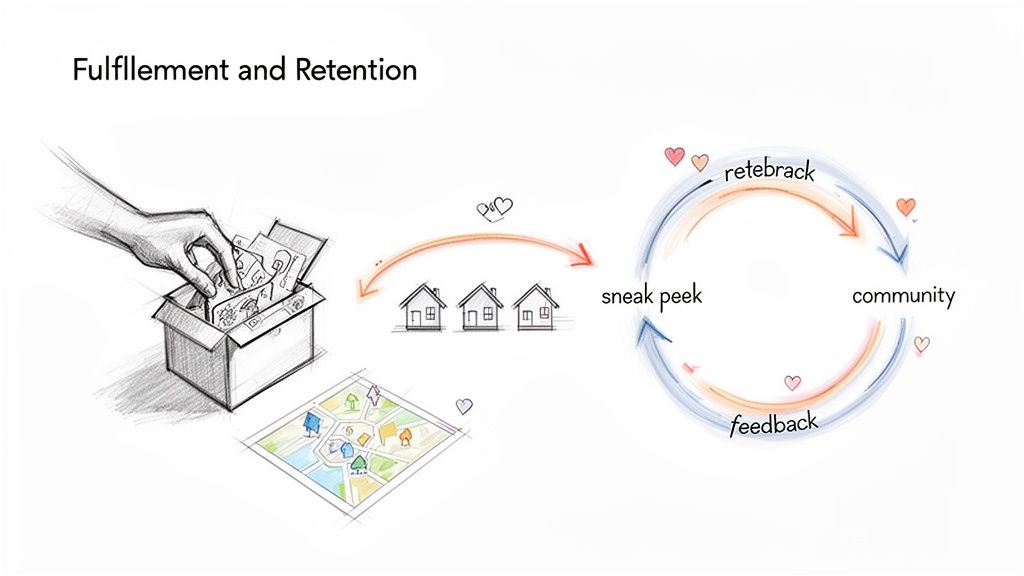
This next chapter is all about marrying the precision of logistics with the art of community building. A single weak link—a delayed shipment, a shoddy unboxing, or just radio silence from you—can be all it takes for someone to hit "cancel." Getting both fulfillment and retention right is what separates a cool idea from a sustainable business.
Nothing builds trust like a box arriving right on schedule. Your subscribers are counting down the days, and a late package can kill that excitement in an instant. The secret to avoiding that pain is a clean, repeatable process that begins and ends with good data.
Your pledge manager is mission control for this whole operation. A tool like PledgeBox lets you export perfectly organized shipping data in a few clicks. This isn't just a messy spreadsheet of names and addresses; it’s a file formatted exactly how your fulfillment partner needs it, ready for printing labels and packing orders. This simple step cuts down the risk of human error dramatically.
Finding the right fulfillment partner is just as critical. You'll want a company that has experience with subscription boxes because they get the rhythm of recurring, cyclical shipments. For creators with a big Aussie following, it’s worth checking out a complete guide to Australian courier services to get a handle on shipping and keep costs in check.
The goal here is simple: make it impossible for your fulfillment partner to mess up. Clean data exported from your pledge manager is the single biggest factor in getting the right items in the right boxes, shipped to the right addresses, every single time.
When logistics run like clockwork, you guarantee the unboxing is a moment of pure joy, not a frustrating puzzle.
With your logistics humming along, your focus can shift almost entirely to retention. It costs a lot more to find a new subscriber than to keep an existing one, so keeping your churn rate low is the key to profitability. This isn't about splashy, expensive gestures. It's about consistent communication that makes your subscribers feel like insiders.
That community you built during your Kickstarter? They’re your biggest advantage now. These are your die-hard fans who want to be part of the story.
Here are a few powerful ways to keep them engaged:
We're seeing a clear trend in this space. The average subscriber placed 4.4 orders over the past year, a figure that jumped 15% from the year before. People are getting used to the convenience and value. While churn will always happen, smart retention strategies can make a huge difference. You can find more insights on subscription market trends on techsciresearch.com.
At the end of the day, a subscription box game succeeds when it feels less like a product you buy and more like a club you belong to. Your job is to be the host of that club, sparking conversations and celebrating your members.
Set up an exclusive space for subscribers, like a private Discord channel or a dedicated Facebook group. Use it to host Q&As with the design team, run painting contests with the minis from the last box, or organize online sessions to play through new scenarios.
When your subscribers start connecting with each other—sharing their painted figures and swapping game-night stories—you’ve built something that can last. That sense of belonging is your best defense against churn and the ultimate key to making your subscription box a long-term success.
Launching a subscription box game is an exciting next step, but it throws a bunch of new questions your way that just didn't come up during your one-off Kickstarter. Let's tackle some of the most common things creators worry about so you can build your recurring revenue with confidence.
The logistics of shipping to a global audience can feel like a monster of a task, but the right tools are built to tame it. This is where a smart pledge manager like PledgeBox really becomes your best friend. It’s designed to automate all the messy parts of global commerce.
When you're setting up your survey, you can create specific shipping rules for every country or region. The system takes it from there, automatically calculating and charging the correct shipping fees and VAT/GST for each backer, every single billing cycle. No more late nights with a spreadsheet trying to figure out tax rates for dozens of countries.
Here's a good way to think about it: Kickstarter's pledge manager is like Amazon—a marketplace for a one-time sale. A platform like PledgeBox is your Shopify, giving you the power to build a long-term, global business with all the right tools baked in.
On top of that, PledgeBox gives you clean, organized data to send straight to your fulfillment partner. This is a game-changer for making sure customs forms and shipping labels are filled out correctly, which helps you avoid those frustrating delays and surprise fees for your international fans.
Let's be real—game design isn't static. Production timelines slip, and brilliant new ideas pop up. Your subscription system has to be just as flexible as you are. It's a must-have.
Platforms that integrate with payment processors like Stripe give your backers their own self-service portal. Through this dashboard, they can manage their own subscription—pausing, canceling, or updating a credit card without ever needing to send you an email. This is huge. It empowers them and saves you from drowning in admin work.
Meanwhile, you keep all the control on your end to:
This kind of flexibility means your subscription isn't just a rigid plan; it's a living product that can grow and change right alongside your game and your community.
Yes! And you absolutely should. This is one of your single biggest opportunities for growth. So many potential fans will discover your game long after the Kickstarter hype has died down. If you don't give them a way to get on board, you're just leaving money on the table.
With a tool like PledgeBox, you can set up a public pre-order page that basically works like a permanent storefront. It stays live forever, letting "late backers" grab original campaign goodies and—most importantly—sign up for your subscription box game.
You can then point people to this page from everywhere: your social media, email newsletters, and your main website. It becomes a non-stop sales funnel, bringing in new subscribers and boosting your project's lifetime value. Best of all, PledgeBox is free to send the backer survey and only charges 3% of upsell revenue if there's any, making it an incredibly low-risk way to capture all that long-term interest.
Ready to turn your successful campaign into a thriving subscription business? PledgeBox provides all the tools you need to manage surveys, upsells, and recurring payments with a creator-friendly pricing model. Get started with PledgeBox today and build your community for the long haul.
PledgeBox
The All-in-One Toolkit to Launch, Manage & Scale Your Kickstarter / Indiegogo Campaign