 PledgeBox
Mastering Kickstarter Game Toppers for Success
Kickstarter game toppers - Boost revenue for your Kickstarter game toppers in 2026! Our guide covers designing, marketing, fulfillment, and leveraging
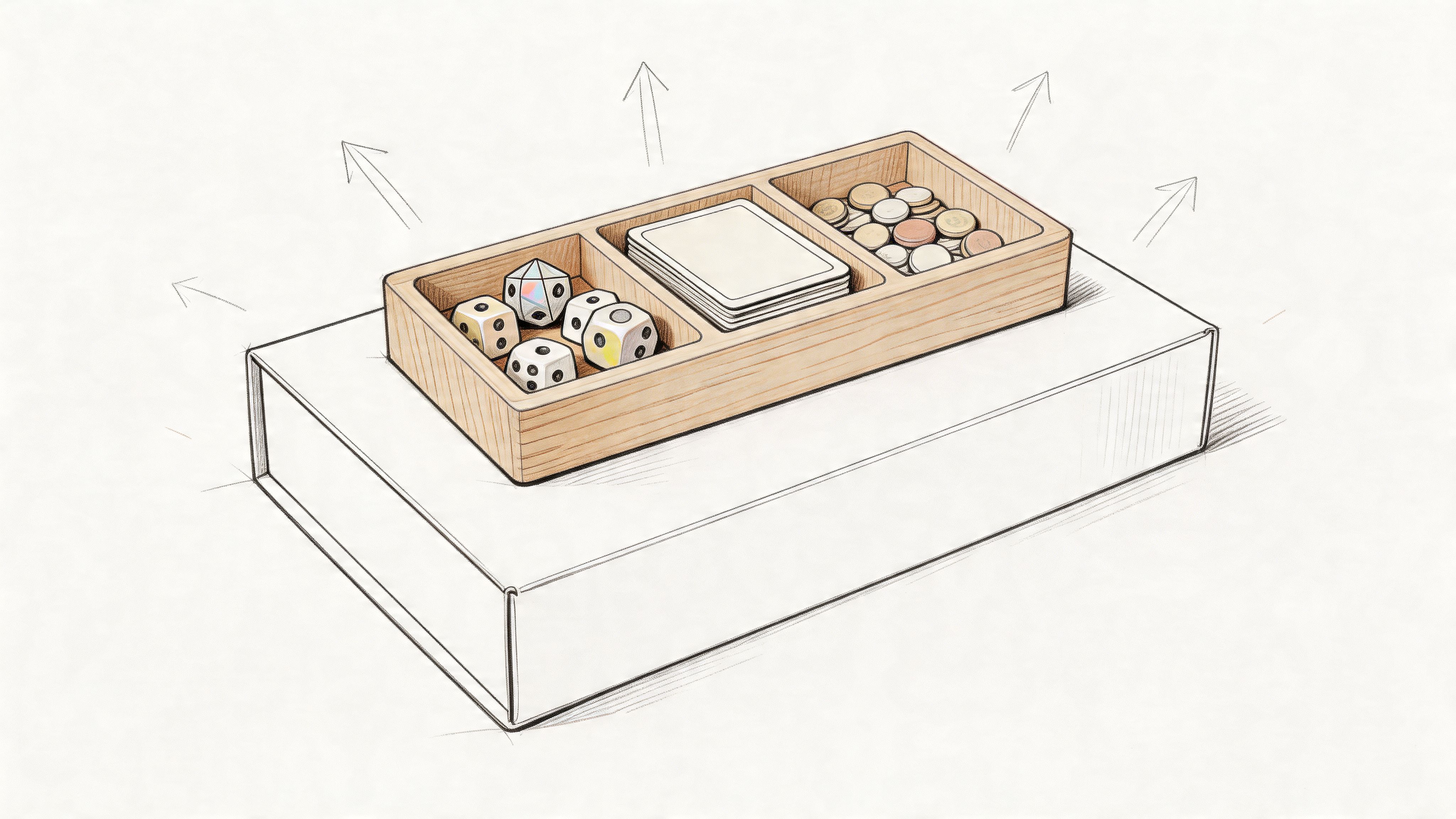
Kickstarter game toppers - Boost revenue for your Kickstarter game toppers in 2026! Our guide covers designing, marketing, fulfillment, and leveraging
Your campaign funded. That feels like the finish line for about five minutes.
Then the operational questions start landing. Which add-ons should stay open after the campaign? How do you collect shipping on oversized rewards without losing money? What happens when an international backer changes address after your survey closes? And if you're offering kickstarter game toppers, are you treating them like a premium revenue driver or just another SKU in a crowded reward list?
That distinction matters. A topper is one of the few add-ons that can lift order value while also making your campaign feel more premium. It can deepen commitment from your best backers, but it can also wreck margin if you price it loosely, package it badly, or leave post-campaign sales to basic survey tooling.
I’ve seen creators get the front end right and the back end wrong. They build excitement, fund fast, then bleed cash through freight mistakes, VAT confusion, weak surveys, and underused late pledge windows. Game toppers expose every weakness in your operation because they’re bulky, optional, high-consideration, and often purchased by your most demanding customers.
Handled well, they become one of the smartest parts of your campaign.
The moment after funding is when most creators narrow their focus too much. They lock onto manufacturing for the base game and treat accessories as housekeeping. That’s backwards if you’re selling premium tabletop products.
Game toppers sit in a rare category. They aren’t impulse buys. They’re commitment products. Backers choose them because they want a better ongoing play experience, better table organization, and a setup that feels permanent rather than improvised.

That demand is already proven. Game Toppers LLC raised $2,119,588 across 5 projects from 2019 to 2025, with 5,086 total backers and an average pledge of $417, according to Tabletop Analytics' creator profile for Game Toppers LLC. Their most recent campaign, Game Toppers 5.0, also passed its funding goal and raised more than double that initial target on the same source page.
A core game has ceiling pressure. Backers usually understand what a base pledge should cost, and the category trains them to compare value aggressively. A topper behaves differently.
It gives you room to sell:
That last point is where creators leave money on the table. If your campaign page treats the topper like a side note, your best customers may never configure the full order they actually want.
An average pledge of $417 in the Game Toppers LLC data isn’t casual behavior. It signals a buyer willing to pay for quality, durability, and a premium tabletop setup when the offer is clear and credible.
Practical rule: If a backer is already paying for a premium tabletop experience, they don't want a vague accessory. They want a well-defined upgrade with clear use, dimensions, finish, and delivery terms.
That changes how you should think about kickstarter game toppers. They’re not filler add-ons. They’re often the strongest expression of your brand’s premium tier.
Most creators only ask, “Should we offer a topper?” The better question is, “How much structured revenue are we losing if we don’t operationalize the topper correctly?”
A strong topper strategy starts before launch, but it pays off after funding. That’s where add-ons, late pledges, upgraded orders, shipping collection, and international compliance all either work together or fall apart.
If you want toppers to improve campaign economics, treat them as a product line with its own margin logic, packaging logic, and fulfillment logic. That’s how they become a business lever instead of a headache.
A topper fails long before fulfillment if the design brief is fuzzy.
Most problems come from trying to satisfy too many use cases at once. The result is a product that looks flexible on the campaign page but becomes expensive to make, hard to package, and confusing to buy. A workable topper needs a narrower promise.

Ask a blunt question first. What exactly is the topper supposed to improve?
If the answer is “everything,” you’re not ready. Good topper concepts usually anchor to one of these:
| Primary job | What backers care about | Common design risk |
|---|---|---|
| Surface upgrade | Better feel, cleaner play, stronger table presence | Looks premium but adds little practical value |
| Modular organization | Component zones, rails, trays, or accessories | Too many parts and too much assembly friction |
| Protection and storage continuity | Preserve game state between sessions | Bulky form factor that becomes expensive to ship |
| Aesthetic integration | Matches the game line or home setup | Custom finishes create manufacturing complexity |
Once the job is clear, material choices get easier.
Creators make expensive mistakes. They prototype for photography and forget to prototype for cartons, corner protection, palletization, and defect handling.
The board game category has a 52% success rate on Kickstarter, and creators improve their odds when the product is already 90% to 95% complete at launch, including reward planning and add-ons, based on the expert discussion summarized from this creator guidance video. For toppers, that standard matters even more because physical details drive cost.
Your prototype should answer operational questions, not just visual ones:
A topper that looks elegant in renders but creates support tickets in the warehouse isn't ready.
I use a simple discipline here. Don’t price from what feels premium. Price from what it costs to survive.
Your internal pricing sheet should include:
If one version needs custom packaging and another fits a standard pack-out flow, those are not comparable products even if they look similar in a render.
Backers need an obvious “yes” tier. If every topper option feels custom or ambiguous, they stall.
Use a clean structure:
If you need a framework for setting up add-on logic cleanly, PledgeBox has a useful explainer on Kickstarter add-on items.
Place this after your concept validation work, not before. Otherwise you’ll build reward logic around a product that still isn’t operationally sound.
A practical visual reference can also help when you're evaluating how premium tabletop products are presented:
What works
What doesn’t
For kickstarter game toppers, pricing is product strategy in disguise. If your numbers only work in a perfect scenario, the product isn’t priced correctly.
The topper should appear on your campaign page as part of the core value story, not as a footnote near the FAQ.
That matters because backers read premium accessories as a signal. A well-positioned topper tells them your project is developed, intentional, and built for people who care about the full table experience. A neglected topper tells them you added it late.
Early campaign behavior shapes how the rest of the market reads your project. Game Toppers 4.0 raised $112,000 from 386 backers in its first three days, slightly ahead of the 3.5 campaign in the same early window, according to this campaign analysis video. The important lesson isn’t just the total. It’s that refined positioning brought in more early backers.
That’s why I push creators to present the topper on day one.
Not as a stretch afterthought. Not buried under twenty graphics. Not hidden in updates that only existing backers will read.
Backers don't buy a topper because it exists. They buy it because they can instantly see a better session with it.
Use your page and social creative to show:
If you want a good companion read on paid and organic campaign promotion, Studio Liddell’s guide on Mastering Advertising for Games is worth reviewing alongside your own launch plan.
Don’t rely on one banner and a price tag. Give the topper a full argument.
A useful sequence is:
That creates purchase logic. It also helps your updates, because you can keep returning to different use cases instead of repeating “don’t forget our add-ons.”
Field note: Expensive accessories sell when the buyer can explain the purchase to themselves in one sentence.
They assume high-value add-ons should stay subtle to avoid scaring off base-game backers. In practice, that often weakens the whole offer. Premium backers want to see ambition handled professionally.
What works better is segmentation. Your page can still lead with the base game while clearly inviting the topper buyer into a more committed path.
If your campaign team is tightening launch messaging, creative angles, and channel timing, this overview on marketing for Kickstarter campaigns is a useful planning reference.
The key decision is simple. Treat the topper as part of campaign momentum, and it can help validate premium demand. Treat it like an optional extra, and only your most determined backers will find it.
After the campaign closes, most creators discover whether they built a funding event or an actual sales system.
The difference between basic native tools and a dedicated pledge manager is apparent. I often explain this to clients with a simple analogy: Kickstarter’s pledge manager is like Amazon, and PledgeBox pledge manager is like Shopify. One is a constrained environment with limited flexibility. The other gives you far more control over the buying experience, post-campaign configuration, and add-on selling logic.
That distinction matters most when you’re handling kickstarter game toppers because toppers usually involve variant choices, shipping collection, taxes, late orders, and post-campaign upsells.
Kickstarter’s native flow can work for very simple projects. If you have a small reward set, limited regional complexity, and almost no post-campaign merchandising, the built-in route may be enough.
But toppers usually create extra layers:
A basic survey can collect information. It usually won’t help you actively grow the order.
Some teams assume late revenue is marginal and not worth system changes. The data says otherwise. Only 15% of campaigns capture more than 10% in late revenue without an integrated pledge manager, and platforms like PledgeBox have been used by 8,000+ creators since 2019, according to the hosted preorders update that discusses late pledges and integrated management tools here.
That matches what experienced operators already know. If backers can revisit their order in a branded, flexible environment, a meaningful share of them will.
A strong post-campaign engine should do more than ask for an address.
It should let you:
| Need | Basic survey mindset | Sales engine mindset |
|---|---|---|
| Backer data | Collect shipping details | Validate, update, and keep clean records |
| Add-ons | Offer static choices | Merchandise relevant upgrades |
| Late pledges | Often unsupported or awkward | Keep buying open in a controlled way |
| Brand experience | Functional | Consistent with campaign identity |
| Operations | Manual cleanup | Export-ready data for vendors |
That’s why I recommend creators choose their post-campaign tooling before launch, not after funding. The topper offer, upsell structure, and shipping logic should already fit the system you’ll use to deliver it.
If your campaign only needs a questionnaire, basic tools are fine. If you want toppers to become a true second sales wave, you need an engine built for commerce.
Shipping a standard card game is manageable. Shipping a large topper is where weak assumptions become expensive.
Bulky products force you to think in layers. Unit weight matters. Carton dimensions matter. Protective packaging matters. Address quality matters. International tax handling matters. And if even one of those inputs is sloppy, your margin disappears faster than most creators expect.

For game toppers, shipping isn’t just postage. It’s packaging design, warehouse handling, carrier selection, customs data, pallet planning, and replacement policy.
The product category itself raises the stakes. One verified source notes that bulky items like game toppers can weigh 45+ lbs per unit, and also notes that 40% of board game Kickstarter backers are international, which is why customs, duties, VAT, and address validation become central operational concerns in this niche, as discussed in this logistics-focused video reference.
That same source also warns that creators can face 20% to 30% cost overruns from shipping errors and unhandled customs or VAT when their systems don’t support address validation and automated tax collection.
Before you publish your campaign shipping table, have firm answers for these:
If you need a rough planning tool while comparing carton scenarios, a practical external reference is this shipping calculator from Material Handling USA.
Use it as a checkpoint, not as your final pricing source. Final shipping decisions still need supplier and fulfillment confirmation.
International backers don’t just need a shipping quote. They need clarity.
Tell them:
| Operational issue | What backers need to know |
|---|---|
| VAT and duties | Whether charges are collected in the pledge flow or due at delivery |
| Address rules | Whether PO boxes, military mail, or remote regions are restricted |
| Split shipments | Whether topper accessories can arrive separately |
| Damage protocol | What evidence is required for claims |
| Change windows | When addresses lock and when they don't |
A vague shipping section creates support volume later. A specific one prevents it.
The best time to explain customs and tax handling is before the backer upgrades their order, not after the parcel is already moving.
Here’s what I tell teams handling oversized tabletop products:
For kickstarter game toppers, logistics isn't a back-office detail. It’s part of product design and margin control.
If you’re offering toppers, automation isn’t a luxury. It’s how you keep complexity from spilling into inboxes, spreadsheets, and expensive manual fixes.
The reason many teams move to PledgeBox is straightforward. PledgeBox is free to send the backer survey and only charges 3% of upsell if there’s any. That pricing model matters because it lets creators open a structured post-campaign sales flow without taking on upfront survey cost just to collect the basics.
The practical comparison also holds up well in operations. Kickstarter pledge manager is like Amazon and PledgeBox pledge manager is like Shopify. One gives you a narrower native flow. The other is built to let you shape the post-campaign storefront around your product logic.

Toppers create conditions where manual workflows break down fast. You may need to collect shipping later, charge taxes by destination, offer accessory add-ons, validate addresses, and export clean order data to vendors.
Verified guidance on pledge management notes that expert-level setups use no-upfront-fee platforms to drive upsells and integrate with fulfillment, and that automating surveys, reminders, and address validation can reduce address errors by 10% to 20% and cut fulfillment delays significantly, as summarized from Stonemaier Games' lesson on reward levels and pledge management.
That’s exactly the kind of operational pressure toppers create.
I’d structure the workflow in this order.
Import your backers and normalize the reward structure first. Don’t carry campaign-page chaos into the survey.
Map rewards into clear product groups:
In this step, you remove duplicate names, unclear variants, and campaign-era wording that backers only understood in context.
The survey shouldn’t feel like a compliance form. It should feel like the continuation of the campaign.
That means:
A good overview of the platform’s role in this broader workflow is available in this article on what PledgeBox is.
Keep the survey short where possible, but don’t hide important shipping or tax details. The goal is fewer support tickets and more completed checkouts.
A lot of value sits here.
Offer toppers only to the backers for whom they make sense. If someone backed at a low tier with no realistic compatibility path, don’t clutter their flow with irrelevant offers. If someone bought a premium pledge, present the topper as the natural completion of that purchase.
Useful upsell logic usually includes:
| Backer type | Smart offer approach |
|---|---|
| Base game backer | Introduce the main topper with clear use-case framing |
| Premium backer | Show the topper plus accessories or upgraded finish path |
| Existing topper buyer | Cross-sell compatible add-ons, replacement panels, or storage extras |
| Late backer | Lead with the most proven configuration, not the full matrix |
The point is relevance. Better targeting produces cleaner decision-making.
Don’t split commercial decisions from logistical ones if you can avoid it.
For topper orders, you want the system to handle:
When those pieces are disconnected, staff ends up reconciling edge cases by hand. That’s slow and expensive.
Operational advice: The more expensive and bulky the product, the less tolerance you have for “we’ll fix it manually later.”
Automated reminders matter because many backers don’t complete surveys the first time. That’s even more true when they need to review shipping charges or make an upgrade decision with a larger item.
Set reminder sequences around real milestones:
This keeps your sales window active while preserving a clear path to fulfillment lock.
The final test of a pledge manager isn’t whether your team can read the dashboard. It’s whether your manufacturer and fulfillment partner can use the output without cleanup.
Your exports should support:
That’s the close of the loop. Survey to payment to export to shipment.
For kickstarter game toppers, operational maturity becomes evident. If your team is still stitching together spreadsheets after the survey closes, you haven’t really solved post-campaign fulfillment. You’ve delayed the pain.
Yes, but only if compatibility is easy to explain and operationally safe to fulfill.
Older catalog support works best when the topper uses a stable format that doesn’t require backers to guess sizing, hardware fit, or accessory matching. If your older line has multiple editions, changed box dimensions, or revised inserts, keep the offer narrow.
A practical rule is to sell only the versions you can support with clear naming, clean exports, and a low chance of customer confusion.
Don’t handle this casually through scattered email replies.
Use a controlled process. Require the backer to confirm the exact order, the old address, the new address, and the timing. Then check whether the order has already been exported, picked, or handed to a fulfillment partner. If it has, your support response should switch from “address update” to “intercept or replacement policy.”
For bulky products, address mistakes are expensive. The right answer isn’t to be flexible. It’s to be precise.
Write the process before the first parcel goes out.
Ask for clear photos of the outer carton, inner packaging, shipping label, and damaged part. Separate cosmetic complaints from functional defects. Then decide whether the fix is a replacement part, a partial solution, or a full reshipment.
For large toppers, full replacements can be costly and slow. That’s why your product design should favor replaceable components where possible. If one panel or accessory can be swapped without resending the whole order, your support costs stay much more manageable.
Backers are usually patient when the process is clear. They get frustrated when the process changes from case to case.
The best campaigns don’t avoid problems. They resolve them consistently.
If you want a cleaner way to run post-campaign surveys, collect shipping and tax, offer topper upsells, and export fulfillment-ready data without upfront survey fees, take a look at PledgeBox. It’s free to send the backer survey and only charges 3% of upsell revenue if there is any, which makes it a practical fit for creators who want more control over kickstarter game toppers after funding ends.
PledgeBox
The All-in-One Toolkit to Launch, Manage & Scale Your Kickstarter / Indiegogo Campaign