 PledgeBox
Exploding Kittens Kickstarter: A Deep-Dive Case Study
Unpack the legendary Exploding Kittens Kickstarter. Learn the marketing, funding, and fulfillment secrets from their $8.7M campaign and how to apply them today.
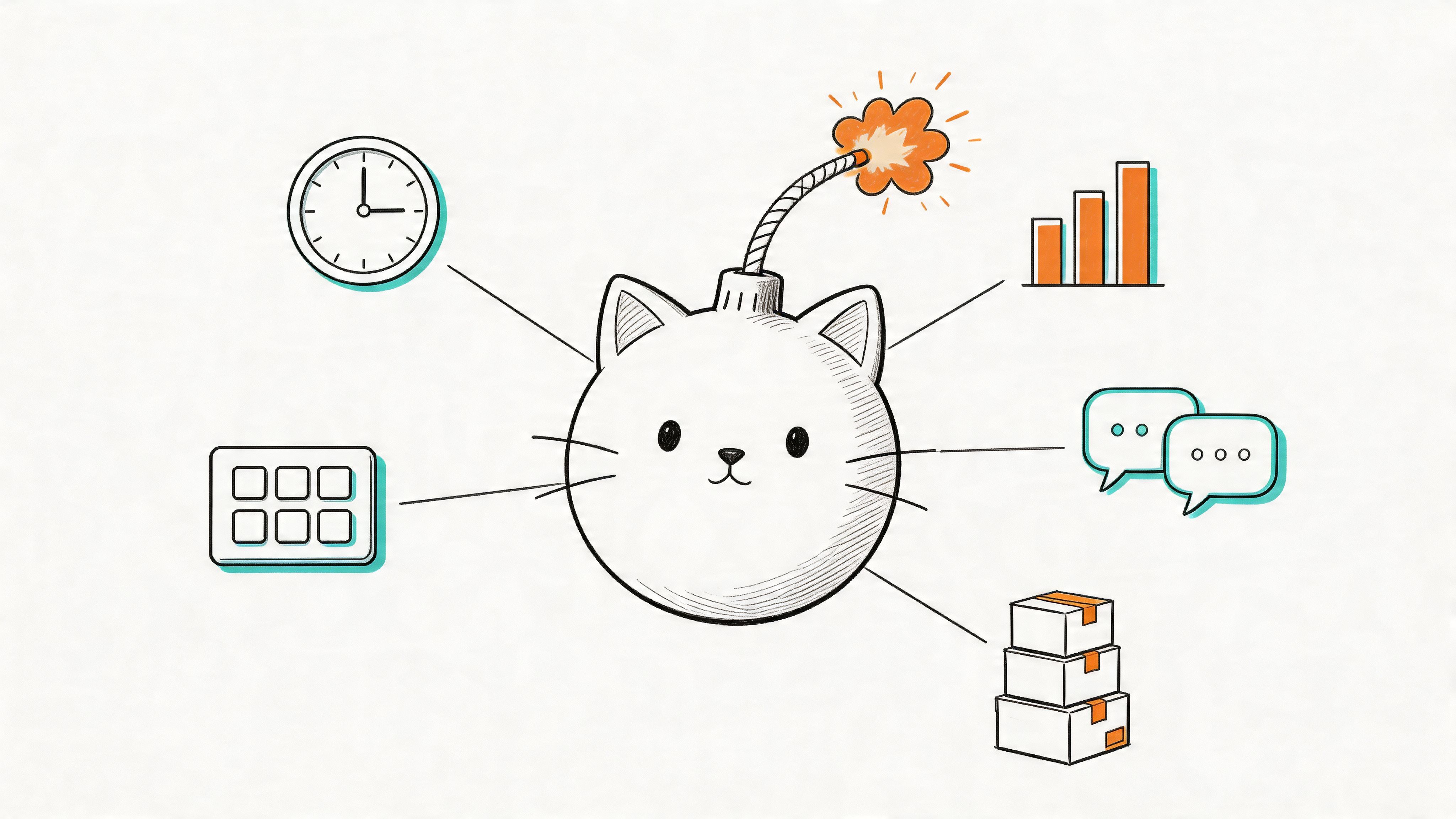
Unpack the legendary Exploding Kittens Kickstarter. Learn the marketing, funding, and fulfillment secrets from their $8.7M campaign and how to apply them today.
The launch is the part everyone remembers. The warehouse work is the part that decides whether a hit becomes a company or a cautionary tale.
That’s why the exploding kittens kickstarter still matters. Not just because it went viral, but because it exposed the gap between raising money and delivering at scale.
On January 27, 2015, Exploding Kittens launched on Kickstarter with a $10,000 goal. It funded in eight minutes, raised $1,333,586 from nearly 35,000 backers on day one, and finished at $8,782,571 from 219,382 backers according to the campaign history on Wikipedia.

Those numbers still stop creators in their tracks. They should. This wasn’t a normal board game launch that got a nice bump from Kickstarter. It was a cultural event.
The creators had a rare mix. Matthew Inman brought The Oatmeal audience. Elan Lee and Shane Small brought game design credibility. The product pitch was instantly legible: a funny, fast card game with a chaotic hook that people could explain in one breath.
That combination matters more than most creators admit. Viral campaigns usually look spontaneous from the outside, but they’re built on stacked advantages:
Exploding Kittens closed after 30 days, and at the time it held the record for the most backers in Kickstarter history, later landing among the platform’s biggest campaigns, as summarized in this roundup of the most funded Kickstarters.
Practical rule: A legendary campaign is never just about money raised. It shows what happens when product, audience, and timing line up before launch day.
Most coverage stops at the headline numbers. That’s useful, but incomplete. The deeper lesson is that Exploding Kittens proved a tabletop project could move like internet media, not just like hobby retail.
That changed creator expectations. It also created a new problem: once a campaign reaches that scale, success itself becomes operational risk.
The easiest way to misunderstand the exploding kittens kickstarter is to treat it like a miracle. It wasn’t. It was a launch built on a few structural choices that made virality more likely.

Matthew Inman’s audience from The Oatmeal wasn’t a side note. It was the ignition source.
A lot of creators focus on campaign-page polish and ignore the preexisting attention layer. That’s backward. If you launch to an empty room, your page has to work impossibly hard. If you launch to a warm audience, your page only needs to convert interest into action.
That’s the first hard truth here. Exploding Kittens had a built-in crowd. Most campaigns don’t.
A $10,000 goal looked almost absurd in hindsight, but it was tactically sharp. Fast funding creates visible proof that other people believe in the project. Backers don’t just assess the product. They assess whether the crowd has already validated it.
That decision did two jobs at once:
| Choice | What it did |
|---|---|
| Low funding goal | Made the campaign look inevitable almost immediately |
| Rapid early conversion | Turned traffic into a public trust signal |
| Visible momentum | Encouraged fence-sitters to join before they missed the wave |
Creators often set goals based on internal budgets alone. That’s understandable, but it can work against you on-platform. A crowdfunding goal is financial math, but it’s also a conversion device.
A lot of board games are better than they pitch. That hurts them.
Exploding Kittens was the opposite. The concept was simple, visual, and funny enough that backers could retell it. That matters because crowdfunding traffic doesn’t only come from ads or press. It also comes from person-to-person explanation.
If you’re studying how projects spread, it helps to study adjacent skills like how teams make viral videos, because the same principle applies: if someone can’t summarize your idea quickly, they won’t share it.
The strongest campaign hook is the one a backer can repeat without opening your page.
Here’s the practical version.
Most creators can’t replicate The Oatmeal audience. They can replicate the underlying architecture. Build attention first. Simplify the pitch. Design for immediate understanding. Then let momentum do its job.
The launch spike got Exploding Kittens noticed. The campaign staying power came from community handling.
That distinction matters. A project can have a huge first day and still lose energy if the team treats backers like completed transactions instead of active participants.
One of the most useful lessons from Elan Lee’s later commentary is the line that crowdfunding success hinges more on “building the crowd” than funding, with the bigger lesson being how Exploding Kittens turned 219,382 backers into a $100M+ business, as described in this interview reference on YouTube.
That’s a key practitioner takeaway. The campaign wasn’t just a cash event. It was an audience capture event.
If you’re a smaller creator, that changes how you should think about updates, comments, and post-launch communication. You’re not just closing pledges. You’re building your first durable customer list.
Humor wasn’t decoration. It was part of the operating system.
The campaign page, art, updates, and stretch goal energy all reinforced the same feeling. Backers knew what kind of brand they were joining. That consistency reduces friction. It also makes community behavior easier to guide because the audience quickly learns the house style.
A weak campaign often has a strong product and a generic communication layer. That disconnect kills momentum.
You don’t need a famous co-creator to borrow the playbook. You do need discipline.
For creators trying to sharpen that side of the job, resources on mastering community engagement strategy are useful because crowdfunding communities behave like miniature fan communities under deadline pressure.
A campaign becomes easier to share when the team gives the audience clear reasons to keep talking about it. That can be a reveal, a stretch-goal decision, new art, a limited add-on, or a memorable update rhythm.
The important thing is consistency. Chaos rarely compounds well.
If you want a practical breakdown of that side of campaign design, this guide on how Kickstarter creators ignite viral buzz is a good reference point.
Backers amplify campaigns when they feel included, entertained, or useful. The strongest projects give them all three.
The simplest mistake I see is creators going silent once funding is secured. That kills the social loop. The campaign may still fund, but it won’t build a crowd that follows you into the next product.
Then the hard part started.
A campaign with 219,382 backers doesn’t move from funding to fulfillment in a straight line. It turns into a data-management problem, a customer-support problem, a tax problem, and a shipping problem all at once.

This is the underserved angle in most exploding kittens kickstarter coverage. People cite the raise and the backer count, then skip to the happy ending.
Operationally, that’s the most dangerous way to study the campaign.
When you’re dealing with a backer base that large, small errors stop being small. Bad addresses multiply. VAT and tax handling gets messy. Backer survey gaps create fulfillment gaps. Support inboxes fill with edge cases that no spreadsheet was designed to handle.
The post-campaign burden usually breaks into a few ugly categories:
That’s why “we funded” is not the same as “we’re ready.”
The historical irony is that Exploding Kittens launched before modern pledge management became standard. Teams at that scale often relied on patchwork workflows, custom exports, and manual cleanup.
The pain wasn’t unique to one campaign. According to Time’s coverage and the cited data point, shipping to over 219,382 backers involved hurdles such as international VAT collection and address validation, and data from 8,000+ modern campaigns shows 65% of high-volume tabletop projects face delays from fragmented tools, while integrated pledge managers often boost revenue by an average of 15% through upsells.
That single sentence explains why so many creators underestimate fulfillment. They think the main threat is manufacturing delay. Often it’s workflow fragmentation.
This is the point in the process where seeing the moving parts helps more than another victory headline.
In practice, three things fail before anything else:
| Failure point | What it causes |
|---|---|
| Surveys sent too late or too loosely | Missing data and stale addresses |
| Separate tools for support, shipping, and upsells | Manual reconciliation and errors |
| No clear creator-side process for exceptions | Backlog, confusion, and unhappy backers |
Field note: The bigger the campaign gets, the less forgiving your workflow becomes. At scale, “we’ll clean it up later” turns into weeks of avoidable delay.
That’s why I tell creators to study Exploding Kittens less as a launch miracle and more as a fulfillment stress test.
A lot of creators still treat the post-campaign survey as an administrative afterthought. That’s a mistake.
Once the campaign ends, your real storefront often shifts away from the crowdfunding platform and into whatever system collects final data, shipping fees, tax details, late pledges, and add-ons. That’s where a pledge manager earns its keep.

Kickstarter’s native pledge flow is like Amazon. It gives you reach and a fixed system, but it’s standardized and narrow.
A dedicated pledge manager is more like Shopify. You get a more branded, flexible post-campaign environment where you can control surveys, shipping logic, tax collection, add-ons, and pre-orders in a way that fits your project.
That difference matters most when your reward structure gets complicated. It matters even more when your campaign has enough scale that every manual fix creates more manual fixes.
Good post-campaign tooling should reduce both admin friction and fulfillment risk.
If you’re comparing options, this overview on the importance of a pledge manager in Kickstarter projects covers the basic role well.
One option in that category is PledgeBox. It can send the backer survey for free and only charges 3% on upsell sales if there are any. For creators deciding whether to add a dedicated post-campaign layer, that pricing model changes the risk calculation because you’re not taking on an upfront survey cost just to get organized.
The bigger point is not brand preference. It’s operational maturity. If your campaign has multiple reward tiers, global shipping, tax complexity, or meaningful add-on potential, you need a post-campaign system that behaves like a store and a logistics desk, not just a form.
Here’s the blunt version.
The creators who manage scale well usually look boring operationally. That’s a compliment.
Exploding Kittens is famous because the top-line result was huge. The campaign is useful because the underlying lessons are portable.
Don’t launch to strangers if you can avoid it. Build a waiting list, warm up a niche audience, and give them repeated contact points before the campaign opens.
This doesn’t mean spamming people. It means earning familiarity.
If a backer can’t explain your project in one sentence, your campaign will depend too much on direct traffic.
Use a concept that survives retelling. The strongest crowdfunding hooks are simple enough to spread and specific enough to feel fresh.
Budget math matters, but so does visible momentum. A campaign page is partly a funding tool and partly a trust signal.
Creators who set goals without considering on-page conversion dynamics often make launch harder than it needs to be.
Don’t wait until surveys go out to think about shipping logic, tax handling, vendor exports, or add-on structure. By then you’re already reacting.
Use this checklist as a sanity pass:
That’s the most transferable lesson from all of this. Funding is the visible outcome. Audience ownership is the durable asset.
If you only think in terms of pledge totals, you’ll miss the larger opportunity. If you think in terms of first customers, repeat buyers, and future launches, your decisions improve almost immediately.
Operator mindset: Don’t ask only “How do I fund this?” Ask “What system am I building that survives after funding?”
That’s the difference between a successful campaign and a business that can launch again.
No. Timing helped, and the creators had real audience influence, but the campaign also had a clear hook, fast social proof, and a brand tone that people wanted to share.
Luck amplifies preparation. It rarely replaces it.
You don’t need a massive audience to apply the lesson. You do need some crowd-building before launch.
The smaller your starting audience, the more important your pre-launch email capture, creator updates, and community interaction become.
The cleanest analogy is this: Kickstarter’s native setup is like Amazon, while a dedicated pledge manager is like Shopify.
Kickstarter gives you the marketplace. A pledge manager gives you more control over post-campaign operations, especially surveys, shipping logic, tax collection, and add-on sales.
Use one when your campaign has enough complexity that manual cleanup will create risk. That usually means multiple reward tiers, international shipping, add-ons, or a backer count large enough that mistakes compound quickly.
If your project is tiny and local, you may be able to keep it simple. Most scaled tabletop campaigns can’t.
PledgeBox is free to send the backer survey, and it only charges 3% of upsell sales if there are any.
That makes it materially different from tools that add upfront survey cost before you’ve created any post-campaign revenue.
Post-campaign execution.
Launch velocity is frequently studied. More creators should study the fulfillment burden that came after it. That’s where many campaigns stop looking legendary and start looking fragile.
If you're planning a Kickstarter and want a cleaner post-campaign workflow, take a look at PledgeBox. It combines survey collection, shipping and tax handling, add-ons, late pledges, and fulfillment-ready exports in one system, with free backer surveys and a 3% fee only on upsell sales if they happen.
PledgeBox
The All-in-One Toolkit to Launch, Manage & Scale Your Kickstarter / Indiegogo Campaign