 PledgeBox
A Proven Guide to Marketing for Kickstarter Success
Master marketing for Kickstarter with a proven playbook. Learn how to build a pre-launch audience, execute a winning launch, and maximize post-campaign revenue.

Master marketing for Kickstarter with a proven playbook. Learn how to build a pre-launch audience, execute a winning launch, and maximize post-campaign revenue.
Here’s a secret many creators miss: successful Kickstarter marketing is a marathon, not a sprint. It begins long before your campaign page ever sees the light of day. The single most important thing you can do is build an engaged community that's ready to back you on day one. This turns your launch from a hopeful wish into a powerful, momentum-fueled event.
Honestly, the fate of your Kickstarter is often sealed weeks, if not months, before you hit that big green "launch" button. A classic rookie mistake is getting lost in the product details while forgetting about the people who will actually fund it. Building a dedicated audience beforehand isn't just a nice-to-have; it's the bedrock of a wildly successful campaign.
This pre-launch phase is all about sparking genuine excitement and building trust. It's your chance to turn passive followers into die-hard advocates for your project. The goal is simple: have a list of eager supporters who are personally invested in your success. When they show up in force during the first 48 hours, it signals to the Kickstarter algorithm that you've got a winner, catapulting your project's visibility across the platform.
First things first, you need a high-converting landing page. This isn't a miniature version of your Kickstarter page. Think of it as a clean, focused hub with one job: capturing email addresses. It's the front door to your campaign's inner circle.
This page needs to communicate your project's core value instantly. Use killer visuals, a headline that stops the scroll, and a quick blurb on what makes your product so special. The call-to-action should be impossible to miss, urging visitors to sign up for launch alerts and exclusive goodies.
The numbers don't lie. Community building is a massive factor in campaign success. Top campaigns in 2025 are launching with email lists of over 1,000 subscribers, giving them a staggering 5x success rate multiplier compared to campaigns that launch to a cold audience. You can discover more insights about building winning campaigns on glowreports.com.
Once you start collecting emails, the real community building begins. Now's your chance to connect with these leads and build a genuine relationship. Don't just let them sit on a list—engage them with valuable content that tells your story.
Here are a few ideas for your email nurture sequence that work wonders:
This flow is simple but incredibly powerful. You capture, you nurture, and then you launch to an audience that's already fired up.
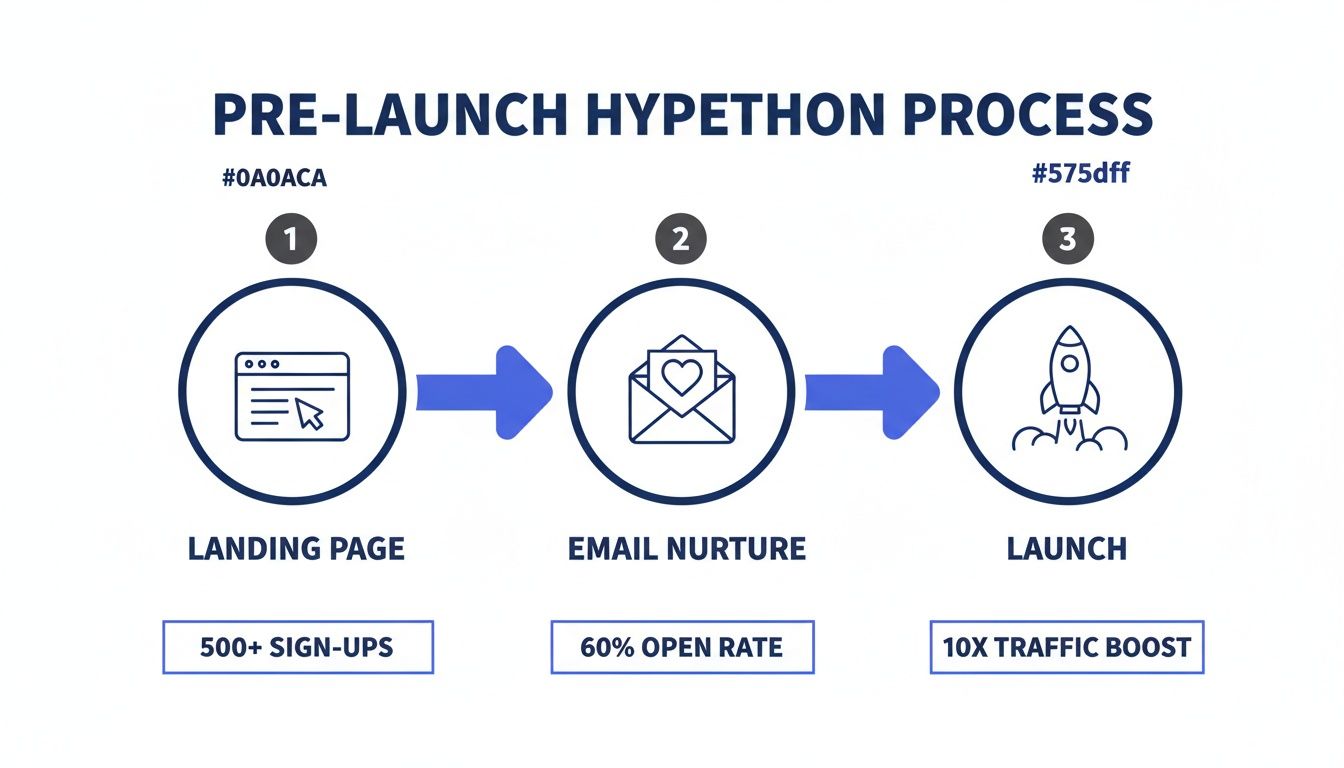
The takeaway here is that each step builds on the last, creating a compounding effect that explodes on launch day.
The best way to serve your backers is to create the thing that you want to play. Your ideas are good. Don't let trends or others convince you to compromise on your creation. Make the game that you want to play, test it to make sure it plays well, and find people who want to play it, too. They’re out there.
By putting in the time on this pre-launch strategy, you aren't just doing marketing for Kickstarter; you're building a real brand with a loyal following that will stick with you long after the campaign clock runs out. If you're looking for more great ideas, check out our guide on 7 actions to build your community before your campaign. This effort is what transforms launch day from a gamble into a calculated, explosive start.
Think of your Kickstarter page as your project's digital headquarters. It’s your sales pitch, your storefront, and your vision board all rolled into one powerful package. Once you go live, it’s the single most critical asset you have. Building a page that converts is all about solid Conversion Rate Optimisation—making sure every person who lands there is guided smoothly toward becoming a backer.
A fantastic page does more than just list features. It spins a compelling story. It blends eye-catching visuals with a clear narrative that gets to the heart of why your project needs to exist. This is where you grab a visitor's casual interest and turn it into genuine support, moving them from "that's cool" to clicking the "Back this project" button.
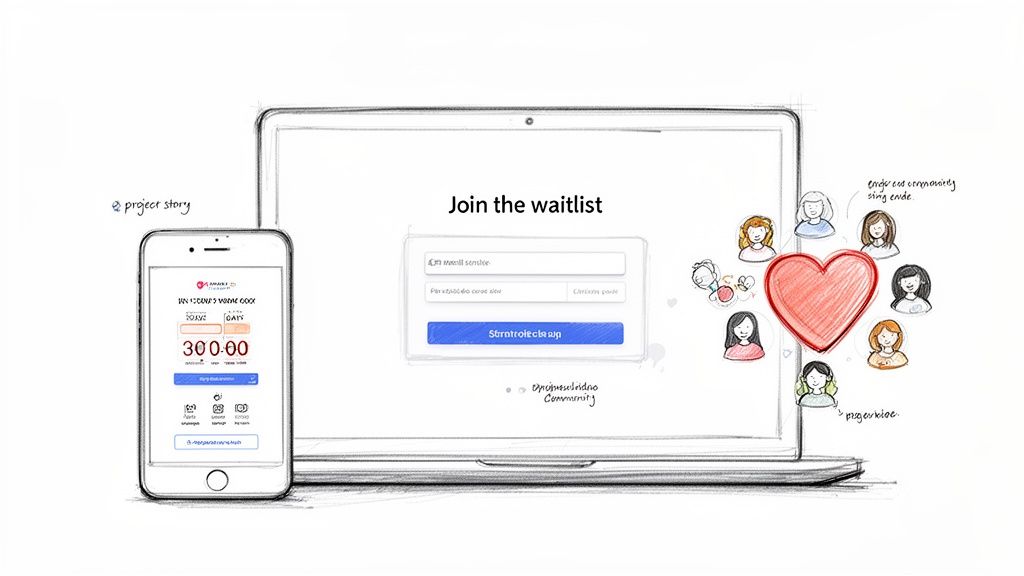
Let’s be real: potential backers are swimming in a sea of projects. Your visuals are what will make them stop scrolling. High-quality photos, GIFs that show your product in action, and an incredible main video are absolutely non-negotiable.
Your campaign video is your secret weapon. Keep it short, punchy, and connect on an emotional level. A 2-3 minute video is the sweet spot to introduce yourself, explain the problem you’re solving, and show off your solution. Remember, authenticity beats a Hollywood budget every time. People connect with the real passion of a creator, not just slick production.
One of the quickest ways to sabotage your own campaign is by setting an unrealistically high funding goal. It might feel ambitious, but it can actually suffocate your momentum right out of the gate. A massive, intimidating number can make early backers feel like their pledge is just a drop in an empty bucket.
Instead, figure out the bare minimum you need to produce and deliver your rewards. That’s your goal. Campaigns with smaller, achievable targets tend to catch fire much faster. Smashing your goal early creates a powerful psychological boost; it signals a winning project and draws in more backers who want to be part of that success.
This early momentum is more crucial than ever. The funding landscape has shifted dramatically. In 2024, game campaigns raised $25.2 million across 1,335 projects—a huge drop from the $51 million peak in 2013. That tells you just how vital it is to get those first wins on the board. You can read the full research about Kickstarter's changing landscape on gamedevreports.substack.com.
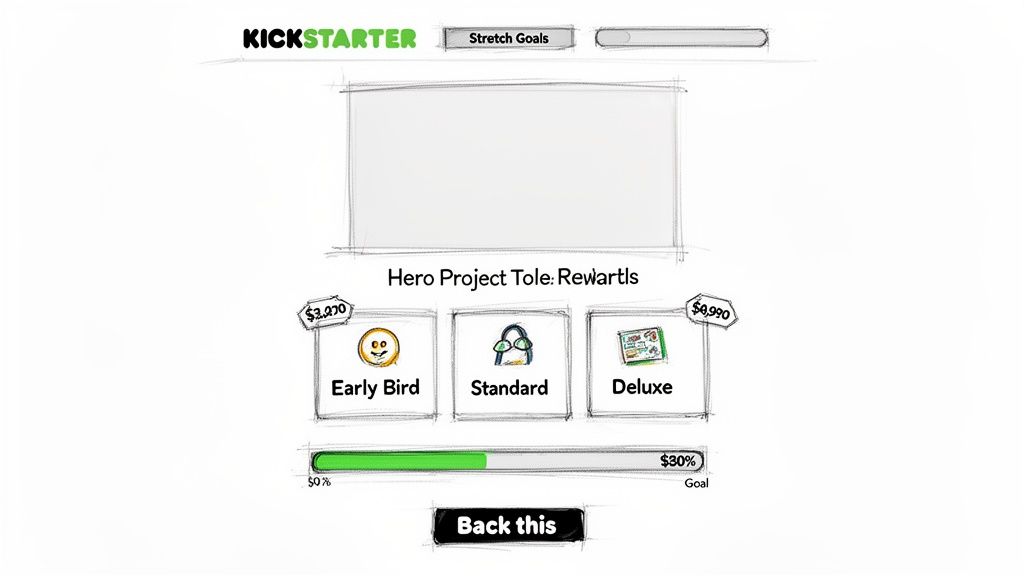
Your reward tiers are the engine that drives your entire campaign. A smart structure acts like a "ladder," gently guiding backers to pledge more. It's a fine art, balancing great value with your own profitability.
Here's a breakdown that works:
The real magic is creating a reward ladder where backers look at each tier and think, "Okay, this is good, but what if I just scroll down a little more?" until they hit a tier so packed with value they can’t help but back it.
Hitting your funding goal is just the beginning. The real work starts now. Strategic stretch goals are the key to keeping the energy and excitement buzzing for the entire campaign. Don’t lay all your cards on the table at once; reveal them one by one as you smash through previous targets.
This strategy turns your campaign from a one-off fundraiser into an ongoing event. Every new goal gives you a fresh reason to post an update, fire off an email, and rally your community. It keeps backers hooked and gives them a reason to share the project with their friends to help unlock that next awesome feature or add-on. This is how you turn a successful campaign into a true blockbuster.
The moment your campaign goes live, the clock starts ticking. The first 48 hours are easily the most critical window for your entire project—this is what sets the tone for success or stagnation. Your marketing focus needs to pivot instantly from building anticipation to driving urgent action.
This is where all that pre-launch hustle pays off. Your email list, your social media followers, and all those warmed-up leads become your front-line troops. The goal is to create a massive, concentrated surge of pledges right out of the gate, which tells Kickstarter's discovery algorithms that your project is hot.
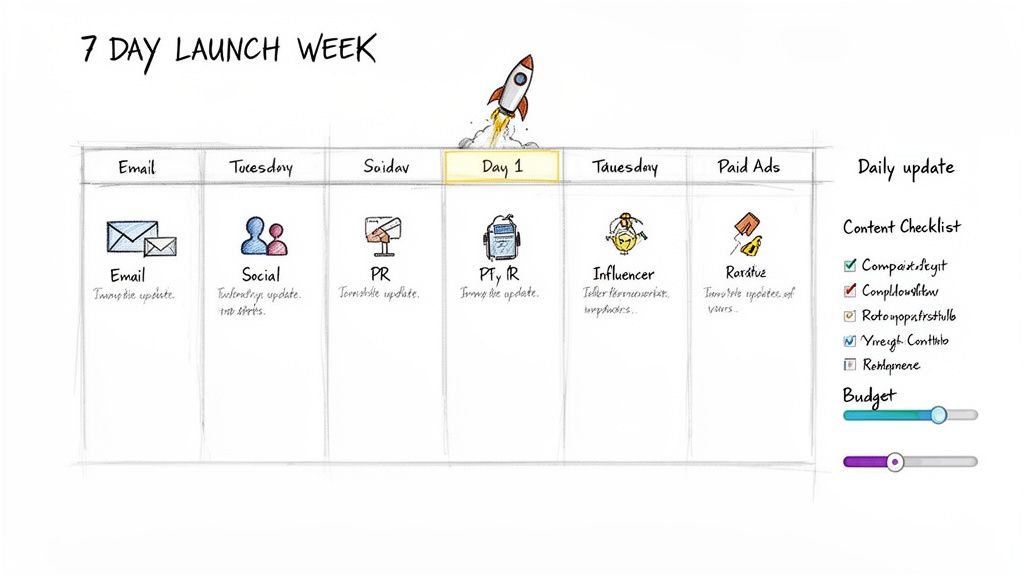
Launch day isn't just one announcement; it's a coordinated, multi-channel broadcast. Have every single asset—emails, social media posts, ad creative, influencer DMs—prepped and ready to deploy the second you hit "launch."
Your email list is your single most powerful weapon here. An email sent the moment you go live should be your biggest driver of those crucial first pledges. I always follow this up with a reminder 24 hours later for anyone who didn't open the first one, making sure to highlight the dwindling early-bird rewards to really dial up the urgency.
On social media, you need to be dynamic. Don't just drop a link and call it a day. Share behind-the-scenes videos, celebrate funding milestones as they happen, and consider a launch-day livestream to answer questions and thank backers in real time. It creates a vibrant, communal energy around your project.
While organic buzz is gold, a smart paid ad strategy can pour gasoline on that fire. During launch week, put your budget behind audiences who are already familiar with you. These "warm" leads are far more likely to convert than a cold audience.
Here’s a simple way to structure that ad spend for maximum impact:
For bringing interested people back to your page to seal the deal, Remarketing with Facebook can be an absolute game-changer in your launch week strategy.
Once you’re live, communication is everything. Post daily updates directly on your Kickstarter page. These updates do a few things at once: they keep your current backers excited, show potential backers that you're an active and trustworthy creator, and give you fresh content to share across all your other channels.
A common rookie mistake is revealing all your stretch goals on day one. It’s much more effective to show the first few, then unveil more as you hit your funding targets. This keeps the excitement high and gives you a new reason to post an update.
Use these daily check-ins to celebrate milestones, answer common questions, and reveal those new stretch goals. This consistent communication builds a real sense of community and reassures backers they've invested in a project with a dedicated team behind it.
And while you're focused on the campaign, it’s smart to be thinking ahead. Even with Kickstarter's own pledge manager, a dedicated tool like PledgeBox gives you far more control and revenue potential post-campaign. Think of Kickstarter's tool as a basic Amazon storefront. PledgeBox, on the other hand, is like having your own Shopify, with powerful upselling features. The best part? PledgeBox is free to send the backer survey and only charges 3% of any upsell revenue you generate. It’s a completely risk-free way to boost your total funding after the campaign ends.
After the initial fireworks of launch week, nearly every Kickstarter campaign hits a quieter period. We call it the "mid-campaign slump." Seeing the funding graph flatten out can be nerve-wracking, but trust me, it's a completely normal part of the crowdfunding cycle. The trick isn't to panic—it's to have a plan ready to stir up some new excitement and keep pledges trickling in.
This lull is actually a golden opportunity. It’s your chance to really connect with your early backers and nudge any fence-sitters over the edge. Think of it less as a time for explosive growth and more about steady, strategic engagement. By giving people fresh reasons to talk about your project, you can turn this quiet middle into a powerful engine for growth.
One of the most effective ways to break through the slump is to introduce something new and unexpected. This gives you a solid reason to email your list again and gives press or influencers a new story to tell. You're essentially creating a mini-launch right in the middle of your campaign.
Here are a few tactics that work like a charm:
Getting through this period is critical. The overall success rate for Kickstarter projects hovers around 41.98%, meaning most campaigns don't make it. This really drives home how important it is to keep that momentum going from day one to the final bell. You can learn more about Kickstarter funding statistics on statista.com.
During the slump, your campaign dashboard and Google Analytics are your best friends. Seriously, dive into that data. See which websites or social posts are actually sending people who pledge. Is a specific blog post driving high-value backers? Double down on what’s working and don’t be afraid to pull back on channels that are just eating up your time and money.
This is also the perfect moment to weaponize your social proof.
Backers want to see that they're joining a thriving community led by a creator who is present and passionate. Share glowing comments, testimonials from early reviewers, and user-generated content to build trust and show new visitors that your project is a sure thing.
For a deeper dive into beating the slowdown, you can also read our guide on navigating the mid-campaign doldrums.
A proactive approach here keeps your funding total ticking upward and ensures you roll into the final 48-hour rush with a strong, engaged community. It turns what could be a stressful lull into a strategic advantage, setting you up for a massive finish.
So, the campaign is funded. Congratulations! It's a massive milestone, but don't pop the champagne just yet. The final bell hasn't rung. In fact, some of your biggest opportunities for boosting revenue and backer satisfaction happen after the campaign clock hits zero. This is where you transition from pledges to delivered products and happy customers.
This phase is where a pledge manager becomes your best friend. While Kickstarter does have a basic survey system to collect addresses, it's pretty bare-bones. A dedicated pledge manager, on the other hand, is a powerful backend that can handle complex shipping calculations, tax collection, and, most importantly, open the door for some serious upselling.
Let's break it down with an analogy. Using Kickstarter’s native survey tool is like having a basic storefront on Amazon. It gets the job done—you can fulfill the orders you've got—but your control is minimal. You're stuck inside a rigid, one-size-fits-all box.
Now, think of a dedicated pledge manager like PledgeBox as having your own personal Shopify store. Suddenly, you've got a powerful, customizable platform built for e-commerce. You can offer your backers an entire post-campaign shopping experience, letting them grab more items, upgrade their rewards, and truly customize their order. This shift from simple fulfillment to a full shopping experience is where you can see a significant bump in your total funds raised.
A common mistake creators make is treating the post-campaign survey like a boring administrative task. You should see it as your first and best chance to upsell your most engaged and loyal customers—your backers.
This isn't just about squeezing out more money; it's about giving your backers more value. People often have second thoughts or wish they’d added that one extra accessory. A pledge manager gives them a dead-simple way to do it, creating a win-win for everyone.
I know what you might be thinking: another tool, another expense. This is where the PledgeBox model really stands out. PledgeBox is completely free to send the backer survey. You can collect all your shipping addresses, manage reward tiers, and organize your backer data without paying a dime.
The platform only charges a small 3% fee on the extra revenue you generate through upsells and add-ons. What does this mean? There's absolutely no financial risk to using it. If you don't sell a single extra item, you don't pay anything. But if you do—and most creators raise an additional 10-20% of their original funding goal—you’re only paying a small commission on pure profit you would have otherwise missed out on.
Beyond the incredible upsell potential, a solid pledge manager brings much-needed order to the chaos of fulfillment. It’s built to handle the complex logistics that Kickstarter's basic survey just can't touch.
Here’s how it makes your life easier:
For a deeper dive into this approach, check out these 5 tips to boost your crowdfunding funding with successful post-campaign upselling.
By building a smart post-campaign strategy around a powerful pledge manager, you're not just fulfilling rewards. You’re creating a better experience for your backers, dramatically increasing your project’s profitability, and setting yourself up for a smoother, less stressful fulfillment process. It’s the final, crucial step in your marketing for Kickstarter playbook.
Navigating the world of Kickstarter can feel like learning a new language. As you map out your marketing plan, certain questions tend to pop up again and again. Here are some straight answers to the most common queries we get from creators.
This is the million-dollar question, isn't it? The textbook answer is to set aside 10-30% of your funding goal for marketing, but that's a bit too simple. A much smarter approach is to focus obsessively on your Return on Ad Spend (ROAS).
For a brand-new campaign, hitting a 2x ROAS (meaning you get $2 in pledges for every $1 spent) is a solid benchmark to aim for. If you're an established brand with a warm, ready-to-buy audience, you should be aiming for 4x or even higher.
The key is to think dynamically. Don't just set a budget and walk away. You need to be in your ad accounts daily, monitoring performance and funneling more cash into the ads that are actually bringing in backers. Start small, test everything, and scale what's proven to work.
Yes. 100% yes. An engaged email list is hands-down the most valuable asset in your marketing for Kickstarter toolkit. Social media is fantastic for casting a wide net, but email gives you a direct, reliable line to your most passionate fans.
Think of it this way: your email subscribers have literally raised their hands and said, "Yes, I want to hear more from you." These are the people who become your day-one backers, creating that incredible funding surge that builds social proof and momentum. Launching without an email list is like throwing a party and not sending out any invitations.
Once your campaign clock hits zero, the real work begins. You have to collect everyone's shipping address, manage their specific rewards, and figure out the logistics of fulfillment. That's where a pledge manager comes in.
While Kickstarter offers a basic survey tool, a dedicated pledge manager gives you so much more power. Here's a good analogy: using Kickstarter's built-in tool is like having a basic Amazon storefront—it gets the job done, but it's very limited. Using a tool like PledgeBox, on the other hand, is like having your own Shopify store. You get total control to offer add-ons, upsell backers to higher reward tiers, and charge for shipping accurately after the campaign ends.
A pledge manager isn't just an administrative tool; it's a powerful revenue generator. So many creators miss that this is their last, best chance to boost total funding by offering backers more of what they already love.
When you're comparing pledge managers, it usually comes down to three things: cost, features, and risk. What makes PledgeBox a go-to choice for thousands of creators is its completely risk-free model.
With PledgeBox, it's free to send the backer survey to all of your backers. You can collect addresses, sort out rewards, and get everything organized for fulfillment without paying a single cent upfront.
The platform only charges a small 3% fee on the upsell revenue you generate. If you don't make any extra money from add-ons or upgrades, you don't pay anything. This model aligns our success directly with yours, making it a no-brainer for maximizing your campaign's profit without adding to your initial expenses.
Ready to streamline your fulfillment and boost your funding? PledgeBox provides the all-in-one toolkit you need to manage surveys, upsell backers, and simplify shipping. Join over 8,000 creators who trust us to make their post-campaign process a success. Get started for free at PledgeBox.
PledgeBox
The All-in-One Toolkit to Launch, Manage & Scale Your Kickstarter / Indiegogo Campaign