 PledgeBox
International Shipping Logistics: A Creator's Playbook
Master international shipping logistics for your crowdfunding campaign. Our step-by-step playbook covers cost modeling, customs, carriers, and fulfillment.
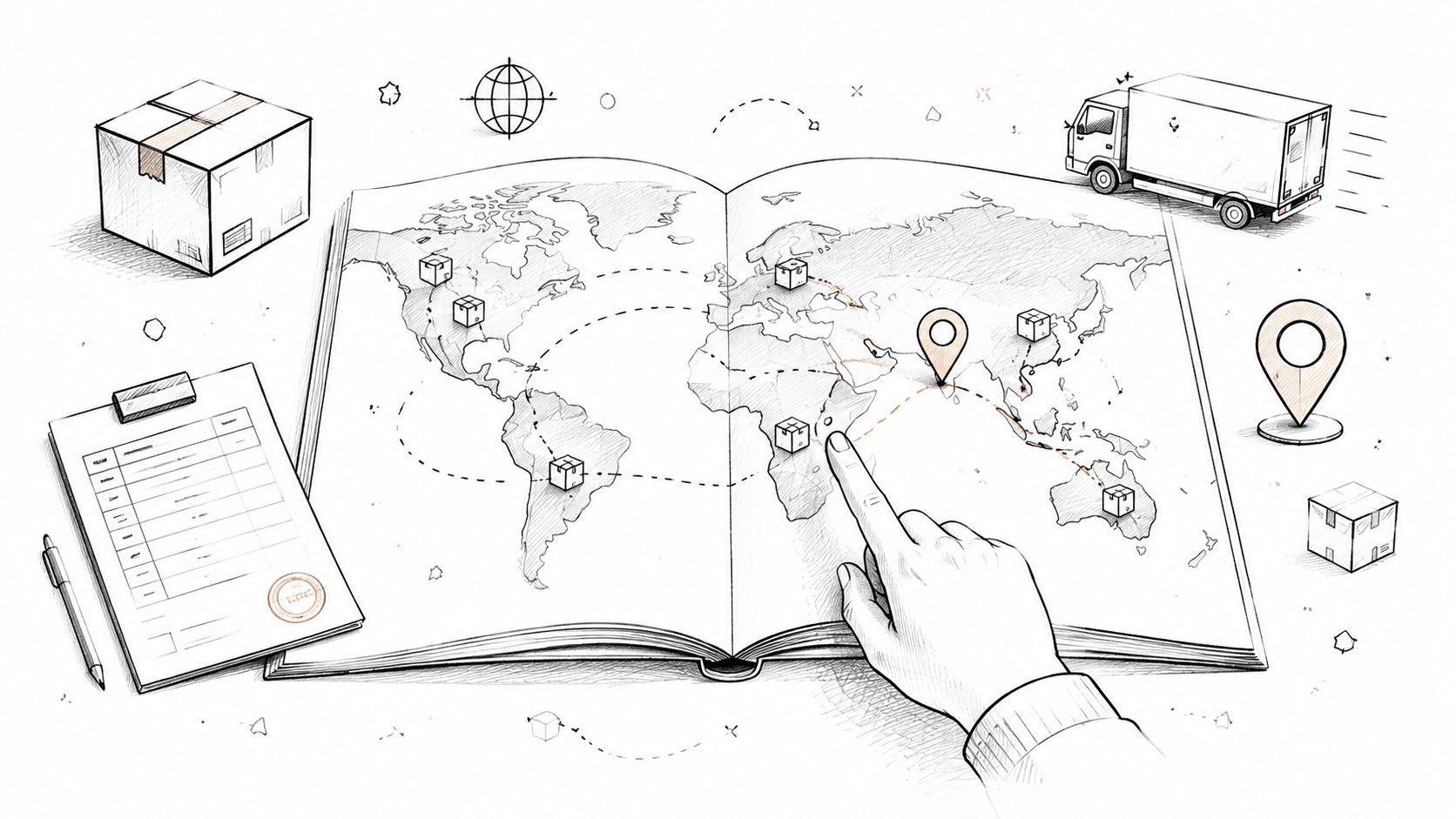
Master international shipping logistics for your crowdfunding campaign. Our step-by-step playbook covers cost modeling, customs, carriers, and fulfillment.
Your Kickstarter or Indiegogo campaign just funded. For a day or two, that feels like the finish line. Then the spreadsheets start multiplying, backers begin asking about delivery dates, your manufacturer wants carton dimensions, and someone on your team realizes nobody has finalized duty assumptions for Europe, Canada, or Australia.
That's the point where many creators discover that international shipping logistics isn't a post-campaign chore. It's the operational core of fulfillment.
The mistake I see most often is treating shipping as a pile of disconnected tasks. One person handles addresses. Another checks freight quotes. Someone else guesses at VAT. A freelancer updates the campaign page. A warehouse waits for a clean file that never quite arrives. The result isn't just stress. It's margin erosion, delayed parcels, customs holds, and angry backers.
A better approach is to treat fulfillment as one connected workflow. Product data, shipping rules, taxes, backer surveys, customs paperwork, carrier choices, and support communications all need to line up. When they do, shipping gets easier. When they don't, every small error cascades.
A funded campaign creates a strange kind of optimism. Creators assume the hard part is over because demand has been proven. In practice, the next phase is where operational discipline matters most.

I've watched this happen with hardware campaigns, tabletop launches, and accessory brands. Funding comes in, then critical questions appear all at once. Which countries are you shipping to? Are taxes prepaid or collected on delivery? Do your reward bundles fit the carton assumptions used in the campaign? Is your backer data clean enough for customs and carrier exports?
Shipping isn't a side expense. It sits inside a much larger market, and that matters because creators are buying into that complexity whether they planned for it or not. The global logistics market reached an estimated value of USD 11.23 trillion in 2025 and is projected to expand to approximately USD 24.36 trillion by 2035, according to Precedence Research's logistics market analysis. For creators, that means shipping will remain a significant operational expense, and efficient management directly protects margin.
That scale shows up in everyday campaign decisions. A small packaging change can affect carton counts. A missing tax rule can change what a backer owes at delivery. A weak export file can slow down your warehouse and trigger support tickets before the first parcel leaves.
Practical rule: If fulfillment still lives in disconnected spreadsheets after funding, you don't have a shipping process yet. You have temporary admin.
The campaigns that handle fulfillment well usually do three things early:
International shipping logistics becomes manageable when it's run like a single project with clear ownership. That doesn't remove complexity. It stops complexity from spreading.
Most shipping problems start before the first label is printed. They start when a creator promises global delivery without deciding how the operation will work.

A shipping strategy needs to answer four things early. Where you'll ship. What each destination will cost. Who pays which border charges. How exceptions will be handled when reality doesn't match the estimate.
Creators often say they'll ship “worldwide” because it sounds backer-friendly. That's usually too broad. Some destinations are straightforward. Others create address validation issues, customs friction, limited tracking quality, or expensive last-mile delivery.
Pick markets deliberately.
If you want a broader framework for this kind of planning, Zaro's guide on mastering international supply chain management is useful because it connects sourcing, inventory, and transportation decisions instead of treating them separately.
The cheapest quote rarely produces the best outcome. One of the most common shipping failures is inadequate strategic planning, and a practical success metric is setting clear objectives such as a 98% on-time delivery rate, while avoiding the mistake of overemphasizing base freight rates over total cost, as noted in this shipping strategy pitfalls analysis from Parcel Industry.
That changes how you compare vendors. Don't ask only, “What's the rate?” Ask:
| Decision area | What to check |
|---|---|
| Service reliability | Can this carrier hit your target transit window consistently? |
| Tracking quality | Will backers get useful milestone updates, or vague scans? |
| Customs support | Can the provider help with declaration accuracy and exception handling? |
| Delivery experience | Are duties prepaid, collected on delivery, or handled inconsistently by region? |
Many creators lose control by announcing shipping later and then improvising rules once surveys start coming in.
Use a simple policy stack:
Backers usually accept slower or more expensive shipping if the rules are clear. They react badly to surprise charges and changing terms.
A strategy that works for a few hundred orders can break under a larger survey wave. The weak points are usually the same. Manual fee edits, inconsistent SKUs, fuzzy zone rules, and no visibility into exceptions.
That's why strong creators design for scale from the start. If your shipping setup depends on one person remembering special cases from a spreadsheet tab, it won't hold.
Freight gets most of the attention. VAT, GST, duties, and documentation accuracy usually decide whether international fulfillment is profitable.

This is the budget line first-time creators underestimate most often. A campaign can look healthy on paper until import charges start appearing in real destination scenarios. Then margins disappear shipment by shipment.
A critical warning sign comes from small-scale crowdfunding itself. 42% of hardware campaigns in 2025 reported budget overruns solely from unanticipated import taxes, and creators often face unexpected 15–25% levy surcharges due to misclassified HS codes or incomplete documentation, according to EFW's analysis of international shipping challenges.
The problem usually isn't laziness. It's fragmented modeling.
One spreadsheet covers freight. Another tracks pledge levels. A survey tool collects addresses but not region-specific tax logic. Nobody has built a workflow that connects product classification, destination, order composition, and fee collection. That's how campaigns drift into undercharging.
The safest way to think about international shipping logistics is as a landed-cost exercise, not a postage exercise.
Use this sequence when pricing cross-border fulfillment:
A calculator helps, but only if the product data and shipping assumptions are already clean. For creators building that workflow, PledgeBox's international shipping tax calculator guide is useful because it focuses on survey-based collection rather than generic ecommerce checkout logic.
A lot of guides stop at “estimate taxes.” That's not enough. You also need a collection method that maps to what the backer ordered.
If your survey can't apply shipping and tax rules based on country, item mix, and reward selection, you'll end up reconciling charges manually. That's where teams lose time and introduce avoidable mistakes.
A practical survey flow should do three jobs:
| Survey job | What it should capture |
|---|---|
| Backer identity | Confirm name, email, and pledge mapping |
| Fulfillment data | Validate country, address format, and any special regional constraints |
| Financial collection | Apply shipping fees, VAT or tax treatment, and add-on logic in the same session |
This walkthrough is a helpful refresher before you finalize those assumptions:
What works is collecting known costs at the point where backers confirm final order details. What fails is hoping customs will sort it out cleanly later.
Field note: If a backer learns about an import charge from the delivery driver instead of your survey, your cost model was incomplete.
That's especially true for hardware, premium board games, and campaigns with bundles. The more reward complexity you add, the less room you have for broad assumptions.
Customs delays usually look mysterious from the outside. Inside the workflow, they're often traceable to ordinary mistakes. Wrong HS code. Wrong weight. Missing origin detail. Pickup booked against an outdated carton count.
That's why paperwork discipline matters more than clever last-minute fixes.
One practice is worth adopting immediately. A 10–15 minute daily risk-check routine that verifies HS codes, cargo weights, and carrier pickup times can reduce documentation errors by up to 42%, according to JCtrans reporting on freight forwarder risk checks.
That routine sounds almost too simple, but it works because it catches the exact kind of drift that creeps into campaign fulfillment. Product descriptions change. Package weights get updated after a packaging revision. Pickup windows shift. If nobody rechecks the basics, the export file no longer matches the physical shipment.
A short morning review should cover:
Customs problems don't usually come from one dramatic failure. They come from several small mismatches that nobody reconciled.
For crowdfunding shipments, the commercial invoice often gets treated like warehouse admin. It isn't. It's one of the key documents customs authorities use to understand what the shipment is, what it's worth, and how it should be handled.
The paperwork stack will vary by route and product, but creators should pay close attention to:
If you need a plain-English reference for one of those identifiers, this Chern & Co EORI explanation is a good starting point for understanding how EORI fits into cross-border trade.
For creators documenting these requirements before handoff, PledgeBox's customs documentation overview is a practical reference because it ties paperwork quality back to fulfillment exports and survey data.
Carrier selection goes wrong when creators compare services as if every parcel has the same job.
Global couriers are often the right fit for higher-value items, better tracking, and tighter delivery windows. Postal routes can make sense for lower-value shipments where cost control matters more than premium visibility. Regional specialists help when a destination has local quirks that bigger networks don't handle gracefully.
Use the product to choose the carrier, not the other way around.
The right mix is rarely one provider for everything. It's usually a portfolio.
Spreadsheets can hold data. They can't run a fulfillment operation well once variables start stacking up.
The moment you're handling reward variants, late pledges, add-ons, country-specific shipping, address changes, tax collection, and export files for a warehouse, you need a central system. At that point, a pledge manager stops being a convenience and becomes the operating layer for international shipping logistics.

Kickstarter's native pledge manager is like Amazon. It keeps you inside a more constrained ecosystem. A third-party pledge manager is like Shopify. You get more control over the branded experience, product logic, shipping regions, tax treatment, and add-on structure.
That distinction matters because crowdfunding fulfillment is rarely standard. You may need different shipping rules for a core pledge versus a bundle, different tax handling by region, and different reminders for backers who haven't completed their survey. A rigid environment makes those tasks slower and more manual.
One practical option is PledgeBox's crowdfunding pledge manager. Third-party pledge managers like PledgeBox operate like Shopify, enabling full control over branded surveys, shipping, and taxes. In contrast, Kickstarter's manager is like Amazon's constrained ecosystem. Critically, PledgeBox is free to send the backer survey and only charge 3% of upsell if there's any, based on the details described in that page.
A modern pledge manager should solve workflow problems, not just collect addresses.
Here's what I want automated before I consider the setup usable:
The strongest setups treat the pledge manager as the source of truth. Campaign platform data feeds in. Backers confirm and update their orders there. Shipping and tax logic runs there. Final exports for fulfillment come from there.
What doesn't work is splitting those jobs across disconnected apps. One tool sends surveys. Another validates addresses. A spreadsheet tracks shipping exceptions. A support inbox handles manual corrections. That kind of stack creates tool sprawl, and tool sprawl creates version-control problems.
A pledge manager should reduce operational decisions at the parcel stage. If your warehouse team still needs to guess which charge rule applied to which order, the setup isn't finished.
Creators often focus on platform fees during fundraising, then stop comparing costs during post-campaign operations. That's a mistake.
Kickstarter's native pledge manager charges a flat 5% platform fee on all funds processed through it, while PledgeBox's standard rate is 3%, or 1.5% for pre-launch linked campaigns, according to PledgeBox's comparison with Kickstarter Pledge Manager. Especially relevant for survey operations, sending the backer survey is free, with no setup, monthly, or per-backer survey cost, as outlined in PledgeBox's survey pricing explanation.
That cost structure changes how safely you can collect final data after the campaign. If survey distribution itself creates overhead, teams delay cleanup. When surveys are free to send, you can focus on data quality, not just tool cost.
By this stage, the strategy is set, charges are collected, and files are cleaner. The last mile still decides how backers remember the project.
Packaging needs to reflect the trip, not just the product. Fragile components need protection that survives cross-border handling. Labels need to match the fulfillment file exactly. If a package arrives damaged or is held because the label data conflicts with the customs file, backers won't care that your survey logic was elegant.
Final-mile execution is part logistics and part customer support. Tracking updates matter because they reduce uncertainty. A clear returns policy matters because international returns get expensive fast. Insurance matters when replacing a lost parcel would be more painful than insuring the shipment in the first place.
Use a simple support standard:
Fragmented tools create the most visible damage. If support can't see survey choices, if shipping data doesn't match tracking data, or if address corrections live only in email, the backer feels the disconnect immediately.
PledgeBox has been trusted since 2019 by over 8,000 creators, validating its role as an all-in-one toolkit that replaces tool sprawl and improves post-campaign ROI through integrated analytics and efficient fulfillment workflows, according to the information on PledgeBox. That matters at the final mile because fulfillment gets smoother when data collection, shipping logic, and order management live together.
The win isn't just fewer mistakes. It's a calmer backer experience. Packages move with fewer surprises, support replies get faster, and the creator looks organized instead of reactive.
If you want one place to collect backer data, apply shipping and tax rules, manage add-ons, and prepare clean fulfillment exports, PledgeBox is worth evaluating. It's free to send the backer survey and only charges 3% on upsell revenue if there's any, which makes it practical for creators who need tighter control over post-campaign fulfillment without adding more tool sprawl.
PledgeBox
The All-in-One Toolkit to Launch, Manage & Scale Your Kickstarter / Indiegogo Campaign