 PledgeBox
Mastering Customs Documentation for Crowdfunding
Master customs documentation for your crowdfunding campaign. Our guide covers invoices, HS codes, and pitfalls for smooth backer fulfillment.
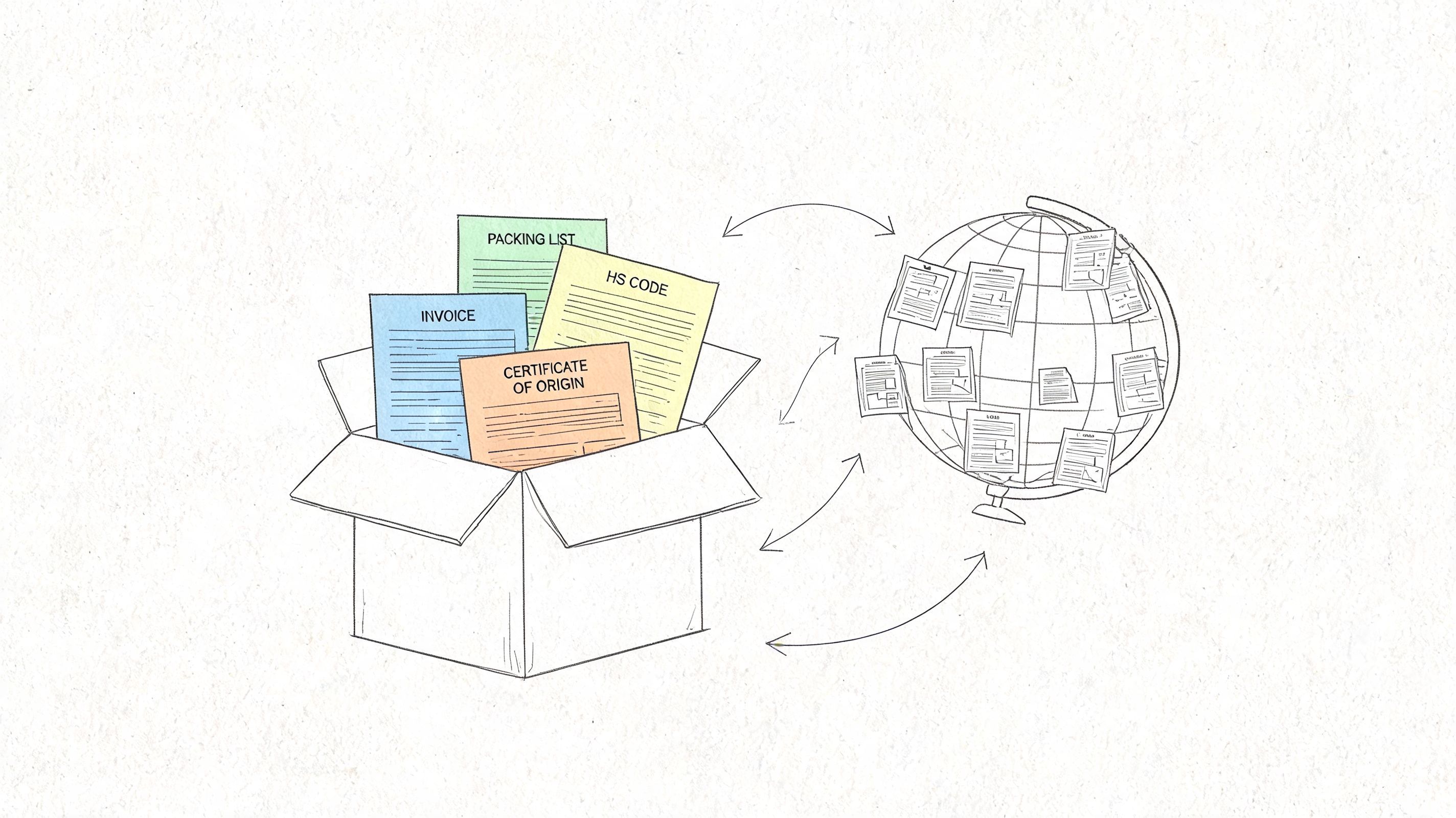
Master customs documentation for your crowdfunding campaign. Our guide covers invoices, HS codes, and pitfalls for smooth backer fulfillment.
Your campaign funded. The comments are buzzing, your updates are getting hearts, and for a day or two it feels like the hard part is over.
Then the survey data starts coming in. One backer upgraded. Another added two accessories. A third moved from Canada to Germany after the campaign. Someone else wants a replacement shipped to a different address. Now your neat reward tiers have turned into a messy pile of real-world orders, and that's usually when customs documentation enters the chat.
Many first-time creators get blindsided at this stage. They think customs documentation is a form you fill out at the end. In practice, it behaves more like your campaign's final systems test. If your data is clean, goods move. If it isn't, boxes sit still.
I've seen this pattern many times. A creator spends months refining the page, polishing the prototype, and managing manufacturing. Then fulfillment starts, and international shipping gets treated like the easy last mile.
It isn't the easy part.
For a crowdfunding project, customs documentation is the point where your campaign promise turns into an official trade record. Customs records are the main data source for the UN's international trade statistics because they reflect the physical movement of goods, and in the U.S., Title 13 directs the collection and publication of foreign trade statistics on a monthly and cumulative basis, as described in the UN trade data compilation guidance. That sounds abstract until you realize your invoice and declaration aren't just labels for a box. They're the formal story of what crossed a border.
Normal retail is repetitive. A store ships the same SKU set again and again.
Crowdfunding is different. Your orders change after the campaign closes. Add-ons reshape the order. Late pledges change quantities. Bundles create strange line items. Replacement shipments don't match the original pledge. Customs documentation has to make sense of all of that.
Practical rule: Customs doesn't care how your reward tier sounded on Kickstarter. It cares whether the shipment data is clear, consistent, and supportable.
A first-time creator often thinks, “My 3PL or broker will handle it.” They can help, and they should. But they can't invent good product data if your campaign system exports vague item names like “Early Bird Deluxe Set Plus” or “VIP Bundle.”
At a basic level, customs wants a consistent description of the shipment. What is it. Where was it made. What is it worth. Who is receiving it.
That's why I call customs documentation the final boss. It tests everything upstream. Your SKU setup. Your backer survey. Your invoice logic. Your fulfillment export. Even your naming habits.
If you handle it early, it becomes manageable. If you leave it until cartons are ready to leave the warehouse, it becomes a scramble.
The failure usually doesn't begin at the border. It begins in your post-campaign data.

A creator may think they're shipping one reward. In reality, they're shipping a changing set of values, origins, item descriptions, and buyer records. That's why crowdfunding customs problems are rarely “just paperwork.” They're usually the visible symptom of mismatched records.
The key problem is simple. Every shipment may need proof that the declared value matches what was paid. When add-ons, late pledges, or bundled rewards change the final commercial value from the original pledge, that discrepancy can trigger holds because undervaluation is a common fraud pattern authorities screen for, as explained in this overview of customs undervaluation risk.
A typical crowdfunding workflow creates several versions of the truth:
If those four don't line up, customs documentation becomes shaky.
That's why the phrase “just send what they ordered” is more dangerous than it sounds. What they ordered may have changed several times since launch day.
Poor customs documentation creates practical headaches before it creates legal ones. Parcels get held. Carriers ask for revised paperwork. Backers see no movement and assume the project is failing. Your support inbox gets flooded with questions your team can't answer cleanly because the records themselves are inconsistent.
Then the fixes start eating time. Someone has to review item descriptions. Someone has to re-check values. Someone has to confirm whether the replacement unit should carry the same declared value as the original package.
This short video gives a useful overview of why customs paperwork goes wrong and why consistency matters:
The fastest way to create shipping chaos is to treat customs documentation as a warehouse task instead of a data-management task.
That's the big shift many creators need. If you solve the data model after the campaign, the paperwork becomes far less painful. If you skip that step, every shipment becomes a little custom exception.
Most customs documentation sounds more intimidating than it is. I tell creators to think of it as a set of documents that all need to tell the same story.
If one document says “gaming accessory set,” another says “plastic parts,” and a third says “collector reward,” customs sees three stories, not one shipment.

The most important rule here is consistency. The commercial invoice is the primary document customs uses for determining duties and taxes, and discrepancies between it and the packing list, transport document, or origin certificates are a common cause of holds because customs can't reconcile the shipment record, according to this guide on export documentation requirements.
Think of the commercial invoice as the master script.
This document tells customs what the goods are, who is sending them, who is receiving them, and what value is being declared. For most creators, this is the document that needs the most care because it drives duty and tax decisions.
If your invoice uses vague campaign language, you're asking for trouble. “Founder Edition Bundle” may make sense to your backers. It doesn't explain anything to customs.
A better description is specific and boring. “Tabletop game accessory set, plastic and paper components, for home entertainment” is far more useful.
The packing list is the “what's in the box” record.
It helps customs and carriers check quantity, box contents, and package structure. If your invoice says one thing and your packing list suggests another, you've created a mismatch that can slow clearance.
The transport document is the carrier-facing record. Depending on the shipping mode, this may be an air waybill or bill of lading. You don't need to memorize every format, but you do need to make sure the shipment details match your invoice and packing list.
Warehouse habit: Your invoice, packing list, and transport document should read like three copies of the same truth written for different readers.
A certificate of origin works like a product passport. It helps prove where goods were made and may affect tariff treatment or preference eligibility.
This matters more than many creators expect, especially if your product uses parts from several suppliers but final assembly happens in one country. You need a clear decision from your trade advisor or broker on what origin will be declared.
For postal shipments, you may also run into CN22 or CN23 forms. These are simplified customs declarations used in mail channels. They're not a substitute for messy internal data. They still need accurate descriptions and values.
If you want more practical reading on avoiding international customs delays, that guide is useful because it focuses on the kinds of documentation mismatches that slow cross-border shipments.
| Document | Primary Purpose | When It's Needed |
|---|---|---|
| Commercial Invoice | Main record for duties, taxes, item description, value, sender, and receiver | Needed for commercial international shipments |
| Packing List | Shows what is physically packed, including quantities and package contents | Needed when customs or carriers must verify shipment contents |
| Transport Document | Records the shipment with the carrier and matches movement details | Needed whenever goods move through a carrier network |
| Certificate of Origin | Supports origin claims and trade treatment | Needed when origin must be proven or claimed |
| CN22 or CN23 | Simplified declaration for postal shipments | Needed for international mail shipments where postal customs forms apply |
The mistakes I see from creators are usually logical. They just aren't customs-safe.
For example, a creator assumes a low-value parcel won't get much scrutiny. Another uses the campaign tier name as the line item description. Someone else treats a bundled reward as one generic product because that's how it was sold on the campaign page.
That's how rejected shipments start.

A lot of creators still think small parcels under the de minimis threshold are basically “no-doc” shipments. That's outdated.
In 2024, CBP tightened requirements for Entry Type 86 low-value imports and called for more precise data such as HTSUS codes and consignee information, as outlined in this note on new low-value import requirements. The practical lesson is simple. Lower value doesn't mean lower data standards.
So if your project is shipping lots of small backer parcels, you don't need less process. You need cleaner process.
A related issue is VAT and tax handling. If you're working through crowdfunding-specific shipping questions, this guide on navigating customs and VAT for Kickstarter is a useful operational reference.
A creator may write “electronic accessory” on a form because it feels safe and broad. Customs often reads that as incomplete. Is it a charger, a controller, a Bluetooth device, a lighting unit, or a battery-powered component?
The more novel your product is, the more precise you need to be.
Don't write for your marketing team. Write for an inspector who has never seen your product before and needs to classify it quickly.
That same rule applies to replacements and split shipments. If a backer gets the core reward now and stretch-goal items later, each shipment still needs a coherent record of what is moving.
The fix is to build one clean source of truth before fulfillment begins.
This doesn't need to be complicated. It does need to be disciplined. A sound customs filing is built around three fields: HS code classification, country of origin, and valuation, and vague product descriptions create misclassification risk, according to this practical guide on customs documentation for smooth trade operations.
Every SKU in your campaign should have a real item record. Not just the hero product. Every variant, accessory, upgrade, spare part, and stretch-goal component.
Your item master should include:
If you don't build this table early, your team ends up improvising under deadline. That's when generic descriptions spread into invoices and labels.
Creators often outgrow the native survey flow. Kickstarter's pledge manager experience is a bit like Amazon. It's convenient, standardized, and good for a basic flow. A dedicated pledge manager is more like Shopify. You control more of the customer journey, the data structure, and the post-campaign logic.
PledgeBox is one example. It lets creators send the backer survey for free and only charges 3% of upsell if there's any, which makes it a practical option when you want branded surveys, add-on handling, address validation, VAT or tax collection, and clean exports for fulfillment. For freight planning on the warehouse side, this walkthrough on booking freight to your crowdfunding fulfillment center helps connect survey data to the next operational step.
A fulfillment partner shouldn't have to guess what “Super Early Bird Tech Pack Plus” means.
Your final export should translate campaign language into shipping language. That means each line item should map to a clear SKU and description. Bundle logic should be resolved before the file leaves your system. If an order contains base reward, add-on cable, and replacement adapter, those should appear as distinct records if your documentation process requires them.
A strong workflow usually looks like this:
Creator shortcut: If a human has to “fix it later” in a spreadsheet, that field probably belongs in your system of record.
Before you hand data to your 3PL, freight forwarder, or warehouse, stop and run a clean check. At this stage, small fixes are cheap.
Ask these first:
Now check the way your records line up:
If you want a broader operational compliance reference, this article on how to avoid SARS penalties with this export guide is worth reviewing as a checklist mindset resource.
These are the final questions I'd ask before release:
Clean customs documentation starts long before the label prints. It starts when your product data becomes stable.
The creators who handle customs documentation well usually aren't customs experts. They're organized.
They understand that international shipping after crowdfunding is a data problem first. Once they accept that, the process gets much less mysterious. Product records get cleaned up. Survey outputs become usable. Warehouses receive better files. Backers get fewer unpleasant surprises.
That's also how a first campaign starts to feel like a real brand. You stop improvising at the border. You ship with a system.
Customs documentation will probably never be the fun part of your project. But it can absolutely become a controlled part. And once you have that under control, global fulfillment stops feeling like chaos and starts feeling like repeatable operations.
The creators who learn this early are easier to work with, easier to trust, and much better prepared for the next campaign.
If you want a cleaner post-campaign workflow, PledgeBox gives creators one place to collect surveys, manage add-ons, organize backer data, and prepare fulfillment exports without adding upfront survey fees. It's a practical way to turn messy campaign orders into shipping-ready records before customs documentation becomes a fire drill.
PledgeBox
The All-in-One Toolkit to Launch, Manage & Scale Your Kickstarter / Indiegogo Campaign