 PledgeBox
Pro Wrestling Board Games: A Creator's Guide to the Ring
Ready to create your own pro wrestling board games? This step-by-step guide covers concept, licensing, design, crowdfunding, and fulfillment for creators.
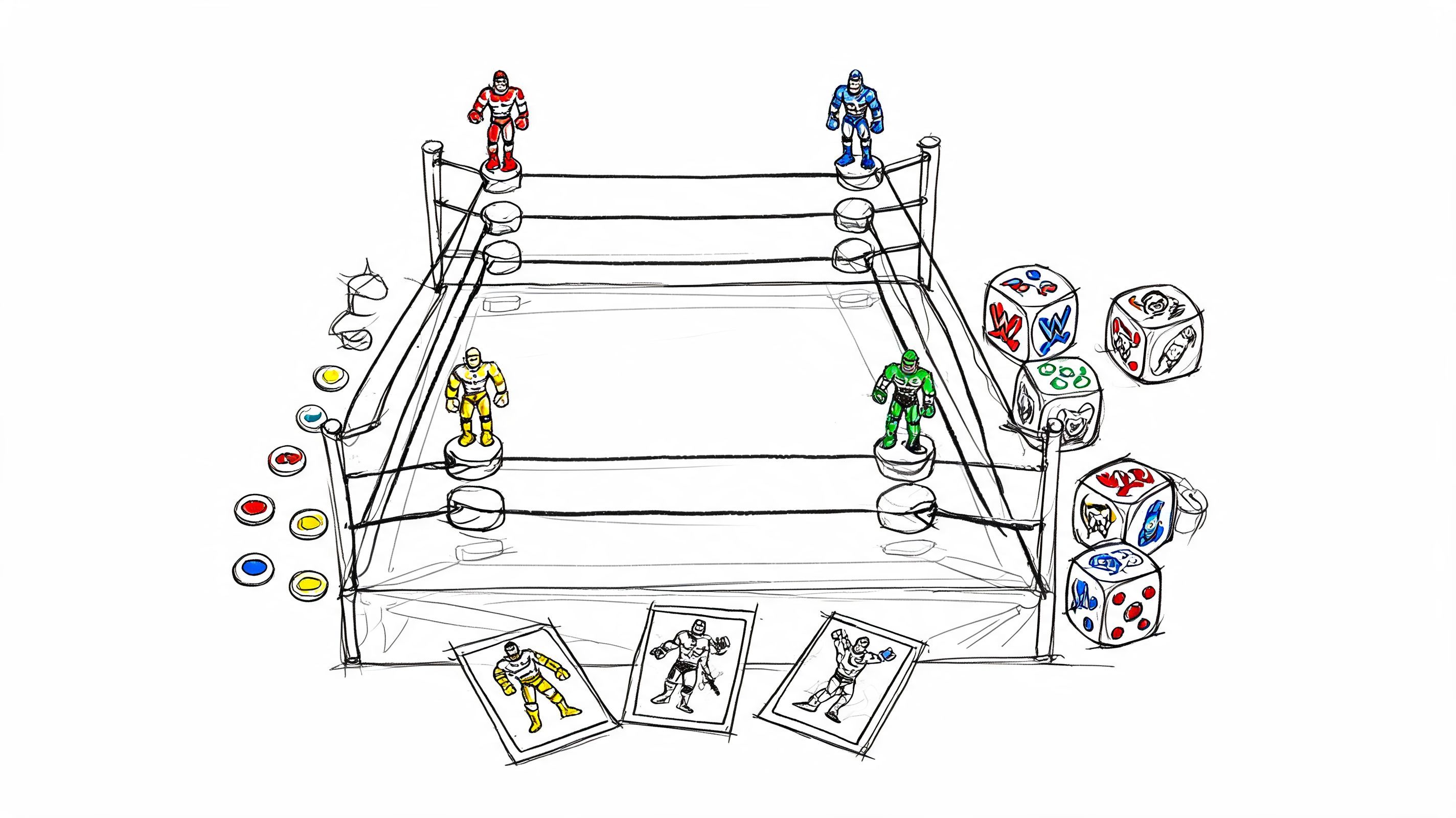
Ready to create your own pro wrestling board games? This step-by-step guide covers concept, licensing, design, crowdfunding, and fulfillment for creators.
You're probably sitting on the same idea a lot of wrestling fans and tabletop designers have had at some point: a game that captures the swing of momentum, the pop of a finisher, the dirty trick, the comeback, and the argument over whether a legend from one era could beat a monster from another.
That idea is good enough to start. It is not good enough to launch.
Pro wrestling board games live in a niche that's smaller than general fantasy or sci-fi gaming, but more emotionally charged. Fans care about authenticity. They care about move sets, match pacing, character presentation, and whether the game feels like wrestling instead of a generic combat system wearing a championship belt. On the business side, the niche creates a different set of pressures too. IP can be expensive. Community expectations are high. And the line between a premium collectible and an accessible entry product is easy to misread.
The creators who do this well treat the project like both a game design job and a live event. They build anticipation, protect margins, and make sure the product supports the fantasy from first reveal to final delivery.
A new creator usually reaches the same moment. The wrestler art looks great, the finishers are fun to name, and friends already have opinions about who should be overpowered. Then the hard question shows up. Is this a fun wrestling idea, or a product that can survive manufacturing, licensing, crowdfunding, and fulfillment?
That distinction matters early.
A pro wrestling board game succeeds when three jobs are handled at the same time. The game has to create a match story people can feel, teach cleanly to players who may not follow wrestling, and present a campaign offer that looks worth backing on first glance. Miss any one of those, and the project gets harder to fund and harder to deliver.
I tell wrestling creators to define the ring experience before they price a single component. Start with the moment your game must deliver every session. Maybe it is the momentum swing before a finisher. Maybe it is heel interference, crowd heat, or the long arc of pushing a nobody into a champion. Build the cheapest prototype that still produces that feeling. If that version falls flat, upgraded pieces will not save it.
This niche also punishes vague positioning. Wrestling fans notice when a game treats the sport like generic combat with belts. Hobby backers notice when the rules depend on fan knowledge to stay interesting. The sweet spot sits in the middle. The design should reward wrestling familiarity without requiring it.
That product discipline is what separates a collectible pitch from a fundable game. Campaigns with broad appeal still need a clear fantasy, but niche themes need sharper translation on the page. One useful benchmark is how major IP-heavy projects explain spectacle, exclusives, and component value in a way backers can grasp fast, as seen in this Marvel Zombies Kickstarter campaign breakdown. A wrestling game needs that same clarity, even if the scale is much smaller.
The same goes for ownership. Before public reveal, creators need to know what they control, because names, likenesses, logos, signature moves, and promotion references can change both risk and cost. That work starts with understanding IP for corporate growth, then applying it to wrestling-specific realities like talent approvals, estate rights, and the shelf life of a licensed roster.
A workable project usually follows a simple sequence:
Treat those as seven separate business decisions, not one creative blur. A wrestling theme can get attention. A disciplined plan is what gets the game made.
The first real fork in the road is whether you build an original wrestling universe or pursue licensed wrestlers, promotions, or legends.

If you go original, you own the world. You can invent factions, gimmicks, promotions, match stipulations, commentary tone, and visual style without waiting for approvals. That freedom matters more than many first-time creators realize.
Original IP also lets you design around gameplay first. You don't need to force a real wrestler's brand into mechanics that don't fit. If you want a masked high-flyer with a crowd-risk engine or a hardcore brawler who gets stronger when injured, you can make that work on the table without negotiating anyone's likeness rights.
The downside is obvious. You don't inherit audience recognition. You have to do the work of making people care.
That means your art direction, naming, wrestler bios, and faction identity need to do heavier lifting than they would in a licensed game. The world has to feel intentional, not like a placeholder because licenses were unavailable.
Licensed wrestling games offer a shortcut to emotional investment. Filsinger Games' Legends of Wrestling shows why this path remains attractive. A game built around iconic names gains immediate recognition, and that connects to a sport with deep roots reaching back to wrestling's place in the ancient Olympic Games from 776 BCE, alongside a modern audience that exceeds 1 billion for major events, according to Britannica's overview of wrestling history and audience context.
That built-in recognition can improve your campaign page, ad creative, and reviewer coverage because people instantly understand the fantasy. “What if these two wrestlers faced off?” is easier to sell than “Meet ten original characters you've never heard of.”
But licensed IP comes with friction:
If you are thinking long term, it helps to approach IP as a business asset rather than just a permission slip. This broader view of understanding IP for corporate growth is useful because it frames ownership, competitive advantage, and strategic value the way a publisher should.
Licensed IP helps you get attention. Original IP helps you keep flexibility.
Use this table before you contact anyone.
| Path | Best fit | Main risk | Best reason to choose it |
|---|---|---|---|
| Original IP | First-time creators, lower-budget launches, mechanics-first projects | Harder audience acquisition | You want control and sequel potential |
| Licensed legends or brands | Established teams, strong legal support, audience-driven campaigns | Approval complexity and thinner margins | You need instant recognition |
One more warning. Don't build your whole campaign around “we'll probably get the license.” Either secure the rights or design around not having them. Half-licensed concepts look amateur fast.
For a good example of how recognizable IP can shape the way a campaign is framed and merchandised, study campaigns like Marvel Zombies on Kickstarter. The lesson isn't “copy this.” It's “notice how much the brand changes every packaging and pledge decision.”
A wrestling game lives or dies on feel. If turns are flat, if reversals don't create tension, or if finishers land without setup, players won't call it a wrestling game no matter how good the art is.
Start with one match story you want the system to tell. Not five. One.

All Time Wrestling Extreme is a useful case study because it makes momentum visible and mechanical. Its combat system uses a momentum meter to change dice-roll difficulty, and playthrough simulations cited in coverage showed an approximate 65% win rate for players who held over 50% meter dominance after 5 turns, which makes the meter more than a thematic add-on. It becomes the center of match strategy, as described in this ATW Extreme playthrough analysis.
That matters for design. Wrestling isn't just damage exchange. It's positional drama. A good momentum mechanic does at least three jobs:
If your prototype uses dice, card icons, or tracks, ask whether they create those three outcomes. If not, you may have built a combat game, but not a wrestling one.
A different path appears in games like Get Over, which blends wrestling themes with deckbuilding and phased rounds. That style works when you want the feeling of a wrestler adjusting over the course of the match rather than only reacting turn by turn.
That can be especially effective if your design fantasy is less “one explosive exchange” and more “build pressure, adapt, and strike when the opponent is worn down.” In practice, this usually creates richer hand management and a stronger sense of setup, but it also risks slowing the pace if every build choice feels like homework.
A simple test helps here. After a few rounds, ask players what they remember. If they remember combos, reversals, and near-finishes, you're on the right track. If they remember sorting cards and reading text, you need to simplify.
One low-cost way to get there is with rough physical testing. This guide to paper prototype game design is useful because wrestling games benefit from quick iteration more than polished early production.
Your first prototype can be ugly. It cannot be vague.
Use index cards, printed paper, a six-sided die, and tokens from another game if you need to. What matters is that every piece answers a specific rule question. How do you gain momentum? When can you reverse? What opens a pin attempt? How do weapons, interference, or stipulations change risk?
A reliable early prototype checklist looks like this:
Later, when the turn flow works, show it. A short visual explanation often teaches better than paragraphs of rules.
Friends who love wrestling will forgive confusion. Strangers won't.
That's why blind playtesting matters. Hand the prototype to people who were not in your design conversations. Watch where they hesitate. Don't defend the game. Don't explain unless the test format requires it. Just observe where the rules fail to communicate.
If a player can't tell whether a move is strong, risky, or situational from the component in front of them, the problem is usually presentation before balance.
The strongest wrestling prototypes communicate drama at a glance. Big moves look dangerous. Reversals feel interruptive. Momentum shifts are visible. Players should feel the match state without needing to audit the board every turn.
Most crowdfunding mistakes in this niche start with a bad product-positioning decision, not bad ad copy.
Creators often drift into one of two traps. They either cram the box with premium components because wrestling fans love collectibles, or they strip the game down so hard in pursuit of accessibility that the campaign loses presence. That tension is especially sharp in pro wrestling board games because fandom rewards spectacle, but crowdfunding punishes vague value.
A real gap in the space is that many creators still guess at whether their game should be sold as a premium collectible or an accessible budget title. Coverage of the niche has pointed out that this guesswork leads to weak tier design because data on price-to-engagement in wrestling crowdfunding is scarce, forcing creators to rely on instinct more than a reliable framework, as discussed in this analysis of pricing and positioning gaps.
Start with a complete cost map. Don't write “standard edition” and “deluxe edition” first and then try to make the numbers behave later.
Your budget should account for:
For a practical budgeting workflow, this guide to crafting a Kickstarter project budget is a strong starting point because it forces you to connect cost assumptions to actual campaign structure.
Here's the trade-off in plain terms.
| Positioning | What backers expect | What can go wrong |
|---|---|---|
| Premium collectible | Strong presentation, upgraded components, showpiece appeal | Price resistance, bloated SKUs, fragile margins |
| Accessible budget title | Fast buy-in, simpler pledge choice, easier gifting | Lower perceived event value, fewer upgrade hooks |
The right answer depends on the core fantasy. If your pitch is “legends, spectacle, and a centerpiece for wrestling fans,” premium may fit. If your pitch is “fast head-to-head action anyone can teach in one session,” accessible may be stronger.
Don't split the difference carelessly. A campaign that looks premium but is priced like a budget item can create suspicion. A campaign that's clearly budget but promises luxury expectations can create disappointment.
Before launch, you need proof that people care enough to click, sign up, and come back. That usually comes from three channels working together:
A good planning resource like the Saaspa.ge product launch resource helps because it reminds you to sequence launch assets instead of improvising them the week before the campaign goes live.
Field note: If the only people excited before launch are your friends and the artists you hired, you don't have pre-launch traction yet. You have internal enthusiasm.
That distinction matters. Hype is not what you feel building the game. Hype is what strangers demonstrate before the campaign asks them for money.
Your campaign page needs to do two jobs at once. It has to sell the fantasy of the game, and it has to remove friction from the buying decision.
The first screen should answer three questions quickly: what the game is, why it feels like wrestling, and why this version is worth backing now. If visitors have to scroll too far to understand the hook, your page is already working uphill.

The campaign video sits at the top of the page strategy because it establishes pace and confidence. Keep it focused. Show the game on the table. Show components in motion. Show the emotional result of a reversal or finisher. Wrestling projects do better when the video feels like a match preview instead of a corporate intro.
After the video, use a short visual block that makes the product legible:
Don't bury gameplay under lore. Lore deepens interest after understanding. It doesn't replace understanding.
A strong board game page usually follows this order:
That sequence works particularly well for pro wrestling board games because the theme is dramatic and easy to oversell. Structure keeps the page trustworthy.
A few execution details matter more than creators expect:
Your rules section on the campaign page is not the full rulebook. It is a conversion asset.
Show a turn sequence with annotated images or GIFs. Label what momentum changes. Show when a finisher becomes legal. If there are match types, explain the one that sells the game best. Let optional depth come later.
A campaign page fails when visitors admire the theme but still can't picture themselves taking a turn.
Your story belongs lower on the page, once the game has earned curiosity. Tell people why this project exists, why you're the team to make it, and what wrestling means to the design. Passion helps. Precision converts.
If you are using stretch goals, keep them coherent. Extra wrestlers, match modules, upgraded components, or scenario content make sense. Random side merch often doesn't. Every included item should strengthen the same fantasy, not scatter attention.
A wrestling campaign can fund on Friday and create support problems by Monday.
The trouble usually starts after the applause. Backers need to confirm addresses, choose add-ons, pay shipping if you collected it later, and understand exactly what they are receiving. If that system is vague, every unclear choice turns into an email, a refund request, or a packing error.
Pro wrestling games hit this stage harder than many other tabletop projects because the offer often grows beyond a core box. A standard euro can survive with one reward and a playmat. A wrestling project often carries alternate wrestler decks, faction-based extras, stipulation modules, promo cards, collector upgrades, and sometimes licensed talent tied to specific pledge levels. That mix puts real pressure on your post-campaign tooling.
Kickstarter's built-in pledge management can handle a simple project with limited tiers and very few add-ons. If you sold one base game, one deluxe version, and domestic-friendly shipping, keeping everything in the native system may be the right call.
In more complicated campaigns, a dedicated pledge manager becomes the better tool.
What matters is control. Dedicated platforms give you more room to structure surveys, collect late shipping, segment backers by region, reopen the store for late pledges, and sell add-ons without making the process harder to follow. For a wrestling title, that usually matters once your campaign includes:

Post-campaign upsells perform best when they feel like a natural extension of match drama and replay value. Alternate wrestlers, stipulation packs, upgraded tokens, neoprene mats, and faction modules all make sense because they support the same core fantasy. Random apparel, unrelated merch, or loosely connected extras usually create friction and raise a more dangerous question from backers: what should have been in the main box to begin with?
That trade-off matters. Every extra item can raise average pledge value, but every extra SKU also raises the chance of survey mistakes and fulfillment errors. New creators often focus on revenue and miss the operational cost sitting behind it.
The survey experience deserves serious attention. A backer should be able to tell, in one pass, what they pledged for, what they added, whether shipping is paid, and which address is on file. If any of those points feel uncertain, support volume climbs fast.
Backers are patient with delays more often than they're patient with confusion.
Licensed wrestling projects need even more discipline here. If an add-on uses a specific wrestler likeness, name, or logo under a limited agreement, your pledge manager setup has to reflect that clearly. Do not create fuzzy bundles that blur what is licensed, what is exclusive, or what may change if an approval runs late. Clear product labeling protects both the backer experience and your legal position.
There is also a practical cost argument for stronger tooling. PledgeBox is free to send the backer survey and only charges 3% of upsell if there's any. For creators testing a larger post-campaign store without adding another upfront software bill, that structure can make sense.
A wrestling campaign can feel finished when funding closes. In practice, the most expensive mistakes often show up after the campaign, when cartons are built, labels are printed, and one bad spreadsheet turns a clean launch into weeks of support tickets.
Fulfillment for a pro wrestling board game has its own pressure points. Collector backers care about box condition. Licensed items may need to ship only to certain regions or within a specific approval window. A foil promo card, a wrestler-specific mini, or a signed insert can turn a simple pick-and-pack job into a multi-SKU operation fast.
That is why fulfillment planning starts before production wraps. Your factory files, carton plan, SKU names, and pledge data all need to match the actual products backers bought.
Run an operations check before inventory leaves the factory or lands at a regional hub:
I tell first-time creators to pay special attention to collector packaging. A standard board game mailer may be enough for a family euro. It often is not enough for a wrestling title with display value, black-finish boxes, or limited edition sleeves. Better packaging raises unit cost, but cheap packaging usually costs more once replacements, labor, and goodwill are counted.
International shipping needs the same discipline. If your campaign includes wrestler-specific content, customs descriptions and declared values have to be accurate, and your team needs a plan for VAT, duty handling, and lost-package replacements by region. Confusion here does not stay small for long.
Backers do not need filler updates. They need timing, facts, and decisions.
Send updates when manufacturing is complete, when freight is on the water or booked by air, when stock clears into each region, and when tracking emails are about to go out. If production slips because a licensor held up final card approval or a factory found a print issue in a champion belt token sheet, say so directly. Wrestling fans can handle bad news. They react far worse to vague language and shifting dates.
The finish matters. A backer opens the box, sees every promised item, and posts photos of a title match on game night. That result is not luck. It comes from boring operational work done well.
If you're preparing to launch pro wrestling board games and want a smoother path from backer surveys to add-ons and fulfillment, PledgeBox is worth a close look. It gives creators an all-in-one system for post-campaign management, and the pricing is unusually creator-friendly: it's free to send the backer survey, and it only charges 3% on upsells if there are any. If Kickstarter's native pledge manager feels like Amazon, PledgeBox feels more like Shopify. You get more control over the backer experience, more room to merchandise add-ons properly, and a cleaner handoff into fulfillment.
PledgeBox
The All-in-One Toolkit to Launch, Manage & Scale Your Kickstarter / Indiegogo Campaign