 PledgeBox
Here to Slay Kickstarter: A Case Study for Creators
A deep dive into the Here to Slay Kickstarter. Learn from its massive success and hidden challenges to master your own campaign's fulfillment and upsells.
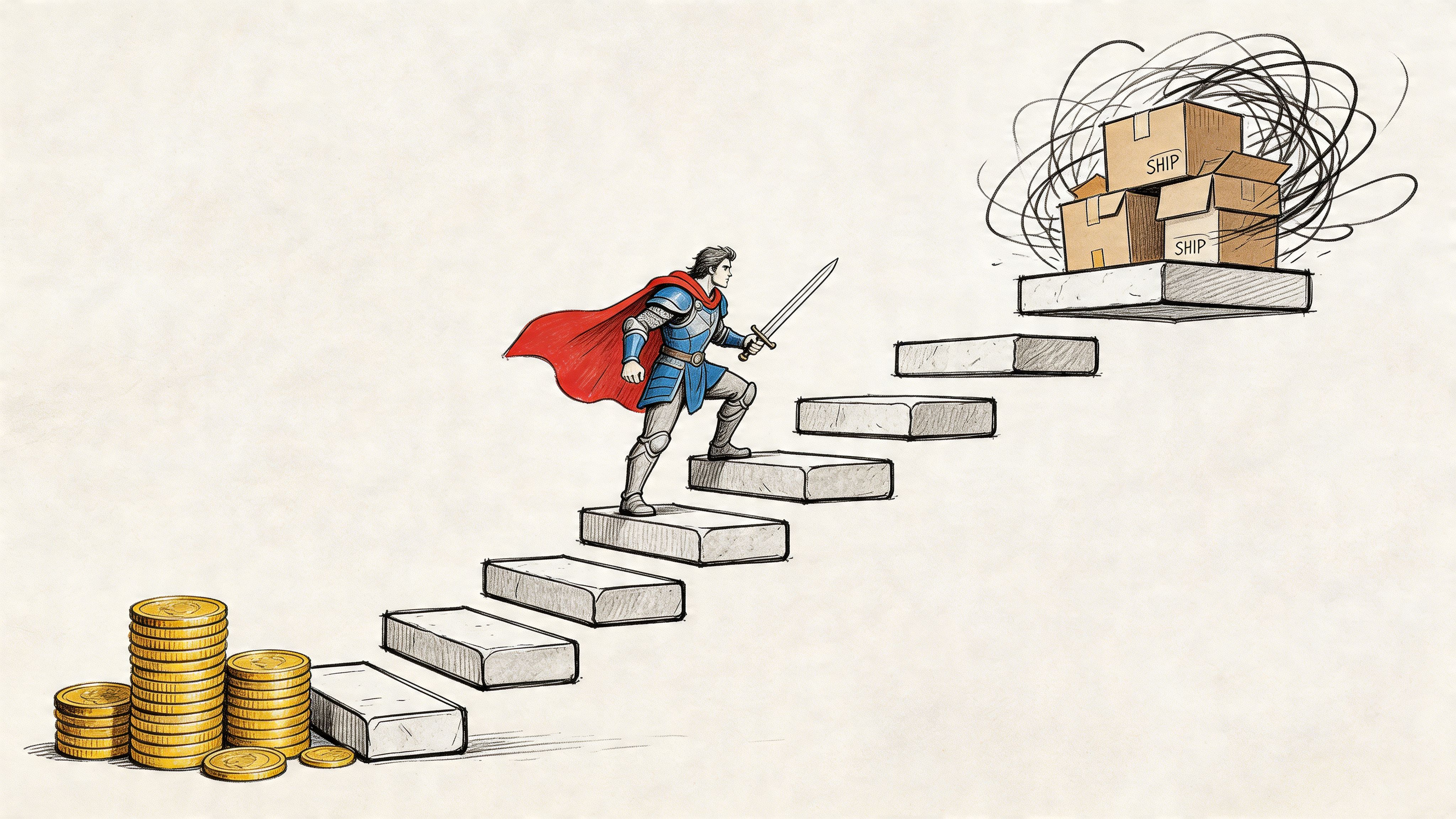
A deep dive into the Here to Slay Kickstarter. Learn from its massive success and hidden challenges to master your own campaign's fulfillment and upsells.
The first time you watch a campaign go nuclear, the dashboard feels like a reward. A few days later, the inbox, SKU sheet, shipping matrix, and backer questions remind you that viral demand is only the beginning.
Here to Slay Kickstarter is one of those campaigns creators still bring up when they want proof that a tabletop project can break out far beyond its niche. It reached 30,774% of its funding goal and later sold over 1 million copies within its first year, according to Tabletop Analytics on Ramy Badie.

That headline number tells one story. The operating reality tells another.
A campaign at that scale doesn't produce one order. It produces a moving system of reward tiers, address collection, failed payments, regional shipping constraints, collector expectations, and thousands of people who all believe their case is the urgent one. That's normal. Success multiplies complexity faster than most first-time creators expect.
Here to Slay had the kind of appeal founders chase for years. Easy-to-grasp game concept. Strong visual identity. Broad giftability. Clear exclusives. Fast shareability. Those are the ingredients of breakout funding.
But the second a campaign overperforms, the creator's job changes. You're no longer only selling a vision. You're managing production promises and customer operations at a scale many small teams have never handled before.
Practical rule: A blockbuster campaign isn't easier to fulfill than a modest one. It's harder, because every small mistake gets repeated thousands of times.
That's why experienced teams study overfunding differently. They don't only ask how a campaign raised so much. They ask what systems had to exist after the funding spike. If you're interested in that side of campaign design, this breakdown of overfunding factors in crowdfunding success is worth reading alongside the public success story.
The fairy tale is real. So is the frenzy.
Here to Slay didn't look accidental. It looked prepared.
The strongest campaigns usually win twice. First before launch, then again on launch day. By the time backers see the page, the audience has already been warmed up, segmented, and primed to act fast. For campaigns like this, pre-launch audience building matters because effective funnels often drive 30% of total funding in the first 48 hours, and campaigns that skip a 2 to 4 month pre-launch phase see 50% lower Day 1 velocity, according to Boost Your Campaign's Kickstarter ads analysis.
Here to Slay had a strong advantage many creators underestimate. You could grasp the pitch quickly.
That matters more than founders want to admit. Board game campaigns often fail because the reward structure is clear but the game itself isn't. Here, the promise was legible. Cute art, competitive energy, and RPG-flavored mechanics made the campaign easy to share with both hobby players and more casual buyers.
A viral campaign usually has one sentence people can repeat to friends. Here to Slay had that.
When a game explodes on Kickstarter, creators sometimes over-credit the campaign page and under-credit the pre-launch work. The page still matters, but launch-day demand is usually a lagging indicator of what happened earlier through social content, creator reputation, community buzz, and list building.
The practical lesson is simple. Don't send paid or organic traffic straight into a weak campaign draft and hope the platform fixes it. Build a pre-launch path that qualifies interest first, then drives traffic to a page built to convert. If you're looking for examples of structure and messaging, this roundup of high-converting landing pages is useful because it shows how strong pages guide attention instead of dumping information on visitors.
You can't copy the brand equity behind Here to Slay. You can copy the discipline.
Strong campaigns feel spontaneous to backers. To creators, they're usually the result of repeated message testing before launch.
That's what went right here. The campaign didn't just attract attention. It converted attention because the product, the timing, and the buildup all aligned.
Creators love gross funding screenshots. Manufacturers, freight partners, and finance sheets don't care about screenshots.
The easiest mistake in crowdfunding is treating the pledge total like spendable cash. It isn't. Before rewards leave the factory, the campaign total starts shrinking through fees and operating costs. Creators need to account for Kickstarter and payment processing fees totaling 8 to 10% of the funding goal, and ignoring those costs alongside production and shipping is a primary reason 37% of projects reportedly fail to deliver rewards, according to PledgeBox's Kickstarter for business guide.

The dangerous phrase is "we raised enough."
Maybe you did. Maybe you priced your campaign based on an optimistic factory quote, rough shipping assumptions, and vague hopes about post-campaign efficiency. That's where creators get trapped. A campaign can look healthy in public and still be structurally underbudgeted.
Here are the non-optional deductions commonly underestimated:
Large campaigns create a false sense of safety. Bigger totals make founders feel insulated. In practice, scale introduces more moving parts, more exception handling, and more expensive mistakes.
A missed cost line on a small run hurts. The same mistake across a huge backer base can wipe out margin.
The creators who stay healthy after a breakout campaign aren't the ones who celebrate the gross total longest. They're the ones who model the ugly version of the budget before launch.
Treat the public goal as a communication tool, not your full internal budget. Your internal model should include the deductions, operational friction, and fulfillment realities that don't fit neatly on a campaign page.
A simple decision table helps:
| Budget area | What creators often do wrong | Better practice |
|---|---|---|
| Fees | Ignore them until payout | Deduct them before setting reward pricing |
| Production | Quote only the base unit | Include packaging, extras, and defects |
| Shipping | Estimate from memory | Build by destination and fulfillment path |
| Add-ons | Assume they are simple | Model extra handling and SKU complexity |
| Delays | Hope they won't happen | Carry contingency from the start |
The hidden lesson from a famous campaign isn't that large funding solves risk. It's that large funding exposes whether the planning was real.
The hard part starts when the campaign closes.
A board game campaign with broad reward appeal doesn't produce one clean export. It produces edge cases. One backer moved. Another wants to split a shipment. Another forgot an add-on. Another asks whether the exclusive deck can be swapped after surveys lock. Someone in another region needs a tax clarification. Someone else never saw the survey email and now thinks they've been skipped.

For large board game campaigns, this isn't unusual. Board Game Design Lab's Kickstarter coverage cites BackerKit data showing 40% of projects over $1M face fulfillment complaints, and community discussions around games like Here to Slay continue to surface shipping delays and add-on confusion long after launch.
Spreadsheets are fine until the survey data becomes operational data.
At small scale, a spreadsheet can track names, reward tiers, and addresses. At larger scale, it starts breaking under real-world behavior. Backers change addresses after lock dates. Some pay for shipping later. Some need VAT handled correctly. Some orders include exclusives, bundles, or late add-ons. Suddenly the sheet isn't a list. It's a fragile warehouse instruction system being edited by a marketing team, support lead, and founder.
That's where teams lose control.
Here to Slay's collector appeal made the campaign stronger, but exclusives also make fulfillment harder. If a campaign includes Kickstarter-only decks or completionist bundles, every order needs the right combination mapped to the right backer at the right fulfillment stage.
That sounds manageable until you multiply it across thousands of records and several waves of support requests.
A practical guide to post-campaign survey planning helps here because survey design isn't administrative cleanup. It's where creators lock address accuracy, collect missing charges, and reduce future support load.
Many creators separate customer support from fulfillment. That split causes problems.
Support isn't an afterthought. Support is the operating system around fulfillment. Every unanswered message increases chargeback risk, frustration, and public negativity. Every unclear survey increases correction work later. Every vague add-on policy creates one more custom exception your team has to resolve manually.
This walkthrough captures the pressure creators run into once the funding high wears off:
A pledge manager isn't a nice extra on a high-volume campaign. It's the layer that keeps reward data, payments, communication, and fulfillment logic from drifting apart.
The main operational lesson from here to slay kickstarter isn't just that demand was huge. It's that huge demand creates an admin burden that no launch-day screenshot shows.
Most creators understand the campaign side of Kickstarter. Fewer think hard enough about the post-campaign stack.
The easiest analogy is this. Kickstarter's native pledge flow is like Amazon. A dedicated pledge manager is like Shopify. Amazon gives you reach and a standard container. Shopify gives you control, brand ownership, and the ability to shape the buyer journey. The same logic applies here.
Kickstarter's built-in tools are useful because they're simple. If your campaign is small, your reward structure is basic, and you don't need much after the campaign ends, simplicity has value.
You get a familiar environment. Backers stay inside the platform. Setup friction is lower.
That works for straightforward projects.
Once your campaign includes shipping collection, add-ons, late backers, exclusive items, tax handling, branded communication, and fulfillment exports, the native approach starts feeling restrictive.
That's the Amazon problem. You're inside someone else's checkout logic. You can complete transactions, but you can't shape the post-campaign customer journey the way a scaling brand needs to.
A stronger evaluation framework is to compare systems based on what happens after funding, not just how easy they are to start with. This guide on selecting the right pledge manager is useful because it forces that broader comparison.
Here's the side-by-side decision logic:
| Option | Best for | Limitation |
|---|---|---|
| Kickstarter native survey | Small, simple campaigns | Less control over branding, upsells, and post-campaign flow |
| Dedicated pledge manager | Complex campaigns with add-ons and fulfillment needs | Requires more deliberate setup |
The cost structure matters too. PledgeBox is free to send the backer survey and only charges 3% of upsell if there's any. That's an important distinction because many creators still think a pledge manager is just another fixed campaign expense. It can be a revenue layer, not just an admin layer.
The analogy holds up well in practice. Kickstarter is like Amazon for the campaign transaction. A dedicated tool is like Shopify for the post-campaign relationship. If you want more control, more brand consistency, and more room for add-ons and late orders, the second model is better suited to growth.
Most campaign advice over-focuses on launch week. The better approach is to plan the whole chain, from audience capture to final shipment.

Here to Slay is a useful reference because its Completionist List included Kickstarter Exclusive Decks. As documented on the Unstable Games wiki completionist list, exclusives like these increase collector demand, but they also require clean add-on logic and strong late-backer handling.
Start with a pre-launch page, not a launch-day scramble. Collect intent early. The point isn't just list size. The point is message testing.
You want to know which hooks pull attention, which visuals get clicks, and which segments care about exclusives versus core product. That lets you build a cleaner launch page and a better ad audience later.
For the social side, a practical companion resource is this guide to social media management for crowdfunding campaigns. Good social planning isn't about posting more. It's about keeping the message consistent across the weeks before launch so your first-day backers arrive already convinced.
A survey should do more than collect addresses.
It should confirm reward selections, capture shipping where needed, handle taxes cleanly, and present add-ons in a way that feels like a curated store rather than an admin form. Failing to do so, many teams leave money on the table. They either don't offer late add-ons at all, or they bury them in a clumsy survey that confuses backers.
Use a simple checklist:
Lock the pledge first
Confirm what the backer already bought before showing anything extra.
Validate delivery data
Catch address errors before files go to the warehouse.
Offer relevant add-ons
Keep the upsell tied to what the backer already wants. Collector items and exclusive content work best when they feel additive, not random.
Collect missing costs clearly
Shipping, VAT, or tax shouldn't appear as a surprise buried in unclear wording.
Clean surveys reduce support tickets. Smart surveys also increase average order value without damaging trust.
Once survey data is stable, your next job is operational handoff. That means usable exports for your fulfillment partner, clear SKU mapping, and a communication plan that keeps backers informed when timelines shift.
For creators handling multiple variants, here's the practical standard:
A quick comparison makes the point:
| Works | Doesn't work |
|---|---|
| Pre-launch audience capture | Launching cold and hoping discovery saves you |
| Store-like add-on flow | Static survey forms with no product logic |
| Clean vendor exports | Manual spreadsheet cleanup at the last minute |
| Frequent status updates | Silence during production delays |
| Controlled late backer process | Ad hoc invoice handling through email |
One more practical note. PledgeBox is free to send the backer survey and only charges 3% of upsell if there's any. That's a very different model from adding another fixed software burden to an already stretched campaign budget.
The best teams don't separate marketing from fulfillment. They treat fulfillment as the final stage of the customer experience.
The lasting lesson from here to slay kickstarter isn't just that a tabletop game can explode. It's that campaign success gets defined long after the funding bar turns green.
A creator earns attention at launch. A team earns trust during fulfillment.
That's the difference professionals understand. Funding proves demand. Fulfillment proves competence. If you want to build a real brand, not just survive a launch, plan your post-campaign stack before the campaign goes live. The smoother your surveys, add-ons, shipping workflow, and backer communication are, the stronger your next launch will be.
A famous campaign should inspire ambition. It should also sharpen your operations.
If you want a simpler post-campaign system, PledgeBox is worth a close look. It works well for creators who need a pledge manager that feels more like Shopify than Amazon. You can send backer surveys for free, and PledgeBox only charges 3% of upsell revenue if there is any, which makes it a practical option for managing add-ons, late backers, shipping collection, and fulfillment without piling on upfront tool costs.
PledgeBox
The All-in-One Toolkit to Launch, Manage & Scale Your Kickstarter / Indiegogo Campaign