 PledgeBox
Master Form Field Validation for Success in 2026
Ensure accurate backer data & higher conversions with form field validation. Master best practices for smooth crowdfunding fulfillment using PledgeBox.
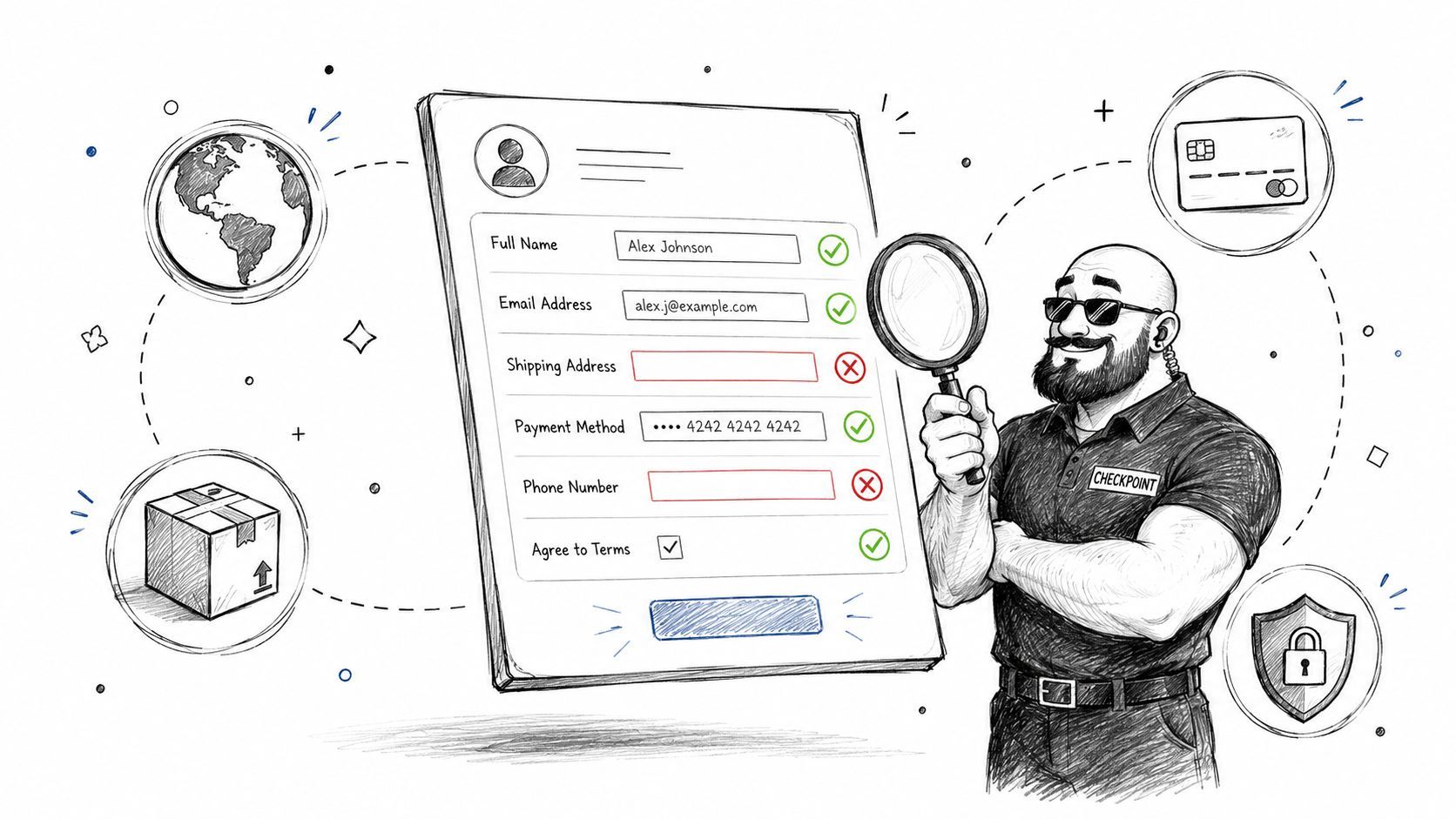
Ensure accurate backer data & higher conversions with form field validation. Master best practices for smooth crowdfunding fulfillment using PledgeBox.
You've finished your campaign. Funding is locked in. Backers are excited. Then the survey data starts coming in, and the mood changes fast.
A shipping address is missing a postal code. A phone number has the wrong country format. A backer picks a reward combination that doesn't exist. Someone enters a business tax detail in the wrong field. None of these look dramatic on their own. In fulfillment, they turn into delays, support tickets, returned parcels, manual spreadsheet cleanup, and avoidable friction with the very people who just trusted you with their money.
That's why form field validation matters so much in crowdfunding. It isn't a developer nicety. It's the set of guardrails that protects your post-campaign operation when hundreds or thousands of backers are feeding data into one fulfillment pipeline.
Most creators don't run into trouble because they failed to manufacture. They run into trouble because clean fulfillment requires clean inputs.
A campaign can look healthy on the front end and still get bogged down after funding closes. The backer survey is where the operational reality shows up. If your form accepts sloppy, incomplete, or contradictory data, your team pays for it later in labor, delays, and frustrated backers.
A common pattern looks like this:
None of that feels like a validation problem when you're building the survey. It feels like a fulfillment problem weeks later.
Practical rule: Every bad field you allow at survey submission becomes a manual decision later. Manual decisions are where timelines slip.
Crowdfunding amplifies small mistakes because you repeat the same mistake across a large backer base. One unclear field label might create a handful of support emails on a normal ecommerce store. In a campaign survey, it can create a backlog that eats your evenings and pushes your shipment file further out.
That damage isn't limited to logistics. It also affects cash flow and backer confidence. If a payment for shipping or add-ons fails because supporting data is incomplete, you end up chasing recovery instead of moving orders forward. If you're dealing with that issue, this guide on failed payment recovery for crowdfunding is worth reading alongside your survey setup.
The practical lesson is simple. Bad data doesn't stay inside the form. It spills into packing lists, customs paperwork, tax handling, support queues, and your reputation. Form field validation is the control point that stops those errors before they enter the system.
Form field validation is the automated check that decides whether an entered value is acceptable before the system accepts it.
The simplest way to think about it is a bouncer at the door. The bouncer doesn't need to know your life story. It checks whether you meet the rules for entry. In a survey, those rules might be “this email needs a valid structure,” “this country must be selected,” or “this postal code has to match the expected format.”

At field level, validation usually answers a few basic questions:
This isn't a new idea. Microsoft documents the long-standing use of validation rules in database and form controls, including a control's Validation Rule and Validation Text to enforce input criteria and show a custom message when data is invalid. That's part of why the concept of blocking malformed data at the point of entry became a mainstream software standard by the late 1990s and early 2000s in widely used enterprise tools like Access, as described in Microsoft's validation rules documentation.
For a crowdfunding creator, form field validation is less about code and more about data governance at the moment of collection. You're deciding what gets into your fulfillment pipeline and what gets rejected until it's fixed.
That matters because a survey isn't just a questionnaire. It's the handoff from campaign excitement to operational execution. If the handoff is loose, every downstream system gets noisier.
Validation is the difference between “we'll clean it up later” and “we only accept data we can actually use.”
A good survey doesn't merely ask for information. It enforces the rules that make the information usable.
A campaign can fund successfully and still run into trouble after the money comes in. The usual culprit is bad survey data. One invalid address, one mismatched VAT field, or one reward choice that should never have been selectable can turn fulfillment into a manual cleanup project.

Smart validation protects the part of crowdfunding that creators usually feel later, in packing, shipping, and tax reconciliation.
If a backer enters the wrong country format, skips a required region, or types a postal code your carrier cannot rate correctly, the problem does not stay inside the form. It shows up in shipping tables, VAT calculations, export files, and exception handling. By then, fixing it costs time and often requires support follow-up.
This matters most on projects with regional shipping rules, EU or UK tax collection, and reward mixes that depend on destination. A survey should reject incomplete or malformed entries before they affect charges or fulfillment logic. Clean input produces cleaner exports, fewer holds, and fewer last-minute edits before files go to your warehouse.
Good crowdfunding survey design practices help here, but validation is the enforcement layer. It turns survey intent into usable operational data.
Post-campaign support often turns into data repair. Backers submit an address that is missing an apartment number, pick an add-on combination that conflicts with their reward, or enter details that force your team to email them for clarification.
Smart validation cuts a large share of that avoidable work. The survey checks the order before it enters your fulfillment pipeline, which is much cheaper than fixing it after pledge management closes or inventory has already been allocated.
There is also a platform trade-off. Kickstarter's native post-campaign tools work for simpler projects, but they leave less room to control field logic, dependencies, and checkout behavior. A dedicated pledge manager gives creators more control over survey rules, shipping exceptions, variant handling, and branded flows. That added control matters once a campaign has multiple reward paths and region-specific requirements.
The same principle shows up earlier in the funnel. Clear forms convert better when you optimize your website for leads, and clear post-campaign surveys complete better for the same reason.
Backers notice whether the post-campaign experience feels organized.
If a survey accepts bad data, sends confusing follow-up emails, or forces people to correct basic details later, confidence drops fast. That affects more than support volume. It can reduce add-on uptake, delay survey completion, and create doubt about whether fulfillment will be handled well.
Strong validation sends the opposite signal. It shows that your project has rules, your shipping setup is thought through, and your team is collecting information it can use. In crowdfunding, that kind of operational clarity supports revenue as much as it supports logistics.
PledgeBox fits this stage well because it combines branded backer surveys, address validation inside the survey flow, shipping and VAT collection, and add-on upsells in one system. It is also free to send the backer survey, and it only charges 3% of upsell if there's any upsell revenue. For creators, that means better control over post-campaign data without taking on fixed survey costs.
Bad validation feels like a schoolteacher slapping your hand while you're still writing. Good validation feels like a quiet assistant pointing to the exact field that needs attention.

Most survey errors aren't hard to fix. They're hard to interpret.
“Invalid input” forces the backer to guess what went wrong. “Enter a postal code in the expected format for your country” gives them something they can act on. The same rule applies to phone numbers, VAT details, and custom variant selections.
Useful error copy should do three things:
A backer should never need to email support just to decode an error message.
Timing matters as much as wording. Baymard's usability research warns against inline validation that fires while someone is still typing. It recommends validating after the user has finished interacting with the field, then rechecking so the error disappears as soon as they fix it, as explained in Baymard's inline validation guidance.
That advice matters in crowdfunding surveys because many fields are not single-keystroke answers. International phone numbers, address lines, and tax information often take a moment to complete. If the form throws red warnings too early, it feels broken even when it's technically correct.
Don't punish a backer for being mid-thought. Wait until they finish the field, then help them.
A practical pattern that works well is:
Complex forms don't just need error text. They need predictable focus behavior and readable structure for different users and devices.
Accessibility guidance from the U.S. Web Design System emphasizes keeping logical DOM order, making required and optional states explicit, and supporting both inline and post-submission feedback patterns in forms, as covered in the USWDS form component guidance. In practice, that means your survey should work for keyboard users, screen reader users, and people using screen magnification, not just mouse users on a desktop monitor.
That usually means:
If you're redesigning survey flows, this resource on best practices for survey design is a practical companion to your validation work.
A short walkthrough helps make these choices concrete:
A backer can complete a survey, click submit, and still leave you with data that breaks fulfillment. The fix is technical, but the goal is operational. Clean records in, fewer warehouse exceptions out.

Modern validation works best in two places.
Client-side validation runs in the browser while the backer fills out the form. It catches missing fields, obvious formatting errors, and simple mismatches early, which keeps survey completion fast and reduces avoidable support tickets.
Server-side validation runs after submission on the platform backend. It checks the payload again before the record is saved, charged, taxed, or exported to your fulfillment partner. That second pass matters because browser checks can be bypassed, disabled, or broken by edge cases on mobile devices.
For crowdfunding, the split is practical. The browser helps the backer finish the survey. The backend protects inventory, VAT handling, shipping data, and downstream exports.
| Aspect | Client-Side Validation | Server-Side Validation |
|---|---|---|
| Where it runs | In the backer's browser | On your server or platform backend |
| Main purpose | Speed and immediate feedback | Integrity and enforcement |
| Best at | Catching missing or malformed input early | Confirming invalid data never enters your system |
| Weakness | Can be bypassed | Slower feedback if used alone |
| Crowdfunding role | Better survey completion experience | Protection for fulfillment, charges, and exports |
Client-side validation should handle the fast checks. Required fields, email format, postal code structure, character limits, and obvious field dependencies fit here. These are the checks that make a survey feel clear instead of clumsy.
Server-side validation should enforce every rule tied to money or logistics. If a backer selects a reward add-on that is out of stock, enters a shipping country that conflicts with your campaign rules, or creates a tax combination that should not pass, the backend has to reject it. Otherwise, the bad record gets stored and someone on your team has to clean it up later.
A simple rule works well here: if the mistake can affect charges, inventory allocation, VAT collection, or shipment release, validate it on the server.
Regex is useful for pattern matching. It can tell you whether a field looks like a phone number, SKU, or structured ID. It cannot tell you whether the address is deliverable, whether the chosen reward combination is valid, or whether a region-country pairing will survive export into a warehouse system.
That distinction matters in crowdfunding because a technically valid field can still be operationally wrong.
The cleanest setup uses three types of checks:
That is the difference between a survey that merely accepts input and a survey that produces usable backer data. In PledgeBox, that distinction affects real outcomes: cleaner address exports, fewer manual fixes before fulfillment, and less risk of charging the wrong amount because a tax or shipping rule slipped through.
If your survey also collects payments, validation needs to work alongside payment response handling. This guide to credit card decline codes in crowdfunding explains the payment side of that handoff.
Real survey data is messy in predictable ways. The trick is to design validation around the mess you know is coming.
A creator shipping mostly in the US can get away with simplistic assumptions right up until international orders hit the export file. Then the problems start. The postal code format is different. Region rules are different. Some address structures don't fit the narrow assumptions built into a generic form.
That's why address validation needs to do more than require a text field. It should help standardize location data while the backer is entering it, not after your warehouse rejects the file.
A phone field that accepts any string is easy to launch and hard to use later. In crowdfunding, phone numbers often matter for carrier handoff, customs paperwork, or delivery contact.
The field should adapt to the selected country and reject combinations that don't make sense together. A UK backer using a US-style number format shouldn't sail through unnoticed if the downstream shipper can't use it.
This is the part many creators miss. A field can be technically complete and still be operationally useless.
Trimble's documentation offers a strong example of this principle. A field can be validated not only for presence, but also against a valid record and an acceptable status. That's the difference between syntactic correctness and domain logic, as shown in Trimble's field validation documentation.
That same pattern shows up in crowdfunding all the time:
The form shouldn't just ask “did they answer?” It should ask “can we actually fulfill this answer?”
The more customizable your project is, the less you can rely on plain required fields. Board games with expansions, hardware with plug standards, collector items with limited variants, and multi-wave shipping all need rule-based validation that mirrors the actual catalog.
That's where the survey stops being a form and starts acting like an operations filter. If your validation matches the operational fulfillment logic, your exports stay clean. If it doesn't, your team ends up interpreting answers manually, one exception at a time.
Strong form field validation does more than block bad entries. It protects fulfillment, reduces avoidable support work, and makes your project feel organized after the campaign high wears off.
For crowdfunding creators, that matters because the survey is where trust gets tested. Backers expect a smooth path from pledge to delivery. If the form catches mistakes clearly and enforces rules that reflect the actual fulfillment process, you save time and preserve confidence.
This is also where the platform choice matters. Kickstarter's native pledge manager is like Amazon. Useful, but fixed. A dedicated pledge manager is more like Shopify, where you shape the data collection experience around your project instead of forcing your project into a narrow template. If you want to send surveys without upfront cost, PledgeBox is free to send the backer survey and only charges 3% of upsell if there's any.
If you want a simpler post-campaign workflow, PledgeBox gives creators a way to collect backer data, shipping fees, VAT, and add-on purchases in one place while keeping the survey free to send. The fee only applies to upsell revenue, at 3% when upsells happen.
PledgeBox
The All-in-One Toolkit to Launch, Manage & Scale Your Kickstarter / Indiegogo Campaign