 PledgeBox
Failed Payment Recovery: Your 2026 Kickstarter Guide
Prevent dropped pledges & master failed payment recovery for Kickstarter. Our guide covers prevention, automation, and backer communication.
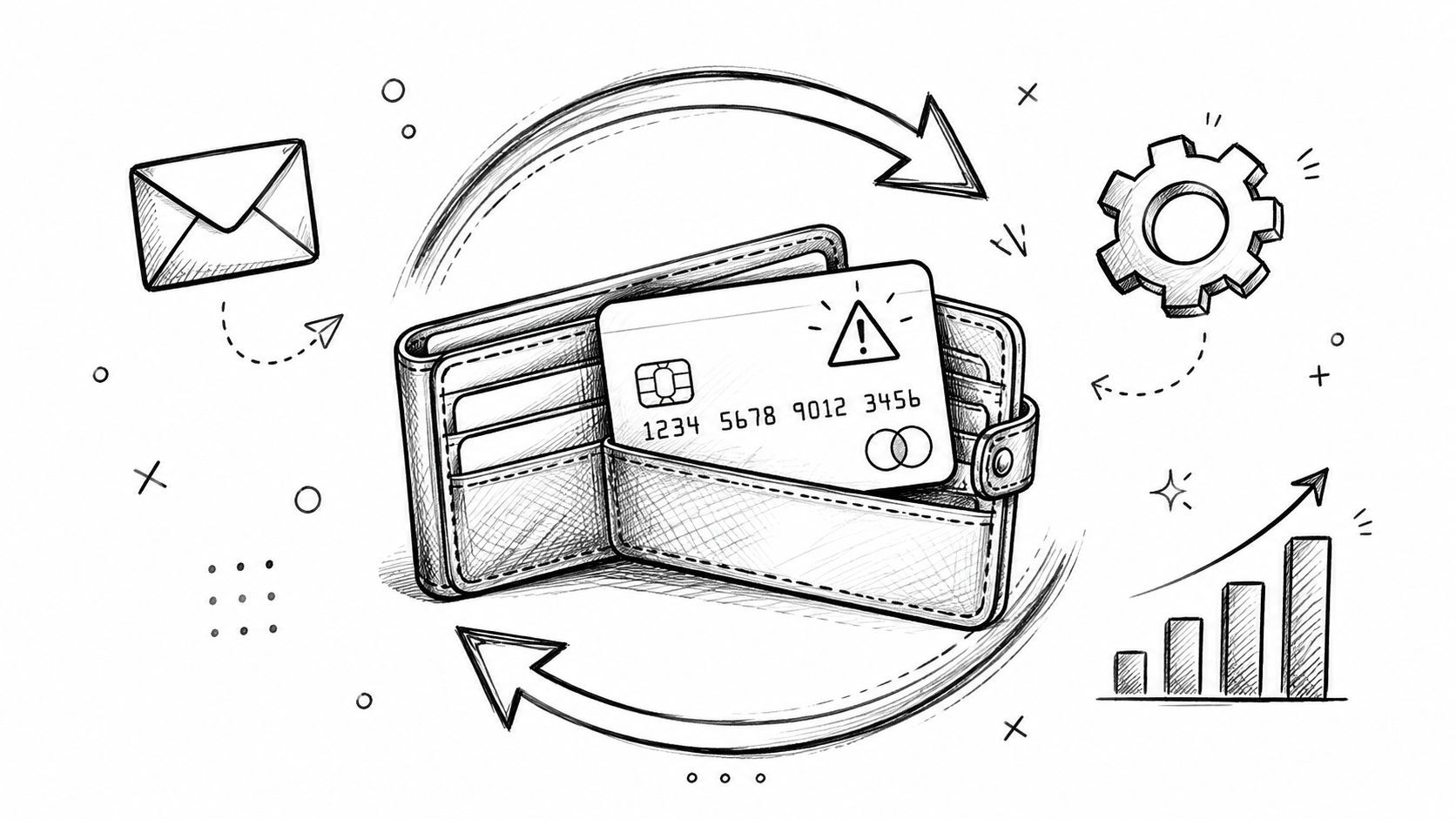
Prevent dropped pledges & master failed payment recovery for Kickstarter. Our guide covers prevention, automation, and backer communication.
You close the campaign tab feeling relieved. Funding is in, comments are upbeat, and the hard part seems over.
Then the failed charges start rolling in.
If you run Kickstarter or Indiegogo campaigns long enough, you learn this fast: funding on the campaign page and money collected are not the same thing. A pledge that fails after the campaign doesn't just reduce your total. It can throw off manufacturing minimums, stretch your freight budget, and leave you guessing how many units to order by SKU, region, or reward tier. In crowdfunding, failed payment recovery isn't a billing-side cleanup task. It's part of operations.
The most common version of this problem looks like this. A creator funds comfortably, starts planning production, and assumes the campaign total is the working budget. Then payment processing finishes and the actual number lands lower than expected.

That gap hurts more in crowdfunding than in ordinary subscription businesses because your costs are front-loaded. You're paying for tooling, print runs, molds, samples, freight bookings, packaging, VAT handling, and support before many backers ever touch the product. Industry benchmarks show that 7% to 10% of recurring payments typically fail, and with average recovery rates between 50% and 70%, creators can permanently lose 2% to 4% of total funding if they don't have an effective recovery plan, according to Revaly's failed payment recovery benchmarks.
A SaaS company can often absorb some revenue leakage and smooth it out over future billing cycles. A Kickstarter creator can't. If a backer drops after the campaign, that missing payment may already have been mentally assigned to a component upgrade, a packaging decision, or the margin you needed to survive overseas shipping.
Three operational problems show up right away:
Practical rule: Treat failed pledges as a post-campaign workflow, not an exception queue.
Many creators also run into a visibility problem. Kickstarter and Indiegogo give you some native recovery support, but they aren't built to run the kind of long-tail, segmented collections work that agencies or finance teams would use in a mature payment stack. If you need ideas from outside crowdfunding, broad collections payment recovery solutions can help you think in terms of segmentation, timing, and escalation instead of sending one generic reminder to everyone.
They underestimate how emotional the moment is. After a successful campaign, many teams want to move forward. They don't want to spend the next week chasing card issues. But the fastest creators to stabilize revenue are the ones who accept that post-campaign collections are part of delivery.
The good news is that this problem is manageable when you separate it into two jobs. First, reduce preventable failures before the campaign ends. Second, build a recovery flow that fits crowdfunding reality, where the backer relationship matters just as much as the payment itself.
The cheapest failed payment recovery is the one you never have to do.
Creators often focus all communication on launch energy, stretch goals, and social proof. That makes sense during the campaign. But if you never prepare backers for the charge process, you increase the chance of avoidable declines later. In crowdfunding, prevention is mostly communication and expectation-setting.
You don't need a legal memo or a long FAQ. You need clear reminders at the right moments.
A simple prevention checklist works well:
Campaign updates should do two things at once. They should keep excitement high and reduce surprises.
Good updates sound like this in plain language:
That tone matters. You're not accusing backers of causing problems. You're helping them avoid one.
Backers are much more responsive when the payment message feels like project support, not debt collection.
Not every failed payment means the same thing. “Insufficient funds” needs a different message from “expired card” or “do not honor.” If you want a practical reference for what those signals usually mean, PledgeBox's guide to credit card decline codes is useful when building your help docs and support macros.
A few prevention habits make a noticeable difference in practice:
Creators sometimes worry that talking about card issues will scare backers off. Usually the opposite happens. Clear payment instructions signal that your team is organized. That helps when you later ask people to complete surveys, confirm shipping, or pay for add-ons.
If your campaign has many first-time backers, this matters even more. Crowdfunding already asks people to trust a process that can feel unfamiliar. Transparent payment communication lowers friction before it turns into recovery work.
Once charges start failing, speed matters more than perfect copy.
For recurring payments, data from Baremetrics shows that sending the first dunning email within 24 hours produces a 41.29% open rate, compared with 26.83% when the reminder is delayed 30 days, according to Baremetrics' failed payment recovery guidance. Crowdfunding behaves differently from SaaS in some ways, but this lesson carries over cleanly. Early contact gets attention. Delayed contact gets ignored.
Creators lose time when they treat every failed charge as one bucket.
A useful split looks like this:
| Decline type | What it usually means | Best response |
|---|---|---|
| Soft decline | Temporary issue like insufficient funds or network interruption | Retry on a schedule and notify the backer quickly |
| Hard decline | Invalid card, closed account, suspected fraud, or unrecoverable authorization issue | Stop blind retries and ask for a payment method update |
If you keep hammering hard declines with automated retries, you create noise without improving outcomes. If you don't retry soft declines intelligently, you leave recoverable pledges on the table.
A benchmarked workflow starts by classifying declines this way and then applying segment-specific retries. One industry guide recommends exponential-backoff timing like 1 day, 3 days, and 7 days, and cites Recurly reporting an improvement in recovery from about 53% to 71% on an enterprise transaction set when retry strategy was optimized. The same benchmark says roughly 90% of recovered transactions happen within the first 10 days, which is why the early retry window matters so much, as summarized by Count's payment retry success rate overview.

Kickstarter's native post-campaign recovery flow is a lot like Amazon. It's simple, standardized, and easy to accept as-is.
A dedicated pledge manager is more like Shopify. You get more control over the customer experience, follow-up timing, payment update flow, and post-failure paths. That doesn't mean native tools are useless. It means they're limited if you want segmentation, custom reminders, or recovery beyond the platform's default window.
That same difference appears in broader collections work too. If you want a finance-side view of escalation logic, message cadence, and recovery trade-offs, Resolut's debt recovery insights are useful because they frame recovery as a system, not a single email.
For Kickstarter and Indiegogo campaigns, the flow that usually works best is:
If you're building a post-campaign setup outside the platform, PledgeBox has a practical walkthrough on how to collect payments from customers, including the mechanics of turning payment intent into a completed order.
Blind retries feel automated. Smart retries feel intentional.
The main mistake I see is creators over-trusting the default processor behavior. Retry logic is not strategy. Strategy is deciding which declines deserve automation, which need customer action, and which should be moved into a pledge manager flow instead of staying stuck in the platform's limited recovery window.
A failed payment email can sound like an error notice, or it can sound like a helpful nudge from the project team. The second version wins more often because it keeps the backer emotionally connected to the campaign.
Most backers don't fail payment because they changed their mind. Their card expired, their bank blocked the charge, or they missed the first notice. Your message should assume goodwill unless you have a clear reason not to.
Strong backer communication has three traits:
Avoid vague lines like “There was a problem with your account.” That creates anxiety and support tickets. A better message says the charge didn't go through, their reward isn't secured yet, and they can fix it by updating payment information through the provided link.
| Scenario | Subject Line | Key Message |
|---|---|---|
| First failed charge | Your pledge payment needs attention | Let them know the original charge didn't go through and ask them to update payment details right away to keep their reward selection active. |
| Second reminder | Please update your payment to keep your reward | Remind them that their pledge is still incomplete, keep the tone helpful, and repeat the direct action link. |
| Final notice | Final reminder to complete your pledge | Explain that this is the last call before the pledge is released or marked incomplete, and make the next step obvious. |
Here's a reliable structure for the first message:
Hi [Backer Name], thanks again for supporting [Project Name]. We weren't able to complete your pledge payment. This usually happens because of an expired card, a bank block, or a temporary authorization issue. Please use the link below to update your payment details so we can keep your reward on track.
That works because it removes blame, gives likely reasons, and points to one action.
A follow-up message can be a little firmer:
We still haven't been able to complete your pledge payment for [Project Name]. If you'd like to keep your reward, please update your payment details as soon as possible. If you've already done that, thank you and you can ignore this message.
The final reminder should be clear, not dramatic:
Good recovery messages also lower support burden. I like these habits:
If you're handling a large support volume, tools built for AI-assisted replies can help your team keep tone consistent. It's worth learning about SupportGPT-1 if you want a structured way to answer repetitive backer questions without making every response sound robotic.
Creators hurt recovery when they send messages that sound like legal collections notices. “Immediate action required” can work in some B2B contexts, but it often lands badly with backers who still feel emotionally invested in the project.
Don't write like a bank. Write like the project team trying to help the backer keep what they chose.
Native recovery windows are useful, but they're narrow. In crowdfunding, some backers won't fix the issue during the platform's built-in process even if they still want the reward.
That's where a pledge manager changes the game. Instead of treating a dropped pledge as final, you move the backer into a fresh post-campaign checkout experience where they can confirm rewards, update payment details, complete surveys, and pay for extras in one place.
One industry summary points out a question most generic billing articles skip: which failed payments are recoverable in crowdfunding? It also notes that 90% of recovered revenue happens in the first 10 days, which means creators need a post-Kickstarter path for what remains after the native collection window closes, a gap described in Paymend's failed payment recovery roundup.
That's the key difference from standard SaaS billing. In a campaign, fulfillment depends on knowing who completed payment, who still wants in, who needs a follow-up, and who has effectively dropped out. A pledge manager gives you a controlled place to answer those questions.

Kickstarter's pledge management experience is like Amazon. It's convenient, familiar, and mostly fixed.
A pledge manager is like Shopify. You get more control over the storefront logic after the campaign, including surveys, shipping collection, taxes, add-ons, and the recovery path for unpaid backers. For creators with multiple reward variants or complex fulfillment needs, that control matters.
If you want a direct overview of how that model works in crowdfunding operations, PledgeBox's guide to a crowdfunding pledge manager lays out the post-campaign role clearly.
Creators often miss upside. A backer who failed to complete a pledge isn't always a lost backer. Sometimes they just need a cleaner checkout moment.
A structured pledge manager flow can let you:
One practical note from the author brief belongs here because it matters operationally: PledgeBox is free to send the backer survey and only charges 3% of upsell if there's any. For creators comparing native tools with external systems, that pricing model reduces the risk of adding a pledge manager just for recovery and post-campaign order completion.
The best recovery setup doesn't only rescue revenue. It also produces cleaner fulfillment data.
What works is inviting failed backers into a simple, mobile-friendly flow where they can see their reward, update payment, and finish checkout without confusion.
What doesn't work is sending them into a maze of old campaign updates, support emails, and manual invoices. Every extra click lowers completion. Every unclear instruction creates a support ticket. Every disconnected system increases the chance that a paid order never becomes a fulfilled order.
For gadget campaigns, board games, and other projects with lots of SKUs, the pledge manager isn't just a financial tool. It's where payment recovery and fulfillment accuracy finally meet.
If you only track “failed” and “recovered,” you won't know what to improve on the next campaign.
The useful view is operational. You want to know which decline types recover, how long recovery takes, which message timing performs better, and whether your process is preserving trust or creating fatigue. Recovery isn't just about retries. It's about trust. With up to 70% of failed payments being recoverable, and 90% of that success occurring within 10 days, creators need a strategy that is both fast and personalized to avoid backer fatigue and protect brand reputation, as noted in LTVplus guidance on failed payment recovery.

I'd keep the dashboard simple:
Those metrics tell different stories. A decent overall recovery rate with a long average recovery time often means your system eventually works, but too slowly for clean fulfillment planning.
Use your data to answer practical questions, not just reporting questions.
| Metric pattern | What it usually means | What to test next |
|---|---|---|
| High first-email completions | Your timing and CTA are working | Refine subject lines and landing page clarity |
| Good soft-decline recovery, poor hard-decline recovery | Retries are fine, update flow is weak | Improve payment update instructions |
| Strong recovery but heavy support load | Automation is incomplete | Add better self-service steps |
| Slow recoveries after native platform efforts | Backers need a second-chance path | Route more of them into a pledge manager flow |
Don't test five things at once. Change one variable at a time.
A good sequence is:
Teams that measure recovery by reason and response stage make better decisions than teams that only watch the total amount recovered.
The point isn't to build an enterprise analytics department around a Kickstarter campaign. It's to make failed payment recovery repeatable. Once you know which declines recover, which messages get action, and which backers need a different post-campaign route, recovery stops feeling chaotic.
If you want a cleaner post-campaign workflow, PledgeBox gives creators one place to send surveys, recover incomplete pledges, collect shipping and add-ons, and move backers from “payment failed” to “ready to fulfill.” It's free to send the backer survey, and it only charges 3% of upsell if there's any.
PledgeBox
The All-in-One Toolkit to Launch, Manage & Scale Your Kickstarter / Indiegogo Campaign