 PledgeBox
7 Crowdfunding Email Marketing Newsletter Examples
Explore 7 email marketing newsletter examples for Kickstarter and Indiegogo creators, from pre-launch teasers to backer fulfillment updates.

Explore 7 email marketing newsletter examples for Kickstarter and Indiegogo creators, from pre-launch teasers to backer fulfillment updates.
You're three weeks past a successful Kickstarter campaign, and your inbox is full of questions. Backers want to know where their rewards are, whether their shipping addresses were saved, and why they received an accessory offer before a survey invitation. Your team is answering individually because the emails were never planned as a sequence.
That problem usually starts before launch. A subscriber joins for product news, becomes a backer, and then needs production updates and delivery instructions. If every message looks like another promotion, they can miss the action that matters.
Useful email marketing newsletter examples show more than attractive layouts. They help you decide what to send, who should receive it, and what the reader should do next. A pre-launch email should build qualified interest. A survey invitation should get a survey completed, not send someone browsing your latest accessories.
The resources below serve different jobs across pre-launch, launch, backer updates, and fulfillment. Some are searchable galleries; others explain the strategy behind a message. Use them to borrow structure and reasoning, not campaign promises or delivery language that your team can't support.
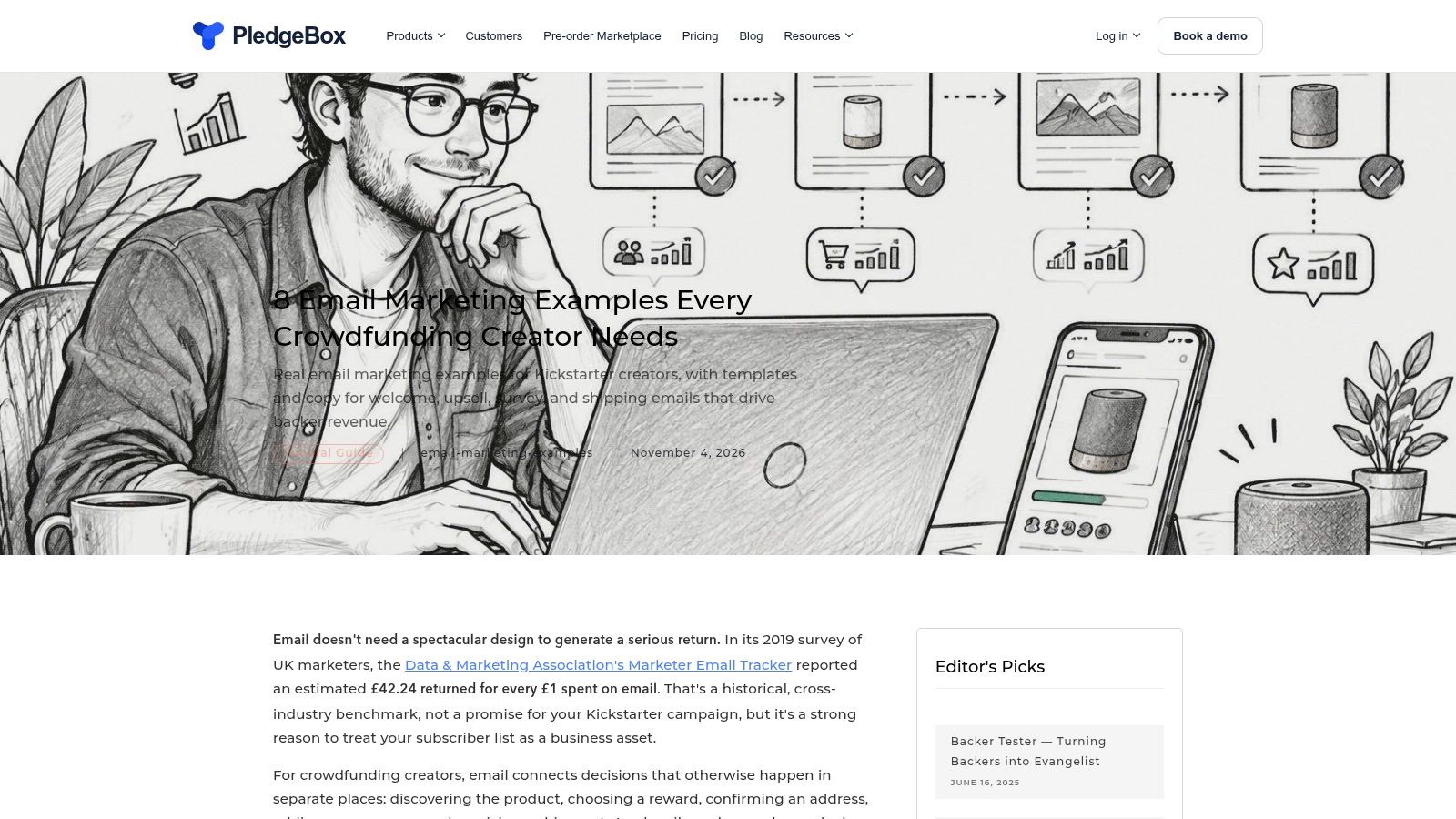
Best for connecting campaign stages to specific backer tasks. The PledgeBox crowdfunding email guide offers examples and adaptable copy for Kickstarter and Indiegogo creators. Its crowdfunding terminology makes it a practical starting point when you need to draft a message for a particular audience and action.
For a tabletop game with different language editions, a pre-launch email might invite subscribers to register interest. A post-campaign email might ask backers to confirm their edition. Even if both use the same visual template, each message needs an explanation that fits its task.
The guide's strength is workflow relevance. It offers a focused source of crowdfunding message ideas, rather than a searchable archive of brand emails with many visual directions. Use a gallery when layout inspiration is the priority; use this guide to shape copy around a crowdfunding task.
Adapt each example to your actual rewards, production status, and support process. A confident-sounding delivery promise can create problems if your team cannot meet it. Keep the next action unmistakable, and remove copy that distracts from it.
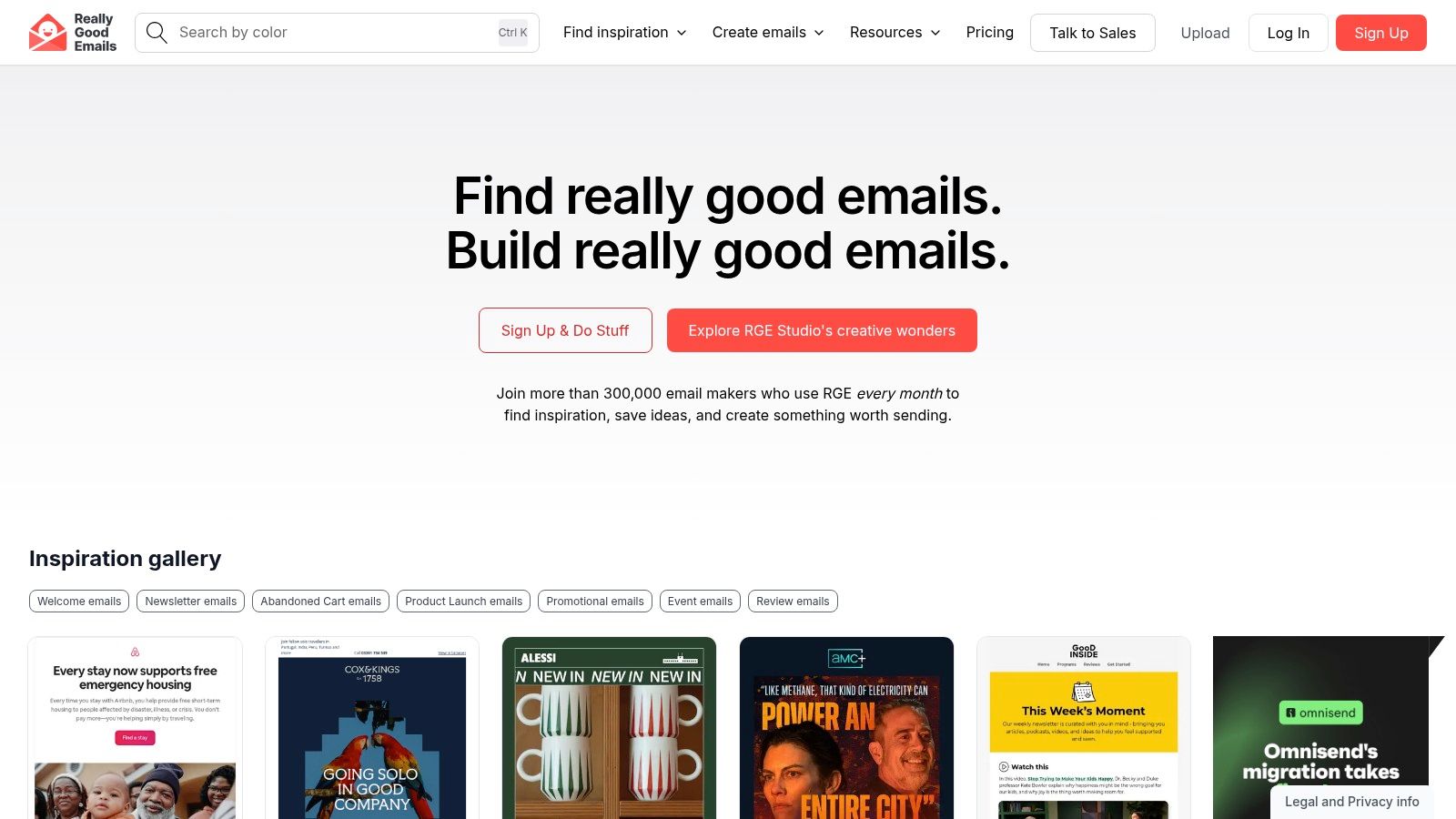
A launch announcement needs a clear visual hierarchy, not a miniature campaign page. Really Good Emails is useful for studying how companies arrange a headline, product image, supporting copy, and primary button.
Its curated, searchable collection covers welcome messages, launches, newsletters, promotions, and other email types. Browse by the job your message must perform rather than looking only for brands in your product category.
A featured email proves that someone selected it for inspiration. It doesn't prove that subscribers clicked, pledged, or bought.
For a hardware campaign, study how product-launch emails explain an unfamiliar object. Can readers identify the product's use without watching a video? Does the main button appear after enough information to justify clicking?
Compare layouts against the crowdfunding tasks in the campaign email examples guide. A retail announcement may end with a purchase button, while your launch email needs to send readers to a campaign where they'll evaluate rewards and delivery expectations.
What works: borrowing content hierarchy, image placement, and a clear primary action. Designers and campaign managers can use the same reference to agree on what belongs above the supporting details.
What doesn't: copying an image-heavy design without checking whether backers can read the essential instructions. Validity's deliverability report cites research indicating that more than 90% of marketing emails contain critical or serious accessibility issues affecting disabled customers.
Keep reward information in live text, use meaningful image alt text, and check contrast and mobile rendering. Current pricing and access terms also deserve a check before you build a research workflow around the collection.
Use Milled when timing matters more than a single beautiful send. The searchable Milled email archive is weighted toward ecommerce, making it useful for researching product announcements and promotional sequences from individual brands.
For crowdfunding pre-launch work, that chronological perspective is valuable. You can study how a brand introduces a product, explains its benefits, handles objections, and changes its message as launch approaches.
Start with a brand that sells a product requiring explanation, such as a specialist gadget or hobby accessory. Examine the progression of its messages rather than treating every archived email as an independent template.
There's a meaningful distinction between a sequence and a recurring general newsletter. In MarketingSherpa's TAB case study, a multi-email lead-nurturing sequence produced a 32.6% increase in conversion rate, where conversion meant clicking through to download landing-page content.
That finding isn't a crowdfunding pledge forecast. It supports testing a connected education sequence against your existing newsletter rather than assuming another general update will do the same job.
Milled offers a free starting point, with saved research folders and more advanced search or keyword-alert features depending on current plan terms. Its limitation is evidence: the archive shows what brands sent, not whether the messages succeeded. Borrow the sequencing logic, but don't import a retailer's discount cadence into a campaign with fixed reward promises.
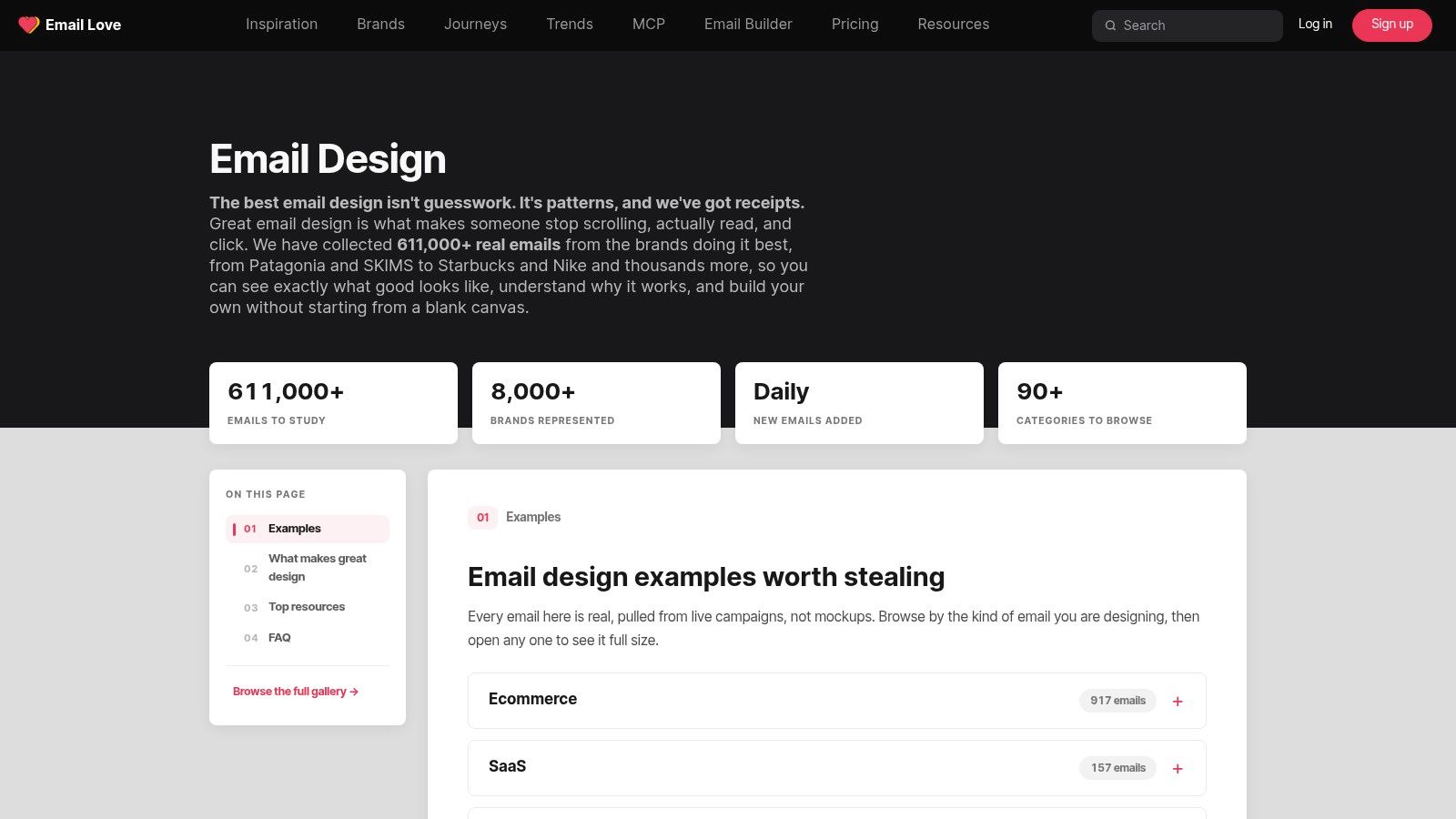
Say your backers need to confirm shipping details, but the draft email looks like an accessory promotion. Email Love is useful for separating visual style from message purpose. Its email design gallery lets you filter real marketing emails by attributes such as industry, type, and style.
That filtering helps when a broad inspiration search produces too many promotional layouts. Look for formats that make a short explanation and a practical action easy to find, rather than choosing whichever design looks most elaborate.
For fulfillment messages, compare the relationship between headings, instructions, and buttons. A backer should understand whether they're reviewing an address, submitting missing information, or just reading a status update.
Use a restrained layout with a recognizable sender, a task-led heading, and a clearly labeled destination. Keep the explanation of why you need the information close to the action.
Design rule: A backer shouldn't need to load images to discover that you need their shipping address.
Email Love's range of brand voices and design treatments can help your team establish a consistent format. Tools alongside the gallery may also support the building process, though features and access terms can change.
The trade-off is relevance. Most examples aren't crowdfunding-specific, and you'll need filters to avoid spending your research time on unsuitable retail promotions.
Design also can't repair poor delivery. A MarketingSherpa conversion case study described an educational newsletter-style email with delivery below 50%, illustrating why inbox reach needs attention before creative polish. Authenticate your sending domain, monitor bounces and complaints, and test the actual message before sending survey invitations.
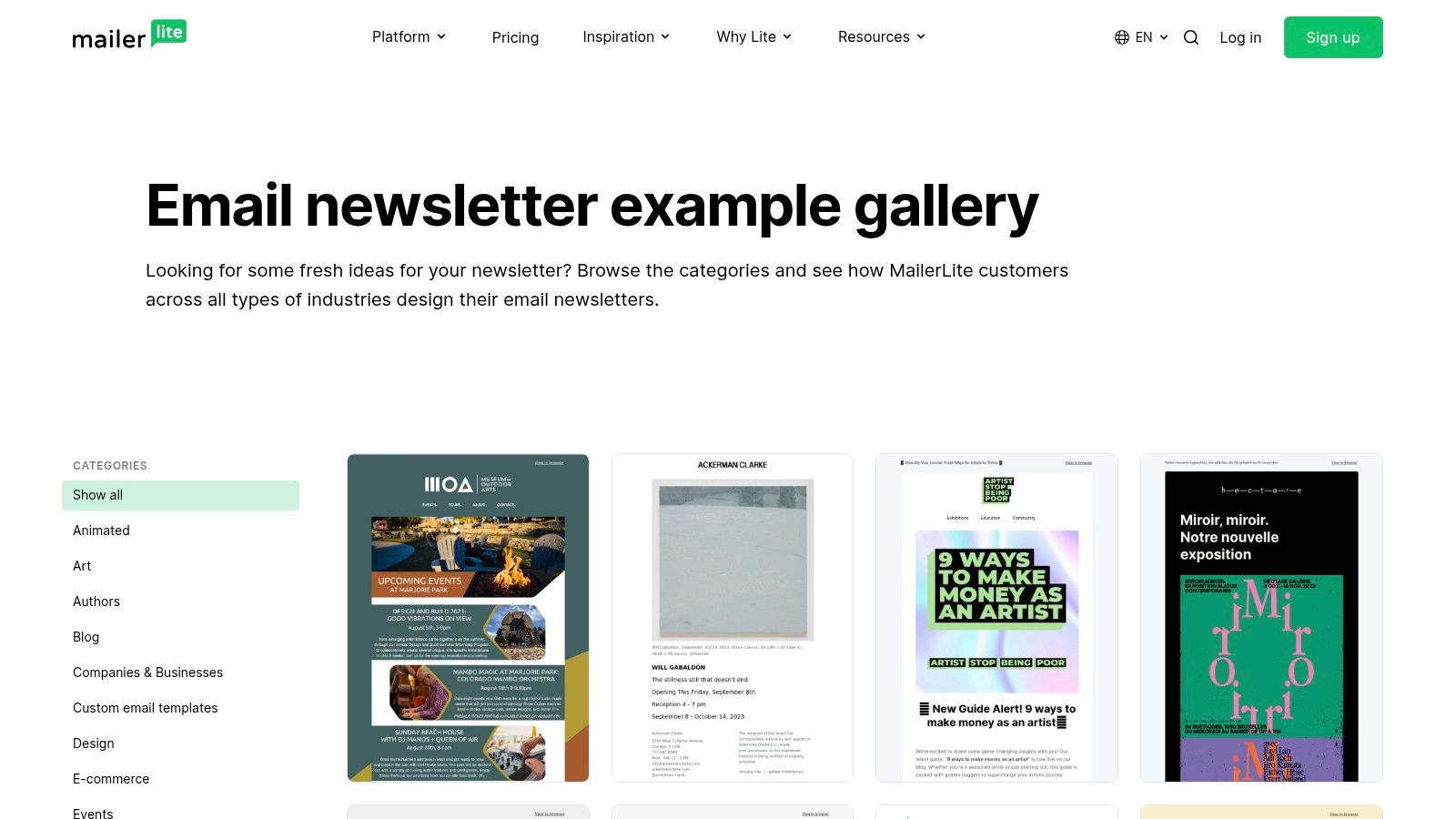
Production updates need a repeatable format. The MailerLite newsletter examples gallery is particularly useful for studying recurring newsletters with multiple sections, rather than isolated product announcements.
For a hardware project, that could mean a consistent arrangement of manufacturing progress, testing results, schedule changes, and backer actions. For a board game, it might mean artwork approval, component production, freight preparation, and regional fulfillment information.
Give readers familiar places to find important information. A stable layout helps returning backers distinguish routine progress from a change that affects their reward.
Pair the visual references with crowdfunding newsletter planning guidance. A polished editorial layout is useful only if it leaves room for operational clarity.
Don't judge those layouts by open-rate expectations alone. MailerLite's benchmark analysis reports a 43.46% median open rate and 2.09% average click rate across campaigns measured from December 2024 to November 2025.
Those are broad email measures, not targets for a production update. If no action is required, readers may get what they need without clicking.
The gallery's strength is visual organization. Its weakness is strategic context: a screenshot won't necessarily explain the audience, campaign circumstances, or results. Borrow the section structure, then write around the questions your backers need answered.
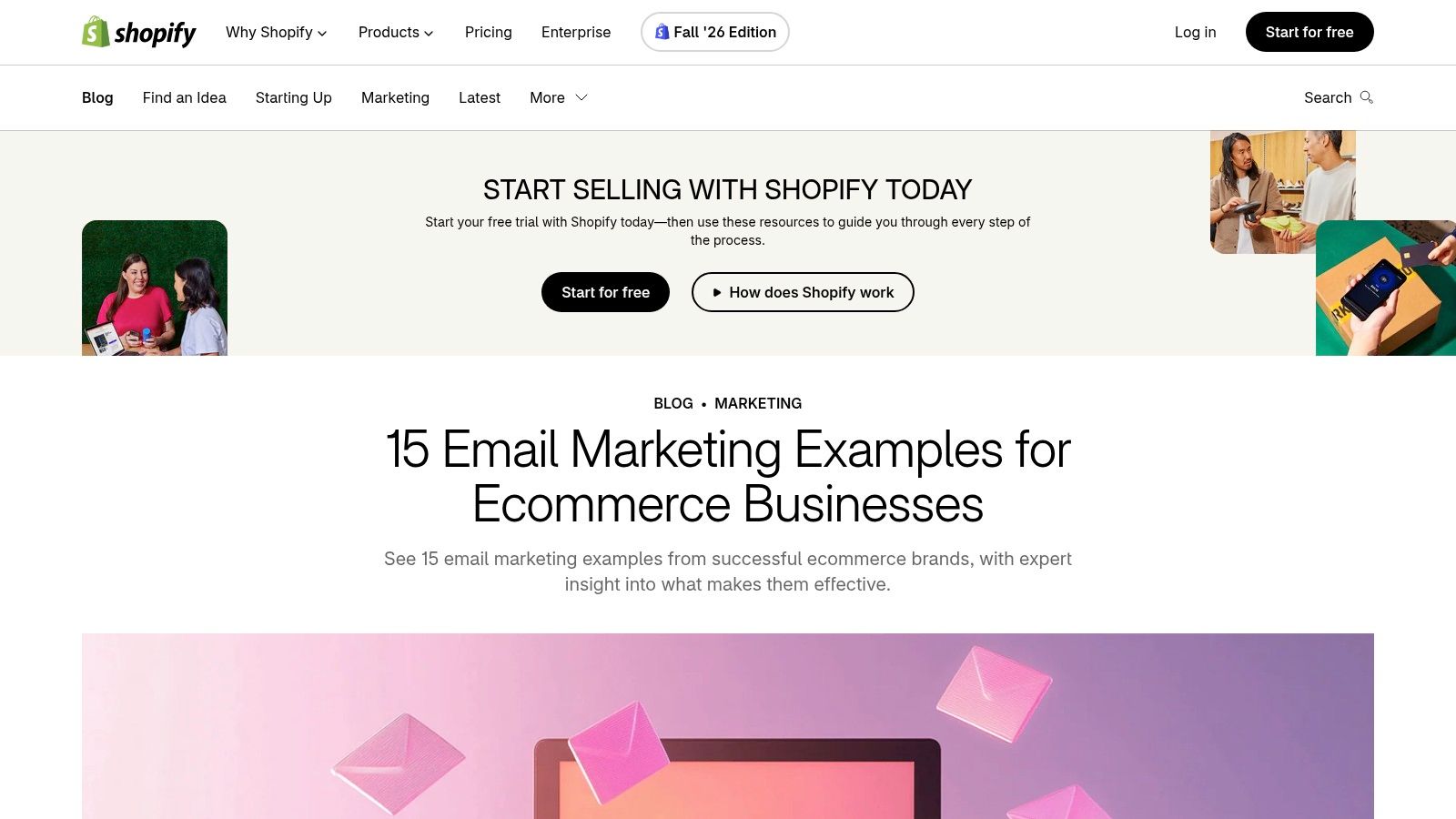
Shopify is strongest when you need to understand why an offer is presented a certain way. Its ecommerce email marketing examples article organizes examples by purpose and discusses brand voice, value propositions, storytelling, and calls to action.
That commentary makes it more useful for copy development than a gallery alone. You can examine how a welcome message establishes expectations or how a product-focused email connects a feature to a practical benefit.
For crowdfunding creators, the closest applications are launch announcements, reward explanations, and relevant accessory offers. The important adaptation is to preserve the distinction between an optional purchase and a required campaign task.
Say you're offering a protective case for a portable device. Explain compatibility, what the case adds, and whether it changes the shipment arrangement before asking the backer to select it.
Don't substitute a generic discount banner for that explanation. A backer deciding whether an accessory fits their reward needs different information from a retail shopper browsing a sale.
Treat an add-on as a useful extension of the reward, not as a toll backers must pay to finish their survey.
Shopify's examples can help you balance storytelling with a clear action. They're less useful for production delays, survey completion, or address-lock communications, where transparency matters more than promotional momentum.
Measure the completed action rather than celebrating the subject line alone. The DMA's email benchmarking report reports a 2.3% UK unique click rate in 2025, but your relevant outcome may be an eligible backer completing an accessory purchase.
Retail tactics aren't automatically transferable. Frequent discounts can conflict with reward-tier positioning, and an example's inclusion doesn't establish that it will work for your campaign audience.
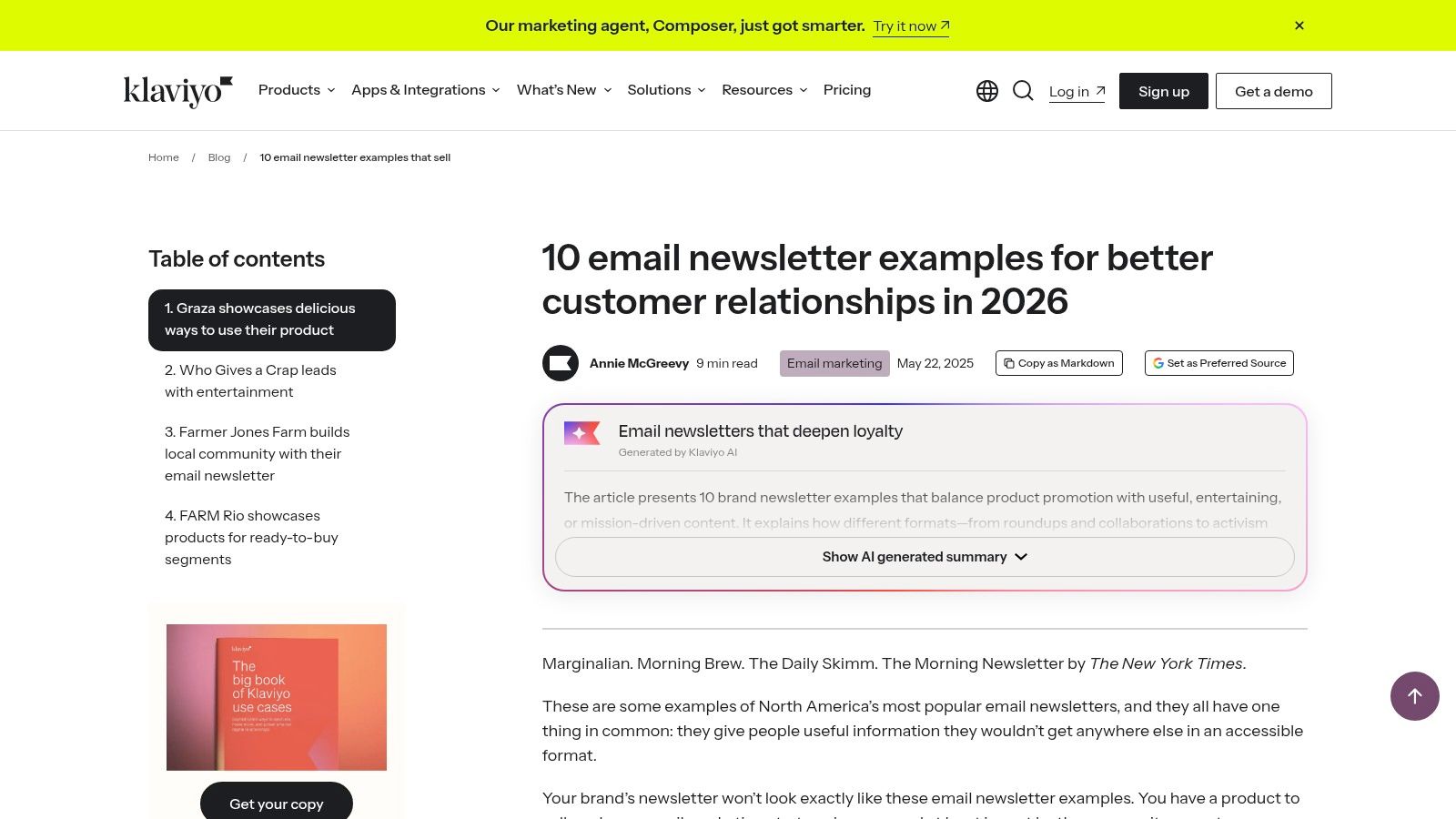
A completed-survey backer and an unanswered-survey backer shouldn't receive the same reminder. Klaviyo's newsletter examples and strategy article is useful for thinking about audience relevance, alongside imagery, copy, and recurring brand voice.
Its established-brand examples offer context that a screenshot alone can't provide. Study how senders choose content for their readers, then apply that reasoning to campaign status rather than relying only on broad product interests.
Separate messages by the task still outstanding. Someone who hasn't opened a survey needs the purpose and destination explained; someone who started but hasn't submitted may need help resolving a specific blocker.
Use email marketing KPIs that correspond to those audience states. Survey completion is more meaningful for a reminder than an attractive open-rate result.
Privacy changes make that distinction important. Market Intelligence Tools' newsletter statistics review explains that Apple Mail Privacy Protection can automatically load tracking pixels, recording opens without an active human reading the message.
Klaviyo's strategic commentary helps with relevance and voice, but it isn't a ready-made crowdfunding sequence. Much of its advice fits ecommerce automation, so adapt the logic rather than copying the promotional triggers. Keep operational reminders factual, and reserve your more expressive brand voice for messages where it won't obscure instructions.
| Item | Main Focus | Crowdfunding Fit | Key Limitation |
|---|---|---|---|
| PledgeBox, Crowdfunding Email Marketing Examples | Email copy and workflows from pre-launch through fulfillment | Directly tailored to Kickstarter and Indiegogo campaigns | Single guide; examples need campaign-specific editing |
| Really Good Emails | Searchable library of email design examples | Useful for visual inspiration, but not crowdfunding-specific | Examples do not show whether emails performed well |
| Milled | Searchable archive of brand marketing emails | Useful for researching launch messaging; archive skews toward ecommerce | Shows what brands sent, not how well it worked |
| Email Love | Filterable gallery of real marketing emails | Useful for design inspiration, with limited crowdfunding relevance | Narrowly relevant examples can be hard to find |
| MailerLite, Newsletter Examples | Newsletter layouts and recurring email formats | Helpful for regular updates, but not crowdfunding-specific events | Limited context on strategy or performance |
| Shopify, Ecommerce Email Marketing Examples | Ecommerce email types, messaging, and calls to action | Ideas can be adapted for product launches | Ecommerce-focused; discounts may not suit backers or pledge tiers |
| Klaviyo, Newsletter Examples and Strategy | Newsletter examples, audience relevance, and brand voice | Useful for shaping audience-focused updates | Inspiration rather than a ready-made crowdfunding sequence |
A strong backer email sequence moves each reader toward the next unfinished campaign task. Map messages to campaign stages, name the action each one should prompt, and choose a destination where the reader can complete it. Pre-launch subscribers may join a launch list; launch-day readers may choose a reward; existing backers may complete a survey or confirm an address.
Give each resource a distinct job. Milled can help you study how messages progress, while Really Good Emails and Email Love offer presentation ideas. MailerLite can inform recurring updates, and Shopify and Klaviyo examples can help you consider offers and audience fit. For crowdfunding operations, use campaign-specific examples to keep the message tied to a real backer task.
For every email, record its audience, requested action, destination, and completion condition. Use tagged links to track clicks, then check whether readers finish the task at the destination. A click alone does not confirm a reward choice, survey response, or address update.
PledgeBox surveys can collect addresses and product choices without offering extra products. PledgeBox's pricing states that PledgeBox charges a 3% fee on add-on sales made during backer surveys, and separate payment-provider charges may apply.
Kickstarter's pledge manager works like a centralized marketplace; PledgeBox's pledge manager works more like a storefront creators control. Use the comparison to clarify the difference in working environment, not to treat crowdfunding as identical to retail.
Within PledgeBox, InBox offers a drag-and-drop email campaign builder that requires no HTML coding. It tracks clicks, conversions, and engagement across campaigns. Close messages with professional email sign-offs that identify the team and make the reply path clear.
Before scheduling, send a test and complete the backer journey yourself. Check that the request is clear, the link reaches the right destination, and the reader can finish without asking support what to do.
PledgeBox combines email marketing, backer surveys, add-on offers, and fulfillment tasks in a crowdfunding workflow. Visit PledgeBox to build a sequence that connects each message to the next reward choice, survey response, or address confirmation.
PledgeBox
The All-in-One Toolkit to Launch, Manage & Scale Your Kickstarter / Indiegogo Campaign