 PledgeBox
Crowdfunding Campaign Strategy That Actually Works
Build a winning crowdfunding campaign strategy from pre-launch to fulfillment. Learn audience building, messaging, KPIs, and post-campaign upsells.

Build a winning crowdfunding campaign strategy from pre-launch to fulfillment. Learn audience building, messaging, KPIs, and post-campaign upsells.
You've just watched the funding bar cross the target. The comments are celebratory, your team is exhausted, and everyone assumes the hard part is over. Then the address spreadsheet arrives, backers request reward changes, shipping costs shift, payments fail, and the launch that looked successful starts consuming every spare hour.
A workable crowdfunding campaign strategy treats the campaign as a lifecycle, not a funding page. You need a pre-launch engine, a disciplined launch week, and a post-campaign revenue and fulfillment system that turns backer data into better decisions. The survey and pledge manager belong in that plan before launch, because they influence reward design, pricing, customer communication, and the amount of demand you can safely accept after funding.
A creator can hit the funding target and still run an operationally weak campaign. The usual pattern is familiar: the campaign page promises several reward variants, stretch goals add more complexity, and the team collects backer information in a form that wasn't designed for changes, payments, taxes, or delivery coordination. Months later, the product may be ready, but the customer data isn't clean enough to ship confidently.
That gap exists because creators often define success as reaching the goal. Funding is only one checkpoint. A complete strategy must connect audience development, conversion, reward economics, survey collection, payment recovery, shipping, support, and retention. The five pitfalls that lead to crowdfunding campaign failures are operational as much as promotional, and many begin before the campaign goes live.
Before launch, build a qualified audience, test the product story, validate demand, and model the reward ladder. A landing page with vague interest isn't enough. You need people who understand the offer and are prepared to act when the campaign opens.
During the campaign, concentrate attention instead of spreading it thinly. Early pledges create visible momentum, while updates, comments, creator partnerships, and clear proof of execution help later visitors decide whether to join.
After funding, treat the backer survey and pledge manager as commercial infrastructure. Collect the information you need, offer relevant additions, recover failed payments, calculate shipping and taxes properly, and close ordering before your team accepts more demand than production can handle.
Operator rule: If you haven't decided how you'll collect addresses, shipping payments, taxes, reward preferences, and add-on orders, you haven't finished planning the campaign.
The post-campaign phase carries both upside and risk. It can increase revenue per backer and reveal what customers wanted, but it can also expose poor assumptions about inventory, delivery, international orders, and support capacity. Creators who plan this stage before launch can design cleaner rewards and make fewer promises they can't keep.
The strongest campaigns don't begin when the platform page goes public. They begin when a creator captures interest, learns who is interested, and turns that interest into a reliable launch audience.
Start with one clear pre-launch destination. Show the product, the problem it solves, the current prototype or sample, and the action you want visitors to take. That action should usually be joining an email list, not merely following a social account. Email gives you a direct channel for launch communication and lets you segment people by product variant, use case, geography, or purchase intent.
Use a short sequence of practical moves:
Capture qualified interest. Ask one or two useful questions on the waitlist form. For a hardware product, you might ask about intended use and preferred configuration. For a tabletop game, ask whether the visitor is a player, retailer, reviewer, or gift buyer.
Validate the prototype. Send samples, demonstrations, or clear product renders to potential users, creators, reviewers, and partners. Record objections, not only compliments. A repeated question about setup, compatibility, or delivery belongs on the campaign page before launch.
Test the reward ladder. Present the proposed base reward, bundles, and premium options to waitlist segments. Track which options attract interest, then calculate contribution margin, inventory needs, packaging work, surveys, and shipment complexity for every tier.
Coordinate partners. Give affiliates, creators, press contacts, and community leaders a compact asset pack. Include approved product descriptions, images, a short video, launch timing, tracking links, and answers to predictable objections.
Warm the list. Send useful product updates before asking for money. A subscriber who understands the product's development is more valuable than a large list that has never opened a message.
Prepare the first day. Write the launch email, reminder messages, social posts, update copy, and partner prompts in advance. Ask early supporters to pledge, comment with relevant feedback, and share the campaign with people who clearly fit the product.
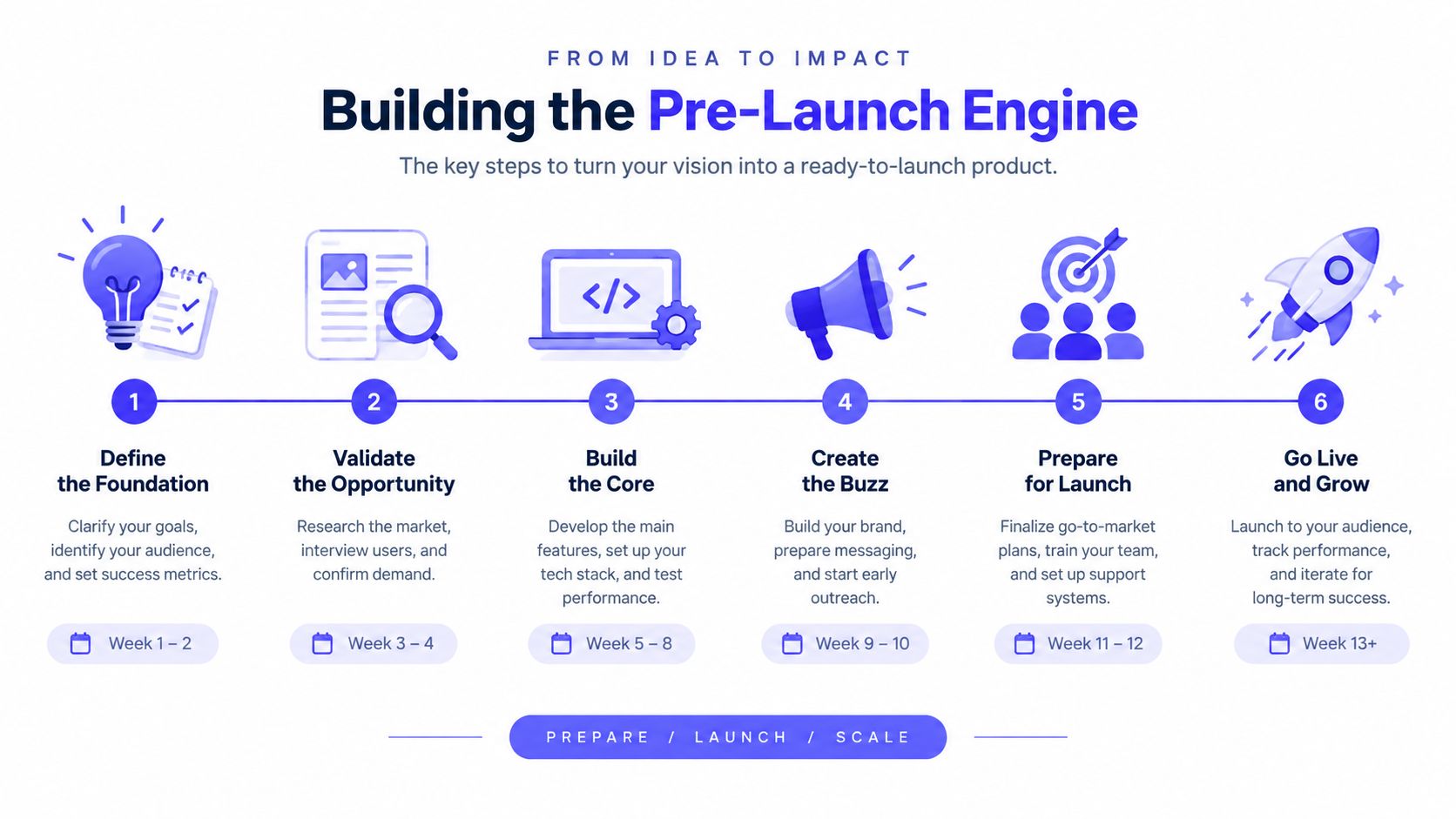
Don't treat list size as the only readiness signal. A smaller, engaged audience with clear product understanding can outperform a larger audience that joined through an untargeted giveaway. Your readiness test is whether subscribers respond to messages, understand the offer, and have shown enough intent to make launch-day pledges.
Email deliverability matters because a carefully built list is useless if launch messages land in spam. Before you send a major sequence, use a practical spam checker to identify message and deliverability issues, then test your sending setup with a small segment.
A large-scale study of 48,526 Kickstarter campaigns representing roughly $237 million in pledges found that only 10% of failed campaigns reached 30% of their goal and just 3% reached 50%, while successful projects averaged $7,825 versus $900 for failed projects, as reported in the study of Kickstarter campaign dynamics. The lesson is direct: don't wait for public discovery to rescue an underprepared launch. Build the audience, secure credible early support, and set a target that your minimum viable production plan can justify.
For a practical implementation sequence, use this Kickstarter pre-launch guide as a checklist, then connect every pre-launch promise to a post-campaign workflow. If a reward can't be surveyed, paid for, produced, and shipped cleanly, remove it before the page opens.
Launch week isn't a burst of random promotion. It's a controlled sequence that gives each audience segment a reason to act, then gives the campaign enough evidence and clarity to keep converting.
Send the first email when the campaign is live, with one direct action and one clear reason to act now. Don't bury the link under a long origin story. Explain what launched, who the product is for, what the early reward options are, and what recipients should do next.

On launch day, watch pledge velocity, traffic sources, reward selection, comments, and the questions people ask before pledging. Your first messages should go to the warmest segments, followed by partner and community outreach. Reply quickly to genuine objections with evidence, specifications, demonstrations, and delivery information.
The next day, publish an update that answers the most common question. If visitors are confused about compatibility, show the relevant comparison. If they don't understand the bundle difference, simplify the reward descriptions. Updates should remove friction, while comments should create a visible record of responsive, credible communication.
A strong launch-week rhythm might look like this:
An empirical study found that success was positively associated with founders' social ties, investment preparation, presentation quality, and multiple reward options, while higher funding goals, longer runtimes, and longer estimated delivery times correlated with lower success rates, according to the empirical crowdfunding analysis. Use that finding as a design constraint. Offer choice, but don't create a reward catalog your factory, warehouse, or support team can't manage.
Stretch goals should release value without changing the underlying production plan. A new digital asset, cosmetic variation, or already-modeled packaging improvement may be safer than a new component, material, or colorway that creates separate procurement and quality-control work.
If momentum slows, don't immediately add another perk. First inspect the message, traffic quality, reward availability, and unresolved objections. A useful recovery update names what has been accomplished, shows what remains, and gives backers a reason to share with a relevant audience. Avoid constant discounts, unexplained pivots, and major reward changes in the first 48 hours. They can make the team look uncertain precisely when backers are deciding whether execution feels credible.
The difference between the two pledge managers comes down to control versus convenience. Kickstarter's pledge manager keeps checkout inside the platform's marketplace flow. PledgeBox gives the creator a more flexible storefront for presentation, configuration, and post-campaign selling.
That choice affects far more than the survey form. It determines how you handle late orders, add-ons, shipping, taxes, payment recovery, reward changes, and customer information after funding closes.
Kickstarter's pledge manager has no upfront cost, but payments made inside it remain subject to Kickstarter's normal fee structure. The cited breakdown identifies a 5% Kickstarter platform fee on applicable funds, excluding taxes, plus a variable Stripe processing fee of approximately 3% to 5% on the full payment. Shipping and add-on amounts may also fall within that treatment, as described in Kickstarter pledge manager and cross-sell fee details.
Use this model when you want a straightforward, platform-native flow with limited configuration. It fits a campaign with a simple reward structure, few post-campaign offers, and a team that values familiarity over storefront control.
Kickstarter also keeps the backer experience close to the original campaign. That reduces setup decisions, but it leaves fewer options for tailoring the sales process around variants, late backers, or more complex fulfillment requirements.
PledgeBox is free to send the backer survey. Its model lets creators collect addresses and reward preferences first, then configure additional purchases when the fulfillment plan calls for them. Add-ons, late pre-orders, shipping, taxes or VAT, and other survey-based offers can sit inside the same ordering flow.
That structure makes the pledge manager a revenue stage, not just an administrative handoff. The creator controls what appears, which choices are available, and how customer information connects to fulfillment. Use that control only if the team can manage the added options without creating production or support confusion.
| Dimension | Kickstarter Pledge Manager | PledgeBox |
|---|---|---|
| Core model | Platform-centered, marketplace-style checkout | Creator-controlled, storefront-style pledge manager |
| Upfront platform cost | No upfront cost | No setup, campaign, or per-backer fee |
| Additional payment treatment | Payments remain subject to Kickstarter's fee structure, including 5% platform fees and approximately 3% to 5% Stripe processing where applicable | 3% of qualifying survey-based upsell revenue, with payment-gateway fees separate |
| Survey-only use | Collects post-campaign information within the platform flow | Sending the backer survey is free when it produces no additional revenue |
| Upsells | Available within the platform's payment context | Add-ons, late pre-orders, shipping, taxes or VAT, and other survey-based revenue can be configured |
| Best fit | Simple rewards and a platform-native experience | More control over selling, data collection, fulfillment, and post-campaign offers |
Choose according to operational needs, not brand familiarity. A campaign with one reward and little post-campaign selling may work well with Kickstarter's simpler flow. A hardware, gadget, or tabletop campaign with variants, international shipping, add-ons, and late backers needs a pledge manager built for planned commerce.
Make the decision before funding ends. Switching systems late, rewriting fulfillment rules, or adding uncontrolled offers after the campaign can turn a funded project into a support and shipping problem.
Treat the survey as the first post-funding sales stage, not an address form. It must answer three questions: who is receiving what, where should it go, and what still needs to be paid? A form that collects only addresses leaves revenue and fulfillment control unused. A form packed with vague questions creates support work and slows production.
Build the survey from the fulfillment plan. Start with each funded reward, then offer only options your team can produce and ship. Collect addresses, phone or delivery details where appropriate, reward preferences, shipping charges, taxes or VAT, and configuration information. Keep optional offers separate from required fields, so backers do not mistake an add-on for the reward they already pledged for.
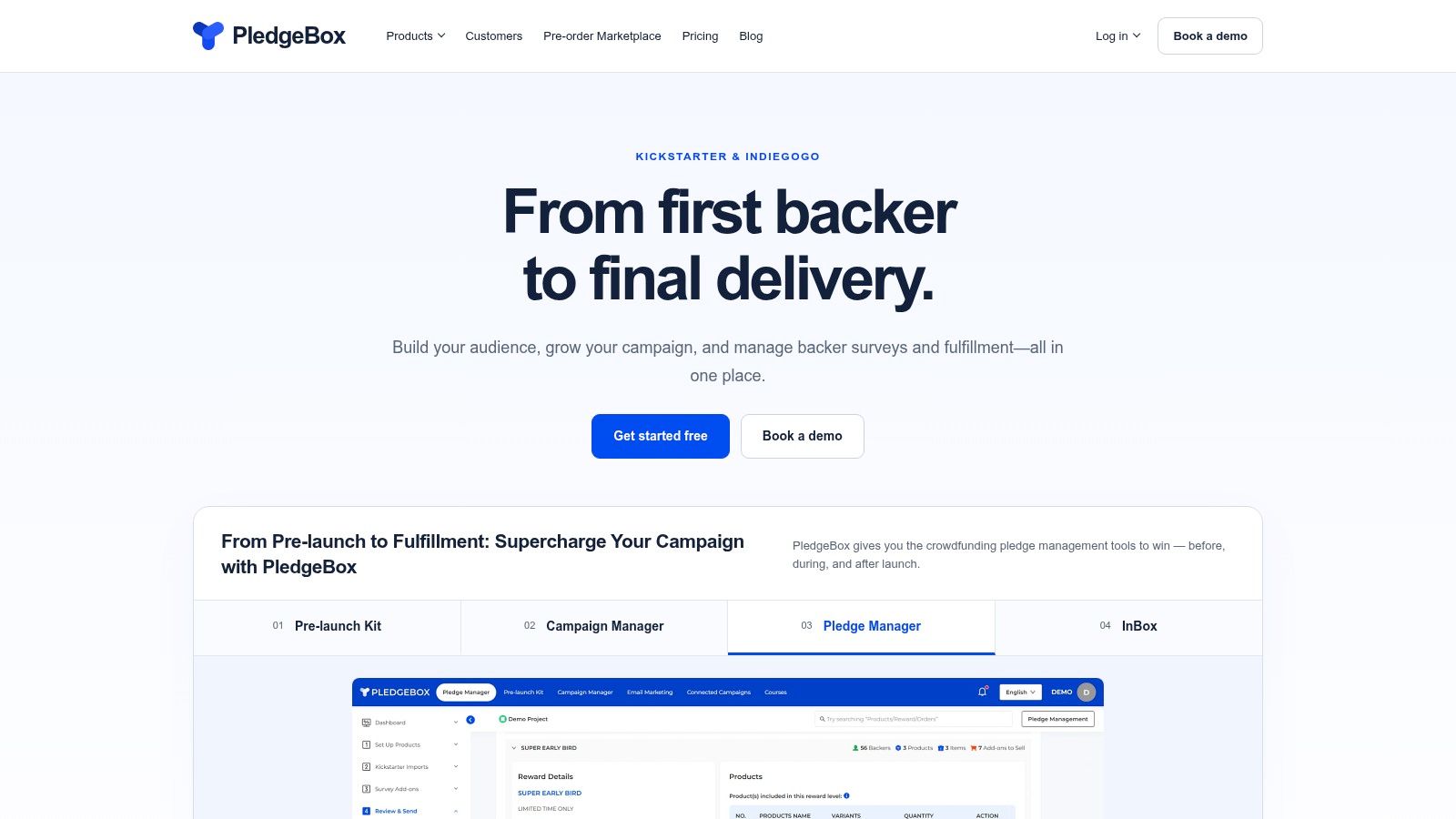
Validate addresses before producing shipping labels. Google Maps-powered validation can flag incomplete or inconsistent addresses, but your team still needs a review process for unusual locations, military addresses, and destinations carriers cannot serve.
Give payment recovery its own workflow. Send reminders, identify failed payments, and provide a clear resolution path. Do not release an incomplete order to production until you decide whether to contact the backer, hold the reward, or close the order after a defined cutoff.
PledgeBox's pricing structure, free surveys with a 3% upsell fee, is outlined in the comparison above. Apply that model to the revenue decision, not as a reason to add offers indiscriminately. Payment-gateway processing fees remain separate, so calculate the margin on every add-on, shipping charge, and tax or VAT collection.
Use the survey as a focused feedback channel. Ask about intended use, preferred configuration, or the reason for choosing an add-on. Keep those questions within the production plan already communicated to backers. Feedback can shape the next product, while fulfillment should not become an uncontrolled product-design forum.
Close ordering when the data supports production and remaining demand no longer justifies new exceptions. Late pre-orders and add-ons can improve unit economics, yet they also create inventory, tax, customs, and delivery obligations. Your post-campaign Kickstarter survey workflow should set the opening date, reminder schedule, available offers, and closing deadline.
That closing data becomes an operating asset. Record which offers sold, which configurations caused questions, where addresses failed, and which payments required recovery. Use those findings to simplify the next campaign's rewards and price its fulfillment plan before launch.
A funded percentage is a useful headline, but it's a poor operating dashboard. It tells you whether the campaign crossed a threshold, not whether the audience was qualified, the reward mix was profitable, or the team can deliver without expensive exceptions.
Track metrics by phase. Before launch, monitor list growth quality, referral conversion, prototype engagement, and the percentage of subscribers who take a meaningful action. During the campaign, track day-one pledge volume, traffic-source mix, reward selection, comment themes, and the relationship between updates and pledge changes. After funding, shift attention to fulfillment and cash quality.
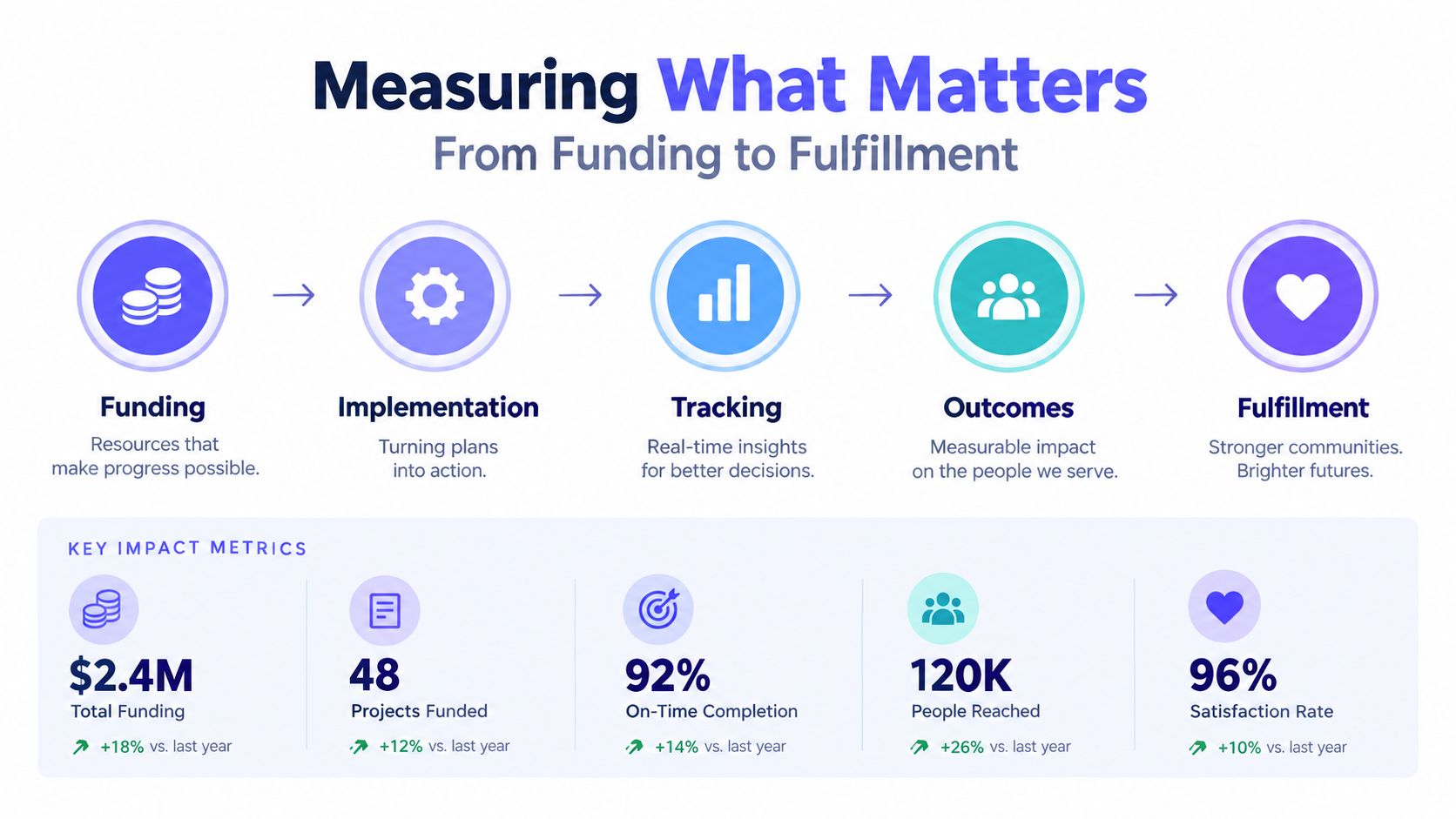
A large social following may look impressive but won't tell you whether the right people will buy. Track the source that produces qualified pledges, not merely the source that produces clicks. Likewise, total add-on revenue matters less than add-on margin after production, payment, tax, shipping, and support costs.
Your post-campaign dashboard should include:
As of January 2025, 376,698 Kickstarter projects had failed to reach their targets, and 246,351 of those achieved only 1% to 20% of their goals, according to Kickstarter unsuccessful project data. That context makes disciplined measurement more important, not less. A campaign that funds can still underperform if its revenue is trapped in low-margin rewards or its fulfillment process produces preventable losses.
For teams that need to connect marketing activity to commercial outcomes, this framework on how to tie content to business results offers a useful way to move beyond clicks and impressions. Apply the same discipline to crowdfunding. Every metric should support a decision about audience, offer, production, communication, or delivery.
Your first campaign produces more than revenue. It produces a record of what customers chose, misunderstood, changed, failed to pay for, asked support to explain, and paid extra to receive. Most creators archive that information as a spreadsheet and then repeat the same reward and delivery mistakes on the next launch.
Turn the data into decisions before you design the next campaign. If one reward tier created excessive packaging work, remove it or redesign it. If a premium bundle attracted interest but produced weak contribution margin, change its contents. If address errors clustered around particular regions, improve the form and shipping logic before accepting those destinations again.
Capture five categories:
Use that record to revise the next campaign's page, FAQ, reward architecture, email segmentation, and fulfillment calendar. Don't add a stretch goal because it sounds exciting if the previous campaign showed that extra variants overwhelm production. Don't promise a short delivery interval if vendor dependencies and international shipping make it unrealistic.
A historical University of Pennsylvania study of 2,105 Kickstarter projects found that among successful projects, more than 90% remained ongoing ventures after the campaign, 32% reported annual revenue above $100,000, and each successful project added an average of 2.2 employees, as described in the study of Kickstarter project outcomes. The sample is historical, but its strategic implication remains clear: campaign execution can affect the business after funding.
The campaign doesn't end at the funding announcement. It ends when you understand what the backers bought, what delivery cost, what they valued, and what the next launch should do differently.
Before starting again, archive the final reward mix, survey exports, payment outcomes, support categories, shipping variance, address-error patterns, add-on uptake, and margin by tier. Then turn those records into the next campaign's product brief and operational plan.
PledgeBox gives creators a free way to send the backer survey, with no setup, campaign, or per-backer fee, and charges only 3% of upsell revenue when the survey collects it. Use PledgeBox to turn post-campaign surveys, add-ons, shipping, taxes, and fulfillment data into a controlled revenue stage instead of an administrative scramble.
PledgeBox
The All-in-One Toolkit to Launch, Manage & Scale Your Kickstarter / Indiegogo Campaign