 PledgeBox
Indiegogo Pre Launch Strategy for 2026
Master your Indiegogo pre launch with a proven 2026 strategy. Learn to build pages, capture leads, run email sequences, and measure real campaign demand.
Master your Indiegogo pre launch with a proven 2026 strategy. Learn to build pages, capture leads, run email sequences, and measure real campaign demand.
You've built the prototype, polished the campaign page, and started collecting emails. Then launch day arrives. You publish the Indiegogo campaign, refresh the dashboard, and see interest without enough pledges to create momentum. That quiet start usually isn't a launch-day problem. It's the result of treating Indiegogo pre launch as a promotional extra instead of an operating phase with measurable readiness criteria.
A strong pre-launch process does more than gather names. It identifies qualified prospects, gives the platform enough time to review your campaign, tests your message, and prepares the systems you'll need after funding ends. The creators who plan that entire path avoid the most expensive mistake in crowdfunding, mistaking attention for demand.
The cold launch is familiar. A creator sends a few social posts, publishes the campaign, and waits for strangers to discover it. The page may receive clicks, but the early funding graph stays flat. Without a concentrated group of people ready to act, the campaign has little evidence of immediate demand to build on.
A widely cited crowdfunding benchmark recommends reaching launch day with 2,000 to 5,000 qualified leads. One independent industry source reports that campaigns with 5,000 or more pre-launch emails converted at 38% on Day 1, compared with 8% for cold launches, a 30-point gap that can determine whether the campaign develops early traction. The same source reports a progression from 22% 30-day success for lists of 0 to 500 to 91% for lists of 10K or more, while average total raised moved from about $45K to $1.8M or more. Those figures come from an independent Indiegogo pre-launch checklist, so treat them as directional benchmarks rather than a promise for your product.
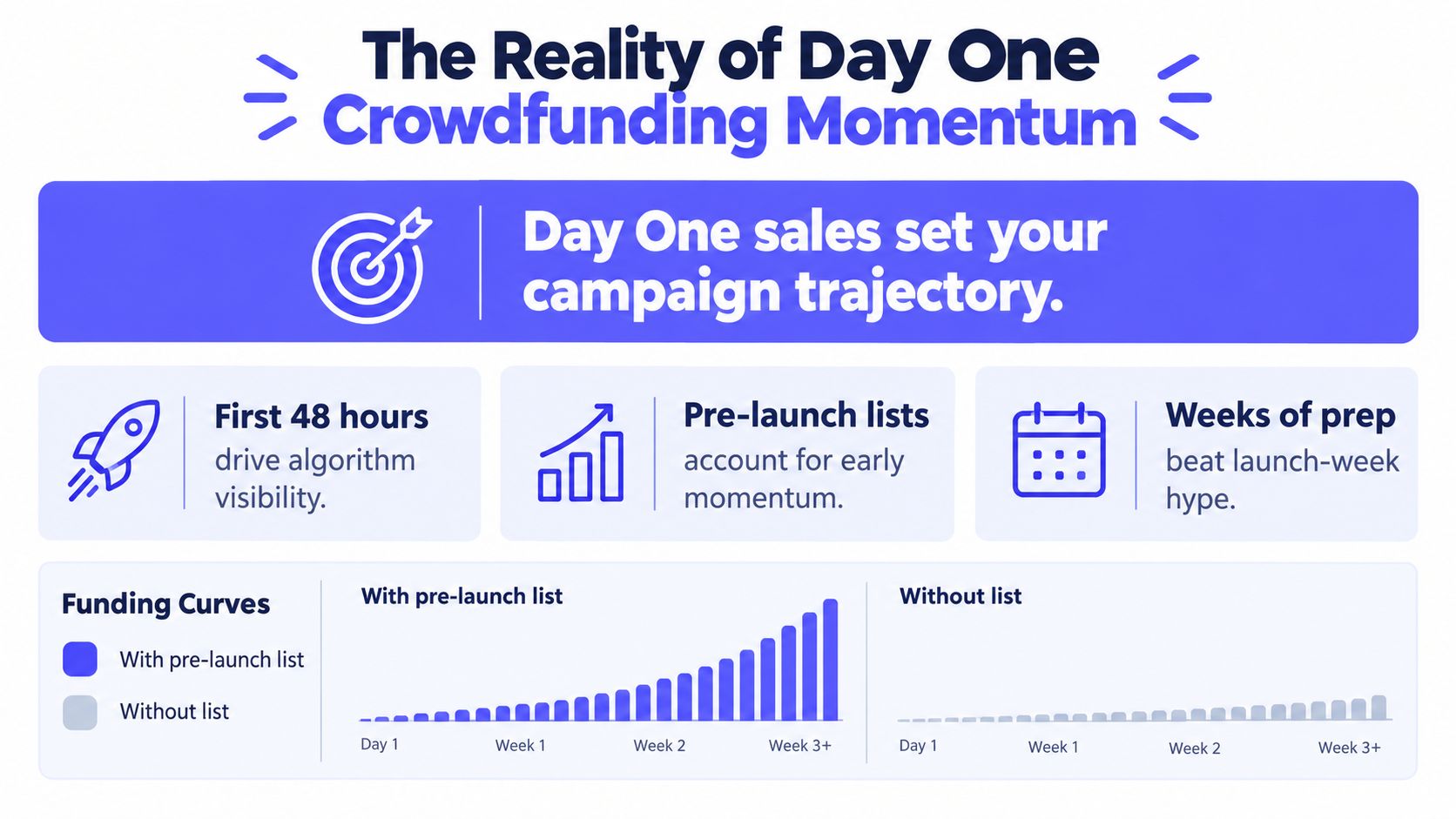
The underlying logic is simple. A warm subscriber already understands the product, has seen the story, and has had time to decide whether the reward fits their needs. A cold visitor must learn, trust, compare, and purchase in a single session. Those are different audiences, and the second group is much harder to convert immediately.
Independent campaign guidance puts a well-run opening conversion from a warm, recently built list at roughly 5% to 12%, with 2,000 engaged emails used as a practical minimum target. That source translates the range into approximately 100 to 240 first-wave backers from 2,000 engaged contacts. Review the assumptions in this explanation of reward-based crowdfunding, then adjust them for price, category, geography, and product complexity.
Practical rule: Count people who have demonstrated intent, not every address captured by a giveaway.
A large list can still fail if subscribers don't open messages, click through, answer product questions, or recognize the offer. Your first-day objective is not maximum reach. It's a visible concentration of genuine backers who can give the campaign a credible opening signal.
A pre-launch page has two operational jobs: explain the product clearly enough to earn a notification signup, and move the campaign through review without creating a deadline scramble. Build it around decisions you can support after launch, not decorative copy or inflated follower counts.
Start with four components:
Prepare the core assets. Use a clear product image, a concise explanation of the problem, a specific description of what backers receive, and one obvious signup action. Keep technical detail selective. The page should create informed curiosity while leaving the full campaign page room to do its work.
Make the promise testable. State what joining provides, such as launch access, a product update, or a reward announcement. Avoid implying guaranteed pricing or availability unless the team can honor those terms once the campaign opens.
Submit early enough for review. Set the launch date at least 7 days after review submission, following guidance on crowdfunding pre-launch planning. Treat that week as scheduled operating time, not spare capacity for unfinished copy. Use it to resolve review questions, confirm the launch sequence, and test the signup and notification path.
Keep the review record current. Assign an owner for identity, bank, and ownership verification, then record outstanding items beside the planned launch date. A page that collects interest while verification remains incomplete can produce a list without a usable launch window.
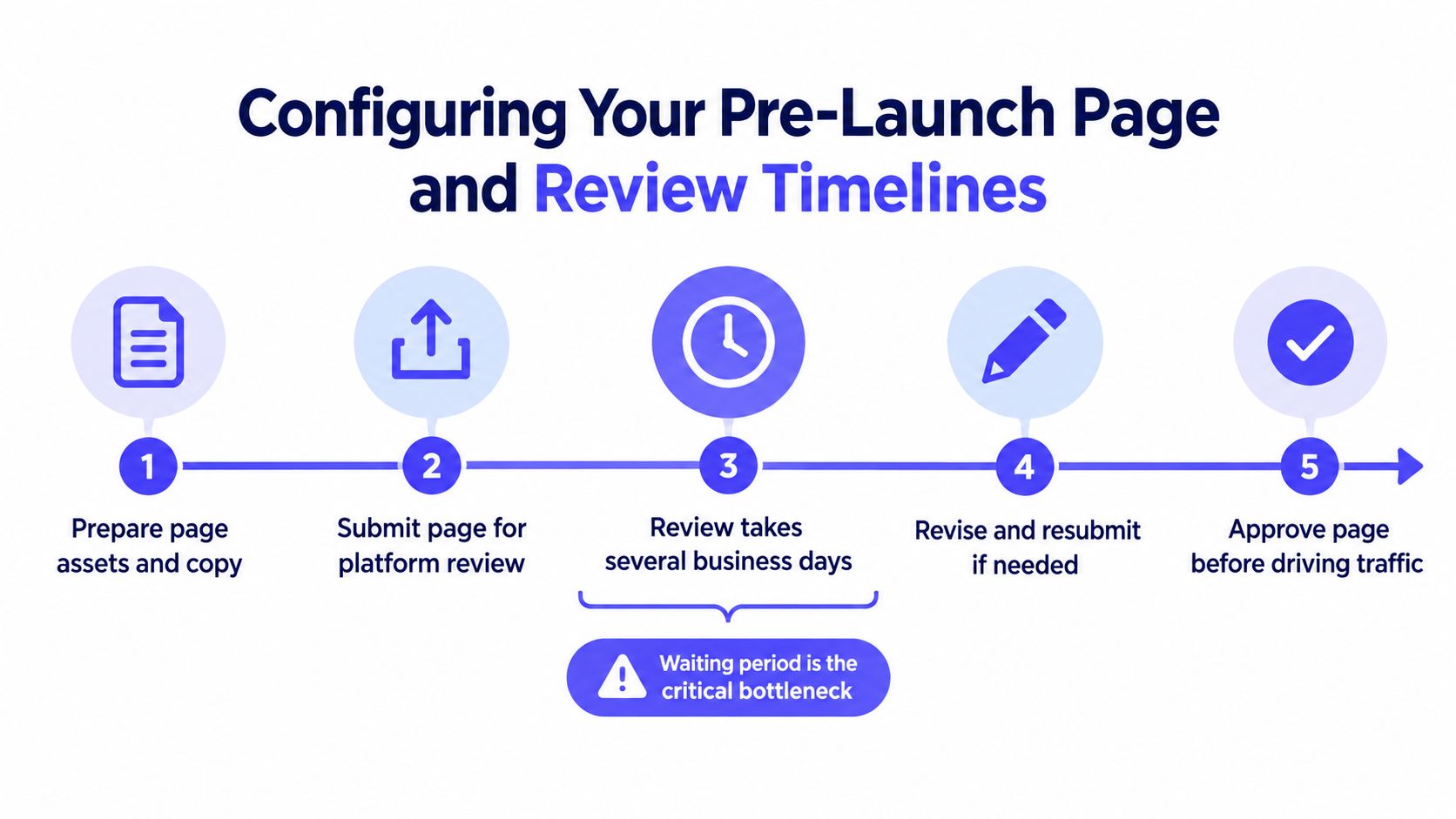
Gather verification details before sending paid traffic. A review delay can leave you collecting signups for a date that must change, forcing new emails, revised expectations, and avoidable loss of trust.
Use the pre-launch discussion area to answer practical questions about materials, delivery, compatibility, reward contents, and known limitations. These conversations expose objections that belong in the campaign page and email sequence. Teams creating digital products can also use this strategy for digital product creators to plan audience education and launch preparation beyond the page itself.
Indiegogo's pre-launch page supports email collection and discussions. Its newer follower-gift mechanic reportedly increases campaign followers by an average of 20% during pre-launch, according to Indiegogo's update on the feature. Use the feature to prompt a meaningful action, then qualify the response. A follower count indicates attention. A reply, survey response, or stated reward preference gives the launch team better evidence of demand.
Creators seeking one place to build the page, monitor traffic, and notify leads can review the PledgeBox pre-launch kit. Keep the review calendar, verification checklist, source notes, and lead-status definitions in one operating document so pre-launch activity connects cleanly to pledge management after the campaign ends.
A large list can still produce a quiet launch. People subscribe for different reasons, including a discount, giveaway, reminder, or closer look. Before launch, identify which motivation applies and whether the subscriber has a credible reason to consider buying.
Acquisition sources with context usually produce better evidence. A niche community discussing the problem your product solves may send fewer visitors than a broad advertisement, yet those visitors often understand the use case. A creator partnership can perform well when the partner's audience matches the product. Untargeted traffic can inflate signup totals without improving launch results.

Ask one useful question after email capture. Identify the intended use case, preferred reward, current alternative, or reason for interest. Keep the question short. You are separating casual curiosity from a specific product need, not running a full market survey.
Then group contacts by observable behavior:
Send the launch reminder to everyone who explicitly opted in, then adapt the message where the available data supports it. A tabletop buyer may need reward and component details. A hardware buyer may focus on compatibility, testing, and delivery assumptions. This segmentation improves relevance while acknowledging that subscribers do not share one motivation.
The common operational mistake is treating a purchased or broadly aggregated list as a backer community. A qualified audience has received enough information to assess the offer and has shown behavior consistent with that interest. The PledgeBox guide to capturing an audience offers a useful framework for separating audience size from audience quality.
A smaller list of people who understand the offer can outperform a larger list assembled around a free incentive.
Record the source, signup date, product interest, and engagement status. Add pledge or reward preferences when they become available. These fields help the team prioritize contacts, tailor launch messages, and carry useful demand signals into post-campaign pledge management instead of starting that process with an unstructured list.
Email should be the backbone of the launch sequence because it gives you a direct channel to people who have already raised their hands. Indiegogo's own preparation guidance recommends a staged cadence of outreach about one week before launch, then at 5 days, 3 days, 1 day, and go-live. The same guidance says email is 33% more effective than other outreach and suggests a 5% conversion assumption for sizing the list. You can review that framework in Indiegogo email guidance for getting backers.
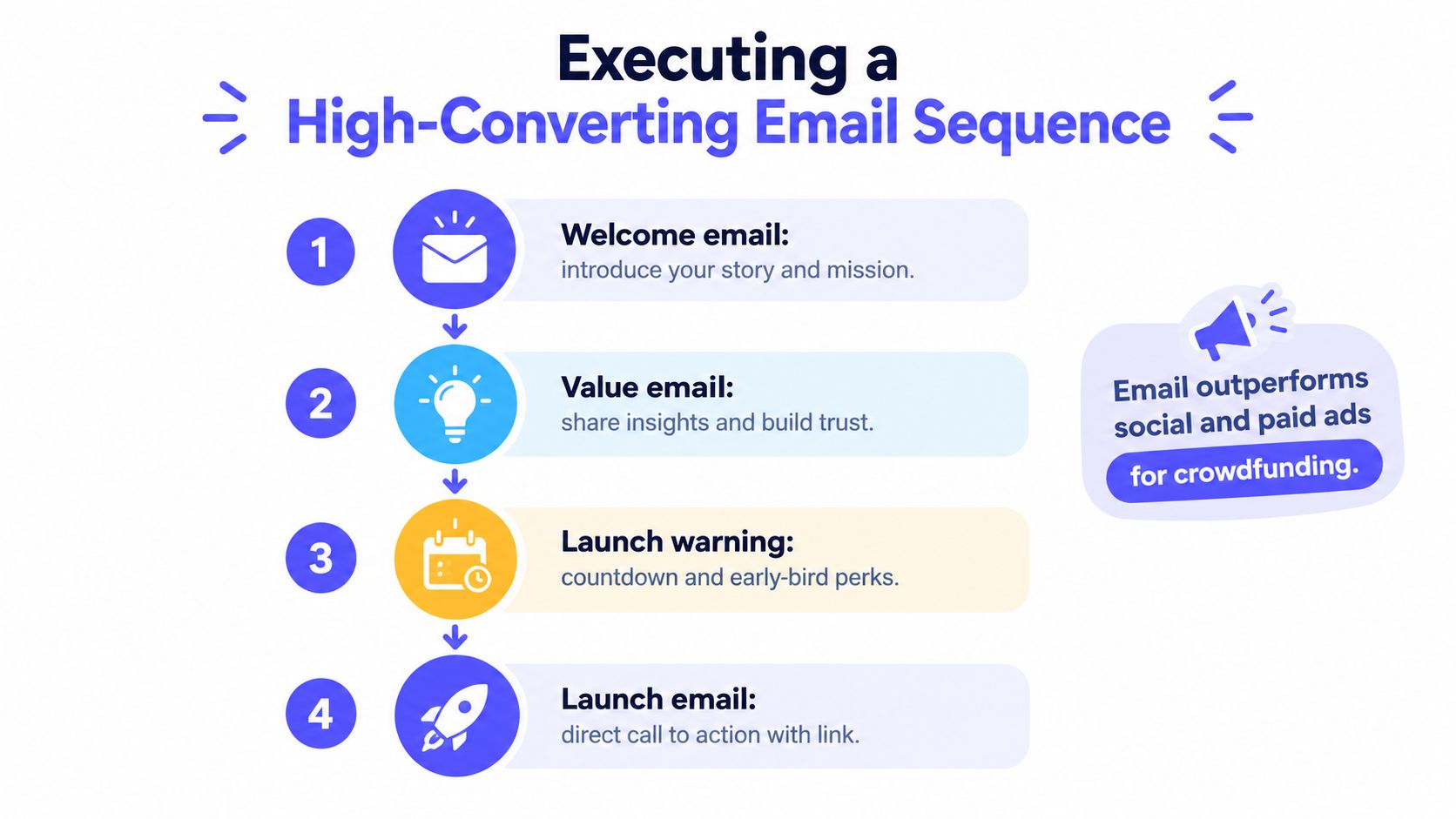
The first message should confirm the signup and explain the product story. Don't spend it repeating the landing page. Tell subscribers what problem the team encountered, why the product exists, and what they can expect before launch.
The value email should reduce uncertainty. Show a use case, explain a design decision, demonstrate the product, or answer an objection raised in pre-launch discussions. A reader should gain something even if they don't pledge immediately.
The final messages should make timing clear:
Indiegogo's prep guidance highlights the first 30% of the funding goal as an early traction threshold. Use that threshold to plan the opening push, but don't promise a result based on list size alone. A warm list still needs a credible offer, clear delivery expectations, and a frictionless path to pledge.
Keep the subject line specific and the body focused. The Indiegogo email marketing tips from PledgeBox can help refine the sequence, but no template can rescue an audience that lacks product fit. Watch clicks, replies, and pledge behavior, not opens alone.
A pre-launch page can collect signups while producing little evidence that people will pledge. Indiegogo's dashboard helps separate activity from readiness. It tracks daily visitors and signups, but it starts populating only after the page receives at least 10 daily visitors. Below that level, use source data, replies, and observed behavior to assess demand rather than treating missing dashboard data as a negative result.
Begin with traffic quality. Compare each source with the actions it generates. Community posts, email, creator collaborations, and advertisements can attract different audiences. If a source produces clicks but few signups, check audience fit and the page promise before increasing spend.
Then compare visitors with signups and downstream engagement. A sudden signup increase may reflect strong messaging, or an incentive that attracts people unlikely to value the eventual reward. Product-detail clicks, replies, launch-reminder engagement, and informed questions provide stronger evidence of purchase consideration.
Use a readiness review:
Track the quality of each signup, not just the total. A smaller list of people who click through, answer questions, and understand the offer can produce more useful launch demand than a larger list built around a generic giveaway.
If the page remains below the dashboard's 10-visitor daily requirement, do not read unpopulated analytics as proof that demand is absent. Increase qualified traffic, verify tracking, and collect direct responses while activity builds. Keep those contacts organized for launch reminders and later pledge decisions, because pre-launch interest becomes operationally valuable only when it can be connected to actual pledges and follow-up behavior. Launch when the evidence supports the product, not just because the calendar feels uncomfortable.
Pre-launch signups become a fulfillment workload as soon as the campaign closes. Backers need reward confirmation, shipping details, tax handling, address collection, add-ons, and timely updates. If those decisions wait until funding ends, the team may discover that the campaign promise does not match the delivery process.
Choose the pledge workflow before launch. Kickstarter's native surveys are free. PledgeBox is free to send the backer survey and charges 3% only on upsell revenue when upsells occur, as stated on PledgeBox's pricing page. The decision is whether the platform's built-in controls cover your operation or whether a separate storefront gives the team better control over products, customer data, and post-campaign sales.
| Feature | Native Platform Manager | Dedicated Pledge Manager, PledgeBox |
|---|---|---|
| Survey distribution | Included in the platform workflow | Free to send the backer survey |
| Upsells, shipping, and taxes | Available according to the platform's native controls | Supports additional revenue collection through add-ons, shipping, and taxes or VAT |
| Storefront flexibility | More constrained by the campaign platform | More customizable for pledge options and post-campaign sales |
| Fee structure | Kickstarter native surveys are free | Charges 3% of upsell revenue when upsells generate revenue, with no survey charge when there are no upsells |
| Operating model | Kickstarter's pledge manager is like Amazon | PledgeBox's pledge manager is like Shopify, with a more store-like workflow |
The Amazon and Shopify comparison describes operational control rather than branding. A marketplace-style workflow keeps the campaign inside the platform's rules and interface. A store-style pledge manager provides more room to configure products, add-ons, customer questions, shipping rules, and fulfillment data around your own process. PledgeBox's fulfillment guidance uses the same comparison when explaining the difference.
Use the native route when rewards are simple and post-campaign selling is limited. Consider a dedicated manager when shipping varies by destination, backers need several reward choices, add-ons are part of the revenue plan, or vendors require clean operational exports.
Set up that system during pre-launch. Reward names, SKU logic, shipping assumptions, tax treatment, and customer questions should match the promises made in your campaign messaging. The transition from attention to pledges, then from pledges to confirmed orders, needs one connected process.
That connection also helps distinguish qualified demand from vanity signups. A large pre-launch list has limited operational value if contacts cannot confirm a reward, provide usable delivery information, or respond to a post-campaign survey. Plan the handoff early so campaign momentum produces manageable orders rather than a preventable fulfillment bottleneck.
PledgeBox connects audience capture with post-campaign surveys, shipping, taxes, add-ons, and upsells. Visit PledgeBox to assess whether its pledge management workflow fits your Indiegogo campaign before launch.
PledgeBox
The All-in-One Toolkit to Launch, Manage & Scale Your Kickstarter / Indiegogo Campaign