 PledgeBox
Boost Creator Revenue: Cost Recovery Strategies 2026
Discover 8 cost recovery strategies for crowdfunding creators in 2026. Optimize shipping, add-ons, & pre-orders to maximize post-campaign revenue.
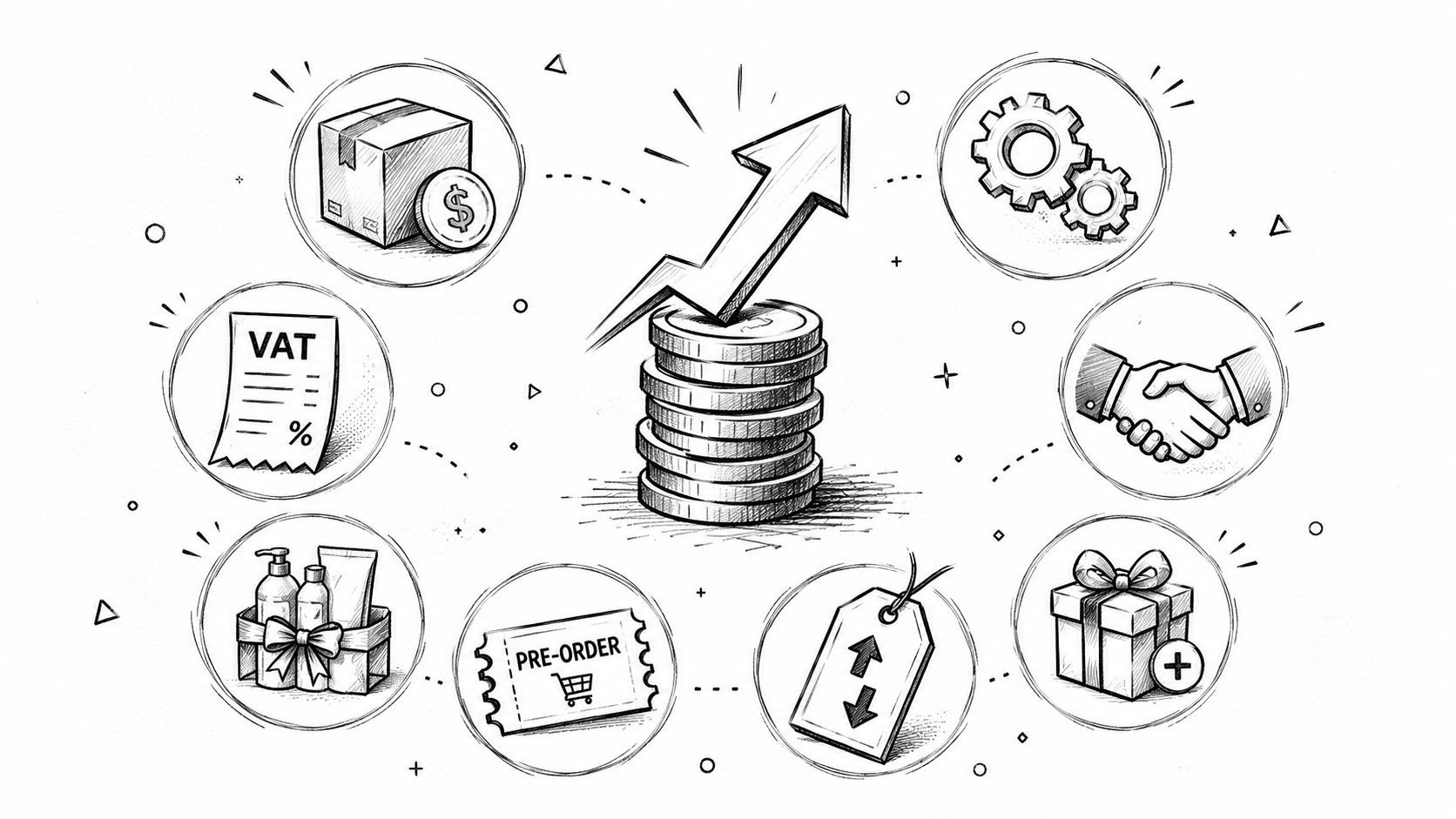
Discover 8 cost recovery strategies for crowdfunding creators in 2026. Optimize shipping, add-ons, & pre-orders to maximize post-campaign revenue.
You hit your funding goal. Then the actual math starts.
Freight quotes come in above estimate. VAT and tax rules turn messy by region. A chunk of backers still need address fixes. Add-on demand is there, but your post-campaign flow isn't built to capture it. What looked like a healthy campaign starts leaking margin from every side.
That's why crowdfunding cost recovery matters. Good cost recovery strategies don't just track expenses. They make sure the campaign covers direct costs, support costs, and indirect costs in a way that's sustainable. The Bayes cost recovery guide frames this as a disciplined process: identify cost categories, apportion support and indirect costs, calculate full service cost, include a contingency or risk premium, and address funding shortfalls through a clear recovery model, as outlined in the Bayes Cost Recovery Guide.
For creators, that discipline usually shows up after the campaign ends. You recover shipping accurately. You collect VAT without chaos. You use upsells carefully so the campaign doesn't subsidize itself blindly. You keep post-campaign revenue working instead of letting it disappear into preventable overhead.
These eight cost recovery strategies help you reclaim every dollar without slowing delivery or alienating backers. One practical point runs through all of them. Kickstarter's built-in pledge flow is like Amazon. It's standardized and controlled by the platform. A PledgeBox pledge manager is more like Shopify. You get more control over the customer journey, and PledgeBox is free to send the backer survey and only charges 3% of upsell revenue if there's any, according to PledgeBox pricing.

The fastest post-campaign revenue usually comes from people who already trust you. Backers don't need a full sales pitch. They need a clean survey, a few relevant upgrades, and a checkout flow that doesn't feel like a second campaign.
That's where the pledge manager matters. Kickstarter's native flow is like Amazon. Efficient, familiar, but rigid. PledgeBox is more like Shopify. You can shape the sequence, control the offer stack, and test how add-ons are presented. It's also free to send the backer survey, and PledgeBox only charges 3% on upsell revenue if the survey collects any.
Most creators oversell. They throw in every leftover accessory, expansion, variant, and upgrade. Conversion usually improves when the offer list is tighter and easier to evaluate.
A cleaner setup looks like this:
A board game publisher might offer deluxe miniatures and a stretch-content expansion after the campaign. A hardware creator might offer a protective case, an extended support package, or a companion software license. These are practical cost recovery strategies because they generate margin from buyers who are already engaged, instead of forcing you to buy more traffic.
Practical rule: Ask for the shipping address first. Present add-ons after the backer has completed the required fulfillment step.
That sequencing keeps the survey compliant with fulfillment logic and reduces friction. It also matters because Kickstarter Lesson #42 says creators should only ask backer survey questions that are necessary for fulfillment, which is one reason many teams prefer a more flexible post-campaign tool, as discussed in Kickstarter Lesson 42 on backer surveys.
For creators building this flow, PledgeBox's add-on item setup guide is useful as a practical reference.

Shipping and tax errors wreck margins faster than weak upsells. If you undercharge, you eat the gap. If you spring fees on backers with no explanation, you create support volume and resentment.
Transparent recovery works better. Humentum's guidance on cost recovery stresses that stakeholders need confidence in how indirect costs are explained, and that same principle applies to creators collecting shipping, VAT, and overhead from backers through a survey flow. The challenge is communication as much as math, which is why the Humentum discussion of successful cost recovery initiatives is still relevant outside the nonprofit context.
Backers usually accept extra charges when they can see what they're paying for. They push back when the fee feels arbitrary.
Use the survey to recover:
PledgeBox fits this use case well because it's free to send the backer survey and only takes 3% of upsell revenue if there's any. That matters when you're collecting shipping fees, VAT, and add-ons through one system. If the survey generates no additional revenue, the creator pays nothing for using the pledge manager, as described in the PledgeBox pledge manager overview.
Explain shipping recovery as sustainability, not as a penalty. Backers are more cooperative when they understand you're protecting delivery quality rather than padding margin.
This is one of the most practical cost recovery strategies for global campaigns. You're not just charging more. You're preventing hidden fulfillment costs from consuming the campaign itself. For implementation details, the PledgeBox VAT and tax compliance guide is the right reference point.
One-time crowdfunding revenue feels great until manufacturing, support, and retention costs spread that money thin. Recurring revenue changes the equation because it gives the project a second recovery layer after the campaign closes.
That can work for products with replenishment, software, premium content, member communities, replacement parts, or expansion packs. The logic is simple. A campaign launches demand. A subscription stabilizes the business around that demand.
In crowdfunding, the average successful campaign historically raises about $7,000, according to Startups.com's crowdfunding statistics summary. That's not much room for sloppy cost recovery if freight, support, and overhead run high.
The same source notes that donor retention models can distinguish between returning and non-returning donors with an AUC of about 0.72, and that this corresponds to identifying the donor more likely to return in about 74% of cases. For creators, the takeaway is practical. Repeat engagement matters because it lowers the pressure to recover everything from the first transaction.
A coffee hardware brand might offer recurring bean shipments. A tabletop publisher might sell a monthly scenario pack or members-only digital content. A gadget startup might offer a support plan with software access and replacement coverage.
Use the survey to test willingness before you hard-launch the subscription. Kickstarter's built-in experience is like Amazon. You get a straightforward transaction. PledgeBox is like Shopify. You can shape a post-campaign path that asks, “Do these backers want an ongoing relationship?” It's free to send the survey, and the platform only charges 3% of upsell revenue if there is any.
Field note: Present the subscription as a convenience or insider benefit. If it feels like you're charging backers to finish the original promise, trust drops fast.
Good cost recovery strategies don't force recurring revenue onto every project. They use it where the product naturally supports repeat value.
Some campaigns stop selling the day funding ends. That's wasted momentum.
The better move is to treat the campaign as phase one of a longer revenue window. Late backer pre-orders let you continue recovering acquisition costs, tooling costs, and post-campaign overhead after the funding deadline. This matters even more in crowded categories where creator acquisition can get expensive.
Successful crowdfunding campaigns typically require allocating 20% to 30% of the total budget to marketing, and seller acquisition costs can exceed $300 per creator in competitive environments, according to this crowdfunding success-factors analysis. If you stop monetizing after campaign close, you leave that spend underutilized.
Late pre-orders help in a few ways:
A hardware startup can keep taking full-price pre-orders while manufacturing locks in. A tabletop publisher can use post-campaign momentum to sell add-ons, expansions, or all-in bundles to late buyers who needed more time.
PledgeBox is well suited here because it's free to send the backer survey and only charges 3% of upsell revenue if there's any. That makes it easier to keep the post-campaign channel live without adding fixed platform cost. And the comparison still holds. Kickstarter's pledge flow is like Amazon. Functional storefront, limited control. PledgeBox feels more like Shopify because you can keep merchandising after the campaign.
If you want a practical walkthrough, use the PledgeBox late pledge Kickstarter guide.

Regional fulfillment is where disciplined cost recovery starts to look like operations, not just accounting. The campaign may be global, but costs aren't. Freight lanes, duties, final-mile service, and return handling vary by region, so your recovery model has to vary too.
The biggest mistake is averaging everything into one “international shipping” bucket. That hides profitable regions, subsidizes expensive ones, and makes post-campaign surprises almost guaranteed.
A better model is simple:
Traditional cost recovery guidance warns against cross-subsidization because it distorts true cost-to-customer relationships. That principle appears clearly in the Victorian cost recovery guidelines. For creators, that warning is useful, but reality is messier. Many campaigns still need upsell revenue or late orders to offset original fulfillment pressure. The key is being explicit about what each region costs instead of pretending one blended charge is fair.
That's why survey-led regional allocation works. PledgeBox gives creators more control over segmentation than a platform-native flow, which is one reason the Amazon versus Shopify comparison is helpful. Kickstarter handles the standard flow. PledgeBox gives you the knobs. It's also free to send the backer survey, and only 3% of upsell revenue is charged if the survey collects any.
When teams use this properly, they don't just recover freight. They reduce support tickets, customs surprises, and warehouse rework.
Not every backer should see the same offer. A collector, a practical user, and a gift buyer don't value the same bundle in the same way. Treating them as identical leaves money on the table and makes the survey feel less relevant.
Segmentation works best when it's behavioral, not demographic. What did they back? Which tier did they choose? Did they add premium components? Are they buying for utility, fandom, or completeness?
A clean segmentation model can drive better cost recovery without making the flow complicated:
In reward-based crowdfunding, refund bonuses have been shown to increase funding efficiency and net returns to the public good, especially when contributors have multiple projects to choose from, according to the Purdue working paper on refund bonuses in crowdfunding. That research isn't about pledge manager segmentation directly, but the principle carries over. Offer design changes behavior. Backers respond to structure, framing, and perceived downside protection.
A gadget creator might show power users a bundle with premium accessories and support. A casual buyer might only see the base add-on that removes a common pain point. That's often enough.
“Don't ask every backer to shop the whole catalog. Route them to the most believable next purchase.”
PledgeBox supports this style of post-campaign selling better than a rigid one-size-fits-all flow. Again, the simplest comparison is this: Kickstarter is like Amazon, while PledgeBox is like Shopify. You control more of the merchandising logic, and the survey is free to send. The only platform charge is 3% of upsell revenue if there's any.
A lot of cost recovery happens before the campaign even launches. If you enter launch week with weak demand, your unit economics stay fragile. You're buying attention at the most expensive moment and hoping volume appears in time to lower production pressure.
The stronger play is to use pre-launch demand and a disciplined stretch-goal plan to protect margins early. This isn't only a growth tactic. It's one of the most overlooked cost recovery strategies because scale can reduce the burden each order has to carry.
Pre-launch audience building helps you shift away from paid dependence and toward owned demand. That matters because customer acquisition pressure can eat the campaign before fulfillment even starts.
A practical sequence looks like this:
This approach lines up with the broader principle that cost recovery needs a full understanding of all costs involved throughout the year, not just after invoices arrive. That language appears in the earlier Bayes framework already noted. For creators, the operating lesson is straightforward. If launch planning and operational planning aren't aligned, revenue shortfalls show up later as “unexpected” shipping or production problems.
PledgeBox helps on the post-campaign side because the survey is free to send, and only upsell revenue triggers the 3% charge. It also fits creators who want a Shopify-style toolkit around the campaign, not just an Amazon-style checkout moment inside the platform.
The campaign doesn't have to be the only commercial environment around your product. Some creators recover margin by recommending adjacent items, partners, or ecosystem products that make the original purchase more useful.
This only works when the recommendation is tight. Random affiliate clutter makes the survey feel cheap. But a well-matched recommendation can offset support and fulfillment overhead without changing the core reward structure.
Examples are easy to picture. A hardware creator can recommend compatible cables, mounts, cases, or installation accessories. A board game publisher can point backers to storage inserts, sleeves, or display solutions from trusted partners. A fitness product campaign can pair the main reward with aligned training content or accessories.
The affiliate layer should follow three rules:
This model pairs well with a flexible pledge manager. Kickstarter's built-in environment is like Amazon. Efficient, centralized, and limited. PledgeBox behaves more like Shopify because you can extend the post-campaign buying environment more naturally. It's free to send the survey, and only 3% of upsell revenue is charged if there's any.
For teams that want to layer partner revenue into their broader monetization strategy, an example of an external partner page is the Mailwarm affiliate program.
| Approach | Implementation Complexity 🔄 | Resource Requirements ⚡ | Expected Outcomes ⭐ / 📊 | Ideal Use Cases 💡 | Key Advantages ⭐ |
|---|---|---|---|---|---|
| Post-Campaign Survey & Add-On Upselling via Pledge Manager | Medium, requires survey design, pricing strategy, UX flow | Low–Medium, pledge manager + payment integration, imagery/A/B tests | ⭐ 15–40% incremental revenue; 📊 improved backer preference data | Campaigns with engaged backers and complementary add-ons | Dynamic upsells, mobile checkout, instant payments |
| Shipping Fee & VAT/Tax Recovery Through Survey Collection | Medium, tax rules and weight inputs needed | Medium, carrier APIs, tax engine, address validation | ⭐ Recover full shipping/VAT; 📊 fewer failed deliveries, margin protection | International physical-product campaigns with variable duties | Accurate cost recovery, compliance, transparent pricing |
| Subscription & Recurring Revenue Model via Pledge Manager | High, requires ongoing ops, churn & CS processes | High, recurring billing, fulfillment/content production, support team | ⭐ Predictable multi-year revenue; 📊 4–6x LTV vs one-time buyers | Consumables, digital services, membership-driven projects | Recurring LTV, predictable cashflow, reduced need for new campaigns |
| Late Backer Pre-Orders & Evergreen Sales via Pledge Manager Marketplace | Low–Medium, marketplace setup and clear positioning | Low–Medium, storefront maintenance, optional batching fulfillment | ⭐ 8–24% extended incremental revenue; 📊 revenue runway extension | Projects with sustained demand or post-launch discovery | Extends monetization window; lower CAC; validates demand |
| International Fulfillment Hub Strategy & Regional Cost Allocation | High, multi-partner logistics & inventory splits | High, warehouses, logistics partners, regional inventory capital | ⭐ 30–50% shipping cost reduction; 📊 faster delivery (5–10 days) | Large global backer bases or heavy/expensive-to-ship products | Lower per-unit shipping, faster delivery, customs mitigation |
| Data-Driven Backer Segmentation & Dynamic Pricing | High, analytics, conditional logic, price rules | High, analytics tools, A/B testing, tailored survey flows | ⭐ 18–45% higher add-on revenue; 📊 improved conversion by segment | Campaigns with varied pledge tiers and sufficient data volume | Targeted offers, optimized revenue per segment, time-based pricing |
| Flex Funding & Stretch Goal Revenue Capture for Campaign Optimization | Medium, pre-launch audience & stretch goal planning | Medium, pre-launch marketing, email capture, analytics | ⭐ Strong launch momentum; 📊 manufacturing cost reductions via volume | Projects needing volume to secure better manufacturing rates | Validates demand, drives early momentum, enables economies of scale |
| Post-Campaign Marketplace Integration & Affiliate Revenue Streams | Low–Medium, partner selection and disclosure | Low, affiliate integrations, curated marketplace curation | ⭐ 3–8% passive incremental revenue; 📊 low operational burden | Creators seeking non-inventory revenue diversification | Passive commissions, low capital commitment, curated recommendations |
Cost recovery usually fails in small, ordinary ways. Shipping was estimated too loosely. VAT wasn't collected cleanly. The survey asked too much or too little. Add-ons were relevant, but they were buried behind a clumsy flow. None of that feels catastrophic in isolation. Combined, it can erase the margin from a successful campaign.
The best cost recovery strategies fix that by tightening the whole post-campaign system. Start with a full-cost mindset. Bayes' five-step framework remains useful here: identify cost categories, apportion support and indirect costs, calculate full cost, include contingency or risk premium, and address the funding gap through deliberate recovery choices. Creators don't need to turn that into nonprofit accounting language. They do need to apply the discipline.
In practical terms, the sequence is straightforward. Set up the backer survey. Configure shipping and VAT or tax collection. Build a short list of add-ons that are easy to understand and useful. If your product supports it, test a recurring offer. Then keep the campaign alive with late pre-orders and selected adjacent revenue.
A second rule matters just as much. Be transparent about indirect cost recovery. Backers are usually more reasonable than creators expect when charges are presented clearly and tied to delivery, compliance, and sustainability. They get frustrated when fees feel arbitrary or when the campaign appears to be fixing earlier pricing mistakes at their expense.
This is also where tooling choice matters. Kickstarter's native pledge flow is like Amazon. It handles a standardized transaction well. PledgeBox is more like Shopify. It gives creators more control over post-campaign merchandising, shipping collection, tax handling, add-ons, and late-order flow. And the pricing model is unusually simple: PledgeBox is free to send the backer survey, with only a 3% charge on upsell revenue if there is any. That structure aligns well with cost recovery because fixed software fees don't pile on before the survey has generated value.
If you're serious about recovering every dollar, don't treat fulfillment as admin. Treat it as revenue preservation. Monitor what backers buy, where charges create friction, which regions cost more to serve, and where support issues repeat. Then adjust the next campaign before launch, not after damage is done.
Creators who do this consistently don't just close campaigns. They build a system that can survive them.
If you want a flexible post-campaign setup, PledgeBox gives you a creator-controlled pledge manager that's free to send the backer survey and only charges 3% of upsell revenue if there's any. That makes it a practical option for collecting shipping, VAT, add-ons, and late backer revenue without adding upfront platform cost.
PledgeBox
The All-in-One Toolkit to Launch, Manage & Scale Your Kickstarter / Indiegogo Campaign