 PledgeBox
Battle of the Breweries: A Crowdfunding Event Playbook
Plan and execute a Battle of the Breweries event to fund your campaign. This playbook covers concept, ticketing, upsells with PledgeBox, and fulfillment.
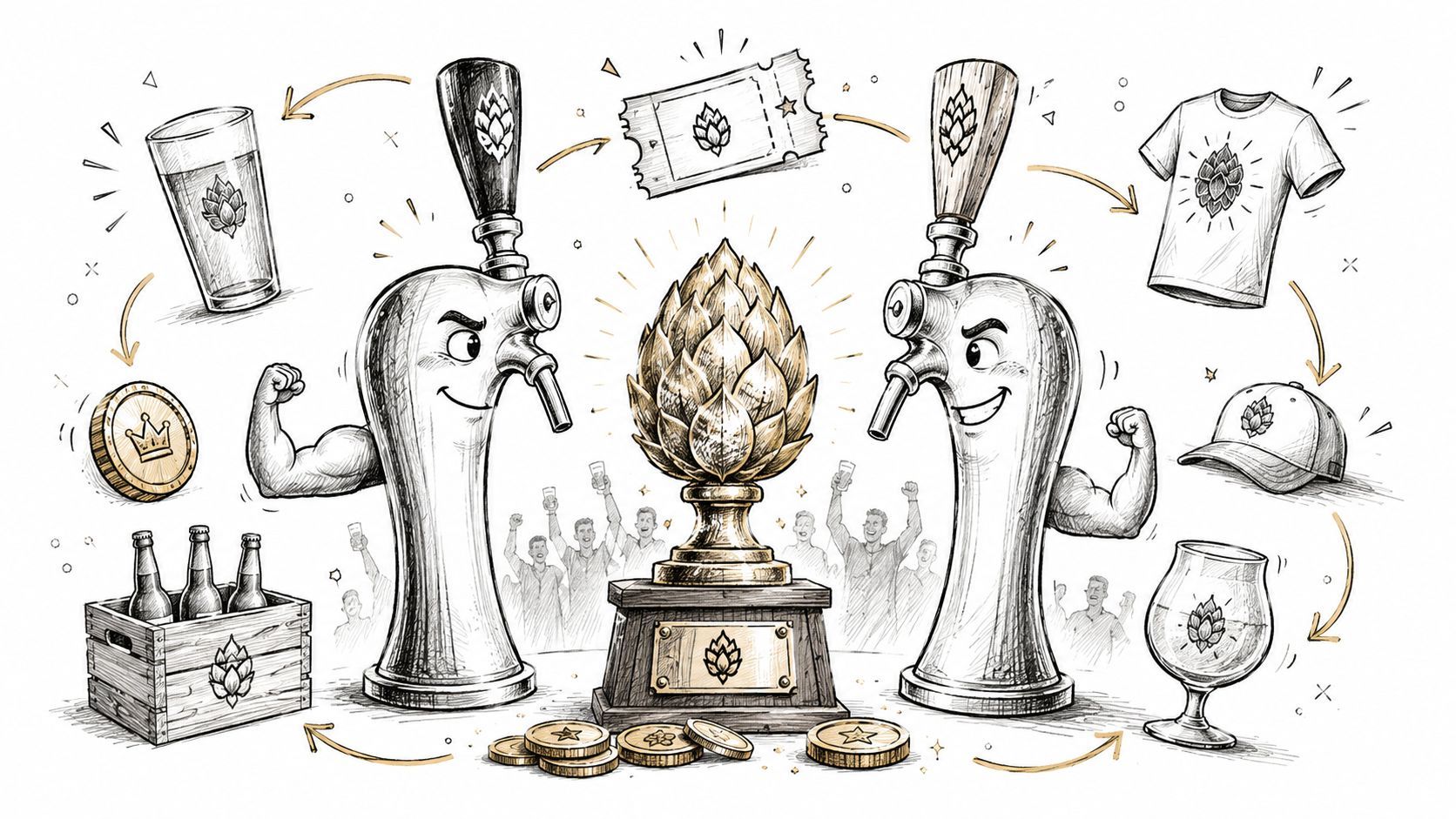
Plan and execute a Battle of the Breweries event to fund your campaign. This playbook covers concept, ticketing, upsells with PledgeBox, and fulfillment.
Your campaign is live, the page looks good, and the product is solid. But attention is thin, and most creators learn the hard part quickly. A better launch page doesn't always create momentum on its own.
That's where a battle of the breweries can work better than another giveaway, another announcement post, or another generic launch party. Done right, it turns your campaign into a live experience people can vote on, talk about, and invite friends into. Backers stop feeling like passive observers and start acting like participants.
For brewery-adjacent creators, hospitality brands, event operators, and local product founders, this format gives you something rare in crowdfunding. It gives you a reason for people to show up now, not later.
Most campaigns that struggle don't have a bad product. They have a forgettable story.
I've seen launches with decent visuals and reasonable reward tiers stall because they ask for attention in the same way everyone else does. A battle of the breweries changes the shape of the ask. Instead of saying, “Support our campaign,” you're saying, “Join the event, help decide the winner, and be part of the launch.”
The timing matters because the beer business is already crowded and under pressure. The Brewers Association reports that craft brewers account for 24.8% of the $113 billion U.S. beer market, while craft volume sales declined 4% in 2025 (Brewers Association national beer stats). That tells you two things. First, there's still major retail value in the category. Second, winning attention is hard even for established brands.

A campaign page explains. An event performs.
That difference matters because people share experiences more naturally than they share product specs. A brewery battle gives you built-in social material. Competing brewers post their entries. Attendees argue for favorites. Sponsors get a reason to promote. Your campaign gets discussed in public without every post feeling like a direct sales pitch.
Practical rule: If your launch only lives on your campaign page, you're asking strangers to care in isolation. If it lives in a real event, people bring others with them.
There's also a psychological shift. A normal pledge is transactional. A brewery battle feels communal. Backers can support a project, vote, attend, collect exclusive rewards, and attach their identity to the event itself.
People rarely remember the fifth “launch update” email. They remember the night they tasted three finalists, cast a vote, took home branded glassware, and backed the campaign on the spot.
That memory is useful because it carries past launch week. It gives you stronger user-generated content, better follow-up stories, and a cleaner reason to re-engage late backers after the event ends.
A simple framing tool helps:
| Event approach | Backer reaction |
|---|---|
| Generic launch party | “Maybe I'll check it out” |
| Discount-only campaign push | “I'll think about it later” |
| Battle of the breweries with voting, exclusives, and limited tiers | “I want in before this happens” |
The best version of this format doesn't just attract beer fans. It gives your campaign a live engine for conversation.
The room is full, pours are moving, and people are posting photos. Then someone asks a basic question: who is winning, and what does this event decide? If you do not answer that before launch, your brewery battle turns into a pleasant tasting night instead of a crowdfunding asset.

A strong concept does two jobs at once. It gives attendees a clear reason to show up, and it gives your campaign a structure that can drive pledges, upgrades, and follow-up sales. That second part is where many event plans fall short. They focus on atmosphere and leave the revenue logic fuzzy.
The best event format is the one your staff, brewery partners, and venue can execute cleanly under pressure.
Trade-offs matter here. A bracket battle creates more content and more reasons to re-engage backers, but it also adds operational complexity. A people's choice event is easier to sell and staff, but you only get one main conversion window. A tap takeover can attract more brewery participation, though it usually creates less urgency than a head-to-head contest.
Well-known breweries can help promotion, but they also create risk if they are slow to confirm inventory, unclear on staffing, or unwilling to promote the event to their audience.
I would take a dependable regional brewery over a bigger local name that keeps changing commitments. That choice usually produces a better event and fewer campaign headaches.
Use a short screening checklist before you lock anyone in:
Analysts cited by historic brewery success-rate analysis found different survival patterns between microbreweries and brewpubs. That does not decide your partner list for you, but it is a useful reminder to assess business stability, not just brand appeal.
Backers and attendees should understand three things immediately. What are breweries competing on? Who votes? What does the winner get?
Write the answer in one sentence and use it everywhere. On the event page, in your campaign copy, in brewery outreach, and in sponsor decks.
Practical examples:
This sounds small. It is not. Clear rules protect trust, reduce disputes with brewery partners, and make your event easier to market because people understand what participation means.
A good concept fails fast if check-in stalls, lines bunch up, or voting feels confusing. Event mechanics shape conversions. If guests spend the first 30 minutes trying to figure out where to start, they are less likely to buy upgrades, interact with sponsors, or act on your campaign pitch.
Map the attendee path from arrival to final vote. Check-in, tasting order, scoring, sponsor stops, merch pickup, and exit should all make sense without extra explanation. For a useful operational reference, review how event planners prepare for festivals. The details are different, but the planning discipline carries over well.
The strongest brewery battle concept is specific. It tells people why this event exists, how they participate, and why backing the campaign is part of the experience instead of an unrelated ask.
A brewery battle becomes a stronger campaign when the ticket is only one part of the offer. The event should help you raise more, segment backers clearly, and create a reason to stay involved after the tasting ends.
Teams get into trouble when they treat the event page and the campaign page as separate sales paths. Backers should be able to tell, at a glance, which tier fits them, what access they get, and why the live event matters to the funding goal.
Good tiers reflect a decision the backer is already making. Attend in person. Support from afar. Get premium access. Claim something tied to the event before it sells out.
That keeps your reward stack clean and makes fulfillment easier later.
| Tier type | Best use |
|---|---|
| Support-only tier | For backers who want to help but won't attend |
| Early access ticket | For launch-week momentum and urgency |
| Standard event ticket | Your baseline in-person offer |
| VIP tasting bundle | Ticket plus premium perks |
| Collector tier | Event access plus branded merchandise and memorabilia |
| Remote fan bundle | Merchandise or voting-related participation for non-attendees |
I usually pressure-test tiers with one question. Would a backer understand the difference in five seconds? If not, the offer is too muddy. Confused buyers stall. Clear buyers convert.
Backers respond better to access and timing than to random extras. A shirt can work. A glass can work. A bag of unrelated merch usually drags margin down and creates fulfillment headaches.
Build rewards around when the value shows up:
Sell the role. Judge, VIP guest, founding supporter, remote fan. Those identities convert better than a pile of objects.
A battle of the breweries can create buzz. Buzz alone does not pay production bills.
For crowdfunding, the event needs a scoreboard tied to revenue and backer growth. If your team cannot say what success looks like before launch, the event slips into general promotion and you lose the ability to judge whether the format worked.
Track outcomes in this order:
That order keeps the event commercially honest. Loud attendance with weak tier conversion is still a warning sign.
This is the part campaign teams often postpone, and it costs them later. If a backer buys a VIP bundle, your system needs to capture the details that matter: session choice, merch size, pickup method, age-related compliance steps, and any guest information tied to the ticket.
That is why I map event tiers with post-campaign collection in mind, not after the campaign closes. A dedicated pledge manager for crowdfunding rewards and event add-ons gives you a cleaner way to collect those selections, offer upgrades, and avoid chasing people through email after funding ends.
Build the tier ladder with fulfillment attached from day one. That is how a brewery battle stops being a one-night promotion and starts working like a funding mechanism.
Once the campaign closes, creators often hit the least glamorous part of the project. Surveys, shipping details, reward selections, add-ons, and support requests pile up fast.
At this stage, a lot of teams lose margin and trust. They've worked hard to create a memorable battle of the breweries, then they manage fulfillment with spreadsheets, scattered inboxes, and manual follow-up.
Backers don't experience your project as “fundraising” and “fulfillment” in separate emotional categories. They see one brand. If the handoff feels messy, the event glow disappears quickly.
That's why a dedicated pledge manager matters. The native Kickstarter pledge manager is like Amazon. Standardized, familiar, and controlled by the marketplace. A dedicated system like PledgeBox is more like Shopify. You get a branded environment, more control over how backers move through surveys, and more flexibility in how you present add-ons and collect final details.

Most creators think of the survey as admin. That's too narrow.
The survey is also a sales moment. Someone who already backed your campaign is often far more willing to add one more item than a new visitor is to make a first purchase. For a brewery battle campaign, that can mean exclusive shirts, second glassware sets, commemorative winner items, or event-adjacent merchandise that didn't fit neatly into the original campaign page.
The important point from a creator-ops standpoint is simple. PledgeBox is free to send the backer survey and only charges 3% of upsell if there's any. That pricing model changes behavior. You don't have to hesitate about sending branded surveys because there isn't a separate survey fee hanging over the process.
If you want to see how a dedicated post-campaign workflow is structured, the PledgeBox pledge manager shows the core functions creators use to collect addresses, confirm selections, and manage add-ons in one place.
A strong survey flow should collect only what you need, in the order backers can answer it without friction.
Use this sequence:
Clean post-campaign systems protect goodwill. They also protect your team from doing support work twice.
What doesn't work is blasting every backer with every possible add-on. Keep the offers tied to what they already bought. The more coherent the post-campaign store feels, the more likely people are to complete the survey and add to the order instead of abandoning it.
Promotion for a battle of the breweries works best when it feels distributed. One organizer pushing one event page isn't enough. You need every brewery, every sponsor, and every friendly community brand telling the same story in their own voice.

Give partners a ready-to-use kit. Don't assume they'll write good posts from scratch.
That kit should include approved event copy, square and vertical graphics, a short brewery spotlight template, sponsor mentions, and the exact campaign link you want used. If you leave those pieces vague, every partner improvises and the message fragments.
My standard promotion checklist looks like this:
Sponsors want relevance. A tiny logo at the bottom of a poster doesn't give them much.
Instead, package specific benefits. Sponsored tasting zones, branded voting cards, winner announcement support, VIP check-in naming, social feature posts, or product inclusion in premium tiers all give sponsors a clearer reason to join. If you need a clean framework, 1021 Events' sponsorship template is useful because it helps structure benefits, audience fit, and inventory without overcomplicating the proposal.
A good sponsor deck answers four questions fast:
| Sponsor question | Your answer should cover |
|---|---|
| Who attends | Local audience and backer relevance |
| What do I get | Named assets, placements, and mentions |
| How will it be promoted | Partner channels, campaign tie-in, event content |
| Why this event | Community angle plus crowdfunding momentum |
Local press and niche creators need a stronger angle than another tasting night announcement.
Lead with conflict, community, or novelty. Maybe breweries compete for a limited collaborative release. Maybe backers decide the winner and release a special reward. Maybe the event is tied to a campaign launch that turns attendance into direct support. Those are stories. “Come drink beer with us” is not.
For teams that need sharper outreach angles, this guide on how to capture media attention for your crowdfunding campaign is a practical reference for tightening your pitch and making coverage easier to win.
A short visual explainer can also help your partners promote more confidently:
Sponsors stay for measurable exposure, and breweries stay for turnout. Your promotion plan has to serve both.
When the final votes are in, the event is over for attendees. For your team, the operational phase is just getting serious.
Closing the loop involves finalizing orders, sorting merchandise by pledge type, and providing backers with clear delivery updates. If your campaign included bundles tied to the brewery battle, fulfillment needs to reflect what happened at the event, including winner-based items or post-event exclusives.
The safest approach is to treat fulfillment as an order-management exercise, not a celebration lap.
Export clean order data, separate physical items from digital or event-based perks, and group shipments by common components before you hand anything to a warehouse or vendor. If you're dealing with mixed bundles, variant-heavy merchandise, or international backers, operational guides like this overview of crowdfunding order fulfillment are useful for mapping out pack logic, shipping flows, and handoff points before mistakes become expensive.
Use a simple internal checklist:
A battle of the breweries is successful when it changes the trajectory of your campaign, not just when people say they had fun.
Look at outcomes that help you make a better decision next time. Did brewery partners drive backers? Did a VIP tier outperform the standard ticket in usefulness, even if it sold to fewer people? Did sponsors renew interest after seeing the audience quality? Did post-event buyers behave differently from launch-week backers?
The best postmortem usually includes both commercial and community signals:
That last category matters more than most creators realize. A strong event doesn't just fund one campaign. It gives you a repeatable launch asset.
If you're planning a crowdfunding campaign with event tickets, merchandise, add-ons, and post-campaign logistics, PledgeBox is worth a close look. It's free to send the backer survey and only charges 3% of upsell if there's any. The native Kickstarter pledge manager is like Amazon. PledgeBox pledge manager is like Shopify. You get a more branded, flexible way to manage backers, collect final details, and keep revenue growing after the campaign ends.
PledgeBox
The All-in-One Toolkit to Launch, Manage & Scale Your Kickstarter / Indiegogo Campaign