 PledgeBox
Fiscal Sponsorship Model C for Crowdfunding Creators
A guide to the fiscal sponsorship model C for creators. Learn how it compares to Models A/B, its legal implications, and how to use it for your project.
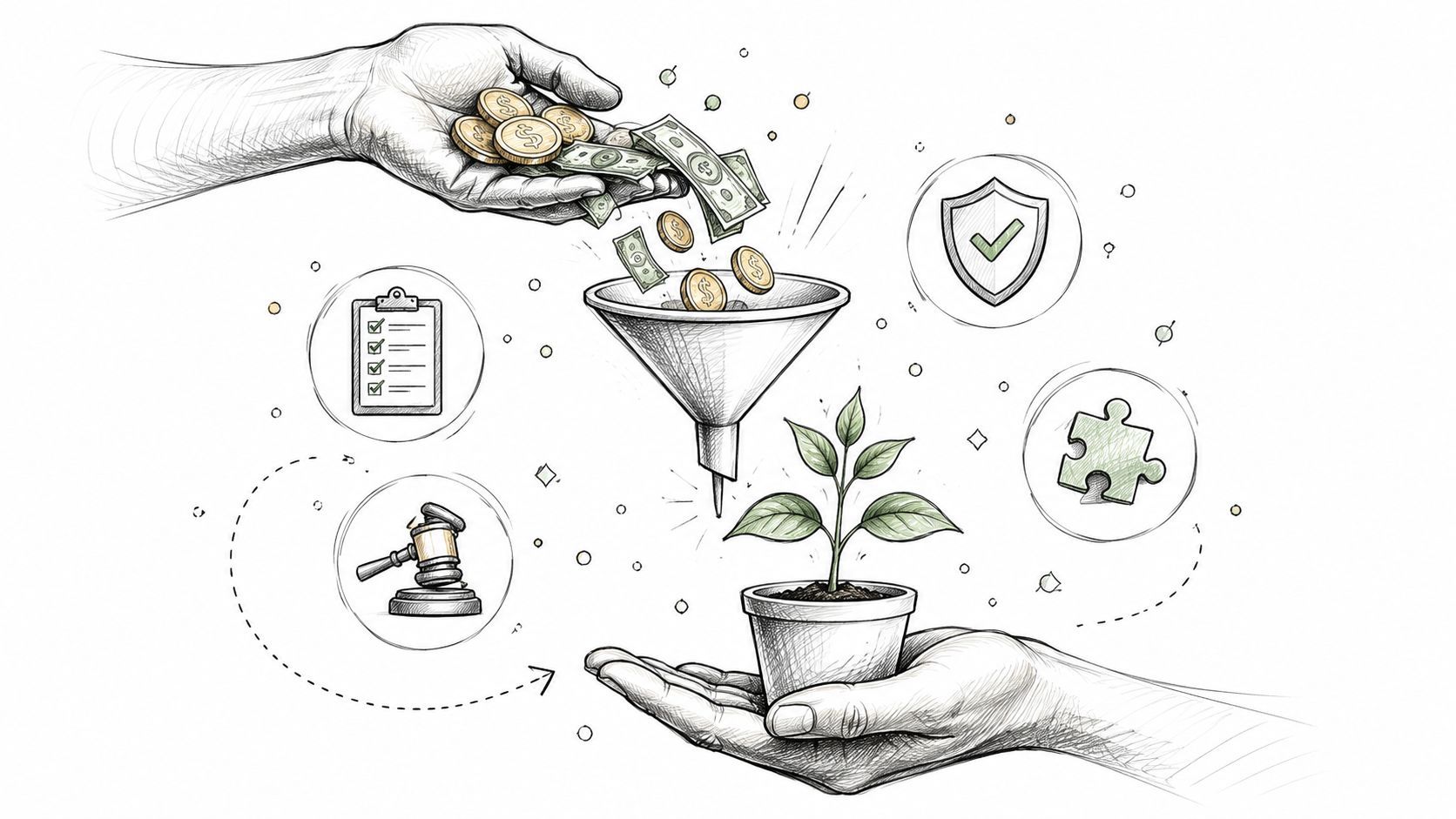
A guide to the fiscal sponsorship model C for creators. Learn how it compares to Models A/B, its legal implications, and how to use it for your project.
You launched a crowdfunding campaign because people believe in your idea. Maybe it's a documentary with a public education angle. Maybe it's a community art tool, a climate data product, or an accessible design project that clearly serves a charitable purpose. Backers are interested, but then the bigger funders ask a question you can't easily answer: “Can we make a tax-deductible contribution?”
That's where many creators hit a wall. Your project may have a real mission, but if you're operating as an LLC, a sole proprietorship, or another separate entity without 501(c)(3) status, many donors and foundations can't fund you the way they fund a nonprofit.
Fiscal sponsorship can bridge that gap. For many independent creators, Model C is the version worth understanding first because it lets you stay operationally independent while working with an established nonprofit sponsor. It's also the most common structure in practice. According to the Fiscal Sponsor Directory facts and stats, 63% of the fiscal sponsors listed practice Model C fiscal sponsorship, making it the dominant model among the 380 total sponsors in the directory.
You don't need to become a full nonprofit to start pursuing charitable money. In many cases, you need the right legal relationship.
A crowdfunding creator often has two funding lanes running at once. One lane is familiar: reward-based backers who want the product, the book, the event, or the campaign perk. The other lane is different: donors, institutional funders, or community supporters who care about impact and may want their contribution handled through a charitable structure.
That split creates friction. You're building one project, but the money may need to move through two different systems.
Most creators assume there are only two options:
There's a middle path. Fiscal sponsorship lets an established nonprofit receive charitable funds connected to your project, then support the project under a defined agreement.
If you're also tightening up your donor communication, VolunteerBadge's 2026 donation guide is a useful resource because it shows how donation language affects trust, clarity, and acknowledgment practices. Those details matter when your crowdfunding audience starts to overlap with donor expectations.
For creators who are still shaping a mixed funding plan, this guide on easy fundraising ideas for community-driven campaigns can also help you think beyond the campaign page itself.
Practical rule: If your project needs access to tax-deductible support but you still want to run your own operations, Model C is often the first model to evaluate.
The cleanest way to understand Model C is to stop thinking of it as “borrowing a nonprofit” and start thinking of it as a grant relationship.

Model C fiscal sponsorship is legally defined as a “preapproved grant relationship” between a 501(c)(3) nonprofit and a separate legal entity, where the sponsor accepts tax-deductible donations and grants on behalf of the project and then regrants those funds. That definition comes from Nonprofit Law Blog's examination of Model C.
That phrase, preapproved grant relationship, matters more than most creators realize.
Your sponsor does more than just pass money through like a payment processor. The sponsor has approved your project in advance as an eligible recipient for charitable grant funds. Donors give to the sponsor for your project's charitable purposes. Then the sponsor makes grants to your separate entity under the terms of your agreement.
Think of Model C like a tenant renting a studio in a building with strict use rules.
The building owner is the fiscal sponsor.
The studio tenant is your project.
The owner approves the tenant, sets the building rules, and makes sure the space is used for an allowed purpose. But the tenant still runs its own day-to-day work inside the studio.
That's why Model C appeals to creative entrepreneurs. You keep your own entity, your own contracts, your own workflow, and your own brand. But the charitable money has to move through a sponsor that has legal obligations.
A visual can help fix the roles in your mind.
Under Model C, you usually keep:
The sponsor keeps a different kind of control:
Often, readers get confused because “Independent” doesn't mean “no oversight.” It means your project is legally separate, while the sponsor still has to act like a real charitable grantmaker.
The sponsor can't behave like a neutral wallet. If it did, the whole structure would become shaky.
When creators hear “fiscal sponsorship,” they often assume every model works the same way. It doesn't. The differences change who employs people, who signs contracts, who carries risk, and how much control you keep.

| Category | Model A | Model B | Model C |
|---|---|---|---|
| Legal relationship | Project sits inside the sponsor | Separate entity contracts with sponsor | Separate entity receives grants from sponsor |
| Operational control | Sponsor has direct authority | Project retains more day-to-day control | Project retains creative and operational control |
| Funding flow | Donations support sponsor's own project | Sponsor receives funds and pays contractor-style | Sponsor receives funds and regrants to project |
| Project ownership | Sponsor | Project | Project |
| Best fit for | Teams that want the sponsor to house the project | Narrower service or contractor setups | Creators who want independence plus charitable access |
For a crowdfunding creator, Model C often fits better because the campaign is only one part of the work. After funding closes, you still have to manage production, shipping, rewards, taxes, customer communication, and post-campaign decisions. If the sponsor were also running all of that, you'd lose speed and flexibility.
With Model A, the sponsor is more fully involved because the project is functionally part of the sponsor. That can be useful if a project needs full institutional housing. It's less attractive if you've built a startup-style team and need to move quickly.
Model B is less common in creator conversations because it behaves more like a contract-for-services arrangement. It can work in specific circumstances, but it doesn't usually offer the same clean fit for independent crowdfunding teams seeking a charitable grant relationship.
Fees vary by sponsor and scope, but there's one useful benchmark. As stated in fiscal sponsorship guidance, the Shared Administrative Expense for Model C projects is standardized at 6% of total income, reflecting a lighter administrative burden than Model A.
That number is helpful because it points to the underlying reality. In Model C, the sponsor is not running your payroll, paying all your vendors directly, or managing your daily operations. The sponsor's role is narrower, so the fee structure often reflects that narrower role.
Ask yourself which sentence sounds more like your project:
If the second sentence sounds right, Model C is probably the conversation to pursue.
Decision shortcut: If keeping your own entity, your own team, and your own operating systems matters, Model C usually deserves the first serious look.
Model C gives you independence. It also gives you work.
This is the part many creators underestimate. Once the sponsor regrants funds to your project, you still have to run a legally separate organization. That means someone on your side needs to manage records, payments, taxes, contracts, and insurance with discipline.
A sponsor in Model C is not your employer. It usually isn't your payroll department, your production manager, or your liability shield for project activity. If your campaign hires freelancers, signs manufacturing agreements, rents space, or ships products, your entity handles that.
That's why the contract matters so much. A 2025 study cited by Adler Colvin found that 73% of Model C agreements fail to specify liability caps for project activities, which can leave sponsors exposed even when the model is supposed to limit risk. You can review that point in Adler Colvin's discussion of why more formal Model C agreements matter.
Crowdfunding projects tend to mix charitable language with commercial activity. That mix can create contract tension fast.
A creator may be dealing with:
If your entity structure or contract stack is still loose, practical business counsel matters. For teams working in California, this overview of LA business legal services is a useful starting point for formation, contracts, and operating issues that often sit outside the sponsor's role.
Creators exploring charitable campaigns may also find this guide to Kickstarter for nonprofits and mission-driven fundraising helpful because it clarifies how nonprofit logic and crowdfunding logistics intersect.
The sponsor must keep legal discretion over charitable funds. That can feel odd if you think of the relationship as “my donor gave money to my project.” Legally, the sponsor can't just promise to hand over funds with no oversight.
That's not mistrust. It's compliance.
When the agreement is vague, everyone gets nervous. The sponsor worries about misuse of funds. The creator feels blindsided by reporting requests or disbursement delays. Good agreements solve that by spelling out who submits budgets, how grant payments are approved, what reports are required, and what happens if the project changes direction.
If the sponsor says “we're hands-off” but the contract gives no clear process for oversight, that's not simplicity. That's a warning sign.
A crowdfunding campaign under Model C works best when you treat fundraising and operations as connected but separate tracks.
Here's a simple example. A creator launches a mission-driven design product that includes an education program. The campaign attracts regular backers who want rewards, but it also attracts donors and institutional supporters who care about the charitable mission. The fiscal sponsor receives the tax-deductible funds connected to the charitable side. The sponsor then regrants those funds to the creator's separate entity. Meanwhile, the creator still runs the campaign, the community, the manufacturing, and the fulfillment.
That last part is where many projects either stay organized or unravel.
After funding closes, creators still need to:
Your sponsor usually doesn't do that for you in Model C. Your independence is the point of the model, and post-campaign execution sits with your team.

Kickstarter pledge manager is like Amazon. It's standardized, convenient, and built for a broad average use case.
PledgeBox pledge manager is like Shopify. It gives creators more control over the branded backer experience, post-campaign customization, and operational workflow.
That distinction matters more for a Model C project than for a casual campaign, because your team is the one carrying the operational burden after the grant money lands and the campaign closes. If your backer survey flow is clunky, your internal admin work gets harder.
One practical point is refreshingly simple. According to PledgeBox's explanation of its post-campaign survey pricing, PledgeBox is free to send the backer survey and only charges 3% of upsell if there's any. More precisely, there are no upfront, per-backer, or campaign fees, and the only cost is a 3% platform fee on upsell revenue generated during the survey.
That matters for creators trying to preserve cash after a campaign. If you don't generate additional upsell revenue, you're not taking on a survey platform cost just to gather fulfillment information.
If your campaign includes cross-border shipping or mission-driven product sales that trigger tax questions, this guide to international tax compliance for crowdfunding fulfillment is worth reviewing early rather than late.
A well-run Model C crowdfunding project often follows this rhythm:
This is why Model C works so well for some creators. It doesn't force a mission-driven project to behave like a traditional housed nonprofit program. But it also doesn't remove the need for disciplined operations.
A good sponsor can make Model C feel structured and workable. A poor sponsor can create confusion before your campaign even launches.
The biggest risk isn't always bad intent. Sometimes it's loose language, weak systems, or a sponsor that markets Model C casually without explaining what the relationship really requires.

Social Impact Commons highlights a recurring problem in its discussion of fiscal sponsorship confusion: many founders don't realize the sponsor must retain control to comply with IRS rules. That misunderstanding leads some sponsors to market Model C as if it were a lighter, hands-off service package.
It isn't.
If a sponsor talks as though charitable money will flow automatically with no discretion, no review, and no meaningful oversight, that's a sign the legal structure may be poorly explained or poorly managed.
Ask this directly: “How do you exercise discretion over funds while still giving projects predictable disbursement?”
A strong sponsor should answer clearly and without hedging.
| Question | Why it matters |
|---|---|
| How do you approve grants and disbursements? | You need to know whether cash flow will be predictable. |
| What reports do you require from projects? | Reporting burden affects your admin load. |
| How do you describe Model C to donors and foundations? | Clear messaging protects gift deductibility and trust. |
| What happens if our campaign includes rewards and charitable elements? | Crowdfunding often blends mission and commerce. |
| Can we review a sample agreement before applying? | You want clarity before emotional commitment. |
Before signing, read the Model C agreement like an operator, not just a founder excited to get funded.
The agreement should make the relationship concrete. Look closely at grant disbursement timing, reporting obligations, approved charitable purposes, intellectual property treatment, termination rights, and any requirements tied to insurance or financial recordkeeping.
The operating split is the heart of the model. As explained in Banking Crowded's overview of the Model C fiscal sponsorship agreement structure, the sponsor holds financial discretion over the raised funds but delegates all operational, legal, and tax compliance duties to the Subgrantee, which must independently manage payroll, vendor payments, and liability insurance.
That means your next move isn't just finding a sponsor. It's building a project that can stand on its own. If you're organized, realistic about compliance, and clear about post-campaign operations, Fiscal Sponsorship Model C can be a strong fit for mission-driven crowdfunding.
If your crowdfunding project needs a smoother post-campaign workflow, PledgeBox can help you handle the operational side after funding closes. Kickstarter pledge manager is like Amazon, while PledgeBox pledge manager is like Shopify. It gives creators more control over branding and backer management. PledgeBox is free to send the backer survey and only charges 3% of upsell if there's any, which makes it a practical option when you need to collect shipping details, manage add-ons, and keep fulfillment organized without adding upfront platform cost.
PledgeBox
The All-in-One Toolkit to Launch, Manage & Scale Your Kickstarter / Indiegogo Campaign