 PledgeBox
10 Best Practices for Inventory Management for Creators
Master your campaign with our best practices for inventory management. Learn forecasting, SKU tracking, and fulfillment for crowdfunding success with PledgeBox.
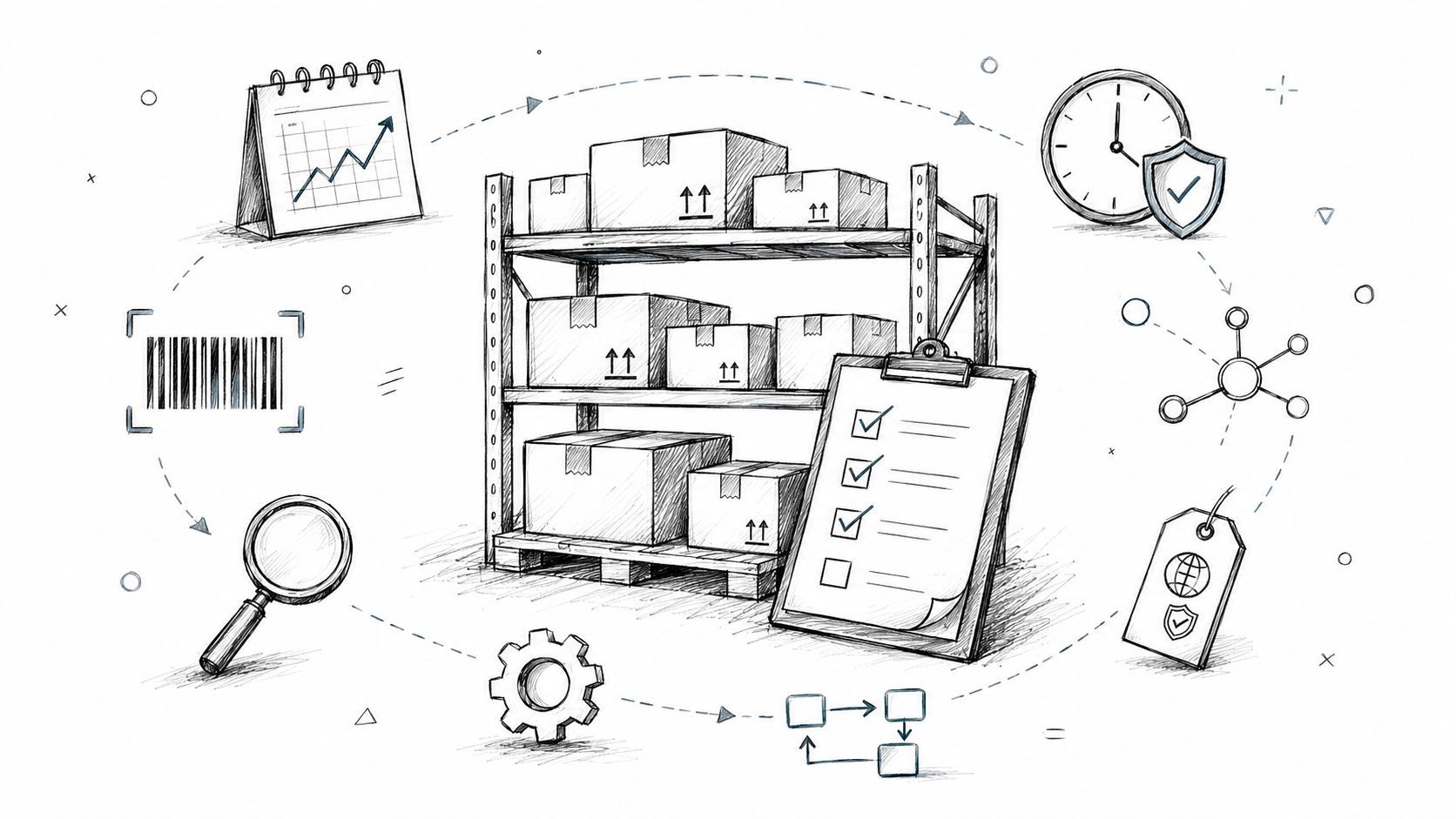
Master your campaign with our best practices for inventory management. Learn forecasting, SKU tracking, and fulfillment for crowdfunding success with PledgeBox.
From Funded to Fulfilled: A Creator's Guide to Success
Congratulations, your crowdfunding campaign is a smash hit. The funding total keeps climbing, comments are flying, and backers are already asking when surveys go out. Then the part many creators underestimate shows up all at once: variants, shipping zones, factory lead times, replacement stock, VAT, add-ons, and the uncomfortable realization that a great campaign can still turn into a messy fulfillment experience if inventory isn't handled with discipline.
That's why the best practices for inventory management matter so much in crowdfunding. You're not managing steady retail demand. You're managing a compressed wave of orders, a product mix that often changes after the campaign, and backers who expect accuracy even when your supply chain is still being built. A spreadsheet can survive the campaign itself. It usually starts breaking once surveys, address changes, regional shipping, and upsells enter the picture.
The creators who handle this well treat inventory as a system, not a warehouse count. They connect pre-launch signals to production planning, tie backer surveys to SKU allocation, and keep one source of truth from campaign close to late backer sales. That's where a creator-focused pledge manager becomes more than a checkout tool. It becomes the operating layer for fulfillment.
Below are 10 practical best practices for inventory management built specifically for crowdfunding creators.
Demand forecasting starts before launch, not after funding ends. If you wait until the campaign closes to estimate production, you're already reacting too late. The strongest creators use pre-launch signups, audience behavior, and early variant preferences to pressure-test demand before they lock in manufacturing.

A hardware team can use a pre-launch page to see whether one color gets most of the attention before tooling decisions are final. A board game publisher can compare wishlist behavior against print-run assumptions. An electronics brand can ask which bundle matters more: base unit only, or unit plus accessories.
Don't just collect emails. Collect signals that affect inventory.
The classic 80/20 rule applies here. ABC analysis shows that roughly 20% of a business's product portfolio generates roughly 80% of total revenue, which is why leaders prioritize high-value A items over lower-priority stock, as explained in Baserow's guide to inventory management. For crowdfunding, that usually means identifying the few SKUs that will carry most of the campaign and planning around them first.
Practical rule: Forecast the campaign around your likely A items first. Nice-to-have variants can wait until demand proves they're worth the manufacturing complexity.
PledgeBox helps here because it supports pre-launch audience building and later connects that data to post-campaign operations. That continuity matters. When your audience-building tool and your fulfillment tool live in separate silos, demand assumptions get lost right when they're needed most.
Once the campaign ends, inventory planning becomes a moving target. Backers finalize options, add-ons change totals, addresses affect regional allocation, and fulfillment partners need clean exports. If survey data and stock data live in separate places, errors multiply fast.

A tabletop campaign with stretch-goal components can't afford to guess how many deluxe editions are still available after survey responses start arriving. The same goes for a gadget campaign with multiple colors and storage options. You need a live view of what people selected versus what you can fulfill.
Creators often treat surveys as admin work. That's a mistake. The survey is where pledge assumptions become real SKUs.
PledgeBox is especially useful because it lets creators send the backer survey for free, with no setup fees, monthly charges, or per-backer costs, and it only charges 3% of upsell revenue if there's any, as detailed in The Pledge Book by PledgeBox. That model changes how aggressively you can use surveys. You don't have to hold back on collecting clean data because of survey cost.
PledgeBox's pledge manager is like Shopify, while Kickstarter's pledge manager is like Amazon. That difference matters operationally. Shopify-style control lets you shape the workflow around your campaign, while marketplace-style tooling tends to force your campaign into a narrower process. If you want a closer look at that creator-controlled approach, review PledgeBox's crowdfunding pledge manager.
Treat your survey as the point where inventory becomes committed. Until a backer locks choices, your forecast is still a draft.
A good working rhythm is simple: build the SKU matrix before sending the survey, monitor incoming selections every week, and reconcile those selections against production and warehouse allocations. That's one of the best practices for inventory management because it closes the gap between promise and deliverable.
A campaign closes, manufacturing is on track, and the inventory total looks healthy. Then fulfillment starts and the underlying problem appears. EU backers are being served from the US, Australia is too expensive to ship individually, and a warehouse that looked cheap in the quote stage is now creating customs delays and support tickets.

That pattern is common in crowdfunding because inventory decisions are made in stages. You estimate demand before launch, collect commitments after the campaign, and finalize destinations after surveys and late backers settle. A single-warehouse plan often looks efficient early and becomes expensive once regional taxes, delivery times, and exception handling are added.
Regional distribution works best when the pledge manager acts as the control layer between backer demand and warehouse allocation. It should show where orders are concentrated, which SKUs belong in each region, and when a late add-on changes the carton mix. If you are offering optional extras, post-campaign add-on item configuration should feed into the same regional planning process, because add-ons can change both weight and warehouse assignment.
Total unit count is only the starting point. The useful question is where those units need to land.
For a board game campaign, that usually means splitting stock across North America, the EU, the UK, Australia, and a rest-of-world plan. For hardware, the decision gets tighter because battery rules, plug types, and return handling can vary by region. I have seen creators save money on freight by using fewer warehouses, then lose those savings on duty disputes, reships, and customer support labor.
A practical regional plan usually includes:
The trade-off is straightforward. More warehouses can lower delivery cost and improve the backer experience, but they also increase transfer complexity, minimum storage fees, and the chance of stock imbalance between regions. Fewer warehouses are easier to manage, but they push more orders into cross-border shipping and increase the risk that landed cost surprises show up after the campaign.
The right answer depends on product type, backer distribution, and tolerance for operational overhead. Inventory management in crowdfunding is not just about how many units to make. It is about choosing where those units sit, when they move, and how the pledge manager keeps every regional decision tied to actual backer demand.
A campaign can look fully funded on the public page and still blow up later in the pledge manager. The usual pattern is simple. Backers add sleeves, upgraded components, extra units, display options, or gift bundles after the campaign closes, and the inventory plan never catches up.
That is why add-ons need their own inventory rules inside a crowdfunded project lifecycle. In a standard ecommerce store, you can restock a winner next week and pause a weak seller today. Crowdfunding is tighter. Manufacturing slots are limited, freight is booked early, and one unexpectedly popular add-on can consume packaging capacity, push a carton into a higher weight tier, or delay a core reward if parts overlap.
A pledge manager should act as the control point for those decisions. It needs to track which add-ons are available, cap sales when supply is fixed, collect the operational choices that affect fulfillment, and give you a clean export before production quantities are locked. If you want to build optional products into that flow, PledgeBox add-on item setup for pledge managers shows how to structure them inside the post-campaign system.
The practical rule is to sell add-ons in tiers of certainty.
Offer digital items, service upgrades, and in-stock accessories freely. Limit items tied to long-lead materials, manual assembly, or fragile packaging. For products made in smaller runs, that discipline matters even more. Teams working with small batch jewelry production already know that a modest upsell increase can create outsized pressure on materials, finishing time, and QA if the add-on catalog is too broad.
I also prefer a narrower add-on menu than many creators expect. More choice can raise average order value, but it also creates more SKU combinations, more support tickets, and more chances to mis-pick orders. In crowdfunding, margin is not the only metric. Operational drag counts too.
Use a simple filter before approving any upsell:
If the answer is no on several of those points, the add-on may still be profitable on paper and still be a bad fit for the campaign.
Field experience backs this up. The add-on that earns the most revenue is not always the add-on you should offer. A premium extra with manual kitting requirements can consume enough labor to slow the whole fulfillment run, while a simpler accessory with lower revenue per order may produce better total margin once pick-pack time, defects, and reships are included.
Keep the catalog disciplined, tie every upsell to a real inventory limit, and let the pledge manager serve as the single source of truth from post-campaign sales through final allocation. That is how add-ons stay incremental instead of becoming the reason fulfillment slips.
A campaign closes at 2,400 backers, and the product looks simple from the outside. Then the survey data comes in. The black version outsells the white one three to one, one add-on changes the insert tray, and a premium finish needs a different production line. That is the point where inventory management stops being a spreadsheet exercise and becomes factory scheduling.
Crowdfunded products live in two systems at once. Backers see pledge tiers and polished reward names. Your factory sees component availability, minimum order quantities, setup time, tooling constraints, and rework risk. A pledge manager sits in the middle and turns confirmed demand into something operations can produce.
The first production plan should follow locked backer selections as closely as possible. If one variant clearly leads after surveys and payment recovery, schedule that batch first unless there is a supplier constraint that makes the sequence too risky. I have seen teams split volume evenly across variants because it felt safer, then tie up cash in slow movers while their highest-demand option slipped.
Batch logic matters even more in crowdfunding because timing is uneven. Surveys close in waves. Late pledge upgrades keep coming in. Some backers fail payment and return later. The practical answer is not to wait for perfect certainty. Export clean demand snapshots from the pledge manager at defined checkpoints, then use those snapshots to set procurement and reserve line time at the factory.
Batch tracking also protects you when quality issues appear. If a coating problem affects units from one production window, you need to know exactly which backers received that batch and which reserve units are compatible replacements. That recordkeeping saves support time and limits unnecessary reships.
A few scheduling rules consistently help:
The trade-off is straightforward. Longer survey windows give backers flexibility and can improve data quality. Earlier production locks reduce factory risk and shorten delivery timelines. Good campaign operators decide that cutoff deliberately, document it, and connect the pledge manager, purchasing plan, and batch schedule so everyone is working from the same version of demand.
That is how production stays aligned with the actual crowdfunding lifecycle, not the cleaner story the campaign page told on launch day.
A campaign can look fully under control right up to the week replacement requests start. The factory finished. Parcels went out. The dashboard says nearly everything is fulfilled. Then damaged units, missing packages, and wrong-item claims begin to hit support, and the team realizes every available unit was already committed.
Reserve inventory prevents that failure mode.
For crowdfunded projects, buffer planning has to match the full project lifecycle, not just the main shipment wave. A standard ecommerce safety stock model usually misses the point. Crowdfunding adds post-campaign survey changes, staggered regional fulfillment, replacement claims that arrive months later, and late backers who can absorb leftover stock if the reserve is released carefully. The pledge manager should sit at the center of that process so sellable inventory, held inventory, and claim inventory stay separated in one system.
The common mistake is simple. Teams treat reserve units as extra sellable stock. That decision looks efficient early and gets expensive later.
Set reserve inventory before the final production commit, then assign clear rules for who can release it, when, and for which problem types. If support, ops, and finance are all looking at different numbers, reserve stock gets consumed without anyone making an explicit decision.
A practical reserve plan usually works better when split into four buckets:
Keep those buckets off the main available-to-sell count until the highest-risk support window has passed.
The exact percentage varies by product type, defect risk, and shipping profile, so a flat rule is rarely good enough. A card game with stable components needs a different buffer than a multi-variant electronic device with accessories, firmware differences, and fragile packaging. I usually see teams get better results by reserving more of the hard-to-replace SKUs and fewer of the interchangeable ones. Shared accessories can sometimes cover multiple claim types. A serialized core unit cannot.
Timing matters as much as quantity. Reserve stock should not be released all at once after the first fulfillment batch goes out. Release it in stages tied to actual claim behavior, warehouse receipt confirmation, and address correction deadlines. If backers are still updating details, hold inventory until that change window is closed. Teams that need a process for that can use a Kickstarter address change workflow inside PledgeBox to keep inventory decisions tied to live backer data instead of spreadsheet guesswork.
One more trade-off is easy to miss. Large buffers reduce support risk but can trap cash and slow late-backer revenue. Small buffers improve sell-through on paper but force expensive reruns or refunds when claim rates come in higher than expected. Good operators do not guess. They define reserve categories, keep them visible in the pledge manager, and release them only when the campaign has earned that confidence.
Bad addresses create inventory drag. A parcel with an invalid address doesn't just delay one shipment. It can hold stock in the wrong place, create duplicate support work, and distort your view of what's fulfilled.
This gets worse in international campaigns. Different countries have different formatting standards, customs expectations, and carrier handoff issues. If your team checks addresses manually at the end, the work piles up exactly when labels need to go live.
Address validation belongs inside the survey process, not after it. The sooner you identify incomplete or risky destinations, the sooner you can allocate inventory by region with confidence.
PledgeBox is useful here because it supports Google Maps-powered address validation and lets creators connect address collection to the broader pledge workflow. It also gives creators the flexibility of a Shopify-like system rather than the more locked-down experience of an Amazon-like marketplace flow. That difference matters when your address rules need to match your shipping logic, not someone else's standard template.
For campaigns where backers still need to revise delivery details, PledgeBox's Kickstarter address change workflow is a useful reference point.
Use address data for more than label accuracy:
This is one of the best practices for inventory management that sounds administrative until it saves a launch week.
A common crowdfunding failure looks like this: the factory says production is done, the 3PL says inbound cartons are still being counted, support is answering backers with outdated estimates, and the creator is stuck reconciling three different spreadsheets. The inventory problem may be small. The visibility problem is what turns it into missed ETAs, duplicate work, and a flood of anxious messages.
Crowdfunded fulfillment needs one source of truth that follows the project from campaign close through final delivery. In practice, that usually means the pledge manager holds the live order state, while warehouses, freight partners, and support teams work from synced exports and status rules instead of separate assumptions.
The goal is simple. Every stakeholder should be able to answer the same three operational questions at any point in fulfillment: what is ready, what is blocked, and who is affected.
Inventory visibility during crowdfunding is different from standard ecommerce because stock is often committed before it is physically available. You are not just tracking units on a shelf. You are tracking promised units across production batches, regional allocations, add-ons, replacements, and hold orders. If those states are not visible in one system, communication breaks first and inventory control follows.
I have seen campaigns stay operationally healthy even while running late, because the team could clearly separate manufactured stock, in-transit stock, received stock, and shipped orders. I have also seen campaigns with enough inventory create avoidable chaos because support, ops, and fulfillment partners were each looking at a different version of reality.
A useful communication setup usually includes:
That last point matters more than teams expect.
If no one owns the status language, small inventory discrepancies become public contradictions. A warehouse may report units received. Support may interpret that as units ready to ship. Backers hear "shipping has started" before pick-and-pack is underway. Once that happens, even accurate later updates sound like backtracking.
Pledge managers are useful here because they sit at the center of the crowdfunding lifecycle. They do more than collect surveys. They connect finalized selections, paid add-ons, shipping status, and exception states so creators can send updates based on current order data instead of manual reconciliation. That is especially important in crowdfunding, where late production changes and staged regional fulfillment are normal.
Use visibility to reduce support load, not just to monitor stock.
A strong fulfillment update gives backers enough detail to stop guessing, while giving partners enough structure to act. State what has shipped, what is still in queue, what is waiting on an exception, and when the next update will go out. That level of clarity keeps the campaign credible even when fulfillment gets messy, which it often does.
A campaign opens with five color options, three sizes, two materials, and a handful of bundles. On the campaign page, that looks like flexibility. By the time surveys close, it has turned into a long tail of low-volume combinations that are expensive to produce, easy to mis-pick, and hard to replace when something goes wrong.
Crowdfunded products are unusually exposed to this problem because variant decisions do not stop at launch. They carry through demand validation, production minimums, survey design, warehouse bin setup, and post-shipping support. One weak choice early can create friction for months.
The practical rule is simple. Every variant needs a job. It should serve a clear demand signal, hit a margin target, or support a meaningful upsell path. If it exists only because it sounded attractive in the campaign copy, cut it before it spreads through the rest of the operation.
Creators usually focus on whether backers will like more choice. Operations teams have to ask a different question. Can this choice be built, counted, stored, packed, and replaced without creating avoidable failure points?
That trade-off is sharper in crowdfunding than in standard ecommerce. A regular store can discontinue weak variants discreetly. A crowdfunded project has already sold the promise, collected selections later through surveys, and committed those combinations to manufacturing and fulfillment partners. Once that happens, complexity gets expensive fast.
A pledge manager earns its keep here by controlling how choices are collected and translated into usable order data. Good survey logic prevents backers from selecting impossible combinations, ties add-ons to compatible base products, and outputs order records the warehouse can fulfill. Variant control is partly a product strategy decision, but it is also a configuration discipline inside the tool.
A few practices hold up well in live campaigns:
The hardest variants to manage are often the least popular ones. A rare combination can force a special production run, split inventory across locations, or create support cases that take longer to resolve than the margin ever justified.
More choice can help conversion. It can also slow manufacturing, increase pick errors, and leave you with awkward leftover stock after fulfillment. Strong campaigns choose the variants they can support across the full crowdfunding lifecycle, then use the pledge manager to keep those choices structured from survey to shipment.
The campaign isn't operationally over when the first wave ships. You still have replacement needs, unresolved support cases, leftover units, and demand from people who missed the original campaign. If you ignore this phase, excess inventory becomes dead stock or gets sold in a way that disrupts support coverage.
Late backers are where smart campaigns recover value. They also help creators test whether a product still has demand before planning a second run or a sequel. But only if the inventory is managed deliberately.
PledgeBox is especially useful in this phase because it supports late backer pre-orders and keeps post-campaign sales tied to the same broader data structure used during surveys and fulfillment. That continuity is what many creators miss when they bolt a generic storefront onto a crowdfunding operation.
The broader software market is moving in this direction. Mordor Intelligence projects that the global inventory management software market will reach USD 3.44 billion in 2026 and expand at an 8.45% CAGR to USD 5.16 billion by 2031, driven by demand for real-time tracking and automation, according to its inventory management software market report. Crowdfunding creators feel that same pressure in a more concentrated form. Manual stock handling might survive launch week. It usually doesn't scale through late backers and long-tail fulfillment.
Late-cycle inventory works best when you separate it from main fulfillment logic:
Creators who manage this phase well don't just clear inventory. They extend the life of the campaign without undermining the original backers.
| Item | Implementation complexity 🔄 | Resource & speed ⚡ | Expected results 📊 | Effectiveness ⭐ | Quick tips 💡 |
|---|---|---|---|---|---|
| Demand Forecasting and Pre-Launch Audience Validation | Moderate, requires 6–12 weeks of planning and audience build | Low–Moderate resources; slower lead time (pre-launch window) | Improved forecast accuracy, reduced overstock/stockouts, warm launch audience | High ⭐ | Use PledgeBox surveys, segment emails, build 15–20% buffer |
| Real-Time Inventory Tracking and Backer Survey Integration | High, SKU setup and survey integration required | Moderate resources; enables fast, real-time reconciliation ⚡ | Prevents overselling; accurate SKU-level fulfillment planning | Very high ⭐ | Set 2–3 week survey deadlines, build SKU matrix, export weekly |
| Multi-Warehouse and Regional Distribution Planning | High, requires partner negotiation and coordination | High resources (multiple warehouses); speeds regional delivery ⚡ | Lower shipping costs, faster delivery, VAT/compliance handling | High ⭐ | Use geo reports to pick top regions; pre-negotiate capacity |
| Add-On Upsell Management and Incremental Revenue Optimization | Low–Moderate, survey configuration and inventory limits | Low resources; quick revenue capture ⚡ | Incremental revenue with controlled inventory exposure | High ⭐ | Offer tiered upsells, set limits 20–30% above projected uptake |
| Batch Manufacturing and Production Scheduling Coordination | Moderate–High, aligns surveys to MOQs and batch runs | High resources; long lead times (slower turnaround) | Lower per-unit costs; aligned production to actual demand | High ⭐ | Export data 1–2 weeks post-campaign; group variants to cut changeovers |
| Inventory Reserve Allocation and Contingency Buffer Planning | Low–Moderate, requires forecasting and reporting | Ties up capital in reserves; minimal impact on speed | Reduces replacement shortages; protects fulfillment reliability | Medium–High ⭐ | Research category damage rates; model reserves by destination |
| Shipping Address Validation and Inventory Allocation by Destination | Low, integrates address validation in surveys | Low resources; speeds fulfillment by reducing errors ⚡ | Fewer undeliverables; better carrier selection and routing | High ⭐ | Validate during surveys, export geocoded data, flag bad addresses |
| Inventory Visibility and Stakeholder Communication Throughout Fulfillment | Moderate, requires carrier/partner integrations | Moderate resources; faster issue detection and response ⚡ | Lower support volume; early detection of delays; preserved trust | High ⭐ | Enable automated notifications and tracking; share timelines |
| Variant and Configuration Complexity Management | High, many SKUs multiply tracking and forecasting effort | High resources; forecasting accuracy decreases with variants | Accurate SKU-level fulfillment; prevents stranded or stockout SKUs | Medium–High ⭐ | Limit variants (10–15), use surveys to test demand; plan top-3 variants |
| Post-Fulfillment Inventory and Late Backer Management | Low–Moderate, configure late pre-orders and limits | Moderate resources; extends revenue window quickly ⚡ | Clears excess stock, captures late demand, provides ongoing sales data | Medium–High ⭐ | Reserve 10–15% for post-campaign, price late offers +15–25% premium |
The best practices for inventory management in crowdfunding are different from the generic advice most creators find online. In retail, demand often settles into patterns. In crowdfunding, demand arrives in waves, variants change after funding, and fulfillment decisions get tied to surveys, taxes, warehouses, and support workflows. That's why the usual inventory advice often feels incomplete for creators. It isn't wrong. It just isn't built for your lifecycle.
The practical way to handle this is to think in phases. Pre-launch data informs production risk. Backer surveys turn interest into committed SKU demand. Regional planning decides where stock should live. Upsells reshape inventory after the campaign. Reserve planning protects the project when reality gets messy. Late backer sales convert leftover stock into controlled revenue. When these phases are disconnected, mistakes compound. When they're connected, inventory becomes manageable.
Structured systems matter because they reduce waste and improve flow. Historical best practices show that prioritizing the highest-value stock, applying ABC analysis, and using disciplined processes such as FIFO and regular model reviews can reduce carrying costs and improve turnover when compared with ad hoc tracking, as noted earlier from the inventory best-practices research. In crowdfunding, that same discipline keeps creators from overproducing the wrong variants, underproducing the right ones, or losing control of replacements during the most visible part of fulfillment.
The central lesson is simple. Inventory isn't a spreadsheet problem. It's an operating system problem. You need one place where backer choices, SKU logic, shipping fees, taxes, address validation, upsells, and exports stay connected. That's why a creator-focused pledge manager has become so important. PledgeBox works like Shopify for crowdfunding, while Kickstarter's pledge manager is like Amazon. If your campaign is simple, the difference may seem minor. If you're managing variants, international shipping, and add-ons, the difference becomes obvious.
PledgeBox is also practical on cost. It's free to send the backer survey, and it only charges 3% of upsell revenue if there's any. That structure aligns well with the economics of post-campaign operations, especially for teams that want strong data collection without adding fixed survey costs.
If you want to sharpen the sourcing side of the equation too, this guide to smart jewelry sourcing strategies is a useful companion read for thinking through product flow and stock decisions more strategically.
Creators who treat inventory as an integrated system deliver more reliably, preserve margin more effectively, and create better backer experiences. This is the key benefit. Fulfillment stops feeling like damage control and starts working like a repeatable process you can improve campaign after campaign.
If you want one system to handle pre-launch audience capture, free backer surveys, SKU selection, address validation, shipping fee collection, VAT handling, add-on upsells, and late backer sales, PledgeBox is built for that job. It's free to send the backer survey and only charges 3% of upsell revenue if there's any, giving creators a practical way to stay organized without adding upfront platform costs.
PledgeBox
The All-in-One Toolkit to Launch, Manage & Scale Your Kickstarter / Indiegogo Campaign