 PledgeBox
Kickstarter Change Address: Creator Guide
Manage Kickstarter change address requests effectively. This guide helps creators avoid shipping errors and streamline updates with PledgeBox.
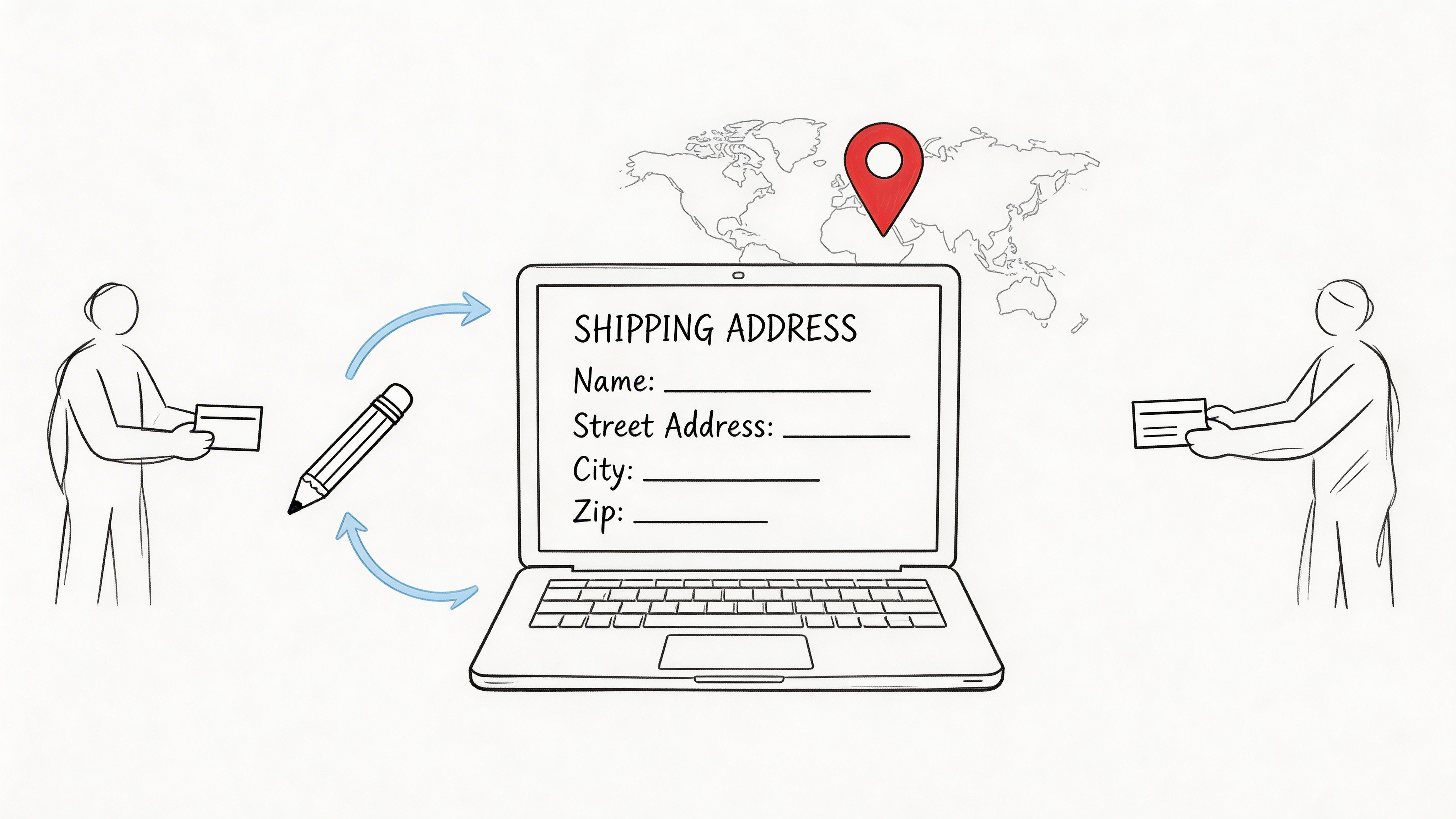
Manage Kickstarter change address requests effectively. This guide helps creators avoid shipping errors and streamline updates with PledgeBox.
Your campaign funds. You celebrate. Then the support messages start.
A backer is moving next month. Another used a work address and changed jobs. Someone else completed the survey on their phone and now cannot find where to edit it. If you are dealing with kickstarter change address questions for the first time, it can feel like a minor admin task. It is not.
Address management sits right in the middle of fulfillment, customer support, and cash control. One wrong assumption can ripple into returned packages, manual corrections, angry comments, and messy warehouse files. The work also arrives at the worst possible time, when you are already coordinating production, freight, and timelines.
Creators usually learn this after funding, not before. The backer thinks, “I just need to change my address.” The creator has to think, “Has the survey been locked, has the country changed, has my freight file already been exported, and who pays if this package gets returned?”
That is why a clean process matters more than most first-time creators expect.
The hard part is not collecting an address once. The hard part is collecting the right address at the right moment.
A Kickstarter campaign often closes long before fulfillment starts. That gap is where trouble begins. Backers move. They split households. They switch jobs. They travel. Their original survey response stops matching real life.
The moment you export survey data for production or fulfillment planning, the address process changes. Before that point, edits are mostly a backer experience issue. After that point, edits become an operations problem.
A creator may need fixed data to estimate stock by region, assign inventory to fulfillment partners, or prepare shipment files. But backers still expect flexibility. Both sides are reasonable. The tension is built into the process.
Jamey Stegmaier described this well from a creator’s perspective. He reported receiving around 200 address change emails in the final four months before shipping, and noted that board game production can take 6 to 12 months, which gives plenty of time for backers to relocate. He also points out the risk of tracking changes manually once survey data has been downloaded into a master spreadsheet in his post about the address update email process.
Most first-time creators assume address changes are just spreadsheet edits. In practice, they involve:
Tip: Treat addresses like live order data, not like a static form field. That mindset changes how you communicate, when you export, and which tools you use.
The creators who handle this well do not wait for chaos. They decide early how backers can update information, when data becomes final, and what happens if someone writes in after the cutoff.
When backers ask how to update shipping details, give them one clean answer. Do not improvise each time.
The most useful version is short enough to paste into a campaign update, but clear enough that people can follow it without opening another support thread.

If your survey or pledge manager is still open, tell backers to follow these steps:
Use a web browser
Kickstarter address edits must be done in a browser. The mobile app does not support this process.
Log in to Kickstarter
They should sign in with the account that made the pledge.
Open the successful pledge
In the account area, they should find the relevant project under successful pledges.
Open the survey or pledge manager
If the creator has not locked addresses, there should be an option to edit the shipping details.
Save the updated address
They should review the entry carefully before submitting.
If they backed multiple projects
They can also check the Shipping Address tab in account settings and update eligible projects there.
This matches Kickstarter’s official workflow in its help article on changing your shipping address after completing a backer survey or pledge manager.
Most address support requests come from a few repeat mistakes:
That same Kickstarter help article notes that address edits only work if the creator has not locked addresses, and that success drops to less than 10% after lockdown without creator intervention.
You can post something like this in updates or support replies:
If you need to change your shipping address, please log into Kickstarter using a web browser, open this project under your successful pledges, and look for the option to edit your address in the survey or pledge manager. If that option is missing, the address may already be locked. In that case, message us directly with your updated details. Please note that changing your country after the pledge is completed is restricted.
This matters. Backers often assume “before shipping” is the only deadline that counts. It is not.
Once you are close to file handoff, every late request becomes manual work. So your public instructions should always include these points:
Consistency reduces friction. If one update says “edit in Kickstarter,” another says “email us,” and a comment says “we’ll lock soon,” people get confused and start sending messages in multiple places.
Use one standard path:
That simple script will save you time.
A backer updates their address in a message. Another sends a second request by email a week later. Your survey export still shows the old address, and fulfillment is asking for a final file by Friday.
This is the primary creator problem.

Kickstarter’s native tools are fine for collecting initial answers. They are much less comfortable once post-campaign data starts changing over time. The platform handles the pledge transaction well, but it does not give creators much control over ongoing order management.
That gap matters because shipping data does not stay still. Production delays, seasonal moves, split households, gift pledges, and country-specific shipping rules all create exceptions. A first-time creator usually expects a survey tool. What they need is a system for keeping one clean, current version of each order.
The trouble usually starts with exports.
Once you download survey data into a spreadsheet, every later change has to be reconciled by hand. Messages come in through Kickstarter, email, comments, and support forms. If your team updates one record but forgets another, the warehouse can ship from an outdated file while your inbox contains the newer address.
I have seen this become expensive fast. The postage cost hurts, but the bigger problem is trust. Backers do not care which file was current on your side. They care that the package went to the wrong place.
Kickstarter gives creators a simple native path, which is helpful early on. The trade-off is rigidity later.
If you lock addresses early, you protect the fulfillment file but create more support tickets from backers who moved after the survey. If you leave addresses open longer, you reduce friction for backers but increase the chance of data drift, duplicate requests, and last-minute cleanup before the file handoff.
Neither choice is wrong. Both create work.
That is why experienced creators stop treating address changes as a small customer service task. It is an operational control problem.
The actual edit takes seconds. The surrounding work takes hours.
Creators end up doing things like:
This is also why Kickstarter feels more like Amazon than Shopify at this stage. You get a standard post-pledge flow, but you do not get much freedom to shape it around your campaign. A pledge manager gives you more of that store-owner control, including cleaner order editing, better visibility, and tighter fulfillment handoff. If you want a practical comparison, this guide to Kickstarter survey vs. third-party pledge managers lays out the differences clearly.
Address management is rarely just about addresses. It touches customer support, fulfillment accuracy, shipping charges, and brand experience.
That is why larger campaigns often move toward tools that behave more like bespoke ecommerce solutions. They need a controlled post-campaign workflow, not just a form field that was correct on the day the survey went out.
A few habits create avoidable problems:
| Approach | What happens |
|---|---|
| Exporting early and treating the spreadsheet as the source of truth | New requests drift outside the file your warehouse will use |
| Accepting changes in every channel | Your team spends more time reconciling records than confirming updates |
| Waiting too long to define a lock process | Support volume spikes right when fulfillment needs stable data |
| Treating address edits as one-off exceptions | Small manual fixes turn into a messy order management process |
For creators using only Kickstarter’s native tools, the challenge is not collecting addresses. It is keeping them accurate without losing control of the order data.
Kickstarter’s native tools are useful in the same way Amazon is useful. They give you a standard environment, they help the transaction happen, and they remove some setup work. But the trade-off is rigidity.
A dedicated pledge manager is closer to Shopify. You get more control over the post-campaign customer journey, more operational flexibility, and a cleaner handoff into fulfillment.
That matters because post-campaign operations are not just form collection. They are order management.

Kickstarter’s official policy places the burden on creators once addresses are locked. In practice, that means creators handle manual updates through reports and direct communication. Stegmaier also notes that at least 50% of notified “address changes” were duplicates in the native system, which turns review into repetitive admin work. He contrasts that with dedicated pledge managers and notes a 3 to 5% address error rate common in fulfillment, which better workflows can help reduce in his article on how backers can change their addresses.
That is the operational case for using a pledge manager. It is not only about convenience. It is about reducing dirty data before it reaches the warehouse.
A dedicated pledge manager helps in a few practical ways:
For creators building more advanced post-campaign systems, the same logic shows up in broader commerce operations. That is why teams exploring bespoke ecommerce solutions often focus so much on data control, customer self-service, and operational flexibility. Crowdfunding has the same need, just in a campaign-shaped environment.
Below is the practical difference between the two approaches.
| Feature | Kickstarter Native Survey | PledgeBox Pledge Manager |
|---|---|---|
| Address updates | Backer can edit only while unlocked. After lock, creator handles manual changes | Backer-facing portal supports a cleaner self-service workflow |
| Mobile experience | Browser-dependent for edits | Mobile-friendly backer portal |
| Address validation | Limited native control from the creator side | Google Maps-powered validation helps catch bad entries |
| Data handling | Exports can become stale when changes continue arriving | Reporting and vendor export workflow are built for ongoing management |
| Post-campaign sales | Limited native flexibility | Add-ons, upsells, and late backer flows are supported |
| Brand control | Standard Kickstarter environment | More brand-controlled post-campaign experience |
The Shopify comparison fits because the underlying shift is not cosmetic. It is architectural. You move from “collecting survey responses” to “managing customer orders.”
One option in this category is PledgeBox’s pledge manager. For creators comparing cost structures, the practical point is simple: it is free to send the backer survey and only charges 3% of upsell if there is any. That changes the decision for first-time creators, because you do not need to take on upfront survey cost just to get a more structured post-campaign workflow.
This is also where the Amazon versus Shopify analogy helps. Kickstarter’s pledge manager behaves more like Amazon. It is part of the platform, standardized, and convenient inside that environment. A tool like PledgeBox behaves more like Shopify. It gives the creator a more configurable backend for post-campaign operations.
Here is a quick product view before comparing your own process needs:
Not every campaign needs the same level of tooling. But the case gets stronger when you have:
Those conditions create more opportunities for orders to change over time. A dedicated pledge manager is built for that reality in a way native surveys usually are not.
Tip: If your fulfillment partner wants a clean export and your backers want flexibility, a pledge manager is often the only place both needs can meet without creating manual support debt.
The cleanest address process starts before anyone asks for a change.
Most backers are easy to work with when the rules are clear. Trouble starts when the campaign says one thing, the survey says another, and the lock deadline arrives without warning.

Add one short note to your campaign FAQ and repeat it in updates after funding.
Good wording sounds like this:
That kind of language reduces panic later because you already told them what to expect.
A simple communication rhythm works well:
Survey launch message
Tell backers where to complete the survey and remind them to use a stable shipping address.
Mid-cycle reminder
Send an update to non-responders and to anyone who may need to review old details.
Final call before lock
Send a direct message that says this is the last easy window for changes.
The final call matters most. If you leave it vague, people assume there is always one more chance.
You can adapt this language:
We are preparing final fulfillment files. If you need to update your shipping address, please do so now. After the lock deadline, changes may require manual handling and may not be possible once files are sent to our fulfillment partners. Please review your current address carefully, especially apartment numbers, postal codes, and phone details if requested.
That message is calm and firm. It gives a reason for the deadline instead of sounding arbitrary.
Choose one place for official instructions and repeat it everywhere.
That usually means:
Do not make backers guess whether comments, inbox messages, or survey edits take priority.
Practical rule: If a backer can receive three different answers from three different channels, your process is too loose.
Short replies work better than elaborate ones. Keep them procedural.
Examples:
| Scenario | Recommended reply style |
|---|---|
| Survey still open | Direct them to edit it themselves |
| Survey locked | Ask for the exact updated address in one message |
| Country changed | Explain that you need to review shipping implications first |
| File already exported | Tell them you will check whether the fulfillment partner can still catch it |
That style keeps expectations realistic and avoids accidental promises.
Even a clean system will not stop every late request. What matters is whether you handle edge cases consistently.
When creators get overwhelmed, they often make one of two mistakes. They either promise too much, or they answer ad hoc. Both create more problems later.
This is the toughest version of a kickstarter change address request.
Country changes are not the same as address edits inside the same shipping zone. They can affect shipping cost, VAT or tax handling, and even whether that destination was supported in your campaign setup.
Use this sequence:
If the new country creates extra cost, say so plainly. Do not absorb that cost automatically unless you chose that policy in advance.
Returned shipments usually happen because the address was old, incomplete, or undeliverable by the time the carrier attempted delivery.
Handle it like an operations issue, not a debate.
A clean workflow is:
This is one place where strong internal processes help. Teams looking for efficient customer support solutions often focus on standard response handling for exactly this reason. The issue is not only speed. It is consistency under pressure.
This happens constantly.
Do not say “no problem” until you know where the order is in the pipeline. There are three different moments:
| Stage | What you should do |
|---|---|
| Before warehouse import | Update the source record and regenerate the export if needed |
| After warehouse import but before label creation | Ask the fulfillment partner if the record can still be edited |
| After label creation or shipment | Treat it as an interception or return scenario, if available |
If you are using a fulfillment workflow with structured order handoff, it helps to understand exactly where the order sits. This guide to crowdfunding order fulfillment is useful for mapping those stages before problems hit.
You do not need to be harsh. You do need to be fair.
A reasonable policy often looks like this:
Backers are usually not trying to create work for you. They are moving, traveling, or dealing with life changes.
That does not mean every request can be approved. It means your answer should sound competent and steady.
Good support language is simple:
That tone protects your budget and your reputation at the same time.
If you want a cleaner way to handle surveys, address changes, add-ons, and fulfillment-ready exports after your campaign ends, take a look at PledgeBox. It gives creators a structured post-campaign workflow without charging to send the backer survey, and it only charges 3% on upsell revenue if there is any.
PledgeBox
The All-in-One Toolkit to Launch, Manage & Scale Your Kickstarter / Indiegogo Campaign