 PledgeBox
10 Continuous Improvement Methods for Crowdfunding Success
Discover 10 continuous improvement methods tailored to crowdfunding with step-by-step PledgeBox examples, free survey tools, and 3% upsell fee insights.
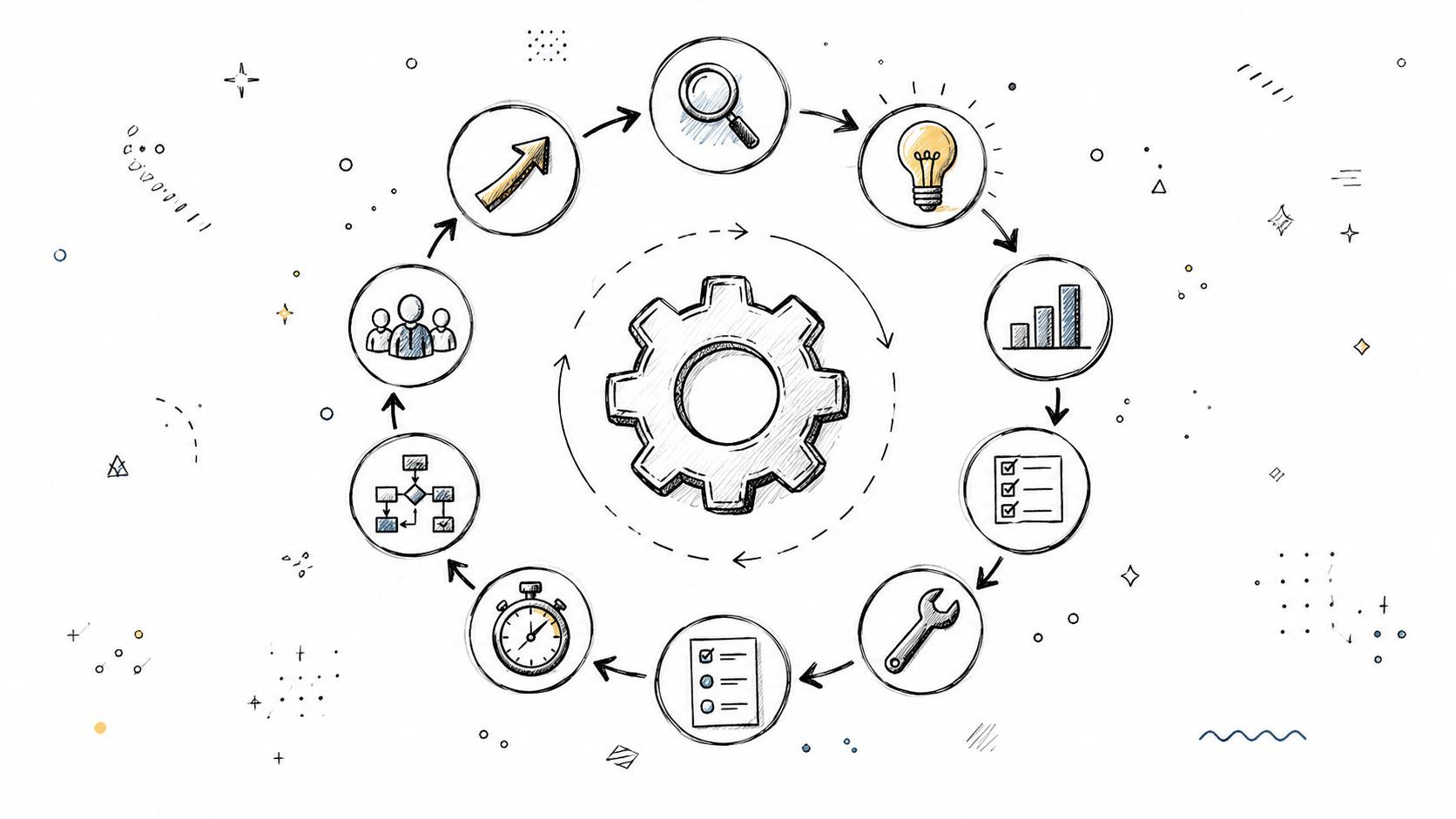
Discover 10 continuous improvement methods tailored to crowdfunding with step-by-step PledgeBox examples, free survey tools, and 3% upsell fee insights.
Ever wondered why some crowdfunding teams keep improving after launch while others keep repeating the same mistakes? The difference usually isn't luck, it's the discipline of continuous improvement methods. In crowdfunding, that means treating every campaign stage, from pre-launch validation to backer surveys and fulfillment, as something you can measure, test, and refine.
That mindset matters because improvement is a loop, not a one-time fix. The classic PDCA cycle, plan, do, check, act, helped move improvement work from intuition to evidence-based experimentation, and it still sits at the center of modern operational excellence, according to the American Society for Quality's overview of continuous improvement. For creators, the same logic applies to reward tiers, survey wording, upsell flows, shipping data, and support handoffs.
Crowdfunding also has a practical tooling angle. PledgeBox lets creators send backer surveys for free and only charges 3% on upsells if there's any, which makes testing and iterating far easier than in a setup where every experiment adds new overhead. If you think about platforms the way many creators do, Kickstarter's pledge manager can feel like Amazon, while PledgeBox behaves more like Shopify, with more flexibility to shape the post-campaign experience around your own workflow.
The best part is that you don't need to master every framework at once. Start with one method that fits your team's current bottleneck, then build from there. If you're also looking at broader workflow support, the ideas behind boosting team workflows with Halo AI line up well with the same improvement mindset.
Lean Six Sigma works well when a crowdfunding process has both waste and variation. Lean helps remove extra steps, while Six Sigma helps reduce errors and inconsistency. In a PledgeBox workflow, that often means simplifying survey setup, cleaning up backer data collection, and making upsell paths easier to complete without confusion.
Use Lean Six Sigma by choosing the noisiest part of the campaign flow and improving that first. If backers keep abandoning surveys, or your team keeps rechecking shipping details by hand, that is the place to begin. The goal is not to redesign every step at once. The goal is to improve one process well enough to prove the method is worth the effort.
Survey completion is a useful example. If creators see drop-off because questions are scattered or repeated, they can remove unnecessary fields, group related items, and test a shorter version before rolling it out fully. The same logic applies to upsells, where fewer distractions and a cleaner path usually make it easier for backers to finish.
Practical rule: fix the process that creates the most friction, not the process that sounds most impressive in a meeting.
Lean Six Sigma also fits campaigns that need precision at scale. The KaINexus ROI data points to the value of continuous improvement through many small gains rather than one dramatic win. That matters in crowdfunding, where one clearer survey, one simpler payment step, and one smoother fulfillment handoff can add up across a large backer base.
To make the method concrete, use a simple sequence:
For creators, Lean Six Sigma is less about manufacturing jargon and more about making the campaign feel easy, predictable, and trustworthy.
Kaizen means continuous improvement in the most literal sense, small changes made consistently until the process gets better. For crowdfunding teams, that idea fits because campaigns rarely break from one huge mistake. More often, they slip because of small issues that nobody returns to, such as unclear survey wording, slow follow-up emails, or reward pages that never get updated after feedback starts coming in.

Kaizen works best when improvement becomes part of the routine, not a one-time burst of effort. A creator can ask the fulfillment lead, the designer, and the support person to each flag one thing that can be improved each week. That could be a survey label, a confirmation email, or a shipping instruction that keeps causing confusion.
The method is easier to apply if you picture it as tuning a machine one knob at a time. Toyota's production system is the classic example, but the campaign version is simpler. A small team reviews recent backer responses, adjusts one survey question, and checks whether the next batch of answers is clearer. That steady iteration is much easier to manage than rebuilding the entire backer journey in one sprint.
The internal guide on the incremental advantage of small steps to big success on Kickstarter fits this mindset well, because the payoff usually comes from repeated small wins, not a single dramatic overhaul.
Small gains need a system. If nobody is tracking them, they disappear into the noise of launch week.
A practical Kaizen rhythm for creators can stay simple:
PledgeBox users can apply Kaizen to campaign pages, survey wording, and backer messaging. The goal is not perfection on day one. It is making the next version a little easier for backers and a little easier for your team.
What do you do when a crowdfunding campaign keeps changing after launch? Agile gives you a way to respond without rebuilding everything from scratch. The method works in short cycles, so your team can learn from backer feedback, adjust the plan, and keep the campaign moving. That fits creators who need to revise reward structures, answer new questions, or tighten messaging as the campaign develops.
A crowdfunding page rarely stays still. A pre-launch page goes live, signups start coming in, and the team notices where people hesitate. Reward tiers may need clearer wording, or the wording on a survey may need to match what backers understand. Agile fits that kind of work because it treats each update as a small test, not a full rebuild.
For PledgeBox users, that often means making one change, checking the response, then deciding what to do next. You might gather early feedback through pre-launch tools, revise survey design, and then review whether the next batch of responses is easier to interpret. You could also test upsell sequencing, then compare how backers move through the flow. That kind of step-by-step adjustment keeps the team focused and lowers the risk of changing several parts at once.
Different backer groups can call for different messages. A tabletop campaign may need one version for early supporters who want detail, and another for late backers who mainly need reassurance before they commit. Agile gives you room to try both paths without freezing the campaign into a single static flow.
If your team wants a cleaner way to frame experiments, the A/B testing glossary helps define what counts as a valid comparison, especially for survey copy or upsell prompts.
Speed only helps when it has a clear purpose. Agile works because each change is tied to a learning goal.
A simple Agile rhythm for crowdfunding can follow this order:
Used this way, Agile gives creators a practical way to keep improving while the campaign is active. It suits a setting where the next round of backer responses can change the plan, and where small, timed adjustments are easier to manage than one large overhaul.
Total Quality Management, or TQM, pushes quality into every part of the organization, not just the final product check. That's valuable in crowdfunding because backers judge the campaign on the whole experience, including survey accuracy, data handling, updates, support, and fulfillment. If one part breaks, the whole campaign feels less reliable.
TQM works when quality stops being a final review and becomes a daily practice. For a PledgeBox creator, that means documenting the campaign flow, training the team on survey standards, and checking that backer data is handled consistently from start to finish. It also means treating support responses, shipping details, and update timing as quality issues, not afterthoughts.
The classic TQM idea is that everyone owns quality. In crowdfunding, that means the person writing survey copy, the person exporting shipping data, and the person answering backer questions all affect the final experience. A campaign can have a great product and still lose trust if the operational details feel sloppy.
PledgeBox's privacy-first approach and 24/7 support posture fit this discipline, because quality in crowdfunding isn't only about speed. It's about backers feeling confident that their information is handled carefully and their rewards will move through the system cleanly.
The internal guide on operational efficiency improvement is a useful companion here, because a quality process usually depends on the same thing, clear workflows and consistent execution.
Here's a practical TQM checklist for campaign teams:
TQM is especially useful for recurring creators and agencies. Once the team has a repeatable quality system, each new campaign becomes easier to run well. The process stops depending on memory and starts depending on standards.
The Plan-Do-Check-Act cycle, or PDCA, fits crowdfunding well because it turns improvement into a simple loop instead of a large redesign. You choose one change, test it on a small scale, review what happened, and then decide whether to keep it, adjust it, or try again. That approach works well for survey wording, reward-page edits, reminder timing, and backer updates.
PDCA works best when you keep the test narrow. If you adjust the survey length, change the reward order, and rewrite the reminder email at the same time, the result will be hard to interpret. A creator who wants better survey completion should compare one version against another, measure the difference, and then use that evidence to make the next decision.
A practical crowdfunding example is backer instructions. If the team suspects that the survey copy is too vague, it can plan a clearer version, send it to a limited group, check completion quality, and then standardize the stronger version if the results hold up. That gives cleaner feedback than changing the full process based on instinct.
The American Society for Quality describes PDCA as a core continuous-improvement model, and crowdfunding fits that logic because campaign work changes quickly and often needs small, repeatable experiments. A simple example is a survey flow that loses backers at one step. Planning a small revision, testing it, and checking the response makes the cause easier to see.
PDCA works because it accepts uncertainty. You do not need the final answer before you begin, you need a clear way to test the next idea.
For a campaign team, the cycle can be written in plain language:
PledgeBox creators can use PDCA to test survey questions, late pledge offers, or reminder timing. A free survey tool helps with the test phase, while a simple checklist keeps the team from skipping the check step. Used this way, PDCA feels less like a theory and more like a practical routine for learning what backers respond to.
Value Stream Mapping, or VSM, shows the full path a campaign task takes from start to finish. It works best when a team stops looking at one step at a time and starts tracing the whole chain, so it can separate actions that create value from steps that only add delay. For crowdfunding, that chain often runs from survey completion to payment, then to shipping updates and delivery follow-up.

A backer may finish a survey, wait for payment confirmation, and then sit in a queue while the shipping workflow catches up. The problem often sits in the handoff, not inside any single tool. VSM makes those handoffs visible so the team can see where information slows down or disappears.
Campaign issues often hide between tools. A survey looks fine on its own, payment looks fine on its own, and shipping looks fine on its own, yet the backer still experiences delay because the process between them is messy. VSM helps creators spot where one step ends and the next one starts to slip.
That matters for teams trying to reduce abandoned surveys or shipping confusion. Once the process is mapped, the weak points usually stand out quickly. You can see where backers stop responding, where the team waits for missing details, and where manual checks keep work from moving.
Manufacturing teams use VSM to study production flow, and crowdfunding teams can use the same idea to study campaign operations. The goal is not to speed up every step automatically. The goal is to remove steps that do not help the backer and make the needed steps easier to complete.
For PledgeBox users, a simple map can follow the backer journey in clear stages:
Start with one journey. A single backer path gives more useful insight than trying to map the whole company at once.
You can also pair mapping with continuous improvement process explained through process mining, especially when digital event data makes each handoff easier to trace. That adds a clearer view of where the campaign flow slows down.
Why does a campaign problem keep showing up after the team has already “fixed” it? Root Cause Analysis, or RCA, answers that question by separating the actual cause from the surface symptom. In crowdfunding, that matters because a low conversion rate or a weak upsell result can come from several different sources, and the wrong fix can send the team in circles. Two tools do most of the work here, the 5 Whys and the fishbone diagram.
A survey completion drop is a useful example. The first answer may be that the survey is too long, but the underlying issue could be a confusing mobile layout, unclear survey purpose, or awkward timing after the campaign ends. RCA helps teams slow down long enough to test each possibility instead of guessing.
The NIH review on continuous-quality-improvement methods explains that FOCUS-PDCA adds five preliminary steps, find a process, organize a knowledgeable team, clarify the process, understand variation, and select improvements, while DMAIC breaks the work into Define, Measure, Analyze, Improve, Control (NIH review). Those structures make root-cause thinking more deliberate, especially when one campaign problem has more than one contributor. For crowdfunding teams, that matters because a single issue can look different to the designer, support lead, and fulfillment manager.
A useful way to run RCA is to follow the problem back step by step, the way you would trace a broken order from delivery back to the point where the mistake started.
The first answer is rarely the real answer. Teams that stop early usually patch symptoms and see the same issue return.
For PledgeBox campaigns, RCA is especially helpful when a survey underperforms or an upsell sequence gets ignored. A clean way to use it is to start with one visible failure, ask what changed before it appeared, and test a small fix that addresses the cause directly. If backers are skipping a payment step, the issue may sit in wording, timing, or the way the step is presented, not in the payment step itself.
Benchmarking helps you compare your campaign process with stronger examples so you can set a target that makes sense for your own launch. The aim is not to copy another creator's style. It is to see what good execution looks like in practice, then adapt it to your project and audience.
Creators often benchmark in two weak ways. They either ignore outside examples altogether or copy a successful campaign without checking whether the fit is right. A better approach is to compare specific pieces, such as survey completion flow, upsell structure, or communication rhythm, then keep the parts that clearly improve the experience.
The empirical dataset involving 1,090 employees showed participation in multiple continuous-improvement mechanisms, including suggestion boxes, permanent team suggestion systems, short-term team suggestion systems, and self-directed work teams, which is a reminder that improvement usually comes from several channels at once, not a single perfect method (PMC dataset). Crowdfunding works in a similar way. You do not compare one surface detail and call it done, you compare several parts of the process and combine what you learn.
A useful way to benchmark is to break the campaign into parts and inspect them one by one. For example, one creator may have a cleaner backer survey, while another handles update timing better, and a third makes pledge add-ons easier to understand. Each comparison gives a separate lesson.
The point is to set a target that is challenging but believable. If your current survey flow feels confusing, a careful comparison can show how much simpler it could be without changing the core campaign idea.
Benchmarking also keeps teams honest. It is easy to call a process “fine” until you see a cleaner version elsewhere. Once you know what a better workflow looks like, improvement becomes more concrete and easier to prioritize.
What if the easiest way to improve a crowdfunding campaign is to make common errors hard to create? Mistake-proofing, or Poka-Yoke, does exactly that. It designs the process so people are less likely to enter bad data, submit incomplete responses, or miss a step that creates extra cleanup later. That fits crowdfunding well, because many campaign errors follow predictable patterns in address entry, tax handling, duplicate records, and survey completion.
A useful way to understand mistake-proofing is to treat the workflow like a form with guardrails. If a backer types an incomplete address, the system should catch it before the order moves on. If a survey question allows conflicting answers, the flow should stop that combination. If payment reconciliation still depends on a manual review, the process should surface mismatches automatically so the team does not find them only during fulfillment.
PledgeBox fits that approach because its workflow includes address validation, automated VAT/Tax calculation, and logic that helps keep data cleaner without constant manual review. For crowdfunding teams, that reduces the number of support tickets that come from preventable input errors. It also protects downstream work, since one small mistake can spread into shipping, tax, and backer communication if no one catches it early.
A simple mistake-proofing checklist for creators can look like this:
The goal is to make the safe path the easiest path. That changes the job of the team, instead of relying on a person to catch every problem after the fact, the process itself helps prevent the mistake from happening.
Good systems assume mistakes will happen. They make those mistakes visible early and cheap to fix.
The data validation example guide shows the same idea in a simple visual form. Forms should verify input before bad data spreads into the rest of the process. For crowdfunding teams, that kind of design discipline saves time, cuts support noise, and protects the handoff to fulfillment.
What should a creator change first: the survey flow, the reward offer, or the follow-up email? Data-driven decision making answers that question with evidence. For crowdfunding teams, the goal is simple: review backer behavior, campaign responses, and fulfillment results before making a change. PledgeBox makes that easier because surveys are free to send, and the 3% upsell fee lets teams focus on add-on revenue while they learn what converts.
Start with a small dashboard, not a crowded one.
Creators often get stuck because they measure too many things at once. A clearer method is to choose a few metrics that reflect campaign health, then review them on a regular schedule. For a PledgeBox campaign, that usually means survey completion, upsell conversion, and average order value. Those three numbers give a quick read on whether backers are moving through the process or dropping off.
The ROI overview from KaiNexus ROI overview shows why disciplined measurement can matter in improvement work. It describes financial impact that accumulates when teams standardize useful changes and repeat them. That same principle applies here. A small adjustment to a survey question or reward path can matter more when it is tracked, tested, and reused instead of guessed at once.
PledgeBox creators can also review downloadable reports to compare backer segments and spot patterns in how people respond to specific survey questions. That helps teams refine question order, upsell wording, and fulfillment timing with less trial and error. The process becomes easier to manage when each change has a visible result.
The internal campaign performance metrics guide gives a practical way to choose those numbers, because the right metrics turn improvement into a repeatable routine instead of a reaction to one problem. For a closer look at how testing fits into that process, the glossary of A/B testing terms can help teams compare variations without getting lost in the jargon.
A simple analytics routine for creators looks like this:
Data does not replace judgment. It gives judgment a firmer base. In crowdfunding, that helps teams improve the campaign without drifting away from the backer experience.
| Method | Implementation Complexity 🔄 | Resource Requirements ⚡ | Expected Outcomes 📊 | Ideal Use Cases 💡 | Key Advantages ⭐ |
|---|---|---|---|---|---|
| Lean Six Sigma | High, structured DMAIC, certification often required | High, statistical tools, trained Belts, time investment | Measurable waste reduction and variance control; strong ROI ⭐⭐⭐⭐⭐ | Complex, measurable processes (survey workflows, fulfillment) | Rigorous measurement and scalable process improvement |
| Kaizen (Continuous Incremental Improvement) | Low–Medium, cultural change and regular routines | Low, team time, lightweight suggestion systems | Slow but cumulative gains in efficiency and engagement ⭐⭐⭐⭐ | Ongoing refinements, small UX and survey tweaks | Low-cost, high employee engagement; rapid small wins |
| Agile Methodology | Medium, needs sprint discipline and team practices | Medium, cross-functional teams, collaboration tools | Faster iteration and validated changes; adaptable outcomes ⭐⭐⭐⭐ | Rapid campaign launches, iterative messaging and rewards testing | Quick validation and frequent stakeholder feedback |
| Total Quality Management (TQM) | High, organization-wide governance and standards | High, training, documentation, quality systems | Long-term quality improvement and customer satisfaction ⭐⭐⭐⭐⭐ | Organizations treating quality as core differentiator | Holistic quality focus and sustained defect reduction |
| PDCA Cycle | Low, simple four-step iterative process | Low, small tests, minimal tooling | Fast learning cycles and low-risk experiments ⭐⭐⭐⭐ | Quick A/B tests and short experiments (survey questions, upsells) | Accessible, repeatable method for continuous learning |
| Value Stream Mapping (VSM) | Medium, mapping sessions and facilitation needed | Medium, cross-functional participation, time | Clear identification of bottlenecks and waste; actionable roadmap ⭐⭐⭐⭐ | Visualizing end-to-end backer journey and process flows | Strong visual alignment and targeted waste removal |
| Root Cause Analysis (5 Whys / Fishbone) | Low–Medium, facilitated analysis sessions | Low, team input, evidence collection | Deep problem resolution preventing recurrence ⭐⭐⭐⭐ | Investigating recurring or high-impact failures (low completion rates) | Targets underlying causes rather than symptoms |
| Benchmarking | Medium, research and comparative analysis | Medium, access to peer data, analysis effort | Realistic targets and proven improvement ideas; impact varies ⭐⭐⭐ | Setting performance targets and learning from leaders | Evidence-based goals and practical best-practices |
| Mistake‑Proofing (Poka‑Yoke) | Medium, design changes or automation required | Medium, engineering/automation and UX work | Significant error reduction and fewer reworks; higher reliability ⭐⭐⭐⭐ | Error‑prone operations (address validation, payments, data entry) | Prevents errors at source; increases customer trust |
| Data‑Driven Decision Making (DDDM) | Medium–High, analytics processes and governance | High, data tools, analysts, data governance | Objective optimization, better ROI and forecasting ⭐⭐⭐⭐⭐ | Campaign optimization, segmentation, A/B testing at scale | Evidence-based prioritization and measurable improvements |
The best continuous improvement methods for crowdfunding aren't the fanciest ones, they're the ones your team will use. If you need a simple starting point, pick one method that matches your current bottleneck. Use PDCA if you want a clean test-and-learn loop, Kaizen if you want steady team habits, or Root Cause Analysis if the same problem keeps coming back in your surveys, upsells, or fulfillment workflow.
Crowdfunding rewards teams that keep learning after launch. A creator who watches survey drop-off, refines question flow, and checks the result again is doing real operational work, not busywork. That's the core strength of continuous improvement, it turns campaign operations into a system that gets better with each cycle. The ASQ definition of PDCA and the broader continuous-improvement models, including Lean, Six Sigma, and TQM, all point toward the same operating logic, measure the process, test the change, and standardize what works (ASQ continuous improvement).
If you're running a campaign now, keep the first pass simple. Document the current workflow, choose one metric, run one test, and review the result before changing anything else. That's enough to uncover friction quickly, especially when you're using a tool like PledgeBox, where surveys are free to send and upsells only carry a 3% fee if there's any. In practice, that gives you room to experiment while staying focused on the parts of the funnel that matter most.
A useful rule for crowdfunding teams is to standardize after every win. If a survey revision improves completion, write it down. If a payment step reduces confusion, keep the new version. If a shipping workflow cuts avoidable support messages, make it the default. Improvement only compounds when the better version becomes the normal version.
If you want a practical next step, choose one method from this list and apply it to your next campaign phase this week. Then review the result with your team, adjust the process, and repeat. That's how stronger crowdfunding operations take shape, one tested improvement at a time.
PledgeBox gives creators a place to apply these methods without adding tool sprawl, from free backer surveys to a pledge manager built around configurable workflows and upsells. If you want to see how that fits your next Kickstarter or Indiegogo campaign, visit PledgeBox and map your next improvement cycle around a real backer flow.
PledgeBox
The All-in-One Toolkit to Launch, Manage & Scale Your Kickstarter / Indiegogo Campaign
