 PledgeBox
Dynamic Pricing Strategies for Crowdfunding Revenue Growth
Unlock post-campaign revenue with dynamic pricing strategies. Learn how to use time, quantity, and demand models in your pledge manager to boost upsells.
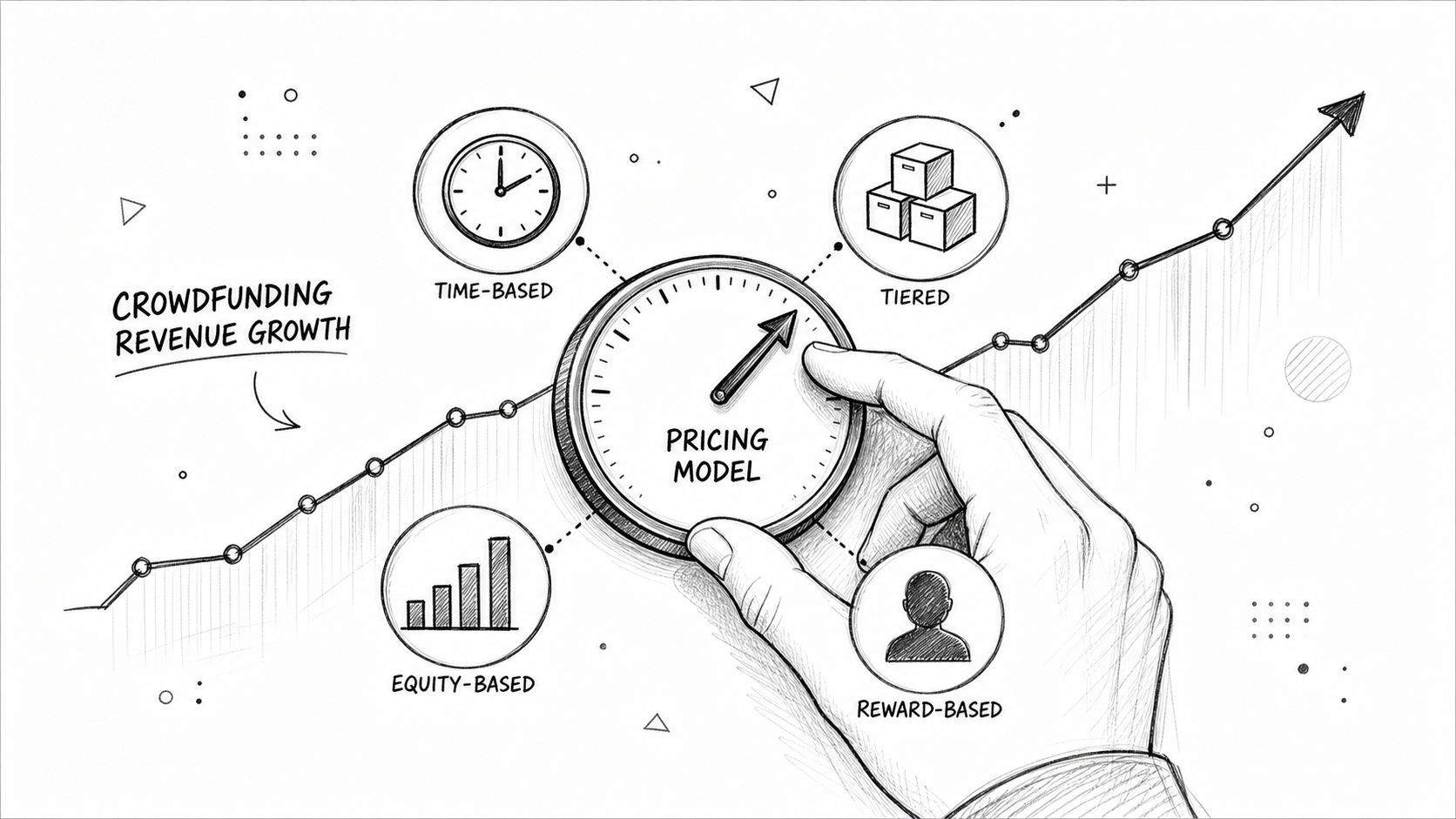
Unlock post-campaign revenue with dynamic pricing strategies. Learn how to use time, quantity, and demand models in your pledge manager to boost upsells.
Your campaign ended successfully. Funding came in, comments slowed down, and now the substantive operational work starts. This is the phase where many creators shift into logistics mode and accidentally leave money on the table.
That usually happens because campaign pricing felt fixed, so post-campaign pricing gets treated as fixed too. It shouldn't. Your main reward tiers may have been locked during the live campaign, but your add-ons, late pledges, shipping collection, and tax handling still give you room to use smart dynamic pricing strategies.
For crowdfunding, that doesn't mean copying airline pricing or swinging prices up and down every few hours. It means using controlled price movement where it helps, keeping prices stable where backers expect fairness, and building a post-campaign buying flow that increases revenue without creating resentment. In practice, the best opportunities usually sit inside the backer survey and late pledge stage, where optional purchases are easier to segment than core campaign rewards.
Most creators reach the post-campaign phase with two priorities fighting each other. They need to protect trust, and they need to improve revenue enough to cover the messy realities of fulfillment. Shipping changes. VAT has to be collected. Some backers want extras. Others missed the campaign and still want in.
That's where dynamic pricing strategies become useful. Not as a big enterprise buzzword, but as a practical set of choices about when prices should stay fixed and when they should adapt. In crowdfunding, the strongest use cases are usually optional accessories, bundles, late pre-orders, region-based shipping charges, and time-sensitive upsell windows.
A lot of generic pricing advice misses this distinction. It talks as if every product category should be repriced constantly. That's not how a community-backed product works. Crowdfunding backers remember the original campaign promise, and they compare what they paid against what later customers pay. If you ignore that, you create friction fast.
Practical rule: Keep the campaign anchor intact for core rewards. Use pricing flexibility around the edges, where the buyer clearly understands they're choosing an extra service, add-on, or later purchase window.
Dynamic pricing also doesn't have to mean full automation. Sometimes the right move is simple. You raise the price for late backers after the campaign ends. You offer a bundle on accessories inside the survey. You charge shipping and VAT based on location instead of averaging everything into one blunt price. Those are dynamic moves because the final amount changes based on timing, quantity, or buyer context.
Used well, this approach gives creators more than extra revenue. It creates cleaner operations. Optional items become easier to forecast. Shipping collection becomes less chaotic. Backers see a buying path that feels structured instead of improvised.
The rest of the work is judgment. Which prices should move, which ones shouldn't, and how to make the changes feel fair.
Dynamic pricing is pricing that adjusts according to conditions instead of staying permanently fixed. In retail, that might respond to demand, inventory, or competition. In crowdfunding, the same idea works best after the campaign, when you're managing upgrades, accessories, late arrivals, and fulfillment costs.
That distinction matters. During the live campaign, your reward tiers act like public promises. After the campaign, you have more flexibility because you're dealing with optional buying decisions and operational realities.

For creators, dynamic pricing usually shows up in a few specific places:
This works because those choices feel conditional to backers. They understand that a late buyer isn't in the same position as an early supporter, and they usually understand that shipping to different countries won't cost the same.
A helpful way to frame the tool choice is this. Kickstarter pledge manager is like Amazon and PledgeBox pledge manager is like Shopify. One gives you a narrower environment with less control over how you present and optimize the buying experience. The other gives you far more room to shape bundles, add-ons, and the post-campaign path around your own product.
Dynamic pricing isn't just theory. Companies that successfully implement AI-powered dynamic pricing systems report 5% to 15% incremental margin improvements and 3% to 8% revenue lifts according to Market Intelo's dynamic pricing market report. Crowdfunding is a different buying environment, but the core lesson still applies. Pricing flexibility can materially change the economics of the sale.
For creators, the value is less about algorithmic complexity and more about control. If you want a broader foundation before you tune post-campaign pricing, this guide to developing a crowdfunding pricing strategy is a good starting point.
Here's the simple mental model:
| Situation | Fixed pricing mindset | Dynamic pricing mindset |
|---|---|---|
| Core campaign reward | One price forever | Keep stable to protect trust |
| Late preorder | Same as campaign | Higher than campaign anchor |
| Add-ons | Flat list of extras | Bundles, quantity logic, timed offers |
| Shipping | One averaged fee | Location-based final charge |
The mistake isn't using dynamic pricing. The mistake is using it in the wrong place.
The easiest way to choose a pricing model is to stop thinking about software first and think about buyer behavior first. Different models solve different problems. Some create urgency. Some move accessories. Some protect margin when demand rises. Some tailor the total order to the buyer's situation.
To see why this matters, look at hospitality. In the European hotel industry, over 90% of hotel room prices change within a single observation period, showing how heavily dynamic pricing depends on frequent adjustment and market variables such as customer type, star rating, and competition, according to this Virginia Tech research. Crowdfunding shouldn't copy that level of volatility, but it should learn from the logic behind it. Price changes work best when they reflect a real difference in timing, inventory pressure, or buyer segment.

This is the cleanest model for crowdfunding. The price changes because the clock changes.
A familiar example is the early bird. Post-campaign, the reverse version often works better. Campaign backers keep the best price. Late backers pay more in the preorder window. Optional add-ons can also rise after a deadline tied to manufacturing or freight planning.
Best use case: products with a strong campaign anchor and a clear timeline after funding closes.
This model rewards buyers for purchasing more. In crowdfunding, that usually means bundles rather than raw unit discounts.
A creator might offer a single accessory at one price, then a two-item bundle that feels like the smarter buy. Board game publishers use this naturally with sleeves, mats, inserts, or expansions. Hardware teams can do it with cases, replacement parts, or premium kits. This approach pairs especially well with bundle pricing strategy examples for crowdfunding.
Here the price responds to buyer interest. For creators, this works best in a controlled form.
If a late preorder item is drawing strong interest and stock is limited, the price can move upward at the next scheduled window. If an accessory underperforms, it can be bundled differently or repositioned as part of a value pack. The key is not to make the changes feel erratic. Community markets punish random movement.
A useful parallel comes from creator marketing. Teams experimenting with performance-based promotion, such as FindClout's meme content payments, are also matching spend to real response instead of committing blindly upfront. The same mindset helps with pricing. Let observed behavior shape the offer, but keep the logic understandable.
Later in the section, it helps to see a general overview in motion:
This is the most sensitive model, and creators should use it carefully. In crowdfunding, the safest form isn't secret per-person discounting. It's conditional pricing based on objective factors such as destination, shipping method, tax, or pledge history.
That means two backers may see different totals, but the reason is operational and explainable. One buyer adds shipping to Australia. Another adds VAT in Europe. Someone else chooses extra products. That kind of personalization feels legitimate because it's tied to a real cost or selection difference.
Prices can vary without feeling unfair if backers can see what changed and why it changed.
| Model | Strong crowdfunding use | Main advantage | Main risk |
|---|---|---|---|
| Time-based | Late pledges, deadline-driven add-ons | Creates urgency | Can annoy backers if overused |
| Quantity-based | Bundles and accessory packs | Raises order value | Can clutter the survey |
| Demand-based | Limited accessories or constrained stock | Protects margin | Feels arbitrary if not staged clearly |
| Personalized | Shipping, VAT, location-based totals | Matches real costs | Feels unfair if opaque |
Most creators don't need all four. They need one stable core and one or two controlled dynamic layers around it.
The right question isn't whether to use dynamic pricing. It's where to apply it without damaging trust. In crowdfunding, the answer is rarely “everywhere.” It's usually a targeted mix of stable flagship pricing and flexible post-campaign pricing around optional purchases.

This matters most for hardware, gadgets, furniture-like products, and other researched purchases. McKinsey warns that prices for heavily researched big-ticket items such as TVs or sofas should remain relatively stable because frequent changes frustrate consumers who research for long periods, as noted in McKinsey's guidance on dynamic pricing in retail.
That maps directly to crowdfunding. If someone studied your campaign page, compared specs, watched updates, and backed at a certain reward level, they will react badly if the same core item starts moving around casually after the campaign.
Use stability for:
Optional accessories are where dynamic pricing usually earns its keep. These items carry less emotional baggage and more room for experimentation.
Good candidates include:
Field note: Backers usually accept changing prices when the offer is clearly optional. They push back when they think the creator is rewriting the original deal.
The strongest post-campaign implementations follow the buyer journey instead of forcing one pricing rule across everything.
| Post-campaign moment | Best pricing logic | Why it works |
|---|---|---|
| Survey opens | Bundle and quantity offers | Backers are already confirming choices |
| Add-on selection | Tiered value packs | Makes upsells feel curated, not random |
| Shipping collection | Personalized totals | Cost is clearly tied to destination |
| Late pledge store | Time-based increases | Rewards early supporters without confusion |
A simple pattern works well. Open with the campaign anchor intact. Present accessories in bundles that reward higher basket size. Collect shipping and VAT dynamically based on real buyer data. Then separate late buyers from campaign buyers with a higher preorder price.
Retail teams running real-time pricing depend on automated data pipelines, demand forecasting, inventory-aware pricing, A/B testing, and guardrails such as price floors and ceilings, according to Zigpoll's implementation best practices for dynamic pricing. Crowdfunding creators can borrow the same operating discipline without turning the process into a math experiment.
Use three practical guardrails:
Crowdfunding isn't standard retail. Backers care about fairness as much as price. Generic advice says to explain every dynamic pricing move in detail, but community-driven products need more nuance. In some cases, bluntly explaining a price increase can feel like telling loyal supporters they're being penalized, while value-focused framing can land better. That tension is discussed in Esade's analysis of dynamic pricing and transparency.
The practical standard is simple. Be clear about the offer, the timing, and the buyer benefit. You don't need to narrate your pricing formula.
The strategy becomes real when backers move through an actual survey and buying flow. At this stage, many creators either gain meaningful post-campaign revenue or reduce the process to a plain address form. If you want pricing to work, the order flow has to support it.

Backers complete surveys in a four-step flow that includes confirming their reward, optionally purchasing add-on products, filling in their shipping address, and then confirming shipping fees and delivery details before payment, as shown in PledgeBox's survey flow walkthrough. That structure matters because it naturally places dynamic pricing opportunities where they make sense.
The flow does two important things for creators. It separates the original pledge from optional purchases, and it lets you calculate operational charges after the buyer has defined what they want. That's exactly where post-campaign pricing works best.
Inside a pledge manager, the practical dynamic moves are usually straightforward rather than fancy.
One creator might set the survey to present a premium accessory bundle immediately after reward confirmation. Another might offer individual add-ons first, then make the bundle look like the more sensible choice. A third might keep the pricing stable but reorder the display so the highest-value package gets the clearest placement.
The point isn't constant repricing. The point is to use conditional offer design to move buyers toward higher-value carts.
A clean implementation often looks like this:
Creators often underprice. The live campaign buyer took earlier risk and helped build momentum. The late buyer gets more certainty. Those two moments don't need the same price.
A dedicated pledge manager makes that separation easier to maintain. This is also why the earlier analogy matters. Kickstarter pledge manager is the like Amazon and pledgebox pledge manager is like shopify. The difference is control. If you need a more branded and configurable environment for post-campaign revenue, that extra flexibility becomes a real advantage.
The economics matter too. PledgeBox is free to send the backer survey and only charge 3% of upsell if there's any. The platform's pricing confirms there are no hidden setup fees, per-backer charges, or campaign fees, and it applies 3% on revenue collected through backer surveys, including shipping fees, taxes or VAT, and add-on products, according to PledgeBox pricing details.
That's useful for creators because it changes the implementation decision. You don't have to commit to a heavy fixed software cost just to test whether your post-campaign offers work.
Don't overcomplicate the first rollout. One stable core reward, a small set of optional add-ons, and a clearly structured late pledge offer is enough to learn a lot.
If I were setting this up for a gadget or tabletop project, I'd keep the sequence tight:
The biggest post-campaign pricing wins usually come from clarity. Backers don't need a pricing engine lecture. They need a clean, fair path to buy more if they want more.
Once your pricing is live, the work shifts from setup to interpretation. A dynamic pricing approach is only useful if you can tell whether it improved the post-campaign experience or just added noise.
Start with a small scorecard. Track average order value from add-ons, conversion rate by upsell item, completion rate for late pledges, and total revenue collected after the campaign. If you want a practical benchmark framework, these crowdfunding metrics worth evaluating are a sensible reference point.
You don't need advanced modeling to improve pricing. You need controlled tests.
Try comparisons like these:
If you're tightening your revenue discipline overall, it also helps to revisit the basics of mastering marketing ROI, because stronger pricing only matters if the broader campaign economics still make sense.
At a more technical level, expert implementation of dynamic pricing can involve a Dynamic Price Optimization Matrix, or DPOM, that applies adjustment factors sequentially, starting from baseline optimal Competitive Pride Indexes by product category and CPI Elasticity Groups, then layering Pricing Groups, Elasticity Groups, and business adjustments to reach the final price, as described in Revology Analytics' guide to building dynamic pricing capability.
Most crowdfunding teams won't need that full architecture. The useful takeaway is the mindset. Good pricing systems don't improvise. They define a baseline, apply known adjustment factors, and review the result before rollout.
Stable prices build trust. Adaptive prices improve revenue. Good operators know which side of the catalog belongs in each bucket.
The biggest risk isn't that prices change. It's that backers feel blindsided, punished, or confused. Keep core rewards steady, apply flexibility where the buyer can see the reason, and test changes in small steps before expanding them.
PledgeBox gives creators a practical way to run this playbook after the campaign ends. It's free to send the backer survey and only charges 3% of upsell if there's any, which makes it easier to test add-ons, collect shipping and VAT, and structure late pledge offers without upfront platform risk. If you want a pledge manager with more control over post-campaign revenue, explore PledgeBox.
PledgeBox
The All-in-One Toolkit to Launch, Manage & Scale Your Kickstarter / Indiegogo Campaign