 PledgeBox
Address Validation Software: Cut Fulfillment Errors in 2026
See how address validation software helps your team verify shipping details at checkout, cut failed deliveries, and keep customer data clean. Learn more.
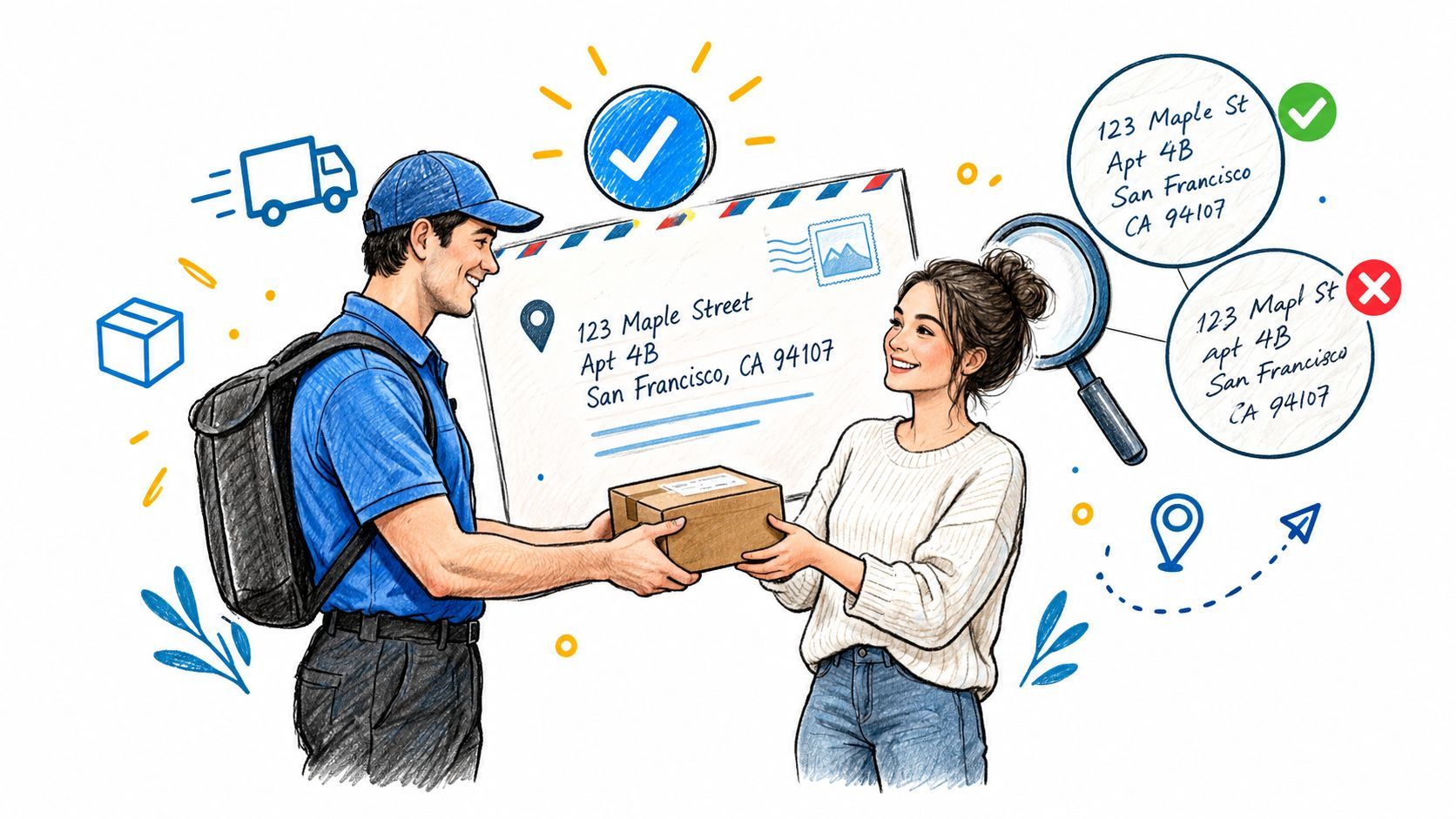
See how address validation software helps your team verify shipping details at checkout, cut failed deliveries, and keep customer data clean. Learn more.
Your campaign is live, the backer count is climbing, and the shipping survey is already open. Then the messages start: a backer moved apartments, another typed the wrong unit number, and a third swears the address is right even though the courier can't find it. That's the point where address validation software stops being a nice-to-have and becomes the thing that protects margin, delivery speed, and backer trust.
For crowdfunding creators, the pain isn't abstract. You're not just cleaning a mailing list, you're trying to turn a burst of pledges into real parcels that reach real people without a pile of manual fixes. If the address layer is sloppy, every downstream step gets harder, from export files to reships to support tickets.
The worst fulfillment problems usually don't look dramatic on day one. They start as small exceptions, one missing apartment number, one broken postal code, one backer who typed a street name from memory. Then those exceptions turn into a queue of corrections, and someone on your team ends up playing detective instead of shipping rewards.
That's where the economics get ugly. A bad address doesn't just risk one failed delivery, it can trigger support work, delay a batch, and create doubt in a backer who expected a smooth post-campaign experience. The campaign might still be successful on paper, but the operational load eats into the ROI you worked so hard to create.
Practical rule: treat every address as a fulfillment decision, not a form field.
The cleanest way to avoid that spiral is to catch problems before they enter the shipping workflow. A backer survey that verifies addresses in real time gives you a much better shot at preventing manual cleanup later, and a careful export process keeps the same bad data from being copied into warehouse or carrier tools. If you're using a pledge manager, this is the stage where validation has the highest payoff, because fixing an address after labels are printed is always more expensive than fixing it during entry. One useful starting point is this guide to changing a Kickstarter address, which shows how much friction can appear when address edits happen too late.
The bigger lesson is simple. In crowdfunding, fulfillment errors don't stay hidden inside operations. Backers feel them immediately, and the campaign's professionalism gets judged by whether rewards arrive cleanly or whether people have to chase you for corrections.
At a practical level, address validation software takes messy user input and turns it into something a postal system or logistics workflow can use. It doesn't just look for spelling mistakes. It standardizes the structure, checks the components against authoritative reference data, and flags records that can't be delivered as entered.
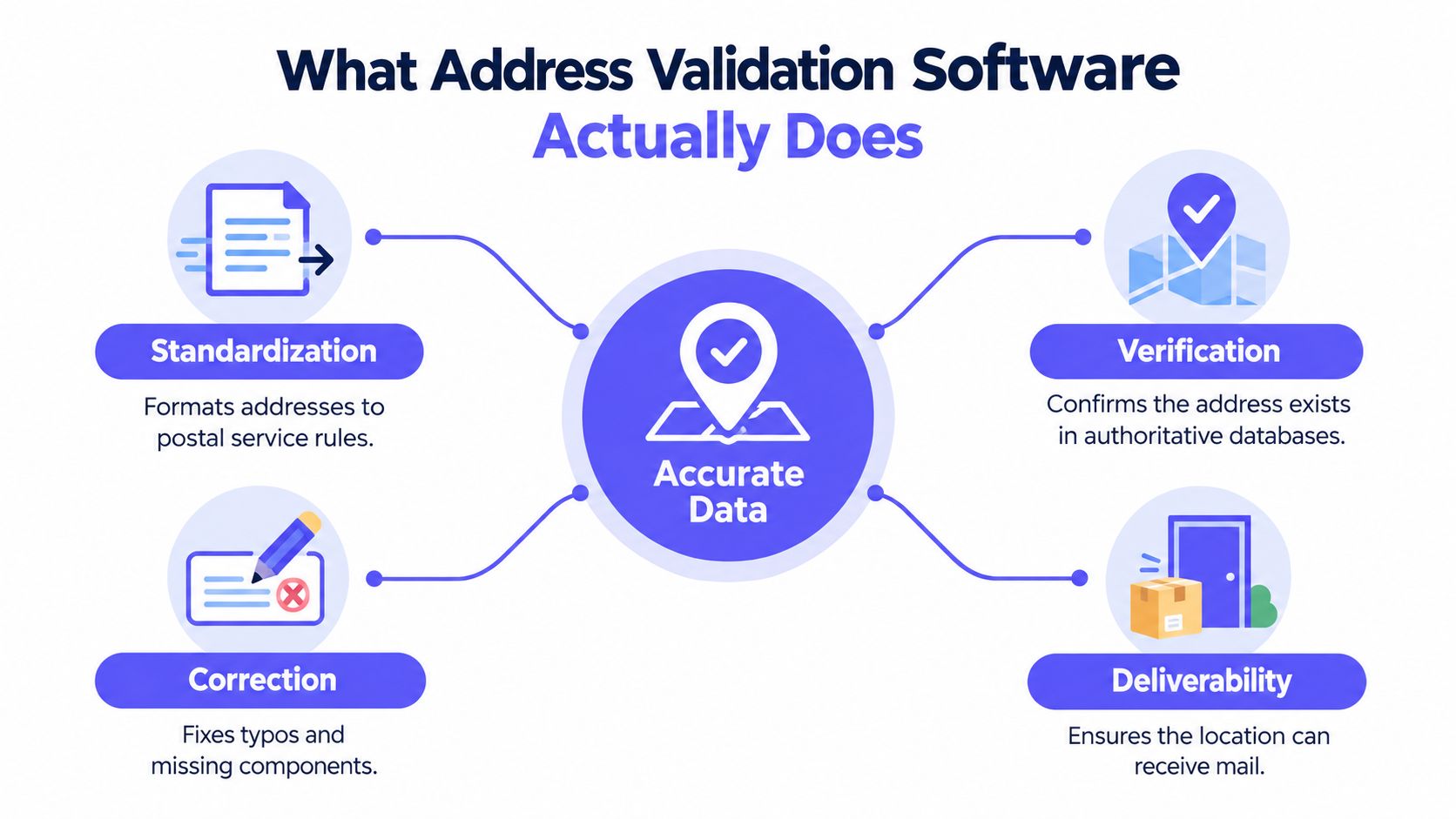
The usual sequence starts with standardization. In USPS-oriented systems, that means pulling an address into the shape the postal database expects, including abbreviation handling and missing elements, which is why systems built around Address Management System records and CASS-style standardization can correct input before it becomes a label problem. USPS describes this kind of address-quality processing in its own address quality materials, especially the parts on standardization and deliverability checks. USPS address quality guidance
Then comes verification, where the software matches the address to an authoritative record to see whether it exists. If the entry is close but incomplete, the tool can often correct missing ZIP data, normalize the street format, or suggest a better version of the same location. The final step is deliverability, which is the business test for fulfillment teams. A cleanly formatted address that still can't receive mail is just a prettier failure.
A tool that only cleans formatting isn't enough if your real problem is shipping.
For creators, the distinction matters because manual review is a poor substitute for automation once orders scale. People are good at spotting obvious mistakes, but they're bad at catching the kind of subtle errors that come from international formatting, apartment syntax, and backers entering data on mobile. A validation layer inside your capture process prevents those edge cases from spreading into every export.
If you want to see how validation fits into a broader capture flow, this overview of Google Maps address validation is a useful practical reference point. The important idea is not the vendor, it's the process, capture, confirm, then send.
Crowdfunding fulfillment is harsher than standard ecommerce in one important way, backers don't all behave like repeat customers. They may back from different countries, move before the survey opens, or fill out reward details months after the campaign launched. That means your address layer has to absorb more variation with less room for error.
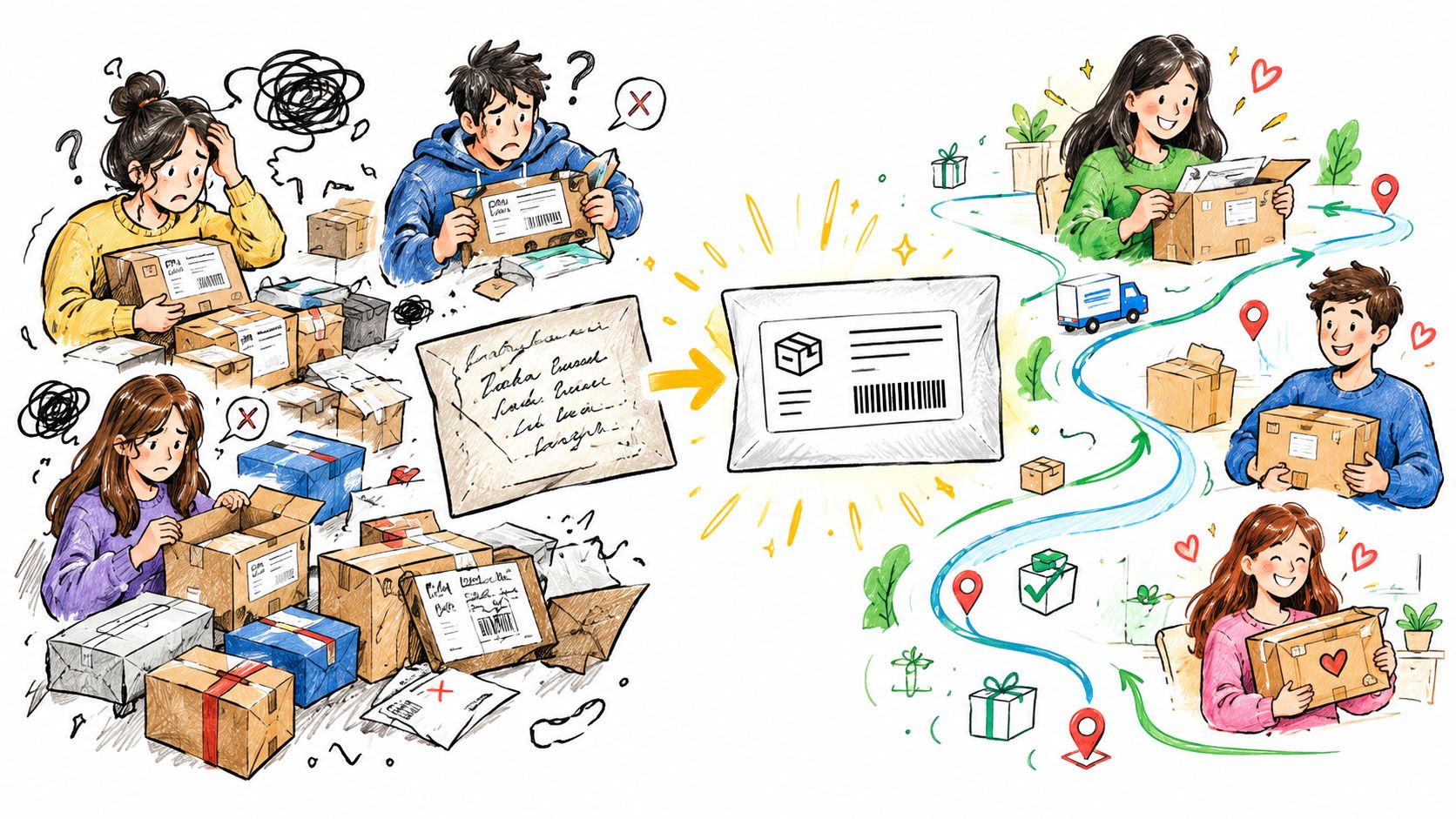
A normal store checkout is optimized for one purchase moment. A pledge manager has to handle late changes, add-ons, taxes, shipping fees, and backers who might return after months away. That makes address validation more than a front-end convenience, it becomes a safeguard for the full fulfillment chain.
Kickstarter's own fee structure shows why every extra mistake matters. Its pledge manager is included with no additional upfront cost, and Kickstarter says pledge manager payments carry the same fees as normal campaign payments, a 5% platform fee on funds except taxes, plus Stripe processing fees of roughly 3% to 5% on the full payment including taxes Kickstarter fee details. If a bad address creates reships or manual edits on top of that, the economic drag gets real fast.
That's why I think about address validation in crowdfunding as ROI protection, not just data hygiene. Every clean address reduces the chance that a label needs rework, a support ticket needs a human reply, or a backer needs reassurance that their reward hasn't disappeared into a logistics black hole.
Kickstarter's pledge manager feels more like a large retail marketplace. PledgeBox's pledge manager behaves more like a customizable storefront, which is useful when you want tighter control over surveys, add-ons, and shipping workflows. PledgeBox is also free to send the backer survey and only charges 3% of upsell if there's any, which makes the address step part of a broader revenue capture flow rather than a separate cost center.
For teams that want to compare integration options across tools and services, a directory like Samba's booking integrations directory can help frame where address validation fits in a stack of connected systems. The practical point is that the best fulfillment setup is the one that keeps data structured from survey to shipment.
A crowdfunding address tool should protect the handoff from backer survey to warehouse. Prioritize real-time capture, predictable exports, international coverage, and clear handling of uncertain matches. A technically valid address that loses an apartment number during export can still create a failed delivery and an avoidable support request.
Real-time validation catches problems while the backer can still fix them. Autocomplete reduces typing, while suggestions guide people toward recognized street, city, and postal formats. Waiting until export means incorrect details may already be copied into survey responses, fulfillment sheets, and support records.
Test the ambiguous-result flow before choosing a tool. If a backer enters “12 Main St Apt 4” and the service finds two possible matches, good software displays both candidates and asks the backer to select one. It should not accept the first result without confirmation or reject the entry without explaining what needs attention. That small interaction can prevent a warehouse from guessing which unit belongs on the label.
International coverage matters just as much. Crowdfunding campaigns often ship across borders, so the tool should recognize country-specific address structures instead of forcing every backer into a United States template. Check whether it preserves local postal formats and handles fields that do not exist in every country.
Validation should produce the same structured address throughout the survey, pledge manager, and fulfillment export. An API or built-in connection can reduce retyping, but test the actual output rather than accepting an integration claim at face value.
Rule of thumb: if you need a spreadsheet cleanup step after validation, the setup is too weak.
Standardization is the layer teams often underestimate. Review this address standardization tool walkthrough to see how abbreviation handling and ZIP correction work in practice. Confirm that the software separates unit information, preserves postal codes, and flags records that need human review.
Some products focus on shipping, while others handle broader contact-data hygiene or identity checks. For crowdfunding, the useful choice keeps the backer moving while confirming that the delivery address can support fulfillment. If PledgeBox already manages surveys, add-ons, and shipping fees, validation should fit that workflow rather than create a separate correction queue.
Budget time for an export test. Run ten real backer addresses through the tool, then inspect the CSV your warehouse receives for truncated unit numbers, altered postal codes, and missing country fields. That test exposes integration failures before they affect rewards, reshipments, or backer trust.
Address validation only pays off when it's embedded in the exact place where backers enter or update their shipping details. A separate checking tool can be useful, but it usually creates another screen, another export, and another chance for someone to miss a correction.
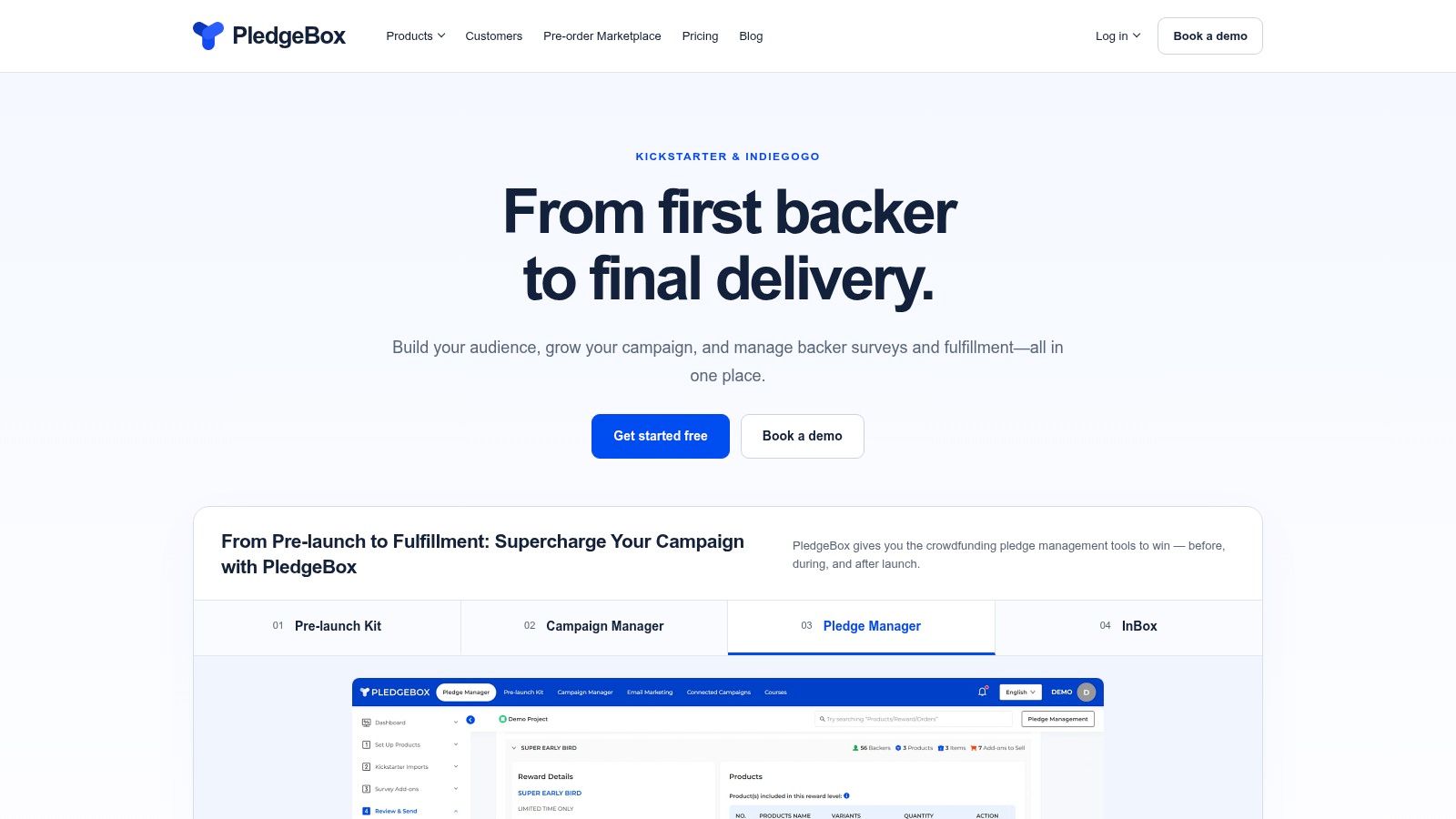
When validation is native to the pledge manager, the workflow feels smooth. The backer completes the survey, the address is checked immediately, and the shipping team gets a cleaner dataset without chasing follow-ups. That's especially important when you're managing add-ons, late pledges, and backer updates in the same environment.
PledgeBox is one of the options creators use for that kind of integrated flow. Its setup combines survey collection, shipping logic, and address handling, and it's also designed to support upsell revenue without charging a separate upfront fee for the survey itself. Because it's free to send the backer survey and only charges 3% of upsell if there's any, the cost structure stays tied to incremental revenue rather than just operational overhead.
Kickstarter's pledge manager sits closer to a large marketplace model, while PledgeBox's pledge manager feels closer to a configurable storefront model. I'd describe that difference as Amazon-like versus Shopify-like, not because the platforms are identical, but because one gives you a more standardized path and the other gives you more control over how the experience is assembled.
A useful pledge-manager integration should do more than surface a warning. It should standardize the address, flag the problem clearly, and keep the corrected version available for shipping exports. It should also make the backer's confirmation step simple enough that they don't abandon the process halfway through.
For teams already juggling shipping software, vendor handoffs, and post-campaign communications, this kind of integration reduces the number of places where address data can rot. The result is fewer corrections for your team and fewer surprises for the backer.
The more moving parts your campaign has, the more important it is that validation lives inside the same system that collects the survey. If you're evaluating a pledge manager or fulfillment stack, test whether address cleanup happens at the point of entry, whether the corrected data exports cleanly, and whether the workflow still makes sense when backers update their details late.
The right choice depends on how your campaign runs, not on how impressive the feature list looks in isolation. A small tabletop campaign with mostly domestic shipping has different needs from a hardware launch sending parcels across multiple countries.
If you need a simple validation layer, choose software that focuses on clean capture and fast correction. If your campaign is broader, with add-ons, late pledges, and repeat address updates, pick a pledge manager that keeps those steps in one place. If you're handling a complex fulfillment operation, the goal is to reduce the number of systems where data can break.
A good test is this, can a backer enter an address once, get a correction if needed, and move on without support intervention? If the answer is no, the workflow is too fragile.
Manual address cleanup feels safer until the order volume rises. Then it becomes slow, inconsistent, and expensive in human attention. Automation doesn't replace judgment, it removes the routine errors so your team can spend its time on the exceptions that really matter.
If the process depends on one person noticing every typo, it won't scale cleanly.
My recommendation is straightforward. For most crowdfunding campaigns, automated validation should be treated as a required part of fulfillment, not an optional enhancement. The backer trust it protects is worth more than the small amount of setup effort it takes to get right.
If you're setting up a new campaign or trying to repair a messy one, PledgeBox gives creators a way to manage surveys, shipping, add-ons, and address validation in one workflow. Visit PledgeBox to see how it can fit into your fulfillment setup and help you keep backers informed, addresses cleaner, and post-campaign operations under control.
PledgeBox
The All-in-One Toolkit to Launch, Manage & Scale Your Kickstarter / Indiegogo Campaign