8 Powerful Rewards for Crowdfunding Success in 2026
Discover 8 powerful rewards for crowdfunding to maximize your campaign. Get actionable tier templates, pricing strategies, and upsell tactics.


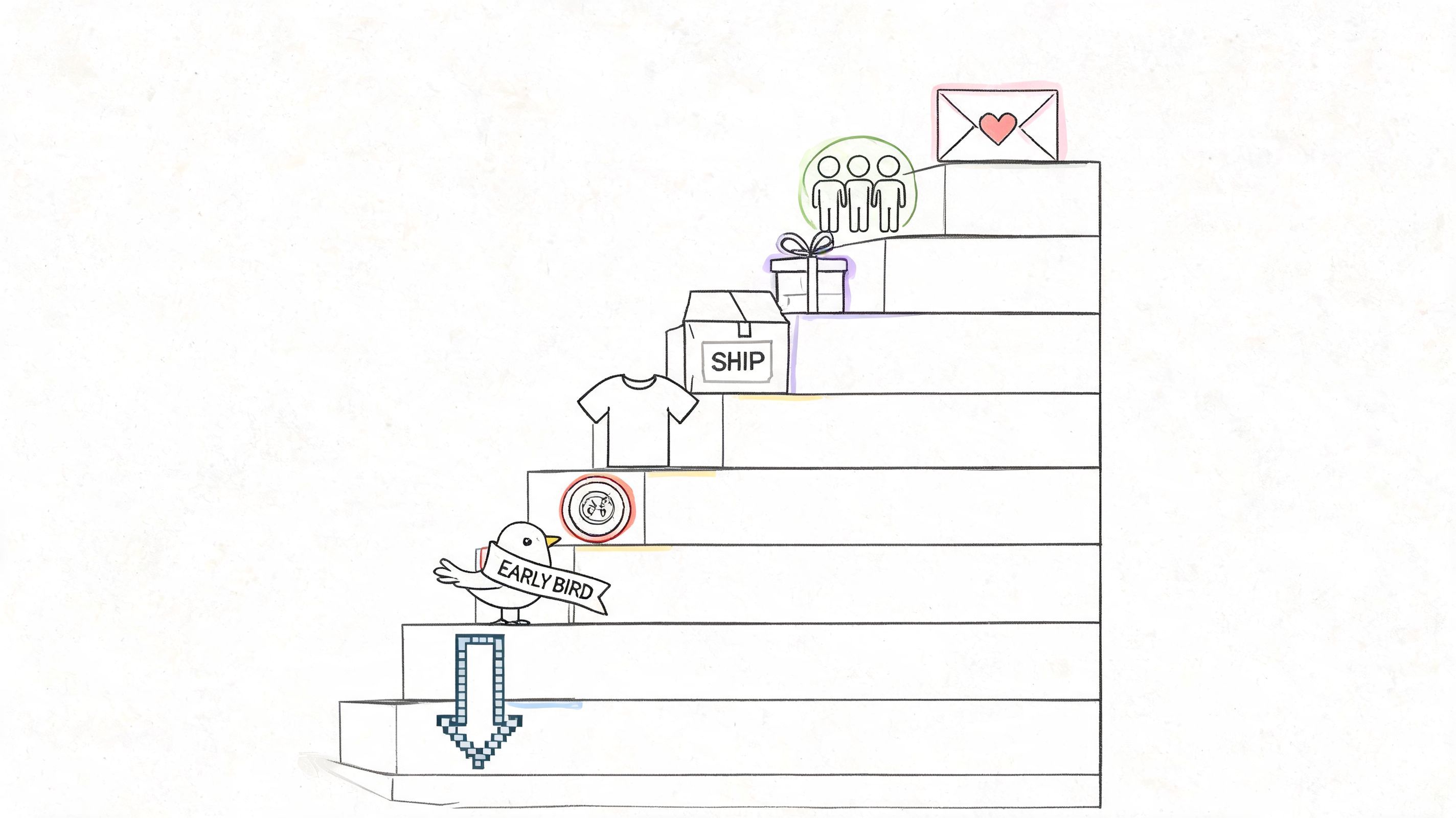
Discover 8 powerful rewards for crowdfunding to maximize your campaign. Get actionable tier templates, pricing strategies, and upsell tactics.
You launch strong, funding starts to come in, and then the substantial pressure hits. Backers begin asking which version they picked, whether they can add another item, and when they will confirm shipping details. If your rewards are vague or overbuilt, that momentum turns into support tickets, missed upgrades, and fulfillment costs that cut into margin.
Rewards do more than populate a campaign page. They set price anchors, shape conversion, and determine how much operational work you create after the campaign ends. A tier that looks attractive on day one can become expensive fast if it requires too many variants, too many manual surveys, or too many one-off exceptions.
The practical question is not just, “Will this reward get pledges?” It is also, “Can this reward survive the post-campaign phase without creating chaos?”
That is the frame for this guide. These reward ideas are not just campaign hooks. They are decisions that affect late pledges, add-on revenue, surveys, shipping collection, and repeat sales. Used well, a pledge manager like PledgeBox helps you turn reward design into a second revenue window through upsells, cleaner backer data, and subscription handling for offers that continue after funding.
Early structure matters. A clear entry tier, a few well-built bundle options, and a controlled add-on plan usually outperform a long list of loosely related rewards. Teams that also plan their post-campaign flow early tend to handle early-bird reward strategy and timing with fewer pricing mistakes and less backer confusion.
The eight strategies below focus on what works in practice. Each one connects the front-end pitch to the back-end work of fulfillment, upgrades, and revenue recovery, so your rewards sell cleanly and stay manageable after the campaign closes.
Early access works because it gives people a reason to act now instead of “waiting for retail.” Limited editions work because they make the backer feel like part of the first wave, not just another customer. When creators combine the two, they usually get a cleaner offer: support now, get it first, get something others won’t.
That structure is especially strong for products with visible identity. Pebble used color variants to make early support feel special. Exploding Kittens made exclusivity part of the collector appeal. Hardware, games, and design-heavy consumer products all benefit from this because the reward is easy to understand at a glance.
Scarcity only helps if you can explain it clearly. If you offer an exclusive colorway, signed version, founder’s edition, or first-run packaging, define exactly what’s exclusive and whether it will ever return. Backers get frustrated when “limited” later becomes standard stock.
A practical way to shape this is to keep the core product stable and limit the finish, packaging, or accessory set. That gives you urgency without splitting manufacturing into too many custom paths.
Practical rule: Make the exclusive part easy to identify and easy to fulfill. Special artwork is easier than a custom product mold.
For campaigns using a post-campaign survey, this reward gets much easier to manage. You can let people choose color, edition, or engraving later instead of forcing every choice during the campaign. That’s one reason many creators use a survey tool after funding closes. If you’re planning early-bird mechanics, this guide to early bird reward strategy is useful for structuring urgency without overcomplicating your page.
A good limited tier has a visible reason to exist. A bad one feels like a random label slapped on the same item.
The hidden upside is post-campaign revenue. Someone who backed the standard edition may still add the exclusive accessory later if your survey flow presents it cleanly. That keeps the campaign page simpler while preserving room to grow order value after funding.
Bundles work when they answer a simple backer question: “What do I get if I spend a bit more?” If your answer is obvious, people upgrade. If it’s murky, they stall.
For many campaigns, the strongest setup is a ladder. Digital gets people in. Standard delivers the core product. Deluxe adds the items enthusiasts want. That’s better than dumping every possible option into the campaign page at once.

Board games do this well with a base game, digital rulebook, and optional expansion content. Course creators can bundle video lessons, templates, and a printed workbook. Tabletop RPG campaigns often pair a printed book with digital sheets and bonus adventures. The logic is the same in every niche. Start with the most accessible entry point, then create a natural upgrade path.
The mistake is trying to do all the selling on the campaign page. You don’t need every add-on visible on day one. In fact, cleaner campaigns often convert better because the initial decision is easier.
Modern crowdfunding platforms increasingly use machine learning to analyze historical pledge data and engagement signals to optimize pricing, reward tiers, and launch timing, according to this crowdfunding market analysis. Even if you’re not building your own pricing model, the lesson is practical: tier structure isn’t cosmetic. It directly affects conversion and total revenue.
Use your campaign page to sell the main path. Use your pledge manager to handle the expanded catalog.
A useful reference for structuring post-campaign extras is this walkthrough on crowdfunding add-on items.
The best add-ons are complementary, not distracting. If someone backed a board game, extra dice or sleeves make sense. If they backed a device, a case or accessory pack fits. If they backed a course, a workbook or office-hours upgrade is coherent.
After your main offer is clear, extra visual explanation helps:
When rewards for crowdfunding are modular, you can increase average order value without forcing every backer into a premium tier upfront.
Personalization creates attachment. Once a backer sees their name in the product, on the packaging, in the credits, or inside the game world, they stop acting like a casual buyer and start acting like an invested supporter.
This is why naming rights keep showing up in games, collectibles, and creator-led projects. A tabletop campaign might let a supporter name a location or NPC. A hardware creator might offer engraved packaging. A premium art print tier might include a handwritten dedication. These aren’t mass-market rewards, but they can be highly effective at the top end of your ladder.

The operational side matters more than the idea. If you offer “name a character” or “custom engraving,” define the limits before anyone pledges. Set character counts. Reserve moderation rights. State whether all submissions are subject to approval and whether the creator can adjust formatting.
Without those guardrails, personalized rewards become a support burden. People submit late. They ask for exceptions. They want changes after production files are locked. The reward can still be worth it, but only if your intake process is disciplined.
Personalization is a production workflow, not just a marketing hook.
The survey stage proves its worth. Instead of collecting messy personalization details by email, route them through a structured form with deadlines and formatting requirements. If you want a broader framework for crafting rewards backers care about, this piece on reward strategies backers will love gives a useful starting point.
Not every personalized reward has to be dramatic. Some of the safest versions are small but meaningful.
What usually doesn’t work is offering deep customization on a mass-produced item with tight margins. That sounds premium but often creates more production friction than the extra pledge is worth.
Use personalization where it creates emotional value without forcing a custom manufacturing process.
Some backers don’t just want the final product. They want proximity to the process. That makes community access one of the most flexible rewards for crowdfunding, especially for creators with strong personalities, ongoing development cycles, or educational products.
Private Discord channels, monthly livestreams, dev diaries, prototype feedback sessions, and backer-only updates all fit here. Video game teams use this well because iteration is part of the appeal. Course creators and media brands also benefit because community can outlast the initial launch by a wide margin.
The biggest mistake is vague language. “Join our private community” sounds good, but backers quickly ask what happens there. If the answer is “we’ll post sometimes,” the reward loses value fast.
Be specific. Monthly founder Q&A. Weekly work-in-progress posts. Private playtest nights. Archived replays. Verified backer role inside Discord. Those details tell people what they’re buying.
If you run a learning-focused or creator-driven project, this outside piece on building online community for course creators offers useful ideas for making community participation sustainable instead of purely reactive.
Community rewards become more valuable after the campaign if they connect to future offers. A private group can be where you launch expansions, beta access, new modules, or subscription content first. That turns one campaign into the start of a customer base.
Backers also tolerate digital rewards differently from physical rewards. A late hoodie creates anger. A delayed bonus livestream usually doesn’t, provided you communicate.
If you hate ongoing interaction, don’t force this reward just because it looks easy. A silent private community becomes evidence that your campaign lost energy.
Merchandise bundles can lift order value fast, but they also create more ways to make fulfillment expensive. That’s the trade-off. Done well, a collector tier feels like a complete experience. Done badly, it becomes a pile of unrelated items stuffed into a box.
Board game creators have used this structure for years. Deluxe editions with sleeves, storage, custom dice, and upgraded components are easy for backers to understand. Creator brands can do something similar with books, prints, apparel, and signed inserts. Tech teams can bundle a product with a case, cable set, or desk accessory if those extras are a natural fit for the product.

Collectors want coherence. A themed box with unified art direction and intentional presentation beats a mixed bundle of disconnected leftovers. If your bundle includes apparel, paper goods, mini-accessories, and product variants all at once, pause and ask whether the box has a story or just inventory.
The unboxing moment matters more than many creators expect. A collector tier often gets shared online, photographed, and remembered. That doesn’t mean you need luxury packaging. It means the items should feel chosen, not assembled in a hurry.
Field note: Merch adds perceived value quickly, but shipping and packing labor can erase that gain if the bundle gets too fragmented.
This category is where creators most often oversell complexity. Three shirt sizes, four poster options, two pin sets, and regional shipping differences create a surprising amount of back-office work.
Use bundles when the upgrade path is obvious:
What usually doesn’t work is making every merch item individually selectable. That feels customer-friendly on paper but often becomes operational chaos. Fixed bundles are easier to pack, easier to explain, and easier to support.
If your margin is already tight on the core item, don’t rely on collectible bundles unless you’ve mapped packaging, shipping, and replacement policies before launch.
Experience rewards are premium because they give access that retail can’t offer. A signed item can be copied. A workshop with the creator, a private strategy session, a factory visit, or a design review session can’t.
That makes this category especially useful for founders, educators, consultants, authors, and specialized product teams. A SaaS founder can offer a private implementation session. A board game designer can host a design workshop. A hardware startup can invite a small group into a product discussion or prototype review. These offers feel real because they are real. They cost your time.
Most creators price these rewards badly because they think in terms of exclusivity, not delivery. The constraint isn’t demand. The constraint is your calendar.
If you offer any VIP reward, define the scope tightly. State whether it’s virtual or in-person, how long it lasts, what the backer gets before and after, and what happens if scheduling changes. A vague “private consultation” creates the same problem as vague software scope. Everyone imagines something different.
Some practical filters help:
Experience rewards are usually best placed near the top of your reward ladder. They add prestige to the campaign and give superfans a meaningful way to spend more, but they shouldn’t become the backbone of fulfillment.
They also work well when paired with a physical or digital bundle. That way the backer gets both the product and the access, and you avoid creating a high-priced tier that feels intangible.
The most common failure here is simple. The creator underestimates their own bandwidth, sells too many experience slots, and then delivers them late or inconsistently. If you can’t imagine honoring every slot calmly after a stressful campaign, cap it harder or remove it.
A campaign can fund a product once. A subscription can keep the business alive afterward. That’s why recurring access is one of the most interesting reward models available, particularly for software, content, education, collectibles, and creator communities.
This category includes monthly digital drops, annual memberships, software access, subscriber-only tutorials, recurring design assets, and physical subscription boxes. It works best when your project naturally produces ongoing value. If it doesn’t, forcing a subscription into the campaign usually feels contrived.
Backers will forgive a lot in a one-time campaign reward. They’re less forgiving with recurring access. If they subscribe, they expect cadence, clarity, and proof that the membership is alive.
Research on crowdfunding rewards often focuses on pre-launch and campaign setup, but post-campaign fulfillment, add-ons, and recurring offers are where creators can realize more value if the system is designed well, as discussed in this article on successful crowdfunding campaign elements. In practice, that means your reward design shouldn’t stop at pledge day.
A subscription offer needs a visible promise. Monthly workshop. New asset library additions. Member-only updates. Quarterly shipment. If the backer can’t picture the next delivery, they won’t trust the renewal.
This is not the right move for every campaign. A one-off gadget with no content ecosystem doesn’t need a membership just because recurring revenue sounds attractive. But a game with ongoing expansions, a course platform, a design resource library, or a creator-led education brand can turn campaign momentum into a durable customer base.
Backers stay for continuity, not for the word “membership.”
A few simple rules help:
This is also where a dedicated pledge manager becomes useful. If you want to collect ongoing upgrades or subscription-style access after the campaign, you need more flexibility than a simple native post-campaign flow usually provides.
Backers love influence, but only when it’s genuine. If you ask for feedback and ignore it, the reward backfires. If you ask for feedback on everything, you lose control of the product. The useful middle ground is structured co-creation.
This can look like feature voting, beta access with guided feedback, art selection polls, stretch-content prioritization, or backer input on packaging and naming. Games and software are obvious fits, but physical products can use this too. A hardware team might invite backers to vote on accessory priorities or finish options. A tabletop publisher might let backers help choose expansion themes.
Creators often say they want community input when what they really need is decision support. That means presenting bounded choices. Vote between three features. Rank these cover options. Choose which module gets developed first. Those are productive asks.
Behavioral guidance around crowdfunding perks is often shallow, and creators frequently default to arbitrary tier jumps without enough thought about psychology, according to this discussion of crowdfunding perks and donor motivation. The same problem shows up in co-creation. If the choice architecture is sloppy, backers hesitate or disengage.
The best co-creation rewards improve both loyalty and decision quality. Beta testing can surface usability issues. Prioritized feedback can reveal what your strongest supporters care about. Voting can turn your roadmap into a public engagement tool.
What doesn’t work is pretending every suggestion will be implemented. It won’t. Feasibility, cost, and timeline still matter.
Collaborative rewards work because they make support visible. Backers don’t just fund the project. They can see where they helped shape it.
| Reward Type | Implementation Complexity 🔄 | Resource & Logistics ⚡ | Expected Outcomes ⭐📊 | Ideal Use Cases 💡 | Key Advantages |
|---|---|---|---|---|---|
| Exclusive Early Access & Limited Edition Products | Medium 🔄, production planning & variant management | Moderate–High ⚡, limited runs, SKU tracking, pledge surveys | High ⭐⭐⭐, urgency, higher conversion, early revenue | Hardware startups, gadgets, board games | Scarcity-driven demand; VIP feel; word-of-mouth |
| Tiered Digital & Physical Bundles with Add‑Ons | High 🔄, pricing, tier design, fulfillment complexity | Moderate ⚡, digital delivery easy; multiple SKUs/add‑ons | High ⭐⭐⭐, increases AOV; strong add‑on revenue (15–30%) | Creators with digital + physical products; tabletop | Maximizes revenue per backer; serves varied budgets |
| Naming Rights & Personalization Rewards | Low–Medium 🔄, vetting workflow & personalization steps | Low–Moderate ⚡, surveys, moderation, occasional engraving | High ⭐⭐, deep emotional engagement; premium pricing | Games, luxury goods, personalized products | Strong emotional connection; UGC; high-margin tiers |
| Exclusive Access to Creator Community & BTS Content | Low–Medium 🔄, ongoing content schedule & moderation | Low ⚡, platform management and creator time | Medium–High ⭐⭐, loyalty, feedback, reduced returns | Strong personal brands, software/game devs, creators | Low production cost; builds long-term community & feedback |
| Physical Merchandise Bundles & Collectible Tier Packages | High 🔄, multi‑supplier coordination & QC | High ⚡, manufacturing, weight/dim shipping, inventory | High ⭐⭐⭐, AOV uplift (30–50%); social unboxing reach | Merch-heavy campaigns; board games; established brands | High margins; shareable unboxing; collectible appeal |
| Experience Rewards & VIP Engagement Opportunities | Medium 🔄, scheduling, scope definition, delivery quality | Moderate ⚡, creator time, travel, coordination | High ⭐⭐, premium pricing; strong advocates/testimonials | B2B, founders, luxury brands, high‑ticket creators | Commands high price per spot; deep engagement & advocacy |
| Subscription & Recurring Revenue Rewards | High 🔄, billing, content cadence, churn management | High ⚡, ongoing ops, payment infra, compliance | Very High ⭐⭐⭐, predictable recurring revenue, ↑ LTV (3–5x) | Content creators, SaaS, education, subscription boxes | Sustainable revenue stream; higher lifetime value |
| Collaborative & Co‑Creation Rewards with Product Input | High 🔄, feedback governance, prioritization workflows | Moderate ⚡, beta testing, analysis, comms | High ⭐⭐, improved PMF; engaged advocates; better product | Software/game devs, hardware makers, engaged communities | Authentic feedback; co‑ownership storytelling; reduced risk |
A campaign closes strong. Then the harder part starts. Hundreds or thousands of backers need to confirm variants, pay shipping, choose add-ons, update addresses, and get clear delivery timelines. If your reward structure was built only to convert pledges, post-campaign operations get messy fast.
Creators often underestimate the operational complexity of post-campaign management. On launch day, rewards function like marketing. After funding ends, they become a fulfillment system. Loose tier logic creates survey errors, support volume, packing mistakes, and margin loss. Clean tier design does the opposite. It gives you accurate orders, fewer exceptions, and more room to increase revenue after the campaign ends.
That is the lens that matters most for rewards for crowdfunding. A strong reward is not just attractive on the campaign page. It must also be easy to survey, easy to fulfill, and flexible enough to support upsells, late pledges, shipping collection, and backer changes without creating manual work for your team.
Each reward type in this guide plays a different role in that system. Early access drives urgency. Bundles and add-ons raise average order value. Personalization increases perceived value, but it also adds data collection and production complexity. Community access can be inexpensive to deliver, yet it demands ongoing engagement. Collector tiers can lift revenue from superfans, while experience rewards depend heavily on scheduling and scope control. Subscription rewards shift the model again because fulfillment becomes recurring, not one-time.
The common failure point is not demand. It is post-campaign execution.
That is why the pledge manager matters as much as the reward idea itself. Kickstarter’s native pledge manager works for simple campaigns with limited SKUs and minimal post-campaign selling. A dedicated pledge manager like PledgeBox gives creators more control over surveys, variants, shipping, add-ons, late backer orders, and post-campaign upgrades.
That control affects revenue, not just administration. If a backer can add an accessory, upgrade a tier, or fix a selection inside a structured post-campaign flow, you recover sales that would otherwise disappear into support emails or abandoned intent. PledgeBox also keeps the cost structure practical for many campaigns. Sending backer surveys is free, and the platform charges 3% on upsell revenue when upsells happen. For teams watching cash closely after funding, that pricing model can make a dedicated pledge manager easier to justify.
A key strategic point is simple. Treat fulfillment as part of the product experience. The survey is where the order becomes usable production data. The upsell page is often your second sales window. The communication flow is where backers decide whether your campaign felt organized or improvised.
That matters even more if the campaign is supposed to lead into a bigger business. Rewards should not stop at the platform checkout. They should support late backers, post-campaign accessories, future launches, and in some cases recurring subscriptions. The reward strategy sets that up, but the right post-campaign tool is what turns that plan into actual revenue and cleaner execution.
Creators who run strong campaigns ask a better question from the start. Not just, what will backers buy? Also, what can we survey accurately, fulfill without confusion, and keep selling after the platform timer ends?
If you’re also looking at the broader business side of turning creative work into revenue, this monetization guide for creative entrepreneurs is a useful companion read.
If you want a cleaner way to manage surveys, collect shipping, offer upsells, and handle post-campaign rewards without upfront survey fees, take a look at PledgeBox. It’s free to send backer surveys and only charges 3% on upsell revenue when upsells happen.

The All-in-One Toolkit to Launch, Manage & Scale Your Kickstarter / Indiegogo Campaign