Peak Design Kickstarter The Blueprint for Crowdfunding Success
Discover the Peak Design Kickstarter blueprint. Learn their strategies for product launches, marketing, and post-campaign fulfillment to scale your own success.


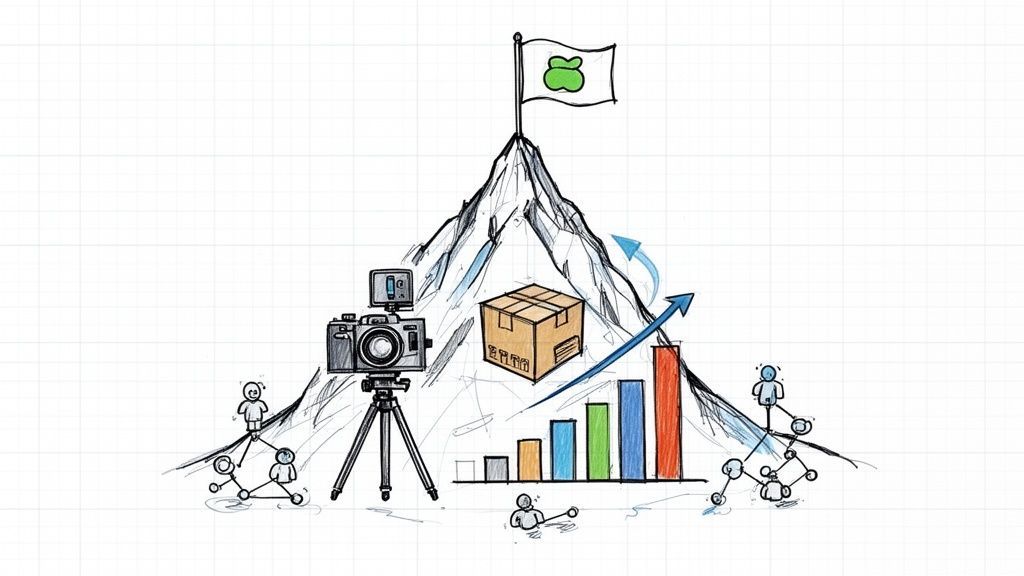
Discover the Peak Design Kickstarter blueprint. Learn their strategies for product launches, marketing, and post-campaign fulfillment to scale your own success.
Peak Design has raised an incredible $34 million across 10 Kickstarter campaigns, making them the most successful active crowdfunder on the planet. But this isn't luck. It's a system—a repeatable formula built on smart product design, savvy marketing, and a post-campaign process that turns one-time backers into passionate, lifelong fans.
In crowdfunding circles, the name Peak Design is spoken with reverence, and for good reason. They didn't just have one hit campaign; they built an empire on Kickstarter, launching one successful project after another. This isn't a story about catching lightning in a bottle. It's a masterclass in deliberate, strategic execution.
To really get what makes them tick, you have to look past the huge funding numbers. Their success is built on a genuine connection with their community and creating a seamless backer experience, from the moment someone pledges to the day the product arrives at their door. This is where so many creators drop the ball, but it's where Peak Design shines. For them, a campaign’s end isn’t a finish line—it’s the beginning of a relationship.

So, what's the secret sauce? The Peak Design strategy really boils down to three core elements that work together perfectly.
These pillars form a powerful growth loop. If you want a deeper dive into the kind of long-term thinking that fuels this kind of success, checking out a practical 90-day growth playbook for marketing a startup can offer some fantastic insights.
Let's take a closer look at the key actions and outcomes of their approach.
The table below breaks down the core pillars of Peak Design's strategy, showing you not just what they do, but what it means for creators like you.
| Strategic Pillar | Key Action | Result for Creators |
|---|---|---|
| Product-Market Fit | Solving tangible problems with elegant, high-quality design. | Creates a product that practically sells itself and earns rave reviews. |
| Community Marketing | Treating backers like partners with transparent updates and real engagement. | Builds a loyal fanbase that returns for every new campaign. |
| Post-Campaign Excellence | Using powerful tools to streamline surveys, upsells, and fulfillment. | Turns a logistical headache into a smooth, brand-building experience. |
By mastering these three areas, Peak Design doesn't just fund products; they build lasting relationships and a brand that people genuinely love and trust.
Here's a simple but powerful way to think about it. The Kickstarter pledge manager is like a giant Amazon for finding new people who believe in your vision. But once the campaign ends, you can't just leave them on Amazon's platform. You need your own storefront to build that direct relationship. That's where a pledge manager comes in.
If the Kickstarter pledge manager is like Amazon, a pledge manager like PledgeBox is like Shopify. It gives you direct control over the customer experience, letting you nurture the relationship and drive more sales through upsells.
This distinction is everything. Tools like PledgeBox are built for this "Shopify" model. It lets you send backer surveys for free and only charges a small 3% fee on successful upsells. This model is a creator's dream—you only pay when you make more money. It flips post-campaign management from a cost center into a profit center.
Every great brand starts with a story, and for Peak Design, it all began with a simple, nagging problem. Ask any photographer, and they’ll tell you the struggle is real: how do you carry a camera securely but also keep it ready to shoot in a split second? Bags are too clunky, neck straps are a pain (literally), and just holding a heavy DSLR for hours is a fast track to a sore wrist.
Back in 2011, a small team led by founder Peter Dering decided they’d had enough. They came up with the Capture Camera Clip—a slick metal clip that latches onto any belt or backpack strap. Your camera locks in securely and releases with the push of a button. It was a brilliant, elegant fix for a problem shared by millions of photographers. They took their idea to Kickstarter.
That first Peak Design Kickstarter campaign wasn't just a success; it was a bona fide phenomenon. It quickly became one of the platform's biggest stories, proving just how powerful it can be when you solve a genuine problem for a passionate community.

The initial funding was just the beginning. Peak Design instinctively knew that a Kickstarter campaign is so much more than a one-time transaction. It's your first, best chance to build a community from scratch. They weren't just collecting pledges; they were gathering believers who felt personally invested in what they were building.
They built this foundation on a simple but powerful idea: relentless communication and transparency. Backers got detailed updates, honest timelines, and a real peek behind the curtain at the manufacturing process. This approach turned one-time funders into repeat customers and, more importantly, into passionate brand evangelists.
In fact, their first campaign set the stage for a dynasty. In 2011, the Capture Camera Clip became the second-biggest crowdfunding success ever at the time, turning an unknown team into Kickstarter legends. This growth was fueled by repeat backers, with some die-hards funding all five of Peak Design's early campaigns. Their secret was keeping the conversation going long after the campaign ended, a strategy that turns pledges into lifelong fans. Even years later, 25% of all Peak Design product registrants said Kickstarter was where they first discovered the brand. You can read more about Peak Design joining the Kickstarter legends to see how it all started.
While Peak Design managed all this communication manually in the early days, modern creators have powerful tools to get the same results. The post-campaign phase is where many creators drop the ball, but it's where you build real, long-term value. It really boils down to three critical steps:
Nailing this process is the difference between being a one-hit-wonder and building a sustainable brand. This is where you lock in all the goodwill you earned during the campaign.
Think of it this way: the Kickstarter pledge manager is like the Amazon marketplace where you find your first customers. A pledge manager like PledgeBox, however, is your own Shopify store. It's where you control the entire post-purchase experience, nurture the relationship, and build your brand directly with your community.
This is a crucial distinction. On a marketplace, the relationship is transactional. In your own "store," it becomes personal. This is your turf to offer personalized upsells, keep direct lines of communication open, and build a database of loyal customers for your next big launch.
For new creators, this model is a game-changer. Pledge managers like PledgeBox are designed around this very idea. You can send the backer survey for free to all your backers to collect their info, so there's no upfront cost. The platform only takes a 3% fee on successful upsells, which means it literally pays for itself by bringing in more revenue. This flips the post-campaign phase from a logistical headache into a profit center—a lesson straight from the Peak Design playbook.
Let's be honest: a brilliant product on its own won't guarantee a blockbuster Kickstarter. What separates a good idea from a record-shattering event is a powerful, multi-channel marketing engine. The Peak Design Travel Tripod campaign is the perfect case study, a masterclass in building unstoppable momentum that brought in a mind-boggling $12 million from over 27,000 backers.
This wasn’t a lucky break or a viral fluke. It was the direct result of a deliberate, aggressive, and perfectly timed marketing strategy. Peak Design proved that proactive marketing isn't just an optional add-on; it's the core driver of explosive crowdfunding success. They treated their launch like a Hollywood premiere, building hype and funneling traffic from every possible angle.
Peak Design knew better than to just rely on Kickstarter’s organic traffic. They built their own traffic-generating machine, blending paid advertising, affiliate marketing, and deep community engagement to whip up a storm of activity. This strategy made sure their campaign was constantly popping up in front of new audiences, driving a relentless flow of pledges.
Their marketing playbook included:
This coordinated effort is a key lesson for any creator wondering how to get started with marketing for Kickstarter. You can check out our guide on marketing for Kickstarter to help build your own strategy.
The affiliate program was a massive win. By offering both public and VIP commission rates, Peak Design gave everyone from major tech reviewers to loyal fans a reason to share the campaign. This move amplified their reach exponentially, turning their own community into a distributed marketing team that earned commissions for spreading the word.
The Travel Tripod campaign was an explosion of interest, raising $12,143,435—a stunning 2,429% of its initial goal. Affiliates alone drove $1.1 million of that total, showcasing the immense power of a well-executed referral program.
The results of this multi-pronged strategy were staggering. The campaign smashed its $500,000 goal in just one hour. Throughout the campaign, the team provided tireless 24/7 support, a demanding task that echoes the efficiency of PledgeBox's modern GPT-human hybrid support for backers. This marketing blitz ultimately helped them become the top active crowdfunder by 2018, amassing over $15.5 million cumulatively. To see just how effective this was, you can explore more insights about how they market their Kickstarter campaigns.
While the live campaign was a marketing spectacle, Peak Design’s strategy highlights an equally important concept: the post-campaign pivot. They understood that Kickstarter is the starting line, not the finish line.
It helps to think of it like this: the Kickstarter pledge manager is like the Amazon marketplace. It’s a massive platform where you can find and acquire new customers, which is fantastic for discovery, but it offers you limited control over the long-term relationship.
Once the campaign ends, you need to move your backers from that "marketplace" to your own "storefront." This is where a dedicated pledge manager like PledgeBox comes in. If the Kickstarter pledge manager is like Amazon, PledgeBox is like Shopify. It gives you the power to create a branded, controlled environment where you can nurture your backer relationships directly.
Critically, PledgeBox is free to send the backer survey, allowing you to collect essential information without any upfront cost. It only charges a 3% fee on successful upsells, meaning the platform pays for itself by generating extra revenue for you. This model allows you to turn the post-campaign phase into a new profit center, just like Peak Design does.

For most creators, the end of a Kickstarter campaign is a sigh of relief, quickly followed by the overwhelming dread of fulfillment. But for a seasoned team like Peak Design, it’s just the beginning of their next revenue phase. They don’t see the post-campaign period as a cost center—they’ve engineered it to be a powerful profit center.
This is a fundamental shift in thinking. The live campaign is all about finding backers, but the post-campaign window is where you deepen that relationship and increase the value of every single pledge. This is done through a smart mix of late pledges, add-on upsells, and a dead-simple process for gathering shipping info and payments.
A great way to think about this is to compare Kickstarter's pledge manager to Amazon. It’s a massive marketplace, phenomenal for getting your project in front of a global audience that’s hungry for new ideas. Your control there, however, is pretty limited.
Once the campaign clock hits zero, you need your own storefront—a place where you can directly engage with your community, kind of like having your own Shopify store. This is exactly what a modern pledge manager does. If the Kickstarter pledge manager is like Amazon, a pledge manager like PledgeBox is like Shopify. It shifts your backers from a transactional platform to your own branded space where you call the shots.
Peak Design has proven again and again that the funding doesn't stop when the campaign ends. Their entire strategy is built on giving backers more chances to buy into their product ecosystem. By offering perfectly timed add-ons and letting latecomers join the party, they don't just extend their financial success—they build serious backer loyalty.
A perfect example was their Roller Pro Carry-On Luggage campaign. It absolutely demolished records, raising over $13 million from 23,461 backers on a tiny $100,000 goal. But the story didn't end there. A well-oiled late pledge system pushed that total even higher, proving just how much money is left on the table after the initial campaign.
This "Shopify" model is exactly what tools like PledgeBox are built for. The entire platform is designed to turn post-campaign management from a headache into a revenue engine, and its creator-first approach lines up perfectly with Peak Design’s lean and profitable strategy.
PledgeBox is free to send the backer survey to collect all your essential info like shipping addresses and reward choices. The platform only takes a 3% fee on successful upsells, which means it literally pays for itself by generating new funds for you.
This model is a game-changer for creators. Instead of paying big fees upfront or per backer, you get a powerful tool that actively adds to your bottom line. You can give backers a smooth, branded survey experience while showing them relevant add-ons that bump up their average pledge value.
By taking this approach, any creator can start to follow the Peak Design Kickstarter blueprint. You can transform the post-campaign phase from a logistical nightmare into a streamlined, brand-building, and profitable part of your crowdfunding journey.
Once your campaign confetti settles, you might think the hard part is over. But for seasoned creators like Peak Design, this is where the real work—and a huge opportunity for profit—begins. Managing thousands of backers isn't just about shipping; it's about turning campaign success into a sustainable business, and that all comes down to the tools you choose.
This is where a pledge manager steps in as the most valuable player on your post-campaign team. Think of it as your control center for everything that happens after the funding clock stops. It handles branded surveys, collects shipping fees, and processes payments. Most importantly, it's your engine for generating extra revenue long after the campaign has ended. If you're not using one, you’re simply leaving money on the table.
The story of any Peak Design Kickstarter proves just how profitable post-campaign management can be. In one campaign, they hit a staggering 49% add-on purchase rate. Let that sink in. Nearly half of their backers willingly spent more money after their initial pledge. That’s a powerful sign of just how much potential is waiting to be unlocked.
To really get what a pledge manager does, let’s use an analogy. Think of Kickstarter's native pledge manager as the Amazon marketplace, while a dedicated tool like PledgeBox is your own personal Shopify store.
Kickstarter's Pledge Manager (The Amazon): It’s a massive platform with a built-in audience, great for getting discovered and finding new customers. The trade-off? You have very little control over the customer experience or the relationship you build with them.
PledgeBox (The Shopify): This is your world. You control the entire experience, from the branding on your surveys to the specific upsells you want to offer. This is where you move beyond a simple transaction and start building direct, long-term relationships with your community.
This difference is everything when it comes to long-term growth. The "Amazon" gets you started, but the "Shopify" is where you build a brand that lasts.
The way your pledge manager charges you directly affects your bottom line. Many traditional platforms hit you with per-backer fees or demand big payments upfront, which can take a serious bite out of the funds you just worked so hard to raise. Modern platforms are flipping that model on its head.
PledgeBox is free to send the backer survey, so you can collect all your essential shipping info and reward choices without spending a dime. It only takes a simple 3% fee on successful upsells. This means the platform literally pays for itself by making you more money.
This performance-based approach is perfectly in line with the smart, capital-efficient strategy that has made Peak Design a powerhouse. You only pay when you profit. Your pledge manager stops being a required expense and becomes a partner in your growth. If you're weighing your options, understanding these different fee structures is critical. We dive deeper into this in our guide on how to select the right pledge manager for your project.
By taking this approach, the whole post-campaign phase is transformed. It’s no longer just a logistical headache. It’s about giving your backers a smooth, professional experience while intelligently offering them add-ons that make their original pledge even better. This is how you turn a $20 pledge into a $50 order, and a one-time backer into a fan for life.
Alright, let's take everything we’ve learned from the Peak Design Kickstarter playbook and turn it into a concrete plan you can actually use. This is your step-by-step roadmap, walking you through the entire crowdfunding journey from that first spark of an idea to getting the product into your backers' hands.
To keep everything organized, I highly recommend using a solid product launch checklist template. Following a proven framework is the best way to make sure no small detail gets missed. We'll break the whole process down into three main phases.
The real work starts long before your campaign ever sees the light of day. This phase is all about building an audience that’s fired up and ready to pledge the moment you go live. A strong start is everything on Kickstarter—that early funding rush is what gets you noticed by the platform's algorithm.
Your main job here is to capture leads. Using a tool like PledgeBox's pre-launch pages, you can set up a simple landing page to collect email addresses from people who are genuinely interested. That email list will become your secret weapon for driving a massive wave of pledges in the first 24 hours.
Once your campaign is live, your focus shifts to keeping the conversation going. A huge part of Peak Design’s success comes from their radical transparency. Their backers don't feel like customers; they feel like they’re part of the team. You can do the same by posting frequent, detailed updates on your progress, challenges, and wins.
Use stretch goals strategically to keep the momentum rolling after you smash your initial funding target. These goals should add real value, encouraging your current backers to share the campaign and new people to jump on board. Think of consistent communication as the fuel that keeps your campaign engine running hot.
This simple flowchart shows you exactly how to turn the post-campaign process into a profit-generating machine.

The big takeaway? The journey doesn't stop when the campaign clock runs out. The smartest creators know that post-campaign actions are where you can seriously boost your bottom line and make your backers even happier.
This is where you turn all those pledges into profit and transform backers into lifelong fans. The post-campaign phase is a logistical beast, and you absolutely need a robust system for handling surveys, add-ons, and shipping. For any serious project, a pledge manager isn't a nice-to-have; it's a must-have.
Think of it this way: the Kickstarter pledge manager is like a generic marketplace, like Amazon. A dedicated platform like PledgeBox, on the other hand, is like your own personal storefront, like Shopify, where you control the entire experience.
PledgeBox is free to send the backer survey and only charges a 3% fee on successful upsells. This creator-friendly model means the platform pays for itself by generating extra funds for you.
With a tool like this, you can send out professional, branded surveys to collect shipping info, offer relevant add-ons that increase each backer's pledge value, and manage the entire fulfillment process without pulling your hair out. This is how you run a campaign with the polish of Peak Design, turning a one-off project into a brand that lasts.
Even with a solid plan, jumping into crowdfunding always brings up new questions. Let's tackle a couple of common ones that come up, especially when looking at a success story like the Peak Design Kickstarter campaigns.
When you’re new to crowdfunding, choosing a pledge manager really boils down to your budget and what you need to accomplish. Sure, Kickstarter has its own basic survey tool, but its features are pretty limited. If you want to look professional and make more money after the campaign ends, you’ll want to look at a dedicated platform.
The biggest difference between them is how they charge. Some hit you with a high per-backer fee or a big upfront cost, which can be tough for a new creator. A much friendlier approach is a model based on performance.
Think of it this way: Kickstarter’s pledge manager is like an Amazon stall, but a dedicated pledge manager like PledgeBox is like your own branded Shopify store, designed to keep the sales coming.
Platforms like PledgeBox are built on that "Shopify store" idea. You can send your backer survey for free, and they only take a 3% fee if you actually make money from add-ons and upsells. This model takes a lot of the risk off your shoulders and helps turn your survey process into another revenue stream.
The potential here is huge, and it's one of the biggest lessons from Peak Design's playbook. In one of their campaigns, they saw an incredible 49% add-on purchase rate. That means nearly half of their backers decided to buy something extra after their initial pledge.
Now, your own results will depend on your products and your audience, but that number shows just how powerful it is to offer relevant add-ons in your survey. Even if you only get a 10-20% conversion rate on those extras, it can give your total funding a serious boost.
Ready to turn your post-campaign process into a profit engine? With PledgeBox, you can create professional surveys, manage backer data, and sell more with powerful upsells. Get started for free today.

The All-in-One Toolkit to Launch, Manage & Scale Your Kickstarter / Indiegogo Campaign