 PledgeBox
Crowdfunding Fulfillment Service: Master Backer Happiness & Shipping
Discover how a crowdfunding fulfillment service streamlines surveys, shipping, and upsells to keep backers happy and campaigns thriving.
Discover how a crowdfunding fulfillment service streamlines surveys, shipping, and upsells to keep backers happy and campaigns thriving.
So, you did it. Your campaign crushed its funding goal, the pledges are locked in, and the celebration is on. But what comes next is arguably the most important part of your journey: getting your product into the hands of your backers. This is where a professional crowdfunding fulfillment service becomes your most valuable partner, protecting your brand and ensuring every backer has a fantastic experience.
Think of your campaign as the high-powered engine you just built. Fulfillment is the drivetrain that actually delivers that power to the wheels. Without a solid plan, you risk stalling out right after crossing the finish line—a mistake many creators learn the hard way as they find themselves drowning in a logistical nightmare that can sour an otherwise amazing project.
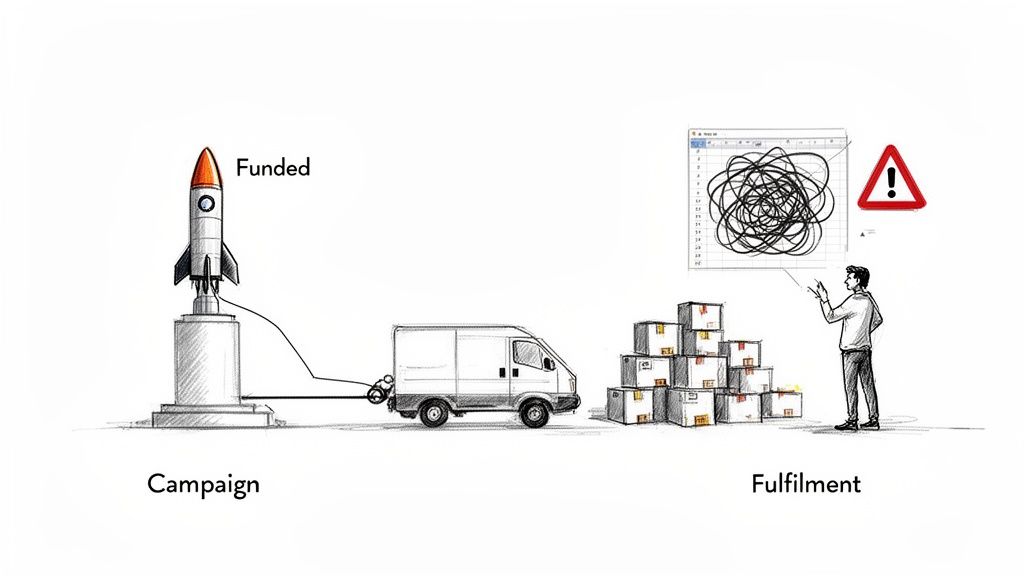
The moment your campaign ends, the real work of delivering on your promise begins. It's way more than just slapping stamps on boxes; it's a complex dance of managing data, communicating with backers, and navigating global shipping.
Without a dedicated fulfillment partner, creators often get buried in problems that were completely avoidable. These challenges can quickly drain your time, money, and sanity, turning your successful campaign into a stressful mess.
Here are a few common pitfalls:
A Kickstarter pledge manager is like Amazon—a massive marketplace. A specialized tool like PledgeBox is more like Shopify—your own customizable storefront. PledgeBox is free to send the backer survey and only charges 3% of upsell if there's any, making it a risk-free way to manage all this complexity.
This guide is your roadmap for navigating the post-campaign world. By understanding what a crowdfunding fulfillment service does and how to use the right tools, you can dodge these common nightmares. For a closer look at what to expect, check out our guide on everything you need to handle after your crowdfunding project ends.
Making a smooth transition from a funded campaign to a fulfilled promise is what separates good creators from great ones.
A crowdfunding fulfillment service is so much more than a company that just puts things in boxes. It's the entire support system that kicks in the moment your campaign ends, handling every crucial task needed to get your product into your backers' hands. Think of it as the operational backbone connecting your campaign promises to reality.
Kickstarter and Indiegogo are like massive, bustling marketplaces where you get to show off your idea and rally support. In that world, a dedicated pledge manager like PledgeBox acts as your own high-end storefront—almost like a Shopify built just for crowdfunders. This is where you finalize every last detail with your community, turning pledges into perfectly prepared orders.
A good service manages several interconnected stages, and each one is vital. When they work together, they prevent the kind of logistical chaos that can completely derail even the most successful campaigns. A true crowdfunding fulfillment partner isn't just one of these pieces; it's the seamless integration of all of them.
Here's what that typically looks like:
A lot of creators get tripped up on the difference between a platform's built-in tools and a dedicated service. Think of it this way: a Kickstarter pledge manager is like Amazon—a giant marketplace with some basic seller tools. A pledge manager like PledgeBox is your own customizable shop where you control the entire post-sale experience.
This distinction is crucial. While Kickstarter is great at collecting the initial pledge, a specialized service steps in to manage all the complex details that come after.
The first and most critical job of a fulfillment service is taming the data. When your campaign ends, you get a raw data file of backer information. To be blunt, this file is often a mess—it's incomplete and almost impossible to use for shipping as-is.
This is where a pledge manager becomes your best friend. It takes that raw data and uses smart, customizable surveys to clean it all up. Backers are walked through a simple process where they can:
This organized approach turns a chaotic spreadsheet into a perfect, actionable database. It ensures every single order is correct before it ever gets near a warehouse, which prevents the costly shipping errors that can eat away at your profits and hurt your reputation with backers.
Beyond just collecting information, a modern pledge manager is also a powerful tool for boosting your revenue. Once backers are in the survey confirming their details, you have a golden opportunity to offer them add-ons and upgrades. This is your chance to upsell.
Many of the people who backed your project are your biggest fans, and they're often eager to buy accessories, expansions, or even extra units. This is where your choice of platform really matters. For example, PledgeBox is free to send the backer survey. There are no setup fees or per-backer charges to use the core system.
Instead of charging for the platform, PledgeBox only charges 3% of upsell if there's any. It’s a completely risk-free model. You get a professional-grade system without paying anything upfront, and you only pay a tiny slice of the new money you make. The platform's success is perfectly aligned with your own.
Once your campaign gets funded, congratulations! Now the real work begins. The journey from a backer's pledge to that happy moment when the product lands on their porch is a tricky, multi-step dance that demands serious precision. This is where a professional crowdfunding fulfillment service steps in, acting as your operational partner to turn potential chaos into a smooth, automated workflow.
Let's walk through this path step-by-step. Think of each stage as a critical handoff—getting them right is the secret to happy backers and protecting the reputation you worked so hard to build.
This diagram breaks down the core stages, showing how a pledge eventually becomes a package on its way to a backer.
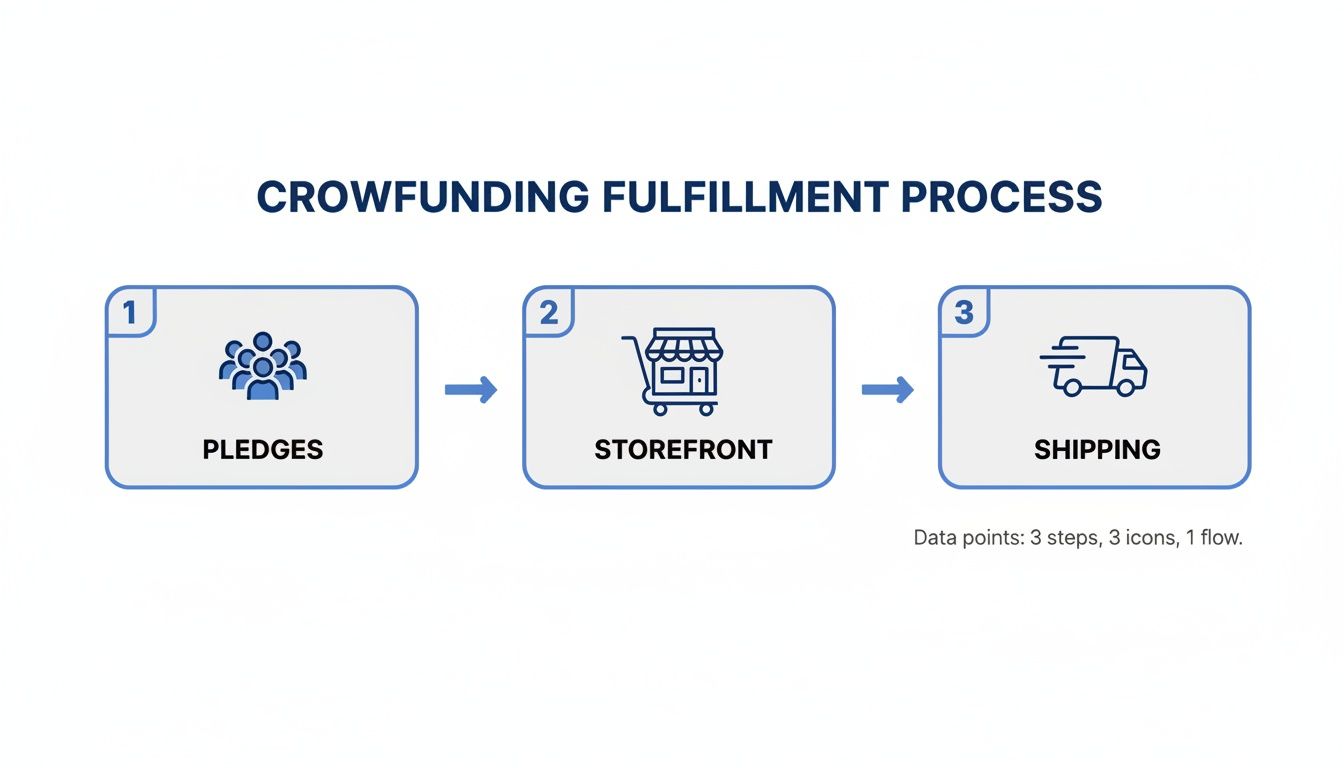
As you can see, the pledge manager acts like a crucial bridge, turning raw campaign data into clean, shippable orders.
The moment your campaign clock hits zero, Kickstarter or Indiegogo hands you a raw data file. This isn't a neat order list; it's more like a jumble of backer info that needs to be sorted out. The first real step is pulling this data into your pledge manager. A good platform, like PledgeBox, does this for you, automatically importing all the backer details, pledge levels, and reward info without any tedious manual entry.
With your data loaded, it's time to fill in the blanks. This happens through custom backer surveys. A helpful way to think about it is that Kickstarter pledge manager is the like Amazon. In contrast, a PledgeBox pledge manager is like Shopify, where you get to craft the perfect experience for your community.
You can send these essential backer surveys for free with PledgeBox, which is where you'll:
This is the make-or-break step for turning messy pledge data into accurate, shippable orders.
Your backer survey is so much more than a data form—it's a golden sales opportunity. These backers are your most dedicated fans, and many are excited to grab add-ons or upgrade their pledge. Platforms like PledgeBox are built to make the most of this excitement.
Because PledgeBox is free for sending surveys, it’s a no-risk way to boost your campaign's bottom line. It only charges a 3% fee on the upsell revenue you generate, which means the platform only makes money when you do. You pay nothing unless you're earning extra.
Bad addresses are a fulfillment nightmare. They lead to returned packages, frustrated backers, and expensive reshipment fees. A quality pledge manager uses address validation tools to automatically check every entry against postal databases, flagging potential errors so backers can fix them. Once the surveys are in and addresses are clean, you "lock" the orders, finalizing the data for your manufacturing and shipping partners.
With orders locked and ready, your pledge manager generates a perfectly formatted data file for your Third-Party Logistics (3PL) partner. This isn't just a spreadsheet; it's a precise manifest that details every single SKU, quantity, and shipping destination. This seamless data handoff eliminates the human error that so often trips up creators trying to manage fulfillment manually. Of course, this process relies on solid inventory tracking, and finding the best inventory management software is crucial for making sure your 3PL has accurate stock counts from the start.
Now, things get physical. Your 3PL partner receives your manufactured products at their warehouse. Armed with the clean data from your pledge manager, their team picks, packs, and ships each individual order exactly as the backer specified. This is where the scale, efficiency, and expertise of a professional logistics company really pay off.
The global crowdfunding market was valued at USD 20.4 billion in 2025 and is expected to hit USD 52.3 billion by 2034. This explosive growth shows just how critical professional fulfillment has become for managing the physical side of a campaign successfully.
The final piece of the puzzle is closing the communication loop. As your 3PL sends out each package, tracking numbers are created. A connected pledge manager will automatically grab this information and push it directly to the right backer. This keeps everyone in the know and drastically cuts down on those "Where is my order?" support tickets.
Picking the right partners for your post-campaign journey is easily one of the biggest decisions you'll make. This isn't just about finding the cheapest way to ship boxes. It's about building a reliable ecosystem of tools and services that will protect your brand, delight your backers, and save you from the logistical nightmares that can sink a project. Looking beyond the price tag is the key to a smooth and successful delivery.
The world of crowdfunding tools can feel like a maze, with everything from basic survey forms to dedicated pledge managers and massive logistics companies. Each one has a specific job, and understanding the difference will empower you to build the perfect fulfillment stack for your campaign.
Before jumping into feature lists, it’s critical to understand the different players on the field. A common mistake is assuming one company handles everything from backer surveys to final shipping. In reality, you're typically choosing two main partners: a pledge manager and a Third-Party Logistics (3PL) provider.
Your pledge manager is the brain of the operation; the 3PL is the muscle. The software you choose to manage your backer data is the first and most critical step. From there, you can dig into our guide on how to pick the right shipping vendor to handle the physical delivery.
When you start comparing pledge managers, you’ll find the differences in what they can do are massive. Kickstarter’s built-in survey is a decent starting point, but a dedicated platform offers a completely different level of control and experience for both you and your backers.
A simple way to think about it is this: a Kickstarter pledge manager is the like amazon, whereas a platform like PledgeBox pledge manager is like shopify where you control the entire post-campaign experience.
Here’s a look at how they stack up.
This table breaks down some of the most important features, comparing what you get with a standard Kickstarter survey versus a dedicated pledge manager like PledgeBox. The differences become pretty clear, pretty fast.
| Feature | Kickstarter Native Surveys | PledgeBox Pledge Manager |
|---|---|---|
| Backer Surveys | Basic, one-time survey. No edits possible once submitted. | Free, customizable, and segmented surveys. Backers can update info. |
| Upsell Functionality | None. No ability to sell add-ons or upgrades. | Robust upsell engine. Sell add-ons and upgrades during the survey. |
| Address Validation | None. Relies on backer accuracy, leading to errors. | Real-time address validation to prevent delivery failures. |
| Automated Communication | Limited to campaign updates. No automated reminders. | Automated survey reminders and shipping notifications. |
| Data Export | Basic CSV export that requires manual cleanup. | Clean, 3PL-ready data exports, saving hours of work. |
As you can see, a dedicated pledge manager is purpose-built to solve the real-world problems that pop up after a campaign ends. This is especially true when you consider that reward-based crowdfunding is the dominant model, accounting for roughly 74% of total sales. This fact alone highlights just how essential a solid system for physical product delivery is. You can find more insights on this trend and read the full research on the crowdfunding market.
One of the biggest advantages of a platform like PledgeBox is its pricing model. It is free to send the backer survey and manage your pledges. They only charge 3% of upsell if there's any. This means you get a professional-grade system with no upfront cost or risk.
This approach means the platform only makes money when you make extra money. When choosing your partners, look for this kind of value alignment. It's a huge sign that a service is genuinely built to help creators succeed, not just to collect a fee.
Even the most celebrated crowdfunding campaigns can hit a wall when it comes to post-campaign logistics. Ask any veteran creator, and they'll likely have a fulfillment horror story to share. The good news is, you can learn from their battle scars.
Successfully navigating this final stage is what separates a one-hit-wonder from a sustainable brand. The journey from a funded project to a delivered reward is littered with potential traps that can sink your budget, waste your time, and—worst of all—destroy backer trust.
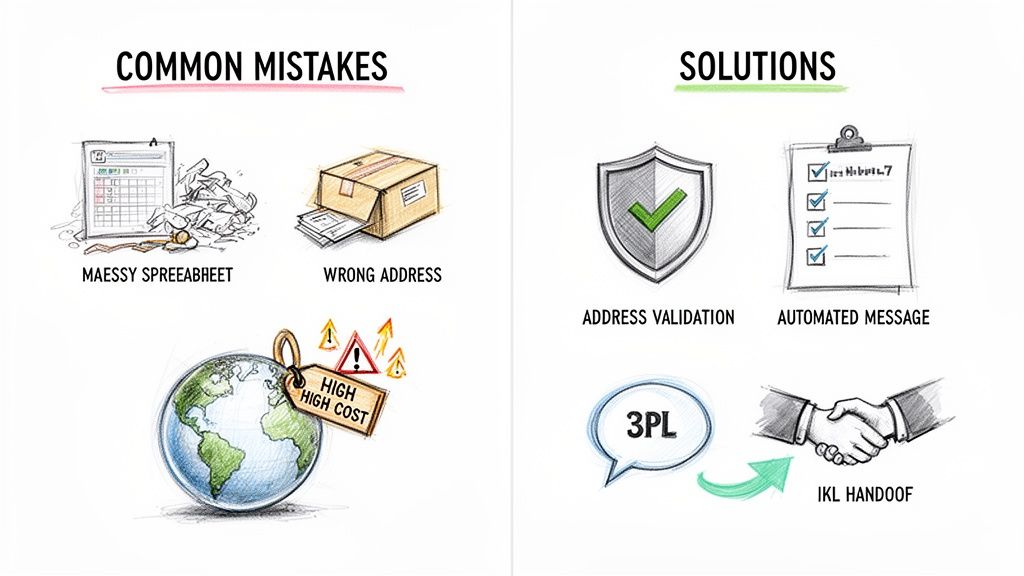
Let's break down the mistakes that trip up creators most often and, more importantly, walk through the exact solutions to make sure they don't happen to you.
Miscalculating shipping costs is one of the fastest ways to watch your profit margin evaporate. It's not just about postage. Creators often forget to budget for packaging materials, dimensional weight surcharges from carriers, and the maze of international duties and taxes like VAT.
Solution: Get a pledge manager with a built-in, real-time shipping calculator. Tools like PledgeBox let you set up sophisticated shipping rules based on item weight, destination country, and pledge level. This allows you to charge for shipping and taxes after the campaign ends, ensuring you collect the precise amount needed to cover everything without any risky guesswork.
Trying to juggle thousands of backer addresses, reward choices, and add-on combinations in a single spreadsheet is a recipe for disaster. It’s an incredibly manual process that’s just begging for human error, which can lead to sending the wrong rewards to the wrong backers—a costly and embarrassing mistake.
Solution: Automate your data management with a dedicated crowdfunding fulfillment service platform. A pledge manager acts as a central hub for all your backer data, automatically cleaning it up and organizing it for your logistics partner. This completely removes manual data entry from the equation and slashes the risk of expensive errors.
A great way to think about it is that a Kickstarter pledge manager is like Amazon—basic and functional. A specialized PledgeBox pledge manager is like having your own Shopify store—you get full control over the backer experience. Best of all, PledgeBox is free to send the backer survey and only charges 3% of upsell if there's any, making it a no-risk upgrade to your workflow.
You'd be surprised how many backers enter their addresses with small typos or formatting mistakes. If you don't catch these errors upfront, you'll be dealing with a tidal wave of returned packages, frustrated support emails, and the double cost of re-shipping every single failed delivery.
Solution: Pick a platform with integrated address validation. This feature is a lifesaver. It automatically cross-references every address with official postal service databases in real-time, flagging potential problems and prompting backers to fix them before they can submit their survey. This one feature alone can save you thousands of dollars and countless headaches.
Going radio silent after the campaign funds is the quickest way to spark anxiety and frustration among your community. When backers are left in the dark, they start to assume the worst. This leads directly to negative comments, refund demands, and even credit card chargebacks.
Solution: Keep your backers in the loop at every single stage. A quality pledge manager automates most of this for you. It can handle survey reminders, send order confirmation emails, and—most crucially—push out automated shipping notifications complete with tracking numbers. This level of transparency builds incredible trust and dramatically cuts down on your support tickets, freeing you up to focus on what matters: getting your product into your backers' hands.
Trying to budget for crowdfunding fulfillment can feel like aiming at a moving target. What's the final bill really going to be? The first step to building a solid financial plan—and making sure unexpected fees don't vaporize your profits—is to pull back the curtain on how these services charge.
Your costs will generally fall into two buckets: fees for your pledge manager software and fees for your physical logistics partner, often called a 3PL. Getting a handle on both is absolutely critical if you want to set your funding goal and shipping charges correctly.
Your pledge manager is the digital brain of your post-campaign operation, but not all platforms charge in the same way. Some take a percentage of your total campaign funds, while others have per-backer fees that can sting, especially if you have a massive hit on your hands. You really need to read the fine print here.
A lot of creators get tripped up comparing Kickstarter’s built-in tools to a dedicated pledge manager. Here’s a simple way to think about it: a Kickstarter pledge manager is the like amazon—a huge, one-size-fits-all marketplace. A dedicated PledgeBox pledge manager is like Shopify—it’s your branded storefront where you have total control over the experience and can maximize your post-campaign revenue.
This difference is even more obvious when you look at the price tag. PledgeBox, for instance, offers a powerful, completely risk-free model for creators.
You can send the backer survey for free using the entire PledgeBox platform. There are no setup costs, monthly fees, or per-backer charges. PledgeBox only charges 3% of upsell if there's any. This means you get a professional-grade system without any upfront investment, and the platform only makes money when you make extra money.
It’s a unique approach that ties the platform’s success directly to yours, removing the financial risk that often comes with using high-end post-campaign tools.
Once your backer data is clean and organized in your pledge manager, the next set of costs comes from your Third-Party Logistics (3PL) partner. This is the company that actually picks, packs, and ships your rewards. These fees cover all the real-world labor and materials needed to get products into your backers' hands.
Here’s a typical breakdown of what you can expect to pay for:
On top of that, some 3PLs have setup fees to get your project into their system or monthly minimums, which means you have to spend a certain amount each month whether you ship anything or not. Getting a clear quote that covers all these potential charges is a must. To go deeper on this, check out our guide on how to calculate shipping costs for your campaign.
Nailing down these costs is becoming more important every single year. The U.S. crowdfunding market alone is expected to explode from USD 372.3 million in 2024 to USD 928.6 million by 2030. You can read more about this market trend at Grand View Research.
That explosive growth means creators are tackling bigger projects with more complex logistics. Having a firm grasp of your fulfillment costs isn't just a good idea anymore—it's a non-negotiable part of planning a successful campaign. By choosing partners with transparent, creator-friendly pricing, you can budget with confidence and protect your bottom line.
Jumping into the world of post-campaign logistics can feel like a whole new challenge. Let's clear up some of the most common questions creators have about using a crowdfunding fulfillment service so you can move forward with confidence.
Honestly? You should be researching and shortlisting your fulfillment partners before you even launch your campaign. This isn't something to leave until the last minute.
Knowing their shipping costs, where their warehouses are, and what they're capable of is critical for setting an accurate funding goal and pricing your reward tiers correctly. The moment your campaign successfully ends, locking in your fulfillment partner should be at the very top of your to-do list.
This is a super important distinction to get right. Think of it this way: one is your digital command center, and the other is your physical warehouse crew.
It's tempting, I get it. For a tiny campaign—maybe under 50 backers with a single, simple reward—it might seem doable. But for almost everyone else, it's a trap.
The hours you’ll lose to packing boxes, wrestling with customs forms, and troubleshooting shipping problems are staggering. That’s time you could be spending on your next big idea.
Here's a helpful way to think about it: a Kickstarter pledge manager is the like amazon—a giant marketplace that works for everyone but isn't built just for you. A dedicated PledgeBox pledge manager is more like your own Shopify store—customizable, powerful, and designed to grow your business. Best of all, PledgeBox is free to send the backer survey and only charges 3% of upsell if there’s any, making professional-grade tools accessible without any upfront risk.
Ready to make your post-campaign workflow a breeze and maybe even boost your revenue? See how PledgeBox can completely change your fulfillment game. Get started for free today.
PledgeBox
The All-in-One Toolkit to Launch, Manage & Scale Your Kickstarter / Indiegogo Campaign