 PledgeBox
Your Guide to the Reaper Miniatures Kickstarter Phenomenon
Unlock the secrets to the Reaper Miniatures Kickstarter. Learn how to navigate pledges, add-ons, and the pledge manager to get incredible value on minis.
Unlock the secrets to the Reaper Miniatures Kickstarter. Learn how to navigate pledges, add-ons, and the pledge manager to get incredible value on minis.
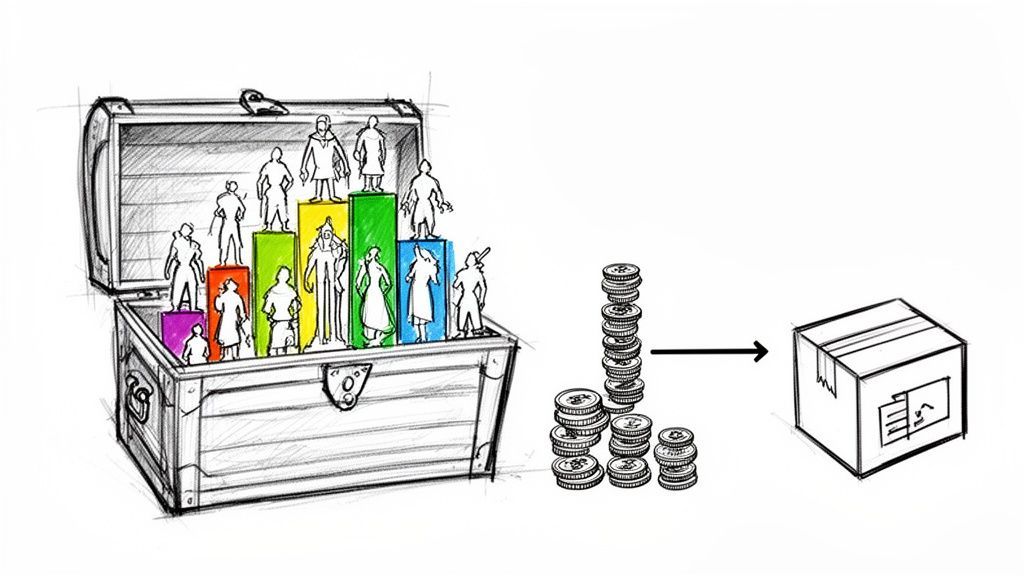
If you've been around the tabletop hobby for a while, you know a Reaper Miniatures Kickstarter isn't just another product launch—it's a full-blown event. These campaigns are legendary for delivering an almost unbelievable amount of value. Think of it like pre-ordering a treasure chest of miniatures that just keeps getting bigger as more people jump in.
A Reaper Miniatures Kickstarter is more than just a sale; it’s a community phenomenon that completely changed the game for miniature collectors. Before Reaper stormed onto the crowdfunding scene, most detailed miniatures were cast in expensive metal. Reaper’s game-changing move was perfecting a high-quality, durable plastic they call 'Bones,' which captures sharp detail at a tiny fraction of the cost.
This single innovation threw the doors of the hobby wide open. Instead of shelling out for a single metal hero, backers could suddenly get a massive box packed with dozens—sometimes hundreds—of unpainted plastic figures for one flat price. That incredible value is the heart of all the excitement.

The real secret sauce behind a Reaper Kickstarter is how it uses community-driven stretch goals. It’s a simple but brilliant system:
This model turns the campaign into a thrilling, collaborative experience where every new pledge helps everyone. The very first Reaper Miniatures Kickstarter for their Bones line in 2012 proved just how hungry the community was for this. It blew past its modest $30,000 goal to raise an incredible $3,429,236, setting a new standard for tabletop projects.
Of course, a wildly successful campaign with tens of thousands of backers creates a massive logistical challenge. This is where having a solid pledge manager becomes absolutely critical for a creator. Kickstarter's built-in survey system is fine for basic checkouts, but a dedicated pledge manager like PledgeBox gives creators a powerful and customizable storefront to handle the post-campaign phase.
For creators inspired by Reaper's success, PledgeBox is free for sending out backer surveys. The platform only takes a small 3% fee on any upsell revenue you generate, making it a no-risk way to organize fulfillment and even increase your funding after the campaign ends.
This kind of tool is essential for managing the sheer complexity of one of the highest-funded Kickstarters and making sure the entire process is smooth for both the creators and their backers.
Jumping into a Reaper Miniatures Kickstarter for the first time can feel like a whirlwind. Between the constant updates, the mountain of add-ons, and the fast-moving stretch goals, it's easy to get overwhelmed. But don't worry—the process is simpler than it looks once you know how to approach it. Your first stop should always be the campaign page itself, where you can track pledge tiers, project updates, and all the cool stuff being unlocked.
Reaper figured out a long time ago that simplicity sells. Their most common strategy is to offer one main, high-value core pledge. Back in 2013, their second Bones Kickstarter was a masterclass in this, raising almost $3.17 million with just two simple options: a $1 tier or a $100 core set. Over 90% of backers went for the big set, proving that people love getting a great deal without having to overthink it. Crowdfund Insider even covered how they set that record.
Here’s a pro tip for any backer: embrace the "pledge now, decide later" method for add-ons. You don't have to pick out every single extra item during the campaign. Instead, you just add enough money to your main pledge to cover whatever you think you might want later on.
It breaks down like this:
This strategy is great because it locks in your spot and helps the campaign smash through more stretch goals, which means more freebies for everyone. If you want to dive deeper into managing these choices, check out our guide on Kickstarter add-ons.
Think of the standard Kickstarter pledge manager like Amazon—it gets the job done, but it's a closed marketplace. A dedicated pledge manager like PledgeBox is more like your own Shopify storefront, giving creators the power to build a flexible and polished experience for their backers.
For creators, handling all these moving parts is where the right tools become a lifesaver. For example, PledgeBox is completely free to send backer surveys and only takes a small 3% fee on any new sales you make from upsells. It’s a powerful, risk-free way to manage all the post-campaign logistics while giving your backers a smooth and professional experience.
Once you get the hang of this flow, you can confidently navigate any Reaper Miniatures Kickstarter and make sure you get the biggest haul of minis possible.
The incredible value you see in a Reaper Miniatures Kickstarter isn't just one thing—it’s a powerful combination of three parts working in perfect harmony. It’s a system designed to build momentum and reward backers exponentially as the campaign’s funding grows. Getting a handle on how these pieces fit together is the secret to getting an absolutely massive haul of minis for your money.
It all starts with the Pledge Tier. For most Reaper campaigns, this is a single, high-value "Core Set" packed with miniatures. This is your main buy-in, the anchor for everything that comes next. On its own, it's already a fantastic deal, but trust me, it’s just the starting point.
Next up are the Add-Ons, which work like an à la carte menu for your pledge. These are totally optional items you can grab by adding extra funds to your pledge. Think giant dragons, themed expansion sets, or packs of their excellent MSP paints.
You just increase your pledge amount during the campaign, and you’ll sort out the specific items you want later on in the pledge manager.
This process can feel a little different if you're new to Kickstarter. The journey moves from making your initial pledge on the campaign page to finalizing all your specific choices and shipping details in a separate tool after the campaign is over.

To make it clearer, here’s a simple breakdown of how a pledge might look. Notice how the pledge total is a single amount, but it's mentally earmarked for different things.
| Pledge Component | Description | Example Cost |
|---|---|---|
| Core Set Pledge | The base reward tier, including all unlocked stretch goals. | $120 |
| Add-On Funds | Extra money added to your pledge for optional items. | $50 |
| Total Kickstarter Pledge | The full amount charged at the end of the campaign. | $170 |
After the campaign, you'd use a pledge manager to confirm you want the Core Set and then spend your $50 credit on the specific add-ons you had in mind.
And now for the secret sauce: Stretch Goals.
Think of your pledge as buying a treasure chest. As the campaign smashes through funding milestones—like $500,000, then $1,000,000, and beyond—Reaper keeps dropping more and more free miniatures right into every backer's Core Set. That treasure chest just gets heavier and heavier, all at no extra cost to you.
This is where the value truly explodes. A Core Set that might start with 60 miniatures can easily end the campaign with over 150. It’s what turns a good deal into an absolutely legendary one, rewarding the whole community for banding together.
For creators, orchestrating this beautiful chaos of add-ons, thousands of backers, and evolving rewards is a massive logistical puzzle. Kickstarter's built-in survey tool is fine for simple projects, but for something like this, it just doesn't cut it. It’s like trying to run a huge, customizable webstore using a basic checkout form.
This is where a dedicated pledge manager like PledgeBox comes in. It gives creators a powerful, branded storefront to handle all these post-campaign details without losing their minds.
One of the best parts for creators is the cost model: it's completely free to send the backer survey. PledgeBox only takes a small 3% fee on new funds raised from upsells in the survey. This makes it a risk-free way to manage backers, organize shipping, and even increase funding after the Kickstarter has already ended. It’s what empowers creators to run the kind of complex, high-value campaigns that Reaper has perfected.
When the thrilling countdown of a Reaper Miniatures Kickstarter hits zero, you might think the adventure is over. But in reality, a whole new phase is just kicking off. The campaign itself might be done, but the real work of getting those massive boxes of miniatures from their warehouse to your painting table is only just beginning.
This is where the pledge manager steps in.
A pledge manager is a special tool creators use after the campaign ends to gather all the critical details from backers like you. It’s the official hub where you’ll finalize your order, confirm your shipping address, pay for shipping, and—most importantly—tell the creator exactly which add-ons you want for all that extra cash you pledged.
Think of it as the project’s mission control center.
So, why not just use Kickstarter’s built-in survey? It’s a fair question, and the difference is huge. The best way to picture it is with a simple analogy:
Kickstarter's own survey system is like the checkout on Amazon—a standardized process within a massive marketplace. It works well, but it's not yours. A dedicated pledge manager like PledgeBox is more like your own Shopify store. It gives creators a powerful, customizable storefront to handle a complex post-campaign experience.
This distinction is absolutely critical for a project as massive as a Reaper Kickstarter. When you have thousands of backers, dozens of potential add-ons, and complex global shipping, a simple survey just can't keep up. For the sanity of both backers and the creator, a robust pledge manager isn't just a nice-to-have; it's essential. You can learn more about how a dedicated pledge manager streamlines crowdfunding fulfillment and see why top creators depend on them.
For creators who look at Reaper's success and feel inspired, the cost of these powerful tools can seem daunting. But here’s where platforms like PledgeBox completely change the game. PledgeBox is completely free to send the backer survey, which means a creator can collect addresses and finalize every single pledge without any upfront cost.
Instead, the platform's model is based on shared success. It only charges a small 3% fee on any new funds raised through upsells within the pledge manager itself. So, if backers decide to add a few more dragons or paint sets to their cart after the campaign, PledgeBox takes a tiny slice of that new money only.
This risk-free approach makes it an incredibly accessible tool for creators of any size. It allows them to run a smooth, professional post-campaign process without breaking the bank before fulfillment even gets underway. It's the engine that keeps everything running like a well-oiled machine.

When you back a Reaper Miniatures Kickstarter, two things are absolutely essential: a bit of patience and a clear picture of the final costs. Once the campaign cheering dies down, the next big step isn't immediate shipping. Instead, you'll be managing shipping and taxes a few months down the road through a pledge manager.
This delay is actually a good thing for everyone involved. Shipping rates can be all over the place, and trying to charge for postage a year ahead of time would be a recipe for disaster. By calculating and collecting these fees closer to the actual ship date, Reaper can lock in the most accurate and fair pricing for you.
If you're an international backer, it's crucial to budget for more than just the postage. This is also when Value-Added Tax (VAT) and other import duties are typically collected. These fees are set by your country's laws and are calculated based on the total value of your pledge plus the shipping cost.
For example, let's say you pledged $120 for the Core Set and shipping to your country comes out to $30. Your government will likely apply VAT to the combined total of $150. This can add a significant chunk to your final bill, so it’s smart to plan for it and avoid any sticker shock.
The sheer scale of these campaigns also plays a huge role. The Reaper Bones 3 campaign, for example, had an incredible launch, pulling in almost $400,000 from 4,000 backers in just the first two hours. Successfully delivering that many orders requires a powerful system with things like automated reminders and address validation to get every package out the door. You can read more about that massive launch and its logistical feats over at EN World.
Patience truly is a virtue with projects of this size. It's not uncommon for your box of miniatures to take a year or even longer to arrive on your doorstep.
The fulfillment process is a massive global operation. It includes manufacturing millions of miniatures, conducting quality control, freight shipping containers to regional hubs in the US, UK/EU, and Australia, and finally, individually packing and mailing tens of thousands of orders.
Every single step in this logistical chain takes time. Understanding this marathon helps set realistic expectations, turning the long wait from a point of frustration into just another part of the epic Reaper Kickstarter experience.
If you're a creator thinking about crowdfunding, you owe it to yourself to study a Reaper Miniatures Kickstarter. Watching one of their campaigns unfold is like taking a masterclass in running a multi-million dollar event. Their winning formula isn't some guarded secret—it's just executed with absolute perfection.
By breaking down their approach, you can pull out powerful lessons to apply to your own project, no matter how big or small.
Reaper’s success really comes down to three things: an irresistible core pledge, highly visible stretch goals that create a frenzy, and steady, transparent communication. They perfected the art of a simple, high-value buy-in that gets a massive audience in the door, then they use that momentum to add an insane amount of extra value.
The biggest takeaway here is to plan for success right from the start, especially for everything that happens after the campaign ends. Trying to manage tens of thousands of backers—each with their own unique add-ons and shipping address—is a logistical nightmare if you don't have the right tools. This is where a robust pledge manager becomes your best friend.
Think of it this way: Kickstarter's pledge manager is like shopping on Amazon—it's a massive, one-size-fits-all marketplace. A powerful pledge manager like PledgeBox is like having your own Shopify store, built to handle thousands of customers with complex, custom orders.
Any creator inspired by the Reaper model absolutely needs a dedicated pledge manager. It's the engine that powers your entire post-campaign operation, letting you:
For creators worried about the cost, platforms like PledgeBox offer a powerful, no-risk way to get started. PledgeBox is completely free to send your backer survey, so you can collect addresses and finalize every order without paying anything upfront. They only take a small 3% fee on new funds raised from upsells that happen inside the platform.
This model lets you manage the wonderful chaos of a successful Kickstarter with the same professionalism as Reaper, all without dipping into your initial funding. It’s a vital tool for turning that campaign excitement into smooth fulfillment and happy backers.
Jumping into a Reaper Miniatures Kickstarter can feel a bit overwhelming, but don't worry. A few answers to common questions can clear things up, helping you pledge with complete confidence whether you're a first-timer or a seasoned backer.
This is a big one. While you can't change your base pledge amount on Kickstarter itself once the funding period is over, you absolutely have options in the pledge manager. This is where you can use any extra funds you added during the campaign to grab optional add-ons.
Depending on how Reaper sets it up, some pledge managers even let you upgrade your entire pledge tier, so you can still jump to a higher level if you have second thoughts.
Ah, the "Graveyard"—this is a fan-favorite and something many veteran backers look forward to. It's a special section in the post-campaign pledge manager where Reaper brings back a selection of miniatures and sets from their past Kickstarter campaigns.
It’s your second chance to snag that awesome dragon or hero figure you might have missed out on a few years back.
The pledge manager is where the real post-campaign action happens. Think of Kickstarter’s pledge manager as the Amazon checkout—standardized and effective. A dedicated service like PledgeBox, on the other hand, is like your own Shopify store, giving creators powerful tools to manage complex orders and offer cool extras.
It's true, patience is a virtue here. The timeline from the end of the campaign to your miniatures arriving can often be a year or more. This isn't just a delay; it's a massive global logistics operation in full swing.
Here’s a quick look at what’s happening behind the scenes:
This complex chain is what ensures everyone gets their rewards correctly, but it simply takes a lot of time. A huge part of why Reaper has such a loyal community is that they've mastered the request a feature process to really listen to and integrate backer feedback throughout this long wait.
For creators, juggling this process is a monumental task. This is exactly where tools like PledgeBox come in. It’s free to send the backer survey, and the platform only charges a small 3% fee on any revenue from upsells. This risk-free approach gives creators a professional way to handle the entire fulfillment puzzle.
At PledgeBox, we offer an all-in-one crowdfunding toolkit to help you manage your campaign from pre-launch to fulfillment. Streamline your surveys, boost your funding with upsells, and ensure a smooth delivery for your backers. Learn more at https://www.pledgebox.com.
PledgeBox
The All-in-One Toolkit to Launch, Manage & Scale Your Kickstarter / Indiegogo Campaign