 PledgeBox
7 Secrets of the Highest Funded Kickstarters in 2025
Discover the strategies behind the highest funded Kickstarters. Learn how they succeeded and how to manage your campaign post-funding. Read our analysis.

Discover the strategies behind the highest funded Kickstarters. Learn how they succeeded and how to manage your campaign post-funding. Read our analysis.
Ever wondered how some projects raise millions, becoming the highest funded Kickstarters of all time? It's not just a great idea. It's a masterful blend of pre-launch hype, community building, and a seamless post-campaign strategy. In this deep dive, we'll dissect the titans of Kickstarter, revealing the specific tactics that propelled them to legendary status. We're not just telling success stories; we're breaking down the actionable methods you can replicate.
More importantly, we'll show you how they managed the most critical phase: post-funding fulfillment and upselling, where a powerful pledge manager becomes a creator's best friend. This is where a campaign’s profitability is truly maximized. While Kickstarter acts like the Amazon of crowdfunding by bringing you a huge audience, a dedicated pledge manager functions more like your own Shopify store, giving you control over the post-campaign experience.
You will learn how top creators leverage specialized platforms to handle surveys, collect shipping details, and generate significant revenue through upsells after the campaign clock stops. For instance, platforms like PledgeBox are completely free for sending backer surveys and only charge a small 3% fee on any funds raised from add-ons and upsells. We'll explore these tools and more, providing screenshots and direct links to help you build your own success story.
The story of Pebble Time is a masterclass in community cultivation and leveraging prior success. After a groundbreaking first campaign, Pebble didn't just return to Kickstarter; they redefined what a sequel campaign could be, raising a staggering $20,338,986 from over 78,000 backers. This wasn't just another product launch; it was a testament to the power of an engaged, loyal audience.
Pebble’s strategy was rooted in acknowledging and rewarding their original supporters. They treated their first-round backers like VIPs, offering them exclusive early-bird pricing and priority access. This approach transformed previous customers into powerful advocates, creating an immediate, explosive wave of funding that propelled Pebble Time to become one of the highest funded Kickstarters of all time.
Pebble’s success demonstrates a critical principle: your first crowdfunding campaign is not just about funding a product, it's about building a community. They understood that their most valuable asset was the trust they had already earned. The campaign was meticulously designed to feel like an exclusive upgrade for existing fans, not just a new product for the general public.
Key Insight: "Your greatest marketing asset for a future campaign is the email list from your first one. Treat those backers like gold, and they will fund your future."
The campaign’s messaging was crystal clear, focusing on tangible improvements like the new color e-paper display and a redesigned interface, directly addressing feedback from their first product. They didn't just launch a product; they presented a compelling evolution that made upgrading an easy decision for their core audience.
The Coolest Cooler is an iconic, if cautionary, tale in the world of crowdfunding. It captured the imagination of over 62,000 backers by promising an all-in-one party machine, raising an incredible $13,285,226. The concept was brilliant: a cooler packed with features like a built-in blender, a waterproof Bluetooth speaker, and a USB charger. It wasn't just a product; it was the promise of the perfect summer day, all in one box.
The campaign's viral success came from its incredibly compelling video and pitch, which perfectly showcased a product that solved a dozen minor annoyances of outdoor gatherings. It went beyond a simple ice chest and presented a vision of effortless fun. This aspirational marketing resonated deeply, turning a simple cooler into one of the highest funded Kickstarters and a pop culture phenomenon.
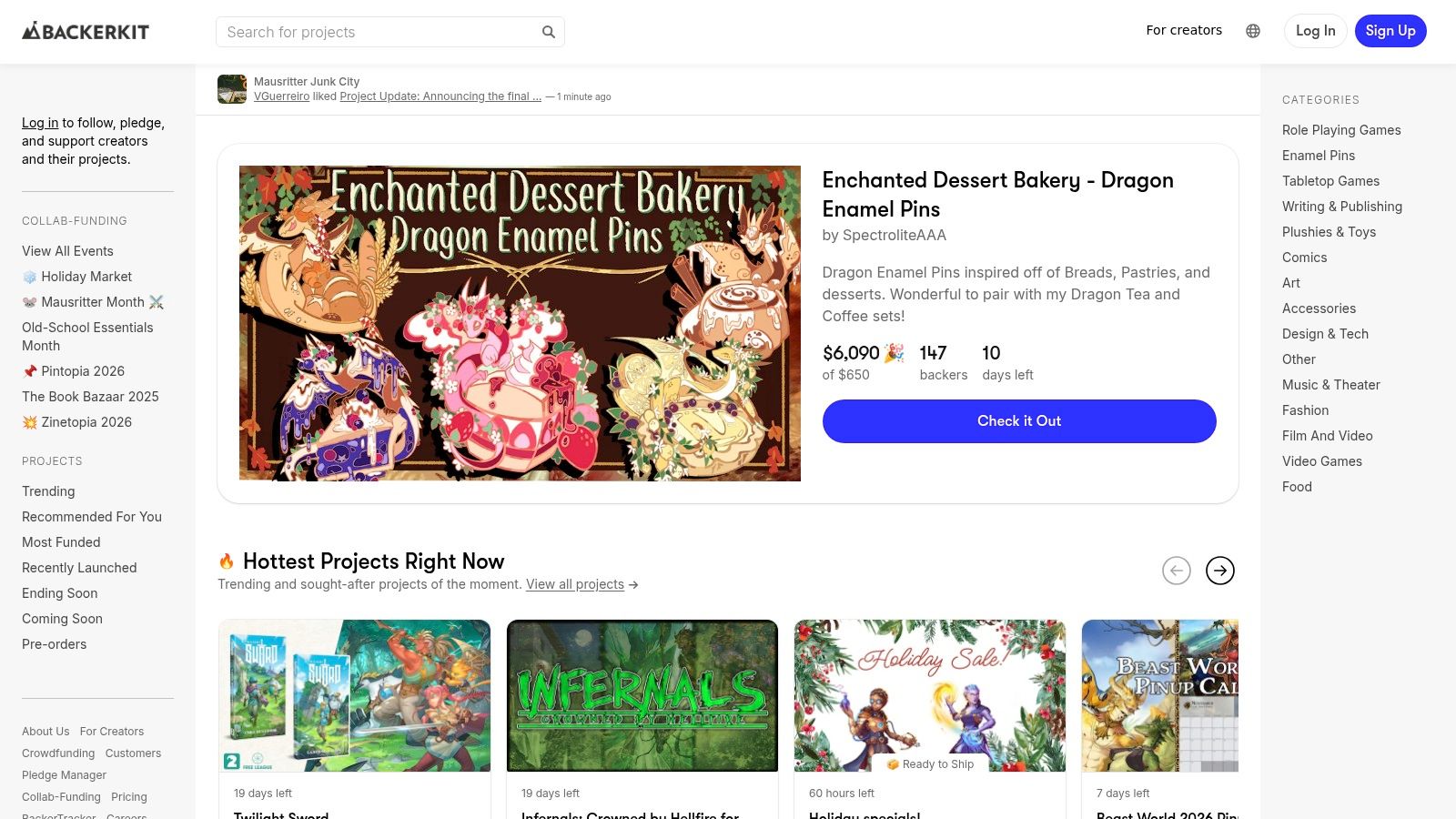
The Coolest Cooler's success highlights the power of a "feature-packed" product that creates a strong emotional connection. The campaign didn't just sell a cooler; it sold an experience. By bundling multiple desirable gadgets into one cohesive unit, the perceived value skyrocketed, making the pledge feel like an incredible deal.
However, its post-campaign struggles offer an even more critical lesson in logistics and manufacturing. The complexity of integrating so many electronic components into a single product created massive production hurdles and cost overruns. This complexity, which was a key driver of its funding success, ultimately became its biggest challenge during fulfillment.
Key Insight: "A product's complexity is directly proportional to its manufacturing risk. A campaign's viral features can become its biggest fulfillment liabilities if not properly planned for."
The team underestimated the costs and logistical nightmare of manufacturing and shipping a large, heavy, and complicated product to a global audience. This disconnect between the campaign's promise and the reality of production serves as a powerful reminder for all creators.
While not a single campaign, Gamefound has become an essential ecosystem for many of the highest funded Kickstarters in the tabletop gaming world. Initially launched as a pledge manager by a major publisher, it has evolved into a full-fledged crowdfunding platform that directly rivals Kickstarter for high-profile board game launches. Its power lies in its deep, industry-specific features designed to handle the complex logistics of massive game campaigns.
Gamefound’s rise is a story of specialization. It solved key pain points for both creators and backers in the tabletop niche, such as complex shipping calculations, add-on management, and multi-wave fulfillment. This focus has made it the go-to post-campaign home for huge Kickstarter projects and a primary launchpad for new ones, fundamentally changing how the biggest board games come to market.
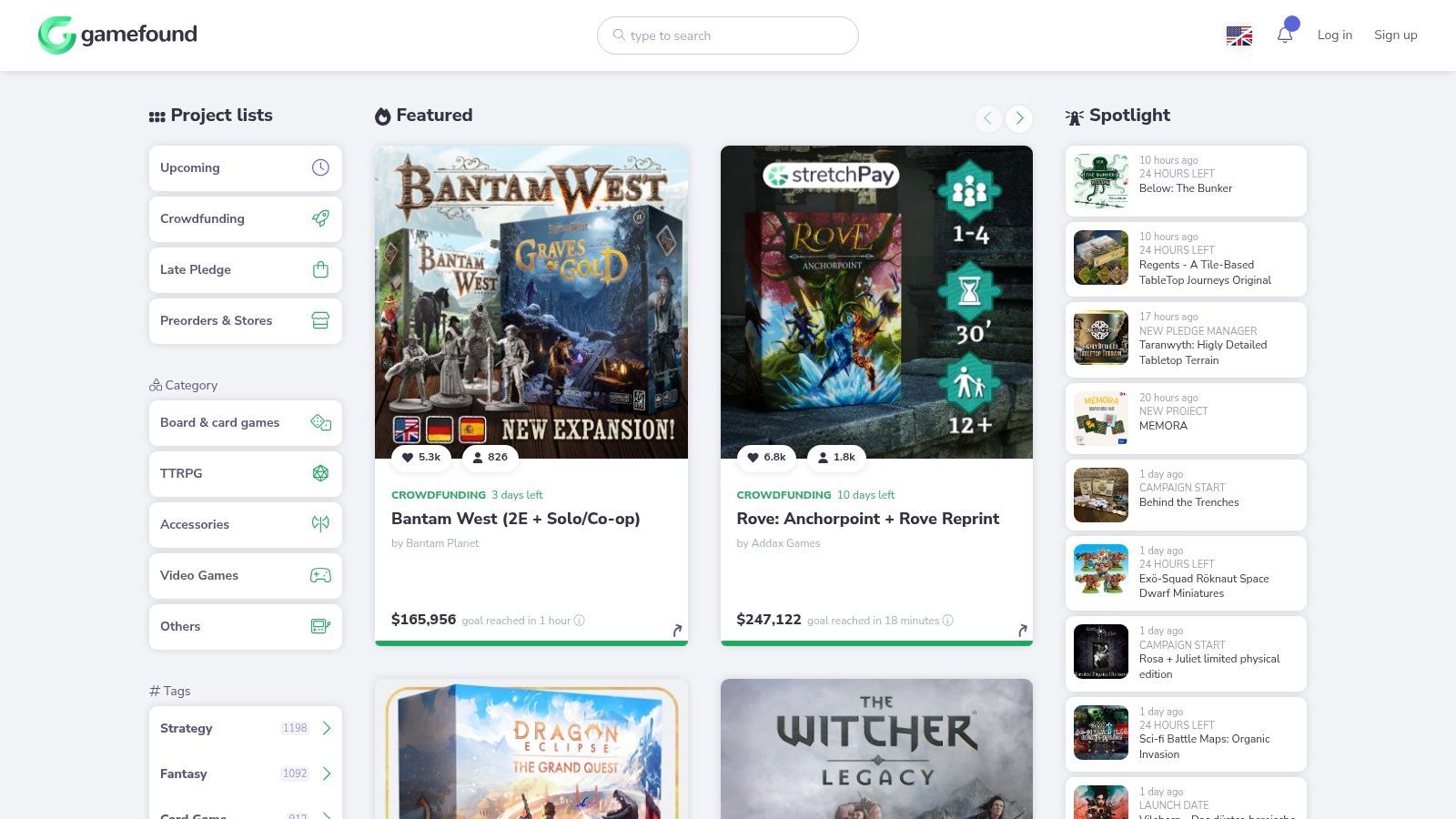
Gamefound's success comes from building a platform for a specific, high-value community rather than trying to be everything to everyone. The platform's features, like integrated shipping and VAT calculators, are tailored to the intricate needs of producing and shipping large, heavy boxes with countless components worldwide. This specialized toolset provides a superior experience for both creators managing fulfillment and backers who get more clarity on final costs.
It operates as a central hub where the most dedicated tabletop fans congregate, knowing they will find premium, "deluxe" gaming experiences. This creates a concentrated, high-intent audience, making it a powerful launch platform for creators who can tap into an existing community of eager buyers.
Key Insight: "Dominating a niche is more powerful than competing in a general marketplace. Build the best tools for a specific audience, and they will make your platform their home."
By seamlessly integrating pledge management with a crowdfunding storefront, Gamefound simplifies the entire backer journey. Users can discover, fund, and manage their pledges all in one place, reducing friction and building trust in the crowdfunding process for its specific audience.
Many of the highest funded Kickstarters don't actually stop raising money when the timer hits zero. The secret to their continued success is often Indiegogo InDemand, a platform that serves as a vital bridge between a successful campaign and full-scale retail. It allows creators to seamlessly transition their Kickstarter project into an ongoing pre-order store, capturing sales from latecomers who missed the original campaign.
This "late pledge" strategy is a game-changer for hardware and design projects that have long manufacturing lead times. By importing their Kickstarter page to Indiegogo, creators can maintain funding momentum, build a larger customer base, and cover unforeseen production costs, all while keeping their community engaged and growing. It’s the essential second act for many top-tier crowdfunding projects.
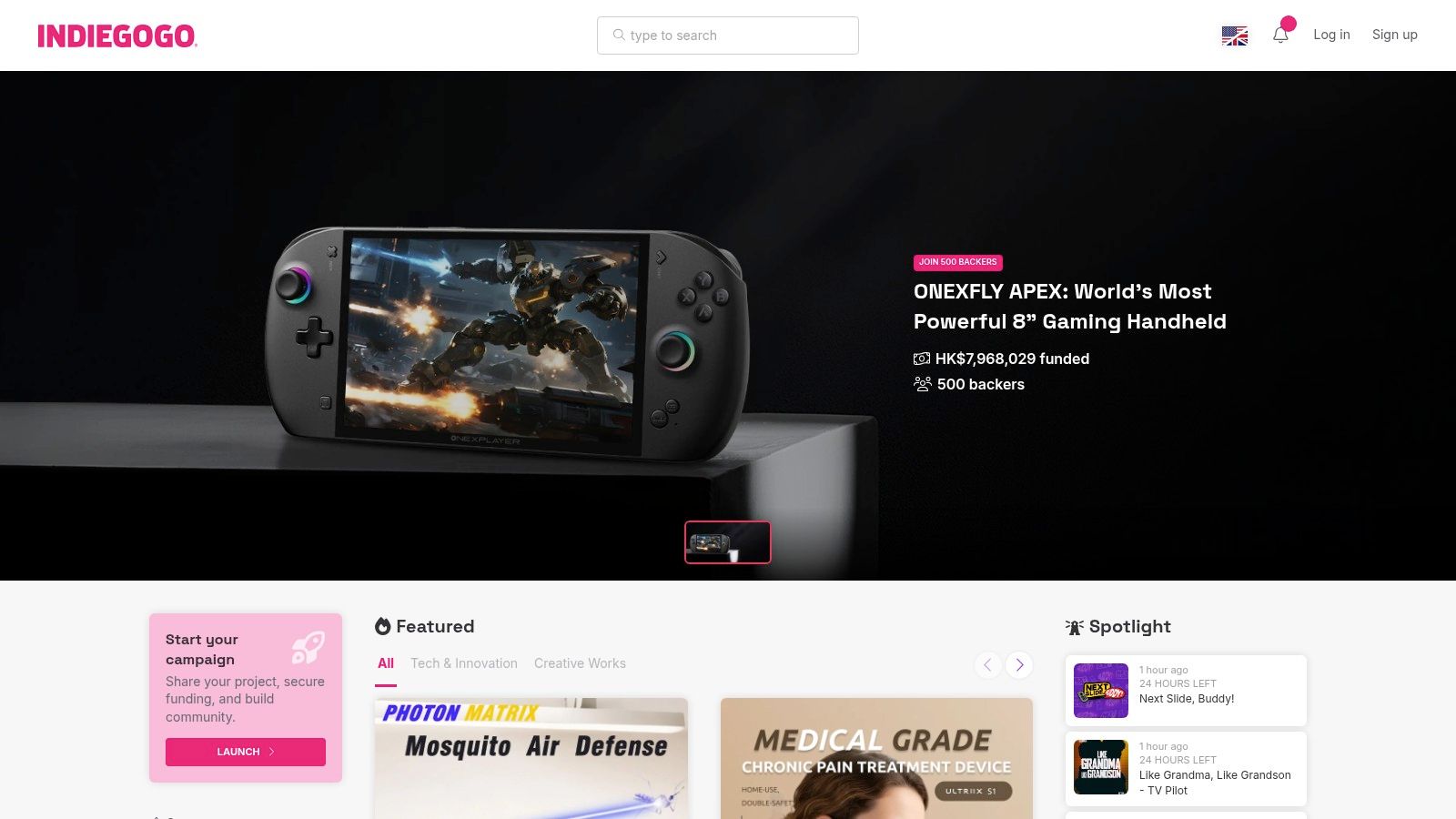
The brilliance of Indiegogo InDemand lies in its ability to solve the "now what?" problem that creators face after a successful Kickstarter. Instead of going dark during the months-long production phase, they can leverage Indiegogo's large, built-in audience and marketing tools to continue accepting orders. This creates a continuous revenue stream that is crucial for cash flow during manufacturing.
The platform is designed for a smooth transition, allowing creators to import their Kickstarter campaign details with just a few clicks. This maintains brand consistency and trust, as new customers see the project's proven history of success. It transforms a time-limited funding event into a sustained direct-to-consumer sales channel.
Key Insight: "Your campaign's end date is not a finish line; it's a transition point. A late pledge platform like Indiegogo InDemand allows you to capitalize on post-campaign buzz and media coverage."
This approach allows creators to adjust pricing and perks over time, moving from early-bird Kickstarter prices to standard pre-order prices. This rewards original backers while establishing a sustainable retail model for the product long before it hits traditional store shelves.
While not a crowdfunding platform itself, Amazon is the critical final chapter for many of the highest funded Kickstarters. It represents the transition from a backer-supported project to a mainstream retail product. For creators, it's the ultimate scale-up destination; for consumers who missed the campaign, it’s the go-to marketplace to purchase these innovative products, often with the convenience of Prime shipping.
Successfully navigating the journey from a Kickstarter promise to an in-stock Amazon listing is a massive achievement. It signifies that a creator has not only fulfilled their obligations to backers but has also established a sustainable production and supply chain. For consumers, this provides a layer of confidence, as products on Amazon are backed by a familiar, reliable infrastructure for delivery, returns, and customer reviews.
The presence of a Kickstarter project on Amazon validates its market readiness and commercial viability. This platform serves as a powerful channel for reaching a much broader audience that may be unaware of or hesitant to use crowdfunding sites. The key is to leverage the momentum and social proof built during the Kickstarter campaign to fuel a successful retail launch.
Key Insight: "Treat your Kickstarter campaign as the ultimate product launch event, and Amazon as the grand opening of your permanent retail store. The first fuels the success of the second."
For creators, the challenge lies in managing the transition smoothly. This includes inventory management, pricing strategy (ensuring early backers still feel valued), and marketing. It’s a different operational ballgame, moving from a single large production run for backers to continuous inventory management for a global marketplace.
While not a crowdfunding platform itself, eBay plays an essential and often overlooked role in the ecosystem of the highest funded Kickstarters. It serves as the primary aftermarket where backers and collectors can find campaign-exclusive items, limited editions, and sold-out rewards long after a campaign has ended. For many popular projects, especially in gaming and collectibles, eBay is the only place to acquire rare items that were never available at retail.
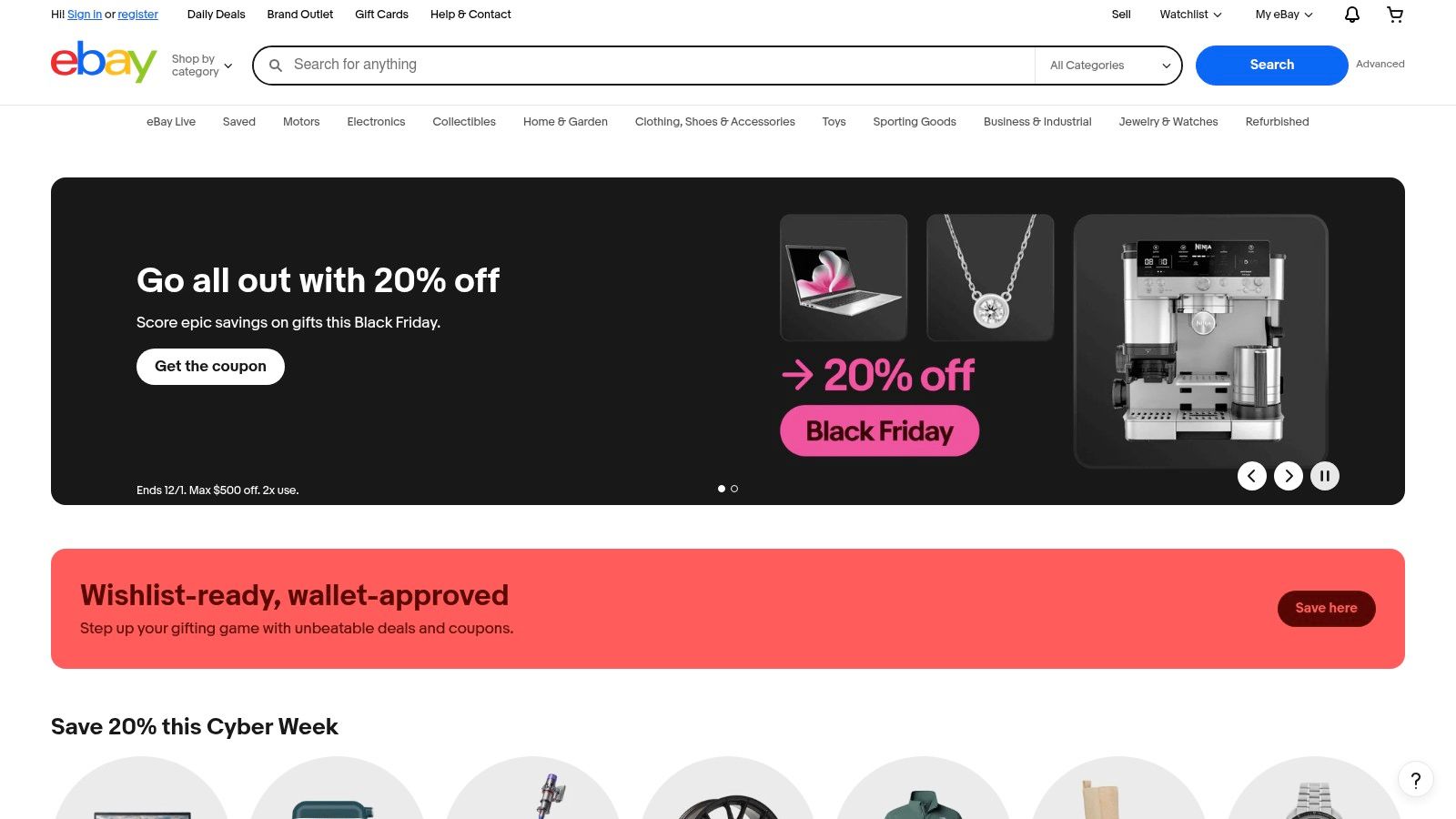
The platform's value lies in its massive user base and robust marketplace features. Buyers can use saved searches to get notified when a rare Kickstarter item is listed, while features like the eBay Money Back Guarantee provide a layer of protection for transactions. For creators, observing the aftermarket prices of their exclusive items on eBay can provide valuable data on demand and what the community values most, influencing decisions for future campaigns.
eBay’s role highlights the long-term value and collectibility of well-managed crowdfunding campaigns. When creators offer compelling, exclusive rewards, they are not just selling a product; they are creating an asset that can appreciate in value. This secondary market activity can generate buzz and a sense of "fear of missing out" (FOMO) around future projects, as potential backers see the investment potential of backing early.
Key Insight: "The existence of a healthy secondary market on platforms like eBay validates the exclusivity and desirability of your campaign rewards, reinforcing their value to both original and future backers."
The most successful Kickstarter campaigns often have a vibrant aftermarket presence. This isn't a sign of failure but of success, indicating that demand outstripped the limited supply offered during the campaign. Savvy creators can monitor this activity to gauge which add-ons or stretch goals were most popular.
While not a single campaign, Crowd Supply earns its place by representing a fundamentally different and highly successful model in the crowdfunding space, particularly for complex hardware projects. It's a curated platform that combines crowdfunding with long-term e-commerce, offering a path from project launch to sustained retail. This integrated approach de-risks hardware development for both creators and backers, making it a critical hub for some of the highest funded Kickstarters and crowdfunded projects in the open-source and electronics niche.
Crowd Supply’s model is built on providing end-to-end support, from campaign strategy and promotion to manufacturing and fulfillment. Unlike broader platforms, it acts as a partner, ensuring projects are viable before they launch. Once a campaign is successfully funded, the product page often transitions into a standard e-commerce listing, allowing creators to continue selling their product directly to new customers with logistics managed by Crowd Supply. This creates a sustainable business, not just a one-off funding event.
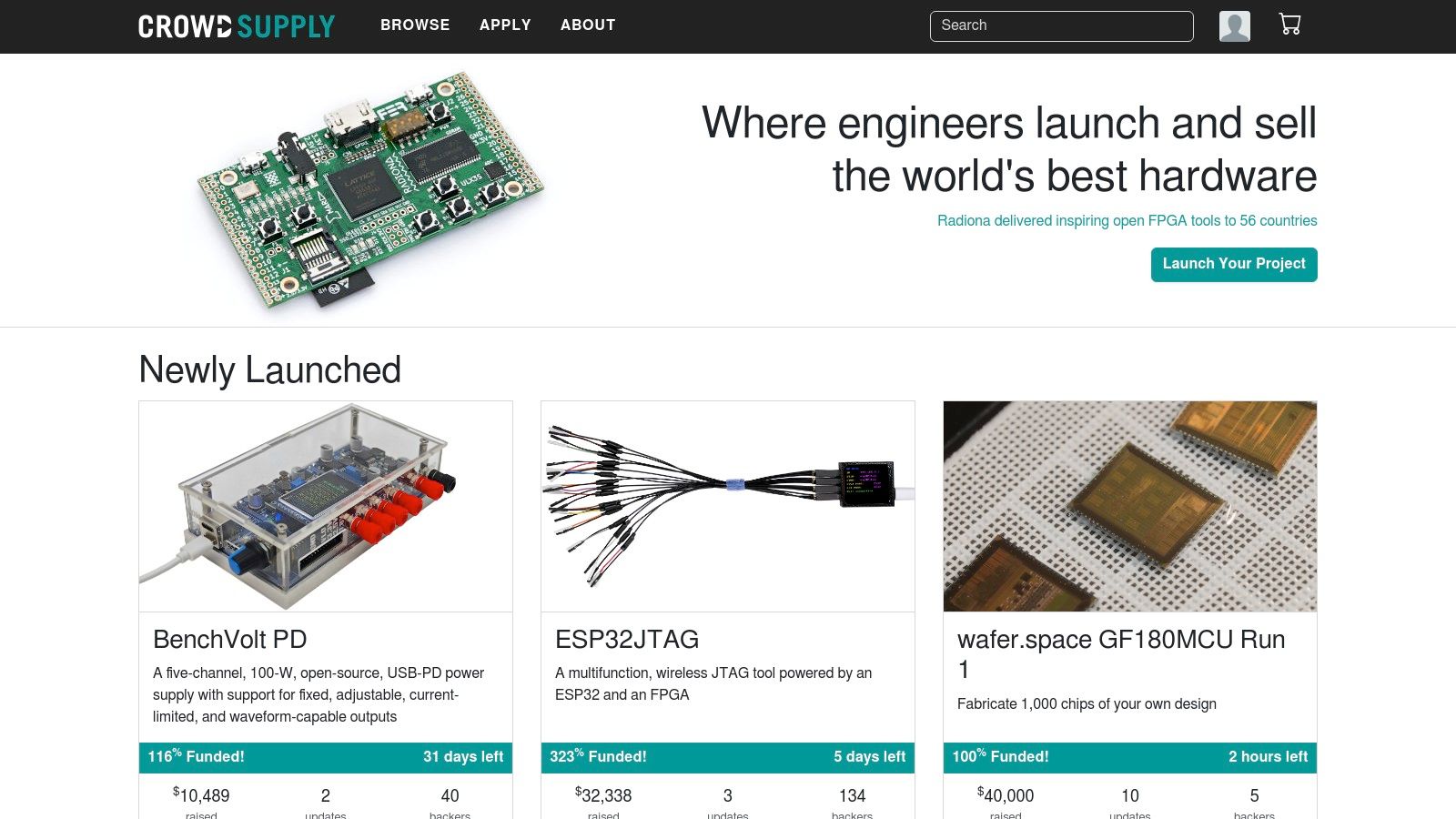
Crowd Supply’s success lies in its specialized, high-touch model that solves the biggest pain point in hardware crowdfunding: fulfillment and logistics. By vetting projects heavily and then managing the post-campaign lifecycle, they build immense trust with a niche but dedicated audience of engineers, developers, and makers. Their platform isn't just a launchpad; it's a long-term commercial home for innovative hardware.
Key Insight: "For complex hardware, the campaign is just the beginning. A successful launch requires a clear path to manufacturing, fulfillment, and ongoing sales, which an integrated platform can provide."
The platform's transparent approach to shipping, with detailed FAQs and order tracking, further solidifies backer confidence. This focus on operational excellence allows creators to concentrate on product development, knowing the complex logistics are handled by an experienced partner, a key reason why many successful hardware creators choose it over larger, more generalized platforms.
| Platform | Process / Complexity 🔄 | Resource needs & Speed ⚡ | Expected quality / Outcomes ⭐ | Results / Impact 📊 | Ideal use cases & Key advantages 💡 |
|---|---|---|---|---|---|
| Kickstarter (official) | Low — browse-only platform; straightforward updates and pages | Low for research; no payments typically after campaign ends ⚡ | High for official information — specs, timelines, updates ⭐ | Verification & reference: platform-wide stats and creator-provided timelines 📊 | Best for verifying official specs, stretch goals and finding creator links; source-of-truth for campaigns 💡 |
| BackerKit | Medium — pledge manager/store workflows for creators and buyers 🔄 | Moderate — hosted stores, inventory and checkout; typical fulfillment flow ⚡ | High for late-pledge fulfillment when available; clear ship estimates ⭐ | Effective for collecting late pledges and managing add-ons after campaigns 📊 | Ideal for buying campaign editions/expansions with standard checkout; common for top Kickstarter creators 💡 |
| Gamefound | Medium — pledge manager tailored to tabletop complexity 🔄 | Moderate — multi-wave shipping, tax/tooling for tabletop; shipping often finalized later ⚡ | High for large-box/tabletop projects with staged fulfillment ⭐ | Central hub for premium tabletop late pledges and add-ons; strong campaign-host impact 📊 | Best for large-scale board-game campaigns and clear shipping stages; tabletop-focused advantages 💡 |
| Indiegogo (InDemand) | Low — continuous order pages, easy import from Kickstarter 🔄 | Low–moderate — ongoing orders, creators can adjust perks/prices; indefinite availability ⚡ | Medium–High for tech/design projects continuing pre-orders into manufacturing ⭐ | Useful for sustained order intake and broader marketing placements 📊 | Good for tech/design projects needing ongoing pre-orders and flexible pricing/offer updates 💡 |
| Amazon | Low — retail listing and checkout with standard policies 🔄 | Low for buyers; very fast shipping on eligible items, robust returns ⚡ | High for in-stock, retail-ready products; consistent fulfillment ⭐ | Wide retail availability, consolidated reviews and return support 📊 | Best when product is in retail: fast delivery, reliable returns and broad selection; verify seller/version 💡 |
| eBay | Low — marketplace bidding/Buy-It-Now, per-listing processes 🔄 | Low for buyers but variable price and seller handling; shipping varies ⚡ | Variable quality; good for rare/discontinued SKUs but depends on seller ⭐ | Strong aftermarket source for sold-out or exclusive campaign editions 📊 | Ideal for collectors seeking hard-to-find campaign SKUs; check seller rating and condition; prices may exceed MSRP 💡 |
| Crowd Supply | Medium — curated hardware listings with managed fulfillment 🔄 | Moderate — focused logistics, clear shipping/fees; buy-now availability for stocked items ⚡ | High for hardware projects with curated standards and predictable fulfillment ⭐ | Reliable in-stock buying experience and transparent shipping/tracking 📊 | Best for open/hobbyist/professional hardware that transitioned to buy-now; higher curation and consistent logistics 💡 |
Analyzing the campaigns of the highest funded Kickstarters reveals a consistent and crucial truth: a phenomenal product idea and a successful funding round are only the first steps. The true litmus test of a campaign’s success lies in what happens after the confetti settles. This post-campaign phase, involving pledge management, backer surveys, complex fulfillment, and continued community engagement, is where potential logistical nightmares can derail even the most promising projects.
The common thread connecting these top-tier campaigns is their meticulous approach to post-campaign execution. They don't just see backers as one-time contributors; they view them as the foundation of a long-term community and customer base. This shift in perspective is what separates a single successful project from a sustainable, thriving brand.
The strategies employed by these record-breaking projects offer a clear blueprint for aspiring creators. From building a massive pre-launch audience to maintaining transparent communication during production delays, their methods are both insightful and replicable.
Here are the most critical lessons to internalize:
Thinking about your tool stack is critical. Kickstarter itself acts like a massive marketplace, an "Amazon" for crowdfunding where creators can gain incredible visibility and reach a vast audience of potential backers. However, once the campaign is funded, you need more than a marketplace; you need a dedicated, powerful backend to manage your new business.
This is where a specialized pledge manager becomes your "Shopify"—a customizable and robust platform designed to handle the intricate details of your post-campaign operations. It gives you the control to tailor the backer experience, manage communications, and strategically grow your revenue. When your Kickstarter campaign is funded, the real work of bringing your product to market begins; exploring effective data-driven product launch strategies is a vital next step that a good pledge manager can support.
For many creators, the ideal tool is one that minimizes risk while maximizing opportunity. A platform like PledgeBox is built on this principle. It is free to send the backer survey and only charges a simple 3% fee on new revenue generated through any upsells, meaning the platform only makes money when you do. This model aligns perfectly with the goals of a new creator, turning the post-campaign phase from a cost center into a profit center and laying the groundwork for your next big launch.
Ready to turn your successful campaign into a seamless fulfillment experience? PledgeBox provides the powerful, creator-friendly tools you need to manage surveys, boost revenue with strategic upsells, and delight your backers. Start for free and see why top creators trust PledgeBox to manage their post-campaign success.
PledgeBox
The All-in-One Toolkit to Launch, Manage & Scale Your Kickstarter / Indiegogo Campaign