 PledgeBox
7 Best Shipment Tracking Tools for Creators
Compare the best shipment tracking tools for crowdfunding creators, including carrier coverage, integrations, pricing, and the best fit for each workflow.
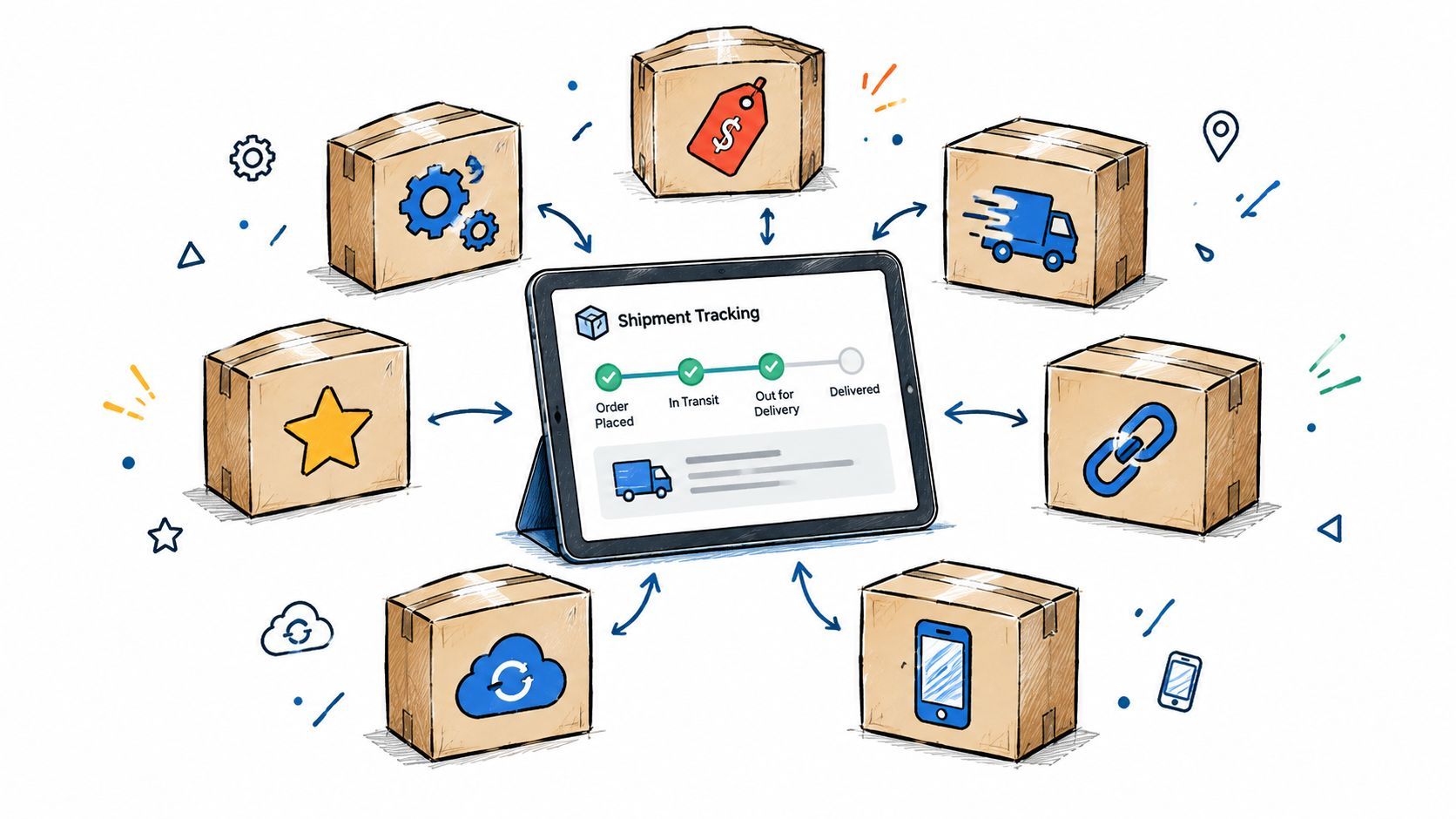
Compare the best shipment tracking tools for crowdfunding creators, including carrier coverage, integrations, pricing, and the best fit for each workflow.
Your campaign funded, production finished, and now the hard part starts. Hundreds of backers are waiting for rewards, addresses need checking, vendors are printing labels in different countries, and your inbox fills with the same question every hour. A backer doesn't care which warehouse or last-mile carrier has the parcel. They care whether it's moving, when it'll arrive, and what you'll do if it stalls.
That's why choosing the best shipment tracking tool for crowdfunding isn't just about a tracking page. You need to match order volume, carrier coverage, integration needs, and the way you collect shipping details and fees. A standalone tracker fits if fulfillment is already handled elsewhere. A complete pledge-management workflow fits if surveys, address validation, vendor exports, and notifications still live in spreadsheets. The comparison matters at the post-campaign stage. PledgeBox's pledge manager works like Shopify, giving you your own branded workflow, while Kickstarter's pledge manager is like Amazon, a centralized checkout inside its marketplace, as described in Kickstarter's pledge manager backer guidance. You can send the PledgeBox backer survey free of charge and pay only 3% on upsell revenue if there's any, with no setup, campaign, or per-backer fee. Before you ship, test the backer experience yourself, even on a simple question like where is my Cumbre Coffee package, and check whether the answer is clear without contacting support.
Choose AfterShip Tracking if you want the safest self-serve starting point for multi-carrier rewards. It's built for startups through mid-market retailers, so you don't need an enterprise sales process to get branded tracking in place before your first fulfillment wave.
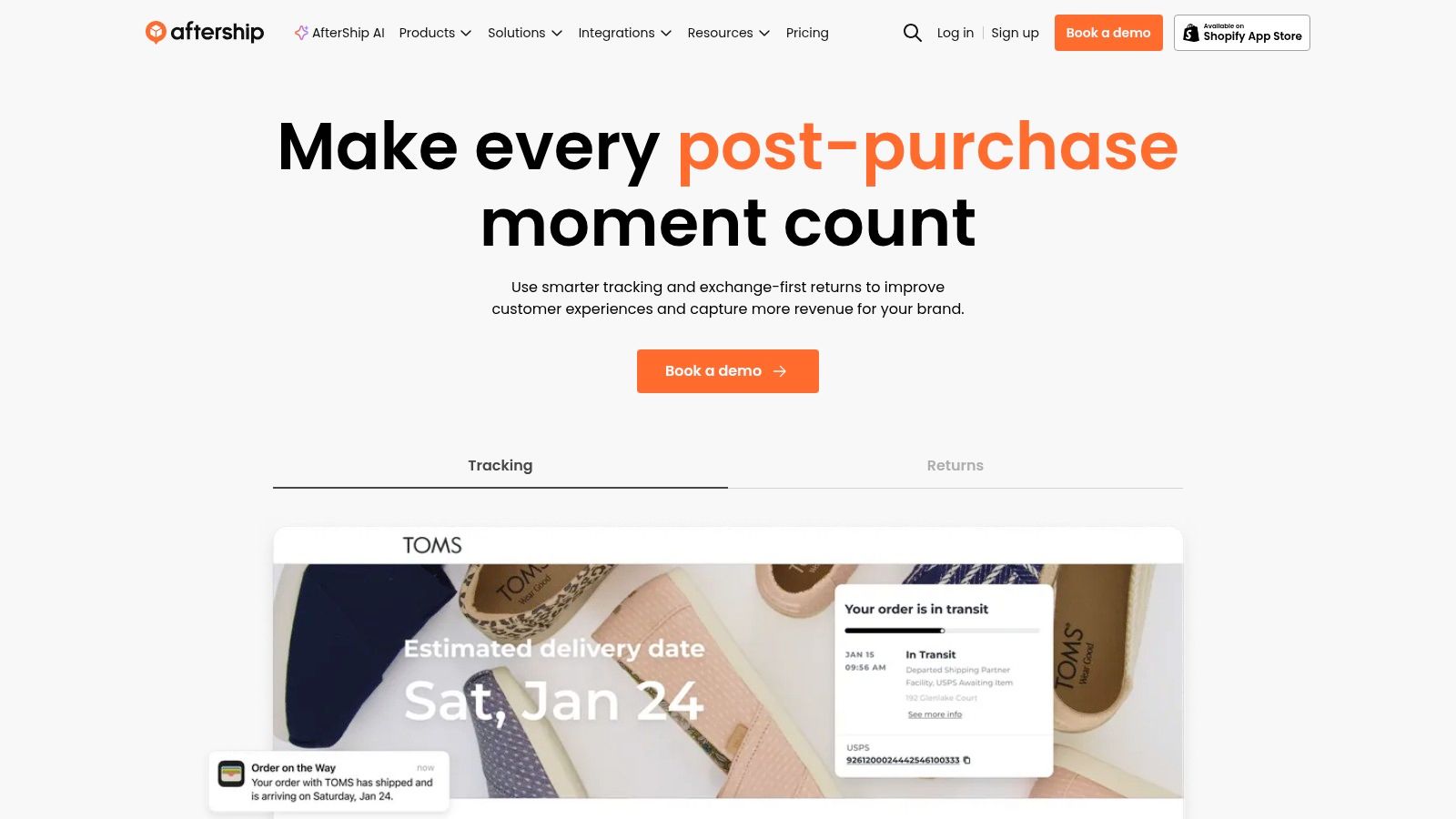
That breadth matters because live visibility is now a procurement expectation, not a bonus. In a 2021 survey of more than 200 global shippers, 57.4% required carriers to provide real-time visibility, yet only 20.2% reported full real-time visibility across all modes and regions. AfterShip helps close that gap for creators by normalizing events across carriers instead of sending backers to several carrier sites.
Pricing starts low, with Essentials from $29/month and Premium from $59/month on AfterShip's published tiers, plus custom Enterprise pricing. Extra shipments can add charges, so model your peak wave, not your average month. If you're still building the workflow, read this guide on how to track shipments before you connect carriers.
Pros: Clear tiers, broad ecommerce and helpdesk integrations, easy self-serve growth. Cons: Advanced features sit on higher tiers, and per-extra-shipment charges can spike during fulfillment. Pick AfterShip for a first campaign with mixed carriers and no dedicated operations team.
Narvar Track is the enterprise choice, not the starter choice. Pick it when you're a larger creator, publisher, or agency running repeated launches and you need governance, security reviews, and a post-purchase system that extends beyond tracking into returns, delivery promises, and fraud tools.
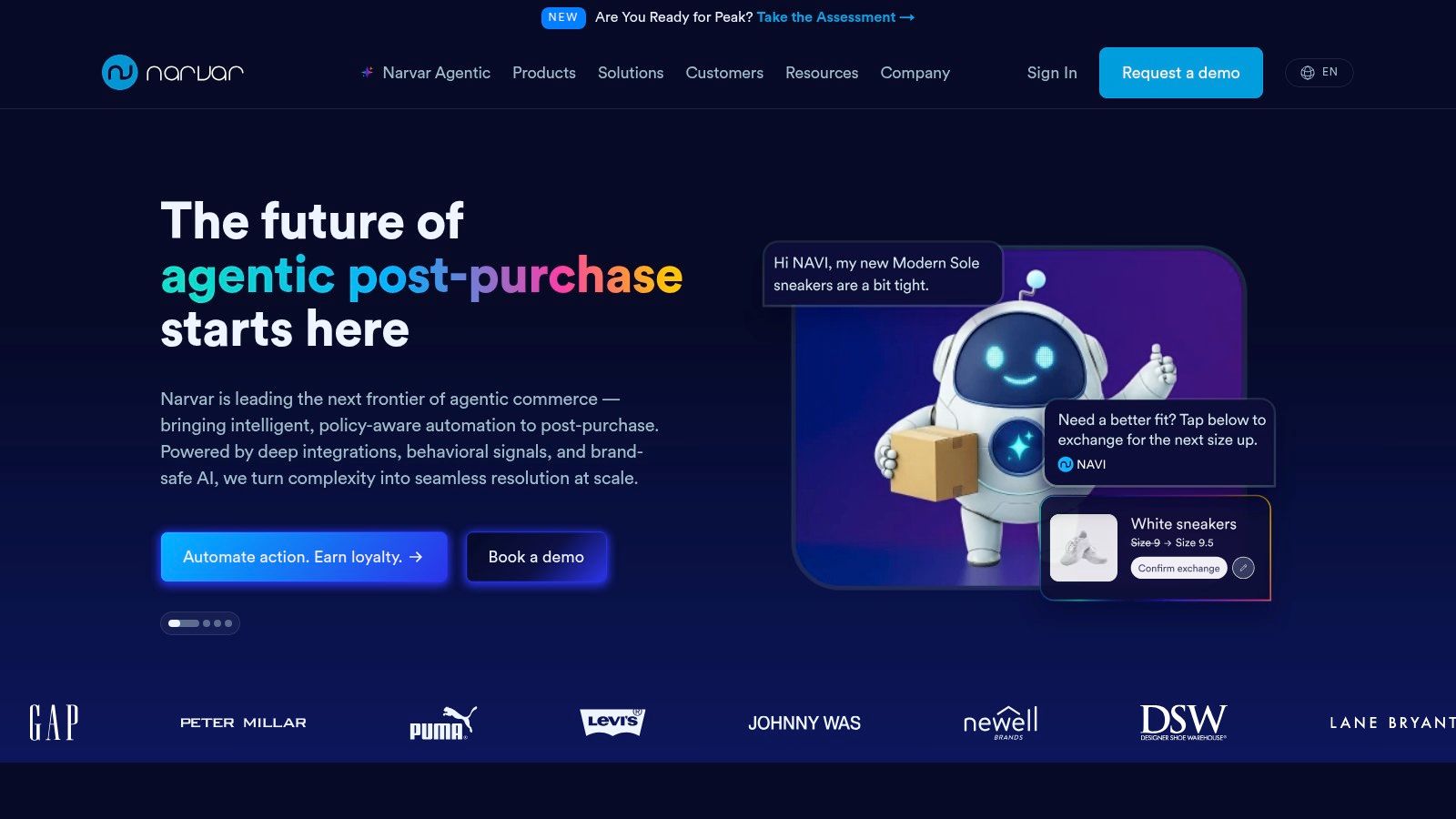
The operational case is strong. In a 2024 survey of 244 U.S.-based supply-chain executives and analysts, 77% classified real-time shipment visibility as a must-have, while 45% had visibility into less than half of their shipments. Narvar targets that coverage problem with unified multi-carrier status rather than isolated carrier links.
Narvar provides branded, embeddable tracking experiences with estimated delivery date visibility, unified communications across channels, and commerce connectors including SFCC cartridges. Enterprise teams also get SSO, security controls, and SLA options. For a board game publisher shipping through regional hubs, that means one consistent backer experience even when the underlying carriers differ by country.
Don't buy Narvar to solve a simple tracking-page problem. Buy it when inconsistent post-purchase communication is already costing you support time, returns confusion, and repeat-buyer trust.
Pros: Mature retail workflows, strong integrations, and the ability to combine tracking with returns and delivery-promise tools. Cons: Pricing is custom and quote-based, and implementation is heavier than API-first tools. You will need internal ownership for onboarding, data mapping, and channel rules.
For most first-time Kickstarter creators, Narvar is more platform than you need. For established brands using crowdfunding as a launch channel alongside retail ecommerce, it's the strongest option here for controlled, enterprise-grade post-purchase communication.
Pick parcelLab if tracking traffic should earn its keep. This is a premium post-purchase platform for global retailers that treats every status check as a branded touchpoint, not a dead-end utility page. That matters for creators selling add-ons, expansions, refills, or a next campaign to the same backers.
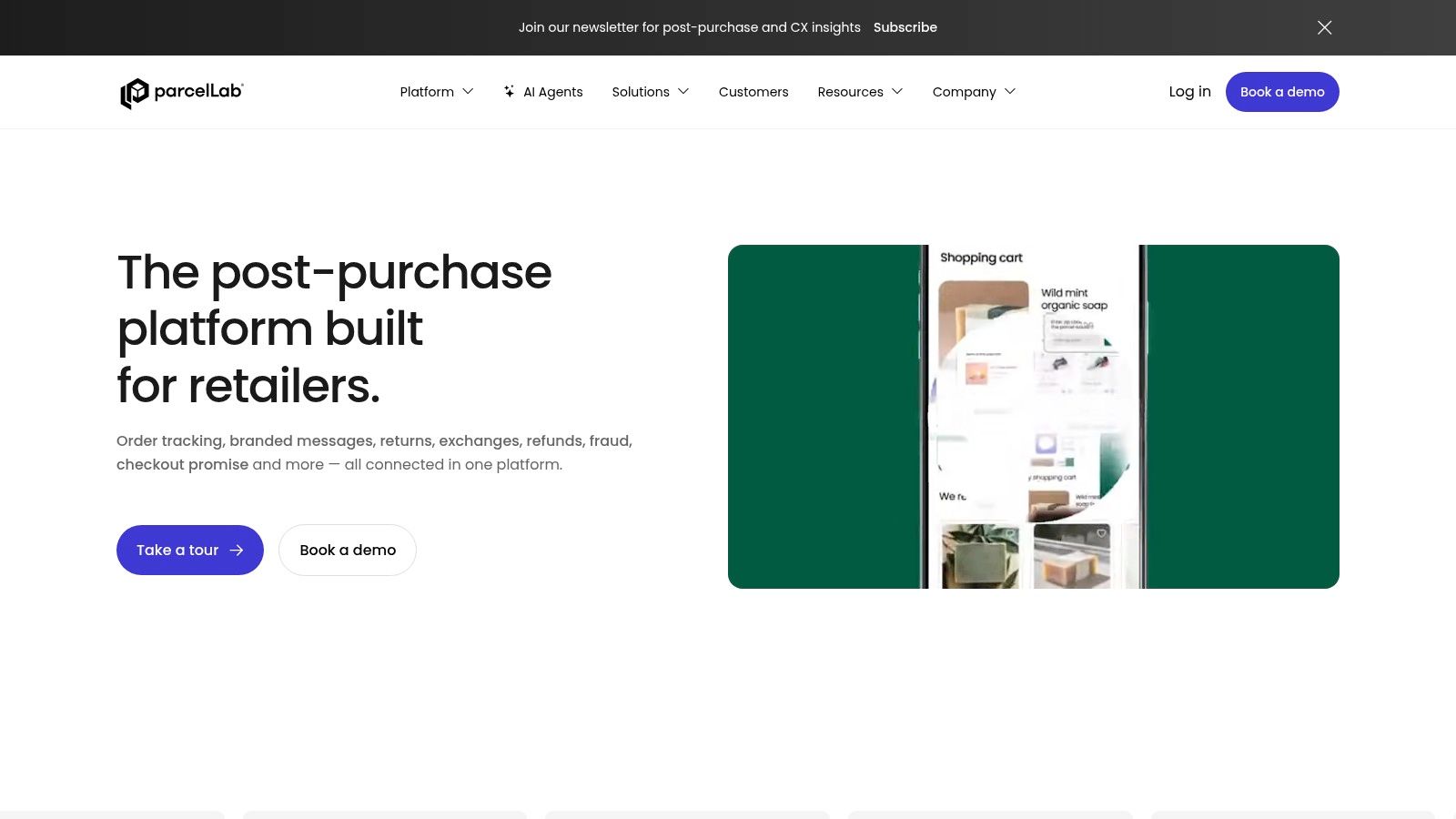
Consumer expectations support that approach. In the 2025 Sifted consumer survey, 63% of respondents considered visibility throughout delivery essential, while only 4.8% said they did not notice or care about tracking. parcelLab is designed for proactive, mobile-first updates that answer questions before backers open a ticket.
The trade-off is clear. Pricing is custom and quote-based, and small stores may pay for revenue and analytics depth they won't use during a single fulfillment wave. Mid-sized and large creators get more value because they can compare carrier performance across waves and reuse the learning on the next launch.
Pros: Strong focus on revenue from tracking visits, deep reporting, and predictive insights that can reduce WISMO inquiries. Cons: Quote-based pricing and more capability than very small campaigns need. Choose parcelLab when your tracking page is part of your retention and repeat-sales strategy, not just a support deflection tool.
For complex cross-border fulfillment, start with data quality. Parcel Perform is built for businesses managing multi-carrier shipping across regions, with standardized events, predictive dates, and exception forecasting. If your rewards move from a factory to a consolidator, then to postal operators and local last-mile carriers, this is the tool designed for that mess.
Carrier differences aren't cosmetic. In Parcel Monitor data reported for U.S. operations, UPS recorded a 98.5% on-time rate in Q4 2023, compared with 87.1% for USPS and 67.8% for FedEx. A generic in-transit label hides that variation. Parcel Perform's carrier benchmarking and service-level analytics help you separate normal route variation from a genuine failure.
Its feature set centers on global multi-carrier tracking with standardized events, predictive delivery dates, risk forecasting, and decision intelligence for exception handling and carrier selection. In practice, your support team works from an intervention queue. Customs holds, prolonged inactivity, and likely delays surface before backers start posting publicly in campaign comments.
That matters for heavy, regionally split rewards. If that's your situation, pair this evaluation with these board game shipping considerations before you commit to regional hubs.
Pros: Strong analytics, predictive capabilities, and proactive exception management for cross-border complexity. Cons: Pricing is quote-based, and implementation usually needs operations or engineering resources. Pick Parcel Perform when you have enough international volume to act on the data, not when you only need a branded page.
Shipup gives DTC brands a choice many tools don't. You can use its hosted branded tracking pages for speed, or build your own tracking interface with its APIs when you want full control. For creators moving from Kickstarter into an ongoing store, that flexibility prevents a rebuild later.
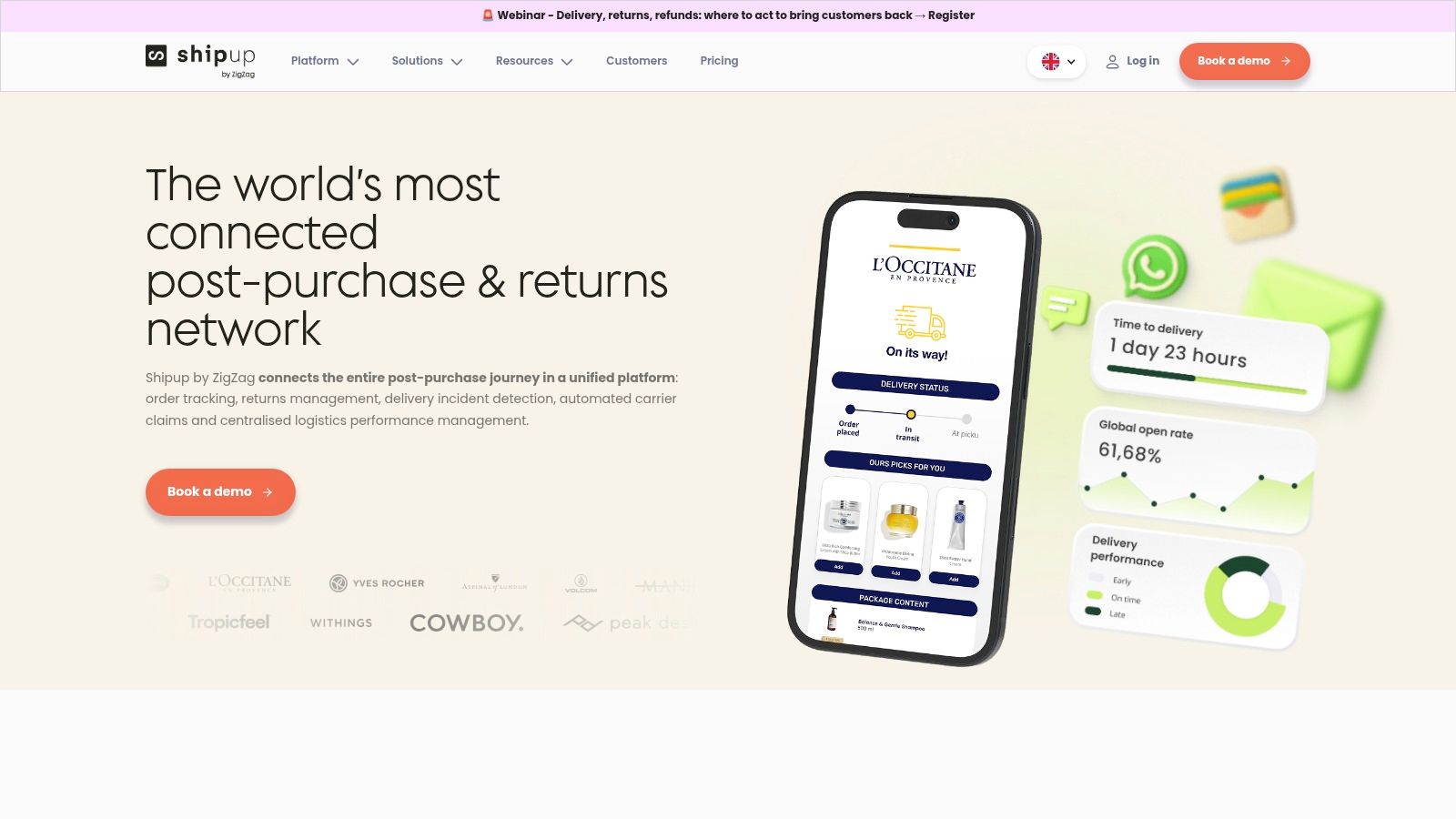
Shipup combines branded pages with smart delivery estimates, email and SMS notifications, APIs, webhooks, and FTP integration options. Multi-account management helps agencies or publishers running several brands, and WhatsApp is available as an add-on for markets where email isn't the primary channel.
Cross-border tracking often goes quiet during handoffs. Maersk identifies higher-quality data and visibility as a major 2025 logistics priority because businesses need visibility that supports resilience and predictive action rather than merely reporting past events. Shipup's value is translating carrier events into customer-facing updates that explain what's happening, instead of dumping raw scans on backers.
Practical rule: If a status needs internal knowledge to interpret, rewrite it in plain language before a backer sees it.
Published pricing lists Essential from €299/month and Premium from €999/month, with package-based fees, channel add-ons, and an annual commitment. That puts Shipup above lightweight tools on cost, and SMS or WhatsApp usage can add up at scale.
Pros: Flexible hosted or API-built experience, broad notification channels, and marketing overlays for tracking visits. Cons: Euro pricing makes U.S. costs less predictable, and channel fees grow with volume. Choose Shipup for a design-led DTC brand that will keep selling after fulfillment ends.
If budget controls the decision, choose TrackingMore. It's a cost-effective multi-carrier tracking API and dashboard with branded pages and notifications, and it doesn't force you into an enterprise contract to start sending useful updates.
Coverage reaches more than 1,300 carriers with auto-detection and carrier correction. You also get branded tracking pages, email and SMS notifications, a tracking API, webhooks, and ecommerce integrations. That API-led setup connects well with pledge managers, CRMs, helpdesks, or BI tools when your team can handle a little technical configuration.
Low cost shouldn't mean passive tracking. SafeWise estimates more than 104 million packages were stolen in the U.S. during 2025, and 31% of Americans experienced package theft in the preceding year. Configure alerts around the delivery window, flag delivered but not received cases fast, and give support a clear path to distinguish theft from misdelivery.
TrackingMore offers a free plan, published paid tiers, and a $0.04 surcharge per parcel beyond plan limits. Before your wave ships, use this guide to calculate shipping costs so notification and overage costs are in your fulfillment budget, not a surprise after labels print.
Pros: Free entry point, simple overage model, and practical API access. Cons: Branding removal and API rate limits depend on higher tiers, and it has fewer enterprise customer-experience modules than Narvar or parcelLab. Pick TrackingMore for lean teams that value coverage and webhooks over polished post-purchase marketing.
WeSupply Labs fits creators who expect returns, exchanges, and address mistakes to be part of fulfillment, not rare exceptions. It combines order tracking with a self-service returns portal, notifications, and analytics in one post-purchase hub. That single destination reduces the back-and-forth when a reward arrives damaged, in the wrong size, or at an old address.
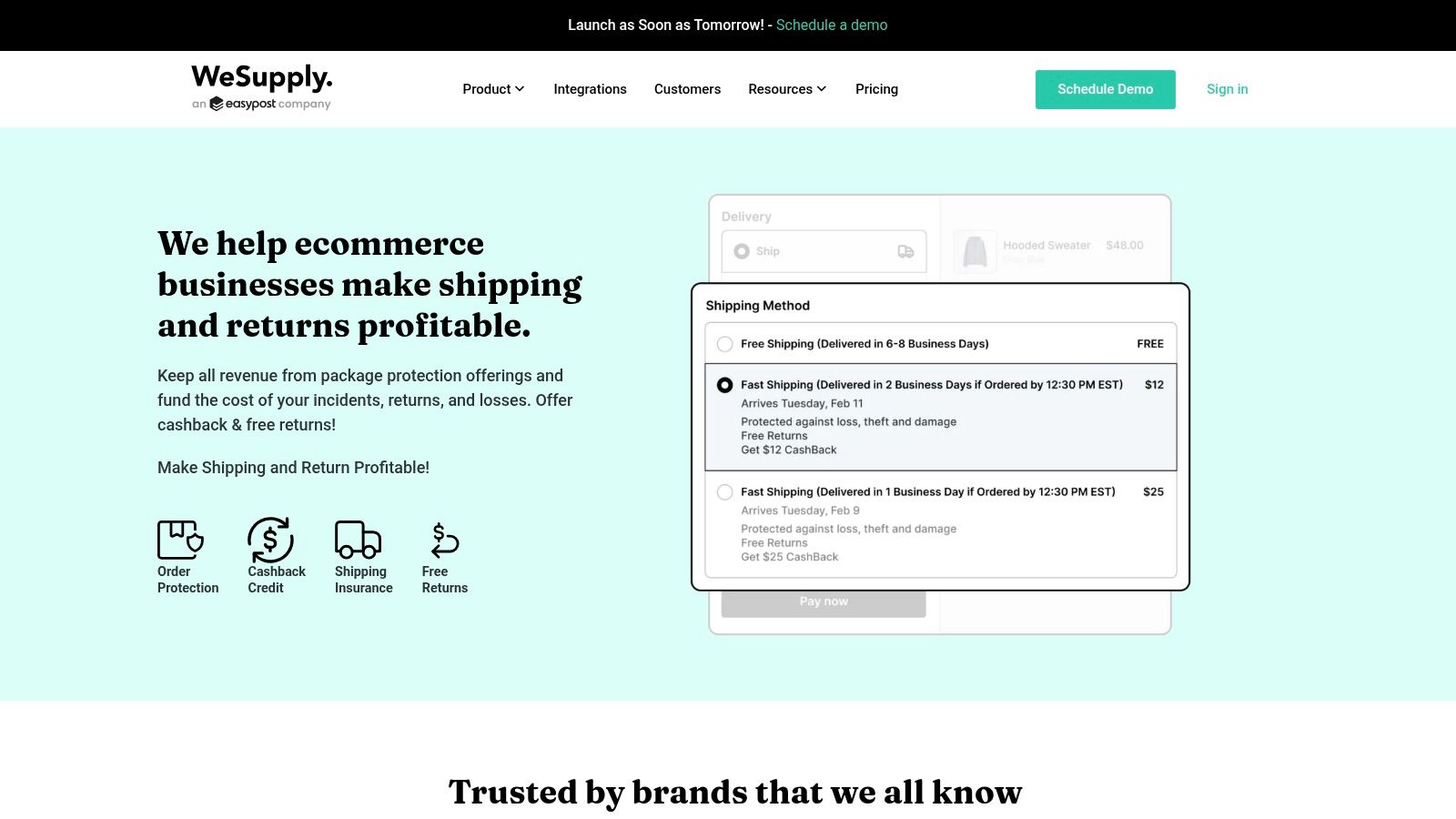
The tracking pages are branded and can carry promotional and upsell modules, which suits creators selling accessories or expansions after delivery. Automated email and SMS updates include bulk messaging, useful when a whole shipping wave is delayed at a port or a regional hub changes carriers mid-fulfillment.
Pricing is published and scalable, with SMS billed separately per message. That transparency helps, but you still need to estimate notification volume across label created, carrier possession, customs, handoff, out for delivery, delivered, and exception events.
Pros: Tracking and returns in one platform, published pricing, documented SMS costs, and merchandising on tracking pages. Cons: It's more of an ecommerce suite than a pure tracking API, and advanced capabilities may require higher tiers. Choose WeSupply Labs when post-delivery service is as important as knowing where the parcel is.
| Platform | 🔄 Implementation Complexity & Resources | 💰 Pricing | 📊 Expected Outcomes | 🎯 Ideal Use Cases | ⭐ Key Advantages |
|---|---|---|---|---|---|
| AfterShip Tracking | Low to moderate; self-serve setup, with APIs for custom workflows | Published tiers from $29/month; extra shipment charges may apply | Branded tracking, automated updates, shipment analytics | Startups to mid-market retailers seeking broad integrations | 2,000+ carrier integrations; scalable plans; AI delivery estimates |
| Narvar Track | High; enterprise implementation and governance support | Custom quote | Unified tracking and post-purchase communications | Large retailers needing enterprise controls and connected returns or delivery tools | Mature retail workflows; SSO and SLA options |
| parcelLab | Moderate to high; enterprise integrations and setup | Custom quote | Predictive delivery insights, analytics, and revenue-oriented tracking | Global retailers focused on post-purchase engagement and operational visibility | Deep carrier reporting; AI insights; supports reducing WISMO inquiries |
| Parcel Perform | Moderate to high; operations or engineering resources typically needed | Custom, enterprise-oriented | Carrier benchmarking, delivery prediction, and exception forecasting | Businesses managing complex, cross-border, multi-carrier shipping | Strong analytics and proactive exception management |
| Shipup | Moderate; hosted tracking pages or API-based custom interfaces | Published plans from €299/month; usage and add-on fees may apply | Branded tracking and multi-channel customer notifications | DTC brands seeking configurable tracking and customer communications | Flexible page or API options; marketing overlays; multiple notification channels |
| TrackingMore | Low to moderate; API-led integration available | Free plan and published paid tiers; $0.04 per parcel beyond plan limits | Affordable multi-carrier tracking, notifications, and branded pages | Cost-conscious businesses needing tracking APIs or webhooks | Low-cost entry; 1,300+ carriers; straightforward extra-parcel pricing |
| WeSupply Labs | Moderate; broader ecommerce suite setup | Published scalable pricing; SMS billed separately | Tracking, self-service returns, and promotional engagement in one platform | Brands seeking a combined tracking and returns hub | Integrated returns and exchanges; published pricing; tracking-page merchandising |
Make the decision by operational shape, not by feature count. Choose AfterShip for accessible multi-carrier visibility you can launch without an enterprise contract. Choose TrackingMore for API-led, low-cost workflows where your team can wire tracking into a pledge manager, CRM, or helpdesk. Choose Shipup for a flexible branded experience you can host quickly or rebuild through its API later. Choose WeSupply Labs when tracking, returns, and exchanges should live in one backer-facing hub.
Move upmarket when complexity demands it. Narvar fits large brands that need governance and a broader post-purchase suite. parcelLab fits teams that want predictive insight and revenue value from tracking visits. Parcel Perform fits cross-border operations where standardized events, carrier benchmarking, and exception queues matter more than page design. Don't pay enterprise prices for a single domestic wave, and don't force a lightweight tracker to manage multi-country handoffs it can't explain clearly.
For an all-in-one campaign workflow, consider PledgeBox as the integrated alternative. It's free to send the backer survey, and it charges only 3% on upsell revenue if there's any, so you can collect shipping details and fees, validate addresses, export orders to vendors, and use auto shipment tracking in the same flow. That's the Shopify-like model, your own branded pledge manager, rather than relying only on the Amazon-like centralized Kickstarter checkout. Kickstarter's own tool has no upfront cost and deducts its usual fees from pledge-manager payments, as set out in Kickstarter's pledge manager creator guidance, so compare total cost against the control and upsell workflow you need.
Before you sign anything, check carrier coverage for your actual lanes, Shopify or other ecommerce integrations, API limits, webhook access, notification and SMS costs, branded tracking on your domain, address validation, vendor exports, and total cost at expected peak volume. Run a test shipment through every handoff, including customs silence and a failed delivery attempt. Small physical details matter too, from carton strength to shipping supplies for card sellers, because perfect tracking can't fix a parcel that arrives damaged. Pick the tool that gives backers a current, plain-language answer and gives your team an exception queue it can act on the same day.
Send your backer survey free with PledgeBox, collect shipping details and fees, validate addresses, and keep backers updated with auto shipment tracking while paying only 3% on upsell revenue if there's any. Visit PledgeBox to set up your pledge manager and connect your fulfillment workflow before your next shipping wave leaves the warehouse.
PledgeBox
The All-in-One Toolkit to Launch, Manage & Scale Your Kickstarter / Indiegogo Campaign