 PledgeBox
Investing in Kickstarter: Your 2026 Guide to Smart Crowdfunding
Master investing in Kickstarter for 2026. Evaluate risks, spot good projects, & understand reward-based crowdfunding with this essential guide.
Master investing in Kickstarter for 2026. Evaluate risks, spot good projects, & understand reward-based crowdfunding with this essential guide.
When you hear someone talk about investing in Kickstarter, it’s easy to imagine buying shares in the next hot startup. But that’s not really how it works. On Kickstarter, you aren't an investor in the Wall Street sense; you're a backer, which is a whole lot closer to pre-ordering a unique product from a creator you’re excited to support.
Let’s clear this up right away: the phrase “investing in Kickstarter” is common, but it's a bit misleading. You aren't buying equity or expecting a financial payout. Instead, you're taking part in reward-based crowdfunding. Think of it as joining a community to help turn a cool idea into a real thing.
In return for your pledge, you get a tangible reward—not a piece of the company. It’s a system built on patronage, not profit. You’re funding the journey from a concept sketched on a napkin to a finished product in your hands. Your "return on investment" is the final product itself, often at a great price, with exclusive goodies, or long before it ever hits a store shelf. It's an investment in creativity.
To help you see the difference more clearly, here’s a quick breakdown:
| Aspect | Kickstarter Backing (Reward-Based) | Traditional Investing (Equity) |
|---|---|---|
| Your Role | You are a backer or a patron. | You are an investor or a shareholder. |
| What You Get | A reward (product, experience, etc.). | Equity or shares in the company. |
| Primary Goal | To help bring a creative project to life and receive a unique product. | To generate a financial return (profit). |
| Financial Return | None. The "return" is the reward itself. | Potential for dividends and capital gains. |
| Risk | You might not receive the reward if the project fails. | You could lose your entire investment if the company fails. |
This table shows that while both involve putting money into something new, the fundamental purpose and outcome are completely different. With Kickstarter, you're a founding customer, not a co-owner.
At its heart, backing a project is a transaction rooted in trust and a shared passion for an idea. Creators put their dreams out there, and backers provide the fuel to make them happen. It’s a powerful, direct connection that cuts out the usual middlemen like publishers or venture capitalists, which is a huge part of the platform's magic.
If you want to dive deeper into the nuts and bolts, you can learn more about the definition of Kickstarter and how it all comes together.
This unique relationship doesn't stop when the campaign clock runs out. Once funded, creators have to manage communications, collect shipping details, and orchestrate fulfillment.
It's helpful to think of the Kickstarter pledge manager as the marketplace where you discover and commit to a product, much like Amazon. Post-campaign, a pledge manager like PledgeBox acts as their own dedicated storefront, similar to Shopify.
This is where having the right tools becomes essential. For example, PledgeBox is free to send the backer survey and only charges 3% of the upsell if there's any. It's a no-risk way for creators to deliver a smooth experience and even boost their project’s success.
To really get what "investing" on Kickstarter is all about, you first need to appreciate just how massive the platform has become. Since it first opened its doors in 2009, Kickstarter has grown into a powerhouse for creative ideas, pulling in an incredible $8.51 billion in pledges across more than 650,000 launched projects as of early 2025. That growth has been explosive, with total pledges more than doubling since 2017—a clear sign of growing global trust in the crowdfunding model. For a deeper dive into these trends, you can explore more detailed statistics about Kickstarter's funding on Statista.
The whole platform runs on an "all-or-nothing" model, which definitely raises the stakes. If a project doesn't hit its funding goal on time, the creator gets zero and no money is ever exchanged. This high-pressure system has pushed 272,205 projects to success, raising a combined $7.85 billion. On the flip side, only $632 million was pledged to campaigns that ultimately fell short.
So, what are the odds of a project actually making it? Across the entire platform, the success rate is about 40%. That means for every five projects you might consider backing, only two are statistically likely to get funded. But that's just the average—the real story is in how different categories perform.
This data tells you where innovation is really buzzing and where the risks for backers might be a bit higher. If you want to see a full breakdown, check out our comparative overview of Kickstarter categories and funds.
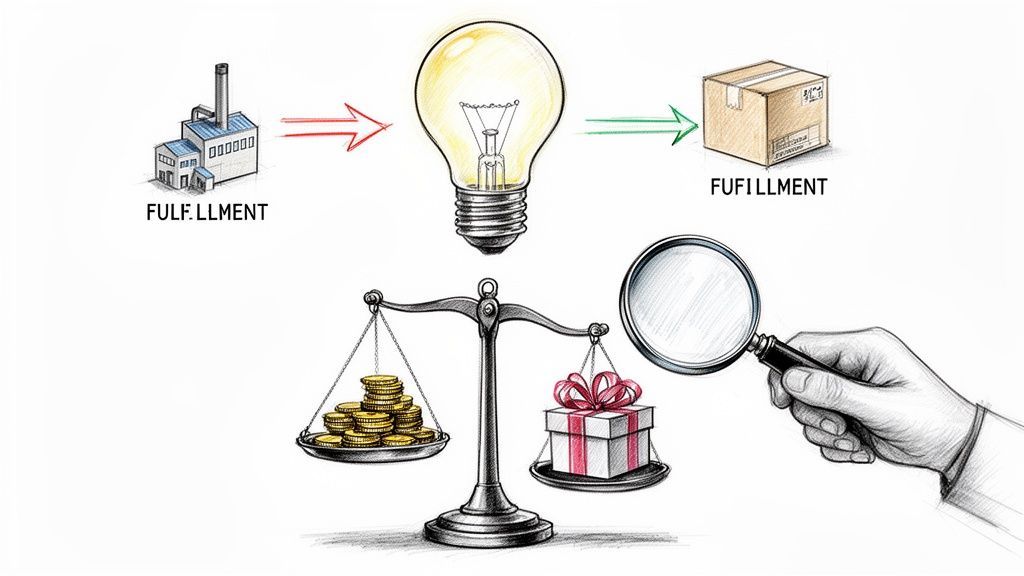
The infographic below really nails the key differences between backing a project and making a traditional investment.

It’s a great visual reminder that while traditional investing is all about the financial ROI, backing a Kickstarter project is about getting a unique reward and helping a creator bring their vision to life.
Understanding the numbers also means looking past the campaign itself. Once a project is successfully funded, the real work begins for the creator. They have to manage fulfillment, which means collecting shipping details, handling add-ons, and keeping everything organized.
Think of it this way: the Kickstarter pledge manager is like Amazon, a huge marketplace where you can discover and buy into new ideas. A pledge manager like PledgeBox, is the creator’s personal storefront—more like Shopify—where they manage their direct relationship with backers after the campaign ends.
This is where you can spot a creator who's truly prepared. They’ll use specialized tools to make the post-campaign process smooth for everyone. For instance, PledgeBox is free to send the backer survey. The platform only takes a 3% fee on any extra funds raised through upsells, which makes it a risk-free way for creators to manage their backer community efficiently long after the confetti settles.
A slick campaign video and exciting promises can make any project feel like a sure thing. But if you want to be a smart backer, you need to look past the hype and do a little homework. Approaching a pledge with a critical eye is the best way to reduce your risk and back projects that have a real shot at success.
Think of it like a startup due diligence checklist. You’re not just buying a product; you’re supporting a creator's journey. That means digging into their history, checking if the project is truly viable, and making sure their plan is crystal clear. A well-prepared creator will have all this information ready for you to find.

The single most important factor in any project’s success is the person or team running the show. A brilliant idea means nothing if the creator can't actually make it happen. Before you even think about pledging, it’s time to do some digging.
Start with their Kickstarter profile. Have they run campaigns before? If they have, did they deliver? Go read the comments on their old projects. See how they handled communication, dealt with delays, and managed fulfillment. A creator with a track record of transparency and success is a much safer bet than a first-timer with no history.
You should also look for them outside of Kickstarter. Do they have a professional-looking website or active social media? This shows they’re serious and committed to their brand beyond just this one campaign.
A working prototype is a massive green flag. It’s proof that the creator has moved beyond just an idea and has a tangible, functioning version of their product. Be very cautious with campaigns that only show off 3D renders, especially for complex electronics or hardware.
A detailed and realistic manufacturing and fulfillment plan is just as crucial. A creator who vaguely says, "We'll figure out manufacturing after the campaign" is a major red flag. Look for specific details about production partners, estimated timelines, and shipping logistics.
The best creators have already thought through the entire journey, from the factory floor to your front door. They might even mention the pledge manager they plan to use. For instance, a creator who says they're using PledgeBox is signaling they’re already prepared for the post-campaign phase. They know that PledgeBox is free to send the backer survey and only charges 3% of the upsell if there's any, making it a smart, professional choice for managing the crucial final steps.
Here are some common warning signs that should give you pause:
Think of it this way: if the Kickstarter pledge manager is the Amazon for new ideas, then a pledge manager like PledgeBox is the Shopify—it’s the creator’s own professional storefront for managing fulfillment. A creator who has their "Shopify" ready is one who's already planning for success.
When you back a project on Kickstarter, your "investment" isn't about getting a financial return. It’s about the reward you receive. In the best-case scenario, you’re getting a groundbreaking product at an incredible price long before it hits the shelves. But the journey from a funded campaign to a delivered reward is paved with potential bumps, making investing in Kickstarter a venture that demands a clear-eyed look at the risks.
The upside can be truly amazing. Early backers often lock in the product at a huge discount, score exclusive add-ons, or simply get the immense satisfaction of helping bring a brilliant idea to life. Think of the original Pebble smartwatch, which pulled in over $10 million and delivered a product that literally defined a new tech category. Backers didn’t just get a watch; they became part of a movement.
But on the other side of that coin are the risks, and they are very real. The most common hiccup is project delays. Making complex products is tough, and unexpected challenges can easily push delivery dates back by months, or even a year or more. It’s frustrating, but it's often a normal part of the crowdfunding process.
A more serious risk is getting a product that just doesn't live up to the hype. The final version might not match the polished prototype you saw in the campaign video. Maybe the parts feel cheaper, or the performance isn't quite what was promised. This often happens when creators are forced to cut corners to stay on a razor-thin budget.
Then there's the worst-case scenario: complete project failure. Despite a creator's best intentions, some projects simply run out of money and are never finished. When that happens, backers are usually left with nothing but a hole in their wallet.
A classic example is the Coolest Cooler. It raised over $13 million but ultimately failed to deliver to thousands of backers after years of production nightmares and financial trouble. It serves as a powerful cautionary tale about the high stakes of creating physical products.
The post-campaign phase is where these risks really come into focus. A successful campaign is just the starting line. Now the creator has to tackle manufacturing, global logistics, and communicating with thousands of backers. This is where you quickly see the difference between a well-prepared creator and one who is in way over their head.
Think of it like this: if the Kickstarter pledge manager is the massive marketplace where you find and commit to a new product (like Amazon), then a pledge manager like PledgeBox is the creator's personal storefront (like Shopify). It's the tool they use to manage their direct relationship with you after the campaign ends.
A creator who has already picked their pledge manager is sending a strong signal that they're ready for this crucial step. Many experienced creators use a tool like PledgeBox, partly because it’s free to send the backer survey. More importantly, it only charges a 3% fee on the upsell if there's any, making it a powerful, risk-free tool for managing fulfillment like a pro. That kind of foresight is a great indicator of a project that’s more likely to succeed.
When the campaign clock hits zero and you’ve met your funding goal, it's tempting to breathe a sigh of relief. But in reality, the real work is just getting started. For backers, this is the waiting game; for creators, it’s the complex puzzle of fulfillment—the stage where promises are either delivered or broken. This is where a smart approach to investing in Kickstarter truly shows its worth, as well-prepared creators can navigate this stage without a hitch.

This journey means wrangling thousands of individual orders, gathering precise shipping details, calculating taxes, and giving backers a last chance to grab add-ons. It's a logistical beast that can easily overwhelm an unprepared team. The creators who nail it are the ones with a solid plan and the right tools ready to go long before their campaign even ends.
Here’s a simple way to think about it. The Kickstarter pledge manager is like a huge marketplace, maybe Amazon, where you first discover a cool new product and make your pledge. But once that initial transaction is over, the creator needs their own dedicated shop to manage their relationship with you. That's exactly what a pledge manager does.
A pledge manager like PledgeBox acts as the creator's personal storefront—much like Shopify. It's a separate platform where they handle all the nitty-gritty details after the campaign, from confirming your reward choices to collecting shipping fees and offering extra goodies.
Seeing a creator use a dedicated pledge manager is a huge green flag. It shows they're shifting from a fundraising mindset to a professional fulfillment operation. For backers, getting a link to a clean, well-organized pledge manager is a strong sign that the creator is organized and serious about getting you your stuff. You can see just how this works in our deep dive into the essentials of a Kickstarter post-campaign survey.
For creators, choosing the right tool here is a massive decision. A platform like PledgeBox is free to send the backer survey, which takes away any upfront financial risk. It only charges a small 3% fee on any upsell if there's any. This makes it a powerful, performance-based tool that can boost revenue while giving every backer a professional experience.
Ultimately, post-campaign execution is where a creator’s real competence shines through, turning a successful funding round into a delivered product and a loyal following. And that following is a goldmine. The backer ecosystem shows that over 8 million people are repeat backers, making for a 33% repeat rate. These loyal supporters pledge to an average of 3-4 projects each. To see more on this, you can read the latest Kickstarter stats and facts on Search Logistics.
If you're a creator, it pays to think like a backer. When someone considers backing your project, they aren't just pre-ordering a product. They're betting on you and your ability to deliver on your promise. Experienced backers have a keen eye for detail, and the best creators know exactly what signs of trustworthiness to put on display.
At the top of the list? Radical transparency and constant, honest communication. Nothing builds trust faster than a creator who posts regular updates, jumps into the comments to answer the tough questions, and is open about their manufacturing partners. This isn't just good PR—it's a massive green flag that signals a well-run campaign that genuinely respects its community.
Beyond great communication, a detailed public plan is non-negotiable. Seasoned backers want to see you’ve done the hard work. This means showing them realistic timelines, a transparent budget, and a solid grasp of your supply chain. Just a quick look at the numbers shows why this is so important. Kickstarter's overall success rate sits at 41.98%, and solid preparation is what makes all the difference. In categories like games, which has seen over 47,000 funded projects, creators almost always show this level of detailed planning. You can explore more data on Kickstarter's funding success on Statista.
A huge part of this plan is figuring out your post-campaign logistics ahead of time. A creator who has already lined up their fulfillment tools is playing in a different league than one who will "figure it out later."
Think of it this way: the Kickstarter pledge manager is like Amazon, a massive marketplace where people discover new ideas. A pledge manager like PledgeBox, on the other hand, is like Shopify—it's your own professional storefront for handling the critical post-campaign phase directly with your backers.
Announcing your pledge manager upfront signals that you’re planning for success. When a creator states they’ll be using a tool like PledgeBox, they're sending a clear message: they have a concrete fulfillment strategy. They've chosen a professional tool known for being free to send the backer survey and only charging a 3% fee on the upsell if there's any. For a backer, this isn't just a minor detail; it’s solid proof that the creator is serious and ready to turn their vision into a reward delivered right to their door.
Even after getting the hang of how Kickstarter works, a few questions always seem to pop up for newcomers and veterans alike. Let's clear the air and tackle some of the most common questions you might have before you pledge.
Kickstarter runs on an all-or-nothing funding model. This is a safety net for everyone involved. If a campaign doesn’t hit its funding target by the deadline, it gets zero funding.
For you as a backer, it's completely risk-free. Your credit card is never charged, and your pledge is simply cancelled. No money ever changes hands, which protects you from putting money into an idea that doesn’t have enough community steam to get off the ground.
This is where backing a project is miles apart from a regular online purchase. Once a campaign successfully funds and the clock runs out, Kickstarter transfers the money to the creator. From that point on, any refund is entirely up to the creator's discretion.
While Kickstarter’s official policy is that pledges are non-refundable, some creators might work with you on a case-by-case basis. You should always go into a campaign assuming your pledge is a firm commitment to help bring that creator's vision to life.
For the vast majority of projects, the answer is no. Because you’re getting a reward—a product, a game, a book—in exchange for your pledge, it’s treated as a purchase, not a charitable donation. So, it's generally not tax-deductible.
The rare exception is if you pledge to a campaign run by a registered 501(c)(3) nonprofit organization and you specifically choose a reward tier with no physical or digital item in return.
It might feel like a pre-order, but the two are fundamentally different. A pre-order is a down payment on a finished product that is guaranteed to be delivered. Backing a project, on the other hand, is about supporting an idea that is still being developed.
You're accepting the built-in risks that come with creating something new—the project could have delays, the final design might change, or in some cases, it could fail to deliver entirely.
Think of the Kickstarter pledge manager as the Amazon of creative ideas—a massive marketplace to discover and launch new concepts. The post-campaign pledge manager, like PledgeBox, is more like the creator's private Shopify storefront. It’s where they professionally manage your order after the funding is secured.
For instance, when a creator uses a tool like PledgeBox, they can send out their backer survey for free. The platform only takes a 3% fee on the upsell if there's any. This is a great sign for backers, as it shows the creator is using professional tools to manage the entire fulfillment process.
Ready to manage your backer community like a pro? PledgeBox provides a powerful, risk-free toolkit to handle surveys, upsells, and fulfillment with ease. Learn more at PledgeBox.
PledgeBox
The All-in-One Toolkit to Launch, Manage & Scale Your Kickstarter / Indiegogo Campaign