 PledgeBox
Blood Rage Kickstarter A Modern Playbook for Success
Uncover the secrets behind the Blood Rage Kickstarter and learn how to replicate its success with a modern pledge manager and smart post-campaign strategy.
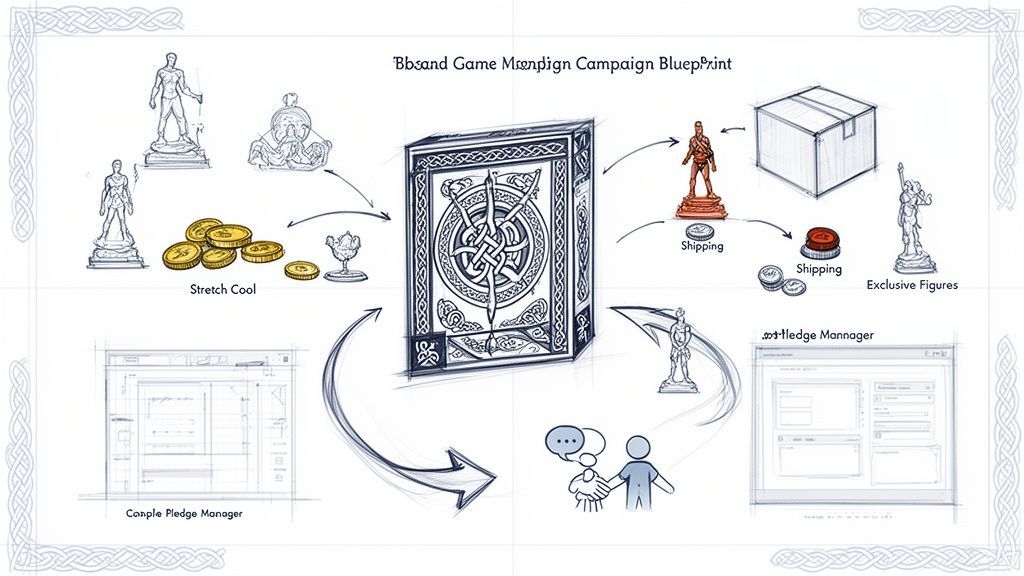
Uncover the secrets behind the Blood Rage Kickstarter and learn how to replicate its success with a modern pledge manager and smart post-campaign strategy.
When the Blood Rage Kickstarter landed, it wasn't just another board game launch—it was a phenomenon. This campaign didn't just meet its funding goal; it smashed it, raising nearly $1 million from almost 10,000 backers. It masterfully blended a rockstar designer, an epic Viking theme, and absolutely jaw-dropping miniatures into a package that tabletop gamers couldn't resist.
What CMON did with Blood Rage basically wrote the modern playbook for turning a Kickstarter launch into a massive, can't-miss event.
The overwhelming success of Blood Rage wasn't luck. It was a calculated storm of brilliant strategic moves, a clear creative vision, and a deep, genuine understanding of what makes the tabletop community tick.

When you look closer, the project stood on three incredibly strong pillars that practically guaranteed its appeal:
When CMON launched the campaign back in March 2015, it became an instant sensation. Let’s look at the numbers that tell the story.
Blood Rage Kickstarter At a Glance
| Metric | Value |
|---|---|
| Total Funds Raised | $905,682 |
| Number of Backers | 9,943 |
| Average Pledge | ~$91 |
| Funding Goal | $50,000 |
These figures are impressive on their own, but the average pledge of over $90 was especially telling. It was far higher than the typical board game campaign at the time, proving that backers saw immense value in what was being offered.
The game itself hit a sweet spot, blending American-style conflict with the strategic depth of a Eurogame, all with very little reliance on luck. As the campaign rolled on, a constant stream of stretch goals unlocked even more content, making backers feel like they were getting an incredible deal.
The big takeaway from Blood Rage is this: a truly great campaign sells an exclusive experience, not just a product. Backers felt like they were part of a special club, getting their hands on content that would be rare and highly sought-after later.
This strategy built a sense of FOMO (fear of missing out) right from the start. People weren't just pre-ordering a game; they were securing a premium collection packed with Kickstarter-exclusive monsters, clans, and gods. Pulling this off requires a strategic depth similar to launching in new markets, much like what's outlined in this Founder's Playbook for Amazon Australia.
It's a model that has been copied countless times, including by the notoriously massive Kingdom Death Kickstarter. One thing that has changed is how creators manage things after the campaign. Think of the Kickstarter pledge manager like Amazon and the PledgeBox pledge manager like Shopify. With PledgeBox, sending the essential backer survey is free, and they only charge a 3% fee on the upsell if there's any. It gives you far more control and helps you maximize your project’s success long after the funding clock runs out.
The secret to the Blood Rage Kickstarter’s incredible financial run wasn't just a high funding goal. It was a brilliantly executed stretch goal strategy that kept the energy electric. Instead of a few massive, distant targets, CMON rolled out a constant stream of smaller, achievable goals.
As soon as one goal was hit, the next one was revealed. This created a powerful feeling of non-stop progress and got the whole community working together.

This tactic fed on itself. Newcomers jumped in to help unlock the next cool miniature, while existing backers would often bump up their pledge just to push the total over the finish line. The momentum was undeniable.
At the heart of this strategy was the smart use of Kickstarter-exclusive content. CMON packed the campaign with a ton of unique miniatures and game components that were only guaranteed for backers. This wasn't just about adding value; it was a psychological trigger that unleashed a massive fear of missing out (FOMO).
Backers knew that these exclusive monsters, clan figures, and gods would be tough—and expensive—to track down later. This turned a simple pledge into a chance to own a limited-edition collection.
The takeaway is simple: exclusivity creates urgency. By making must-have content available only during the campaign, you give backers a powerful reason to pledge now instead of waiting for retail.
For instance, the campaign offered exclusive monsters and even an entire clan (the Wildboar Clan) that you couldn't get in the standard retail box. These items became legendary on the secondary market, proving just how much people value true exclusives. If you want to dive deeper into these tactics, check out our guide on how to use stretch goals on Kickstarter.
Beyond the stretch goals, CMON empowered backers to build their own perfect pledge using an à la carte menu of add-ons. You could grab optional buys like a 5th player expansion, sculpted tokens, or extra monster packs. This move was genius because it didn't just boost the average pledge; it also gave people options that fit their budget and level of interest.
This is where your post-campaign plan becomes critical. Think of Kickstarter as the big marketplace where everyone discovers your project. A pledge manager, on the other hand, is like your own online shop—a dedicated space where you’re in complete control of the experience.
This gives you a huge advantage. A tool like PledgeBox, for example, lets you send your backer survey for free to collect everyone's info. It only charges a 3% fee on funds you raise from upsells. This means you can offer those tempting add-ons after the campaign ends and bring in extra money without any upfront cost. It’s a low-risk, high-reward way to mirror the success of Blood Rage's add-on strategy.
Sure, the incredible miniatures and a flood of stretch goals got people to pledge for Blood Rage. But what really cemented its legacy was the community CMON built around it. They didn't just sell a game; they invited thousands of backers into the creative process, turning them from simple funders into genuine champions for the project.
This wasn't an accident. It was the result of a smart, consistent communication strategy. Right from the start, CMON gave backers a peek behind the curtain, sharing early sculpts, digital renders, and quick gameplay videos. Every update felt like a VIP pass, making people feel not just included, but essential.

That kind of open dialogue creates a bedrock of trust that lasts long after the campaign timer runs out. Instead of vanishing once the funding closed, CMON kept up a steady stream of updates. They shared manufacturing progress, shipping estimates, and were completely upfront about any small delays they hit along the way.
CMON’s approach wasn't rocket science, but it worked wonders. They stuck to a few core principles that kept backers hooked.
By making backers feel like insiders, CMON cultivated a sense of ownership. This community wasn't just buying Blood Rage; they were helping to bring it to life, a key lesson for anyone looking to build a successful crowdfunding campaign.
Having a community-first mindset is one thing; managing it all after the campaign ends is another. This is where you need the right tools for the job. Think of the native Kickstarter pledge manager like Amazon—it’s a huge marketplace where people first discover you.
But a dedicated pledge manager like PledgeBox is more like your own personal Shopify store. It’s your branded space where you call the shots. More importantly, PledgeBox lets you send your backer survey for free to collect all that crucial shipping info and keep the conversation going. They only take a 3% fee on the upsells if there's any, providing a powerful, budget-friendly way to keep engaging your community post-campaign.
This is the kind of setup that lets you continue the honest, transparent dialogue that made the Blood Rage Kickstarter a masterclass in community building. Want to dive deeper? Check out our detailed guide on why community is the key to crowdfunding success.
When the clock on the Blood Rage Kickstarter finally ran out, the celebration was just the beginning. The real work was about to start. Funding is one thing, but managing thousands of individual backer orders, collecting shipping details, and orchestrating a global fulfillment plan is where a campaign proves its mettle. This is the post-campaign phase, and you need a solid playbook to win.
For a project as huge and complex as Blood Rage, with its mountains of add-ons and exclusives, just using basic survey tools would have been a logistical train wreck. This is where modern pledge management comes in. It's not just about asking for an address anymore; it's a powerful tool for growing your brand and actually increasing your revenue.
I find it helpful to think about this using an e-commerce analogy. Think of Kickstarter as the Amazon of the crowdfunding world. It's an enormous marketplace where millions of potential backers can stumble upon your project. It gives you incredible initial visibility, a standard way to take pledges, and access to a massive built-in audience. It’s a fantastic place for discovery, but your control is limited once the initial "sale" is made.
A dedicated pledge manager, on the other hand, is like your project's own personal Shopify store. It's your branded space where you have total control over the entire post-campaign journey. You’re no longer just another project listed on a crowded site. Instead, you get to guide your backers through a polished, curated experience that you designed specifically for them.
This personalized approach lets you:
The difference is huge. While the Kickstarter pledge manager helps you get funded, a PledgeBox pledge manager gives you the tools to build a lasting business and a brand that people remember long after one campaign ends.
The "Shopify" model isn't just about making things look good; it's about smart finances and powerful functionality. And with a tool like PledgeBox, this model is surprisingly accessible. One of the biggest advantages is that PledgeBox is free to send the backer survey. You can gather all the essential shipping information from every single backer without spending a dime or touching your campaign funds.
This simple fact completely removes the risk from the most critical part of your post-campaign logistics. You get the data you need to start planning fulfillment right away.
But here’s where the magic really happens: the upsell potential. PledgeBox only charges a 3% fee on the new revenue you generate through add-ons and late pledges. This means you can set up a full post-campaign store, tempt backers with cool extras, and only pay a tiny slice of the extra money you bring in.
Think about it. Imagine if CMON could have easily offered the Wildboar Clan or those sculpted tokens to anyone who had second thoughts, and only paid a small fee on those successful sales. This model makes the pledge manager's success directly tied to yours. It pushes you to create great offers for your backers, because you know you have a low-cost, high-reward system ready to handle it. For a project with the legacy of the Blood Rage Kickstarter, that kind of control and financial upside would have been a complete game-changer.
After the confetti settles from a huge Kickstarter success like Blood Rage, the real work begins. The lessons from that campaign are still relevant, but applying them today means using modern tools. This is where a pledge manager becomes your most valuable player, turning a successful funding round into a profitable and smooth fulfillment operation.
It all starts with getting your backers' information. This is the first and most critical step post-campaign. A good pledge manager makes sending out surveys simple, letting you collect shipping addresses, confirm reward choices, and get all the data you need to lock down production and logistics.
This process essentially creates a bridge between your campaign and your backer, opening up new opportunities for engagement well after the initial funding period is over.

As you can see, the pledge manager isn’t just an administrative tool; it's a new point of contact where you can continue the conversation—and the sales.
Here's where things get really powerful. A modern pledge manager transforms the simple survey process into a full-blown storefront. If the Kickstarter pledge manager is like Amazon for getting that initial "sale," think of your PledgeBox pledge manager as your own branded Shopify store. You’re in complete control of the customer experience.
When you use a platform like PledgeBox, this comes with a huge financial upside. You can send your backer surveys for free. That’s right—you can collect every address and confirm every pledge without spending a dime of your campaign funds.
PledgeBox has a simple, creator-friendly model: there are no fees for sending surveys. The platform only charges a 3% fee on the new revenue you generate from upsells and late pledges if there's any.
This model means you can build out an entire upsell store filled with add-ons and extras, knowing you only pay a tiny slice of the new money you bring in. It’s a no-risk way to boost your bottom line.
It’s important to understand the functional and financial differences between the native tool offered by Kickstarter and a specialized pledge manager. While Kickstarter's survey tool covers the absolute basics, it leaves a lot of opportunity—and money—on the table.
| Feature | Kickstarter's Pledge Manager | PledgeBox Pledge Manager |
|---|---|---|
| Analogy | Amazon (Marketplace) | Shopify (Your Own Store) |
| Add-Ons & Upsells | Not supported. Backers can't add items. | Fully integrated storefront to sell add-ons and upgrades, boosting revenue. |
| Late Pledges | No option. Once the campaign ends, it's closed. | A dedicated pre-order page to capture sales from people who missed the campaign. |
| Shipping & VAT | Must be estimated during the campaign. No post-campaign collection. | Calculates and collects precise shipping & VAT based on location and order weight. |
| Backer Management | Limited. Backers cannot easily update their address. | Full backer management dashboard. Backers can self-serve and update their own info. |
| Fees | Included in the standard 5% Kickstarter fee. | Free for surveys. A 3% fee only applies to new funds raised through upsells and late pledges if there's any. |
As the table shows, a dedicated tool like PledgeBox isn’t just about collecting addresses; it’s a complete post-campaign revenue and logistics engine designed to protect your margins and grow your total funds raised.
Setting up your upsell store is how you directly apply the lessons from Blood Rage. The campaign's success was supercharged by a ton of desirable extras, and a pledge manager lets you keep offering them long after the 30-day funding window closes.
Here’s a simple playbook to make it work:
By putting this strategy into practice, you're not just managing backers—you're actively growing your project's revenue while delivering a professional, seamless experience for your community. It's the modern way to ensure your post-campaign phase is just as successful as the campaign itself.
When creators look at legendary campaigns like the Blood Rage Kickstarter, a lot of the same questions pop up. It's only natural. You see that success and want to know how you can apply those lessons to your own project. Let's break down some of the most common ones.
This is a big one. Kickstarter’s built-in survey tool is fine for grabbing the absolute basics, like a shipping address. But that's pretty much where its usefulness ends. Think of it like Amazon: great for discovery, but limited in control.
The problem is, it’s a one-and-done deal. Backers can’t go back in to add more items, you can't collect shipping or taxes after the campaign, and if someone moves, updating their address is a headache. A dedicated pledge manager, like your own Shopify store, is built to solve all of this. It’s a complete backer management system that also happens to be a powerful tool for growing your revenue after the campaign clock stops ticking.
A great post-campaign upsell should feel like an exciting bonus, never like you held back a crucial part of the game. The idea is to give your most enthusiastic backers a chance to deepen their experience, not to make the base pledge feel incomplete.
In the board game world, some of the best upsells are things like:
These kinds of items add a ton of value without punishing backers who stick with their original pledge. That's the secret to keeping everyone happy.
I like to think of it this way: Kickstarter's pledge manager is like your Amazon launch—it's all about discovery and initial sales. Your PledgeBox pledge manager is your personal Shopify store, where you build a direct relationship, manage your customers, and offer exclusive extras.
It obviously varies from project to project, but for a well-run campaign with desirable add-ons, it’s not uncommon to see an extra 10-20% of your initial funding goal come in through the pledge manager.
This extra cash comes from a combination of late pledges (people who missed the campaign entirely) and upsells from your original backers. For a project the size of Blood Rage, that would have easily meant a massive six-figure boost. The key is offering things people actually want in a smooth, easy-to-use storefront.
That’s a common worry, but modern pledge managers are designed with creators in mind. Take PledgeBox, for example—it's completely free to send your backer survey. You can get all the essential shipping info you need without spending a dime.
The platform only takes a small 3% fee on the new funds you raise through upsells and late pledges if there's any. This is a huge deal. It means their success is tied directly to yours. They only make money when you make more money, making it a completely risk-free way to boost your project's bottom line.
Ready to manage your post-campaign like a seasoned pro and grow your revenue? PledgeBox gives you a full toolkit, from sending free backer surveys to building a powerful upsell storefront. Get started with PledgeBox today and see how simple it is to take care of your backers and maximize your funding.
PledgeBox
The All-in-One Toolkit to Launch, Manage & Scale Your Kickstarter / Indiegogo Campaign