 PledgeBox
The Marvel Zombies Kickstarter A Creator's Guide to Licensed Games
Want to create a Marvel Zombies Kickstarter? Learn why the CMON campaign was a licensed hit, the risks of using IP, and how to legally crowdfund your own game.
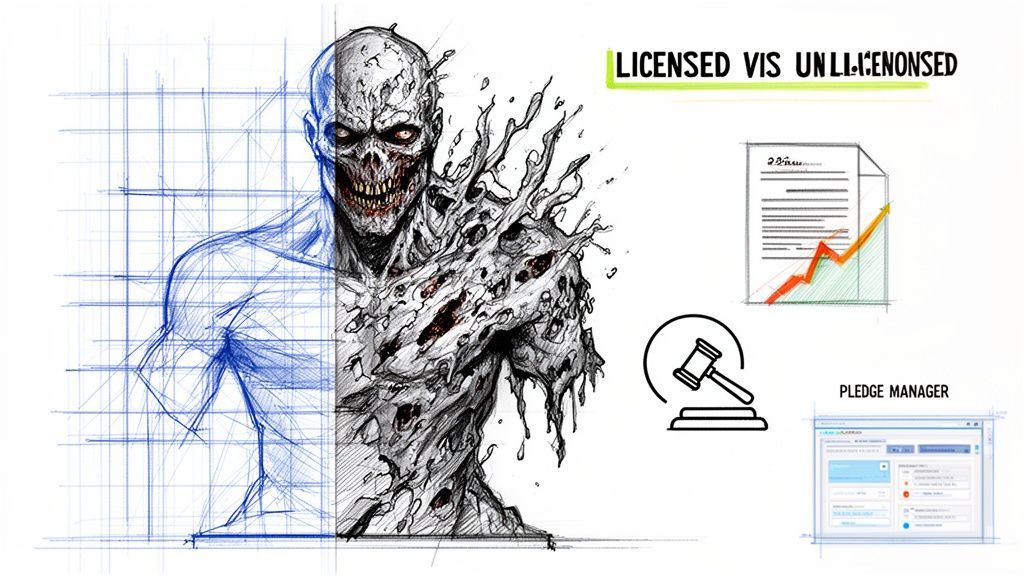
Want to create a Marvel Zombies Kickstarter? Learn why the CMON campaign was a licensed hit, the risks of using IP, and how to legally crowdfund your own game.
Let's get this out of the way right up front. The short answer is a hard no, you cannot launch your own Marvel Zombies Kickstarter without securing an official license directly from Marvel.
The record-shattering campaign you've seen was a fully authorized partnership, not some scrappy indie project that got lucky.
After seeing the absolute phenomenon that was the Marvel Zombies - A Zombicide Game campaign on Kickstarter, it’s natural to feel inspired. You might be buzzing with ideas for your own project based on the beloved comic series. But hold on—trying to crowdfund anything using that IP would land you in serious legal trouble almost immediately.
The characters, the artwork, the stories, and even the name "Marvel Zombies" are all protected intellectual property (IP) owned by Marvel. Think of it like this: using someone else's IP is like borrowing their car, repainting it, and then trying to sell it as your own. You might have a vision for it, but at the end of the day, it isn't yours to sell. This is a fundamental rule on all major crowdfunding platforms. You can dive deeper into how Kickstarter's rules and policies work in our detailed guide.
The official campaign, a massive collaboration between game publisher CMON and Marvel, is a perfect case study in the sheer power of a licensed project. This wasn't just another successful board game launch; it was a crowdfunding event that took the tabletop world by storm.
The campaign absolutely exploded from the second it went live, pulling in $1 million in just 13 minutes and crossing the $2 million mark in under an hour. That kind of explosive start is only possible when you have the massive, built-in audience that comes with a global brand like Marvel.
By the time the 16-day campaign wrapped up, it had raised an incredible $9,072,946 from 28,974 backers. This just goes to show the immense financial potential when a great product meets a legal, high-profile partnership.
Here’s a look at the official campaign page that had thousands of fans hitting the "Back this project" button.
From the first glance, the page screams "high-quality, official product." It masterfully combined the trusted Zombicide game system with iconic Marvel characters, creating a formula that proved completely irresistible to fans.
Before we move on, it's helpful to see the stark contrast between a fully licensed campaign and an unauthorized attempt.
The table below breaks down exactly what separates a professional, licensed project like CMON’s from a fan-made project that will likely never see the light of day.
| Aspect | Licensed Campaign (e.g., CMON's Marvel Zombies) | Unauthorized Campaign |
|---|---|---|
| Legality | Fully legal with official contracts from the IP holder (Marvel). | Illegal and subject to immediate takedown notices and potential lawsuits. |
| Platform Trust | Welcomed by Kickstarter; seen as a high-value, legitimate project. | Violates Kickstarter's IP policies and will be shut down quickly. |
| Marketing Power | Can openly use official names, logos, and characters to attract a huge, built-in audience. | Must avoid using any copyrighted terms, making it impossible to attract the target audience. |
| Funding Potential | Extremely high, often reaching multi-million dollar figures due to brand recognition. | Extremely low; campaign will be terminated before it can gain any real traction. |
| Creator Risk | Low legal risk; the primary risk is meeting production and fulfillment promises. | High legal and financial risk, including fines and legal fees. |
| Backer Confidence | High; backers trust the established brands and are confident they will receive a product. | Very low; savvy backers will recognize it as an unlicensed project and avoid it. |
As you can see, attempting to use a major IP without permission is a non-starter. The risks are huge, and the chances of success are virtually zero.
Once the adrenaline of the campaign funding period is over, the real work of managing your backers begins. This is where creators need a solid system to collect shipping info, handle taxes, and maybe even offer a few last-minute add-ons. The relationship between a platform like Kickstarter and a pledge manager is often misunderstood.
Here’s a simple way to think about it:
Best of all, PledgeBox is free to send your backer surveys. They only charge a small 3% fee on any extra money you raise from upsells. This model lets creators manage their backers and organize fulfillment without any upfront costs, which is a huge help when you're focused on getting your product made.
So, what was the secret sauce behind the official Marvel Zombies Kickstarter and its absolutely massive success? When you pull back the curtain on its $9 million run, you find a playbook full of powerful lessons for any creator, whether you’re working with a household name or building your own.
At its heart, the campaign’s magic came from a brilliant pairing: a world-famous IP with a rock-solid game system. CMON took the global appeal of Marvel—a brand with decades of comics, movies, and die-hard fans—and plugged it into the proven mechanics of their hit Zombicide board game. This was an instant win, pulling in both Marvel collectors and seasoned tabletop gamers who already trusted the system.
The result was an explosion of interest right out of the gate. Just look at these numbers.

This kind of demand is a rare sight, and it shows what happens when a powerful brand turns a product launch into a genuine cultural event. It didn't just succeed; it set a whole new standard for what a board game could achieve on Kickstarter.
But a big license alone doesn't guarantee a $9 million payday. CMON’s real genius was in their strategy. They masterfully built anticipation before the launch and kept the energy high with a constant stream of stretch goals and exclusive add-ons.
Every time the funding hit a new milestone, more content was unlocked—a new hero, a grotesque zombie version of a beloved character, you name it. This turned the campaign itself into a game, encouraging the nearly 29,000 backers to spread the word and bump up their pledges to help hit the next exciting goal. It kept the community buzzing from start to finish.
The pledge tiers were also cleverly designed to welcome everyone:
While Kickstarter was the launchpad, the mission wasn't over when the funding ended. The post-campaign phase is where even the biggest projects can stumble. This is when you have to collect shipping details, manage taxes, and figure out how to get thousands of different orders to the right doorsteps.
Think of it this way: Kickstarter's pledge manager is like the big, bustling marketplace of Amazon where everyone makes their initial purchase. A dedicated pledge manager like PledgeBox, on the other hand, is your own personal Shopify storefront. It gives you the control you need to manage those backer relationships and even make post-campaign sales.
This storefront approach not only makes the experience smoother for your backers but also opens up new ways to grow your revenue. Best of all, a tool like PledgeBox is completely risk-free to set up. It’s free to send your backer surveys and only takes a 3% cut from any upsell funds you raise. This model lets you get organized and handle fulfillment without any upfront cost, turning a logistical nightmare into a streamlined, profit-boosting part of your project.
The dream of creating a game based on something you love—like a Marvel Zombies Kickstarter—is a powerful one. We get it. But letting that passion lead you down the path of using unlicensed intellectual property (IP) is a shortcut to disaster.
Think of IP as digital real estate. You simply can’t build your project on land you don’t own.
Marvel, like any other entertainment giant, aggressively protects its characters, names, and stories. Using their IP without a license isn't a minor slip-up; it's a direct infringement that brings serious heat. Your campaign can be shut down by Kickstarter almost instantly after a takedown notice. Even worse, you could be staring down a cease-and-desist letter or a lawsuit that could ruin you financially.
Many creators think they’ve found a clever loophole, but these common arguments almost never work for a commercial project.
The risk isn't just about money, either. It's about your reputation. Having a campaign publicly shut down for IP infringement can permanently damage your credibility with the backer community.
Trying to navigate intellectual property law on your own is like walking through a minefield blindfolded. Copyright law protects the specific expression of an idea (like the art and story in a comic book), while trademark law protects brand identifiers (like logos and character names). Using either without permission puts your entire project at risk.
At its core, the problem is that you’re trading on the goodwill and brand recognition that an IP holder has spent decades and millions of dollars to build. Platforms and courts see this as an unfair attempt to profit from their brand, which is why they act so swiftly and seriously.
If you ever find yourself in this messy situation, you need to act fast and know what your options are. For creators who’ve already received a takedown notice, we've put together a guide on what to do if your Kickstarter project gets involved in an IP dispute.
But honestly, the only guaranteed way to run a successful and stress-free campaign is to respect IP rights from day one.

So, the bad news is you can't just launch your own Marvel Zombies Kickstarter. But here's the good news: you can absolutely create a smash-hit game by channeling that same creative fire into a project that’s 100% legal and gives you complete ownership.
Instead of getting tangled in a licensing nightmare, let's look at three powerful ways to build a game on your own terms. This isn't about settling; it's about building a much stronger, more sustainable foundation for your career as a creator. Your idea deserves a real shot, and that starts with owning it from day one.
The most powerful path forward? Create your own intellectual property (IP). Ask yourself what you truly love about the Marvel Zombies idea. Is it the clash of horror and heroism? The shocking character transformations? The desperate fight for survival?
You can capture that exact feeling without ever touching a licensed character. Dream up your own unique heroes, design a new kind of apocalypse, and write lore that is entirely yours. This approach is a game-changer for a few key reasons:
If you really want to work with established characters, the public domain is your treasure chest. It’s filled with incredible stories, characters, and settings that are no longer protected by copyright, making them free for anyone to use and reinvent. Think of classic figures like Dracula, Frankenstein's Monster, and the cosmic horrors from H.P. Lovecraft’s Cthulhu Mythos—all fair game.
Imagine a "Zombified Sherlock Holmes" mystery or a tabletop battle featuring the Thor and Loki from ancient Norse mythology, not the MCU. The public domain is a massive sandbox full of recognizable figures you can legally transform into something new and exciting for your backers.
Finally, think of your first project as a stepping stone. Huge brands like Marvel only partner with established companies like CMON because they have a proven history of success. They know how to deliver high-quality products and handle massive global fulfillment operations.
By launching and successfully delivering your own original game, you build an invaluable track record. You're showing the industry you can manage a budget, grow a community, and bring a great product to market. While a Marvel license might be out of reach for now, a single hit game puts you on the map, apening doors to all sorts of licensing partnerships down the road.
Protecting what you create is the first step, and you can learn more by checking out our guide on safeguarding your crowdfunding intellectual property.

The adrenaline rush of watching the pledges climb is over, and your campaign is officially funded. It's a huge milestone, but the celebration is short-lived. Now, the real work begins. The post-campaign phase is where successful projects are made or broken, and it all comes down to managing your backers and organizing fulfillment.
This is where a pledge manager becomes the most valuable tool in your entire project.
Without one, you're signing up for a logistical nightmare. Imagine trying to track thousands of backers, collect addresses, and manage add-ons using nothing but messy spreadsheets and an overflowing email inbox. A pledge manager automates this entire process, turning that potential chaos into a clear, manageable workflow. It’s the essential bridge between a funded campaign and a delivered product.
Think of it this way:
Kickstarter's pledge manager is like Amazon: It’s a massive, public-facing marketplace where backers discover your project and make their initial pledge.
A pledge manager like PledgeBox is your Shopify: It’s your own private, back-end command center. This is where you manage your customer relationships, collect crucial shipping data, and even generate more revenue long after the campaign clock hits zero.
While Kickstarter is your launchpad, a pledge manager is the mission control you need for the rest of the journey.
One of the biggest hurdles after a campaign is simply getting the right information from every single backer. A pledge manager’s primary job is to solve this. Tools like PledgeBox empower you to send branded, mobile-friendly surveys to gather shipping addresses and let backers finalize their order details.
Best of all, PledgeBox is completely free to send your backer surveys. You won't face any setup fees or monthly charges just to get organized. This means you can collect all the vital information you need without spending a dime of your campaign funds, keeping that money reserved for manufacturing and production where it belongs.
But a pledge manager does more than just collect data—it opens up powerful new revenue streams. There's almost always lingering demand after a campaign ends, and a pledge manager helps you capture it in two key ways:
This is where the business model becomes a true partnership. PledgeBox only makes money when you make more money. While the core survey and data collection functions are free, the platform charges a transparent 3% commission on any upsell funds you raise through the platform.
It's a completely risk-free approach that aligns our success directly with yours.
For a project on the massive scale of the Marvel Zombies Kickstarter, which had tens of thousands of backers and countless add-on options, this kind of automated system isn't just a nice-to-have—it's an absolute necessity. It transforms the daunting task of fulfillment into a smooth, professional, and even profitable operation.
After diving into the legal side of a potential Marvel Zombies Kickstarter—the risks, the realities, and the rewards—you probably still have a few burning questions. Let's tackle some of the most common ones we hear from creators to give you a clearer path forward.
It’s a tempting thought, but it’s a legal minefield. Trying to create a game with characters that are merely "inspired by" a huge IP like Marvel is what lawyers call a "colorable imitation." It doesn't give you the legal cover you might think it does.
If your game is still easily recognizable as a spin-off of a famous brand, even with different names, you're facing the same takedown notices and lawsuits. Corporate legal teams are paid to be very, very good at spotting projects trying to ride their brand's coattails. The far safer—and more creative—route is to use that inspiration to build something entirely new and original.
In one word: tools. No team could manage that many people with just spreadsheets. This is exactly what a pledge manager was invented for. A platform like PledgeBox automates that entire post-campaign chaos, turning a mountain of data into a clean, organized system.
Kickstarter's pledge manager is like Amazon—a massive marketplace to get those initial pledges. A pledge manager like PledgeBox is your personal Shopify store, giving you total control over your backers after the campaign ends.
With a good pledge manager, you can send out thousands of mobile-friendly surveys to get addresses, manage complex shipping and tax rules for backers all over the globe, and keep everyone in the loop. For a project of that size, it's not a nice-to-have; it's absolutely essential.
This is the best part of the model. PledgeBox is completely free for sending your backer surveys and gathering all the shipping information you need. There are no setup fees or monthly charges for that core service.
The platform is designed to be a partner in your growth. It earns money by taking a small, transparent 3% commission, but only on the extra funds you raise through the platform itself. This comes from late pledges, new pre-orders, and any cool add-on items your backers decide to grab during the survey. It means PledgeBox only makes money when you do, making it a powerful, risk-free way to boost your final funding total.
If you're thinking about launching your own project, it’s a good idea to get familiar with the fundamentals of crowdfunding your business to set yourself up for success.
It's extremely unlikely. Giants like Marvel almost always partner with established, big-name publishers—think CMON—who have a long track record of successfully producing and shipping high-quality games on a global scale. They need 100% certainty that their multi-billion dollar brand is in good hands.
A much more realistic path is to focus on creating an amazing original game and funding it successfully on your own. Once you have a hit on your hands, a proven track record, and a built-in community, you'll be in a much stronger position to knock on the doors of major licensors for future collaborations.
Ready to turn post-campaign logistics from a headache into a new revenue stream? With PledgeBox, you can manage surveys, upsells, and fulfillment effortlessly. See why thousands of creators trust our toolkit to grow their projects after the funding ends. Discover how PledgeBox can help you today!
PledgeBox
The All-in-One Toolkit to Launch, Manage & Scale Your Kickstarter / Indiegogo Campaign