 PledgeBox
Crowdfunding Food Truck: A Step-by-Step Launch Guide
Master crowdfunding food truck campaigns with a proven, step-by-step guide to validating your concept, building a winning campaign, and delivering on promises.
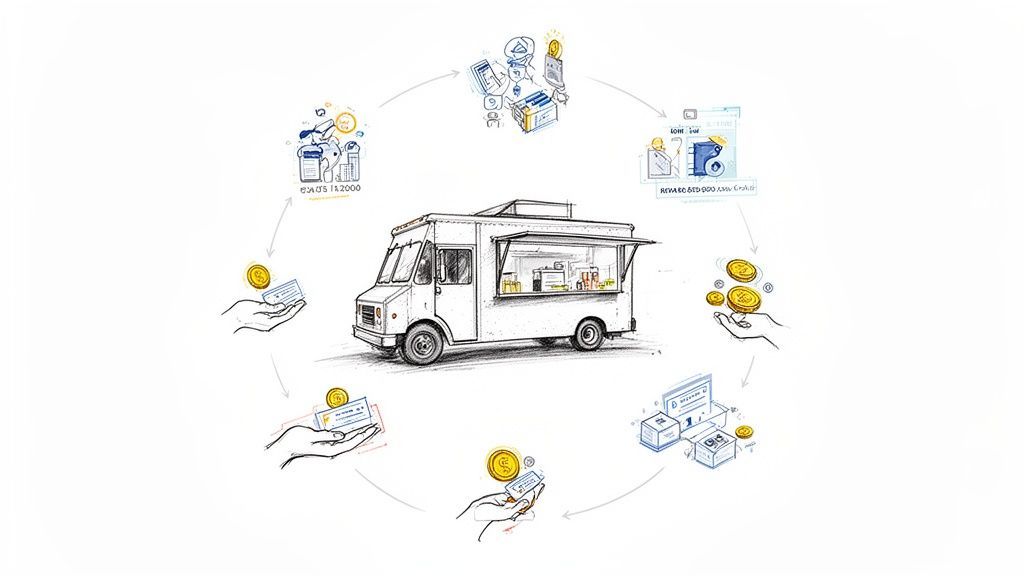
Master crowdfunding food truck campaigns with a proven, step-by-step guide to validating your concept, building a winning campaign, and delivering on promises.
Ever wondered how new food trucks hit the streets already buzzing with customers? A lot of them are skipping the bank and using crowdfunding to turn their culinary dreams into reality. This approach isn’t just about the money; it's about proving you have an audience before you even buy the truck.

Launching a food truck is an amazing journey, but let's be real—it isn't cheap. Between the truck, commercial-grade kitchen gear, permits, and your first big food order, startup costs can easily run from $50,000 to over $150,000.
Traditionally, this meant going to a bank for a big loan. That's a slow, tough process, and it’s often a non-starter for new entrepreneurs without a long business history.
Crowdfunding on platforms like Kickstarter flips the script entirely. Instead of pitching to a loan officer, you’re pitching directly to your future customers. It’s a brilliant way to validate your whole business model—from your unique menu to your brand—before spending a dime on the actual truck.
A successful campaign for a crowdfunding food truck gives you so much more than just cash. It builds a community of passionate fans who are financially and emotionally invested in your success. These people aren't just backers; they're your first loyal customers, your biggest cheerleaders, and a built-in focus group.
Let's quickly compare the two paths.
| Feature | Crowdfunding (e.g., Kickstarter) | Traditional Loan |
|---|---|---|
| Funding Source | Your future customers (the crowd) | A bank or financial institution |
| Market Validation | Built-in. Funding proves people want it. | None. You're betting the market is there. |
| Upfront Risk | Low. You secure funds before major spending. | High. You take on significant personal debt. |
| Marketing Benefit | Creates huge organic buzz and a ready customer base. | None. Marketing starts after you get the loan. |
| Community | Builds a loyal tribe of brand advocates from day one. | No community-building aspect. |
As you can see, crowdfunding isn't just an alternative; it's a strategic launchpad that sets you up with a customer base before you even open for business.
There has never been a better time to get into the food truck game. The industry is booming, creating a huge opportunity for new chefs and entrepreneurs. In fact, market projections show the global food truck market is set to grow from $4.63 billion in 2026 to $6.28 billion by 2030. That growth signals a massive public appetite for unique, mobile dining. You can see the full market projections to understand just how big this trend is.
Key Takeaway: Crowdfunding is a complete launch strategy, not just a funding method. It lets you test your idea, build an audience, and secure capital all at once, giving you a huge head start in a growing market.
While Kickstarter is great for raising the initial funds, the real work starts after the campaign ends. Managing all your new backers is a whole different challenge, and this is where a dedicated pledge manager is a lifesaver.
Think of it like this: Kickstarter’s built-in survey system is like Amazon—simple, standard, and it gets the basic job done.
But a specialized tool like PledgeBox is more like Shopify—it gives you a powerful, customizable storefront just for your backers. This is where you can really maximize your success. A pledge manager lets you easily offer add-ons and upsells, like extra meal vouchers, t-shirts, or bottles of your special sauce, turning your initial funding total into something much bigger.
Even better, PledgeBox is free to send the backer survey and only charges 3% on upsell revenue if you make any. This model lets you manage backers and boost your funds with zero upfront cost, creating a smooth path from a successful campaign to a thriving food truck business.

A successful campaign for a crowdfunding food truck doesn’t just magically happen on launch day. It’s the result of a carefully laid-out blueprint. This pre-campaign phase is where you do the real grunt work—the stuff that ensures your dream is built on a solid foundation, not just wishful thinking.
Your journey kicks off by defining your unique culinary identity. What makes your food special? Are you going to be the master of authentic Neapolitan pizza, the creator of next-level gourmet grilled cheese, or the go-to for incredible plant-based tacos? A clear, compelling concept is your north star.
Once you’ve got your niche, it’s time to become an expert on your local market. This research is absolutely non-negotiable. You can find a deeper dive into doing market research before launching, but it all boils down to understanding your city’s food scene, scoping out your competition, and finding the gaps you can fill.
Good market research means getting your boots on the ground, not just doing a few Google searches. You need to see things for yourself.
This kind of on-the-ground intelligence helps you fine-tune everything—from your menu and branding to your entire operational strategy—before you spend any serious cash. It’s what turns your passion project into a business that has a real shot at success.
With your concept validated, the next move is to build a brutally honest budget. This document is the bedrock of your campaign and will directly shape your funding goal. A fuzzy budget is a recipe for disaster, so every detail matters. You need to account for every single dollar it will take to get your truck on the road and serving up delicious food.
Let's break it down. Your budget needs to cover a few key areas:
Crucial Insight: Always, always add a contingency fund of 15-20% to your total budget. Unexpected costs aren't a possibility; they're a guarantee. This buffer can be the difference between a small setback and a project-ending catastrophe. This is a best practice used by top creators in all categories, including desktop games, where complex manufacturing can lead to surprise expenses.
The grand total of these expenses becomes your minimum funding goal. This is the number you’ll show your backers, and having a detailed breakdown proves you’ve done your homework and can be trusted with their money.
Your budget is the "what," but your brand story is the "why." People don't just back a business idea; they back a person and their vision. Your story is what creates an emotional connection with your audience and makes them genuinely want to be part of your journey.
This is especially true in the crowded crowdfunding world. The global crowdfunding market was valued at USD 1.95 billion in 2024 and is projected to skyrocket to USD 7.82 billion by 2033. This explosive growth means you’re competing with countless other creators for backers’ attention.
Your story needs to cut through that noise. Are you a third-generation chef carrying on a family legacy? Did a life-changing trip inspire your menu? Are you on a mission to bring healthy, affordable food to your neighborhood?
This narrative needs to be woven into every single piece of your campaign—your video, your project page, your social media updates. It’s what turns a simple transaction into a meaningful relationship, and a backer into a fan for life.
This is where your food truck dream starts to feel real. A killer launch for your crowdfunding food truck depends on one thing: building a massive amount of excitement before you go live. Think of it as creating a groundswell of support, so when you finally hit that launch button, a wave of hungry backers is already waiting to get you funded.
The first move? Start building your pre-launch buzz. It’s not as complicated as it sounds and starts with a simple, clean landing page. You can spin one up quickly with a tool like PledgeBox’s free pre-launch page builder. Your only goal here is to capture email addresses. This list of people who are genuinely interested in your project will be your secret weapon on launch day.
The heart and soul of any great Kickstarter campaign are the reward tiers. This is where so many first-time creators go wrong. You have to stop thinking of it as "asking for donations" and start seeing it as "offering an incredible deal." Your backers aren't just giving you money—they're pre-ordering an experience and becoming the founding customers of your food truck.
Your rewards need to feel exclusive and offer real value. A simple "thank you" email just won't cut it.
The trick is to use a tiered approach. Start with small, accessible pledges and build up to these larger, more exclusive experiences. This gives everyone a way to support you, no matter their budget.
Pro Tip: Structure your rewards to tell a story. A $10 pledge gets your name on a "Founder's Wall" inside the truck. A $50 pledge gets you an exclusive meal. A $500 pledge makes you a VIP for life. Each level should feel like a clear upgrade in both status and value. This strategy is essential in categories like desktop games, where backers love unlocking stretch goals and feeling like they are part of the creative process.
Your fundraising doesn't stop when the Kickstarter timer hits zero. The smartest creators plan for post-campaign add-ons from day one. This is how you can seriously increase your total funds raised—often by 10-20% or even more.
During the campaign, you're laser-focused on hitting that funding goal. But afterward, in the pledge manager phase, you have a captive audience of excited backers who have already committed to you. This is the perfect moment to offer them a little something extra.
For instance, a backer who pledged for a meal voucher might jump at the chance to also buy a t-shirt. Someone who snagged a t-shirt might want to add a bottle of your special sauce. These small purchases add up incredibly fast when you have hundreds of backers.
This is exactly where a dedicated pledge manager proves its worth. Kickstarter's built-in survey system is okay for the basics, but it's like using a generic template—functional but limited. A tool like PledgeBox, on the other hand, is built for this. It lets you create a smooth, branded survey experience where you can seamlessly present add-ons to your backers.
Best of all, PledgeBox is free to send the backer survey and only charges 3% on the upsell revenue you bring in. It's a no-brainer for maximizing your campaign's financial success with zero upfront risk.
Finally, you need to wrap all these pieces together on a compelling campaign page. Your story provides the emotional hook, and nothing tells a story better than a great video and photos that make people's mouths water.
Your campaign video doesn't need a Hollywood budget. It just needs to be authentic. Show your face, talk about your passion for food, and explain why this food truck dream is so important to you. People connect with people, not just business plans.
Then, back up your story with high-quality photos of your food. Remember, you're selling a culinary experience, so make people hungry! Invest in good lighting and presentation. These are the visuals that will make someone stop scrolling and hit that "Back this project" button.
You did it. You're funded! The confetti has settled, the adrenaline is wearing off, and now the real work begins. The period right after your campaign ends is one of the most critical for any crowdfunding food truck. It's all about keeping the momentum going and, just as importantly, creating a seamless path from campaign success to actually fulfilling your promises.
This post-campaign phase is where a pledge manager becomes your best friend. It’s the tool that connects your wildly successful Kickstarter campaign to the real-world puzzle of getting rewards into the hands of hundreds of excited backers. Knowing your options here is the key to stretching your funds further and keeping your new community happy.
Let’s put it this way: Kickstarter’s native backer survey is kind of like Amazon. It's standardized, it’s simple, and it does the basic job of collecting need-to-know info. It works, but it's not designed to help you grow.
On the other hand, a dedicated pledge manager like PledgeBox is more like your business's personal Shopify store. It's a powerful, customizable platform built specifically to help you expand on your initial success. It turns the simple task of collecting an address into a genuine revenue-generating opportunity.
This difference is huge. Sticking with the basic tools is like leaving cash on the table. A proper pledge manager is an investment in maximizing the success you’ve already achieved, turning your final campaign total into a much healthier operating budget.
This is your moment to offer those tempting add-ons you’ve been planning—extra meal vouchers, a cool t-shirt, or a few bottles of your signature sauce. Your backers are already pumped and invested; giving them a chance to get more of what they love is a win-win.
The best part? PledgeBox is free to use for sending your backer survey and only takes a small 3% fee on the extra cash you raise through these upsells. That means you can tap into this powerful tool without any upfront cost.
The secret to great upsells is offering items that naturally complement what your backers already pledged for. You're not just hawking random merch; you're enhancing their entire experience with your brand.
Here are a few ideas to get you started:
We dive much deeper into this topic in our guide on using upsells to increase funding. The whole idea is to make these offers feel like a natural, exciting extension of their initial support.
Remember, the work you did before launch—building buzz, creating awesome rewards, and making a killer video—is what gets you to this point.

All that foundational effort creates the engaged audience that's now eager to see what else you have to offer.
The food truck game has changed. By 2026, food trucks and trailers are seen as serious small businesses, not just a passing trend. This evolution is all about professionalizing the industry and finding new revenue streams beyond just slinging food on the street corner. For many successful owners, catering has become a more stable and profitable income source than day-to-day service.
Your backer list is a goldmine here—many of them could be your first leads for corporate catering gigs. You can learn more about these evolving food trailer trends and how they can inform your business strategy.
Your pledge manager survey is the perfect spot to test the waters. Just include a simple, no-pressure question like, "Would your company be interested in learning more about our corporate catering packages?" A single question like that can open the door to some incredibly profitable opportunities down the road.
This kind of forward-thinking is only possible if you manage your backer data well. It’s not just about getting shipping addresses right; it’s about understanding your customers and spotting future growth. With a system that keeps everything organized, you can easily filter backers by location, pledge level, and what add-ons they bought, building a powerful database for all your future marketing efforts.

The campaign is over, you hit your funding goal, and the real fun begins. Now it’s time to take that successful campaign page and turn it into a real, operational crowdfunding food truck. This part is all about logistics and execution—transforming the funds you raised into a tangible business that can finally start serving up delicious food.
Your first big-ticket item is the truck itself. Whether you’re buying a brand-new, custom-built vehicle or retrofitting a used one, this is where a huge chunk of your budget will go. Right after that comes the outfitting. This is where a complete guide to food truck kitchen equipment can be your best friend, helping you make smart purchases from day one.
With the truck secured, your next big challenge is the maze of local regulations. Honestly, this is the part of starting a food truck that catches most people by surprise. The legal stuff can be a headache and varies wildly from one city to the next.
You'll need to chase down:
While you're drowning in paperwork, start building relationships with your food suppliers. Finding reliable sources for high-quality ingredients is the foundation of your menu. You’ll want to lock in your suppliers early to get a handle on their ordering process, delivery schedules, and pricing. This is critical for managing your costs once you open for business.
Delivering rewards is your first real test as a business owner. This is your chance to show backers that their faith—and their money—was well-placed. How you handle fulfillment will set the tone for your relationship with your brand-new community of fans.
A pledge manager is your command center for this whole process. It helps you track every single backer, what they pledged for, and where they are in the fulfillment pipeline. This is where you’ll really see the difference between Kickstarter’s basic survey and a dedicated pledge management tool.
Think of Kickstarter’s pledge manager like Amazon—it’s simple and standardized. PledgeBox, on the other hand, is like Shopify—it’s a powerful, customizable tool for your brand. PledgeBox is free to send the backer survey and only charges 3% on any upsell revenue, making it a risk-free way to manage fulfillment and boost your funds.
Managing all the different reward types requires serious organization:
For a deeper dive, our guide on everything to handle after your crowdfunding project ends offers a complete checklist. At the end of the day, the goal is simple: turn the people who funded your dream into your most loyal customers, happily lining up on day one.
If you're thinking about crowdfunding for your food truck, you probably have a lot of questions. It's a big step! Let's clear up some of the most common ones we hear from aspiring food truck owners.
This is the big one, right? A crowdfunding food truck campaign can bring in anywhere from $15,000 for a used trailer and startup costs to over $100,000 for a brand-new, fully-loaded vehicle. There's no magic number.
Your final funding total really comes down to three things: a rock-solid budget, how much people crave your food, and how well you market your campaign before it even launches.
A great way to ground your expectations is to spend some time on Kickstarter. Look up other food truck campaigns that got funded. What did they offer? How much did they raise? This research will give you a realistic benchmark for your own project.
Your rewards are the heart of the campaign. You're not just asking for cash; you're giving your first customers a chance to be part of the story. The best rewards offer real value and make your backers feel special.
Here are a few ideas that always seem to work well:
Yes, you absolutely should. Even if you aren't shipping a single thing, a pledge manager is a game-changer. It offers powerful tools that go way beyond Kickstarter's basic post-campaign survey.
For example, when backers go to fill out their survey, you can easily offer them add-ons like extra meal tickets, drinks, or that cool t-shirt they were eyeing. This is a simple way to increase your total funding after the campaign has already ended.
Think of it this way: Kickstarter's native survey is like Amazon—functional but standardized. A dedicated tool like PledgeBox, on the other hand, is your own custom storefront—more like Shopify.
PledgeBox is free to send the backer survey and only charges 3% on upsell revenue if you make any. This lets you manage your backers like a pro and boost your funding with zero upfront cost, ensuring a smooth ride from your campaign's end to your grand opening.
Ready to manage your backers and maximize your funding? PledgeBox offers a powerful, all-in-one toolkit designed to help you succeed after your campaign ends. Start for free and see how much more you can raise.
PledgeBox
The All-in-One Toolkit to Launch, Manage & Scale Your Kickstarter / Indiegogo Campaign