 PledgeBox
Unlock how to create a kickstarter campaign and launch your project
Discover how to create a kickstarter campaign with a practical, expert-led roadmap covering pre-launch to post-campaign success.

Discover how to create a kickstarter campaign with a practical, expert-led roadmap covering pre-launch to post-campaign success.
Before you write a single word for your campaign page, the real work begins. Many first-time creators think a brilliant idea is all it takes, but the hard truth is that strategy separates the funded from the forgotten.
The most successful campaigns are built on a solid foundation of research, planning, and budgeting long before they go live. This pre-launch phase is where you build the scaffolding that will support your entire project, ensuring you launch with momentum, not just hope.
Think of it as a three-part harmony: you need to validate your idea by seeing what's already out there, define your ideal backer and the story that will grab them, and build a rock-solid budget. Nail these three, and you're already ahead of the pack.
This isn't just about having an idea; it's about building a viable plan that sets you up for victory from day one.
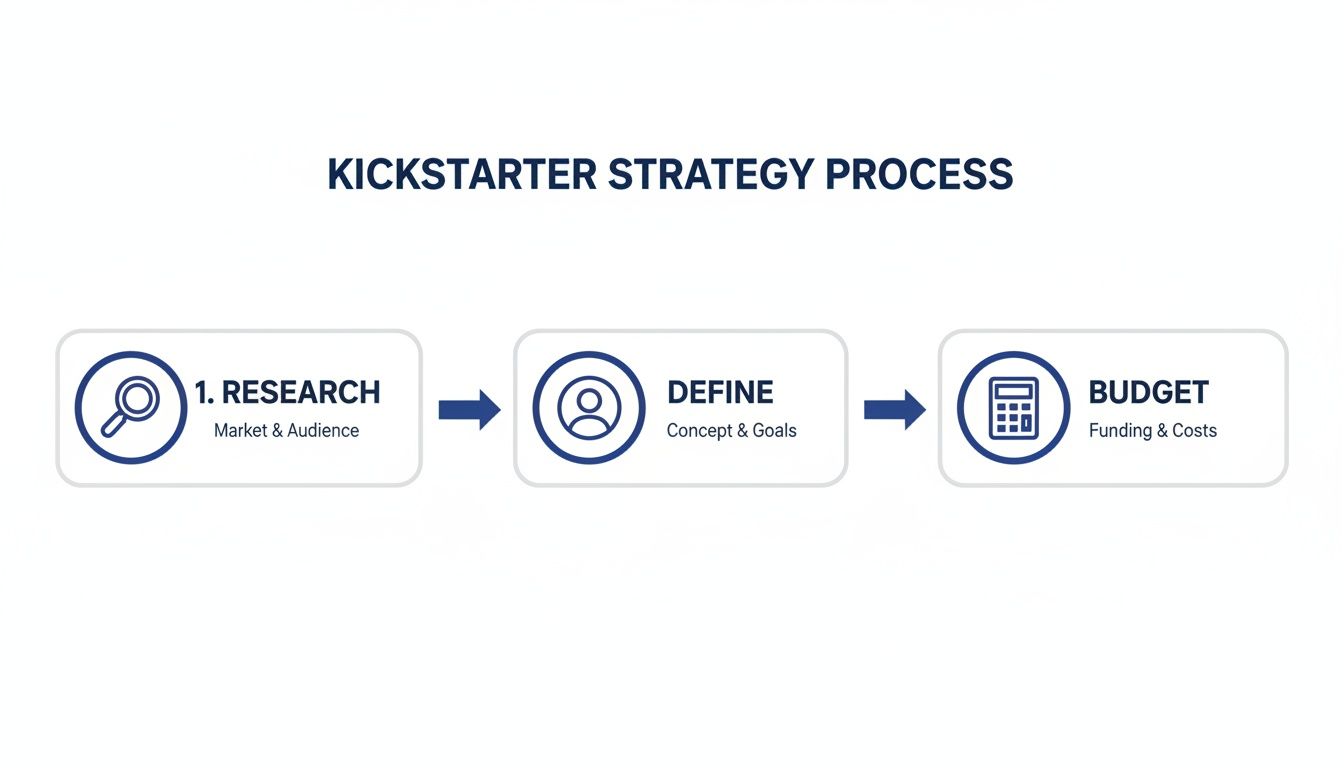
This process shows that a winning campaign starts with homework. Each step informs the next, creating a clear path to your funding goal.
Your first move is to become a student of Kickstarter. Seriously, dive deep. Search for projects like yours—pay close attention to the ones that smashed their goals and the ones that crashed and burned.
Analyze what the winners did right:
This research is your reality check. As of January 2025, the overall success rate for Kickstarter projects is just 41.98%. That number swings wildly depending on the category. Games, for example, tend to do well, while other categories are a much tougher climb. Knowing these stats helps you set a goal that’s ambitious but actually achievable.
A classic rookie mistake is pricing your product based on gut feeling. Don't do it. Let the data be your guide. If ten similar projects all found success at a $50 price point, launching yours at $150 without an incredibly good reason is just asking for crickets.
Okay, you've done your market research. Now, who exactly are you trying to reach? It's time to create your "backer persona"—a detailed profile of the one person you want to click that "Back this project" button.
Get specific. Think about their age, their interests, and what keeps them up at night. Where do they hang out online? What other Kickstarters have they backed? This persona isn't just a fun exercise; it becomes the north star for every word you write and every ad you run.
Your project's story needs to speak directly to this person. This isn't about listing specs and features. It’s about crafting a narrative. Why does this project need to exist? What problem are you solving? People don't just back products; they back passionate creators with a compelling story.
If you're looking for a structured way to tackle this, a good pre-launch kit can give you the templates and checklists to make sure you don't miss a beat.
This is the step that trips up so many creators, but it's non-negotiable. You absolutely must build a detailed, realistic budget before you go any further. This means accounting for every single cost you can think of.
Your budget needs to include:
Getting these numbers wrong is the fastest way to turn a fully-funded campaign into a financial nightmare. Your funding goal is not your profit—it’s the bare minimum you need to produce your product, fulfill every reward, and pay all the bills along the way.
Before you start designing your page or shooting your video, it's worth running through a final check of these strategic cornerstones.
Here’s a quick summary of the essential strategic elements you need locked in before moving on to the creative side of building your campaign.
| Checklist Item | Key Action | Why It Matters |
|---|---|---|
| Market Research | Analyze 5-10 similar successful and failed campaigns in your category. | Establishes realistic pricing, reward structures, and funding goals based on what the market will support. |
| Backer Persona | Create a detailed, one-page profile of your ideal backer, including their interests and online hangouts. | Ensures your story, visuals, and marketing efforts are laser-focused on the right audience. |
| Core Narrative | Write a one-paragraph "elevator pitch" that explains the "why" behind your project, not just the "what." | A compelling story is what converts casual browsers into passionate backers who share your campaign. |
| Preliminary Budget | Itemize all potential costs, including production, fees, marketing, shipping, and a 10% contingency fund. | Prevents you from setting a funding goal that’s too low, which can lead to financial disaster post-campaign. |
Completing this checklist gives you a powerful strategic foundation. It transforms your campaign from a hopeful idea into a well-oiled machine, ready for launch day.
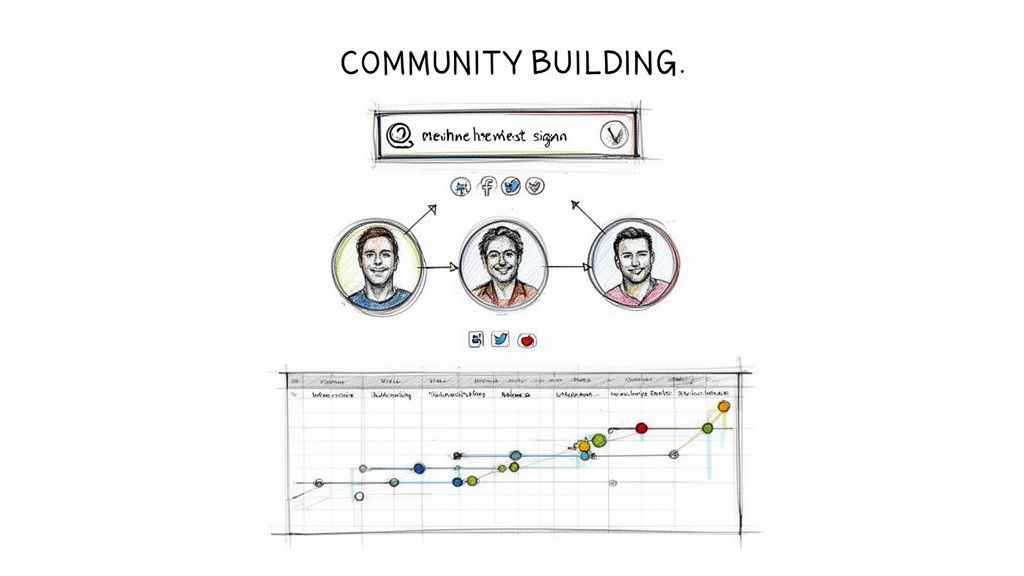
Too many creators fall into the trap of believing a great product will just sell itself. The truth? Those Kickstarter campaigns that look like overnight successes were actually won months before they ever went live. Their secret weapon wasn't a viral video—it was an engaged community, ready and waiting to pledge on day one.
Building that dedicated following before you launch isn't just a good idea; it's the difference between a campaign that fizzles out and one that blows past its funding goal. Learning strategies like how to cultivate a super fans group is non-negotiable in today's crowdfunding world.
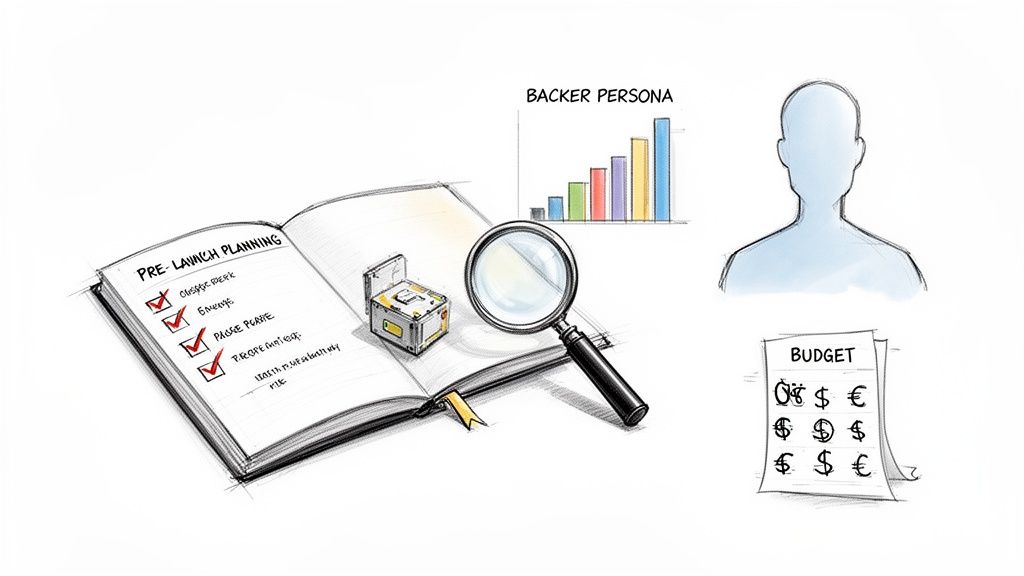
This pre-launch phase is where you turn passive onlookers into true believers who are genuinely excited to support your project.
The first piece of real estate you need is a high-converting landing page. This isn’t a carbon copy of your Kickstarter page. Think simpler. It's a focused, single-page website with one job: to capture email addresses from people who want to see your project succeed.
Make it visually compelling with your best product photos or renders. Most importantly, it needs a crystal-clear call to action, something like, "Sign up for launch-day alerts and lock in your exclusive early-bird discount."
That incentive is crucial. Offering an early-bird special just for your email subscribers makes them feel like insiders and creates a powerful sense of urgency. It’s the perfect way to reward your earliest supporters.
Once your landing page is live, it’s time to start driving the right traffic to it. Don't just spray and pray. Zero in on the online spaces where your ideal backers already hang out.
This nurturing process is everything. The data is clear: the most successful campaigns often launch with email lists of over 1,000 subscribers, and they see a success rate 5x higher than campaigns that launch cold. It's the hidden key that's often more important than your product category or when you launch.
Building an email list is just step one. Now you have to keep that list warm. Send out regular updates that provide real value, but don't spam their inboxes. A weekly or bi-weekly email is usually a good rhythm to hit.
Your goal is to build so much anticipation that when you finally hit "launch," your community is already there, credit card in hand. For a deeper dive, check out our guide on how to build a list of potential backers before your Kickstarter campaign launches.
Your pre-launch community isn't just a mailing list; they are your launch-day army. They provide the initial funding surge that creates social proof, attracting new backers and signaling to the Kickstarter algorithm that your project is a hot commodity.
That initial momentum is what it's all about. A strong start creates a powerful feedback loop of excitement and pledges that can propel you through the entire campaign. This is how you create a Kickstarter that doesn't just fund, but truly thrives.
Your Kickstarter page is the digital soul of your project. Let's be clear: it is the single most important asset you will create. Think of it as your sales pitch, product demo, and brand story all rolled into one. Every element, from the headline down to the very last reward tier, has to be meticulously designed to turn a curious visitor into a committed backer.
This page is more than just a description; it's an experience. Your job is to build an emotional connection and establish a level of trust that makes hitting that "pledge" button feel like an easy, exciting decision.
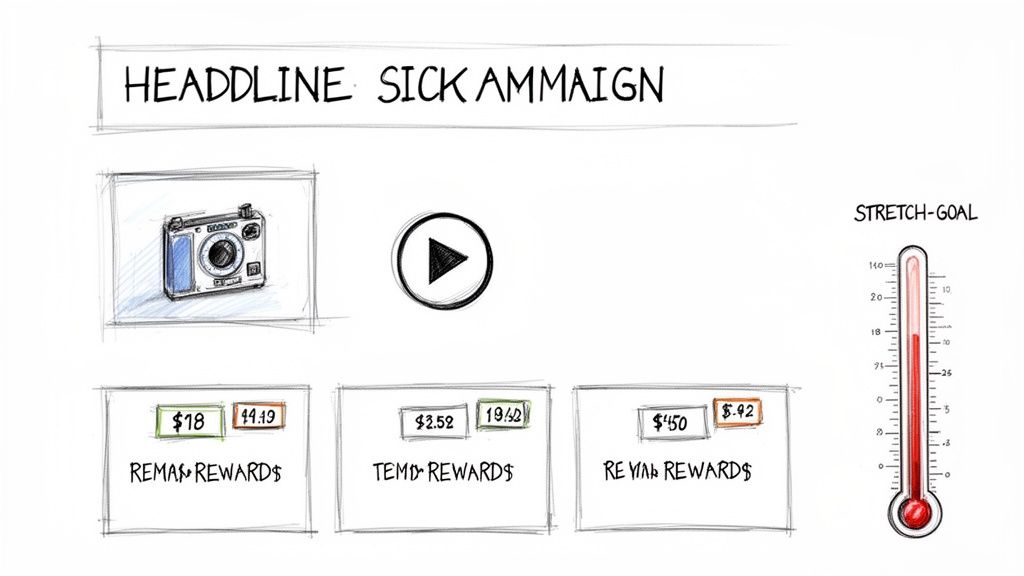
The moment someone lands on your page, their eyes jump to two things: your main image or video, and your headline. You have just a few seconds to hook them. Your project video is hands-down your most powerful tool for getting this right.
It doesn’t need a Hollywood budget. What it does need is to be clear, engaging, and authentic. A great video should:
Your headline and sub-headline are the one-two punch that works with your video. They must clearly and concisely explain what your project is and who it's for. Ditch the clever jargon. Clarity wins every single time. To get your page to really perform, it helps to adopt principles from proven ecommerce landing page best practices, focusing on clear messaging and strong calls to action.
After the video grabs their attention, the project story is where you seal the deal. A classic rookie mistake is just listing out product features. Don't do that. Instead, structure your page like you're having a conversation, guiding the reader from one point to the next in a way that just makes sense.
A page layout that consistently works follows this kind of flow:
Break up those long walls of text with visuals. Use bold headlines, bullet points, and blockquotes to make the page scannable. You can learn more about effective design in our detailed guide on Kickstarter campaign page design tips.
Your reward tiers are the engine of your campaign's conversion strategy. The goal is to create a ladder of options that appeals to everyone, from the casual supporter to the all-in superfan.
A well-structured set of reward tiers gently guides backers up to your ideal pledge value. The goal is to make each step up feel like such a great deal that it's an easy choice to spend a little more.
Start with a low-cost, digital-only, or simple "thank you" tier to get people on board. Your main product should be the star of the show, often with a "Super Early Bird" discount to create urgency. From there, add deluxe or bundled tiers that offer a ton of value for a higher pledge.
Stretch goals are your secret weapon for keeping the momentum going after you hit your funding goal. Don't reveal them all at once. Announce them one by one to create ongoing excitement and give your community a reason to keep sharing. Make sure the goals are meaningful upgrades that benefit every backer, like better materials or cool new features.
The timer is ticking, and your project is finally live. This is no time to kick back and relax; the first 48 hours are without a doubt the most crucial window of your entire campaign. A powerful start creates a snowball of social proof and excitement that can propel you right past your funding goal.
Think of your pre-built audience as launch-day rocket fuel. The mission now is to trigger a massive, synchronized push that turns months of anticipation into a huge wave of pledges. This is the moment all that community building pays off.
The second your page goes live, you need to hit "send" on every single channel you've been warming up. This isn't a slow trickle of information—it's a coordinated blast designed to get as many eyeballs on your page as fast as humanly possible.
Your messaging should be tweaked for each platform, but the core message needs to be unified and urgent: "We're LIVE! Go grab your early-bird discount now!"
This immediate burst of activity is exactly what catches the attention of new backers browsing Kickstarter and, just as importantly, the platform's own algorithm.
There’s a powerful psychological trigger at play here. When potential backers land on a project that's already 20% or 30% funded within a few hours, it sends a clear signal: this is a winner. That social proof melts away their hesitation and makes them far more likely to jump on board.
This is precisely why that initial surge is everything. Research shows that hitting just 30 percent of your funding goal in the first week can boost your campaign's chance of success to an incredible 75 percent. Campaigns that also feature personal videos and share daily updates tend to raise significantly more, which just underscores the need for constant engagement right from day one. If you want to dive deeper into these trends, you can explore additional crowdfunding statistics and insights.
Don't underestimate the power of being present. In the first 48 hours, treat your campaign page like a live event. Be there to answer every question, thank every backer, and keep the energy electric.
For the first two days, your job is to be the campaign's biggest cheerleader and most responsive customer service rep. Turn on all your notifications and be ready to jump on comments and questions in real-time.
A quick, thoughtful response doesn't just help the person who asked; it shows every other visitor that you're a dedicated and reliable creator they can trust.
Celebrate every milestone publicly. Post an update when you hit 25%, 50%, and 75% of your goal. Blast these updates out on social media. This constant communication keeps your project top-of-mind and inspires your community to share your progress, creating a self-fueling cycle of excitement that is the hallmark of every successful launch.
That "Successfully Funded!" notification is an incredible feeling, but don't pop the champagne just yet. In many ways, the real work is just getting started. The minute your campaign ends, the clock starts ticking on managing backer expectations, gathering crucial info, and actually fulfilling every single promise you made.
This is the make-or-break phase. It’s where you either cement your reputation as a pro or completely drop the ball. The key to navigating it successfully? Using the right tools. Trying to run everything through Kickstarter’s built-in survey system is a recipe for logistical nightmares, and worse, it means leaving a ton of extra money on the table.
Let’s be real: Kickstarter’s native survey tool is basic. It’s designed to do one thing—collect shipping addresses. It's functional, but it’s rigid. For any project with multiple options, add-ons, or international backers, it quickly becomes a tangled mess.
A dedicated pledge manager, on the other hand, is your post-campaign command center. It turns the simple task of sending a survey into a massive opportunity to grow your revenue. This is how you take a successful campaign and scale it into a truly profitable venture.
Your relationship with your backers doesn't end when the campaign timer hits zero. The post-campaign phase is your chance to deepen that relationship, provide a seamless experience, and build a foundation for future projects. A great pledge manager is your most valuable partner in this process.
This is where a tool like PledgeBox changes the game. It lets you create a professional, branded storefront where your backers can finalize their pledges, confirm their shipping info, and—most importantly—buy more stuff. Think extra copies of your product, exclusive accessories, or other items they might have missed during the campaign.
This isn't some minor perk; it's a core revenue strategy. We see successful creators increase their total funding by 10-20% (and sometimes much more) just from these post-campaign upsells.
The best part is the pricing model. PledgeBox is completely free to send your backer survey. You only pay a small 3% fee on the extra money you make from add-ons sold through the platform. It's a no-brainer. If you don't sell anything extra, you pay nothing for the powerful survey tools.
When you see the features side-by-side, the difference becomes crystal clear. Kickstarter gives you the bare minimum, while a pledge manager gives you a full suite of tools to manage backers and grow your business.
| Feature | Kickstarter Surveys | PledgeBox |
|---|---|---|
| Add-On Sales | Not supported. You can't sell more items after the campaign ends. | Fully supported. Create a "store" experience to upsell add-ons and boost revenue. |
| Cost | Free with your campaign. | Free for surveys. Only 3% on funds raised from post-campaign add-on sales. |
| Shipping Fees | Must be estimated and included upfront in the pledge amount. | Lets you charge precise, real-time shipping fees based on backer location and final order weight. |
| Backer Management | Limited. It's a real pain to manage address changes or complex orders. | A powerful dashboard for easy address updates, order changes, and segmenting backers. |
| Customization | Standard, non-branded survey format that looks the same for everyone. | Highly customizable. Add your own branding, images, and personalized questions. |
| Late Pledges | Not supported. Anyone who missed the campaign is out of luck. | Lets you accept late pledges, capturing more sales from people who found you after it ended. |
Ultimately, how you manage this phase is what turns a one-off Kickstarter project into the foundation for a sustainable brand. By handling backer information like a pro and maximizing your revenue, you're not just finishing a campaign—you're launching a business.
Even the most meticulously planned campaign will hit you with a few head-scratchers. As you inch closer to launch day, you’ll inevitably find yourself wrestling with questions about money, timing, and what the heck to do after the funding clock stops.
Let's clear up some of the most common questions creators ask. Think of this as your final gut-check before hitting that big green launch button.
There’s no single price tag on a Kickstarter launch—costs can swing from a few hundred bucks to tens of thousands. The one thing you can't do is show up with an empty wallet. Before you even dream of launching, you need a budget for three key areas.
Realistically, you’ll need cash on hand for:
A solid rule of thumb is to have at least 10-20% of your funding goal sitting in your bank account, ready for these upfront costs.
While there's no magic launch button that guarantees success, years of crowdfunding data have revealed some pretty clear patterns. Timing your launch can give you a serious edge right out of the gate.
Most veteran creators will tell you to launch on a Tuesday around 10:00 AM Eastern Time. It’s the sweet spot. You miss the Monday morning chaos but catch people across North America before they’re swamped for the week.
Seasonally, the action heats up in the Spring (March-May) and Fall (September-October). You’ll want to steer clear of major holidays and the sleepy summer months when potential backers are out on vacation. Of course, this is just a starting point—always do a little digging to see when your specific audience is most active online.
Yes, and you absolutely should! This is one of the most powerful, yet frequently missed, opportunities to significantly increase your total funding. It’s also why using a dedicated pledge manager is a non-negotiable for anyone serious about turning their project into a real business.
Kickstarter's built-in surveys are bare-bones; they just don’t have the horsepower for post-campaign sales. A tool like PledgeBox, on the other hand, turns your survey into a dedicated storefront. Here, backers can grab extras, upgrade their pledge, or add accessories, dramatically boosting your final revenue.
Think of Kickstarter's pledge manager like Amazon—a huge, one-size-fits-all marketplace. A PledgeBox pledge manager is like Shopify. You get total control to customize the experience, manage your customers, and grow your sales on your own terms.
The best part? It’s a completely risk-free way to add revenue. For example, PledgeBox is free to send your backer survey and only charges 3% of the upsell revenue if there is any. This means you get to tap into a whole new income stream with zero upfront cost.
Getting shipping costs wrong is one of the quickest ways to watch your profits evaporate. I’ve seen it happen time and time again. Whatever you do, don't guess.
First, you need the final weight and dimensions of your product in its packaging. Use those specs to get real-time quotes from multiple carriers for your key shipping zones (like the USA, EU, and the rest of the world).
The smartest move is to charge for shipping after the campaign is over using a pledge manager. This lets you bill each backer the exact amount based on their specific location and any add-ons they bought. It’s the only way to protect your margins from the brutal surprise of flat-rate shipping miscalculations.
Ready to manage your backers and scale your revenue like a pro? PledgeBox gives you all the tools you need, from powerful surveys to post-campaign upsells. Get started for free today.
PledgeBox
The All-in-One Toolkit to Launch, Manage & Scale Your Kickstarter / Indiegogo Campaign