 PledgeBox
10 Localization Best Practices for Crowdfunding Creators
Localization best practices for crowdfunding creators: translate pages, price in local currency, handle VAT, validate addresses, and survey backers.
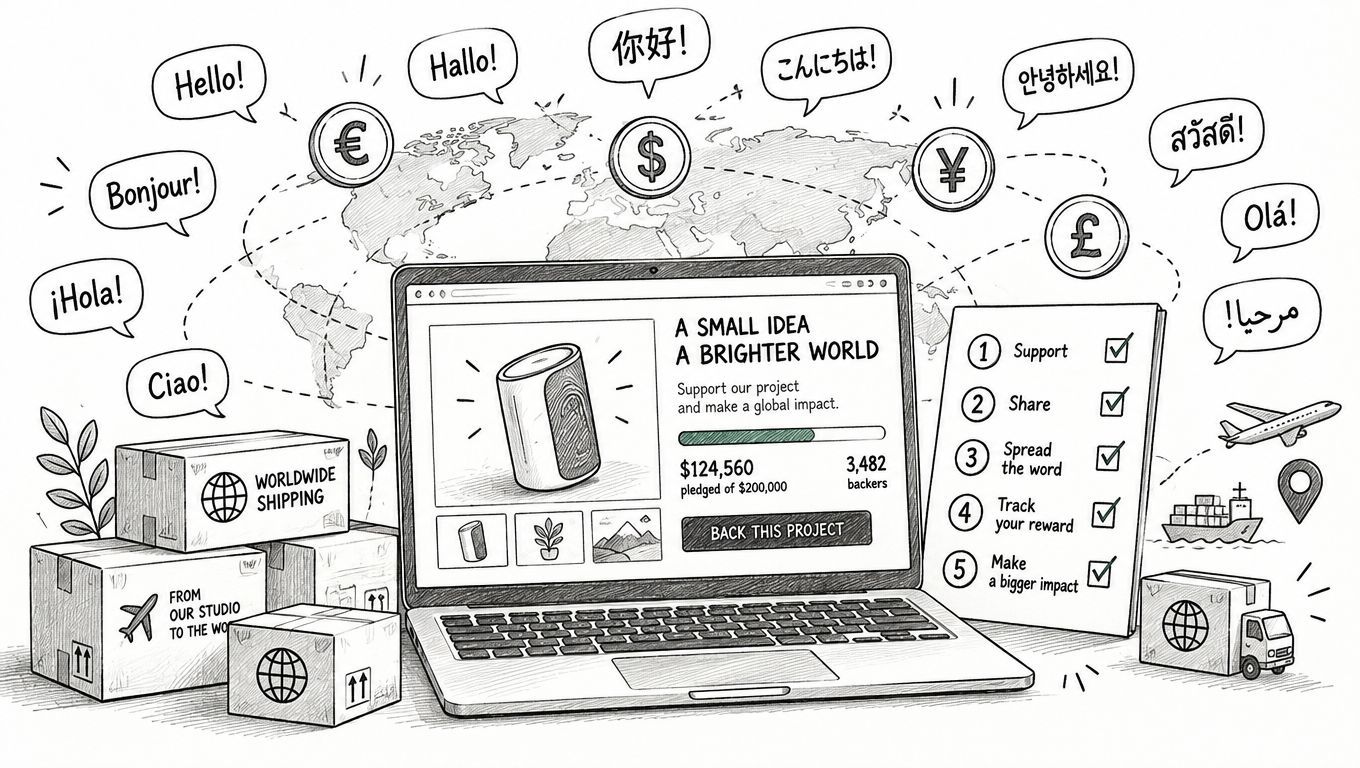
Localization best practices for crowdfunding creators: translate pages, price in local currency, handle VAT, validate addresses, and survey backers.
A backer in Berlin sees a pledge total in dollars, a shipping fee that appears only at the end of checkout, and a survey written entirely in English that they only partly understand. Most lost pledges and failed deliveries begin with one of these gaps. The ten localization best practices below follow the order in which problems surface, from the campaign page to pricing, shipping, tax, addresses, the post-campaign survey, payments, cultural review, compliance, and support. Fix the highest-cost gaps first, then build the rest of the experience around them. For broader planning context, use this guide for cross-border founders.
A backer opens your campaign page, reads an English-only risk disclosure, and cannot tell whether the reward includes the promised components. The product may be strong, yet unclear language can stop the pledge before pricing or shipping becomes relevant.
CSA Research found that 76% of consumers preferred to buy when product information was available in their own language, while 40% said they'd never buy from websites in other languages. The research surveyed 8,709 consumers across 29 countries in their native languages. CSA Research's consumer language findings show why campaign copy needs more than a late translation pass.
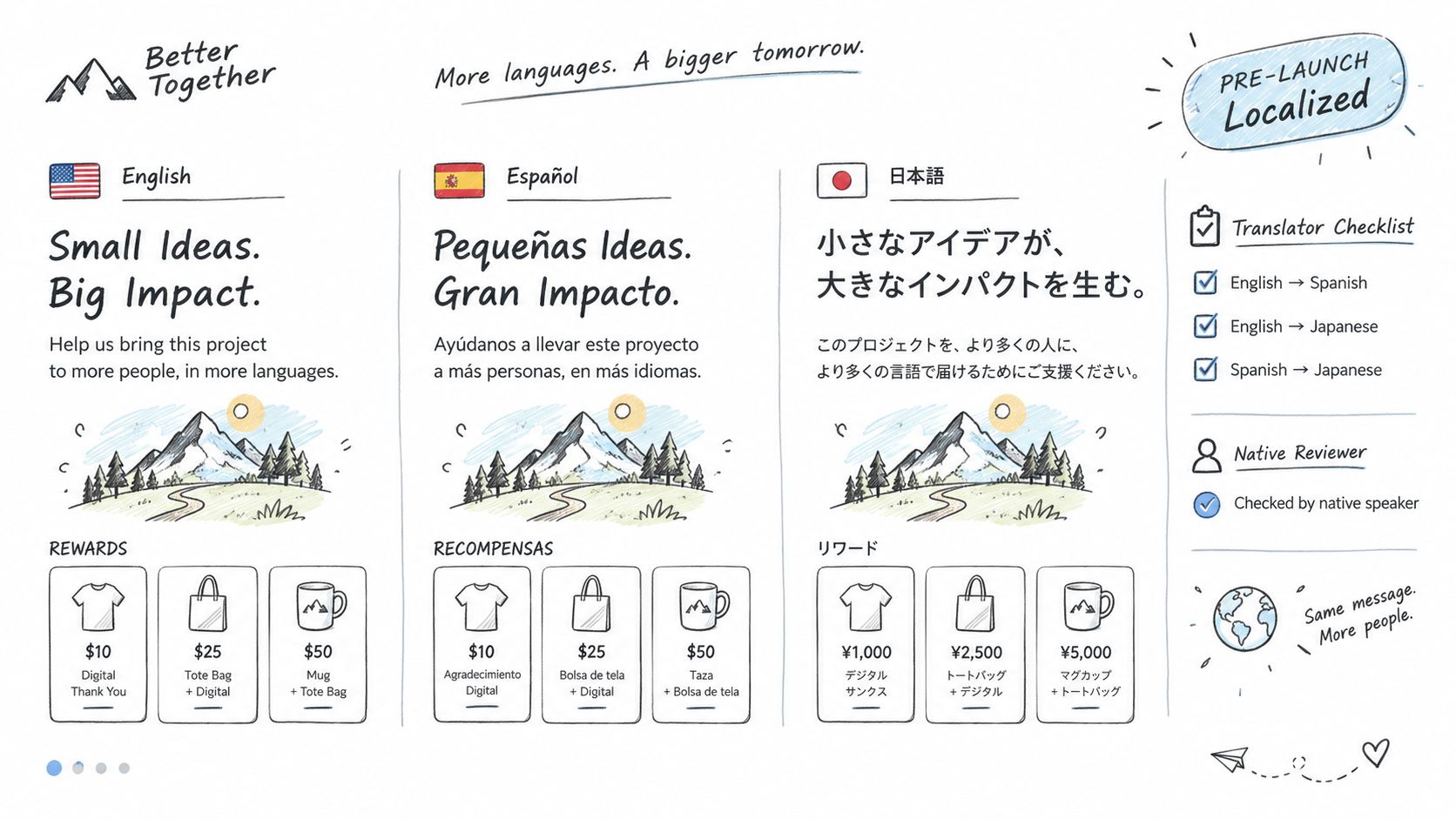
Localize the title, pitch, reward descriptions, FAQs, risk disclosures, idioms, product terms, dates, and measurements. A board game might publish German and French rule summaries beside its English pitch. A hardware campaign may need Japanese and Korean specification sheets, not only translated headlines. Native-speaking reviewers should check whether the page sounds credible and whether technical terms carry the intended meaning.
Create a glossary for reward names, components, technical features, and shipping terms. Test each localized page with people from the target market before launch. PledgeBox's multi-language support helps creators keep campaign and post-campaign language consistent in one workspace, rather than rebuilding translations across separate tools.
Keep the same reward logic across every language version. If a component, limitation, or delivery condition changes in translation, backers may choose the wrong tier or expect the wrong product.
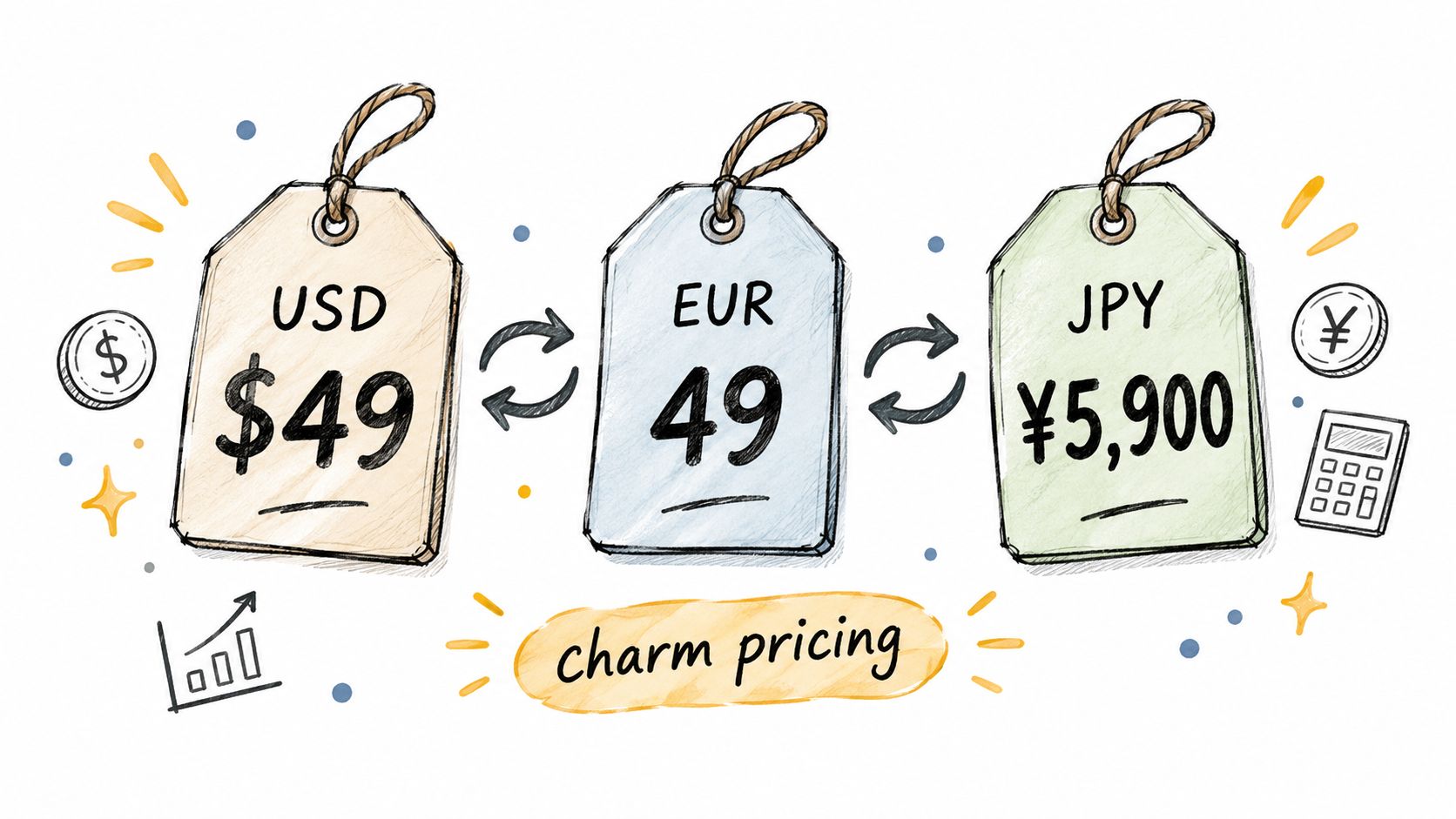
A backer shouldn't need a separate conversion tool to understand what a reward costs. Showing a familiar currency reduces mental effort, but you still need to confirm how your platform and payment processor handle collection, conversion, refunds, and payout reporting. Some campaigns collect pledges in one currency and show an estimate in another. Others create separate local price points.
Separate GBP and EUR reward tiers can avoid awkward converted amounts for European backers. A single USD tier with an approximate local total may be simpler, but it creates uncertainty when exchange rates move. Neither approach works automatically for every campaign. Choose based on your accounting setup, expected markets, and ability to reconcile refunds and add-ons.
Check supported pledge currencies before publishing reward tiers. If you set local prices, leave room for exchange-rate movement and verify the actual margin by currency. PledgeBox supports Stripe and PayPal, which handle many currencies and conversion workflows, while its pledge manager brings reward and add-on totals into one operational view. You can also review global payment solutions for SA businesses when comparing regional payment infrastructure.
Use local date formats and measurement units alongside currency. A price may look localized while the product dimensions remain in inches or the delivery date uses an unfamiliar format. That inconsistency weakens confidence at exactly the point where the backer is deciding whether to proceed.
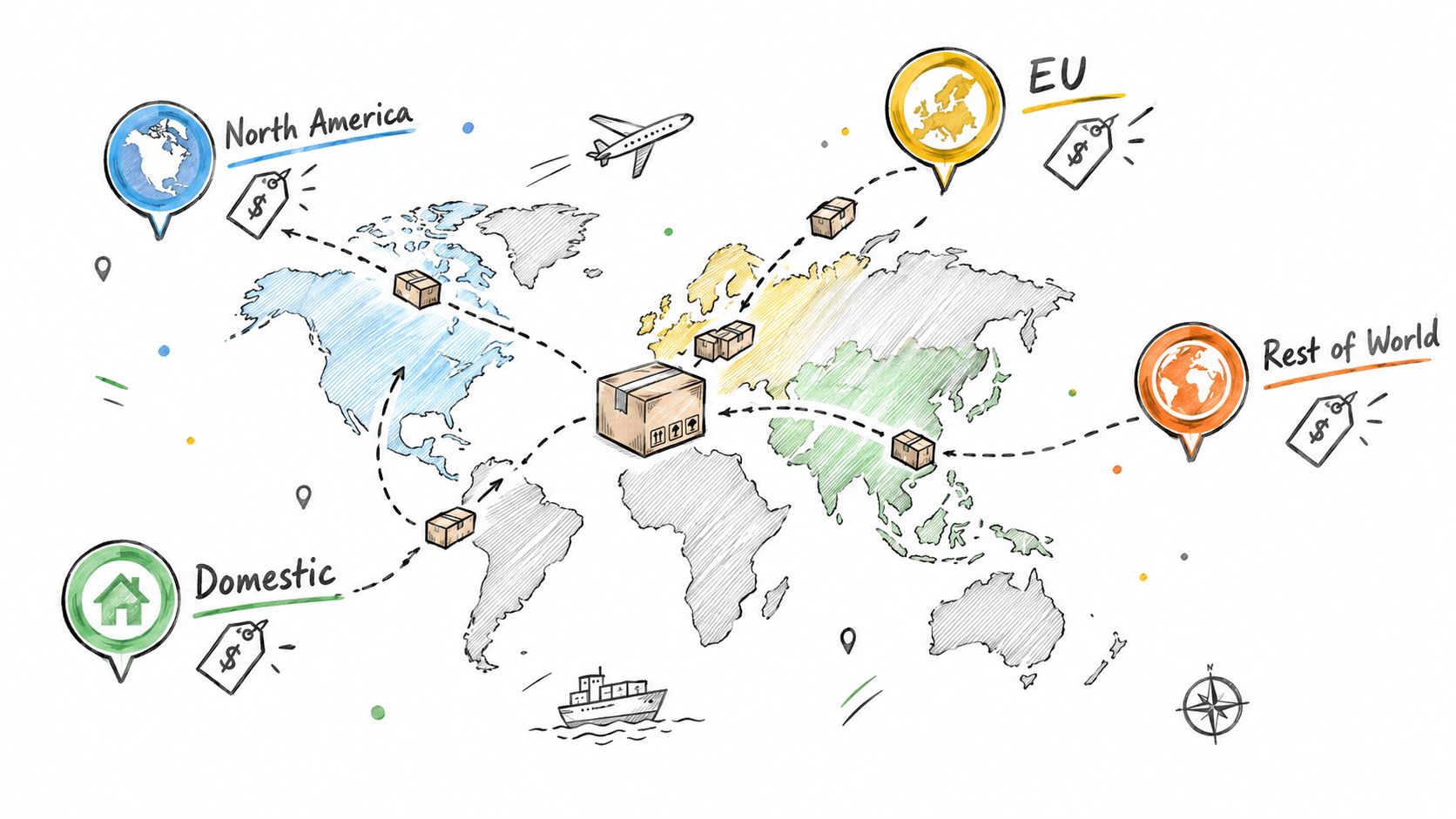
Shipping errors turn into public complaints quickly. A single international rate may look simple in a campaign budget, but it rarely reflects differences in parcel size, carrier service, remote-area surcharges, customs handling, or battery restrictions. Group countries into practical zones and show the zone list before a backer commits.
A board game publisher might separate Core Europe, the UK, Canada and the US, and the Rest of World. A hardware startup may exclude countries where battery transport isn't available, then explain the restriction on the campaign page instead of surprising backers after payment.
Get carrier quotes for heavy and distant parcels before launch. Publish eligible countries early so backers can check their location. PledgeBox can collect shipping fees through the survey and pledge manager, then support shipment tracking and vendor exports for fulfillment teams. Address validation during the survey also catches a wrong-country entry before a label is created.
Practical rule: A shipping zone is useful only when the creator can explain which countries it includes, which carrier serves it, and what happens if the address falls outside the planned route.
Review rates when carrier terms change. Keep a contingency in the zone calculation, but don't hide a broad surcharge inside a supposedly universal fee. Transparent regional pricing is easier to defend when delivery conditions change.
Taxes create a second price shock after shipping. A backer may accept the reward price, then reject delivery when a carrier asks for VAT, GST, customs duty, or a handling payment. Localization requires a clear decision about whether the creator collects applicable charges at checkout or leaves them for the recipient on delivery.
Delivered Duty Paid, or DDP, generally gives the seller more control over the delivered cost. Delivered at Place, or DAP, can be simpler operationally, but the buyer may owe charges before receiving the parcel. The right choice depends on the destination, product category, carrier, and tax advice. Don't describe either arrangement vaguely.
State which prices include tax and which destinations may incur import charges. Keep a region-by-region tax record and update it as the campaign changes. PledgeBox supports VAT and tax collection in its survey, allowing creators to show more of the expected fulfillment cost before shipment. Its VAT and tax compliance guidance is useful when mapping the survey flow.
For customs documents, use accurate declared values and the correct HS codes. Don't reduce a customs value to make the parcel appear cheaper. That can create clearance problems, insurance disputes, or additional questions for the recipient.
A campaign risk section should explain the tax approach in plain language. Backers can tolerate a charge they understood before pledging. They're much less forgiving when the charge appears without warning at the door.
An address form that works in the UK can fail in Japan or Brazil. Field order, postal code structure, province requirements, and writing systems vary. Some countries need a state or province. Others don't. Forcing every backer through the same fields creates false errors and incomplete addresses.
A localized form should change labels and requirements by country. It should also allow a backer to continue when a location doesn't fit the default database. PledgeBox offers Google Maps-powered address validation, which checks entries against real-world locations during the backer survey.
A tabletop publisher might require postal code validation during the survey to catch a missing or malformed entry. A hardware creator shipping to Japan may ask backers to enter the address in local order so the result matches carrier requirements. The point isn't to force one universal format. It's to capture the format the destination and carrier use.
Use a second check before label creation. Keep optional fields clearly optional, provide a “my address isn't listed” path, and separate personal data from general campaign reporting. After fulfillment, follow your privacy policy for retention and deletion.
The survey turns campaign promises into shipping records. Reward selections, size choices, compatibility questions, tax details, and delivery instructions must be clear enough for each backer to answer correctly. As noted earlier, CSA Research found that many consumers prefer information in their own language, and some rely on machine translation. Give backers localized guidance while they confirm what they ordered.
Translate survey questions, reward descriptions, size charts, confirmation pages, reminders, and deadline messages. Let backers change languages without losing their answers. Use local date formats, time zones, metric measurements, and familiar sizing references. A survey that explains a clothing size or product specification poorly can create avoidable support requests and replacement shipments.
Check completion by language and device. If one localized version has a lower completion rate than others, review its wording, required fields, and mobile layout before sending another reminder. Keep reminders short, state the closing time in the recipient's local time, and send them during reasonable local hours. Route complex questions to human support.
PledgeBox is free to send the backer survey. There's no upfront, campaign, or per-backer fee. PledgeBox charges 3% only on revenue collected through survey-based upsells, including add-ons, shipping fees, and taxes or VAT. If the survey generates no qualifying upsell revenue, the survey service costs nothing.
That pricing lets creators treat localization as an operating requirement rather than a per-recipient expense. A board game creator can send reminders in German, French, and Spanish, then test each version on a phone.
Operational test: Complete the survey as a backer in every priority language, using the local formats and fields you expect to receive.
A localized price won't help if checkout rejects the payment method a backer normally uses. Dutch backers may expect iDEAL. German backers may look for Sofort or PayPal. Belgian customers may prefer Bancontact, while Brazilian customers may use Pix. Availability depends on the processor, country, transaction type, and platform configuration, so verify support before promising a method in campaign copy.
PledgeBox supports Stripe and PayPal, giving creators access to broad payment coverage and a way to reconcile payments and add-on sales in one pledge-manager workflow. That doesn't remove the need to review each target market. A payment method available through a processor may still require separate activation or have different refund rules.
Show supported payment logos where they're accurate. Check fees, settlement timing, refund handling, and currency conversion for each method. Track declines and incomplete checkouts by country and payment type, then investigate whether the problem sits with the card, the processor, the address, or the language of the error message.
A campaign may discover that international card checkout performs poorly for Dutch visitors and add iDEAL. Another creator may emphasize PayPal in markets where backers already trust it. The best payment mix comes from observed checkout behavior, not from adding every possible option.
A translated sentence can be correct and still feel wrong. Humor, gestures, colors, symbols, holiday references, and product comparisons carry local meaning. A joke that makes sense in one campaign market may confuse another. A color associated with celebration in one region can suggest mourning or caution elsewhere.
Review the complete creative set, not just the body copy. A game publisher might replace a holiday reference in campaign art for a regional audience. A technology startup may reword battery-life claims so they fit local advertising expectations. Product claims deserve evidence and legal review wherever they appear.
Ask at least one local reviewer in each major market to assess the page, images, email subject lines, reward names, and calls to action. Don't rely on literal translation for idioms or puns. Keep an approved-claims file that records the wording, supporting evidence, and markets where the claim is permitted.
PledgeBox's branded pre-launch pages and email tools can help creators test regional creative before launch. Use that feedback to identify confusion early, but don't treat audience preference as a substitute for legal review.
A local reviewer should be able to flag a visual that feels inappropriate, a phrase that implies an unintended promise, or a technical term that customers don't use. That input often costs less than repairing trust after launch.
International fulfillment can fail even when the backer chose the correct reward and paid the correct shipping fee. Electronics, toys, batteries, chemicals, food-contact products, and connected devices can require different certifications, warnings, labels, or documentation by market. The certification is part of the delivery plan, not a detail to resolve after pledges are collected.
A hardware creator may need CE documentation for the EU, FCC approval for the US, or UKCA requirements for Great Britain. A toy creator may need EN 71 testing in Europe. Requirements depend on the product and destination, so work with a compliance consultant, testing laboratory, or customs specialist familiar with the category.
Use the backer survey to capture plug type, voltage preference, age information, or other data needed to ship the correct version. State certification status and known restrictions in the campaign's risk section. If EU shipping must wait for documentation, tell backers before they ask.
Multilingual safety warnings and age labels should be reviewed by someone who understands the local rules and the product itself. A literal translation can omit the caution that matters most. Compliance text also needs version control, so the factory, fulfillment vendor, campaign team, and support agents use the same approved wording.
Support problems appear after payment, after the address deadline, and after the parcel leaves the warehouse. A backer may ask about VAT, a missing add-on, a plug type, an address change, or a tracking scan. If the only answer is an English template sent during one team's office hours, the campaign feels unfinished.
CSA Research found that 75% of consumers were more likely to purchase from the same brand again when customer care was available in their language. Even respondents highly confident in English showed a preference for support in their own language. CSA Research's customer-care findings support a full-lifecycle approach to localization, not a campaign-page-only approach.
Translate the top support questions first. Cover shipping status, tax, address changes, reward contents, payment failures, survey deadlines, and refunds. Publish expected response times by region and review automated answers whenever shipping or tax information changes.
PledgeBox provides 24/7 Support GPTs alongside human assistance, allowing creators to answer routine questions in several languages while escalating complex cases. Human review still matters for refunds, legal concerns, damaged goods, and exceptions. Teams expanding support coverage can also evaluate Latin American virtual assistants for language and time-zone capacity.
A bilingual contact for each major market can prevent small misunderstandings from becoming public disputes. Keep support terminology aligned with the campaign glossary so “pledge,” “reward,” “add-on,” and “shipping fee” don't change meaning across channels.
| Item | Implementation Complexity 🔄 | Resources Required ⚡ | Expected Outcomes 📊 | Ideal Use Cases 💡 | Key Advantages ⭐ |
|---|---|---|---|---|---|
| Localize Campaign Page Language and Copy | High, multiple language versions + review | Translators, native copy editors, localized media | Higher conversion, trust, local PR pickup | Campaigns targeting non‑English markets (board games, hardware) | Clearer messaging; improved international conversion |
| Multi‑Currency Pricing and Local Price Display | Medium, pricing strategy + payment integration | Stripe/PayPal support, finance reporting, price lists | Reduced checkout friction; fewer unexpected fees | Price‑sensitive international audiences; regional stores | Better checkout completion; regional pricing control |
| Regional Shipping Zones and Country‑Specific Rates | Medium, zone mapping & carrier quotes | Carrier contracts, shipping calculator, survey setup | Accurate shipping charges; fewer complaints & re‑ships | Physical goods with varied carrier costs | Protects margins; transparent shipping costs |
| VAT, GST, and Import Duty Handling | High, tax regs, DDP vs DAP decisions | Tax advisor, tax collection tools, possible registrations | Fewer refused parcels; compliant fulfillment | Campaigns shipping to EU/UK/Australia and VAT jurisdictions | Avoids surprise duties; boosts backer confidence |
| Address Formats & Google Maps Validation | Low–Medium, form logic + API integration | Google Maps API, dev work, privacy controls | Fewer failed deliveries; cleaner address data | High‑volume fulfillment; countries with varied formats | Reduces re‑shipments; speeds survey completion |
| Localized Backer Survey & Communications | Medium, translations + automation rules | Translators, Pledgebox survey features, scheduler | Higher survey completion; accurate orders | Campaigns needing detailed post‑campaign choices | Improves order accuracy; low cost to send surveys |
| Localized Payment Methods | Medium, integrate local gateways/wallets | Stripe/PayPal/local gateways, reconciliation tools | Lower abandonment; fewer declines | Markets preferring local methods (iDEAL, Pix, Sofort) | Increases conversions in local markets |
| Cultural Adaptation of Imagery, Humor & Claims | Medium–High, creative variants + legal checks | Local creatives, legal review, testing budget | Stronger resonance; lower reputational risk | Consumer campaigns relying on emotion/branding | Better local engagement; avoids cultural missteps |
| Regulatory Compliance & Product Certifications | High, testing, documentation, SKU variants | Testing labs, compliance consultants, labeling resources | Access to regulated markets; fewer customs holds | Electronics, toys, batteries, regulated products | Ensures legal sales; prevents fines and recalls |
| Localized Customer Support & Time Zone Coverage | Medium, staffing + automation | Multilingual agents, GPT automation, knowledge base | Faster replies; higher backer satisfaction | Global backer bases needing post‑launch support | Reduces support load; improves trust and retention |
Start with the steps that touch money and parcels: local price points, zone-based shipping, and a clear DDP or DAP decision for every region. Then localize the backer survey, which PledgeBox sends free of charge, and remember that only add-on upsell revenue carries a 3% fee. A survey that produces no qualifying upsell revenue costs nothing, so creators can use it to collect accurate localized order data without adding an upfront, campaign, or per-backer charge.
Review address validation, payment methods, and support answers before each market goes live. Test the complete path as a backer, from the campaign page through reward selection, checkout, survey completion, address confirmation, and delivery updates. Use native-language reviewers for marketing copy and task-based testers for critical workflows. A translation can read well while a country-specific field, date format, right-to-left layout, or error message still blocks completion.
Localization also needs a technical foundation. W3C guidance recommends Unicode, separating translatable text from presentation logic, explicit language metadata, text-direction support, and a deterministic fallback such as fr-CA to fr to the default language. Those controls matter for survey questions, shipping instructions, tax notices, automated reminders, validation errors, and support content. They prevent the common failure where the main page is translated but the checkout error remains in English.
Quality testing should include native-language accessibility users. A translated name may be pronounced incorrectly by a screen reader. A right-to-left layout can change navigation order. Long labels can obscure payment instructions. Keyboard input methods can create unexpected conflicts. Automated accessibility scans won't catch every locale-specific failure, so critical flows need human testing on the devices and assistive technologies your backers use.
Machine translation can accelerate coverage, but it shouldn't make the risk decision for you. Human review is most valuable for legal terms, tax and VAT language, refunds, safety claims, campaign promises, culturally sensitive messaging, and high-value conversion pages. Lower-risk transactional text can use automated checks and sampling. Track conversion, support tickets, refund requests, and translation defects by locale so review capacity follows the areas that create the greatest financial or reputational risk.
Finally, schedule a monthly review of tax and shipping information. Carrier terms change. Product variants change. A support answer that was accurate at launch can become wrong before the last parcel ships. Treat each localized version as an active operating surface, not a finished translation file.
PledgeBox combines localized pre-launch pages, email marketing, free backer surveys, tax and shipping collection, add-on upsells, payment support, Google Maps-powered address validation, vendor exports, shipment tracking, and multilingual support tools in one crowdfunding workflow. Use PledgeBox to build a clearer international backer experience, reduce fulfillment friction, and manage post-campaign revenue without paying to send the survey.
PledgeBox
The All-in-One Toolkit to Launch, Manage & Scale Your Kickstarter / Indiegogo Campaign