Multi Language Support: Boost Crowdfunding Conversions
Discover how multi language support boosts trust and conversions. Learn practical steps and how PledgeBox simplifies global campaigns.


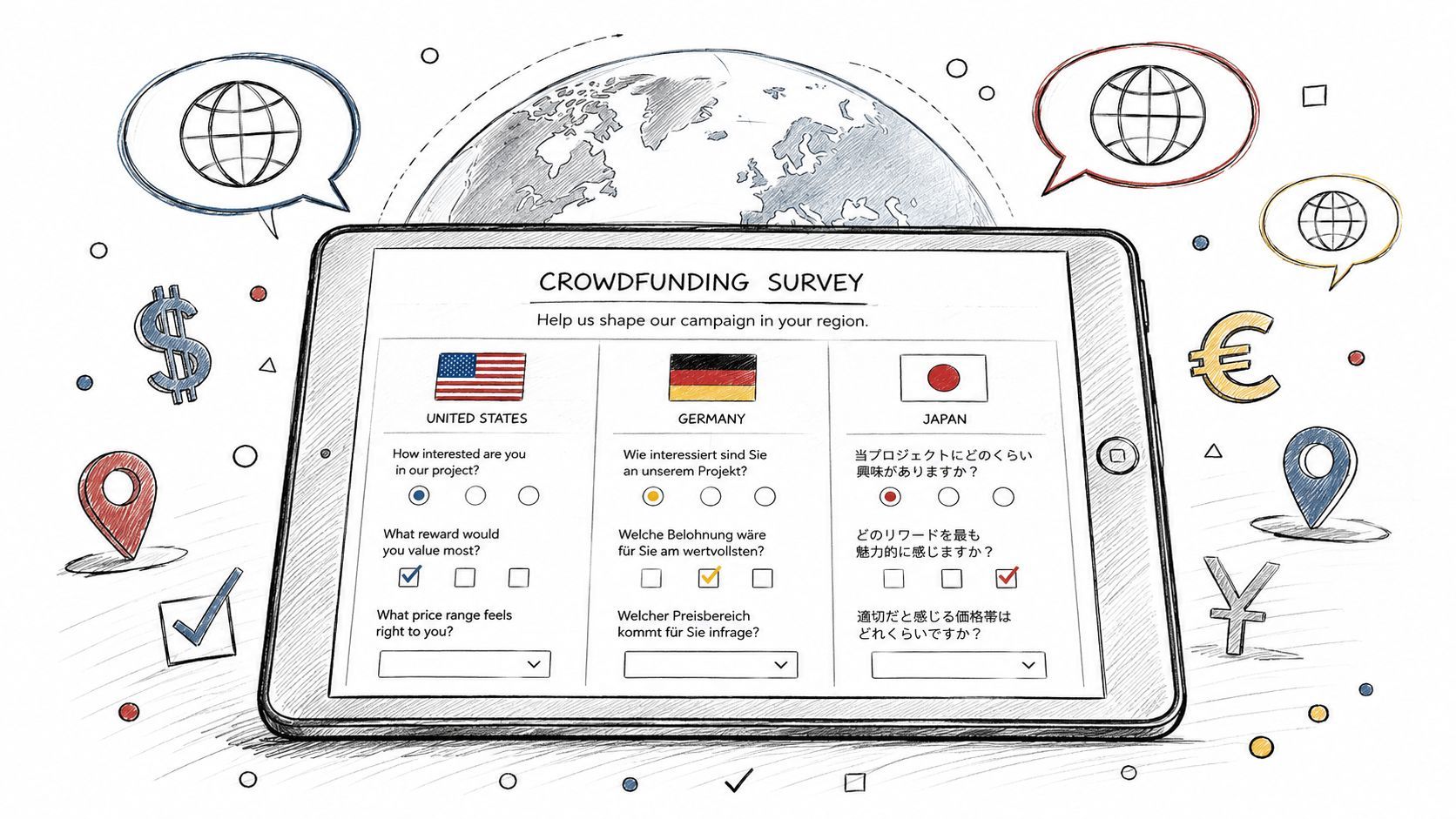
Discover how multi language support boosts trust and conversions. Learn practical steps and how PledgeBox simplifies global campaigns.
You can fund a campaign cleanly, ship on time, and still leave money on the table if your backer survey only speaks one language. The painful part is that the loss doesn't show up as a dramatic crash, it shows up as backers who hesitate, abandon add-ons, skip shipping updates, or open support tickets because the forms feel unfamiliar. For global creators, multi language support isn't a translation chore, it's a conversion system.
A major 2025 contact-center survey found that 86% of respondents had customers who were not native English speakers, while only 65.5% formally offered support in a language other than English, and 72% said native-language support increased satisfaction. That gap is exactly why multilingual support has moved from a nice-to-have into a baseline operational requirement for any campaign that expects international backers. It's also why a pledge manager can't behave like a static form. Kickstarter's native pledge manager is closer to Amazon, rigid and standardized. A creator-controlled pledge manager like Shopify gives you room to adapt the experience to real backer behavior.
For a practical lens on how campaign structure affects revenue capture, the detailed Fundrise platform assessment is a useful comparison point, because it shows how much clearer the user path gets when the experience is built around conversion rather than convenience for the platform. If you want the next lever after language, the logic behind incremental revenue is the same, remove friction where the money is decided.
The easiest place to lose money is the moment backers are supposed to confirm intent. A creator can run a strong campaign, earn trust during funding, then watch add-on revenue stall because the survey, reward descriptions, or shipping questions are only in English. That isn't a branding issue. It's a checkout issue.
The web data tells the same story at scale. W3Techs reports that English is used by 49.7% of websites whose content language is known, which means about half the web still assumes one language even though audiences are international. Meanwhile, there are more than 7,000 languages spoken worldwide, and UNESCO-linked reporting notes that about half the global population uses two or more languages or dialects in daily life. A one-language campaign page is therefore out of step with the audience it's trying to convert.
The biggest leak is not usually the headline pledge. It's the decision points after the pledge, the add-on selection, shipping confirmation, tax acknowledgment, and survey completion. When those steps feel hard to parse, backers delay or drop off.
Practical rule: if a backer needs to translate your survey in their head, some of them will stop before they finish it.
A multilingual pledge manager should reduce that friction at the exact point where a backer is deciding whether to spend more. That's why creators often see the biggest benefit from translating the backer journey, not just the campaign page.
The concept is simple, but the execution matters. Backers don't just want the promise in their language, they want the operational parts in their language too, including addresses, payment prompts, and post-campaign updates. A campaign can be fully funded and still underperform on post-funding revenue if those moments are left in English only.

For a broader framing of revenue capture inside campaigns, the incremental revenue discussion fits here too. It's the same principle, small reductions in friction at key moments compound into meaningful post-campaign lift.
A reward tier can read correctly and still fail at checkout. The copy may be translated, but if the shipping assumptions, measurement units, tax wording, or date references do not fit the market, backers hesitate. In crowdfunding, hesitation costs real money.
A translated tier description preserves the message. A localized tier description fits how people in that market read, pay, and complete a pledge. That difference matters at the exact moments that drive post-campaign revenue, adding items, upgrading a pledge, or entering a shipping address that needs to feel trustworthy.
Some parts of a campaign can move across languages with direct translation. Others need full localization.
W3C's international guidance is clear that each text range should carry a single language value with lang or xml:lang, and that primary-language metadata belongs in HTTP Content-Language or a <meta> declaration, while mixed-language documents should be split and tagged at the highest practical level. That is not just a developer preference, it is how multilingual content stays legible to browsers, assistive tech, and search systems. Crowdfunding assets need the same treatment. If a page mixes languages, each block should be identified properly. The same practical logic shows up in translating menus for apps and boards, where context matters as much as vocabulary.
Localization also protects trust. German backers often expect structured address handling that differs from Japanese backers, and right-to-left markets need layout decisions that go beyond string replacement. When the form feels native, completion feels natural. When it does not, every field becomes a hurdle.
The right language order is usually visible before launch if you know where to look. Start with your own data, then use competitor behavior and support tickets to fill the gaps. Don't guess from your native market alone, because the audience that looks small in the pre-launch stage can become the audience that drives your post-campaign profit.
A strong prioritization process starts with three signals. First, check where your pre-launch traffic is coming from. Second, look at what languages similar campaigns used when they sold reward-heavy or shipping-heavy offers. Third, read support messages for patterns that hint at language friction, not product friction. That last distinction matters, because a slow conversion doesn't always mean the product is weak. Sometimes the form is just hard to understand.
Use a basic scorecard to choose the first languages.
That framework lines up with independent guidance that says organizations should use analytics, support tickets, and funnel drop-offs to choose the first language. It's also where one of the most useful outreach tactics fits. The personalized email campaigns from Gmail approach is a good reminder that segmentation works best when the message fits the audience instead of blasting everyone with the same copy.
The first language you support should make your campaign easier to buy from, not just easier to read.
If the market justifies full localization, don't stop at copy. If it only justifies translation-first support, keep the operational burden light and measure whether drop-offs improve. The point is to prioritize the language that removes the most friction for the least complexity, not to chase every possible market at once.
A multilingual campaign fails when the content is translated but the system still behaves like a single-language form. That's why the technical layer has to be locale-aware from the start. Language choice should be persistent, visible, and tied to the backer's session so they don't have to reselect it every time they move between survey pages or notifications.
Support patterns recommend detecting language from the browser Accept-Language header, saving the backer's preference, and giving them a manual switch they can see at all times. That combination matters because browser detection is a good default, but it's not enough on its own. People travel, share devices, and change languages during a campaign.
Right-to-left languages need explicit layout handling, not just translated text. If the interface flips labels, alignment, or field order incorrectly, the backer experience breaks immediately. The same principle applies to survey questions, help text, and confirmation emails.
Practical rule: test the campaign in the target language, not just the target words.
A clean implementation should also separate document language from text language. W3C recommends assigning the correct language to each text range and splitting mixed-language content at the highest practical level. That protects both readability and downstream processing. For campaign teams, it also prevents the ugly situation where a report or export looks fine in one section and broken in another.
For a deeper look at form handling discipline, the form field validation guide is a useful companion because multilingual support collapses fast when fields accept inconsistent data. In practice, the best systems keep language, validation, and notification logic aligned from the start.
A workable multilingual workflow starts before the survey goes live and ends only after fulfillment data is clean. The strongest setups keep the backer journey consistent across survey, payment, shipping, and tracking, so the experience doesn't feel stitched together from separate tools. That consistency is what keeps support load manageable when backers reply in different languages.
PledgeBox fits that workflow because the survey itself is free to send, and it only charges 3% of upsell revenue if there are any add-on sales. That pricing matters for smaller creators and for campaigns testing new markets, because it keeps the language rollout from becoming a fixed overhead problem. If a market underperforms, you're not stuck paying a heavy access fee just to learn that lesson.
Start with the survey. Build each branded survey so the language matches the backer segment you're targeting, then connect it to localized shipping fee collection and regional tax display. The goal is to make the backer feel like they're completing one coherent process, not multiple systems glued together.
Next, set up address validation and shipping logic. Google Maps-powered address validation helps reduce bad entries before they reach fulfillment, which is especially important when backers use regional formats or transliterated addresses. Then connect Stripe and PayPal so payment and upsell flows stay familiar in-market.
After that, configure reminders and backer communications. Mobile-friendly portals, automated multilingual reminders, and 24/7 Support GPTs reduce the number of places where a backer has to ask for help. Direct vendor exports and auto shipment tracking then keep fulfillment moving without forcing your team to retype multilingual data into another system.
For a related operational example, the customize-your-domain survey experience guide is a helpful reference point because branded touchpoints matter more when backers are already navigating a second language. In multilingual campaigns, consistency beats cleverness every time.
The most common mistake is translating the visible copy and leaving the rest untouched. That creates a false sense of readiness, because the campaign looks multilingual at a glance but still behaves like a single-language system when backers try to act on it. Hardcoded text in images is the classic version of this problem, since it can't adapt when the campaign changes language or when legal language needs a revision.
Another frequent failure is ignoring address formats. If you assume every backer writes their address the same way, shipping errors show up later as support issues, refund requests, and avoidable manual cleanup. The fix is boring but effective, use locale-aware fields, validation, and clear field labels that match the market.
A peer-reviewed study on multilingual software construction found that developers often follow a practical language-selection chain of functionality domain, main language, integration language, then support language. That's a good reminder that language choice is architectural, not cosmetic. If your support language is bolted on last, the whole workflow tends to feel bolted on too.
Fixing these mistakes is less about polish and more about reducing operational drag. Every backer who has to ask for clarification adds friction to your team's queue, and that friction steals time from fulfillment, support, and upsell management.
A multilingual campaign fails fast when the language work is treated like a cosmetic layer. The practical version starts earlier, with audience data, shipping realities, tax copy, and the support workflow that backers will touch.
Pre-launch preparation. Audit your traffic sources by country, referral channel, and device language before you decide what to translate. Check which markets already convert through paid social, which come from organic search, and which arrive from creator email or community links, then match those sources to the languages that deserve full localization. Build survey copy, tax language, and reminder templates before launch so your team is not rewriting fulfillment text under pressure.
Active campaign management. Watch backer behavior by language, not just pledge value. If one language drives a higher rate of support tickets, abandoned surveys, or manual address corrections, the wording or form structure is probably doing real damage. Track which language toggle gets used, where backers drop off in the survey, and whether a specific market keeps asking the same question after checkout. Keep the manual language switch visible so people do not have to search for it after they have already committed.
Post-campaign fulfillment. Review exports, address validation, payment status, and vendor files for consistency in every language you supported. Look for misaligned field labels, untranslated country names, and address formats that break when they move from survey to warehouse sheet. Multilingual support shows its value here, because it is either reducing cleanup or creating it. Clean data at this stage saves hours of back-and-forth later.
PledgeBox reduces a lot of the financial friction in that process because the backer survey is free to send and upsell revenue is only charged at 3% if add-on sales happen. That makes it practical to test multilingual flows without turning every market into a fixed-cost gamble. Its privacy-first data isolation and one-click data erasure also help campaigns stay organized across jurisdictions, which matters once backer information is entering surveys, exports, and fulfillment files in more than one language.
If you are planning a global campaign, build the language workflow now instead of patching it after funding. Visit PledgeBox to see how a multilingual pledge manager can keep surveys, shipping, upsells, and fulfillment working together without making post-campaign operations harder than they need to be.

The All-in-One Toolkit to Launch, Manage & Scale Your Kickstarter / Indiegogo Campaign