 PledgeBox
Kickstarter Fee Calculator: A Creator's Guide for 2026
Don't just estimate, calculate. Use our Kickstarter fee calculator guide to understand every cost from platform fees to fulfillment for a profitable campaign.
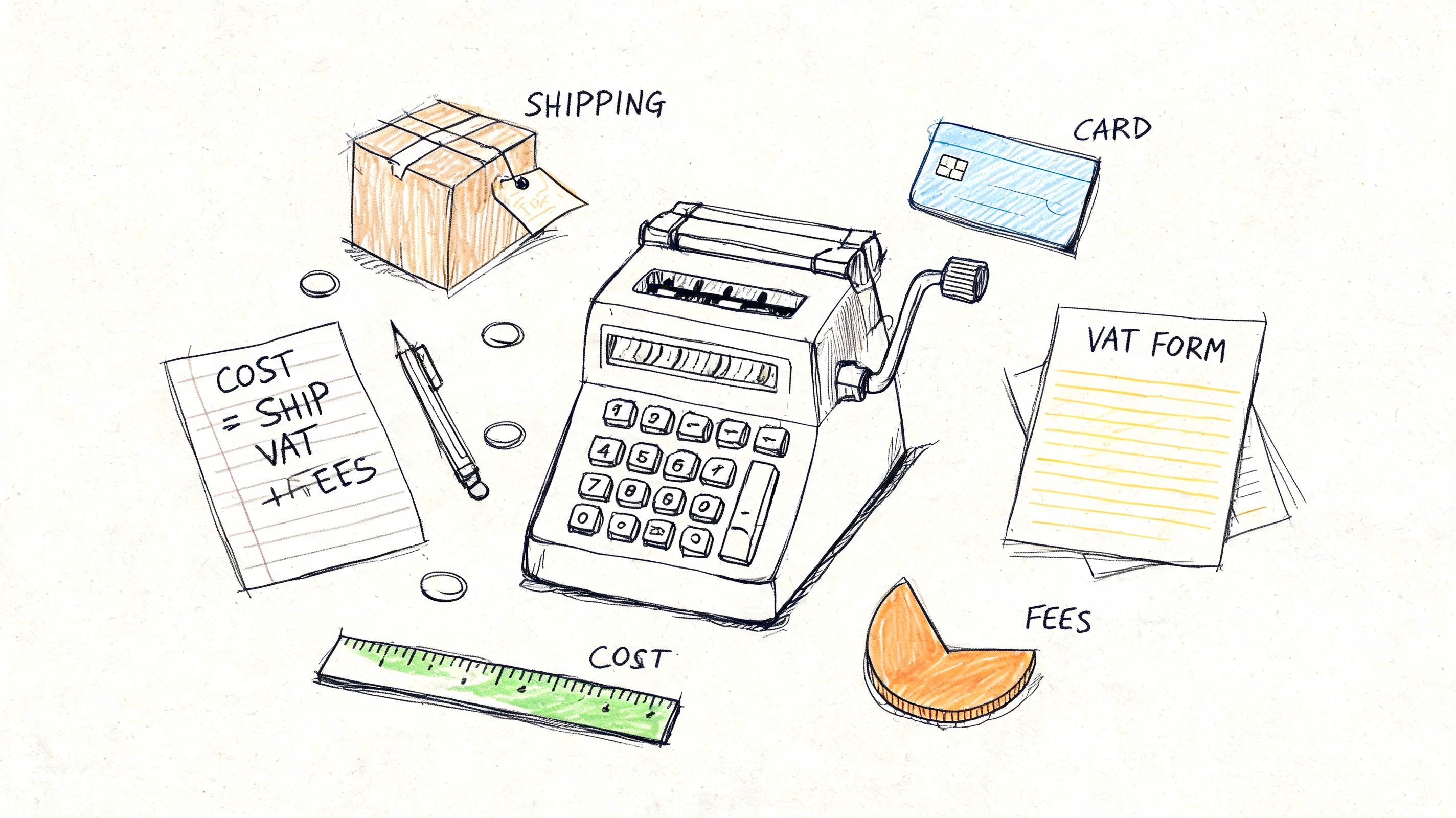
Don't just estimate, calculate. Use our Kickstarter fee calculator guide to understand every cost from platform fees to fulfillment for a profitable campaign.
You hit “funded,” see a big number on your Kickstarter dashboard, and your brain immediately starts allocating that money. Factory deposit. Tooling. Freight. Maybe a little breathing room.
That instinct gets creators in trouble.
A kickstarter fee calculator is useful, but most of them only answer the smallest financial question: what does Kickstarter take? That matters, but it's not the whole budget. The essential question is whether your campaign leaves enough cash to produce rewards, cover fulfillment, survive payment failures, handle taxes, and still keep the project healthy after the campaign ends.
Creators usually don't fail because they forgot the headline fee. They fail because they treated gross funding like usable cash. It isn't. A workable model starts with net reality, not the celebration number on the campaign page.
The cleanest way to think about crowdfunding is this: funding goal, gross revenue, net payout, and true profit are four different numbers.
Most first-time creators collapse them into one. They see the campaign total and assume that's the production budget. Then the deductions start. Platform fees come out. Payment processing comes out. Dropped pledges reduce what settles. Manufacturing invoices land. Shipping turns out to be messier than the spreadsheet suggested. Taxes don't wait politely at the end.
That's why a basic kickstarter fee calculator is only a starting point. It helps you avoid one mistake, but not the full chain of mistakes that usually hurts creators later.
Practical rule: Build your campaign from the bottom up. Start with costs you must pay, then work backward to the funding goal.
There's also a psychological trap here. Hitting a visible public number feels like success. Operationally, it's just the start of a cash flow problem you now have to manage well. A campaign can fund, look healthy from the outside, and still leave the creator undercapitalized.
The number that matters most isn't your campaign total. It's the amount left after every unavoidable deduction and every real delivery cost.
That means your planning model needs to separate:
When creators skip that separation, they usually underprice rewards or set a goal that looks attainable but isn't sustainable.
A useful kickstarter fee calculator should tell you more than “subtract the fee.” It should help you answer practical questions:
If your current calculator can't help with those decisions, it's not a budgeting tool. It's a deduction widget.
A campaign can hit its goal, show a healthy gross total, and still deliver less cash than the creator expected once fees are pulled out. The first deductions happen before manufacturing, freight, or tax ever enter the picture.
Kickstarter charges a 5% platform fee, and payment processing usually adds 3% to 5%, which puts the baseline deduction for many campaigns around 8% to 10% of funds raised according to PledgeBox's fee breakdown.

That split matters in practice. Creators often talk about “Kickstarter fees” as one line item, but two different systems are taking money out of the same pledge. One is the platform charge. The other is the card processing cost tied to how backers pay.
For a practical benchmark, a campaign raising $50,000 would pay an estimated $2,500 in Kickstarter fees plus about $1,600 in payment processing, leaving a net payout of $45,900 in that example, as outlined in this explanation of what percentage Kickstarter takes.
Processing is where simple calculators start to break down. The rate is not one clean percentage applied evenly to every backer.
Pledge size changes the math. Smaller pledges usually carry a higher effective processing cost because fixed per-transaction charges take a bigger bite out of low-dollar rewards. A campaign built around a lot of small backers can lose more than expected even when the creator planned for the headline fee.
That is one reason reward design and fee planning belong in the same spreadsheet.
| Fee type | Typical cost | Practical note |
|---|---|---|
| Kickstarter platform fee | 5% | Applied to funds raised on successful campaigns |
| Payment processing | 3% to 5% | Varies by pledge size and payment details |
| Combined baseline | About 8% to 10% | Useful planning band for initial estimates |
This table gives you the deduction layer. It does not tell you whether the campaign is financially healthy.
Fee drag hits digital and physical rewards very differently. Marian Call's Kickstarter math analysis shows how reward mix can change what a creator keeps, especially once fulfillment risk enters the picture.
A digital reward can absorb fees without much stress. A physical reward has to survive those same fees before you pay for packaging, freight, replacement units, and customer support. I have seen creators price a physical tier with enough margin on paper, then watch that margin disappear because they treated payment fees as the whole problem instead of the first deduction.
That is the practical lesson. Fee math is simple. Profit math is not.
Use platform and processing fees as the opening deduction in your model, then test whether each reward tier still works after that cash is gone. If the project only survives under the most optimistic fee outcome, the budget is too tight.
Experienced creators plan around net cash received, not gross pledges shown on the campaign page. That small shift leads to better pricing decisions before the expensive mistakes start.
Most creators obsess over the visible fee because it's easy to see and easy to calculate. The expensive mistakes usually sit elsewhere.

A bare-bones kickstarter fee calculator will show the 5% platform fee plus payment processing, but many calculators don't model the broader cost stack that decides whether your campaign is profitable. Research summarized by Enytool's calculator analysis notes that successful creators often invest 15% to 25% of their funding goal in marketing, and can spend $1,000 to $5,000 on video production plus $100 to $2,500 on photography.
Those aren't side notes. They're part of the campaign.
When creators say, “Kickstarter takes too much,” they're often blaming the wrong line item. The platform fee is visible. The hidden costs are what crush margin.
The common misses are operational:
A calculator that ignores those categories can still be mathematically correct about fees and completely wrong about viability.
Shipping is where clean assumptions go to die. Creators often estimate one average number and move on. Real shipping behaves badly when your package dimensions change, your country mix shifts, or your freight assumptions don't hold.
That's why I'd rather see a rough but honest shipping model than a precise-looking fee estimate. If you need help mapping that line item, this guide on how to calculate shipping costs is more useful than another generic payout widget.
Field note: The campaign page sells the dream. The shipping spreadsheet decides whether you can deliver it.
A simple calculator typically answers one question: “What lands in my bank account after platform deductions?” A practical calculator should answer a harder set of questions:
| Cost area | Often included in simple calculators | Should be included in a true profitability model |
|---|---|---|
| Kickstarter platform fee | Yes | Yes |
| Payment processing | Yes | Yes |
| Marketing spend | Often no | Yes |
| Video and photography | Often no | Yes |
| Manufacturing and packaging | Sometimes | Yes |
| Fulfillment and shipping | Sometimes | Yes |
| Post-campaign admin and tax handling | Rarely | Yes |
If you build your campaign around the narrow version, you can “successfully fund” and still run short when you reach production.
Creators need one model for the whole project, not one for launch day and another for cleanup.
Use a cost stack that includes the full life of the campaign:
Before launch
Creative production, prototypes, ads, testing, and page assets.
During the campaign
Platform fees, processing, support, and live marketing spend.
After the campaign
Manufacturing payments, shipping collection gaps, tax handling, replacements, and fulfillment overhead.
That's the difference between calculating what Kickstarter takes and calculating what your campaign costs.
The campaign ends. The admin work begins.

This is the stage many creators under-budget because the money feels “already raised.” It isn't finished money. Some pledges fail. Some backers need address updates. Some countries trigger VAT or customs handling. Some projects discover their campaign spreadsheet never separated production cash from post-campaign liabilities.
According to LaunchBoom's discussion of Kickstarter charges, expert-grade calculators account for dropped pledges of 3% to 5% of total funds, and pledge manager models can shift the math from pure cost to a hybrid revenue model because a 3% add-on fee on upsell sales needs to be included in margin planning.
Kickstarter's native survey is functional. It captures basic information. That's enough for very simple campaigns.
For anything more complex, the difference is closer to this: Kickstarter's pledge manager is like Amazon, and PledgeBox pledge manager is like Shopify. One is a built-in marketplace workflow. The other gives you more control over the post-campaign buying experience, branded surveys, add-ons, shipping collection, and tax handling.
There's also an important pricing difference from the creator side: PledgeBox is free to send the backer survey and only charges 3% of upsell if there's any. That matters because you're not paying upfront just to collect data from backers. You're paying only if post-campaign add-on revenue is generated.
A pledge manager isn't just an admin tool. It changes cash flow.
Used well, it helps creators:
Creators who skip this stage often end up doing manual clean-up across email threads, payment links, and spreadsheets. That usually costs time, and time becomes labor cost quickly.
Later in the process, many creators also need a clearer handle on taxable treatment. If you're trying to sort out what part of campaign income is taxable after business deductions, a plain-language reference on how to determine your taxable income can help frame the accounting questions before you hand the records to your tax professional.
International campaigns get expensive when tax handling is vague. VAT, customs prepayments, and region-specific rules can force creators into reactive decisions after the campaign closes. This overview of the unseen VAT dilemma in Kickstarter campaigns is worth reading before you promise “friendly” international shipping without knowing what sits behind it.
One useful way to think about taxes is that they don't behave like fees. Fees are predictable deductions. Tax obligations depend on where you sell, where you ship, how you collect, and how you classify the transaction.
A short walkthrough of post-campaign operations makes that clearer:
Post-campaign operations decide whether a funded project feels organized or chaotic to backers.
A useful kickstarter fee calculator doesn't start with gross revenue and subtract a fee. It starts with your actual obligations and builds upward.
The practical formula used by experienced creators is simple in structure: add your hard costs first, then divide by a factor that absorbs fees and miscosts. As summarized in SendFromChina's Kickstarter fees guide, creators first total manufacturing, shipping, taxes, and buffer, then divide by 0.90 to 0.88 to approximate a funding goal that absorbs about 10% to 12% in total fees and miscosts.
Use this structure:
In plain English:
Funding Goal = Total Hard Costs ÷ 0.90 to 0.88
If your campaign is simple and domestic, the higher end of that range may be enough. If your campaign includes physical goods, more logistics, or more pledge risk, the lower end is safer.
A simple campaign might be a book, zine, or digital-heavy product with limited operational complexity. The creator totals printing, packaging, shipping, tax obligations, and contingency. Let's say those hard costs come to $44,000.
Using the lower retention factor in the expert formula:
$44,000 ÷ 0.88 = $50,000
That means a $50,000 goal is the safer number than $44,000, because the extra room absorbs fee drag and planning error rather than pretending those costs don't exist.
This is the key difference between a realistic model and an optimistic one. The optimistic model says, “I need $44,000, so I'll ask for $44,000.” The realistic model says, “I need to receive enough after deductions to cover $44,000.”
Now take a hardware or gadget campaign with more moving parts. The same formula applies, but the discipline around inputs matters more.
Before you divide by the retained factor, make sure you have cost lines for:
For these campaigns, a generic calculator is less useful than a calculator that forces explicit assumptions. If your campaign also touches digital asset sales, token rewards, or crypto-related accounting in adjacent business operations, it's worth using specialist tools that simplify crypto tax reporting so those records don't get mixed into your crowdfunding bookkeeping later.
What works:
What doesn't:
Working habit: If your spreadsheet only looks healthy when every assumption goes right, the campaign is priced too tightly.
Yes. They matter because campaign totals are not the same as settled cash. If your plan assumes every pledge converts cleanly, you're planning against a best-case outcome instead of an operational one. Build your budget with settlement friction in mind.
You usually won't reduce the platform fee itself. What you can control is how efficiently the campaign is structured. Reward design, average pledge size, operational simplicity, and post-campaign upsells all affect what your final economics look like. That's very different from “beating” the fee.
Yes. Fees are deducted as part of platform and payment handling. Taxes are a separate planning category. If you mix them into one vague overhead bucket, you'll lose visibility and make pricing decisions with bad inputs.
Not every project does. A simple campaign with limited SKUs and domestic fulfillment might manage with basic tools. Once your campaign involves multiple add-ons, region-based shipping, tax collection, or late backers, post-campaign management becomes a real operational layer rather than a nice extra.
They use it as a payout checker instead of a business model. A calculator should help you decide whether the campaign can survive production and fulfillment, not just estimate what Kickstarter deducts.
At minimum, include platform fees, payment processing, manufacturing, packaging, shipping, taxes, and contingency. For a physical product, you should also model post-campaign admin and any costs that happen after the funding window closes.
If you want a post-campaign workflow that goes beyond basic surveys, PledgeBox is one option to evaluate. It supports branded backer surveys, shipping and tax collection, add-on upsells, and late-backer flows. The pricing model is simple for creators: backer surveys are free to send, and the platform charges only 3% of upsell revenue if upsells happen.
PledgeBox
The All-in-One Toolkit to Launch, Manage & Scale Your Kickstarter / Indiegogo Campaign