 PledgeBox
Risk of Rain Kickstarter: Lessons From $30k to $900k+
Unpack the Risk of Rain Kickstarter legacy, from the original game's $30k to the board game's $900k+. Get actionable lessons for your own campaign.
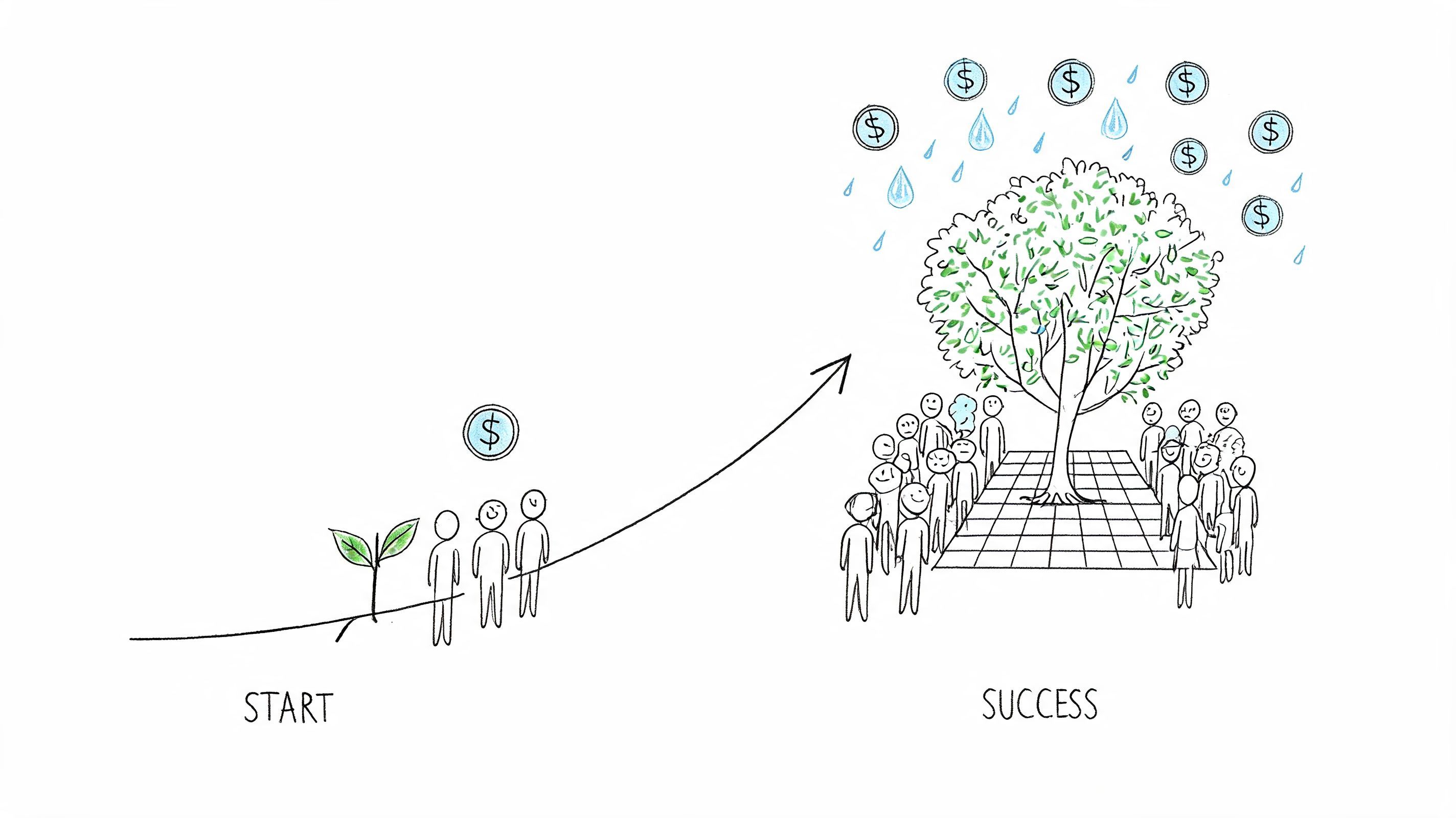
Unpack the Risk of Rain Kickstarter legacy, from the original game's $30k to the board game's $900k+. Get actionable lessons for your own campaign.
One campaign put a niche indie game into existence. The other showed what happens when a franchise spends years earning trust and then brings that audience to a new format.
That’s why the risk of rain kickstarter story matters. It isn’t just a funding headline. It’s a rare before-and-after record of how a small campaign can become a much bigger commercial engine when the product, audience, and post-campaign planning finally line up.
The sharpest lesson in the risk of rain kickstarter history is contrast.
In the early days, Risk of Rain was the kind of project creators still recognize immediately: a clear idea, a limited budget, and a campaign that needed to prove the team could build something distinctive before anyone would think about scale. Years later, Risk of Rain: The Board Game arrived with a completely different advantage. It didn’t need to introduce the world. It needed to convert an existing fanbase.
That difference changes everything. The first campaign had to establish credibility. The later one had to channel momentum.
I’ve seen creators misread stories like this and assume the board game’s breakout was mostly about launch-day hype. It wasn’t. Launch-day velocity is usually the visible result of work that happened much earlier: community building, product translation, audience fit, and a campaign structure that gives supporters an easy yes.
A useful comparison is the way large fandom projects stack demand before launch, then release into that demand all at once. The dynamics are different by category, but the pattern is familiar if you’ve studied major crowdfunding ecosystems such as the Star Citizen Kickstarter case study.
The first campaign built the property. The later campaign monetized the property across a new medium.
That’s what makes this a masterclass. It shows two valid paths. One is the scrappy launch that creates a franchise foothold. The other is the expansion launch that cashes in years of earned attention. Most creators are somewhere between those two points, and the practical question isn’t “How do I copy Risk of Rain?” It’s “Which stage am I in, and what strategy fits that stage?”
The original Risk of Rain campaign is still one of the cleaner reminders that a modest crowdfunding outcome can be strategically perfect.
In 2013, the original Risk of Rain Kickstarter raised exactly $30,480, a number later preserved inside the franchise through the in-game “Funded!” challenge in Risk of Rain 2, which requires players to collect that same amount of gold, as noted on the Risk of Rain 2 Funded challenge page. That detail matters because it tells you the campaign wasn’t treated as a disposable funding event. It became part of the brand’s mythology.

A lot of creators look at a number like $30,480 and instinctively compare it to modern blockbuster campaigns. That’s the wrong benchmark.
The right benchmark is this: did the campaign fund the project well enough to get the product made, get the audience invested, and create a base for future releases? In this case, the answer was yes. The campaign wasn’t trying to prove mass-market inevitability. It was trying to get a distinctive roguelike off the ground.
That’s a different operating model from modern board game launches tied to known IP.
Here’s what tends to work in that kind of early-stage campaign:
The original campaign’s biggest lesson isn’t “start small” in some generic sense. It’s “match your ask to your proof.”
If you’re launching your first project, don’t build your page around what the most visible campaigns are doing now. Build it around what you can demonstrate now. A small campaign can be the right campaign when it creates enough confidence for the audience to follow you into the next release, the next sequel, or the next product category.
Practical rule: Early campaigns should optimize for trust and deliverability before they optimize for spectacle.
That’s how franchises get built. Not every creator begins with scale, but plenty of durable brands begin with a campaign that feels grounded, specific, and finishable.
The board game campaign is what expansion-stage crowdfunding looks like when the IP already has gravity.
Risk of Rain: The Board Game hit its $50,000 Kickstarter goal in under 30 minutes on August 12, 2025, and then pushed past $600,000 with 2,864 backers, according to ixbt.games coverage of the campaign’s launch velocity. Those are the kind of numbers that create instant social proof. Once a campaign funds that fast, every undecided fan gets a message without anyone saying it out loud: other people are already in.

This wasn’t just a board game with nice art. It had several structural advantages.
First, it had a known universe. Fans already understood the tone, enemy design, progression loop, and co-op survival fantasy. That removes a huge amount of educational friction from a campaign page.
Second, it had format fit. Not every video game becomes a compelling tabletop adaptation, but roguelike systems can translate well when the designer preserves replayability, escalating challenge, and build variation.
Third, it had stored audience intent. Fans of the series didn’t need to be persuaded that the world was interesting. They needed confidence that the board game respected it.
Creators often fixate on the speed of funding and miss the harder lesson. Quick funding isn’t a trick. It’s the result of reducing uncertainty before launch.
Here’s what that usually means in practice:
| Campaign factor | What it did for Risk of Rain |
|---|---|
| Established IP | Lowered discovery friction |
| Familiar mechanics | Helped fans understand the adaptation |
| Strong launch velocity | Increased social proof immediately |
| Existing community trust | Converted attention into pledges faster |
Fast funding changes backer psychology. People stop asking whether the project is viable and start asking which tier they want.
That’s why pre-launch matters so much for projects with fandom behind them. If your audience already wants the world, your job is to remove reasons to hesitate. If your audience doesn’t know you yet, your job is different. You need to earn that confidence first.
The board game campaign also offers a caution. When support arrives this fast, every weakness behind the scenes gets exposed fast too. Reward design, shipping setup, survey planning, and post-campaign communication can’t be afterthoughts when thousands of people arrive early.
Most creators ask the wrong question after seeing a campaign like this. They ask how to get the same launch spike.
The better question is how to create the conditions that make a launch spike possible.
The original game and the later board game sit at opposite ends of the same principle. Audience quality matters more than noisy promotion. If people care deeply, they don’t need much convincing. If they barely know you, urgency tactics won’t rescue weak demand.
That means pre-launch work should focus on evidence, not theater.
A solid pre-launch stack usually includes:
A page that captures interest cleanly
Your pre-launch page should explain the concept in seconds and collect qualified leads, not vague curiosity. If you need a practical framework for that setup, this guide to Kickstarter pre-launch planning is a useful reference.
Creative that proves translation
If you’re adapting a digital property into physical form, show how the mechanics survive the transition. Don’t assume fans will fill in the gaps for you.
Messaging tuned to player expectation
Fans of games respond to different cues than general board game audiences. If you need a broader read on audience framing, launch positioning, and channel selection, these new rules of video game marketing are worth reviewing.
The Risk of Rain board game benefited from a low-friction opening target relative to demand. Creators should pay attention to the logic, not just the headline.
A funding goal does several jobs at once:
Set the goal too high, and you slow your own proof loop. Set it unrealistically low, and experienced backers may question whether your planning is serious. Good goals create confidence without inviting skepticism.
Launch day rewards teams that already know who is showing up in the first hour.
I don’t advise creators to obsess over vanity indicators. A large social following can help, but it doesn’t guarantee conversions. What matters more is whether your audience repeatedly demonstrates intent.
Look for signals like these:
Pre-launch breaks down when creators rely on broad hype and avoid hard questions.
Common mistakes include promising too many SKUs too early, showing pretty renders without explaining gameplay or use case, and treating all audiences as interchangeable. The board game adaptation had an easier path because the franchise already trained the audience on what kind of experience to expect. Most projects don’t get that luxury.
If you’re still earning trust, simplify. Make the page clearer. Cut claims you can’t prove. Show the product in action. Give people a reason to believe they’ll get what you say they’re backing.
A campaign can succeed publicly and still become messy operationally.
That’s the hidden risk behind a fast-moving board game launch. Once you have thousands of backers, multiple reward levels, international destinations, and product variations, the campaign stops being a marketing exercise and becomes an operations problem.

For straightforward projects, a basic post-campaign workflow can work. For tabletop projects with expansions, add-ons, and global fulfillment, that usually starts breaking apart.
The central issue isn’t just address collection. It’s the interaction between all the moving parts:
According to the cited YouTube analysis, board game adaptations generate 25-40% of total revenue post-campaign via upsells and late pledges, and creators also run into VAT and tax collection problems for EU backers, which is exactly the kind of operational burden pledge managers are meant to handle, as discussed in this video on post-campaign revenue and fulfillment pain points.
This is the simplest way to explain the tool choice to creators.
Kickstarter’s native pledge manager is like Amazon. It’s built into the larger marketplace. It’s convenient. It gives you a standard path. But it isn’t centered on your brand, your exact upsell logic, or your ideal customer flow.
A dedicated pledge manager is closer to Shopify. You control the storefront feel, the structure, the post-campaign logic, and the way backers move through upgrades, surveys, shipping, and payment collection.
That distinction matters because post-campaign behavior is highly sensitive to friction. If your survey feels clunky or your add-ons are hard to understand, you lose revenue and create support tickets at the same time.
The best pledge manager is not the one with the most features on a checklist. It’s the one your backers can complete without confusion.
A lot of fulfillment headaches begin in email, not software. If backers ignore survey reminders, miss payment requests, or misunderstand shipping notices, your operations team ends up doing manual rescue work.
That’s why email craft matters more than creators think. Even something as simple as clearer subject lines can improve backer response quality. For teams tightening reminder campaigns, these subject line capitalization best practices are a practical place to clean up deliverability-facing communication.
When the backer count rises, the winning setup is usually boring in the best sense. It’s predictable.
Use a system that lets you:
| Operational need | What good setup looks like |
|---|---|
| Survey collection | Branded, mobile-friendly, easy to complete |
| Shipping and tax | Collected in the same flow, not patched in later |
| Add-ons | Presented clearly with natural upgrade paths |
| Data export | Clean outputs for warehouse and support teams |
Creators often wait until the campaign ends to think about this. That’s late. If your launch works, you won’t have time to invent process afterward. You’ll be too busy reacting to edge cases you could have prevented.
The strongest creators don’t treat the survey as paperwork. They treat it as the second storefront.
That’s where the Risk of Rain board game structure becomes especially useful as a case study. The campaign offered a basic pledge at $125, a deluxe pledge at $185, and an all-in pledge at $235 that bundled expansions such as Survivors of the Void, as described in Wargamer’s overview of the campaign tiers. That kind of tiering doesn’t just raise more money during the campaign. It creates a ready-made post-campaign upgrade ladder.

Backers are most likely to spend more when the offer feels like continuation, not interruption.
That means your post-campaign upsell flow should answer simple questions:
A creator who pledged at the basic level shouldn’t see a wall of options with equal visual weight. They should see a guided path. “Upgrade to deluxe.” “Add the expansion.” “Complete your collection.” The point is not to be aggressive. The point is to make the next best purchase obvious.
For teams refining this logic, these strategies to boost average order value translate well to crowdfunding because they focus on offer design, bundling, and purchase sequencing.
The easiest upsells are the ones that fit the pledge someone already made.
Good post-campaign candidates include:
A practical playbook for this is to map each pledge level to one next action. If you present three equally important upgrade routes to every backer, conversion usually drops because the survey starts feeling like work.
Here’s a useful operational model in this guide to increasing average order value in crowdfunding.
A short demo can help teams think through how this flow should feel for backers:
Not every add-on should exist.
If you offer too many extras, you create several problems at once: slower survey completion, more support questions, more picking and packing complexity, and a greater chance of fulfillment mistakes. The best upsell catalog is curated, not exhaustive.
Revenue lens: Every extra option should justify itself twice, once in added revenue and once in manageable fulfillment.
The board game category makes this especially important because physical complexity compounds quickly. A digital add-on can be delivered almost instantly. A physical add-on affects freight, warehousing, packing logic, and replacement workflows. Upsells work best when finance and fulfillment agree that the extra offer is worth carrying.
The risk of rain kickstarter story works because it captures the full arc.
It begins with a campaign that raised $30,480 and helped establish a new game world. It matures into a board game campaign that used known IP, strong audience alignment, and rapid launch momentum to operate at a very different scale. Most creators won’t start at the second stage, and that’s fine. The first stage is where durable projects usually earn the right to exist.
Three lessons hold up.
First, scope wins trust. The original game campaign mattered because it was believable enough to back and meaningful enough to remember.
Second, community compounds. The board game didn’t emerge from nowhere. It benefited from years of audience attachment to the franchise, which is why creators should treat every campaign as brand infrastructure, not just a revenue event.
Third, operations need to be designed before success arrives. Once backers flood in, there’s no clean way to improvise taxes, shipping logic, support routing, and upgrades without friction.
If I were advising a creator planning their own launch, I’d keep the checklist simple:
That’s the larger point. Crowdfunding isn’t just about getting funded anymore. It’s about moving from launch to fulfillment without losing margin, goodwill, or control.
The Risk of Rain campaigns show what happens when a project first earns belief, then earns scale.
If you want a practical system for that second half of crowdfunding, PledgeBox is worth a look. It’s free to send the backer survey and only charges 3% of upsell revenue if there is any, which makes it a low-risk option for creators who want to manage shipping, taxes, late pledges, and add-ons without adding upfront software cost. The simplest way to think about it is this: Kickstarter’s pledge manager is like Amazon, while PledgeBox’s pledge manager is like Shopify. One is a standard marketplace-style layer, the other gives creators a more branded and flexible post-campaign storefront.
PledgeBox
The All-in-One Toolkit to Launch, Manage & Scale Your Kickstarter / Indiegogo Campaign