 PledgeBox
How to Identify Upsell Opportunities for Crowdfunding
Learn how to identify upsell opportunities in crowdfunding with backer data, surveys and pledge manager tactics to boost add-on revenue.
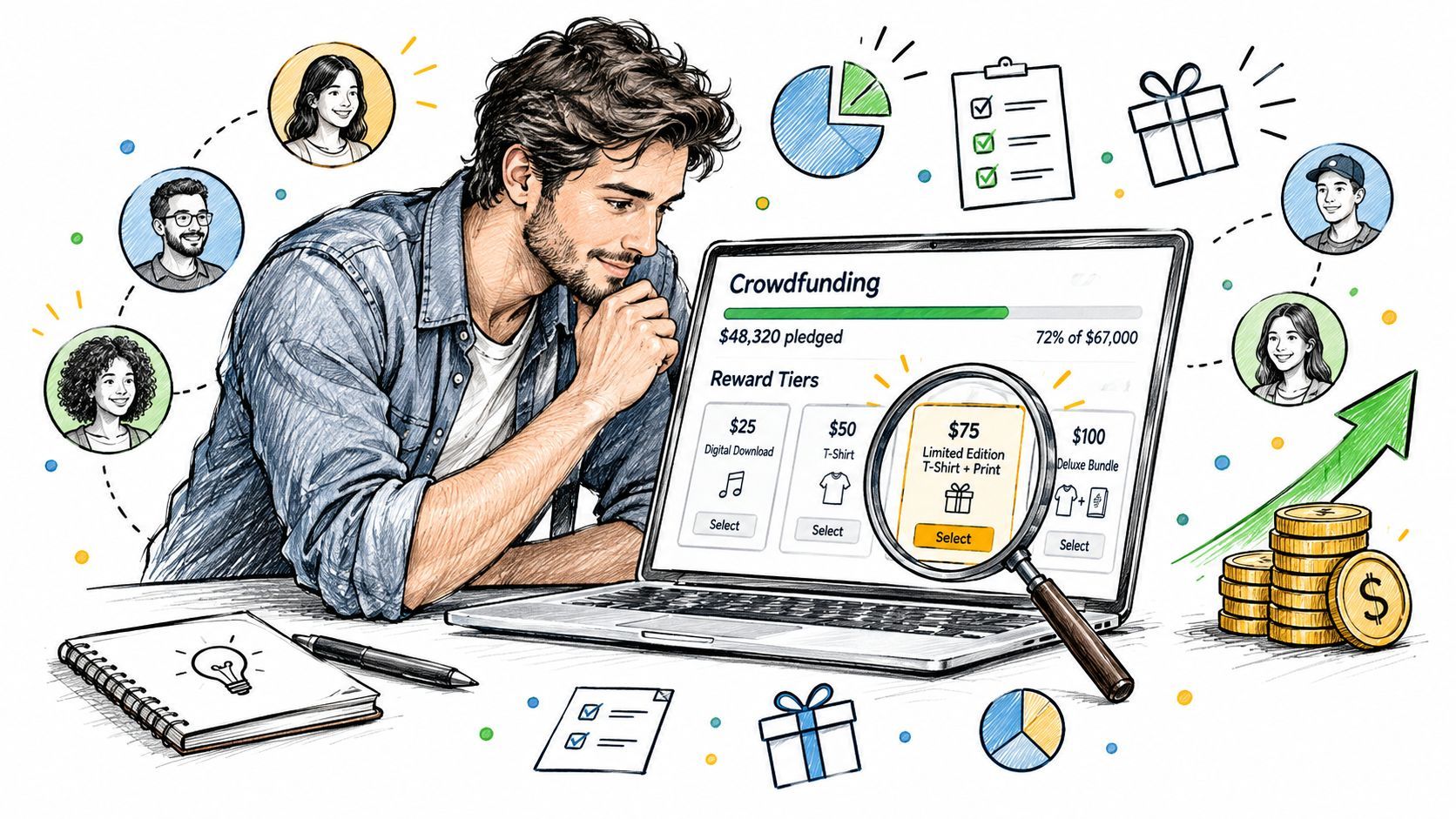
Learn how to identify upsell opportunities in crowdfunding with backer data, surveys and pledge manager tactics to boost add-on revenue.
You've finished a campaign, the backers are excited, and the first fulfillment questions are arriving. Then someone asks whether they can add the spare battery, upgrade the case, or order a second unit. That question often reveals an upsell you could have offered earlier, but only if you're watching the right signals.
Crowdfunding upsells rarely fail because creators lack possible products. They fail because creators present irrelevant extras at the wrong moment. The practical skill is learning how to identify upsell opportunities from pledge choices, backer questions, survey friction, add-on requests, and purchase behavior, then turning those signals into a small set of useful offers.
A hardware creator can spend weeks designing a polished add-on menu and still miss the offer backers want. One campaign team I've seen focused on cosmetic accessories while backers repeatedly asked about replacement parts, shipping protection, and whether a second unit could be added to the same order. The team had products available, but the demand signals were sitting in support messages and survey comments rather than in the planned merchandising calendar.
That's the central distinction between adding products and discovering upsell opportunities. Adding products starts with what the creator wants to sell. Discovery starts with what the backer is already trying to solve.
A useful upsell extends the core reward without forcing the backer to rethink the purchase. A spare component makes ownership easier. A bundle removes a future purchase decision. An upgrade addresses a limitation the backer has already mentioned. A second unit may fit a household, team, or gifting use case that appears in comments and replies.
Practical rule: If the add-on requires a long explanation before a backer understands why it belongs with the reward, it probably isn't ready for the survey.
The mistake becomes expensive because crowdfunding has several high-intent moments. Backers choose a tier, confirm payment, complete a survey, ask fulfillment questions, and sometimes return later to change their order. Each moment produces evidence about what they value. If creators treat those interactions as administrative work only, they lose the clearest signals for expansion revenue.
Research on customer feedback highlights a gap in common upsell advice. Most guidance emphasizes generic signals such as feature usage, plan limits, or support tickets, while fewer sources explain how negative feedback and unmet needs inside complaints can reveal the next offer. That matters in crowdfunding because survey friction, shipping questions, and add-on requests often expose demand more clearly than raw engagement data, as discussed in this practical explanation of upsells.
The process is straightforward:
This approach also protects the backer experience. A crowded menu creates decision fatigue, complicates fulfillment, and makes the core reward feel less clear. A focused menu feels more like helpful configuration.
The strongest operators don't ask, “What else can we sell?” They ask, “What would make this reward more useful, easier to receive, or more complete for this specific backer?”
Backer data becomes useful when you read it as a sequence of intent signals rather than as isolated events. A pledge tier shows the initial commitment. An add-on click shows curiosity about an extra. A survey comment reveals an unmet need. A shipping question may expose a bundle or delivery preference. A support message can identify the problem an upgrade should solve.
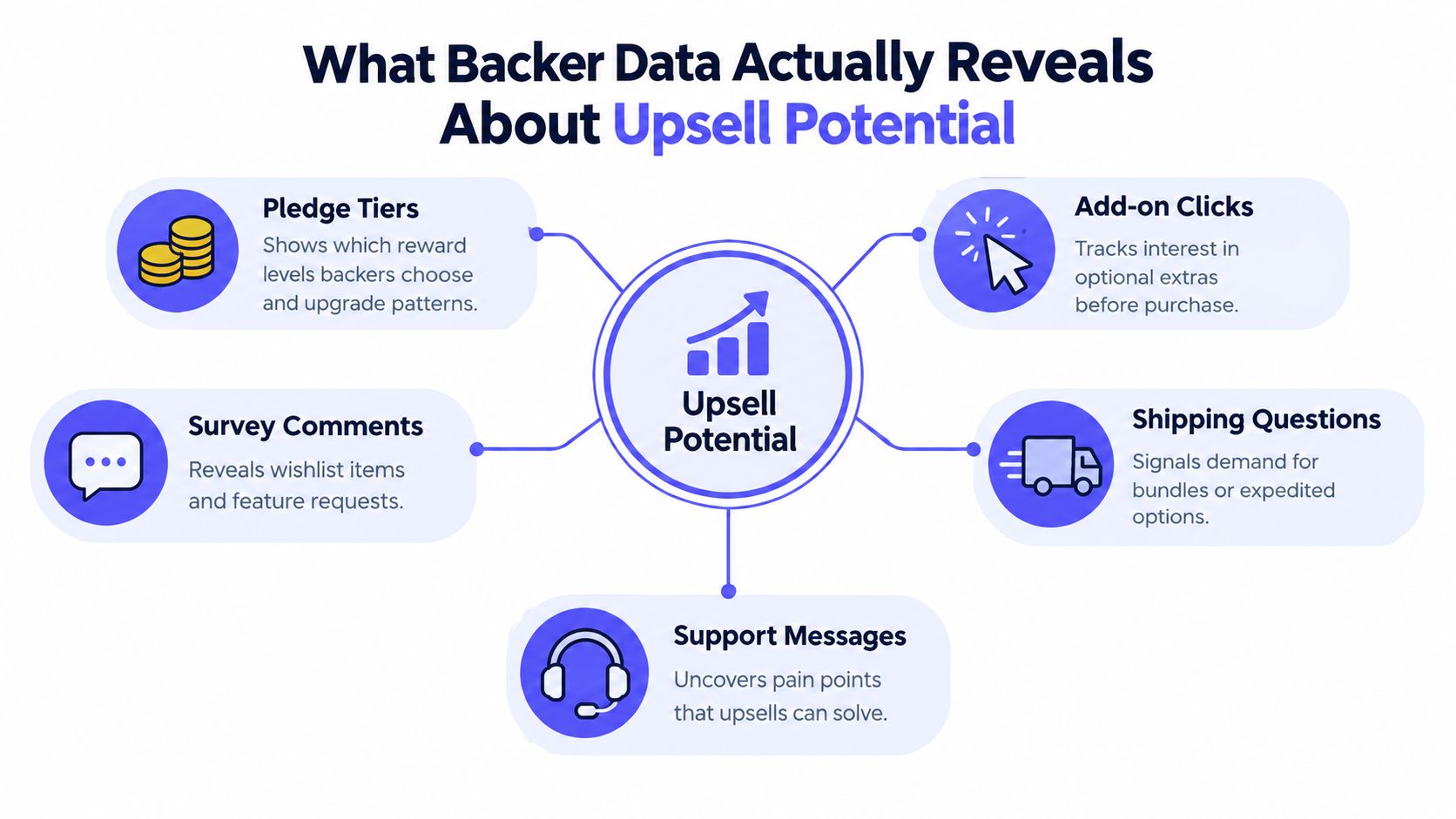
Start with the records closest to a completed pledge, then move outward.
Compare the reward tiers backers select and the upgrades they make during the campaign or after pledging. If backers consistently move toward a higher tier, that may indicate demand for the additional function, quantity, or accessory included in that tier. If they stay with a base reward but ask about one component from a premium tier, that component may work better as a standalone add-on.
Product-affinity analysis makes this pattern easier to see. In plain terms, it asks what backers buy together or what they ask for after buying the base reward. For a tabletop campaign, that might mean a storage insert following the core game. For a gadget, it might mean a spare charger, protective case, or replacement module.
Support inboxes and survey comments often contain stronger signals than clicks because backers explain the reason behind their interest. Group messages into themes:
Don't treat every mention as validated demand. One enthusiastic comment is a lead. Repeated, specific requests from people who have already pledged are stronger evidence.
Existing backers and post-purchase audiences deserve priority. Benchmark reporting places the probability of selling to an existing customer at 60–70%, compared with 5–20% for a new prospect, and reports that upsell and cross-sell programs can represent 10–30% of ecommerce revenue. These figures are provided in benchmark coverage of upsell and cross-sell behavior, but creators should still evaluate their own campaign data rather than applying a generic target.
Record signals nightly in a simple sheet or database with the backer ID, original tier, requested item, source, timing, and fulfillment implications. Your post-campaign survey should collect those preferences in a structured way, alongside addresses and other fulfillment details. This guide to Kickstarter post-campaign surveys explains why the survey is more than a shipping form. It's also a direct listening channel.
Interest isn't the same as intent. Backers may click an accessory because it looks attractive, vote for an idea because it sounds useful, or ask about a feature they wouldn't purchase. Validation means creating a small, controlled path from signal to decision before committing inventory, packaging, or production capacity.
Begin with the simplest test that can answer the question. If several backers ask for an accessory, add it to a targeted survey question with clear wording and an explicit choice. If you're unsure whether people prefer a bundle or separate add-on, run a short poll before changing the campaign structure. If an idea is still early, use a pre-launch waitlist or email segment to measure who wants early access.
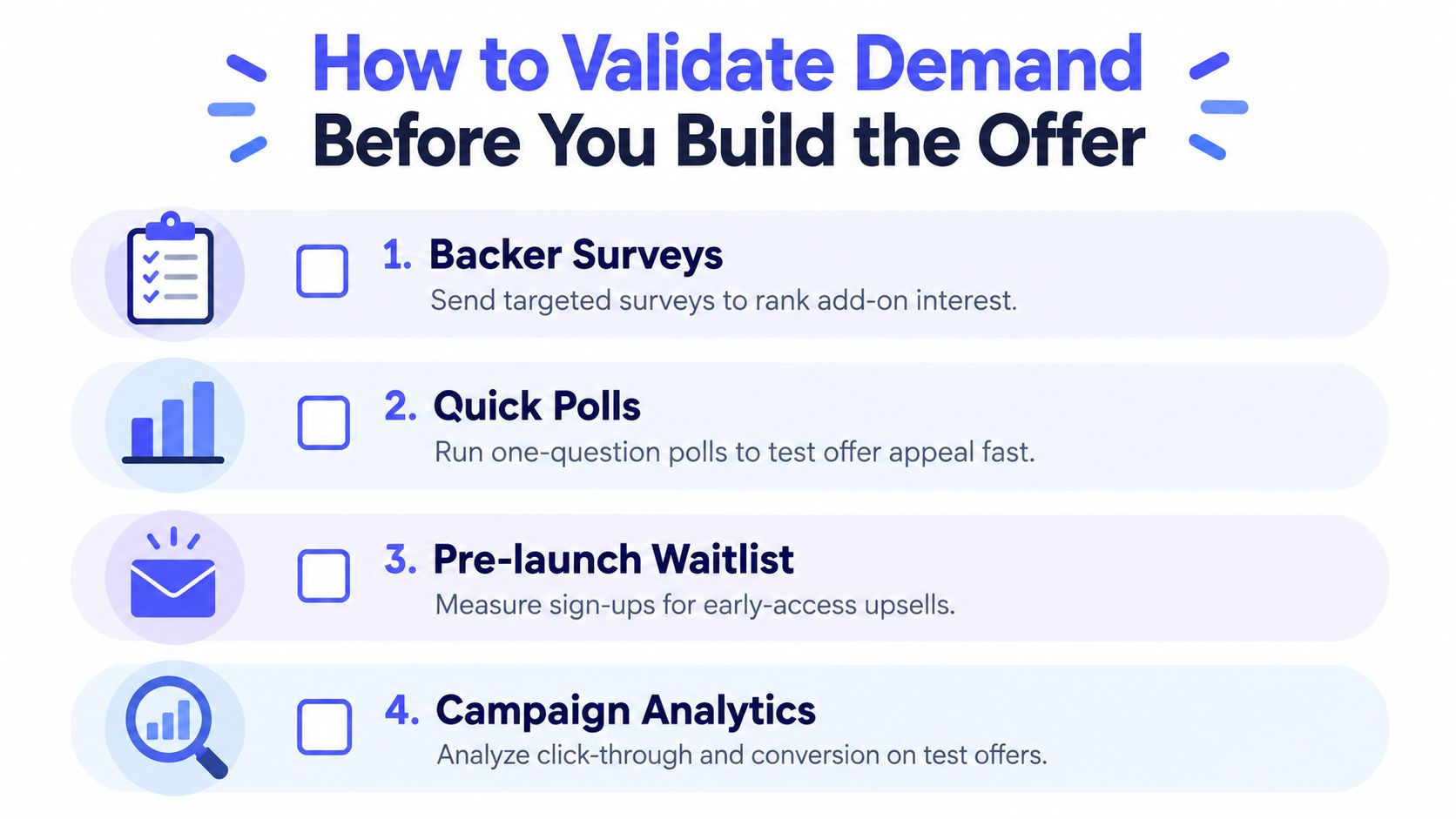
A survey can test relative interest. A poll can test a single choice quickly. Campaign analytics can show whether a presented offer attracts meaningful engagement. None of these should be interpreted alone.
For each candidate, ask:
Complaint-driven requests deserve careful handling. If backers say the standard packaging feels vulnerable, don't immediately sell an expensive protection bundle. First determine whether they want stronger packaging, shipping insurance, a replacement option, or a different delivery method. The complaint describes the problem. Your validation test should identify the acceptable solution.
Upsell reporting can make weak demand look strong if you count every positive response as a conversion. Separate decided-only conversion from true conversion, and distinguish count-based conversion from value-weighted conversion. A large number of low-value add-ons and a smaller number of expensive upgrades represent different commercial outcomes.
Cohort opportunities by the date they were created and evaluate only completed periods. Allow at least 1.5–2 times the median upsell cycle before judging the result, which helps reduce right-censoring. A second cohort anchored to renewal proximity can show whether timing changes acceptance, as outlined in this methodology for measuring upsell conversion.
Normalize multiple quotes or offer views into one buying cycle. Separate uplift ARR from total TCV where those measures apply, and check expansion tags against actual billing changes such as added seats or increased recurring value. For crowdfunding, the equivalent is confirming that an expressed preference became a paid add-on, not merely a survey selection.
A useful validation log contains the hypothesis, audience, offer wording, placement, response, payment status, and fulfillment result. Keep the test small enough to understand, but structured enough to repeat.
Crowdfunding offers three distinct discovery windows, and each one produces a different kind of evidence. Pre-launch is where backers describe the reward they wish existed. The live campaign shows what they'll choose when money and urgency are present. The post-campaign pledge manager captures the practical extras they want once the original decision is complete.
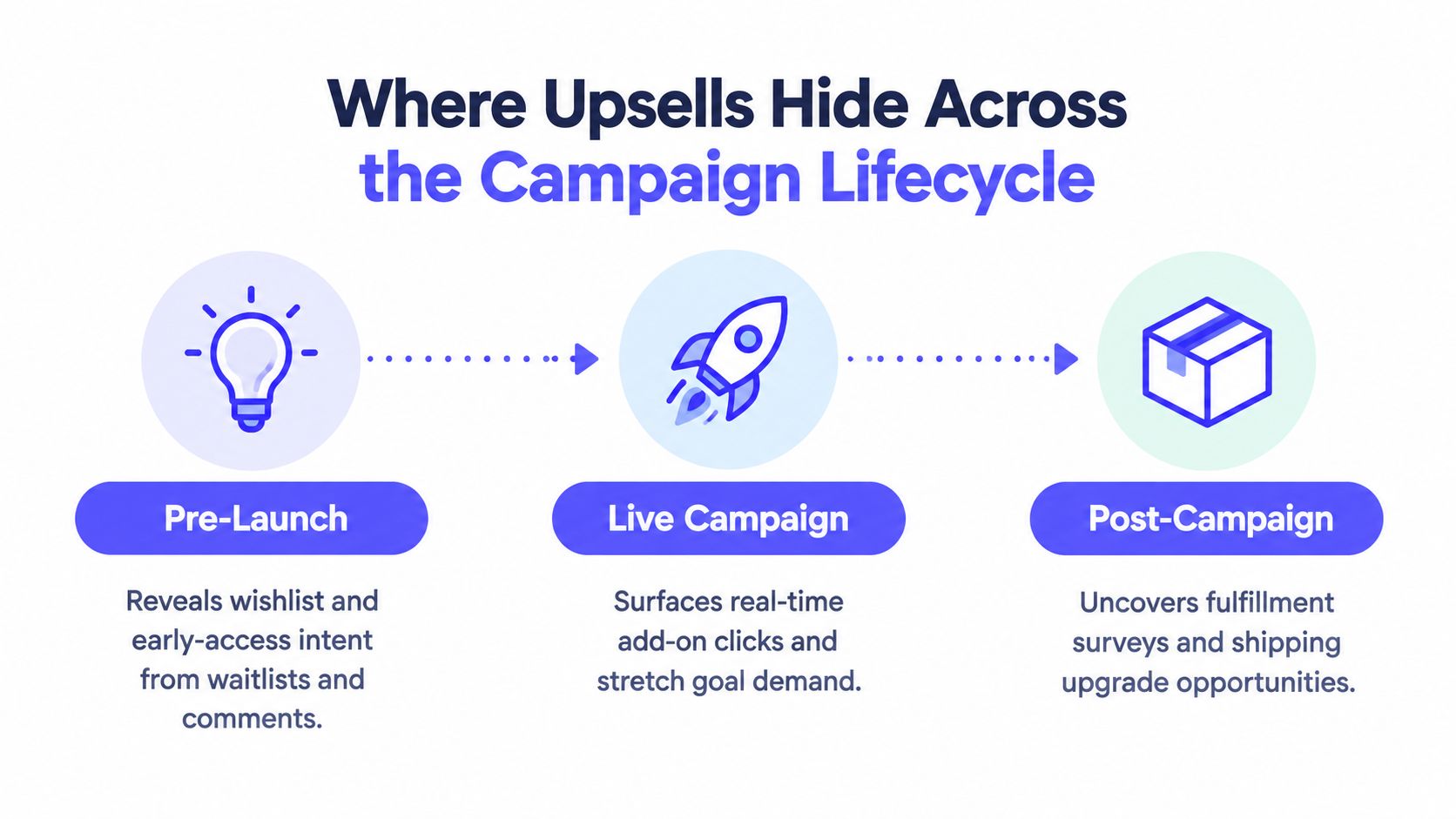
Pre-launch signals come from waitlist replies, landing-page questions, email engagement, and comments. They're useful for shaping bundles, early-access extras, and stretch-goal candidates. The weakness is that pre-launch interest can be aspirational. People may want to hear about an idea without being ready to pay for it.
During the live campaign, pledge-tier selection, add-on clicks, upgrade behavior, and repeated comments give you more immediate evidence. This is the right window for testing a clearly related accessory or tier upgrade, especially when the offer can be understood without interrupting the main pledge decision.
Post-campaign, the pledge manager becomes the richest operational source. Backers answer surveys, review shipping choices, request additional items, and return to complete late purchases. Kickstarter's Pledge Manager lets creators configure reward tiers and add-ons, allow backers to upgrade, and accept purchases of available rewards after the campaign ends. Kickstarter also states that surveys update when backers add or upgrade rewards, making the survey a natural place to capture both fulfillment information and purchase intent. Its model is like Amazon, with a structured marketplace experience and less flexibility for creators.
PledgeBox's pledge manager is more like Shopify, because creators can shape the storefront, configure add-ons, manage branding, and support late sales around their own campaign workflow. The distinction matters when your offer depends on custom bundles, staged fulfillment questions, or a longer post-campaign selling period.
Independent benchmark reporting in 2025 found that order bumps achieved a 37.8% conversion rate, higher than other upsell formats. The same report found that the $51–100 offer-price band delivered a 16.2% conversion rate with a 31.4% revenue lift. These figures come from the 2025 upsell conversion benchmark report, so use them as context rather than a promise for a specific campaign.
| Campaign Phase | Signal to Watch | Best Upsell Type |
|---|---|---|
| Pre-launch | Wishlist comments, waitlist replies, email interest | Early-access accessory, bundle concept, or premium configuration |
| Live Campaign | Add-on clicks, tier upgrades, repeated feature requests | Simple order bump, related accessory, or tier upgrade |
| Post-campaign | Survey comments, shipping questions, self-serve edits | Replacement item, shipping option, second unit, or late backer add-on |
Device context also matters. The same benchmark reported that mobile upsell conversions lagged desktop by 54%, so mobile offers should be shorter, clearer, and easier to accept. For broader merchandising principles, this guide to cross selling for marketers is a useful reference, especially when deciding whether an item complements the reward or competes with it.
Once signals begin accumulating, creators face the opposite problem: too many plausible offers. A scoring model prevents the loudest request from automatically becoming the next product.
Score each idea against four practical dimensions:
You don't need a complex machine-learning system. A High, Medium, and Low tier is enough if the criteria stay consistent.

Place an offer in High when the signal is specific, the relationship to the core reward is obvious, and fulfillment is already understood. A backer who selected a camera but asks for a spare battery is showing a clearer opportunity than someone who clicked a general “coming soon” banner.
High-priority offers should appear in the most relevant survey step or immediately after the main reward is confirmed. Keep the copy concrete. Explain what the item does, who needs it, and whether it changes shipping or delivery.
Medium opportunities have encouraging evidence but still need a test. A premium material, larger bundle, or new color may attract interest, yet lack enough completed purchases to justify broad placement. Show these offers to a defined segment or test them in a targeted survey question.
Low priority ideas should remain in the backlog. They might be attractive products, but without a clear signal they add menu clutter and operational exposure.
A nightly workflow keeps scoring current:
Track expansion revenue separately from total campaign revenue. Otherwise, a successful core campaign can hide weak add-on performance, and a large add-on can make a poor offer appear healthy because of value rather than acceptance. Attach rate, paid conversion, average add-on value, refund behavior, and fulfillment exceptions should each have their own view.
Operator's note: A tight add-on menu usually beats a catalog. Backers need a confident recommendation, not every possible configuration.
Identifying an offer only creates value when backers can accept it without friction. The practical execution sequence is short: place the strongest validated add-on near the reward decision, explain its use in one clear sentence, collect the choice inside the survey, and keep the edit window open long enough for backers to complete the order.
Kickstarter's Pledge Manager supports reward tiers, add-ons, upgrades, and post-campaign purchases, and Kickstarter says it's included with no additional upfront cost. Its support documentation says the same fees apply to shipping and additional add-on funds raised through the pledge manager as to campaign pledges, while taxes raised through the pledge manager aren't charged fees. That structure can work well when you want a familiar, marketplace-style experience.
PledgeBox is free to send the backer survey and charges only 3% of add-on revenue collected through backer surveys if there's any. Its published comparison says sending the survey itself is free and that the 3% fee applies to relevant survey revenue. Backers can also make post-campaign order changes after submitting a pledge manager order, including purchasing new add-ons and answering related survey questions, while creators can set how long those edits remain open or close them manually, as described in Kickstarter's backer self-serve add-ons release notes.
For creators comparing workflows, Kickstarter's pledge manager is like Amazon, while PledgeBox's pledge manager is like Shopify. The first offers a more standardized environment. The second gives creators more control over the branded survey, add-on presentation, late sales, and campaign-specific fulfillment flow.
Use this guide to increasing average order value to turn validated signals into a focused test. Start with one high-affinity offer, track paid acceptance separately from survey interest, and remove anything that creates confusion or fulfillment risk.
PledgeBox gives crowdfunding creators a flexible pledge manager for branded backer surveys, add-ons, upgrades, shipping collection, and late purchases, with no charge to send the survey and only 3% charged on add-on revenue if there's any. Visit PledgeBox to turn the backer questions and survey signals you're already collecting into a focused upsell workflow.
PledgeBox
The All-in-One Toolkit to Launch, Manage & Scale Your Kickstarter / Indiegogo Campaign