 PledgeBox
How to Reduce Cart Abandonment and Boost Crowdfunding Conversions
Discover how to reduce cart abandonment with proven strategies. Learn to recover lost sales, optimize your checkout, and boost crowdfunding conversions.
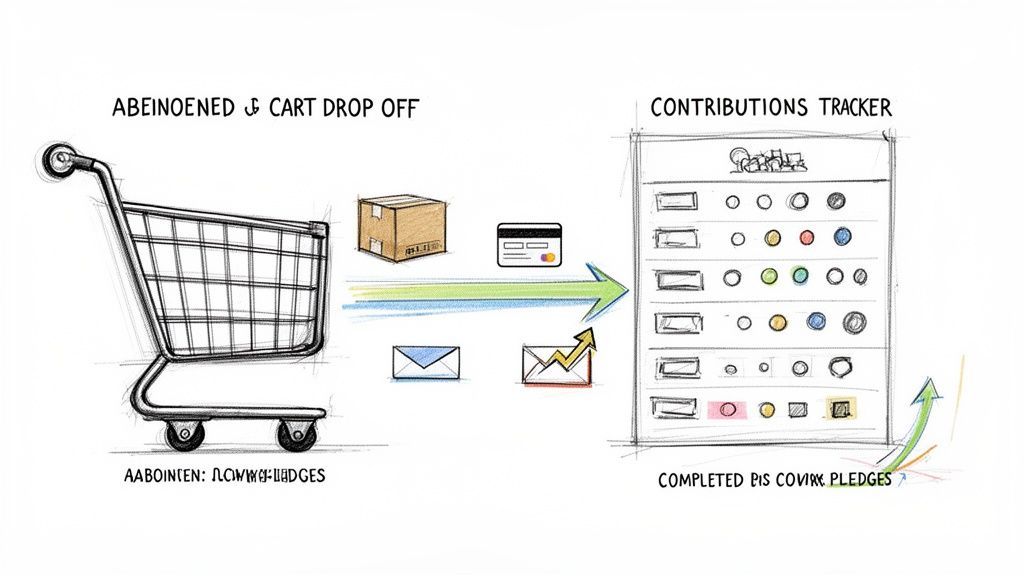
Discover how to reduce cart abandonment with proven strategies. Learn to recover lost sales, optimize your checkout, and boost crowdfunding conversions.
For crowdfunding creators, tackling "cart abandonment" really means fixing your post-campaign survey. It’s all about being upfront with costs, making the process dead simple, and earning your backers' trust. Your goal is to eliminate surprise fees, streamline the checkout, and offer payment flexibility to get backers from survey to completion without a hitch.
Let's start with a hard truth: a good chunk of the excited backers who start your post-campaign survey will never actually finish it. This isn't just a typical e-commerce hiccup; it’s a massive roadblock for creators during the most critical phase—fulfillment. When a backer drops off, it's not just a lost upsell. It's a fulfillment headache waiting to happen and a direct hit to your bottom line.
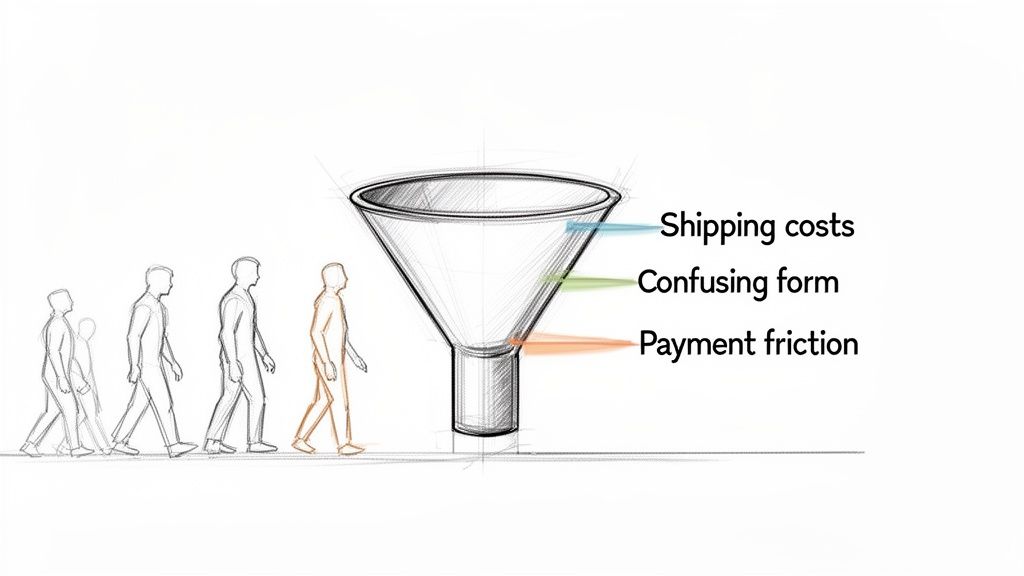
Globally, the average shopping cart abandonment rate is a jaw-dropping 69.99% to 75.38%. Think about that. Nearly three out of every four shoppers add items to a cart but bail before paying, leaving an estimated $4 trillion in merchandise on the table every year. This has been a growing problem for years, showing a clear disconnect between what a customer wants to buy and their ability to actually buy it.
For creators, this problem is often magnified. Your "cart" is the backer survey or pledge manager, the essential step where you lock in rewards, collect shipping info, and process final payments. A backer abandoning this step is way more costly than a random shopper leaving a website.
Here’s a quick look at the top reasons backers and customers walk away during this crucial step.
| Reason for Abandonment | Impact on Backers/Customers | Core Problem |
|---|---|---|
| Unexpected Costs | Backers feel ambushed by high shipping fees or taxes not clearly stated during the campaign. | Lack of Transparency |
| Complex Checkout | Long, confusing forms, or forcing account creation causes frustration and fatigue. | User Experience Friction |
| Payment Issues | Limited payment options (e.g., no PayPal) or declined cards halt the process. | Payment Flexibility |
| Technical Glitches | The survey page doesn't load correctly, especially on mobile, or buttons don't work. | Poor Optimization |
| Lack of Trust | An unbranded or unprofessional-looking survey page makes backers hesitant to enter payment info. | Branding & Security |
Each of these issues erodes the trust and excitement you worked so hard to build during your campaign. Getting a handle on them is non-negotiable. Exploring practical tactics to convert shoppers can give you some great ideas that apply directly to your survey flow.
This is exactly where the right pledge manager becomes your most valuable tool. The default Kickstarter pledge manager is a bit like Amazon—a giant, standardized marketplace where everyone gets the same experience. It's functional, but it's not yours.
In contrast, a dedicated platform like PledgeBox pledge manager is more like Shopify. It puts you in the driver's seat, giving you the power to create a branded, customized, and frictionless journey for your backers.
You control the flow, the branding, and the communication, turning a simple survey into a seamless final step of your campaign journey. This control is essential for building trust and guiding backers to completion.
The business model matters, too. For instance, PledgeBox is free to send the backer survey and only charges a 3% fee on successful upsell revenue, if you have any. This approach aligns the platform's success directly with yours. It means the features are designed to maximize your completions and revenue, not just to process transactions.
In the next sections, we'll dive into the concrete strategies you can use to fix these common abandonment issues for good.
What's the number one conversion killer in both e-commerce and crowdfunding? It’s not a bad product or a clunky website. It's that jarring moment right before checkout when a backer sees their total suddenly jump because of shipping, VAT, or other taxes.
This "sticker shock" is responsible for a huge number of abandoned surveys.
The data on this is crystal clear. Research shows extra costs are the direct cause for 48% of shoppers abandoning their carts worldwide. This single issue is the biggest driver behind the massive 70.19% average abandonment rate, a problem that hasn't gone away for years. When backers feel ambushed by these fees, they don't just get frustrated—they lose trust and bail. You can learn more about the latest cart abandonment statistics here.
This is why total transparency with these costs isn't just a "nice-to-have." It's fundamental to your success. The old way of hiding fees until the final payment screen is a guaranteed way to lose backers. The smart move is to integrate them smoothly and transparently into your post-campaign flow right from the start.
To get rid of sticker shock for good, you need a system that can handle complex shipping rules and show them to backers in a way that makes sense. This is where a powerful pledge manager becomes absolutely essential.
Imagine you're a board game publisher with tons of intricate add-ons shipping to dozens of countries, or a hardware startup trying to figure out EU VAT. Every backer's situation is different. A single, flat shipping rate just isn't going to work—it’s either not feasible or not fair.
Here’s how you can set up your pledge manager for maximum clarity:
For a deeper dive, check out our guide on how to calculate shipping costs.
A generic survey tool just can’t handle these variables gracefully. It often feels like a disconnected marketplace checkout, almost like an Amazon experience where everything is standardized and you have no control.
In contrast, a dedicated pledge manager like PledgeBox acts more like your own branded storefront. It puts you in the driver's seat, letting you build a transparent and reassuring experience. You can communicate costs upfront and weave them naturally into the survey flow, so backers see their total update in real-time as they make their choices.
The key is to shift the backer's mindset from "You're surprising me with hidden fees" to "You're helping me calculate my final, accurate cost." This builds immense trust and dramatically increases survey completion rates.
This approach is also supported by the business model. For example, PledgeBox is free to send the backer survey for all your backers. We only charge a 3% commission on upsell revenue if you decide to offer add-ons. The system is designed to help you succeed by creating a smooth, transparent experience that encourages backers to finish their surveys—and maybe even add more to their pledge.
By tackling shipping and taxes head-on, you turn your biggest point of friction into a chance to build trust and lock in your funding.
Once you’ve tackled sticker shock, the next massive hurdle is the user experience itself. A clunky, long, or untrustworthy survey process will absolutely tank your completion rates. Your post-campaign survey is a direct extension of your brand; it’s not just a form, but a critical final touchpoint that needs to feel effortless for your backers.
The data backs this up. A staggering 18% of consumers will ditch their carts simply because the checkout process is too complicated or long. For creators, that means every extra click, every confusing question, and every moment of doubt pushes a backer closer to just giving up.
To put it in perspective, think about the difference between shopping on Amazon versus a slick, modern Shopify store. Kickstarter's native pledge manager is a lot like Amazon—it's a massive, one-size-fits-all marketplace. It gets the job done, but every creator is stuck with the same generic layout, and you have almost no control over the branding or user flow.
A dedicated pledge manager like PledgeBox, on the other hand, is like giving your project its own Shopify store. You get to create a branded, customized, and smooth journey from start to finish. You’re no longer just another listing on a giant platform; you’re guiding your backers through your store, reinforcing the trust you worked so hard to build.
This distinction is critical. A branded, Shopify-like experience feels professional and secure, encouraging backers to enter their shipping and payment details with confidence. A generic, marketplace-style checkout can feel disconnected and less trustworthy, causing hesitation at the final step.
This is also why the business model makes sense. Remember, PledgeBox is free to send the backer survey and only charges 3% of upsell revenue if you sell any add-ons. The platform's goals are perfectly aligned with yours: create an experience so good that backers not only finish the survey but are also excited to buy more.
To build a survey that actually converts, your mission is to hunt down and eliminate every single point of friction. The goal is to make it so easy that backers don't even have to think.
This flowchart shows exactly where things can go wrong—when shipping and taxes pop up after the initial pledge.
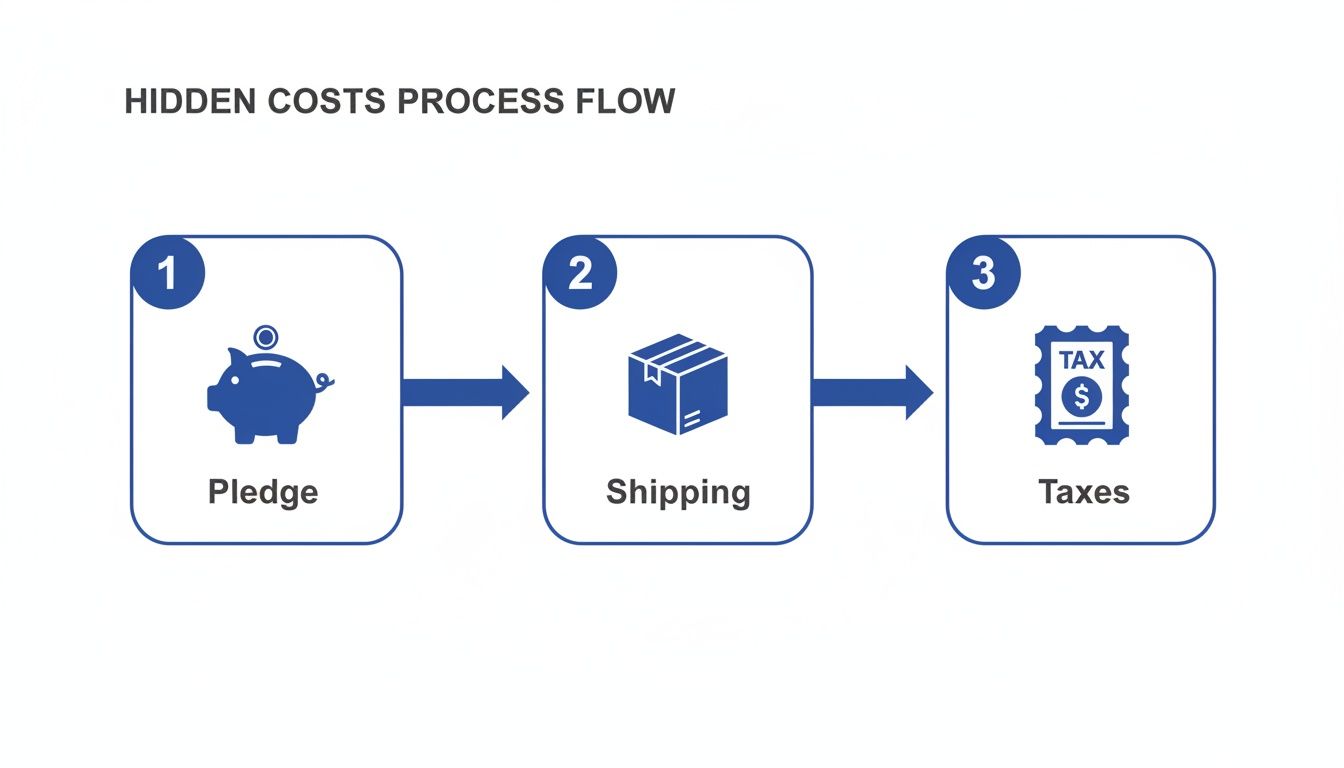
If these steps aren't handled with total transparency, they become major friction points that lead directly to abandonment.
Here are the non-negotiable best practices you need to implement:
Choosing the right pledge manager has a direct impact on both the backer experience and your ability to control the process. Here's a quick comparison of the two main approaches.
| Feature | Marketplace-Style Manager (e.g., Kickstarter) | Dedicated Platform (e.g., PledgeBox) |
|---|---|---|
| Branding & Customization | Generic, platform-branded interface. Minimal control. | Fully customizable with your logo, colors, and branding. |
| User Flow | Standardized, one-size-fits-all process. | Creator-controlled flow, optimized for simplicity. |
| Upsell & Add-on Experience | Limited or clunky upsell functionality. | Seamless, integrated add-on store to boost revenue. |
| Support & Error Handling | Backers contact the main platform; less direct control for creators. | Direct creator control and specialized support tools. |
| Backer Trust | Can feel disconnected from the original campaign. | Branded experience reinforces trust and professionalism. |
Ultimately, a dedicated platform gives you the tools to create a professional and reassuring final step, which is key to getting backers across the finish line.
For a deeper dive into crafting a survey that backers actually want to complete, check out our guide on the Kickstarter post-campaign survey. And if you’re looking for broader strategies, this practical guide to improve ecommerce conversion rates offers some great insights that apply here, too.
By focusing on these user-centric design principles, you can transform your survey from a potential roadblock into a smooth final step that secures your funding and sets you up for a successful fulfillment.
Once you’ve got your checkout flow running smoothly, it’s time to think bigger: how can you increase your average pledge value? Upselling with add-ons is an incredible tool for this, but it’s a delicate dance. Do it wrong—get too aggressive or confusing—and you’ll just overwhelm backers. They’ll feel pressured, get frustrated, and abandon the whole process.
The secret is to weave your upsells into the experience so seamlessly that they feel like a natural, valuable part of the journey, not a pushy sales pitch. This approach doesn't just prevent cart abandonment; it can actually make backers happier by helping them discover relevant items they might have missed. You want them thinking, "Oh, that’s a great addition," not, "Here we go with the hard sell."
This is another area where the pledge manager model really shines. Think of the native Kickstarter survey process like a massive, standardized marketplace where your project is just one of many. Its main job is fulfillment, not creating a tailored experience to boost your revenue.
A dedicated platform like PledgeBox, on the other hand, is like having your own Shopify store. You get the control to build a branded, intuitive add-on experience that feels like a true extension of your campaign.
To make your upsells stick, you have to nail the relevance and presentation. Backers have already committed to your core product, so any add-on needs to feel like it truly complements that initial pledge.
Here are a few strategies that consistently work wonders:
By making the add-on process feel like a curated bonus round instead of a mandatory hurdle, you encourage more spending without adding friction. You can dive deeper into these strategies by learning how to increase average order value.
Where and when you show backers your upsells can make or break the sale. Bombarding them with add-ons before they've even confirmed their core pledge is a recipe for disaster. The ideal flow is to let them lock in their original reward and shipping information first.
Once those essential steps are complete, you can present a dedicated, easy-to-browse "add-on store" as a final, optional step. This separation ensures the primary goal—completing the pledge—is never at risk. The upsell becomes an exciting opportunity, not an annoying obstacle.
The best upsell strategy is one that aligns the platform's success with your own. When the tool you use only makes money when you do, its features are inherently designed to create a positive, revenue-boosting experience for your backers.
This is exactly how PledgeBox is structured. PledgeBox is free to send the backer survey to all of your supporters. We only charge a 3% commission on the revenue generated from successful upsells—and that's only if you choose to offer any at all. This means our success is directly tied to yours. We're motivated to help you create a smooth, appealing add-on experience that backers actually enjoy, because if you don't make money on upsells, neither do we.
Let's be realistic: even with a perfectly designed survey, life gets in the way. Backers get distracted by a phone call, forget they opened the survey, or just decide to finish it "later." That's why a proactive recovery strategy is so important—it turns those forgotten surveys into completed orders and gives you the accurate data you need for fulfillment.
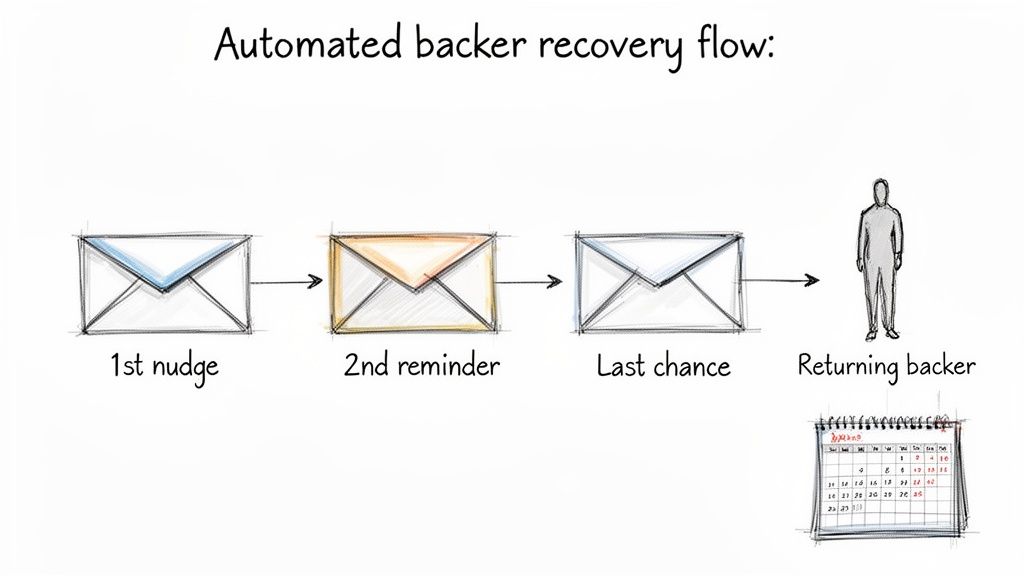
Just sending a single reminder won't cut it. The trick is to use a multi-step, automated email sequence that gently—but persistently—nudges backers to finish their survey. This isn't about spamming people. It’s about sending helpful, well-timed reminders that stand out in a crowded inbox.
The goal is to be persistent without being annoying, a balance that automated systems handle perfectly.
From my experience, a timed three-email strategy is the most effective way to recover backers. Each email has a different purpose and tone, building on the last one to give backers a compelling reason to act. Setting this up in your pledge manager is a one-time effort that will pay off for the entire post-campaign period.
Here’s a breakdown of a powerful three-email flow:
This automated sequence makes sure you're consistently following up with every incomplete survey without lifting a finger. It’s one of the most powerful tactics for reducing cart abandonment after your initial survey goes out.
This is where your choice of platform really matters. While the native Kickstarter pledge manager feels like a generic marketplace with limited tools, a dedicated pledge manager like PledgeBox gives you the control you need, almost like running your own Shopify store.
You can set the timing for your emails, customize the templates with your project's branding, and even track open and click-through rates to see what’s working. That level of control is what makes a recovery campaign truly effective.
An automated follow-up system isn't just a safety net; it's a core part of a successful fulfillment strategy. It ensures your data is as complete and accurate as possible, which prevents costly shipping errors and delays down the line.
The business model of your pledge manager can also make a huge difference. For example, PledgeBox is free to send the backer survey, and we only charge 3% of upsell revenue if there's any. This means our success is tied to yours. We're invested in giving you the tools—like automated reminders—that help you get the highest completion rate possible.
Ultimately, a happy, responsive backer community is good for everyone. By automating your recovery efforts, you maximize completions, secure your revenue, and set yourself up for a hassle-free fulfillment process.
Even with the best strategies, ironing out the wrinkles in your post-campaign process brings up questions. Trying to slash your pledge abandonment rate is an ongoing game, and getting the small details right can make a massive difference in your survey completion and final funding.
Let's dive into the most common questions we hear from creators, with some straight-up answers to help you lock in more of your hard-earned pledges.
You should be aiming for an 85-90% survey completion rate within the first two weeks of sending it out. That initial rush gives you a solid, early read on what you need for production and fulfillment.
If your rate is stuck below 80% after that initial push, it’s a big red flag. Something is causing friction—it could be surprise shipping costs, a confusing survey, or just a technical glitch. A high abandonment rate at this stage can easily snowball into major fulfillment headaches down the road.
The real goal is to get as close to 100% as you can before locking down your final manufacturing numbers. Using a pledge manager like PledgeBox, which has automated multi-step email reminders, can realistically push your final completion rate well above 95%. Hitting that number is crucial for accurate production counts and a smooth, on-time delivery.
Getting your shipping estimates right is your single best defense against the sticker shock that drives backers away. Nail this, and you've already won half the battle.
Start with a final prototype of your product, packed in its final packaging, and weigh it. Don't guess. Use that exact weight to get real-time quotes from shipping carriers and fulfillment centers that serve your key regions (like North America, the EU, and Asia).
A few practical steps to get it right:
A good pledge manager will then let you set up specific shipping rules based on country, region, and total package weight, so every backer gets charged the correct amount automatically.
Charging for shipping in a post-campaign pledge manager is the industry standard for a very good reason—it’s just better for everyone. This approach lets you collect the most accurate fees based on a backer's final shipping address and any add-ons they grab in the survey.
Trying to charge a single flat shipping rate during the campaign is incredibly risky. For one, it can make your funding goal look artificially high, which might scare off early backers. More importantly, it's almost impossible to find one rate that’s fair for a global audience with different pledge levels.
The absolute key to making this work is radical transparency. Your campaign page has to clearly state—in multiple places—that shipping fees and any applicable taxes (like VAT) will be calculated and charged separately in the post-campaign survey. This sets expectations from day one and avoids any "gotcha" moments later.
Besides the shock of unexpected costs, a few classic user experience (UX) issues consistently push backers to give up. These friction points can seem minor, but they add up fast and lead straight to frustration.
The most common culprits are:
This is exactly where your choice of pledge manager makes all the difference. Think of the native Kickstarter survey tool as a generic, one-size-fits-all form, kind of like the basic Amazon marketplace checkout. You have almost no control over the experience.
A dedicated pledge manager like PledgeBox, on the other hand, is like having your own Shopify store. You control the branding, the flow, and the entire user experience. You can ensure the design is mobile-first and integrate tools like Google Maps address validation to make it effortless.
Best of all, PledgeBox is free to send the backer survey—the platform only charges a 3% commission if you generate any upsell revenue. This model means the platform is built from the ground up to create the smoothest, most effective experience for your backers.
Ready to eliminate pledge abandonment and create a seamless post-campaign experience for your backers? PledgeBox gives you all the tools you need, from a fully branded survey to automated recovery emails and smart upsells.
PledgeBox
The All-in-One Toolkit to Launch, Manage & Scale Your Kickstarter / Indiegogo Campaign