 PledgeBox
10 Fraud Prevention Methods for Crowdfunding Creators
Discover 10 practical fraud prevention methods for crowdfunding creators, covering address checks, chargebacks, backer surveys, and duplicate accounts.
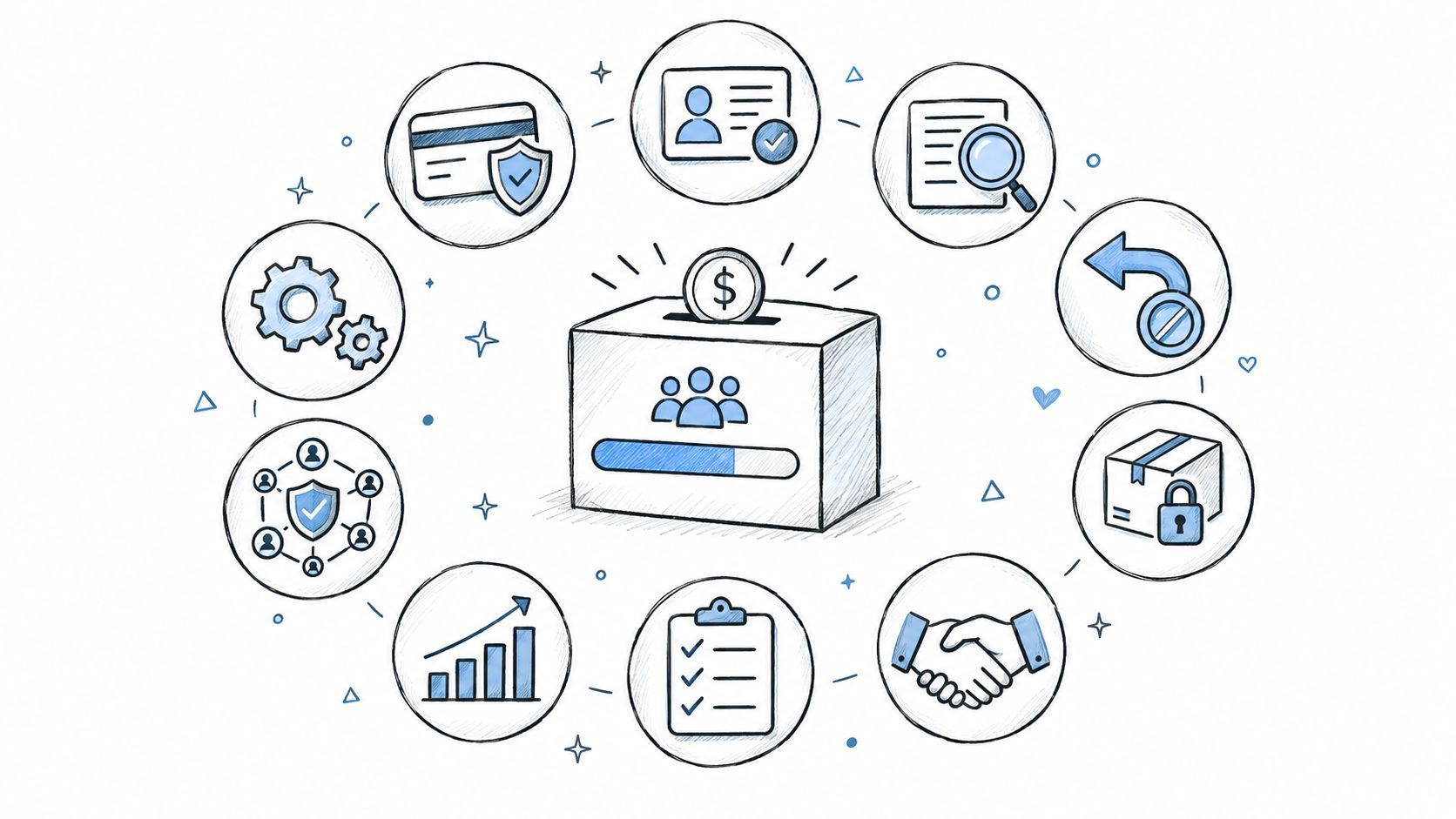
Discover 10 practical fraud prevention methods for crowdfunding creators, covering address checks, chargebacks, backer surveys, and duplicate accounts.
You're staring at a campaign that finally hit its goal, and the substantive work is just starting. Backers are paying in bursts, survey links are going out, shipping details are changing, and one sloppy account or payment slip can turn into a refund fight later. The safest way through that stage is a layered stack of fraud prevention methods that starts at pledge time and keeps working until the last box leaves your warehouse.
Kickstarter's pledge manager works a bit like Amazon, a closed storefront with fixed rules and familiar processes. PledgeBox's pledge manager works like Shopify, so you can shape surveys, add-ons, and checks around your own campaign. PledgeBox sends the backer survey for free and charges only 3% of upsell sales, if there are any.
A fake pledge often starts with a disposable inbox. If you don't confirm the address, you can end up sending campaign updates, survey links, and fulfillment notices into dead space or into accounts that never belonged to a real backer. The fix is simple, immediate, and worth the extra step.
Send the confirmation email right after the pledge lands. Make the CTA direct, then restrict survey access or reward changes until the address is confirmed. For backers who miss the message, offer a second path through support instead of forcing them into a broken loop.
Practical rule: use confirmation to block bots, not to punish legitimate backers who got filtered or were busy.
That matters for creators shipping in multiple waves. Indie game teams, creator collectives, and small hardware campaigns all rely on clean email records when production delays hit or address changes come in late. If your list is messy, fulfillment communication gets messy too.
A creator using PledgeBox can watch confirmation behavior through email marketing tools and follow up with the people who never click through. A short deadline makes sense, but the process still has to be recoverable for real humans. Email Validation API
Payment checks stop a different kind of loss, the kind that becomes a chargeback after the reward is already reserved. Real-time card validation, tokenization, AVS, and CVV checks help you separate clean pledges from transactions that need a closer look. If you handle global backers, this is one of the first controls you should wire in.
Integrate payment verification before the campaign gets busy. Retry policies matter too, because not every failed card is fraud. Some are just expired cards, bank declines, or a backer who mistyped a ZIP code during checkout.
PledgeBox's payment-security guidance points creators toward gateway-native controls such as Stripe Radar, PayPal protections, and 3D Secure for higher-risk transactions, which is the right way to think about it inside a pledge workflow, not after the fact. PledgeBox payment gateway security
Clean payment logs make dispute work easier later, but only if you keep the approval rules tight enough to matter.
Watch fraud-score alerts during pledge spikes and during survey-based add-on purchases. Fashion brands, game studios, and creator collectives all see the same pattern, suspicious cards tend to show up where urgency and limited availability create pressure. If you're using PledgeBox payment analytics, look for repeat declines, mismatched regions, and strange transaction sequences rather than treating every failed attempt the same way.
A pledge from a new country is not automatically suspicious. The warning sign is a location mismatch, one region for the IP, another for the card, and a third for shipping. That is how proxy fraud and impossible-travel behavior often show up in creator campaigns.
Start with the regions you expect to see. Then compare IP origin, payment origin, and shipping destination as pledges come in. International campaigns need that baseline, because real global demand can look messy without it.
Use geography as one signal, not the final call. A backer on a VPN or traveling abroad can look unusual for a normal reason. Pair location checks with account history and activity patterns before you escalate.
Hardware launches, luxury drops, and campaigns with high-value add-ons benefit from this filter. PledgeBox's downloadable reports let you export pledge and shipping data to spot regional clusters and repeated destinations. That pattern often matters more than any single login.
Fraud rarely moves like one neat transaction. It usually moves in bursts, with repeated pledges, similar payment timing, and clustered activity across a short window. Velocity analysis catches those patterns while there's still time to pause review or ask for more proof.
Set your baseline early in the campaign. A board game project with a predictable fan base behaves differently from a tech launch that gets hit by press traffic, so your threshold should reflect the campaign type, not a generic rule. Review the numbers daily, especially in the final campaign week.
The strongest use of velocity data is not just alerting. It helps you decide whether a wave of pledges is organic excitement or coordinated abuse. If multiple accounts are buying in fast from similar devices or geographies, you can hold the most suspicious transactions before they become fulfillment cost.
Useful habit: compare pledge speed, payment frequency, and geography together, because each signal gets more useful when the others line up.
PledgeBox reports let you export this pattern data after the campaign closes, which is helpful for adjusting thresholds before the next launch. Hardware creators and tech startups use this kind of review to catch bot attacks in the final hours, when a campaign feels busiest and people are least likely to notice subtle abuse.
Multi-accounting usually shows up when someone wants more rewards than the rules allow. It can also show up when one actor tries to manipulate campaign numbers, crowd out real backers, or hoard limited stock. If you sell scarce tiers, this control matters a lot.
Look for repeated emails, shared cards, identical shipping details, and the same device fingerprints across multiple accounts. Flag those clusters early, before you send fulfillment instructions or release reward upgrades. A single suspicious cluster can distort your inventory plan if you let it sit.
Limited-edition board game campaigns are a good example. Resellers often move fast, and if your rules are loose, they can claim extra copies before real fans get a shot. Set reward limits per person or per address, and require phone verification for the tiers that are most likely to be abused.
PledgeBox support can help you review flagged accounts manually, which is useful when the signals are messy and the accounts might be shared within one household. Document the reason for each flag, because that history matters if a backer later challenges your decision or if the same pattern appears in a future campaign. The point is to stop exploitation without turning normal family, team, or business ordering into a problem.
A collector tier with a high resale value needs more than a payment check. Identity verification gives you a second gate, and it is worth using when the reward, compliance burden, or fraud exposure justifies the extra step.
Use it only where the friction makes sense. Luxury goods campaigns, blockchain projects, and limited collectible launches fit that pattern. Say why the check exists, then keep the upload flow short and clear so real backers do not stall.
Privacy still matters. Synthetic identities and impersonation make a simple document upload an incomplete defense. A better setup combines verified payment credentials, device signals, rate limits, and human review for edge cases. For campaigns with regulated or high-risk rewards, screening against public sources such as Sex-offender registries adds a layer document uploads alone cannot provide.
If every backer faces the same process, you will lose legitimate buyers who lack the right documents or do not want to share more than needed. Keep identity checks separate from standard survey steps, and make the appeal path obvious for anyone blocked by mistake. PledgeBox's customizable survey flow helps keep that split clean.
A collectible campaign requiring ID for tiers above $500, with a two-step appeal path, keeps friction proportional to risk.
The post-campaign survey is where weak commitments show up. Some backers never answer. Some rush through the form and leave bad details behind. Others submit shipping or tax data that will slow production or create fulfillment errors later.
Send the survey right after the campaign ends. Keep it short. Use conditional logic so backers only see the questions tied to their reward tier. Set a deadline and reminders, but do not stretch the process so far that real backers drop out.
The timing matters because it gives you a clean checkpoint before production locks in. If an international backer cannot receive a certain shipment, or if someone pledged for a reward they no longer want, you want that to surface before you print labels or pack boxes. That avoids wasted materials, rework, and support time.
Keep the survey clean. Every extra field gives a real backer one more reason to quit and a fake one more place to hide bad data.
PledgeBox's completion analytics help you see where people stall. The form field validation guidance covers practical setup choices like making apartment numbers a separate field, which helps keep shipping and tax data usable and cuts down on undeliverable-label reprints.
Shipping fraud and delivery errors start in the address field. If the address is malformed, incomplete, or inconsistent with the rest of the order, you may end up paying for a lost package, a non-delivery claim, or a time-consuming support thread. Address validation is one of the cheapest ways to protect the fulfillment budget.
Turn it on early in the survey. Don't wait until boxes are packed. If an address is flagged, send an automated correction request right away so the backer can fix it before your vendor locks in labels or pallets.
Board game publishers and hardware creators feel this pain the most because bulk shipping mistakes scale fast. PledgeBox's Google Maps-powered address validation helps you audit shipping quality before you commit to final production or export data to a vendor. PledgeBox address validation
Use downloadable reports to spot repeated formatting problems or suspiciously similar addresses tied to multiple accounts. That's where the fraud and the operational errors overlap, and both deserve the same careful review. If you wait until fulfillment day, you're already paying to clean up the mistake.
A lot of disputes start as confusion. A backer expected one timeline, one reward spec, or one shipping update, then got something that felt off. Clear communication lowers that risk and gives you evidence if a chargeback or refund claim turns into a formal dispute.
Write reward descriptions with photos, specs, and realistic timelines. Then keep backers updated during production and fulfillment, not just when something goes wrong. Weekly or bi-weekly updates are usually enough to show progress and keep support volume manageable.
Tracking notices matter too. If a reward ships late, or a backer asks why shipping costs changed, the answer should already be in your campaign history. PledgeBox's automated notifications help you send shipment confirmation and tracking links without hand-copying every message.
If a backer disputes a charge, the strongest record is the one you already kept.
That includes FAQ entries, response threads, delay notices, and proof that you answered questions professionally. Keep the communication history organized inside your system so you can pull it quickly if a processor asks for evidence. Board game teams and hardware creators do this well when they treat updates as part of fraud defense, not just community management.
Chargebacks are the last line of defense, not the first. By the time a dispute lands, you need records, tracking, and a financial cushion already in place. That's why this method works best when it starts long before shipping begins.
Monitor chargebacks monthly during fulfillment. Look for patterns tied to specific reward tiers, shipping regions, or fulfillment phases. If one issue keeps appearing, fix the process instead of fighting each claim one by one.
Reserve funds give you breathing room when a case is weak or when shipping delays create tension. Some creators also look at fraud insurance early, especially for large campaigns where one bad month can create a cash-flow problem. Coordinate both with your payment processor so your reserve strategy and dispute workflow aren't working against each other.
Practical rule: keep the evidence before you need it, because tracking scans and support logs age better than memory.
PledgeBox transaction exports make it easier to assemble a defense file, and shipment notifications give you a paper trail that matters when a backer claims non-receipt. The FTC's fraud data also show why this layered approach matters, since reported consumer fraud losses in 2024 reached more than $12.5 billion, the share of people reporting fraud who also reported losing money rose from 27% to 38%, and investment scams and imposter scams led the reported losses at $5.7 billion and $2.95 billion respectively, with more than 1.1 million identity-theft reports and 6.5 million total reports through FTC channels. FTC fraud loss report
| Method | Implementation complexity 🔄 | Resource requirements ⚡ | Expected outcomes 📊⭐ | Ideal use cases 💡 | Key advantages ⭐ |
|---|---|---|---|---|---|
| Email Verification and Double Opt-In Confirmation | Low, simple confirmation workflows | Low, email service + validation API | 4⭐, reduces fake accounts, lowers bounces, improves deliverability | Campaigns facing bot/disposable-email abuse | High fraud prevention for low effort; improves list quality |
| Payment Verification and Card Authentication | Medium, gateway integration, tokenization | Medium, payment processor, PCI considerations | 5⭐, prevents stolen-card use, reduces chargebacks | High-value or global payment campaigns | Stops fraudulent transactions; PCI-aligned security |
| Geolocation and Geographic Anomaly Detection | Medium, IP geolocation + mapping integration | Medium, geo databases/APIs and tuning | 4⭐, detects VPN/proxy and mismatched locations | International campaigns or suspicious IP patterns | Unmasks proxy/VPN fraud; provides geographic risk insights |
| Velocity and Pattern Analysis Monitoring | Medium–High, real-time analytics & alerts | High, analytics engine and active monitoring | 4⭐, detects coordinated/bulk fraud in real time | High-traffic launches and final campaign hours | Real-time intervention; identifies organized attacks |
| Duplicate Account and Multi-Accounting Detection | Medium, clustering, fingerprinting logic | Medium, data fusion (email, IP, payments), manual review | 4⭐, prevents multi-claims and reselling abuse | Limited-edition or scarce-reward campaigns | Protects allocation integrity; consolidates duplicates |
| Backer Identity Verification and KYC Processes | High, third-party KYC integration, compliance | High, ID providers, legal and operational overhead | 5⭐, strong prevention for high-value/regulated cases | Luxury, regulated, or VIP reward tiers | High-assurance identity validation; regulatory compliance |
| Survey Response Validation and Completion Monitoring | Low–Medium, conditional logic & tracking | Low, survey platform + reminders | 4⭐, identifies fraudulent/invalid pledges; improves fulfillment accuracy | Post-campaign verification and address collection | Improves data quality; reduces fulfillment errors |
| Address Verification and Validation Systems | Medium, postal DBs and maps integration | Medium, address APIs and international datasets | 4⭐, reduces non-delivery claims and address-related chargebacks | Physical-goods campaigns with global shipping | Improves delivery success; catches typos before shipping |
| Transparent Communication and Documentation Practices | Low, notification workflows and templates | Low, content creation and automation tools | 4⭐, lowers disputes, builds trust, aids dispute defense | All campaigns, especially long fulfillment timelines | Provides documented evidence; improves backer satisfaction |
| Chargeback Monitoring, Dispute Prevention, and Financial Risk Management | Medium, monitoring + dispute workflows | Medium–High, accounting for reserves, possible insurance | 4⭐, protects revenue and merchant health; supports disputes | Large-volume or high-risk financial campaigns | Financial cushion (reserves/insurance); evidence-based defenses |
Start with the checks that stop fake pledges before they reach your fulfillment budget, then layer address validation, survey follow-up, and documented communication on top. Assign each method an owner and a review date in your campaign calendar, and check chargeback and velocity data before production orders are placed. The ACFE's 2024 global study found that tips were the most common detection method in occupational-fraud cases, uncovering 43% of cases, and that several controls, including surprise audits, financial-statement audits, fraud-reporting hotlines, and proactive data analysis, were associated with at least a 50% reduction in both fraud losses and scheme duration, which is a strong argument for layered defense instead of one hard gate. ACFE occupational fraud report
Build your process so a suspicious pledge can be reviewed without slowing the whole campaign down. The 2025 survey data showing 62% adoption of real-time transaction monitoring and 76% increasing investment in AI and analytics point in the same direction, fraud prevention needs to happen during checkout, not only after the money clears. SEON fraud report
PledgeBox fits well here because the survey stage can run at no added cost, with no upfront fee and only 3% on upsell sales if there are any. If you're already managing a Kickstarter or Indiegogo campaign, that gives you a practical place to organize survey checks, shipping validation, and dispute-ready records without adding tool sprawl.
If you want a tighter post-campaign workflow, use PledgeBox to run your survey, validate addresses, track backer responses, and keep fulfillment records in one place. Visit PledgeBox and set up the controls that help you catch fraud before it turns into shipping losses or chargebacks.
PledgeBox
The All-in-One Toolkit to Launch, Manage & Scale Your Kickstarter / Indiegogo Campaign