 PledgeBox
Payment Gateway Security Guide for Crowdfunding 2026
Payment gateway security - Secure your crowdfunding campaign with our 2026 payment gateway security guide. Protect backers and reduce fraud for Stripe and
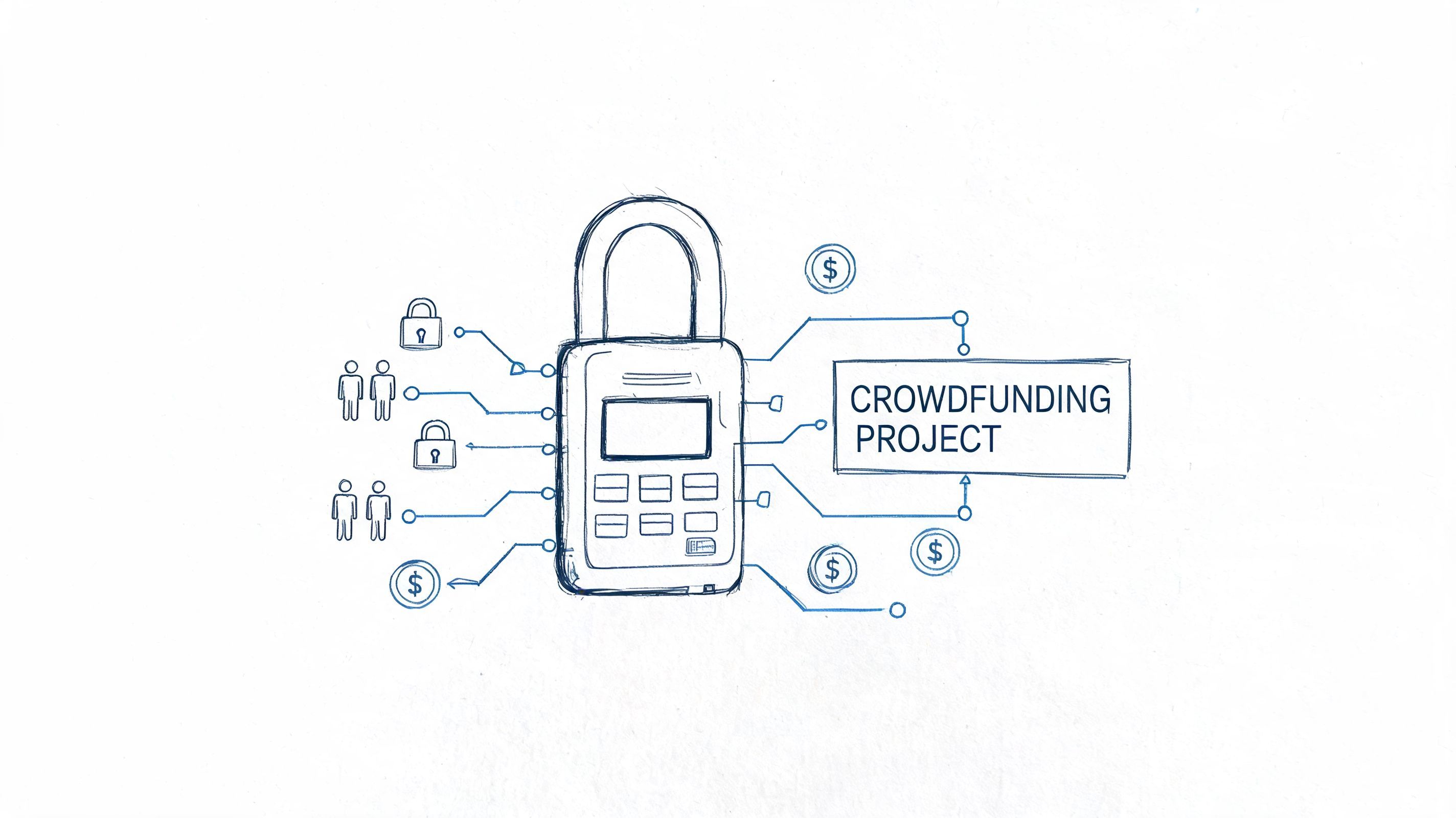
Payment gateway security - Secure your crowdfunding campaign with our 2026 payment gateway security guide. Protect backers and reduce fraud for Stripe and
Your campaign funded. The comments are full of congratulations. Backers are asking about add-ons, shipping timelines, and late pledges. That's usually the point where creators shift from marketing mode into operations mode.
It's also where payment gateway security starts to matter in a very practical way. Not as a compliance buzzword, but as the system that protects your revenue, your backer data, and your reputation when payments keep flowing after the campaign page stops doing the heavy lifting.
The riskiest payment period for many crowdfunding campaigns isn't launch week. It's the messy stretch after funding, when you're collecting shipping, upsells, VAT, tax, and late pledges across multiple touchpoints.

That post-campaign traffic is mostly card-not-present activity. The financial exposure is real. Card-not-present fraud losses are projected to reach USD 28.1 billion by 2026, and every USD 1 of fraud costs merchants USD 4.61 in total losses, according to these payment gateway security statistics. For a creator, that extra cost shows up as chargeback handling, lost time, support overhead, and a community that suddenly has questions about whether your operation is trustworthy.
A normal ecommerce store has a stable checkout. Crowdfunding doesn't.
Your payment flow often changes over time. First there's the campaign. Then the survey. Then shipping adjustments. Then add-ons. Then address fixes. Then support requests where a backer wants to change one thing and pay the difference. Each new payment moment creates another opportunity for fraud rules to miss something or block a legitimate backer.
That's why generic store advice falls short. Crowdfunding payments are spread across phases, tools, and user states. Some backers are returning months later through an email reminder. Others are paying from mobile while traveling. Some are adding a low-cost item that looks harmless but behaves exactly like card testing.
Payment gateway security in crowdfunding is less about one checkout page and more about controlling a chain of small, high-trust transactions.
Creators often think about fraud as the face value of the bad transaction. That's too narrow.
The larger cost usually comes from:
One hard lesson from post-campaign operations is that fraud prevention can't be bolted on after surveys go live. If your payment gateway security is weak, the campaign can look successful on paper and still leak margin during collection and fulfillment.
The dangerous assumption is that the gateway alone handles everything. Stripe and PayPal are strong tools, but your setup still determines how much risk reaches them. Survey links, plugin choices, fulfillment integrations, exported reports, and who has account access all matter.
A funded campaign gives attackers something useful: a warm audience, active transactions, and a team that's busy enough to miss weak signals. That's why the celebration phase is exactly when disciplined payment handling starts.
Before you think about fraud rules, start with architecture. Good payment gateway security begins with reducing what your own team touches.

The first principle is simple. Don't store card data yourself. Route payments through established gateways such as Stripe and PayPal, and keep sensitive payment information outside your servers through hosted collection and tokenization.
PCI DSS is where many creators get intimidated, and for good reason. Only 14.3% of companies achieved full PCI DSS compliance in 2023, and the framework includes 12 key requirements and over 400 test procedures, as outlined in this PCI DSS payment gateway overview.
If you're a creator, the smart move usually isn't to master every layer of PCI control yourself. It's to choose a setup that offloads most of that burden to providers built for it.
That usually means:
Practical rule: If your workflow requires your team to view, copy, or manually move card details, the workflow is wrong.
A native Kickstarter-style post-campaign flow is a bit like Amazon. It's convenient, standardized, and you operate inside someone else's structure.
A dedicated pledge manager is more like Shopify. You get more control over branding, add-ons, surveys, taxes, shipping logic, and payment behavior. That flexibility is useful, but it also means you need cleaner operational discipline. More integrations and more customization can improve the backer experience, but only if the security foundation stays tight.
If you need a plain-language refresher on how a gateway sits between the customer, processor, and banks, this ConversorSEPA payment gateway explanation is a helpful quick read.
A workable architecture for creators usually has these traits:
If you're using PayPal in a campaign workflow, take the time to review a practical PayPal setup for receiving payment guide before backer collections begin. Misconfiguration creates avoidable friction later.
Tokenization doesn't look exciting from the outside, but it's one of the most useful security controls in payment operations. It replaces sensitive card data with a token, so your own environment carries far less breach exposure.
That matters even more in crowdfunding because your payment lifecycle is long. You may collect initial pledges, then come back later for shipping, then process upsells, then issue partial refunds. The fewer moments your own stack handles sensitive payment data directly, the better.
A strong architecture won't stop every fraud attempt. What it does is narrow the blast radius, simplify compliance, and give you a cleaner base for everything that comes next.
Most creators think about payment gateway security at checkout. Crowdfunding needs a wider lens. Your weak point might be a pre-launch email form, a survey reminder, a shipping fee update, or a CSV export shared with the wrong partner.
I look at campaign security as a sequence of touchpoints, not a single event. If one phase is sloppy, attackers often use it to enter the next one.
Before funding, you're usually collecting emails and building interest. That feels like marketing infrastructure, but it still affects payment security later.
Low-quality signups, bot traffic, and messy list capture create downstream problems. They pollute reminder flows, trigger fake engagement, and make it harder to distinguish real backers from automated behavior once surveys go out. Keep forms lean, review unusual bursts of submissions, and restrict who can access your audience data.
This phase is also where account hygiene starts. Shared passwords, old agency accounts, and broad admin rights become a real problem later when payment and backer data enter the same ecosystem.
Post-campaign surveys are useful because they let you collect shipping, VAT, tax, late pledges, and add-on revenue in one controlled flow. They're also one of the easiest places to miss fraud patterns that don't look like standard store abuse.
A 2025 Flagright report noted that real-time transactions in post-campaign survey flows have a 40% higher fraud slip rate due to narrow detection windows, leading to chargeback spikes of 15-20%, as discussed in this analysis of hidden vulnerabilities in real-time transactions. That matches what operators see in practice. Small survey payments can look harmless while attackers use them to test stolen cards.
A secure survey flow should do a few things well:
The post-campaign survey isn't a formality. It's a live payment environment with backers, bots, retries, and edge cases all mixed together.
For creators figuring out the mechanics, this guide on how to collect payments from customers gives a useful operational baseline.
A short walkthrough can help if your team is setting up collection flows and backer communications at the same time.
By the time you're exporting backer data, many teams relax. That's a mistake.
Fulfillment is where payment data, address data, and order logic often intersect. Keep API keys limited to the services that need them. Export only the fields your warehouse or freight partner requires. Remove stale integrations after the project closes. If you're syncing shipping software, tax handling, and support notes, decide who owns access review and log checks.
There's also a practical business point here. You want systems that let you run secure survey collection without adding upfront tool friction. Some creators prefer operational setups where the survey itself is free to send and fees only apply when upsells happen. That model keeps the barrier low while still making room for secure post-campaign monetization. In that context, the common comparison is straightforward: Kickstarter's pledge manager is like Amazon, while a more flexible pledge manager is like Shopify. The added control is valuable, but only if your team treats every touchpoint like part of the payment surface.
A solid architecture reduces exposure. It doesn't decide in real time whether a payment should pass, get challenged, or be stopped. That's the job of active defense.

The mistake I see most often is treating fraud defense as a binary setting. Teams either trust the gateway defaults too much, or they pile on so many restrictions that legitimate backers get blocked. Good payment gateway security sits in the middle. It's selective, adaptive, and tied to campaign behavior.
Start with signals that map well to crowdfunding traffic:
The goal is not “challenge every transaction.” The goal is “increase scrutiny when the pattern justifies it.”
Implementing 3D Secure 2.2 can boost approval rates by 8% while cutting fraud by 70%, and AI-driven tools like Stripe Radar achieve 90%+ detection accuracy, according to this guide to improving payment success rates. The same source warns that overly aggressive controls can create 15% to 20% false decline rates.
That trade-off matters in crowdfunding because your best backers are often international, mobile, and returning through reminder links. They don't always behave like textbook low-risk ecommerce users.
Use stronger checks where they make sense:
| Transaction type | Recommended approach |
|---|---|
| Small routine survey payment | Let low-risk traffic move with minimal friction if behavior looks normal |
| High-value add-on order | Add stronger authentication and review rules |
| International payment with unusual signals | Trigger extra verification instead of outright blocking |
| Repeated retries from the same pattern | Slow, challenge, or stop the sequence |
Field advice: If your fraud rules are frustrating real backers during a survey push, the answer usually isn't weaker security. It's better segmentation.
Creators often have two kinds of payments in the same project. One is predictable, such as standard shipping collection. The other is irregular, such as late backer orders, add-on bundles, or pledge adjustments after support conversations. Those should not always share identical rules.
A practical setup often includes:
Blanket MFA on every transaction creates avoidable drop-off. Static rules that never get reviewed also age badly. So do fraud settings copied from a generic store without considering the long crowdfunding timeline.
The strongest teams I've seen do one thing consistently. They check outcomes. If a rule catches fraud but also blocks too many genuine backers, they adjust it. Payment gateway security isn't a set-and-forget screen. It's an operating discipline tied to your campaign's actual payment behavior.
Even a well-defended payment flow needs monitoring. Problems usually show up as small signals first. A spike in failed payments. A strange pattern in retries. A plugin someone forgot was installed months ago. A chargeback alert that doesn't match normal campaign geography.
Two recurring audit failures deserve attention here. Security audits frequently uncover scope creep from unvetted plugins in 70% of cases, and 60% find inadequate logging, according to this payment gateway security audit guide. For creators, those aren't abstract compliance findings. They're exactly how small projects lose visibility when something goes wrong.
Watch these areas closely:
When an incident starts, complexity slows people down. A three-part response is easier to execute under pressure.
Pause the affected flow if needed. Disable the suspicious integration, revoke the questionable credential, or limit admin access until you understand the issue. Don't keep “observing” a problem while live transactions continue through the same path.
Contact your gateway and the relevant platform partners quickly. Stripe and PayPal both have established security and dispute processes. Bring logs, timestamps, transaction IDs, and a concise description of what changed.
If backers may be affected, tell them clearly what happened, what you've paused, and what they should do next. Don't speculate. Don't bury the operational impact in vague language. Calm, direct communication protects trust better than silence.
Fast, plain communication does more for backer confidence than polished wording sent too late.
| Area | Check | Status (OK / Needs Review) |
|---|---|---|
| Gateway setup | Stripe and PayPal accounts are owned by the correct legal entity and reviewed for current permissions | |
| Access control | Admin access is limited to staff who need refunds, reporting, or payment settings | |
| Authentication | Team members use strong passwords and MFA on payment-related accounts | |
| Survey flow | Survey links, add-on flows, and payment steps are tested on desktop and mobile | |
| Fraud settings | Risk rules are reviewed during active collection periods and adjusted when false declines appear | |
| Logging | Failed payments, chargebacks, and admin changes are logged and easy to retrieve | |
| Plugins and apps | Unused integrations and plugins have been removed from the payment environment | |
| Fulfillment exports | Only required order and shipping data is shared with vendors or warehouses | |
| API credentials | Keys for shipping, tax, and support integrations are restricted and rotated when staff changes occur | |
| Incident process | Your team knows who isolates issues, who contacts providers, and who updates backers |
Creators don't need a giant enterprise manual. They need habits that survive busy weeks. Review logs during collection windows. Audit access when contractors change. Trim integrations after fulfillment. Keep records organized enough that if a gateway asks for evidence, you can provide it without searching across six tools.
That's what good payment gateway security looks like in real operations. It's visible, repeatable, and boring in the best way.
Creators often treat security as overhead. In practice, it affects conversion, support volume, repeat backing, and how confidently you can offer add-ons or late pledges. Secure payment operations don't just prevent losses. They protect the conditions that let revenue continue after the campaign ends.
That matters more now because fraud is shifting. Post-2025 data shows a surge in silent account takeovers exploiting API vulnerabilities during cross-border fulfillment, as noted in this payment security and compliance guide. Rule-based systems alone often miss that kind of activity. Teams need privacy-first monitoring, cleaner permissions, and a willingness to update controls as the campaign moves from funding to fulfillment.
When backers feel safe, they finish surveys, pay shipping faster, and are more willing to buy extras. When the process feels inconsistent, they hesitate. Some open support tickets. Some abandon. Some decide they'll wait and see whether your next campaign feels more organized.
Security improves growth in a few direct ways:
A creator doesn't need a bloated stack to get there. They need a workflow that keeps payment handling controlled while still allowing branded surveys, upsells, and fulfillment coordination. If you're comparing platforms for that job, this overview of best payment processing software for small business is a practical starting point.
The strongest post-campaign setups usually share one trait. They make secure behavior the default. Fewer manual workarounds. Fewer shared accounts. Fewer hidden dependencies. More visibility into what's being charged, who can access it, and where the next risk is likely to appear.
Security doesn't make a campaign feel less creator-friendly. Done right, it makes the whole experience feel more professional. Backers notice that, even if they never say it out loud.
If you want a pledge manager built for the complexities of crowdfunding operations, take a look at PledgeBox. It's designed for creators managing surveys, shipping, VAT, tax, late pledges, and add-ons across the full post-campaign lifecycle. The survey is free to send, and there are no upfront, per-backer, or campaign fees. It only charges 3% of upsell revenue if there's any upsell at all. For many creators, the simplest way to think about it is this: Kickstarter's pledge manager feels more like Amazon, while PledgeBox feels more like Shopify. You get more control over the backer experience without taking on unnecessary tool sprawl.
PledgeBox
The All-in-One Toolkit to Launch, Manage & Scale Your Kickstarter / Indiegogo Campaign