 PledgeBox
International Tax Compliance for Crowdfunding: A Guide
Master international tax compliance for your Kickstarter or Indiegogo campaign. This guide covers VAT, nexus, collection, and how to use PledgeBox.
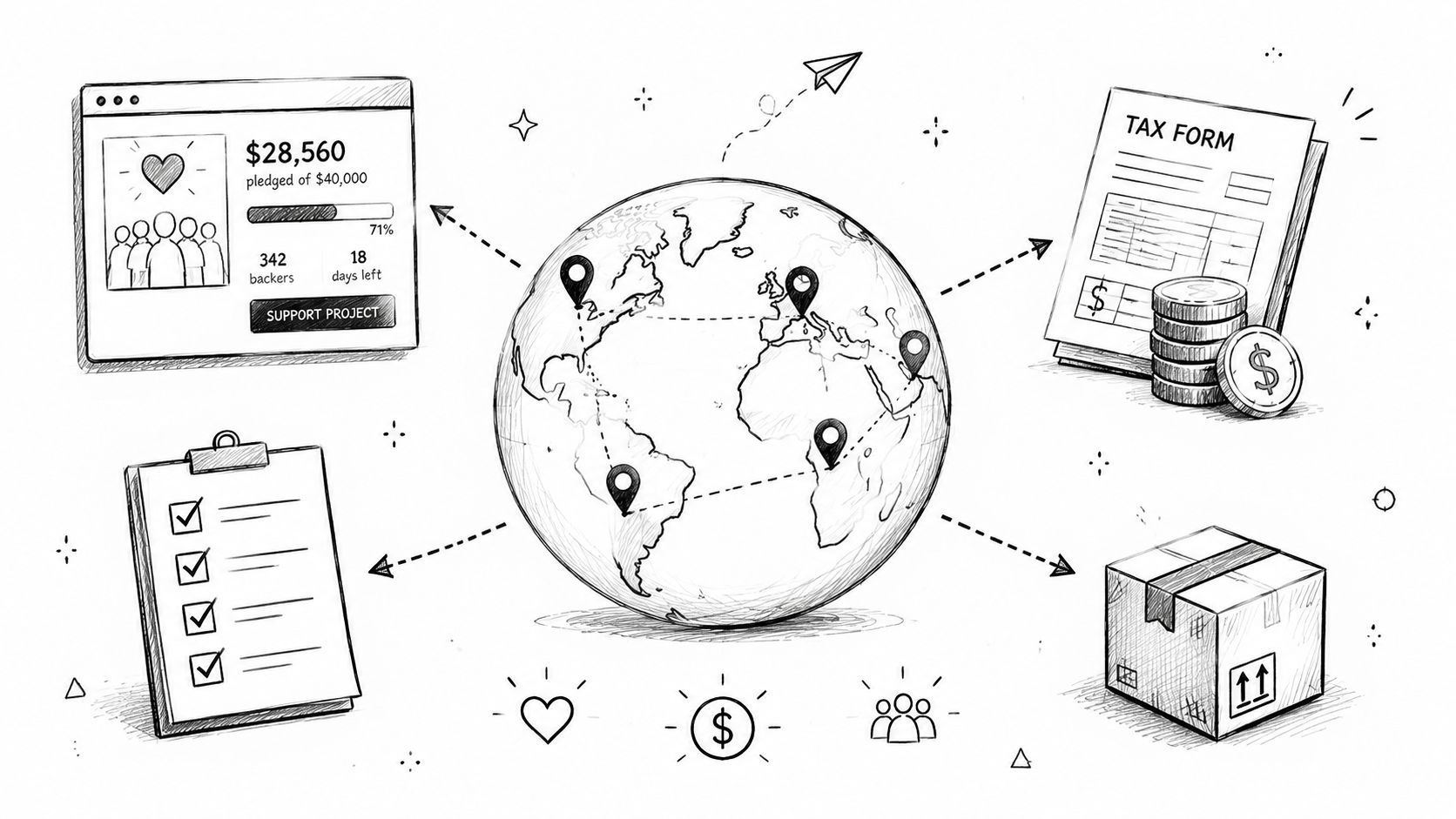
Master international tax compliance for your Kickstarter or Indiegogo campaign. This guide covers VAT, nexus, collection, and how to use PledgeBox.
Your campaign funded. Backers are excited. Add-ons, shipping upgrades, and late pledges are already on your mind.
Then the uncomfortable questions show up. Do you need to collect VAT on add-ons? Which country's rules apply? What happens if a backer in the EU pays after the campaign through a survey tool? If you collect the wrong amount, who fixes it later?
That's where international tax compliance stops being abstract and becomes operational. For crowdfunding creators, it isn't just a legal topic. It's part of post-campaign execution, right alongside surveys, shipping, and fulfillment.
The easiest mistake after funding is assuming the hard part is over. It isn't. Raising money proves demand. It doesn't settle your tax obligations.
International tax compliance becomes real the moment you start taking money from backers in multiple countries, especially during post-campaign surveys, add-on sales, and shipping collection. The tax treatment of a campaign pledge can differ from the tax treatment of an add-on. A reward bundle can be treated differently from a donation. Shipping can be taxed differently from the product itself depending on jurisdiction.

Most creators spend months refining their campaign page and almost no time building a tax workflow. That's understandable. Tax law feels far removed from prototypes, stretch goals, and community building.
But the penalties are not theoretical. The average penalty for non-filing in multinational contexts now exceeds €50,000 per jurisdiction, and enforcement is tightening, with the U.S. IRS reporting a 35% increase in international tax audits and HMRC recovering £4.5 billion from non-compliant businesses in a single year according to Oyster's overview of international tax compliance.
Practical rule: If your campaign has backers in several countries, assume tax review belongs in your post-campaign checklist, not your “deal with later” pile.
A lot of creators first discover the issue when they start reading about VAT on rewards and realize the campaign total on the platform isn't the same thing as tax-cleared revenue. If you want a plain-language example of how this starts affecting real campaign margins, the VAT dilemma many Kickstarter creators miss is worth reviewing early.
The biggest operational risk isn't one giant legal failure. It's a chain of smaller mistakes:
Crowdfunding rewards move through several systems before the box reaches the backer. Money is pledged on one platform, updated in a survey, processed through a payment provider, and eventually tied to shipping and customs paperwork. Tax has to stay coherent across that whole chain.
That sounds heavy, but it's manageable once you turn it into a workflow instead of treating it like legal trivia.
A creator finishes a strong campaign, opens the pledge manager, and assumes tax is just a line item to add later. That is usually the moment small classification mistakes turn into margin problems.
Creators do not need tax theory. They need a working map of what each rule changes inside the post-campaign checkout flow, because that is where tax stops being abstract and starts affecting what a backer pays.

Here is the version creators use:
Germany is a useful example because many creators ship there without realizing the standard VAT rate is 19% according to Germany's Federal Central Tax Office.
Crowdfunding does not produce one clean transaction. It produces a sequence of related ones. The original pledge may be treated one way. Add-ons, upgraded bundles, shipping, and late backer purchases may be treated another way.
That matters because tax treatment follows what the backer is buying and when payment is collected. A support-only contribution can sit in a different bucket from a reward with clear goods value. A post-campaign add-on collected through your crowdfunding pledge manager workflow can trigger tax logic that was not obvious on the campaign page itself.
I see creators make the same expensive mistake over and over. They apply one flat rule to every backer because it feels faster. Tax authorities expect location-specific handling, product-specific treatment, and records that match the amount charged.
Use four checkpoints before you configure anything:
| Term | What it means for a creator |
| | |
| Your location | Where the business is formed or managed |
| Backer location | Where the goods are delivered or the customer is based |
| Inventory location | Where stock sits before final delivery |
| Payment event | The point when money is collected for rewards, add-ons, shipping, or late orders |
If your campaign reaches buyers across multiple regions, you are dealing with international trade and taxation complexities that behave much more like cross-border e-commerce than a simple donation drive.
Good setup is plain, disciplined work:
What fails is relying on rough averages or assuming the platform handled everything for you. Platforms move money. Compliance still sits with the creator.
A campaign closes strong. Then the real test starts. Backers update addresses, add extras, and pay shipping weeks after the original pledge. If tax is not built into that post-campaign flow, creators end up patching numbers by hand, and that is where errors start.
PledgeBox gives creators room to set this up properly. The platform is more configurable than the locked-in survey flow many creators expect, which matters if you need tax logic tied to destination, item type, and checkout timing. PledgeBox is free to send the backer survey and charges 3% of upsell if there is any. That pricing model gives teams space to build the tax step into the survey instead of avoiding it to save upfront cost.

The goal is simple. Charge the right amount to the right backer at the moment money is collected.
Import backer data cleanly
Start with country, original pledge level, selected rewards, and any early shipping assumptions. If the import is messy, the tax output will be messy too.
Split original support from later purchases
Keep the base pledge, add-ons, late pledges, and shipping as separate line items where possible. That structure makes it easier to apply the right rule to the right charge instead of taxing one blended total.
Set country-based tax rules
Use delivery destination as the main decision point inside the survey. For a creator shipping worldwide, a pledge manager then stops being a simple form and starts acting like a real checkout system.
Apply tax to the item categories that require it. In practice, that often means checking product value separately from shipping and post-campaign upsells instead of applying one blanket percentage.
Test the survey before launch
Run sample checkouts for a few common destinations. I usually test at least one domestic order, one EU order, and one non-EU international order so the team can spot bad assumptions before backers do.
Export reports that match filing work
You want records that show who paid, what they bought, where the order shipped, what tax was charged, and when payment was collected. If your report cannot answer those questions, it will not help much at filing time.
Creators rarely get into trouble because they do not care about compliance. They get into trouble because tax was treated as an afterthought, then bolted onto a survey built for convenience.
Manual spreadsheets break once orders start changing. A backer adds two units, upgrades to a bundle, changes country, or pays shipping later. Now someone on the team has to decide whether the original tax assumption still holds. That is slow, inconsistent, and hard to defend if the numbers are ever reviewed.
A configured pledge manager reduces those judgment calls. It applies the rule at checkout, stores the result with the order, and gives you one place to reconcile what was charged.
A weak setup usually looks familiar:
A durable setup is more disciplined:
That is the core advantage of a good pledge manager. It turns abstract tax rules into a repeatable order workflow your team can run under deadline pressure. For a broader view of how this fits into post-campaign operations, see this guide to a crowdfunding pledge manager workflow.
Tax is only one layer of the post-campaign math. Payment processing sits underneath the survey checkout, and those fees need their own line in your forecast.
For example, Stripe publishes its standard card processing pricing on its official pricing page. Those fees are separate from your pledge manager costs, and separate from any tax you collect on the order. Keeping those buckets separate makes margin planning much easier, especially when international orders, currency conversion, and add-on revenue all hit at once.
The practical rule is straightforward. Configure tax in the survey, forecast processor fees separately, and do not mix either one into product margin assumptions.
Tax collection and cross-border delivery are related, but they aren't the same thing. A creator can handle VAT correctly and still create a terrible backer experience if customs charges land as a surprise at delivery.
The operational choice usually comes down to DDU or DDP.
| Shipping model | What the creator does | What the backer experiences |
| | | |
| DDU | Ships without prepaying import charges | May get a customs bill before delivery |
| DDP | Collects and handles duties and taxes in advance where applicable | Receives the parcel with fewer surprises |
DDU looks cheaper upfront because you aren't carrying as much cost or coordination. But it often transfers confusion to the backer. They may face payment requests from the carrier, delays at customs, or even refused delivery.
DDP usually produces the cleaner customer experience. The backer sees the cost earlier, pays once, and gets the package without a last-minute customs shock.
For most physical reward campaigns, transparency beats optimism.
If you know a shipment may trigger import costs, it's better to surface that during the survey than to let the carrier explain it later. Backers are generally tolerant of cost they can see and approve. They're far less tolerant of surprise bills.
Use the survey to make one thing unmistakably clear:
If your comments section says “I already paid, why am I being charged again,” the problem usually started long before the package reached customs.
A practical customs workflow also depends on good paperwork. Product descriptions, declared values, and destination details need to stay consistent from survey to shipment file. For a creator-focused look at that operational side, this guide to customs documentation for crowdfunding fulfillment is useful.
Customs and tax are different systems, but they share one rule: sloppy cross-border handling gets expensive.
That's why broader finance rules matter as a warning sign. Under FATCA, the U.S. can impose a 30% withholding tax on certain cross-border payments when compliance requirements aren't met, as the IRS FATCA overview explains. That isn't a customs duty, but it shows how hard penalties can hit when cross-border processes aren't handled cleanly.
For creators, the lesson is simple. Don't treat fulfillment as “just shipping.” For international campaigns, fulfillment is part of international tax compliance discipline.
A campaign can fund on Friday, surveys can go out on Monday, and by the time money starts settling you may already have tax data scattered across your campaign page, pledge manager, payment processor, and shipping files. That is the hidden problem. If the records are not organized early, every later task gets slower, riskier, and more expensive.
For crowdfunding creators, recordkeeping is not bookkeeping theater. It is the audit trail that connects what a backer bought, where it shipped, what tax was charged, and what changed after refunds, add-ons, or address updates. In PledgeBox or any other pledge manager, that means treating each order record as part of your filing workflow, not just fulfillment admin.
The standard is simple. Another person should be able to review your files and understand the transaction history without guessing.
Keep these records in a format you can export and reconcile:
Download reports on a schedule.
Do not rely on the idea that you can pull one clean export months later and reconstruct everything at filing time. In practice, creators run into changed addresses, split shipments, upgraded pledges, manual edits, and partial refunds. Those details matter because tax rarely follows the original campaign promise. It follows the actual transaction and destination.
The right time to bring in a specialist is usually earlier than creators want to hear. Not because every campaign needs a large advisory firm, but because a short review before launch is cheaper than correcting bad collection logic after hundreds or thousands of orders have closed.
Get professional help if any of these are true:
Many creator guides conclude too soon. A hardware founder with a U.S. company, overseas manufacturing, and global backers can trigger issues that have nothing to do with basic VAT setup. The practical question is not just, “Do I need to collect tax?” It is, “How do my campaign flow, pledge manager settings, and business structure affect filing obligations in the countries where I am selling?”
A good advisor does more than prepare returns. They help you choose a workable operating method before your data gets messy.
That usually includes:
I have seen creators save money by paying for a focused pre-launch review, then handling routine record exports and reconciliations internally. I have also seen the opposite trade-off make sense. If the campaign has many SKUs, many destinations, and frequent post-campaign changes, outsourcing more of the tax work can reduce error risk.
The key is to hire for the point of friction. If your problem is setup, get setup advice. If your problem is filing volume, get filing support. If your problem is entity structure, find an international tax specialist rather than a general bookkeeper.
Expert help costs money. Cleanup after incorrect tax collection usually costs more, and it comes with deadline pressure.
Creators who treat tax records as part of the order workflow usually have a much calmer filing season. The goal is not perfection on day one. The goal is a clean, exportable chain of evidence from pledge to payment to shipment to remittance.
Use this as a working list, not as decoration. The creators who stay calm after funding are usually the ones who convert complex rules into small operational checks.

Identify taxable regions
Review where your backers are located and flag every country where you're collecting money for rewards, add-ons, or shipping.
Confirm local tax treatment
Check whether the destination uses VAT, GST, or another framework, and verify whether your specific reward setup changes the treatment.
Separate transaction types
Don't treat campaign pledges, add-ons, late pledges, and shipping as one undifferentiated pool.
Verify nexus and registration needs
Determine where your activity creates an obligation to register before you continue collecting.
Configure location-based collection logic
Your survey and payment flow should calculate taxes based on destination, not on a rough average.
Keep exportable records from day one
Save order data, tax totals, refunds, and shipment records in a way that supports filing and review.
Escalate to an expert when complexity rises
If the product mix, entity structure, or number of jurisdictions stops feeling straightforward, stop improvising.
International tax compliance feels intimidating when it lives as a pile of acronyms. It becomes manageable when it lives as a sequence of decisions inside your campaign operations.
That's the shift creators need. Don't ask, “Do I understand global tax law perfectly?” Ask, “Do I have a clean process for identifying, collecting, documenting, and remitting what applies?”
If the answer is yes, you're already operating more professionally than a large share of campaigns.
If you want a practical way to handle surveys, add-ons, shipping collection, and tax-ready post-campaign workflows in one place, PledgeBox is built for that. It's free to send the backer survey and only charges 3% of upsell if there's any, which makes it a low-friction option for creators who want tighter operations without adding upfront survey cost.
PledgeBox
The All-in-One Toolkit to Launch, Manage & Scale Your Kickstarter / Indiegogo Campaign