 PledgeBox
Email Marketing Automation Platforms: 10 Picks for 2026
Compare 10 email marketing automation platforms for crowdfunding teams, with pricing, features, and PledgeBox integration notes for your campaign.

Compare 10 email marketing automation platforms for crowdfunding teams, with pricing, features, and PledgeBox integration notes for your campaign.
How will you move subscribers from a pre-launch waiting list to a completed backer survey without stitching five tools together? Most comparisons of email marketing automation platforms focus on templates and newsletter features. Crowdfunding creators need a different test: can the platform handle audience capture before launch, targeted updates during the campaign, and a clean handoff to post-campaign communication?
The email platform doesn't need to manage rewards, shipping addresses, and survey payments itself. PledgeBox is free to send the backer survey and charges 3% on upsell revenue if there's any, although its pricing terms also apply that collection fee to additional payments such as shipping, taxes, and reward upgrades. That distinction matters when you're budgeting fulfillment, not just marketing.
Think of Kickstarter's pledge manager as Amazon and PledgeBox as Shopify: a standardized platform experience versus a more customizable creator-controlled experience. It's a useful operating analogy, not a claim that either product shares those companies' features.
Your email platform's job is narrower: collect permission, preserve subscriber context, send relevant messages, and stop the wrong sequence when someone becomes a backer. These picks prioritize that workflow. For every PledgeBox handoff, verify the available integration or export route before buying, rather than assuming a native connector exists.
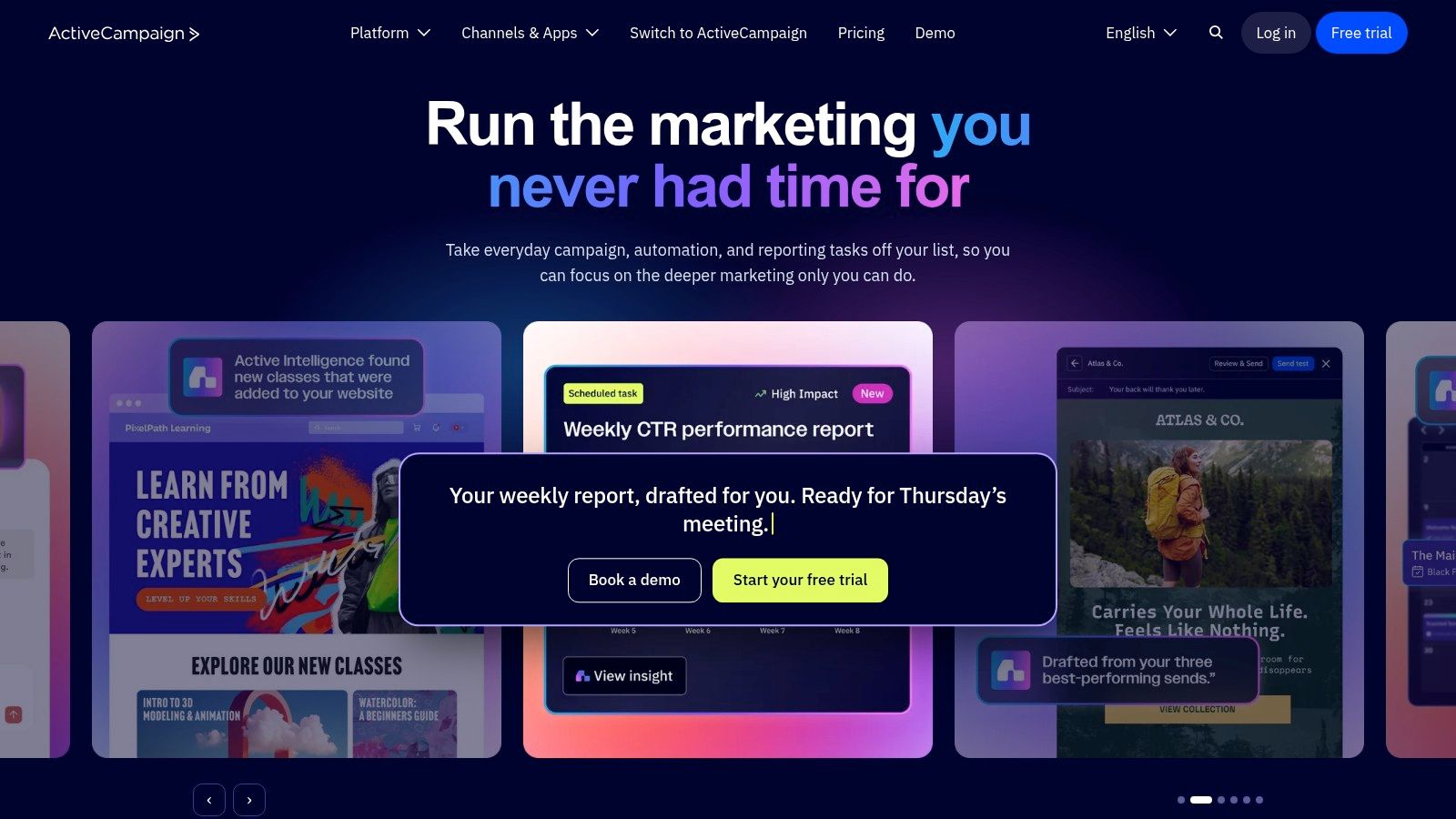
ActiveCampaign suits campaigns with genuinely different subscriber journeys. A board game publisher might need separate messages for solo players, retailers, and returning backers. Its visual automation builder, segmentation, forms, and optional CRM features make that branching approach practical.
Use ActiveCampaign to record product interest during pre-launch, then route subscribers through relevant launch messages. During the campaign, exclude confirmed backers from pledge-acquisition emails where your available campaign data allows it. Don't interpret every click as a pledge.
The useful feature isn't the ability to build a complicated diagram. It's the ability to define entry conditions, exclusions, and exit rules clearly enough that someone else can maintain it.
The trade-off is maintenance. Contact-based costs, plan restrictions, and advanced capabilities can make a modest starting subscription less representative of your eventual bill.
I recommend mapping the crowdfunding email workflow before building anything. If the team can't explain why a branch exists, remove it. ActiveCampaign is a strong choice for deliberate automation, but excessive branching creates more troubleshooting than useful personalization.
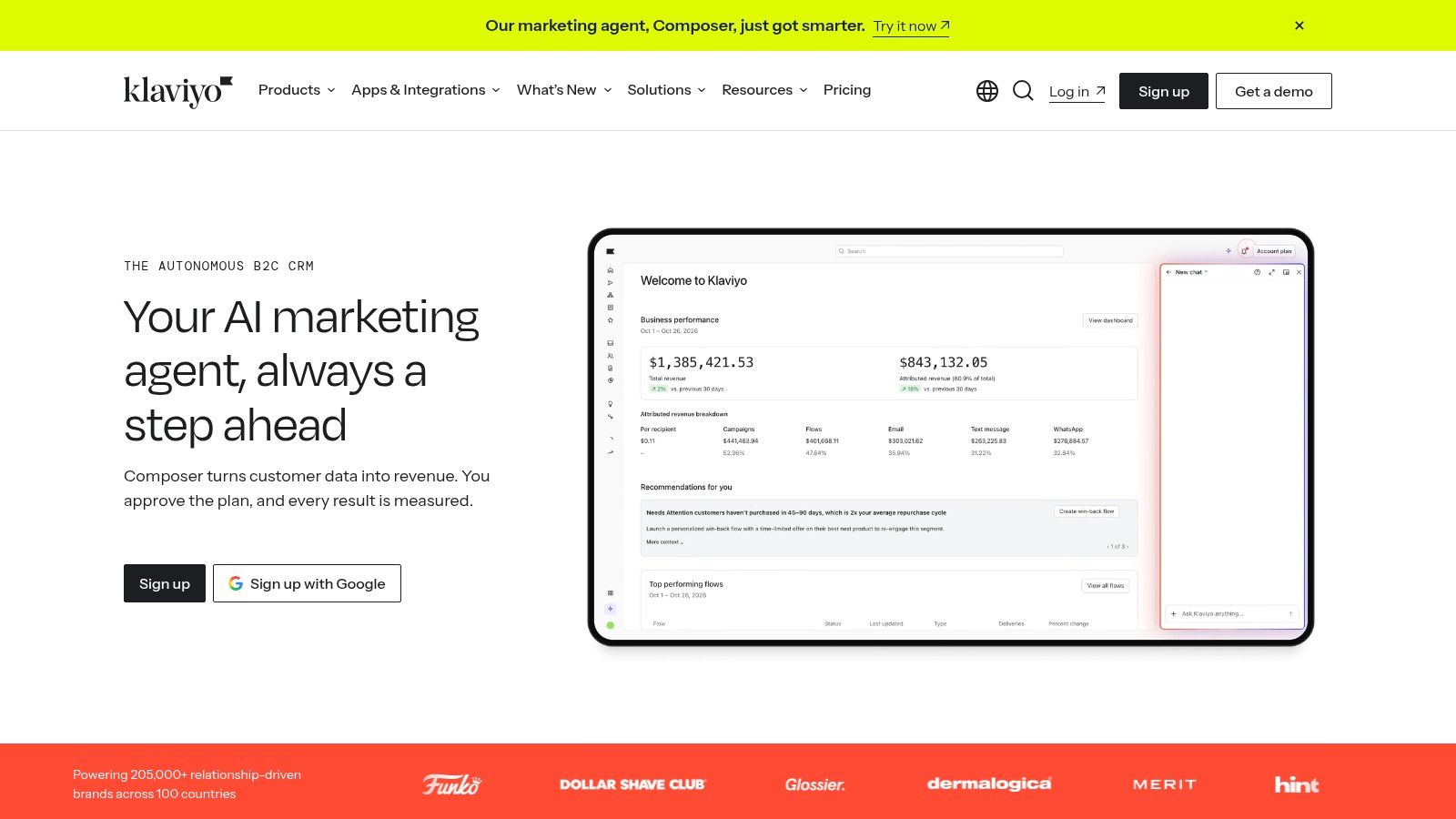
Say your hardware campaign will become a direct-to-consumer store after fulfillment. Klaviyo makes more sense when crowdfunding starts a continuing customer relationship, rather than ending with a shipping notification.
Klaviyo centers its segmentation and flows on customer attributes and behavioral events. That can support pre-launch product-interest groups, launch-window follow-up, and later ecommerce communication. Its value depends on whether you can supply reliable events, not merely upload email addresses.
In its analysis of 2024 activity, Klaviyo's email benchmark report reported average revenue per recipient of $3.65 for abandoned-cart flows versus $0.11 for email campaigns. Those are ecommerce results, not a crowdfunding revenue forecast.
A crowdfunding pledge isn't automatically an ecommerce order. Don't build an order-triggered journey until you've verified what the incoming event actually represents.
For the PledgeBox handoff, establish how you'll receive survey completion, add-on purchase, and backer-status updates. Confirm the export, middleware, or custom integration route available to your setup; don't assume ecommerce integrations cover pledge-manager activity.
The main trade-offs are profile-based costs, sending volume, and integration work. Klaviyo can be excessive for a creator sending occasional updates. It becomes more compelling when product-level segmentation and ongoing store revenue justify maintaining a richer customer record.
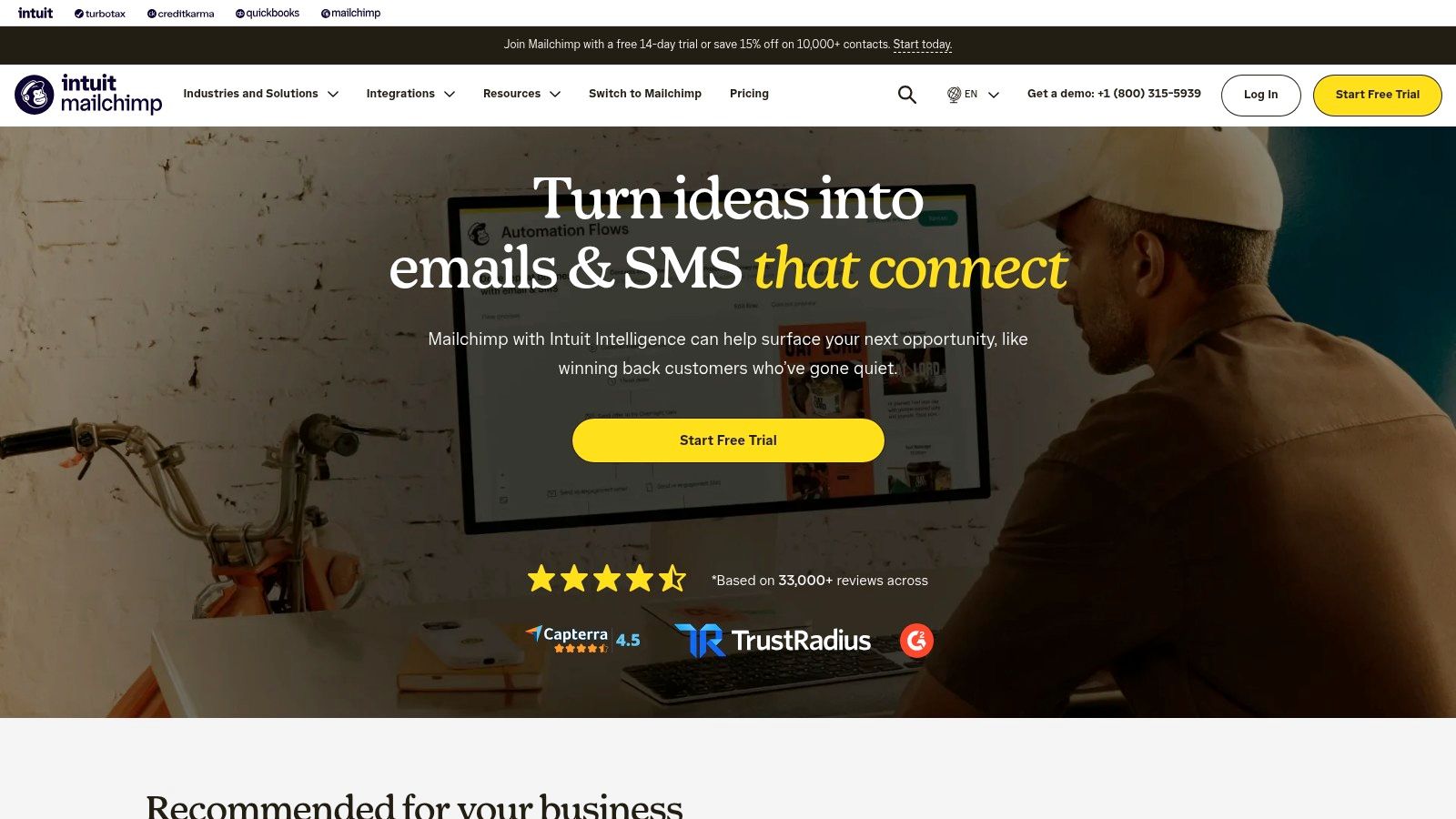
Mailchimp is a reasonable starting point when the campaign needs newsletters before it needs elaborate automation. Forms, templates, audience management, reporting, and customer journeys cover familiar creator tasks without requiring a custom event pipeline.
Build a pre-launch welcome email, send development updates, and separate interested subscribers from confirmed backers when you have dependable status information. Mailchimp can support conditional journeys, but verify which automation capabilities your selected plan includes.
A common operational mistake is creating disconnected audiences for every campaign phase. Instead, decide how you'll represent campaign identity, product interest, marketing permission, and backer status before importing contacts.
Compare the options in this email marketing tools guide against the work your team performs. A familiar editor can be more useful than advanced segmentation nobody maintains.
The trade-off is that contact growth and plan-dependent features can change the economics. Check how subscribed, unsubscribed, and duplicate records affect your account before importing historical lists. Mailchimp is most attractive when you keep the program straightforward and let PledgeBox remain responsible for survey operations.
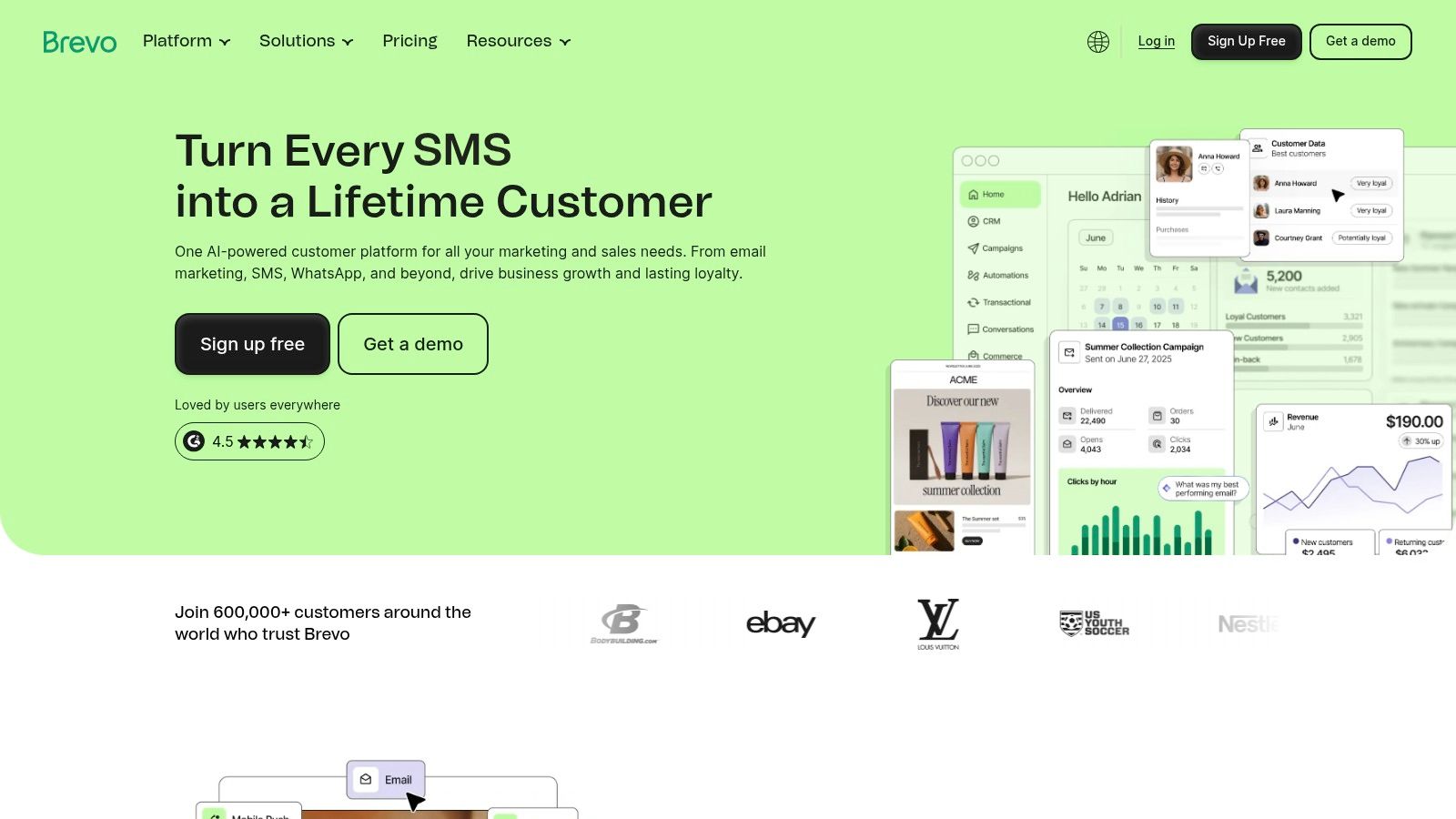
A large waiting list doesn't necessarily mean frequent sending. Brevo deserves consideration when your campaign communicates in bursts, with quieter periods between announcements.
Brevo combines email marketing, automation, transactional messaging options, SMS, and contact-management tools. Its emphasis on sending volume can suit intermittent communication, but you still need to compare contact allowances, automation eligibility, and reporting by plan.
For pre-launch, use signup forms and an expectation-setting welcome message. During the campaign, budget for the combined volume of announcements, automated follow-ups, and resends rather than estimating only your main broadcasts.
Practical rule: Separate operational messages from promotional journeys, even when the same platform can send both.
Keep PledgeBox as the survey-status authority. If you want Brevo to send additional follow-up, first establish a verified export or integration process and specify which system owns each reminder.
Otherwise, a backer could receive a survey-completion request after already submitting it. The problem isn't the email copy; it's stale status information.
Brevo's breadth is useful when a lean team wants several communication tools under one account. The compromise is that a combined platform doesn't guarantee identical depth across editing, analytics, and automation. Test a realistic launch-day send and a survey-status exclusion before choosing a plan, especially if your campaign will create sharp sending peaks.
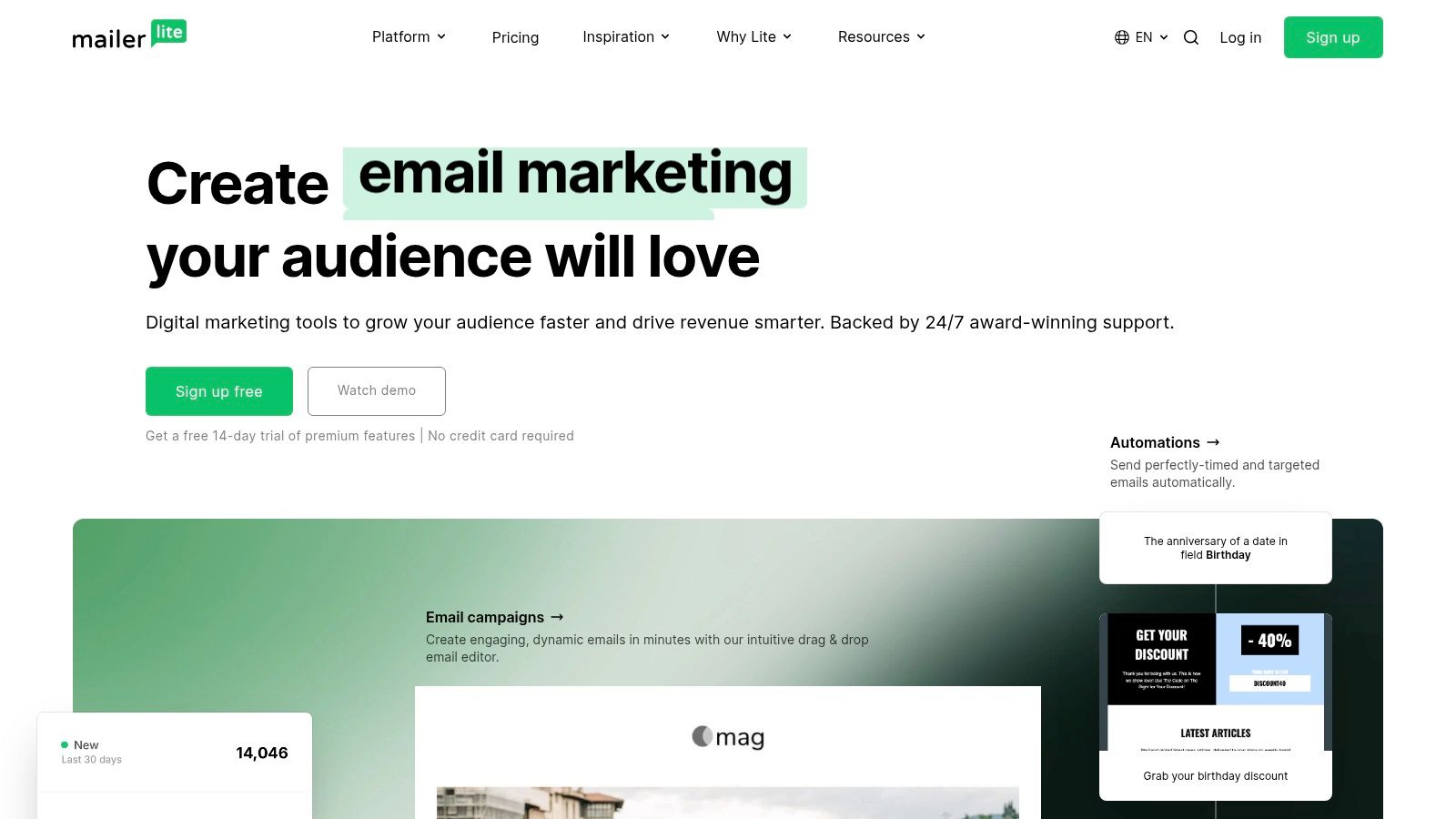
MailerLite is my shortlist choice for a solo creator who needs to launch the list, not administer a CRM. Its forms, landing pages, newsletters, segmentation, and visual automations cover the core pre-launch workload.
With MailerLite, the sensible first build is a landing page, an opt-in form, and a welcome sequence explaining the product and launch expectations. Add complexity only when subscriber behavior gives you a concrete reason.
Use campaign and product-interest fields consistently so you can distinguish a tabletop expansion subscriber from someone interested in the base game. During the live campaign, send clear updates instead of trying to simulate a store's entire customer lifecycle.
For the PledgeBox handoff:
The limitation is scope. MailerLite isn't the natural choice for teams managing sales pipelines or complex product-event orchestration, and automation allowances differ across plans.
Check subscriber limits, sending allowances, and active-workflow restrictions before relying on a free tier. Its strongest advantage is operational simplicity: a creator can keep audience capture and campaign updates manageable while leaving reward selection and address collection in PledgeBox.
A crowdfunding audience may follow the creator before it understands the product. Kit, formerly ConvertKit, suits that relationship-led approach, particularly for designers, authors, and tabletop publishers building an ongoing community.
Kit combines newsletters, forms, landing pages, subscriber tagging, and visual automation options. Use it to explain development decisions, share prototypes, and identify subscribers who actively want launch notifications.
Unlike a store-centered setup, the useful starting point is often an interest tag, not a purchase event. Someone clicking a manufacturing update may want detailed progress reports without wanting every promotional message.
Before launch, separate general newsletter subscribers from people requesting campaign announcements. During the campaign, use those interests to keep updates relevant rather than sending every message to everyone.
For post-campaign communication, bring verified PledgeBox status information into the subscriber record through an available export or tested integration. Don't make Kit a second source of truth for addresses, reward choices, or survey completion.
Kit is less specialized for detailed ecommerce order data than Klaviyo or Omnisend. That's not necessarily a disadvantage: if your launch depends on trust and useful editorial updates, you may not need a commerce-heavy system.
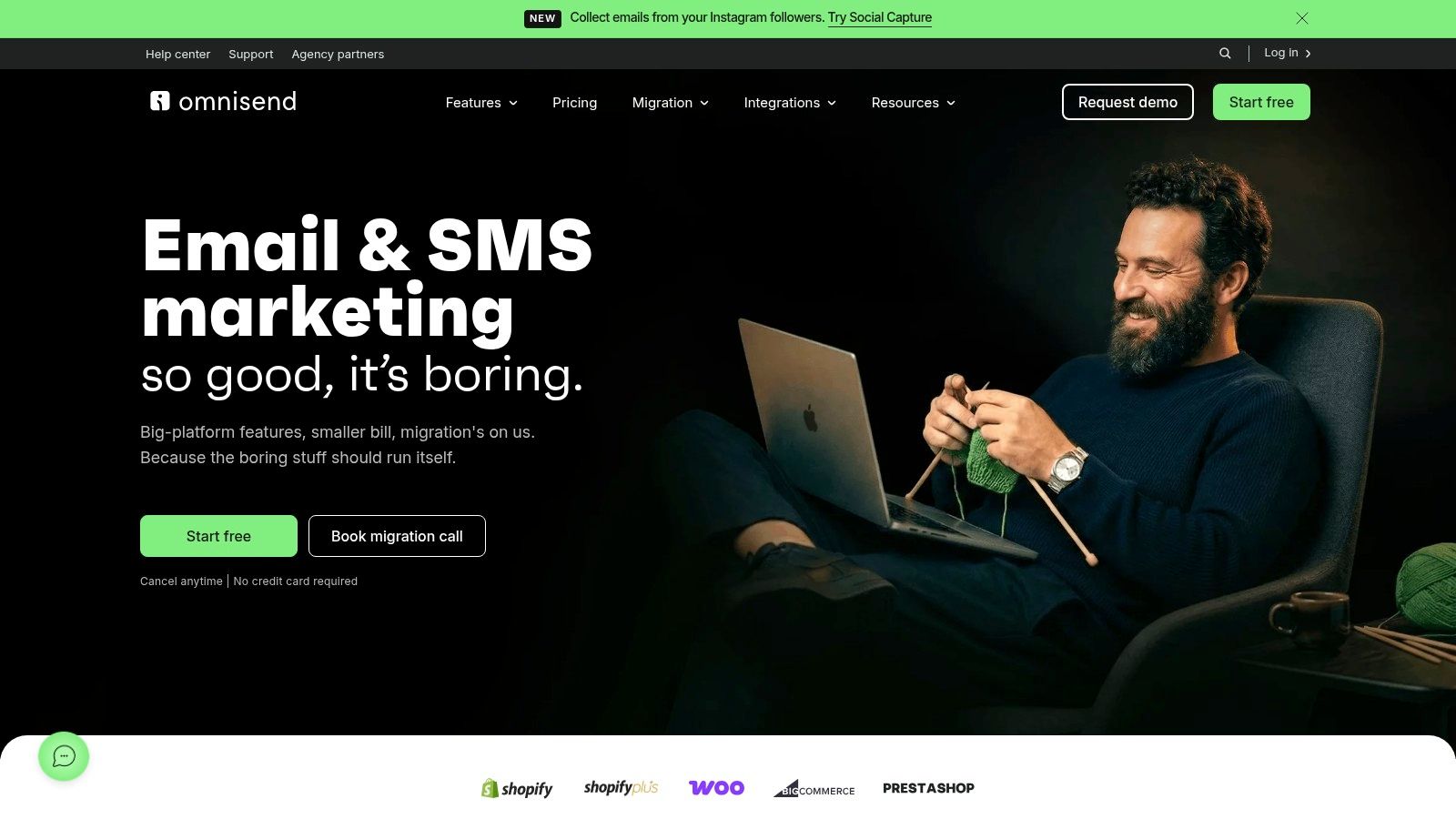
Omnisend belongs on the shortlist when an ecommerce store is already part of the campaign plan. Its email automation, prebuilt commerce workflows, web push, and eligible SMS options are oriented toward product marketing.
Omnisend can help coordinate pre-launch audience capture and later store activity. The caution is that a store workflow doesn't automatically translate into a Kickstarter workflow: a page visit, pledge, late order, and survey payment represent different actions.
Start with the behavior you can observe. During the campaign, use confirmed engagement and available backer information rather than treating a campaign-page click as an abandoned checkout.
After funding, establish how PledgeBox information will reach Omnisend. Keep survey completion separate from order fulfillment, and test whether imported updates can accidentally trigger an inappropriate store sequence.
The reason to prioritize relevant triggers is practical. Validity's global email benchmark reported 7.39% click-through for automated messages versus 2.27% for ordinary marketing emails, across its benchmark categories rather than crowdfunding specifically.
The trade-off is configuration outside the store model. Contact-based billing, channel eligibility, and SMS conditions also need scrutiny. Choose Omnisend when you can reuse its commerce strengths after the campaign, not just because its prebuilt workflows look convenient.
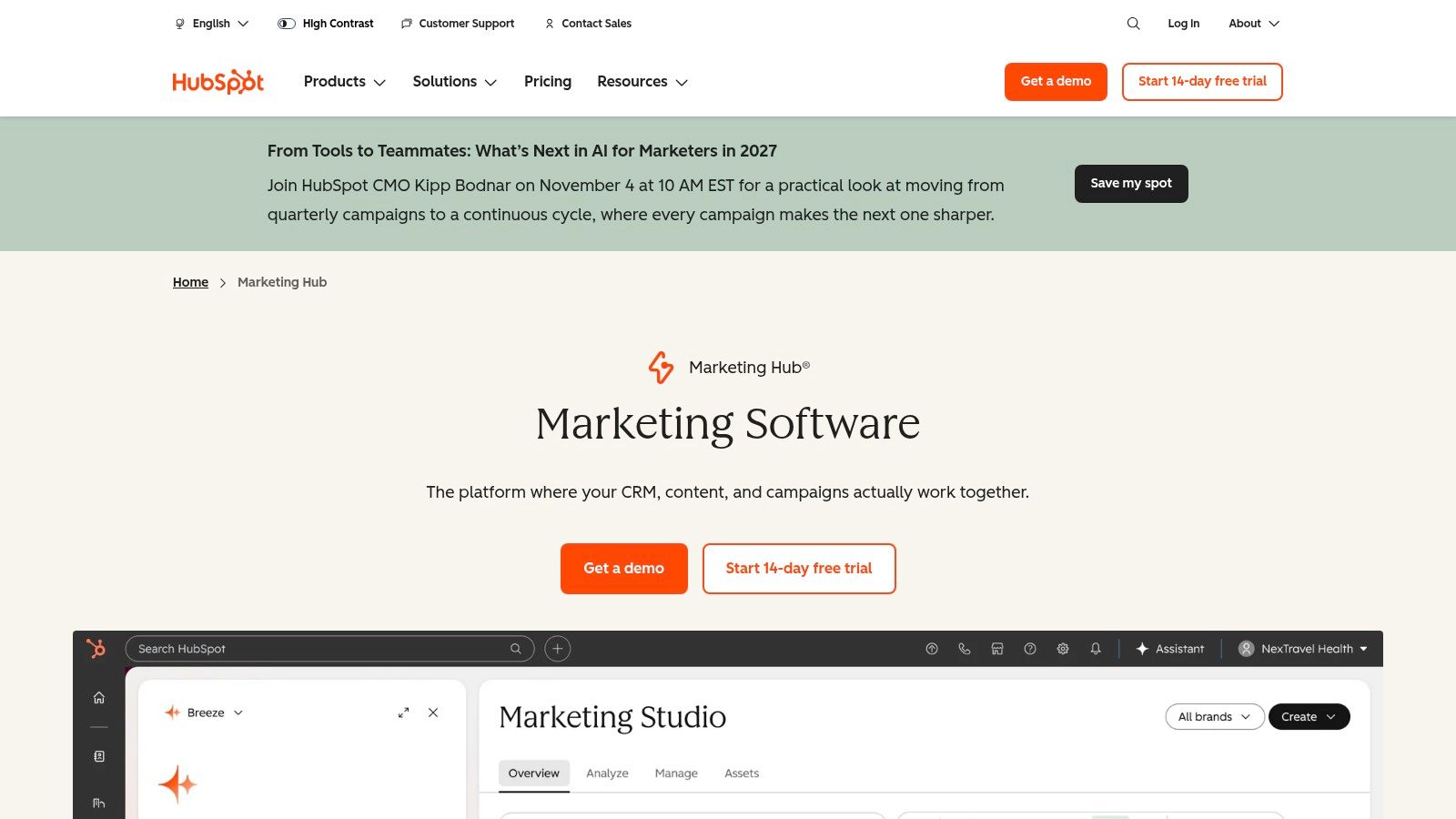
An agency managing creators, press contacts, retail prospects, and commercial partners has a different problem from a solo designer collecting subscribers. HubSpot Marketing Hub makes more sense when shared contact history is central to the work.
HubSpot Marketing Hub connects email with CRM records, forms, landing pages, and campaign analytics. Higher-tier workflows can coordinate marketing activity with internal tasks and sales processes.
Pre-launch, distinguish prospective backers from distributors and journalists. During the campaign, keep partner outreach separate from consumer updates so a retail conversation doesn't trigger a generic pledge reminder.
For PledgeBox, define the minimum information HubSpot needs: campaign identity, backer status, survey completion, and an appropriate reference to the operational record. Validate how those fields will be transferred before promising automated handoffs.
Keep your crowdfunding email marketing focused on recipient needs, not internal CRM stages. I wouldn't buy HubSpot solely to send launch announcements. Its stronger justification is giving marketing, sales, and client-service staff usable context without maintaining competing contact histories.
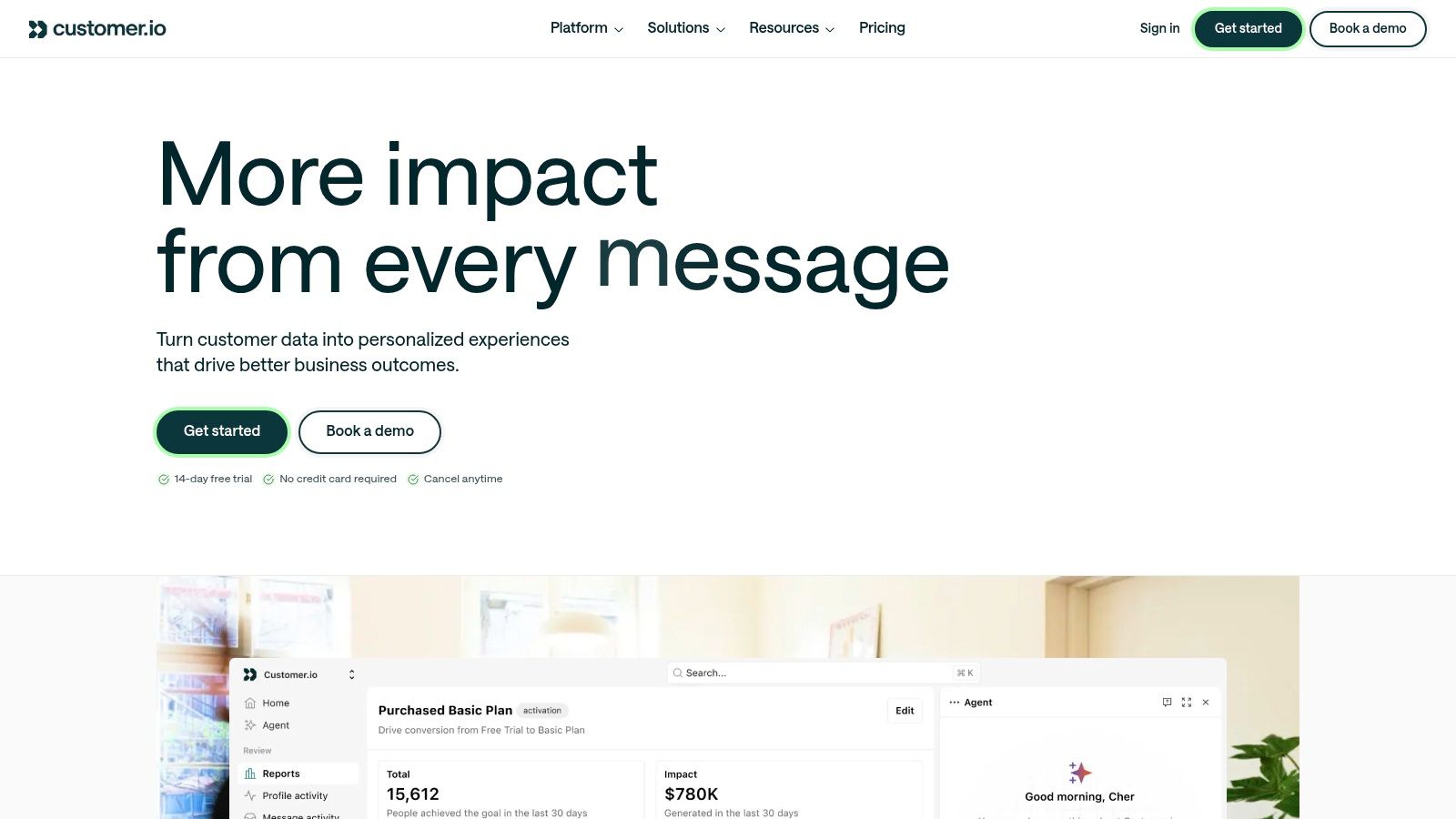
Customer.io is for teams prepared to own their event pipeline. If your hardware startup already maintains a product backend or custom customer database, that control can be useful.
Customer.io supports visual workflows driven by customer attributes and events, with cross-channel messaging options. It can model detailed journeys, but somebody must define, transmit, and troubleshoot the underlying information.
A pre-launch signup should include its source and permission context. A confirmed pledge should change the subscriber's journey, while survey completion should stop outstanding survey reminders.
For PledgeBox, investigate the supported data-access route before designing real-time workflows. If your available method is a periodic export, design for that delay instead of presenting the journey as instantaneous.
Don't automate a reminder unless you can also automate the condition that stops it.
Use clear event names such as survey_completed and document what each means. Test repeated imports, missing identifiers, and delayed updates so backers don't re-enter a sequence unexpectedly.
The trade-off is engineering and maintenance. Subscription cost is only part of ownership when a developer must maintain mappings, retries, and monitoring. Customer.io is excessive for basic newsletters, but a credible option when accurate lifecycle events already exist and the team needs more control than a creator-focused platform provides.
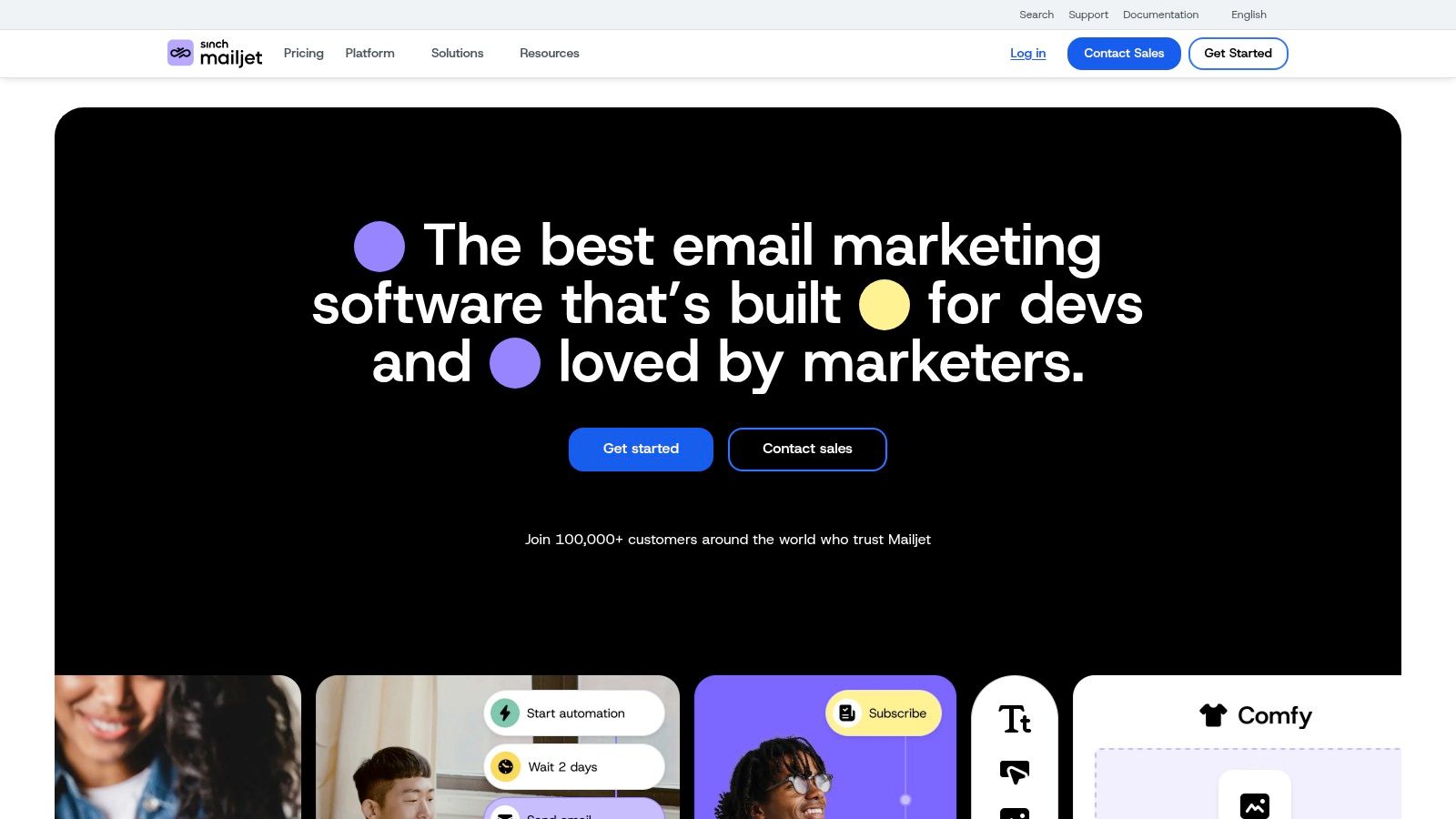
Mailjet combines marketing campaigns with developer-oriented email sending. It can suit a crowdfunding team that needs newsletters alongside API or SMTP sending, without adopting a larger CRM.
Mailjet offers campaign building, templates, segmentation, and programmatic sending. Automation features depend on the plan, so check that the tier you choose includes the workflows your campaign needs.
Before launch, check that signups receive the right welcome message and that the team can maintain the process without developer help. During the campaign, judge whether the editor, segmentation, and reporting cover routine updates.
Keep post-campaign survey operations in PledgeBox unless you have a reliable handoff to Mailjet. PledgeBox handles survey delivery, while Mailjet can support campaign email and technical sending needs. An API can send a message, but it cannot determine whether a backer still needs it.
Use useful image alt text, readable contrast, logical headings, and dark-mode checks in launch updates and automated reminders. Many marketing emails have accessibility problems, so review the full message, not just its visual design.
| Platform | Starting Price | Free Plan | Best For |
|---|---|---|---|
| ActiveCampaign | $15/month | No; 14-day trial | Behavior-based email automation and sales follow-up |
| Klaviyo | Usage-based pricing | Yes; up to 250 profiles and 500 monthly email sends | Ecommerce segmentation and event-triggered messaging |
| Mailchimp | $20/month for Standard (500 contacts) | Free plan available | Beginners building campaigns and customer journeys |
| Brevo | $18/month for Standard | Yes | Multichannel marketing with volume-based pricing |
| MailerLite | Tiered pricing | Yes; limited subscribers and monthly emails | Solo creators and small teams needing email and landing pages |
| Kit | $33/month for Creator (1,000 subscribers) | Yes; up to 10,000 subscribers with automation limits | Creators building newsletters and audiences |
| Omnisend | $16/month for Standard | Yes; 500 emails monthly to 250 contacts | Ecommerce teams coordinating email, push, and SMS |
| HubSpot Marketing Hub | Professional tier pricing varies | Yes; basic tools available | Teams connecting email marketing with CRM and sales |
| Customer.io | Essentials tier pricing varies | Free plan available | Product teams running event-based, multichannel messaging |
| Mailjet | $29/month for Premium | Yes; 6,000 emails monthly, capped at 200 daily | Teams combining email campaigns with API and SMTP sending |
For crowdfunding, compare each tool across three jobs: building the pre-launch list, sending campaign updates, and coordinating post-campaign communication. PledgeBox handles backer surveys for free and charges 3% only on upsell revenue, so the email platform's value is in audience management and campaign messaging, not replacing survey operations.
Choose for the campaign phase you can operate well today. MailerLite or Kit is a sensible starting point for pre-launch audience building. ActiveCampaign suits behavior-driven branching, while Klaviyo becomes more attractive when crowdfunding leads into an ongoing ecommerce business.
Brevo deserves attention for intermittent sending, and Mailchimp works for straightforward newsletter programs. Consider Omnisend when store workflows matter, HubSpot when shared CRM context matters, Customer.io when you own reliable event infrastructure, and Mailjet when developer-oriented sending is part of the requirement.
Build a small end-to-end test before committing to a subscription. Capture a subscriber, send the welcome message, record a simulated backer-status change, and verify how a PledgeBox survey-status update would reach the email tool.
Check both sides of every automation: what starts it and what stops it. A beautifully personalized reminder is still wrong if it reaches someone who has already completed the task.
Deliverability isn't solved by generating more copy. Validity's 2025 deliverability benchmark found that one in six legitimate marketing emails failed to reach the inbox. Use clicks, replies, completed actions, and recent activity to guide follow-up rather than relying on opens alone.
Post-campaign survey communication doesn't need another email subscription just to collect reward choices and addresses. PledgeBox is free to send the backer survey and only charges 3% on upsell revenue if there's any, with the additional-payment fee scope described earlier.
Kickstarter's built-in pledge manager works like Amazon in this analogy: standardized and comparatively rigid. PledgeBox works like Shopify, giving creators more control over the branded pledge and upsell experience, though that doesn't mean unlimited customization.
Also, no upfront charge isn't the same as payment processing without fees: Kickstarter's pledge manager guidance says its usual fees are deducted from payments made inside the manager. Keep that distinction visible when comparing total campaign costs, and avoid paying for CRM machinery your team won't use.
PledgeBox brings backer surveys, reward choices, address collection, and add-on upsells into the post-campaign workflow. Visit PledgeBox to plan your survey handoff, then choose an email automation platform for the audience-building and campaign messages you still need.
PledgeBox
The All-in-One Toolkit to Launch, Manage & Scale Your Kickstarter / Indiegogo Campaign