 PledgeBox
Double Wall Ceramic Tumbler Guide for Crowdfunding Creators
Everything creators need to know about double wall ceramic tumblers — how they work, pros and cons, costs, packaging, and tips for crowdfunding rewards.
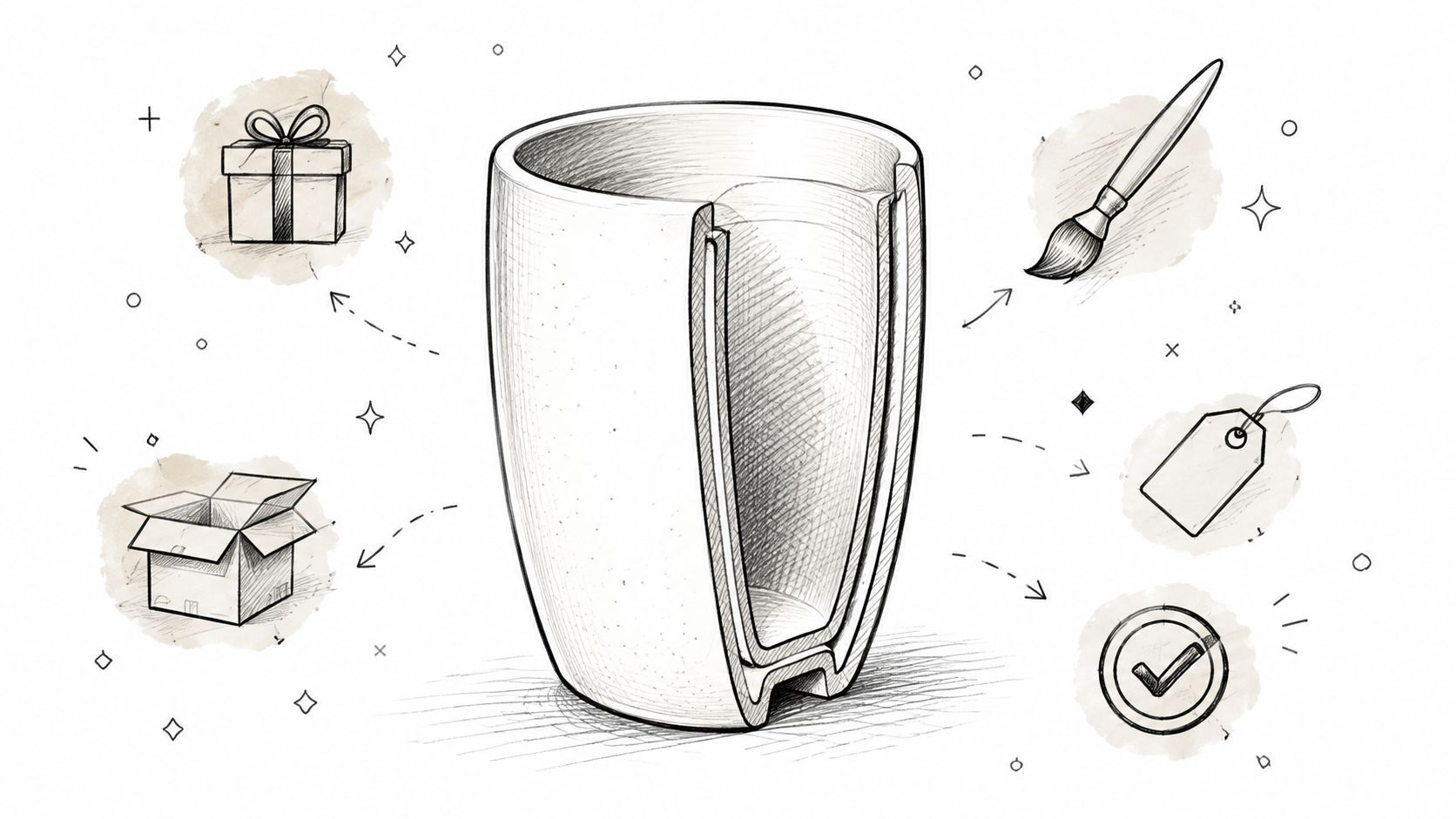
Everything creators need to know about double wall ceramic tumblers — how they work, pros and cons, costs, packaging, and tips for crowdfunding rewards.
You're probably at the point where the campaign is funded, the comments are full of backer requests, and now you're staring at reward tiers trying to decide what feels premium without turning fulfillment into a headache. A double wall ceramic tumbler looks attractive in that moment because it feels like a real object people will keep, photograph, and use, not another throwaway add-on.
The catch is that ceramic rewards only work when the production, packaging, and post-campaign workflow are planned with the same care as the design. If you get that balance right, the tumbler can become one of the easiest ways to make a campaign feel more polished. If you get it wrong, it turns into a breakage and shipping problem fast.
The decision usually starts with a simple thought. A creator wants one reward that feels more substantial than a sticker or a standard mug, so they mock up a double wall ceramic tumbler and suddenly the whole tier looks more giftable. That's not a small thing in crowdfunding, where backers often judge a project by how the reward looks on arrival as much as by the thing inside it.
Ceramic keeps showing up because it sits in a sweet spot. It feels warmer in the hand than metal, it doesn't push a metallic taste into coffee or tea, and it photographs well on a campaign page. That visual appeal matters when backers are scanning reward tiers quickly, especially for lifestyle brands, desk accessories, and products meant to sit beside a notebook or keyboard.
The minute a ceramic tumbler enters the mix, the questions arrive. What size makes sense, can the supplier print or glaze it cleanly, and how fragile is the finished reward once it leaves the warehouse? A creator also has to think about whether the tumbler is a main reward, an add-on, or a stretch goal that can carry the story without carrying the entire economics.
Practical rule: ceramic wins when the reward needs to feel premium in the hand, not when it needs to survive careless travel.
For creators trying to add a luxury cue without overcommitting to a huge product line, a laser-etched or branded finishing option can help. A useful reference point is Evright Industrial yeti laser etching, which shows how decoration can turn plain drinkware into a more personal-looking object without changing the base category.
The bigger lesson is that ceramic rewards are rarely sold on utility alone. They succeed when the campaign copy, supplier choice, and unboxing experience all support the same message, which is that this is a keep-it-on-your-desk item, not a rugged survival cup.
The engineering is simpler than most creators think. A double wall ceramic tumbler is basically a ceramic sandwich, one wall inside another, with a trapped pocket of air between them. That air gap slows heat transfer, and the outer wall stays more comfortable to hold than a single-wall cup that exposes the liquid's temperature more directly.

The construction principle is the same one used across double-walled ceramic, glass, and stainless tumblers, only the material and sealing method change. In ceramic, the air gap does the insulation work. In vacuum-insulated metal, the air is removed instead of trapped, which is why those cups usually retain temperature for longer.
Creators sometimes assume a better-insulated cup has to be bulky. That isn't necessarily true. One commercial example, the Reno 10 oz double-wall ceramic tumbler, measures 7.40" H × 3.35" W × 3.35" D and uses air insulation, which shows that the format can stay compact while still delivering the basic comfort benefit of double-wall construction (PCNA product spec).
A good way to explain it to backers is to keep the language plain. The inner wall touches the drink, the air gap slows heat moving outward, and the outer wall keeps the hand from dealing with the full temperature of the contents. That's the functional reason double-wall ceramics feel nicer for sipping at a desk or table than a basic mug.
A ceramic double wall tumbler is about holding temperature long enough for relaxed use, not about surviving a cross-town commute with the heat untouched.
For campaign pages, that distinction matters. Once you understand the mechanism, it becomes easier to describe the reward accurately, and that clarity reduces confusion when buyers compare it with vacuum mugs later in the funnel.
Creators usually end up choosing between these three materials for a reason, not by accident. Ceramic, stainless steel, and glass all support double-wall construction, but they create very different backer expectations around heat, taste, weight, and breakage. The right call depends on whether the reward is meant for a desk, a kitchen counter, or a commute.
Heat retention is where the trade-offs show up fast. Independent testing from CoffeeGeek found that ceramic mugs cool faster than vacuum-insulated metal cups, which is exactly why ceramic works better as a relaxed sipping cup than as a travel vessel. For a campaign, that usually means setting the promise correctly. Ceramic feels better in the hand and keeps drinks comfortable for a desk session, while stainless steel is the safer pick if the backer expects the cup to hold heat through a longer morning.
Double Wall Tumbler Material Comparison
| Material | Heat Retention | Taste | Weight | Breakage Risk |
|---|---|---|---|---|
| Ceramic | Good for casual sipping and short desk use | Very strong, flavor-neutral feel | Moderate | Higher if dropped |
| Stainless Steel | Best for longer retention and travel use | Good, though some buyers notice metallic notes | Light to moderate | Low |
| Glass | Moderate for short tabletop use | Neutral | Moderate to heavy | High |
The market context matters too. Stanley's Quencher, launched in 2016, became a blockbuster, with CNBC reporting more than 10 million units sold overall and annual sales rising to about $750 million by 2023. Retail coverage also reported a 275% year-over-year increase in Quencher sales and a 215% increase in the brand's hydration category in one recent period, which shows how fast insulated drinkware can scale when the design story lands.
For creators, the decision stays practical. Use ceramic when you want premium presentation, taste neutrality, and desk-friendly branding. Use stainless when backers expect commuting performance. Use glass only when the visual feel is worth the extra fragility. If you are still turning a concept into a production order, this manufacturing planning guide for Kickstarter campaigns is useful for lining up supplier samples, packaging checks, and timing before you commit to a reward run.
A lot of reward guides skip the part that matters most, which is what the tumbler costs once you ask for your own look. At small-batch quantities, a 10 oz double wall ceramic tumbler can be affordable as a base item, but every finish decision pushes the number upward. Color, glaze style, lid material, print method, and gift boxing all add cost, and those adders are where campaigns usually drift off budget.
MOQ pressure matters here. Ceramic suppliers often want 500 to 1,000 units for custom colors, which means a creator has to decide early whether the reward needs a unique palette or whether stock finishes are good enough. If the campaign is still proving demand, stock options usually protect margin better. If a stretch goal opens up a larger order, custom color can make more sense because the extra volume helps justify the setup work.
This manufacturing planning guide for Kickstarter campaigns is useful when you're turning a concept into a production order, especially if your reward depends on supplier samples, packaging checks, and timing that all have to line up before you commit.
The base cup is only one line item. The lid, printed logo, gift box, and protective insert can matter as much as the ceramic body once you are shipping to backers who expect a polished presentation. If the tumbler is meant to sit in a premium tier, budget for the whole experience, not just the vessel.
A market projected to reach $17.51 billion in 2025 with a 5.6% CAGR through 2033 shows the double-wall tumbler category is mature enough for real sourcing competition, but not so commoditized that you can ignore negotiation (Crestline history timeline). That is good news for creators, because suppliers understand the product category, but it also means there is no excuse for guessing on landed cost.
Budget rule: if the reward only works when every add-on is cheap, the margin is already too thin.
Creators should build the price from the ground up, then test whether the tier still works after decoration and packaging are included. If it does not, simplify the design before the campaign goes live.
For creator campaigns, the same cost discipline should also cover pledge collection and add-on planning after launch. A pledge manager like PledgeBox can handle surveys and upsells cleanly, which helps you separate the base reward from upgraded packaging, extra units, or replacement parts without rewriting the whole offer.
The biggest mistake is pretending ceramic is tougher than it is. A double wall ceramic tumbler can crack or shatter if it hits a hard surface, and the air gap that improves insulation also makes the body less forgiving than a solid mug. That's not a defect unique to one brand, it's a structural tradeoff, and backers need to know it before the box arrives.
Independent product discussions have highlighted broken double-walled ceramic cups as a real-world failure scenario rather than a rare edge case, which is exactly why campaign copy should stay honest about durability (Mashed coverage of a broken double-walled ceramic Starbucks cup). If you oversell toughness, you invite replacement tickets later. If you understate the care needs, backers feel misled.
A useful durability reference point comes from ROCKS guide to lasting barware, which is a good reminder that product longevity depends on how clearly the use case is defined and how carefully the material is tested for everyday handling.

Don't promise indestructible. Promise beautiful, comfortable daily use, then back it up with a care card.
That small shift in language lowers support friction. It also tells backers that the campaign understands the product's limits, which usually reads as professionalism rather than weakness.
Packaging is where ceramic rewards often stop being charming and start becoming expensive. A double wall ceramic tumbler needs more protection than a solid mug because the structure is lighter in hand but more vulnerable in transit, so most campaigns should plan on molded inserts or double-boxing instead of hoping a retail sleeve is enough. If you cut corners here, you don't save money, you just move the cost into replacements and apology emails.
Dimensional weight is the hidden tax. Once the tumbler sits inside a gift box, sleeve, and outer mailer, the shipping bill is often driven by the package size, not just the actual cup weight. That becomes even more painful for international backers, where carrier pricing and customs-related handling can magnify the difference between a neat unboxed unit and a fully protected retail-style reward.
International shipping fee planning for crowdfunding creators is worth reviewing before you lock the reward tier, because global rates can erase the margin you thought you had on the unit itself.
The instinct to save a dollar on inserts is understandable, but it's usually false economy. A broken ceramic unit costs more than a better mailer, and a broken batch can create a support burden that slows fulfillment for everyone. That is especially true when backers ordered the reward for its premium feel, because the unboxing is part of the product.
The practical approach is straightforward.
Backers rarely complain that a ceramic tumbler shipped too safely. They complain when it arrives chipped, crushed, or rattling in a box that was never designed for ceramics in the first place.
The post-campaign survey is where the ceramic reward either becomes manageable or turns into a margin leak. A pledge manager gives you the chance to collect shipping, extras, and address details after funding, which matters a lot when the product has real packaging and breakage costs. It also lets you separate the excitement of the campaign from the practical work of fulfillment.
PledgeBox is free to send the backer survey and only charges 3% of upsell revenue if there's any, which makes it easier to preserve margin on add-ons instead of paying upfront just to gather fulfillment data. For creators, the useful mental model is simple, Kickstarter pledge manager is like Amazon and PledgeBox pledge manager is like Shopify. One controls the storefront-like experience for the backer, the other gives the creator more control over how the post-campaign checkout is presented and managed.

This post-campaign survey guide is a useful reference if you're mapping how backer data should flow into fulfillment, especially when the reward has add-ons and variable shipping.
The best add-ons are the ones that don't create new logistics chaos. An extra tumbler, a matching coaster, a lid upgrade, or an engraved accessory can increase average order value without requiring a completely different manufacturing path. That matters because the ceramic unit itself is already asking for careful packaging and more cautious handling than a metal cup.
A survey flow is also the right place to collect the things creators always need later, like shipping fees, VAT, and color choices. If you wait until fulfillment to solve those details, you lose time and probably money. If you collect them cleanly in the survey, your supplier or 3PL gets better data and you get fewer surprise emails.
Use the survey to raise order value, not to patch broken planning.
That's the advantage of a polished pledge manager. It turns a nice-looking tumbler tier into a controlled fulfillment process, which is where the business case finally gets honest.
A ceramic tumbler reward works when the product is meant to feel like part of a daily ritual. It belongs on a desk, next to a notebook, beside a laptop, or in a kitchen where the backer cares about touch, taste, and presentation. It does not belong in a campaign that needs rugged thermal performance for commuting, because the heat-retention tradeoff compared with vacuum mugs is already clear from the data.
The decision rule is simple. Choose double wall ceramic when your audience values design, flavor neutrality, and the unboxing experience more than all-day heat retention. Choose stainless steel when the backer expects travel use. Choose glass only when the visual effect outweighs the fragility risk.
A ceramic reward can absolutely work in crowdfunding, but it works best when the campaign tells the truth about what it is. The backer is buying a premium lifestyle object, not a survival thermos. Once that's clear, the rest of the decisions, supplier vetting, packaging, care instructions, and add-on strategy, fall into place much more easily.
If you're building a ceramic reward tier and want the post-campaign side to stay under control, PledgeBox gives you a practical way to run surveys, collect add-ons, and manage shipping data without making fulfillment harder. It's a strong fit for double wall ceramic tumbler campaigns because the free backer survey and 3% upsell model help protect margin where ceramic rewards need it most.
PledgeBox
The All-in-One Toolkit to Launch, Manage & Scale Your Kickstarter / Indiegogo Campaign