 PledgeBox
Body Bags Comic: History and Crowdfunding Guide
Explore the Body Bags comic history, art, and controversy. Learn how creators crowdfund mature graphic novels and manage fulfillment with PledgeBox.

Explore the Body Bags comic history, art, and controversy. Learn how creators crowdfund mature graphic novels and manage fulfillment with PledgeBox.
You've just found a long out-of-print comic with a striking cover, a creator name that keeps surfacing in fan discussions, and a question that's harder to answer than “What's it about?” You want to know whether the Body Bags comic is a genuine cult classic, a product of 1990s shock culture, or a property with enough creative and commercial strength to support a modern reprint or crowdfunding campaign.
That question matters to publishers because mature creator-owned comics create two jobs at once. You have to preserve what made the work distinctive, then build a practical system for selling, surveying, packing, and delivering it. Body Bags offers a useful case study because its identity is unusually clear, while its audience expects both authenticity and collectible value.
A reader encountering Body Bags for the first time might expect a straightforward exploitation comic. The premise certainly points in that direction. Mack Delgado, known as Clownface, works as an ultra-violent bounty hunter in Terminus, Georgia, alongside his teenage daughter, Panda. Their relationship gives the series a built-in contradiction. The work is full of brutal professional violence, yet its central partnership is also recognizably familial.
That tension comes from creator Jason Pearson, whose visual approach makes the contradiction impossible to ignore. The comic uses bright, semi-cartoonish imagery beside extreme brutality, producing a deliberate clash between playful surfaces and gruesome action. A detailed overview of the comic's premise, setting, characters, and visual dissonance is available in this Body Bags reference.
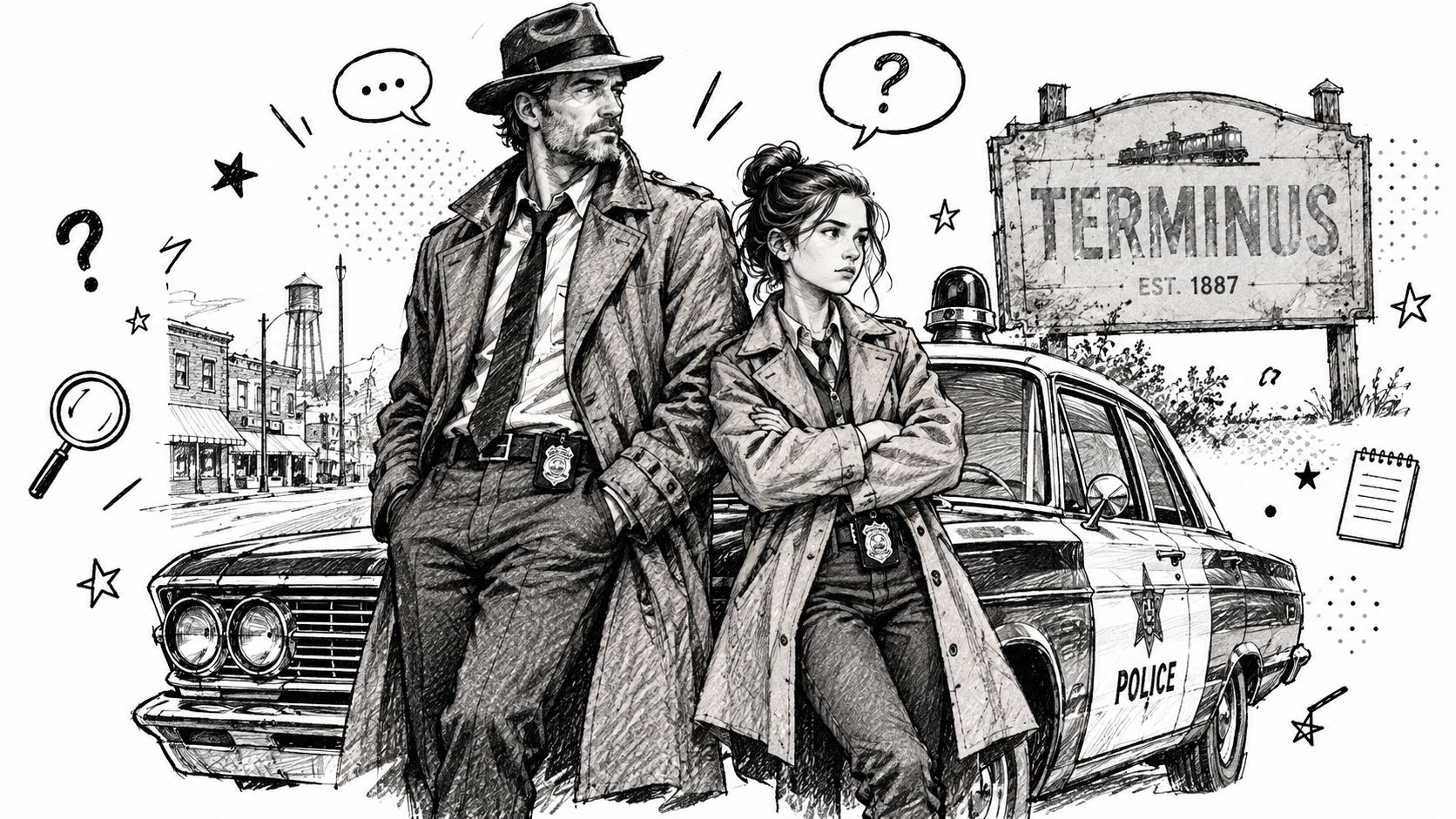
The fictional city of Terminus gives the series room for heightened action without pretending to be ordinary crime fiction. Mack's profession establishes the danger, while Panda's presence changes the emotional reading of every confrontation. Their father-daughter dynamic prevents the book from becoming only a procession of violent set pieces.
That balance is one reason the series has remained a useful reference point for creators working with mature material. The violence attracts attention, but the relationship gives readers a reason to keep reading. Black comedy, kinetic movement, and an exaggerated setting make the book feel designed rather than merely extreme.
Practical rule: Mature content earns attention, but character relationships create retention.
For publishers, the lesson is straightforward. A cult property needs more than a provocative elevator pitch. It needs a recognizable voice, visual decisions that can be identified at a glance, and characters who support discussion beyond the initial controversy. Body Bags has all three, which is why it can function as both a historical artifact and a model for creator-led brand equity.
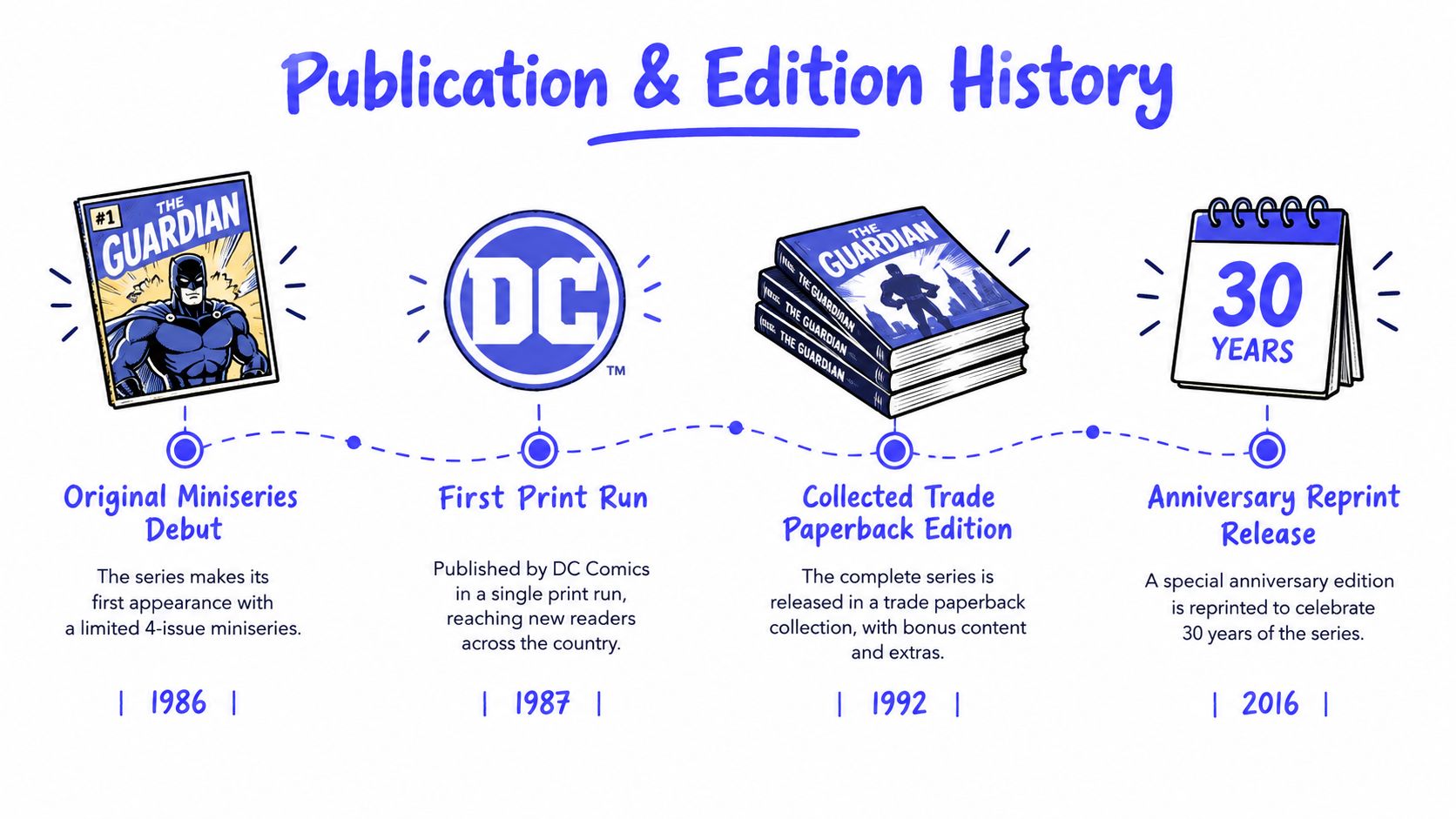
Body Bags has a compact publication history, yet its release pattern offers a practical model for keeping a creator-owned property commercially legible after its first appearance. The series began in 1996 as a four-issue miniseries under Dark Horse's Gaijin/Blanc Noir imprint. It later gained a collected edition in 2005, followed by one-shots in 2005 and 2008. ICv2's report on Jason Pearson's death records this release history.
Beyond the fact that the title appeared in several formats, the sequence shows how continued reader interest can support reprints and revivals in different publishing contexts. Cult comics often sell more than a plot. They offer access to a distinctive creator identity, which gives publishers a stronger basis for testing new editions with an engaged audience.
A first miniseries establishes the property, while a later collected edition changes how readers can buy it. New readers receive a single entry point instead of having to locate individual issues. Existing fans gain a reason to purchase the material again when the package offers a different format, presentation, or collecting purpose.
The one-shots serve a separate commercial function. They can renew attention without requiring a full relaunch, which helps a publisher manage production risk and audience expectations. Mature properties often have concentrated but highly engaged readerships, making special editions and targeted releases more suitable than broad-market monthly distribution.
| Publication stage | Commercial role |
|---|---|
| Original miniseries | Establishes the concept, characters, and visual identity |
| Collected edition | Creates an accessible entry point and a stronger shelf product |
| One-shots | Reopens the conversation without rebuilding the entire property |
| Revival or reprint cycle | Tests continued demand among collectors and returning readers |
A practical revival plan starts with rights clarity, usable production files, and a defined edition strategy. Before a crowdfunding campaign, decide what each pledge tier delivers: a reading experience, a premium physical object, archival material, or a combination. That decision affects manufacturing, packaging, survey design, and post-campaign fulfillment.
Body Bags demonstrates the value of sequenced publishing. Each edition should answer a distinct customer need. Clear separation between editions helps backers understand why an upgrade is worthwhile, reduces duplicate purchases, and gives the property room to remain active without exhausting its identity. The same discipline also makes inventory planning and fulfillment communications easier once the campaign closes.
The easiest way to discuss Body Bags is to call it controversial. Coverage often centers on the extreme violence, the debate around Panda's age, and the title's reputation as a shock comic. Those subjects are relevant, but they don't fully explain why the work continues to attract critical attention.
Independent reviews and retrospectives also describe the book as a tightly drawn action thriller with black comedy, kinetic art, and a surprisingly sympathetic father-daughter relationship. The Slings and Arrows review of Body Bags: Father's Day is useful because it treats the book as more than a provocation. It recognizes that the craft and the character dynamic complicate the initial response.
Pearson's art creates impact by refusing to settle into one emotional register. Bright, semi-cartoonish forms can make a scene feel energetic or even humorous, then the brutality changes the meaning of what came before. The reader has to process both impressions at once.
That approach can be effective, but it also creates responsibility for anyone marketing a similar property. Promotional material should communicate the mature nature of the work without reducing it to a gallery of explicit moments. A campaign that uses only its most graphic images may attract attention from the wrong audience and give existing readers no reason to believe the project has substance.
Creators developing visual assets can benefit from using design character sheets for ads to keep character presentation consistent across campaign graphics, previews, social posts, and reward mockups. For an adult comic, consistency matters because every image contributes to the reader's understanding of tone.
The strongest lesson is not “add controversy.” It's make the extreme material serve a recognizable dramatic purpose. In Body Bags, violence is part of the world and the profession, but the emotional stakes come from Mack and Panda's relationship. That structure gives readers something to evaluate besides the surface shock.
Publishers should also label mature material clearly, select campaign previews with care, and separate collector messaging from sensationalism. The aim isn't to make the work seem safer than it is. The aim is to present it accurately, so the people who buy it understand the tone and value before they pledge.
A mature graphic novel campaign needs sharper audience definition than a general-interest comics launch. You're not trying to make the project look acceptable to everyone. You're trying to reach readers who understand the tone, can evaluate the work from appropriate previews, and will support a creator-owned property because its identity feels specific.
Start by defining the audience in practical terms. Separate established fans, collectors of premium editions, readers interested in independent comics, and buyers who want merchandise connected to the characters. Each group may respond to a different reward, but all of them need a clear explanation of what the project contains.
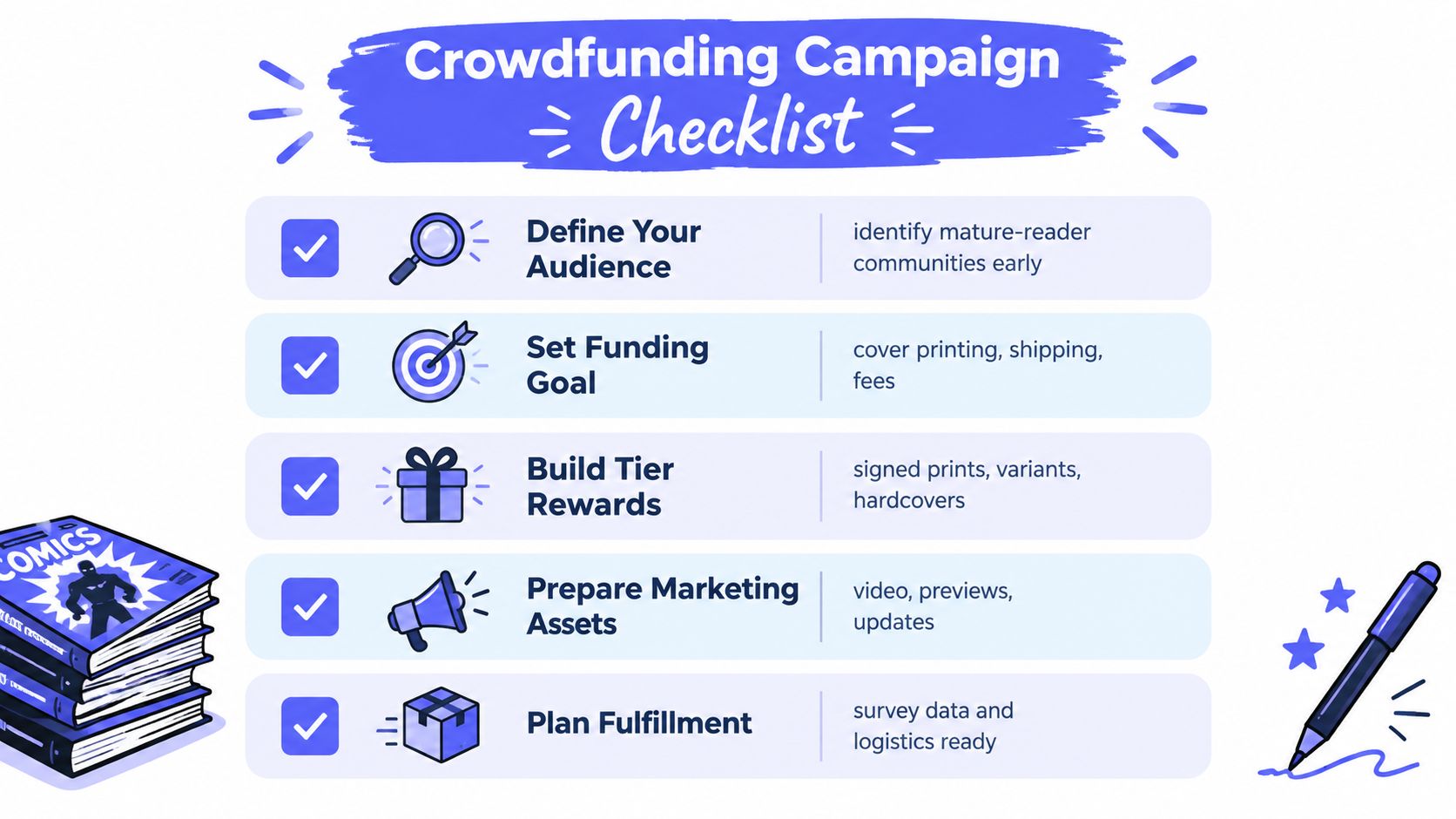
A strong campaign page should answer the questions that create hesitation:
Platform rules and community standards still matter. Mature comics should use clear age-appropriate framing, avoid misleading thumbnails, and make the campaign copy responsible about explicit content. A backer shouldn't discover the project's actual tone only after payment.
Campaign principle: Sell the specific promise of the book, not just the fact that it might offend someone.
Audience development should begin before launch. Collect permission-based email signups, show finished character art, publish production updates, and let readers see the creator's decision-making. A campaign for an established cult property can use recognition, but it still has to demonstrate why this edition deserves support now.
For additional thinking on how editorial coverage and clipping can contribute to campaign visibility, consult FindClout's guide to clipping and crowdfunding. Creators who want a broader launch framework can also use this guide to kickstarting a comic career.
The campaign video should show the work as a complete creative object. Let viewers see the creator, the pages, the physical materials, and the reason the edition exists. A mature project doesn't need to hide its edge, but it does need to show that the publisher has control of the project beyond the headline.
Once a campaign is funded, the pledge manager becomes the operational storefront. It has to collect the information needed to deliver rewards, but it can also determine how naturally backers move from their original pledge to add-ons, late purchases, and edition upgrades.
The clearest comparison is Amazon versus Shopify. Kickstarter's native pledge manager is like Amazon because it provides a more standardized experience. PledgeBox's pledge manager is like Shopify because it gives creators more control over branding, product presentation, and checkout. PledgeBox explains this distinction through its audience and storefront comparison.
| Feature | Native Platform Manager | Dedicated Pledge Manager |
|---|---|---|
| Checkout structure | More standardized | More configurable |
| Branding | Limited within the platform experience | Greater control over storefront presentation |
| Product presentation | Built around a common platform flow | Can be organized around the property and edition |
| Add-on experience | Available within the platform's structure | Can support a more storefront-like buying journey |
| Best fit | Creators who want a familiar, simpler process | Publishers managing multiple editions, add-ons, or a branded catalog |
A small campaign with one reward and minimal post-campaign activity may not need extensive customization. A mature comic property is often different. It may have a collected edition, signed copies, variant art, prints, apparel, and late orders that need to remain understandable several months after the campaign ends.
Customization matters when the product itself carries a strong identity. A branded storefront can organize the catalog around characters, editions, and collector priorities instead of presenting every item as an isolated transaction. That structure can reduce confusion, especially when backers need to select upgrades or add-ons.
Kickstarter's pledge manager comes with no additional upfront cost, but successful projects still pay the platform's standard 5% fee plus payment processing fees of roughly 3% to 5%, and those fees also apply to payments made through the pledge manager, according to Kickstarter's fee guidance. Treat those charges as part of the fulfillment budget from the beginning, not as an unpleasant discovery after the campaign closes.
Before choosing a system, review how to select the right pledge manager. The right choice depends on the number of products, the complexity of shipping, the need for branded checkout, and how much post-campaign selling you expect.
A backer survey is not a formality. It's the point where a campaign promise becomes an order record. If the survey collects incomplete addresses, unclear product choices, or missing shipping information, the fulfillment team has to solve those problems manually later.
Build the survey around the warehouse workflow. Ask for the delivery address, contact details needed by the carrier, edition selection, signatures or personalization, and any relevant variant choices. Keep optional questions separate from required data so backers don't mistake marketing fields for information needed to ship the reward.
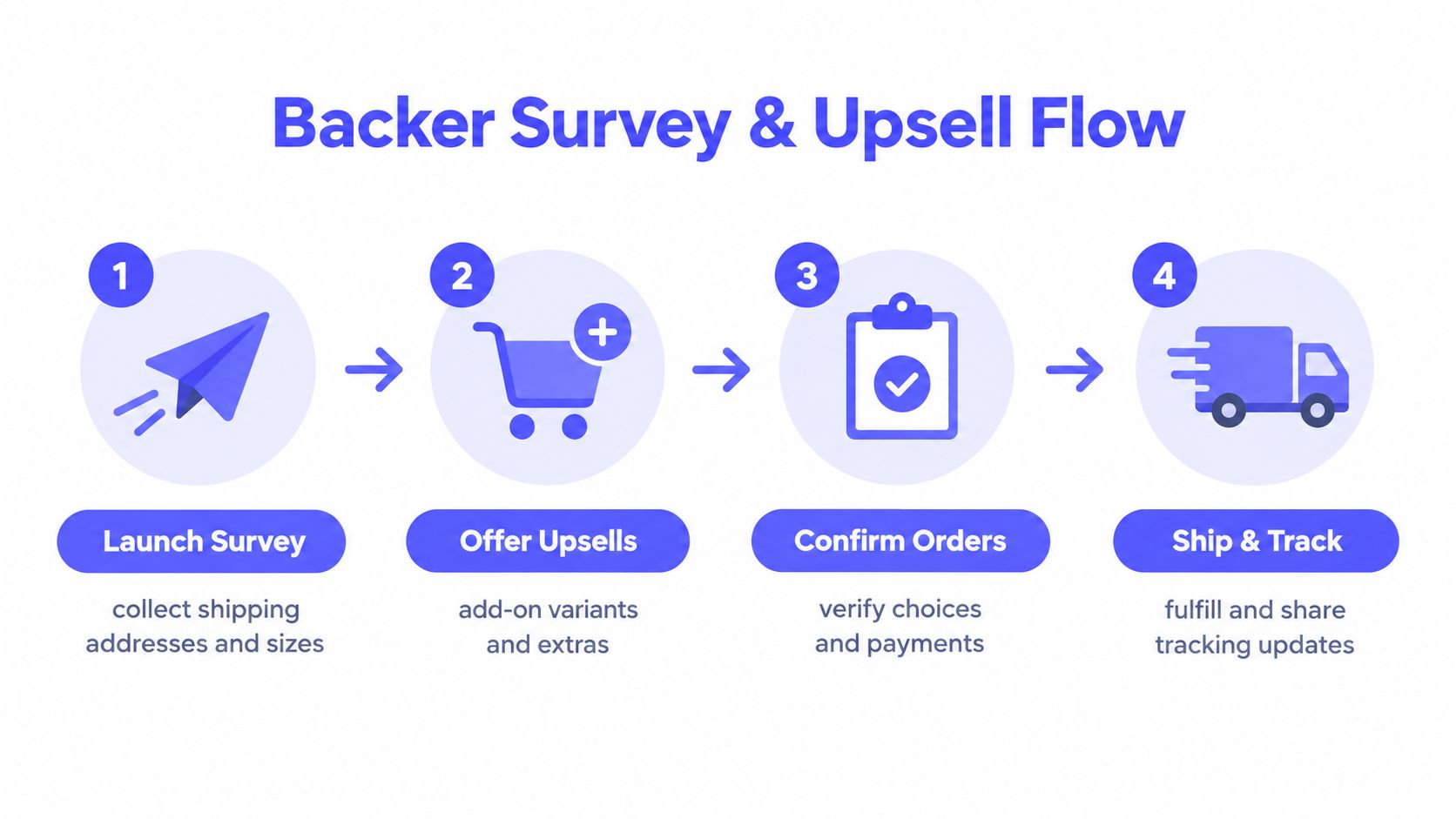
Add-ons should feel like a continuation of the campaign, not a second campaign forced into the checkout. Present related products together, explain whether an item ships with the primary reward, and make quantity and variant choices explicit. For a mature comic, logical add-ons might include a signed print, a cover variant, an art book, or another physical item tied to the same visual world.
Tax and shipping information also need a defined place in the flow. Tell backers when shipping charges are collected, account for VAT or other applicable taxes, and make customs responsibility understandable for international orders. Don't promise a single global shipping experience if your carriers, packaging, or tax treatment vary by destination.
PledgeBox states that sending the backer survey is free, with no campaign fee, no per-backer fee, and no upfront fee. It charges only 3% of additional revenue collected through the survey, including add-ons, shipping fees, and taxes or VAT, and that charge applies only when there's additional revenue to collect, as described on PledgeBox's pricing page. In practical terms, pledgebox is free to send the backer survey and only charges 3% of upsell if there's any.
Use the ultimate guide to backer surveys when mapping fields, reminders, payment choices, and add-on presentation. Test the flow with internal users before sending it to backers. A survey that works on a desktop but becomes confusing on a phone will create avoidable support work.
Fulfillment insight: Every unclear option in the survey becomes a support ticket, a packing error, or a delayed shipment.
A successful mature comic campaign ends with a physical object arriving in good condition. The creative work may be finished, but the publisher still has to protect corners, prevent moisture damage, match each backer to the correct edition, and provide useful updates when a shipment takes longer than expected.
Packaging should reflect the product's vulnerability. Use rigid protection for books and prints, separate items that can scratch or bend one another, and test the packed parcel before committing to a large run. Signed editions deserve extra handling because a replacement may involve more than the cost of another printed copy.
Keep one reliable order record that connects the backer, selected rewards, add-ons, shipping charge, address, and tracking status. Export or share only the information each vendor needs. A printer may need the edition count, while a shipping partner needs the destination and parcel details.
Customer support also needs a prepared answer set. Write responses for address changes, damaged books, missing parcels, duplicate orders, and late survey completion. Assign ownership, so backers aren't sent between the creator, printer, fulfillment warehouse, and platform without a clear resolution path.
The financial comparison matters here. Native platform fees can be easy to overlook because they sit alongside campaign costs, processing charges, and fulfillment expenses. A dedicated tool's transparent survey economics may be preferable when post-campaign revenue is limited or when the publisher wants to preserve control over the storefront and data.
Body Bags shows why a mature creator-owned property deserves an infrastructure designed for continuity. The book's edition history, distinctive visual identity, and collector appeal all create opportunities, but those opportunities disappear if the survey is confusing or the package arrives damaged. Fulfillment isn't an administrative afterthought. It's the final expression of the publishing brand.
PledgeBox gives comic publishers a branded pledge manager for surveys, add-ons, shipping, tax collection, and fulfillment workflows, with no fee to send the survey and a 3% charge only when additional survey revenue is collected. Visit PledgeBox to see how it can support a mature comic campaign from post-campaign checkout through delivery.
PledgeBox
The All-in-One Toolkit to Launch, Manage & Scale Your Kickstarter / Indiegogo Campaign