 PledgeBox
Audience Segmentation for Crowdfunding Creators
Master audience segmentation for crowdfunding. Learn how creators define segments, collect data, and boost upsells with targeted backer messaging.
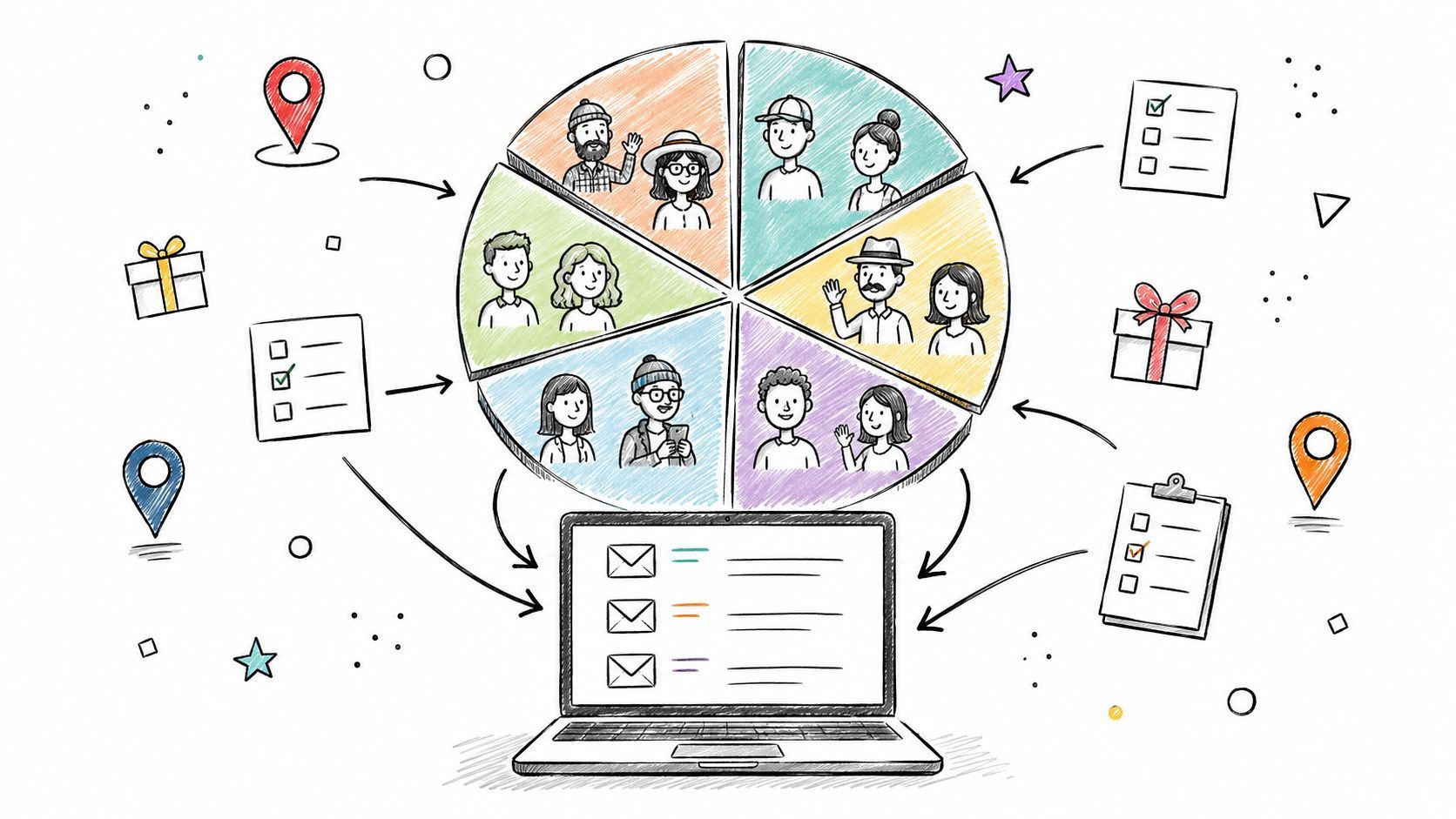
Master audience segmentation for crowdfunding. Learn how creators define segments, collect data, and boost upsells with targeted backer messaging.
You've closed the campaign, the backers are excited, and the post-campaign survey is ready to send. Then the first problem appears: one generic message asks every backer to confirm shipping, choose add-ons, and answer the same product questions, regardless of what they pledged. Some people ignore it, others see offers they can't buy, and your team spends valuable time untangling responses that should have been separated from the start.
Audience segmentation fixes that operational mismatch. In practical terms, it means dividing a broad audience into smaller groups that share a relevant trait or behavior, then changing the next message, question, or offer accordingly. For a useful primer, what is audience segmentation provides the broader marketing definition. Crowdfunding creators need a more specific application, built around pre-launch signups, pledge history, reward eligibility, and backer survey responses.
A creator sends the same post-campaign survey email to 3,000 backers. The message asks everyone to choose an add-on and complete shipping details, but it doesn't recognize whether each recipient already selected that reward, pledged at a premium tier, needs another copy, or only made a small test pledge. The campaign team watches completion stall while unfinished addresses and missed upsell opportunities accumulate.
That outcome isn't surprising. A backer who already bought every compatible add-on shouldn't receive the same product pitch as someone who selected the base reward. A first-time backer may need a clear explanation of how late add-ons work, while a repeat supporter may respond better to a concise loyalty message. International backers may need a regional shipping or tax notice, and an unengaged recipient may need a reminder rather than another sales message.

The commercial benefit gets attention, but the operational benefit usually arrives first. Segmentation helps you show the right survey questions, reserve premium offers for eligible backers, and reduce the number of responses your team must manually correct. It also gives fulfillment a cleaner view of shipping region, variant, reward tier, and completion status.
For example, a tabletop creator might use four practical groups:
The point isn't to build dozens of miniature campaigns. Start with a few groups where the next action meaningfully changes. Broad campaign lists can contain valuable differences, but a segment only earns its place when your team can assign it a distinct message, offer, or operational treatment.
Practical rule: If two groups receive the same question, offer, timing, and follow-up, they probably don't need to be separate segments.
Crowdfunding pledge management makes this especially direct. Kickstarter's native pledge management is more like Amazon, where the campaign and transaction experience are largely contained within the marketplace. A dedicated pledge manager such as PledgeBox is more like Shopify, giving the creator a focused post-campaign store and survey environment for managing orders, collecting outstanding costs, and presenting relevant add-ons. PledgeBox is free to send the backer survey and only charges 3% of upsell revenue if there's any. If the survey produces no additional revenue, the survey is free, as described on its pricing page.
Crowdfunding creators don't need every marketing segmentation category. Five dimensions usually provide enough context to decide what a backer should see next: demographic, geographic, pledge tier, behavior, and engagement. Use them as decision filters, not as a reason to build an elaborate audience matrix.
Demographic segmentation uses attributes such as age, income, education, gender, household size, and location. OpenStax lists demographic, geographic, psychographic, benefit, and volume segmentation as basic consumer market forms, and identifies demographic segmentation as the most common because the data is relatively easy to obtain. The OpenStax market segmentation overview is useful background, but demographic data shouldn't replace observed behavior.
A tabletop creator might ask whether a backer is an experienced player or buying for a family. The first group could receive information about expansions, while the second may need a simpler starter explanation. Treat the answer as a relevance signal, not proof that every person in the group wants the same product.
Location affects shipping method, delivery timing, taxes, VAT, language, and regional availability. Start by separating domestic and international backers, then create country or region groups only when the operational difference justifies the work. A country-level segment that receives the same email and offer as everyone else adds maintenance without adding clarity.
Pledge tier often reveals the clearest commercial intent. Group backers by reward level, early-bird status, multiple pledges, and add-on eligibility. A high-value collector may be appropriate for a premium bundle, while a basic reward backer may respond better to a low-friction accessory.
Behavior records what the backer did. Useful fields include first-time or repeat support, previous pledge history, survey completion, add-on purchase, referral activity, refund request, and payment status. A backer who selected “interested in upgrades” but already bought all compatible options belongs in a different group from someone who showed interest and remains eligible.
Engagement adds recency and frequency. Track whether people opened launch emails, clicked a reward link, attended a product demonstration, visited the campaign page, or recently interacted with a reminder. For a small creator team, five to ten core segments are generally more manageable than a theoretical matrix nobody can maintain. Combine dimensions only when the combination changes the next action.
Pre-launch data tells you what a prospect noticed before committing. Post-campaign data tells you what a backer bought and still needs. Confusing those roles creates inaccurate segments.
A signup form can record the source, signup date, campaign, location, and requested reward or product interest. Engagement adds useful context, including email opens, project-page visits, reward-page clicks, referral signups, event attendance, and answers to preference questions.
Suppose a prospect selects a premium reward on the waitlist but hasn't pledged. That person may belong in a high-intent education segment, not a premium upsell segment. The early signal can guide launch messaging, but it can't confirm eligibility, order status, or final reward selection.
Once the campaign closes, the pledge record becomes the operational source of truth. Survey responses enrich that record with information that changes fulfillment or communication, such as selected reward, add-on interest, shipping region, size, variant, language, gift status, accessibility needs, and permission for follow-up.
Pledge-management data should include pledge value, reward tier, number of orders, add-on purchases, payment status, fulfillment status, and delivery information. A backer may say they're interested in an upgrade while already owning every compatible add-on. Actual purchase and eligibility should override interest alone.
Creators using Kickstarter can review the practical workflow in this Kickstarter post-campaign survey guide. The important discipline is reconciliation before activation.
Pre-launch behavior is strongest for message relevance and intent education. Post-campaign records are strongest for eligibility, fulfillment, and upsell decisions.
Build segments from fields your team can verify and use. In an email platform such as Klaviyo or MailerLite, create properties for pledge tier, survey response, favorite stretch goal, color preference, shipping country, and engagement status. In a pledge manager such as BackerKit or PledgeBox, use the order and survey records to filter by reward, add-on eligibility, survey completion, shipping status, and payment state.

Start with a single audience model, then validate it against downstream results. A useful naming convention makes the logic visible:
Country | Tier | Intent or eligibility | Status
For example:
Canada | Tier 2 | Hardcover interested | Fulfillment open
That group can trigger a localized upsell email one week after fulfillment launches, provided the backer remains eligible and hasn't already purchased the hardcover. Use a condition that excludes completed purchases, refunded orders, and records with unresolved payment issues.
A small team should avoid building a group that nobody can read, test, or serve. A practical working threshold is roughly 100 backers for an email segment and 25 backers for an upsell add-on segment, based on the workflow described in the plan for this article. Smaller cohorts often stall because the creative work, review time, and reporting effort outweigh the available learning.
Build the segment around the decision: “Who should receive this offer now?” is more useful than “What attributes can we collect?”
Use a short test before activating a full flow. Check that the segment contains the intended tier, country, survey answer, and purchase status. Confirm that excluded customers really are excluded. Then connect the group to a message, pledge-manager banner, or automated reminder. Guidance such as these segmentation tips from Ecommerce Boost can help refine email logic, but crowdfunding creators still need to verify reward eligibility inside their own records.
For the follow-up sequence, a focused email workflow automation guide can help you map triggers to reminders without turning every field into a separate campaign.
A segment is useful only when it changes the treatment. Pair each group with one message, one offer, and one follow-up rule. Don't promise a measurable conversion lift before testing. Your first job is to establish whether the segment responds differently from the broader audience.
High-tier backers eligible for a VIP add-on should receive a personal email from the creator, not a generic banner. Give them a 48-hour early-access window, explain why the item is limited or relevant to their reward, and exclude anyone who already purchased it. The channel is email because the offer depends on recognition and perceived access.
Single-reward backers who abandoned checkout need friction removed before they need more persuasion. Use a two-email reminder sequence with a small add-on bundle, then stop messaging once checkout completes. A pledge-manager reminder can carry the same logic for people who return directly to their order page.
Repeat backers from a prior project can receive a loyalty offer, such as a discount on an annual subscription tier when that product complements the current campaign. Don't introduce a subscription merely because the person is loyal. The offer must fit the backer's known relationship with the creator.
Survey respondents who flagged an unfunded stretch goal deserve transparency. Send an update explaining that the stretch goal didn't fund, then offer late-pledge access if the item is available. An in-update CTA works well here because the context matters more than urgency.
Before creating supporting software around these flows, review relevant audience engagement tools for developers when your campaign includes custom integrations or technical event tracking. The tool should serve the segment logic, not force the campaign into a more complex stack.
The commercial question remains simple: can the offer cover its own operational cost? PledgeBox is free to send the backer survey and only charges 3% of upsell revenue if there's any, including eligible add-ons, shipping fees, or taxes and VAT, according to its survey feedback and pricing explanation. For broader planning around offer structure, see this guide on increasing average order value.
If no suitable upsell applies, don't segment for the sake of personalization. A clean fulfillment reminder sent to the right people is a successful operational segment even when it produces no extra order value.
Track three measures for each active segment: survey completion rate, upsell take rate, and add-on revenue per backer. More dashboards won't compensate for unclear decisions. These three figures show whether the segment is reachable, commercially relevant, and worth maintaining.
The working targets in this operating framework are a 25% to 40% survey completion rate and a 3% to 8% upsell take rate, both defined as internal benchmarks rather than universal guarantees. Treat them as testing ranges, not promises. The final measure, add-on revenue per backer, determines whether the work required to build and maintain the segment produced enough value.
A high completion rate with a low upsell take rate usually means the survey is understandable but the offer is wrong, too expensive, already owned, or poorly matched to the group. A low completion rate with a high take rate suggests the offer may be relevant, but the survey questions, reminder timing, or message may be misaligned with intent.
A low result across all three measures points to a structural problem. Check the audience definition, data freshness, eligibility rules, and checkout path before changing the subject line.
| Measure | What it tells you | Likely decision |
|---|---|---|
| Survey completion rate | Whether recipients can finish the required action | Simplify questions or change reminders |
| Upsell take rate | Whether the offer fits the segment | Replace, narrow, or reposition the offer |
| Add-on revenue per backer | Whether the segment justifies maintenance | Retire, merge, or expand the segment |
Ignore vanity signals that don't connect to an order. An open rate above 40% on a small list can look impressive while producing no revenue, and raw email clicks don't prove commercial value without attribution. Review each segment weekly, record the three measures, note the message and offer used, then choose one action: retire, merge, or expand.
A useful rhythm follows the campaign rather than demanding constant manual intervention. Run the post-campaign survey in week one, build and validate segments in week two, activate targeted messages and upsell flows during weeks three through six, then review performance before the next campaign milestone. Independent segmentation guidance also recommends quarterly refresh cycles because static groups lose relevance as customer behavior changes, as described in this review of segmentation pitfalls and biases.
Over-segmentation turns a 500-backer project into nine buckets that nobody can execute consistently. If each group needs its own copy, review, test, and support process, the campaign team may spend more time maintaining labels than improving the backer experience.
Stale data creates incorrect offers. A survey answer from one campaign may no longer describe a backer's current order, and a static engagement tag can keep people in a reminder flow after they've completed checkout. Refresh segments before every major send and audit them quarterly.
Weak upsell economics can make a technically successful offer a practical failure. A 3% take rate on a $20 add-on may generate less value than the tooling, copywriting, support, and reconciliation time required to run it. The exact economics depend on your costs, so calculate contribution after platform fees and staff time, not just gross sales.
PledgeBox's comparison materials describe its survey model as having no upfront, per-backer, or campaign fee, with 3% applying only to upsell revenue, while Kickstarter's pledge management cost is included in its 5% platform fee. The comparison is useful when deciding whether post-campaign survey monetization needs a separate operating model, rather than treating it as part of the original campaign funding cost, as outlined in this Kickstarter pledge-management comparison.
PledgeBox lets crowdfunding creators send the backer survey for free and charges only 3% of upsell revenue when the survey generates it, which fits a segmentation workflow built around verified eligibility and relevant add-ons. Visit PledgeBox to organize survey responses, manage post-campaign orders, and turn cleaner backer data into more focused fulfillment and upsell actions.
PledgeBox
The All-in-One Toolkit to Launch, Manage & Scale Your Kickstarter / Indiegogo Campaign