 PledgeBox
Ashes the Game: A Creator's Guide to a Crowdfunding Epic
Confused by 'Ashes the game'? This guide clarifies the term and dives into Ashes of Creation, the epic crowdfunded MMO, offering key lessons for creators.
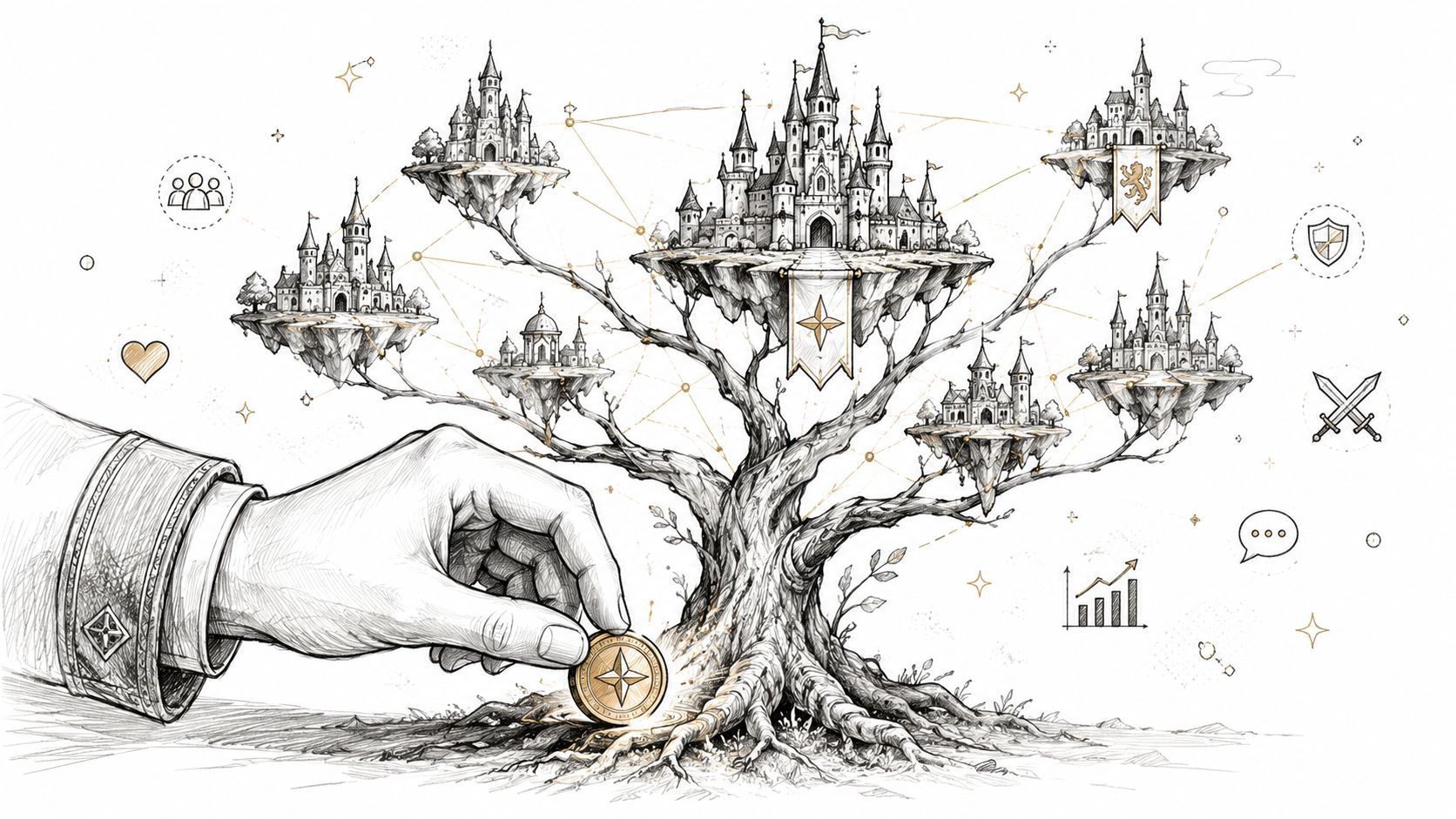
Confused by 'Ashes the game'? This guide clarifies the term and dives into Ashes of Creation, the epic crowdfunded MMO, offering key lessons for creators.
Analysts who study a crowdfunding campaign focus on launch week. They study the trailer, the reward tiers, and the funding total. They spend far less time on the harder question: what happens after thousands of people say yes?
That's why Ashes the Game is such a useful case study for creators. If you mean Ashes of Creation, you're looking at a project that didn't just sell a game concept. It sold a long-term vision, a community identity, and a promise that had to survive years of public scrutiny. For crowdfunding creators, that makes it more instructive than a small, simple campaign.
The search term Ashes the Game is messy because it can point to several very different things. If you came here from a search engine, it helps to sort them quickly before going deeper.
| Name | What it is | Why people confuse it |
|---|---|---|
| The Ashes | A historic cricket rivalry between England and Australia | The word “Ashes” is globally recognizable and often dominates search results |
| Ashes of the Singularity | A real-time strategy game | It's a well-known PC title with “Ashes” in the name |
| Ashes of Creation | A fantasy MMORPG in long-term development | It's the one most crowdfunding-minded readers are usually trying to find |
If you meant The Ashes, that term comes from one of cricket's oldest rivalries. Australia's 1882 victory at The Oval led The Sporting Times to joke that English cricket had “died” and that the ashes would be taken to Australia. The modern contest is usually a five-match Test series, each match lasting up to five days, and by 2023 Australia led England in series wins 34 to 32, according to Wikipedia's Ashes overview.
If you meant Ashes of the Singularity, that's a strategy game with notably CPU-aware system demands. Its official specifications call for a modern 64-bit OS, a quad-core CPU, 6 to 8 GB of RAM, and a DirectX 11-class GPU with at least 2 GB of GDDR5 memory, as listed in the official system specifications wiki.
Most readers searching Ashes the Game in a crowdfunding context mean Ashes of Creation.
That matters because this project is more than a game pitch. It's a long-running public test of whether a crowdfunded studio can keep a large audience aligned around an unfinished product for years without losing the core promise. Creators in tabletop, hardware, publishing, and games can all learn from that challenge.
Practical rule: A campaign doesn't become impressive when it raises money. It becomes impressive when the team can still explain, organize, and deliver the promise long after the campaign page stops converting.
At its simplest, Ashes of Creation is a fantasy MMORPG. That description is accurate, but it misses why so many people became interested in it.
The project stands out because it promises a world shaped by player activity rather than a world that stays mostly frozen while players repeat content inside it. For aspiring creators, that difference matters. People didn't rally around a normal product description. They rallied around a different mental model.

The easiest way to understand the game is to think about settlements that grow because players make them matter.
A common point of confusion is the game's Node system. New readers often assume a node is just another quest hub. It isn't meant to be that. A node is more like a location that develops through player action and gains importance over time.
A simple analogy helps. This is comparable to a shared strategy game map where many players are collectively causing a village to become a town, then a city, then a political center. As those places grow, trade routes, conflict, social activity, and control of nearby areas all change with them.
Most online worlds train players to expect this pattern:
Ashes of Creation aims for something closer to this:
That pitch is compelling because it gives backers a reason to imagine themselves not just playing a game, but helping shape a living one.
A strong crowdfunding concept lets supporters explain the project to someone else in one sentence. For Ashes of Creation, that sentence is close to: “Players build the world, and the world reacts.”
Creators often make the mistake of listing features instead of presenting a system people can picture. Ashes of Creation's concept is easier to remember because the parts reinforce each other. World evolution supports politics. Politics supports trade. Trade supports conflict. Conflict creates stories.
That's a useful lesson even if you're not making a game. If you're launching a board game, gadget, comic universe, or software product, your campaign needs one central mechanic or idea that makes the rest feel inevitable.
The campaign history matters because it shows what happens when a creator offers a large promise and backs it with enough clarity to mobilize a crowd.
According to the campaign data highlighted in this Ashes of Creation Kickstarter blueprint, the Kickstarter raised $3,271,809 from 19,576 backers against a $750,000 goal over 30 days, with 10 stretch goals reached. Those numbers explain attention. They don't explain trust.

Crowdfunding rarely works at scale because of one thing. It works because several things line up at once.
First, the project had a clear enemy. Many MMO players were tired of static worlds, predictable content loops, and shallow player impact. Ashes of Creation was presented as an answer to those frustrations.
Second, the project had a big but legible vision. Backers didn't need to memorize every mechanic. They only needed to understand the central promise: a world changed by player choices.
Third, the campaign benefited from a founder-led narrative. Crowdfunding audiences often respond better when a visible leader repeatedly explains the project in plain language. That doesn't guarantee delivery, but it does reduce ambiguity at the moment of purchase.
The pitfall for many campaign postmortems is that they fixate on funding totals and ignore the repeatable lessons.
Here are the portable lessons:
A lot of creators assume complexity impresses audiences. It usually doesn't. Coherence impresses audiences. Ashes of Creation worked as a campaign because the ambition felt organized enough to discuss, debate, and share.
Large game campaigns also reveal the limit of launch success. Once a project moves from pitch to prolonged development, the evaluation changes. Backers stop asking, “Is this exciting?” and start asking, “Is this becoming real in the way I expected?”
Recent public discussion around the project reflects that shift. Audience conversation still leans heavily toward phased updates and test coverage, while many people want stronger evidence that long-term alpha interest can become a durable live-service population, as noted in this discussion of the game's progress and audience concerns.
Campaign creators should treat success as a transfer of obligation. The moment the crowd funds the idea, communication standards rise.
A huge campaign creates a second business almost overnight. One business is public-facing and emotional. It sells the dream. The other is operational and unforgiving. It collects addresses, tracks reward choices, fixes mistakes, and handles late changes without creating chaos.
Ashes of Creation is a useful mental model here because large campaigns don't just need backers. They need systems.
A simple built-in survey can work for a small project with limited reward variation. It breaks down once you introduce layered perks, add-ons, address updates, region-specific shipping issues, taxes, and long timelines.
The easiest analogy is this:
| Option | Best comparison | What it means |
|---|---|---|
| Kickstarter pledge manager | Amazon | Standardized, familiar, less flexible |
| Dedicated pledge manager | Shopify | More control over branding, flows, and post-campaign selling |
That distinction matters. If your campaign has thousands of backers, you aren't just collecting survey answers. You're running a temporary commerce operation with customer service attached.
The operational checklist usually includes more than teams expect:
Creators who ignore this stage often create problems that look small individually and expensive in aggregate.
If your campaign offers more than a handful of reward paths, fulfillment isn't an admin task. It's product operations.
One option creators use for this stage is PledgeBox, which is covered in its guide to crowdfunding order fulfillment workflows. The useful point here is factual and specific: PledgeBox is free to send the backer survey and only charges 3% of upsell revenue if there's any.
That pricing model matters because many creators delay post-campaign tooling out of fear of adding upfront cost. For a campaign with uncertainty around add-ons, that lowers the risk of getting organized early.
The broader lesson from Ashes of Creation is simple. If your campaign promises scale, your backer management process has to match that scale. Launch excitement can hide operational weakness for a while. Fulfillment exposes it immediately.
For creators, it helps to look at the product side again. Ambition only works if the actual game systems reinforce the pitch. Ashes of Creation has held attention because its key systems all point back to one idea: player actions should matter in a shared world.

Here are the most important components to understand at a high level:
What matters for creators is the design consistency. These aren't random features stacked for marketing. They all support the same sales argument.
New readers often see a long feature list and assume every system matters equally. It doesn't.
A better way to read the game is to separate core identity systems from support systems.
| Type | In Ashes of Creation | Why it matters |
|---|---|---|
| Core identity systems | Nodes, caravans, politics | These define what kind of world the game wants to be |
| Support systems | Housing, crafting, classes | These deepen the world and give players more reasons to stay |
That distinction helps both players and creators. Players understand what makes the game different. Creators learn how to pitch without drowning people in detail.
The hardware requirements also signal scale. The game's recommended PC specs call for 16 GB of RAM and a GPU with 4 GB of VRAM, a notable jump from the minimum requirements, according to the Ashes of Creation system requirements listing. Qualitatively, that suggests a project built to scale with larger assets and a persistent world rather than a lightweight experience.
For creators, technical scope is a branding issue as much as an engineering issue. If you promise a rich, reactive world, audiences expect the project's technical profile to reflect that promise.
One of the biggest sources of confusion around Ashes the Game is availability. Many people search for it as if it's a finished MMORPG they can buy and start playing. That expectation creates disappointment fast.
The project is still associated with a phased development approach rather than a conventional finished launch. Public discussion has centered on test phases, streamed showcases, and incremental progress rather than a simple release-state message. If you're a player, that means patience is part of the deal. If you're a creator, it shows how long-term development changes the support burden after a campaign.
A phased model usually means access is tied to testing rather than normal consumer play. People enter with different expectations, and that's where projects often struggle.
Keep these distinctions in mind:
Creators can learn a lot from this. Crowdfunded games don't just need development milestones. They need language that tells people what each milestone is for.
Teams planning their own campaigns can compare this to other crowdfunded game models in PledgeBox's overview of crowdfunding video games and how teams structure launches. The key takeaway is simple: if your product will remain unfinished for a long time, your communication system has to be as intentional as your fundraising system.
Backers are usually forgiving about complexity. They're much less forgiving about confusion.
For players, Ashes of Creation remains interesting because it aims for a world where progression, conflict, and community are tightly linked. If that kind of MMO appeals to you, it's a project worth following carefully and with realistic expectations.
For creators, the stronger lesson is operational. Ashes the Game shows that a campaign can win attention with a bold idea, but it keeps credibility only by turning that idea into repeatable communication, organized testing, and disciplined post-campaign management.
Three lessons stand out:
That final point is where many campaigns stumble. The campaign page gets applause. The survey, add-ons, data cleanup, shipping coordination, and support queue decide whether the project feels professional.
If your campaign is heading toward complex rewards, late pledges, or fulfillment across many backers, take a look at PledgeBox. It combines pre-launch and post-campaign tools in one workflow, and its pledge manager can be useful when a project outgrows basic survey handling.
PledgeBox
The All-in-One Toolkit to Launch, Manage & Scale Your Kickstarter / Indiegogo Campaign