 PledgeBox
Your Data Breach Response Plan: A Creator's Guide
Build a practical data breach response plan for your crowdfunding campaign. This guide helps creators protect backer data, meet legal duties, and recover fast.
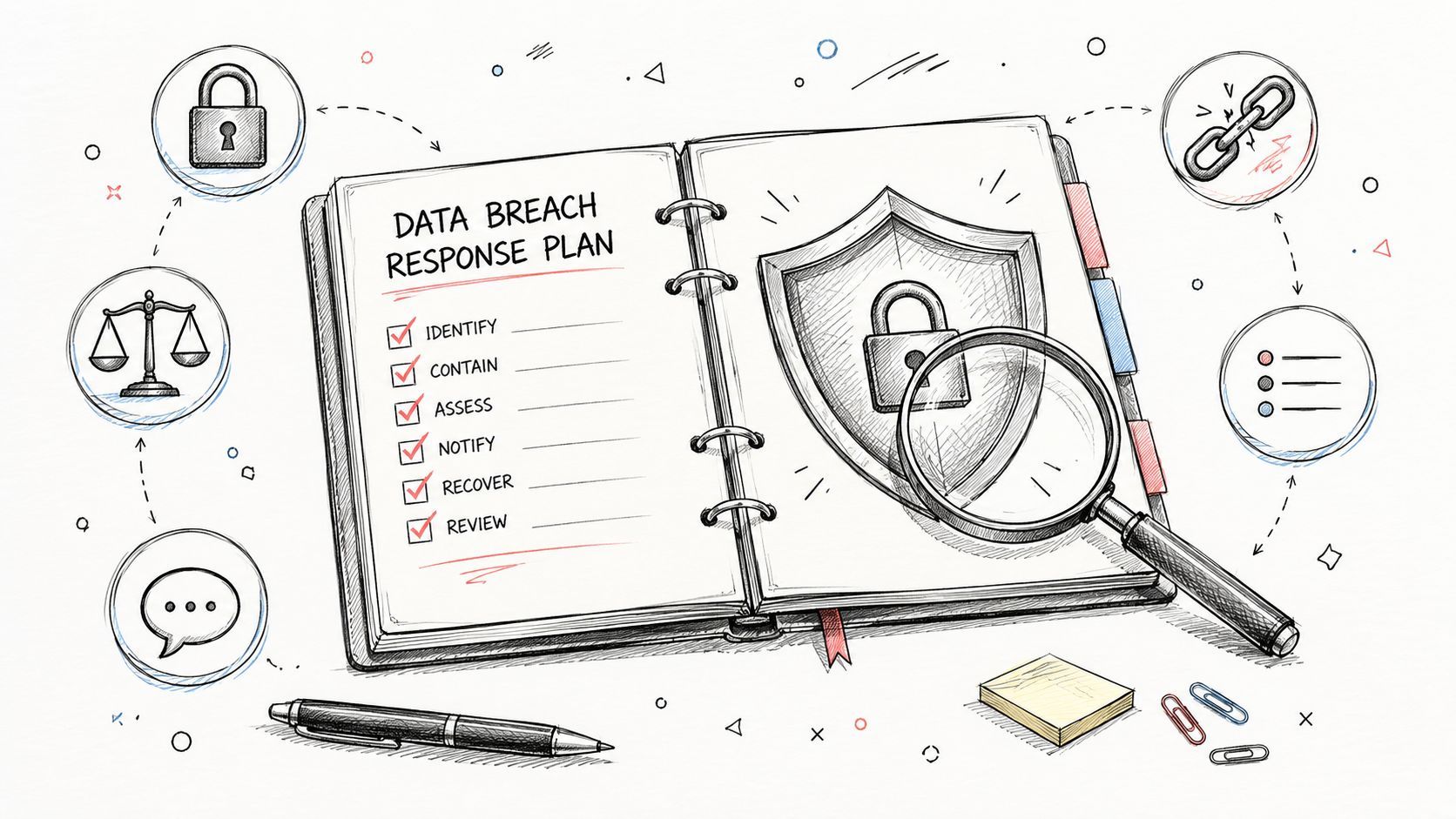
Build a practical data breach response plan for your crowdfunding campaign. This guide helps creators protect backer data, meet legal duties, and recover fast.
You're staring at a support inbox that suddenly feels too quiet, then a backer forwards a login alert you didn't send. The next message says someone else is asking about shipping details, and now the whole campaign feels a step away from chaos. That's the moment a data breach response plan stops being a compliance document and becomes the thing that keeps your project, your backers, and your reputation from spinning out.
A crowdfunding campaign has a very specific kind of exposure. You're not just holding customer data, you're holding launch timing, reward addresses, payment-linked information, and a direct trust relationship with thousands of people who expect you to be reachable. When something looks off, hesitation makes the problem worse, and every extra hour without a plan invites confusion.
The financial stakes are real. IBM's 2025 Cost of a Data Breach report found that organizations with a tested incident response plan saved an average of $2.66 million per breach compared with those without one, and the global average breach cost was $4.44 million (IBM 2025 Cost of a Data Breach data). That's not a theoretical boardroom number, it's a practical reminder that preparation changes outcomes. If your campaign handles backer data at scale, readiness matters even more when a breach could undermine future launches, refund handling, and fulfillment.
Practical rule: if you haven't written the first hour of your response, you've already made the incident harder than it needs to be.
For creators, the plan has to be simple enough to use under pressure and specific enough to fit campaign reality. A useful outside reference is ITSM incident response strategies, because the same discipline that helps IT teams organize an outage also helps a creator keep messaging, evidence, and decision-making in one place. The point isn't to turn a small team into a security department. It's to make sure you don't waste the first critical hour figuring out who's allowed to say what, who can isolate systems, and who's answering backers.
A strong plan also protects trust, which is essential currency in crowdfunding. Backers will forgive a hard moment faster than they'll forgive confusion, silence, or contradictory updates. A creator who responds cleanly signals that the campaign is still being run by adults, not adrenaline.
A breach response team doesn't need to be large, but it does need to be clear. The UK's 2025 Cyber Security Breaches Survey found that only 39% of businesses had specific roles and responsibilities assigned for breach handling, which tells you how often people try to improvise when the pressure is on (UK Cyber Security Breaches Survey 2025). Crowdfunding creators can't afford that kind of ambiguity, because one person may be juggling platform admin, backer support, and fulfillment logistics at the same time.

At minimum, name one person for each of these jobs, and name a backup if you have one. If you're a solo founder, you can wear multiple hats, but you still need to decide which hat is on your head at each stage of the response.
That structure mirrors what good response guidance already says, and it fits crowdfunding because you're usually moving fast with a lean team. If you need a practical security baseline for how campaign data should be handled, the internal guide on PledgeBox security best practices is worth keeping in your toolkit.
Keep one rule non-negotiable, never let the technical person and the communications person become the same job during an active incident.
The toolkit is where a lot of creators fail. They know who should do what, but they haven't pre-built the stuff that makes action possible. A secure chat channel, a shared incident log, and a folder of pre-approved templates matter because you won't want to draft them from scratch while people are asking whether their data is safe.
Store the following before anything happens:
If you're already handling backer data, the difference between order and panic often comes down to whether these pieces are sitting in a folder nobody can find or in a place the team can use instantly. That's the value of preparation, it turns reaction into a sequence.
The first day decides whether a breach becomes an event or a disaster. The instinct is usually to fix everything at once, but that's how evidence disappears and the scope gets worse. Start by confirming what is happening, then move in a controlled line, not a frantic circle.

A useful but often skipped step is figuring out whether the alert is a real breach or just a noisy false alarm. One guide specifically calls out the need to rule out false positives, authorized penetration testing, or system errors before launching a full-scale response (Darkscout data breach response plan guide). That matters because if you treat every alert like a confirmed breach, you'll waste time, burn trust, and create unnecessary disruption.
Start with four questions. What happened, when did it start, what systems are involved, and what data could be exposed? If you can't confidently rule out exposure, treat the event as high risk and move into response mode.
For creators, the hard part is often not the alert itself, it's the surrounding mess. A strange login can be the symptom, but the breach could live in the backer export, the shipping sheet, or the email account someone used to coordinate fulfillment. Keep the investigation narrow at first, then widen it only when the facts justify it.
Once the issue looks real, isolate the affected systems fast. Do that without turning the whole operation upside down if you can avoid it. Preserve logs, disconnect compromised access, and capture screenshots or notes before changing anything. The goal is to stop active damage while leaving enough evidence for a proper review.
A practical sequence looks like this:
If you need a regionally grounded reference for how incident handling and recovery are framed in practice, Saskatchewan cyber incident management is a useful comparison point for the kind of structured response teams should aim for.
Don't reboot, reimage, or “clean up” a system until you've decided what evidence has to survive.
That discipline is especially important when backer data may have been exposed through multiple tools, because one rushed fix can erase the clue that tells you how the incident started. A calm first day is usually more valuable than a perfect first fix.
Once containment starts, the question changes from “What happened?” to “Who needs to know, and when?” That's where creators get trapped, because the legal duty depends on what data was exposed, where the backers live, where you operate, and whether the incident crosses a reporting threshold. There isn't one universal script.

The FTC recommends a staged workflow for breach response and specifically advises preparing pre-written stakeholder notification templates in advance so communication doesn't become ad hoc during the crisis (FTC data breach response guide). That's the right instinct for creators too. You want wording that is calm, honest, and specific without oversharing facts you don't yet know.
A strong backer notice usually needs these pieces:
A simple draft can sound like this, if the facts support it: “We identified unauthorized access affecting some campaign data. We're investigating what information was involved, limiting access, and working with the relevant service providers to understand scope. We'll share updated information as soon as we can do so accurately.” That language is measured, not evasive.
The hard part is deciding which notices are required. The legal threshold can depend on jurisdiction and on the kind of data involved, so a breach that stays internal in one market might trigger notice elsewhere. That's why a creator should never rely on memory or general caution alone.
If you want a better handle on privacy obligations in a crowdfunding context, the internal guide on PledgeBox and GDPR is a practical reference point for how backer data and privacy duties intersect. For broader legal research workflow support, LegesGPT's legal research tool review is a good place to compare tools before you bring in outside counsel.
Later, once the situation is stable enough for a more structured update, a second message can be sent to backers and, if needed, regulators. Keep that message short, factual, and free of guesses. If you don't know the scope yet, say that you're still determining scope rather than filling the gap with speculation.
The FTC's guidance on prewritten templates works because it reduces contradictory wording, and that matters more in crowdfunding than in many other businesses. Backers watch updates closely. If one message says “no sensitive data was involved” and another says “we're still investigating,” trust drops fast.
The safest path is a single communications point, one approved draft, and one timeline. Don't let support replies, social posts, and email notices drift into separate stories. Backers notice inconsistency quickly, and inconsistency makes them assume the worst.
Recovery is easier when your tools aren't fighting you. A platform built with privacy in mind gives you more control over what data lives where, who can access it, and how quickly you can respond to requests tied to a breach. That's especially useful when the aftermath includes account reviews, data minimization, and backer reassurance.

Kickstarter's pledge manager workflow operates more like a marketplace, while PledgeBox functions more like a branded storefront environment. That comparison matters because breach recovery usually needs control, not just reach. A creator trying to manage data across a marketplace-style flow can feel boxed in, while a dedicated environment gives more room to segment tasks and handle sensitive information deliberately.
PledgeBox is also structured to make the economics of recovery more forgiving. PledgeBox is free for sending backer surveys and collecting shipping information, and it only charges a 3% fee on additional revenue generated through add-on sales or upsells during the survey process (PledgeBox pricing). If there's no extra revenue, it's completely free. That matters because a recovery period can already be expensive, and tools that don't add a fixed burden are easier to keep in play.
The best recovery tools aren't only about convenience, they reduce cleanup work. If a platform supports data isolation and one-click erasure, that gives you a faster way to respond to backer requests tied to privacy and retention concerns. Those aren't flashy features, but after a breach they're the kind that help you respond without dragging the whole campaign through a mess of manual exports and fragmented records.
The internal privacy policy page at PledgeBox privacy practices is worth reviewing before you need it, because you don't want to discover your options while you're already under pressure. The broad lesson is simple. Keep sensitive campaign operations in systems that help you narrow exposure, not widen it.
Recovery is not just restoring what was lost. It's making sure the same exposure path is harder to repeat.
For creators, that can mean using the campaign tool that leaves fewer loose ends, fewer one-off spreadsheets, and fewer places where personal data drifts without oversight. The platform itself won't solve a breach, but it can make the cleanup cleaner and the next step easier to control.
A plan that never gets tested is usually a false sense of security. The weakest breach response plans are the ones that look polished in a folder but collapse the moment someone has to use them under pressure. Regular drills turn uncertainty into muscle memory, and they reveal which parts of your process are only working on paper (SealPath data breach response plan guide).
A tabletop exercise for a small creator team doesn't need theater. Give the team a realistic scenario, a simple timeline, and a set of prompts. Then ask each person what they'd do, who they'd call, what they'd log, and what they'd say to backers if the facts were still incomplete.
Use scenarios that fit crowdfunding reality, such as:
After the exercise, write down the gaps immediately. Update contact lists, rewrite any clumsy template language, and assign owners for the fixes. A response plan should live the same way your campaign does, with active maintenance, not ceremonial approval.
The best teams don't wait for a disaster to discover their weak points. They rehearse the ugly version first, while the stakes are low, so that when something real happens, the response feels practiced instead of improvised.
If you want a calmer next launch and a cleaner way to handle backer data under pressure, build your response process around a tool you can trust. Explore PledgeBox and set up your campaign workflow with privacy, recovery, and backer communication in mind before the next crisis ever starts.
PledgeBox
The All-in-One Toolkit to Launch, Manage & Scale Your Kickstarter / Indiegogo Campaign